Things to do in Sintra
-
A
Palácio Nacional da Pena
Rising up from a thickly wooded peak and often enshrouded in swirling mist, Palácio Nacional da Pena is pure fantasy stuff. The wacky confection is a riot of onion domes, Moorish keyhole gates, writhing stone snakes, and crenellated towers in sherbet-bonbon pinks and lemons. Ferdinand of Saxe Coburg-Gotha, the artist-husband of Queen Maria II, commissioned Prussian architect Ludwig von Eschwege in 1840 to build the Bavarian-Manueline epic (and as a final flourish added an armoured statue of himself, overlooking the palace from a nearby peak).
reviewed
-
B
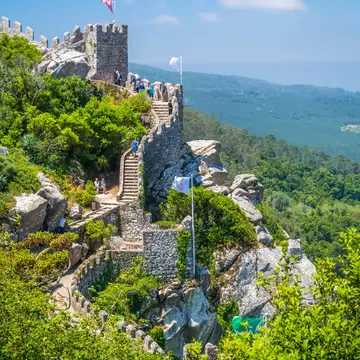
Castelo dos Mouros
Soaring 412m above sea level, this mist-enshrouded ruined castle is a Great Wall of China in miniature. Like a dragon’s backbone, this 9th-century Moorish castle’s dizzying ramparts wriggle across the mountain ridges and past moss-clad boulders the size of small buses. When the clouds peel away, the vistas over Sintra’s palace-dotted hill and dale to the glittering Atlantic are – like the climb – breathtaking.
reviewed
-
C
Convento dos Capuchos
Hidden in the woods is the bewitchingly hobbit-hole-like Convento dos Capuchos, built in 1560 to house 12 monks who lived in incredibly cramped conditions, their tiny cells having low, narrow doors. Byron mocked the monastery in his poem Childe Harold, referring to recluse Honorius who spent a staggering 36 years here (dying at age 95 in 1596).
reviewed
-
D
Casa Piriquita
This busy café is a popular destination for inexpensive bites as well as Sintra's famous queijadas (sweet cheese cakes) and travesseiros (almond pastries).
reviewed
-
E
Fonte da Pipa
A hip tiled bar, this has craggy, cavelike rooms and comfy seats.
reviewed
-
F
Museu do Brinquedo
Sintra’s toy story is Museu do Brinquedo. João Arbués Moreira’s fascinating 20,000-piece collection presents a chronological romp, from 3000-year-old Egyptian stone counters to a 1999 Barbie Burberry. Standouts feature vintage Barbies from a more demure, housewifely era and archrival Sindy dolls. Also note tin soldiers used to drum up Nazi support, WWII Action Men, penny toys and Japanese kokeshi wooden dolls. On the 3rd floor is a toy-repair workshop, where a man sits studiously working in a glass case, beside a bizarre tray of disembodied heads.
reviewed
-
G
Monserrate Park
Wild and rambling Monserrate Park is a 30-hectare garden created in the 18th century by wealthy English merchant Gerard de Visme, then enlarged by landscape painter William Stockdale (with help from London’s Kew Gardens). Its wooded hillsides bristle with exotic foliage, from Chinese weeping cypress to dragon trees and Himalayan rhododendrons. Seek out the Mexican garden nurturing palms, yuccas and agaves, and the bamboo-fringed Japanese garden abloom with camellias. The park is 3.5km west of Sintra-Vila.
reviewed
-
Walking
Walking through pretty countryside is a much-loved activity in the Sintra region. A pleasant walking trail is from Sintra-Vila to Castelo dos Mouros, a relatively easy 50-minute hike. You can continue to Palácio Nacional da Pena (another five minutes). From here you can ascend the Serra de Sintra's highest point, the 529m Cruz Alta (High Cross) named for its 16th-century cross, with amazing views all over Sintra. You can continue on foot to São Pedro de Penaferrim, and loop back to Sintra-Vila.
reviewed
-
H
Palácio de Monserrate
The Moorish-inspired Palácio de Monserrate was constructed in the late 1850s by James Knowles for another wealthy Englishman, Sir Francis Cook. Previously on the site stood a Gothic-style villa, rented by the rich, infamous British Gothic writer, William Beckford, in 1794 after he fled Britain in the wake of a homosexual scandal. Visits to the recently restored Monserrate Palace are by 90-minute guided tour (including the grounds); reservations are essential.
reviewed
-
I
Museu de Arte Moderna
The world-class Museu de Arte Moderna hosts rotating exhibitions covering the entire modern art spectrum – from kinetic and pop art to surrealism and expressionism. Sheltering Hockney, Lichtenstein and Warhol originals, the permanent collection is part of billionaire José Berardo’s stash, which also graces the walls of Museu Colecção Berardo. Exhibits change frequently because of space limitations.
reviewed
Advertisement
-
J
Quinta da Regaleira
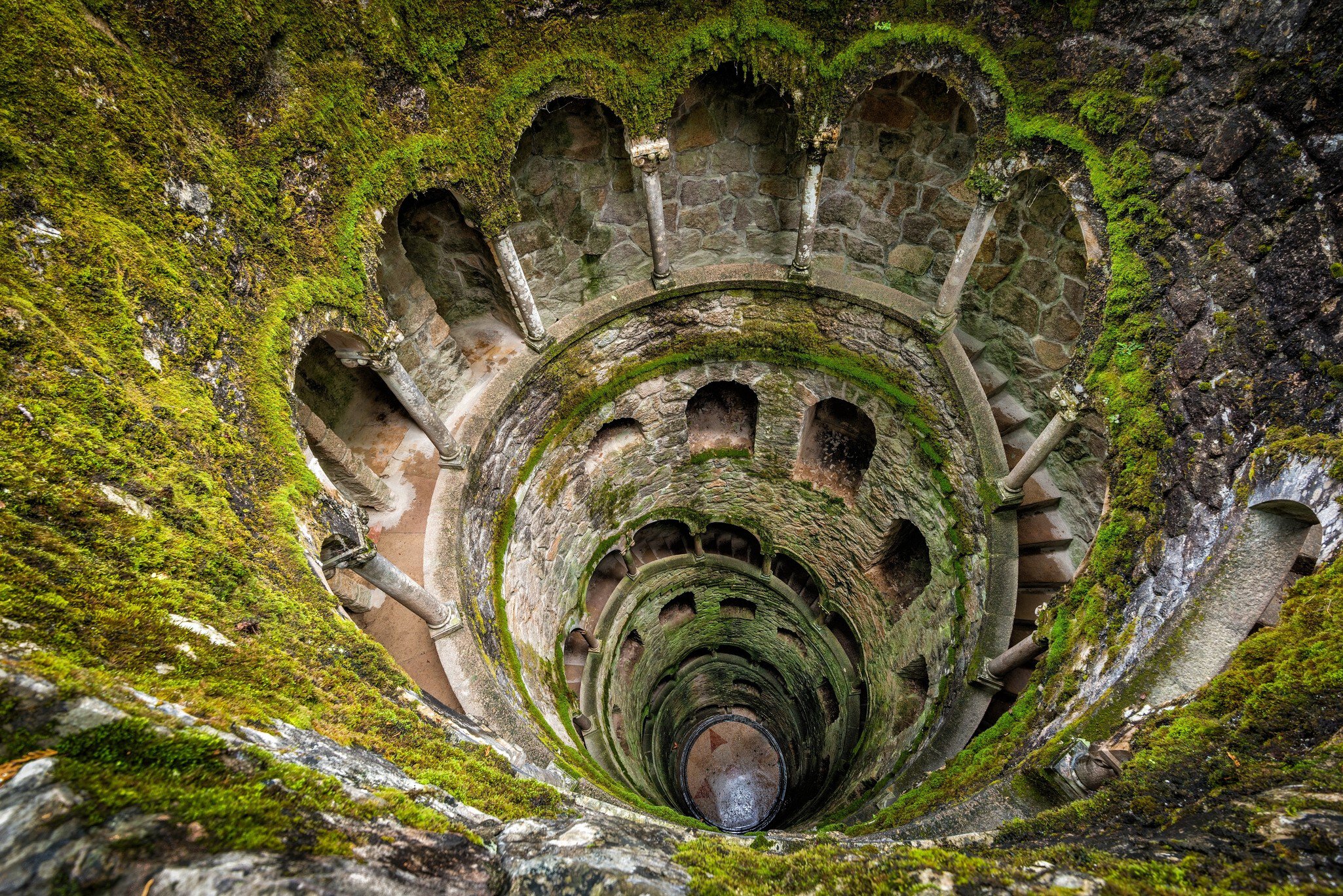
This magical villa and gardens is a neo-Manueline extravaganza, dreamed up by Italian opera-set designer, Luigi Manini, under the orders of Brazilian coffee tycoon, António Carvalho Monteiro, aka Monteiro dos Milhões (Moneybags Monteiro). The villa is surprisingly homely inside, despite its ferociously carved fireplaces, frescos and Venetian glass mosaics. Keep an eye out for mythological and Knights Templar symbols.
reviewed
-
K
Palácio Nacional de Sintra
The icing on Sintra-Vila’s Unesco World Heritage cake is this palace, whose iconic twin conical chimneys set imaginations into overdrive and cameras snapping. Of Moorish origins, the palace was first expanded by Dom Dinis (1261–1325), enlarged by João I in the 15th century (when the kitchens were built), then given a Manueline twist by Manuel I in the following century.
reviewed
-
L
Parque da Pena
A further 200m up the road from Castelo dos Mouros is Parque da Pena, filled with tropical plants, huge redwoods and fern trees, camellias, rhododendrons and lakes (note the castle-shaped duck houses for web-footed royalty!). It’s cheaper to buy a combined ticket if you want to visit Palácio Nacional da Pena too.
reviewed
-
M
Binhoteca
Jazzy music and exposed stone set the scene at this glam wine bar, serving Portugal’s finest, from full-bodied Douros to woody Madeira whites. Nibblers graze on goodies such as pata negra, cumin-and-apple blood sausage and pungent cheeses with pumpkin chutney. It’s untouristy despite being smack in the centre.
reviewed
-
N
Lawrence’s Restaurant
Perfect for romantic tête-à-têtes with its classical music, candlelight and rose-clad terrace, the restaurant at Lawrence’s Hotel serves modern Portuguese cuisine. Signatures such as veal with turnip tops and tarragon sauce are beautifully cooked and presented.
reviewed
-
O
Casa de Chá e Chocolate
Maria uses fruit and veg from her own garden to whip up vegetarian dishes, salads and the like. But it’s her wicked desserts that shine, from chocolate fondue to yoghurt-and-berry torte. The mint-and-ginger iced tea is refreshing.
reviewed
-
P
Tacho Real
Take a pew on the cobbled patio or retreat to the 17th-century vaulted interior, bedecked with century-old azulejos, at this charming haunt. Dapper waiters bring specialities from juicy steaks to stuffed king crab to the table.
reviewed
-
Q
Adega do Saloio
Popular with locals, Adega do Saloio has two outlets across the road from each other, both specialising in grills, but one more formal than the other. Both have bustling atmospheres and are decorated with strings of garlic.
reviewed
-
R
Alcobaça
This simple, busy place is one of the best-value and most traditional restaurants in the old town. It serves hearty Portuguese fare including tasty caldo verde (cabbage soup), grilled sardines and garlicky clams.
reviewed
-
S
Tulhas Bar & Restaurante
This converted grain warehouse is dark, tiled and quaint, with twisted chandeliers and a relaxed, cosy atmosphere. It’s renowned for its bacalhau com natas (shredded cod with cream and potato).
reviewed
Advertisement
-
T
Café de Paris
This opulent cafe is a pink marble, stucco and chandelier confection. Oui, the crunchy baguettes, bistro specials, light crepes and even the snooty service are indeed very Parisian.
reviewed
-
Cabra Montêz
Cabra Montêz, or ‘mountain goat’, arranges all kinds of adventurous pursuits including trekking/rafting/canyoning trips for €25/45/40 per person.
reviewed
-
U
Sabores da Vila
Painted in zesty lemon-and-lime tones, this modern cafe attracts lunchtime locals with its wallet-pleasing lunch buffet (with vegetarian options). The price includes a drink and coffee.
reviewed
-
V
Casa de Chá Reposa
An amazing tearoom with a view, crammed with interesting things for sale. A chandelier hung with tissue-paper-covered teapots dangles from the high stuccoed ceiling. Good cakes.
reviewed
-
W
Centro Cultural Olga Cadaval
Sintra’s major cultural venue, staging concerts, theatre and dance, is the Centro Cultural Olga Cadaval, beautifully converted from an old cinema.
reviewed