KrakówThings to do

Things to do in Kraków

‹ Prev

of 12

  1. A

    Salt Mine

    Just outside the administrative boundaries of Kraków, some 14km southeast of the city centre, Wieliczka (vyeh- leech -kah) is famous for its ultra-deep Salt Mine, which has been in continuous operation for 700 years and can be visited. It’s an eerie world of pits and chambers, and everything has been carved by hand from salt blocks. The mine was included on Unesco’s World Heritage List in 1978.

    reviewed

  2. B

    Chłopskie Jadło

    Old Town (012 429 5157; ul Św Jana 3) This place, a short walk south of Wawel, looks like a rustic country inn somewhere at the crossroads in medieval Poland, and serves up traditional Polish ‘peasant grub’ (as its name says). Live folk music is performed here on Friday and Saturday, and seating in antique sleighs adds to the rustic atmosphere. We love the żurek (sour rye) soup in a bread loaf.

    reviewed

  3. C

    Gruzińskie Chaczapuri

    Gruzińskie Chaczapuri ul Floriańska (ul Floriańska 26) ul Grodzka (ul Grodzka 3) If you have a hankering for something a little different, this cheap and cheerful chain of Georgian restaurants with five branches in Kraków serves up grills, salads and steaks and, the house speciality: cheese pie.

    reviewed

  4. D

    Kazimierz

    Today one of Kraków's inner suburbs and located within walking distance south of Wawel and the Old Town, Kazimierz was for a long time an independent town with its own municipal charter and laws. Its colourful history was determined by its mixed Jewish-Polish population, and though the ethnic structure is now wholly different, the architecture gives a good picture of its past, with clearly distinguishable sectors of what were Christian and Jewish quarters.

    The suburb is home to many important tourist sights, including churches, synagogues and museums. The western part of Kazimierz was traditionally Catholic, and although many Jews settled here from the early 19th century…

    reviewed

  5. E

    St Mary's Church

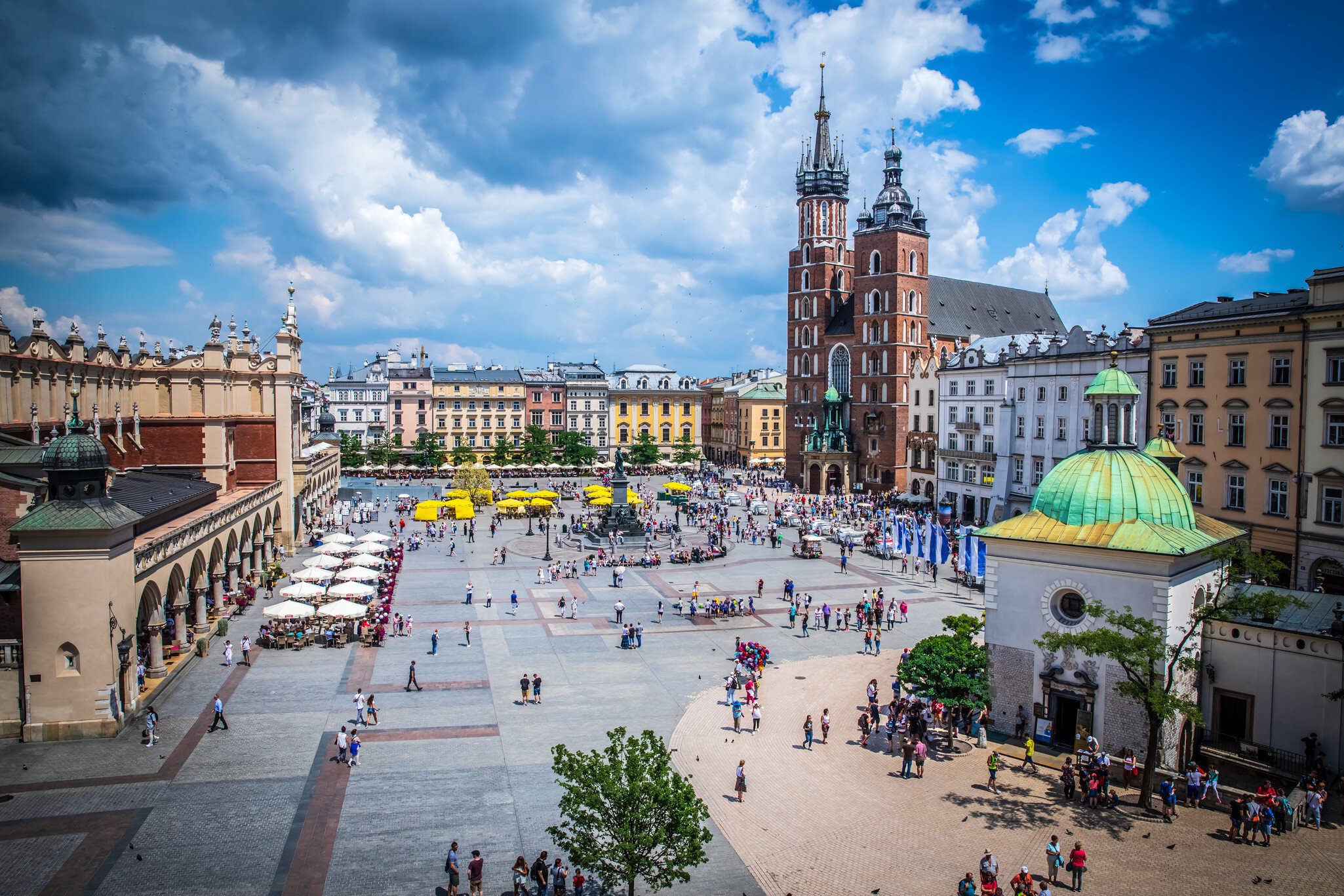
    Rising over the northeastern corner of Rynek Główny, St Mary's is Kraków's most important church, after Wawel Cathedral. The original church, built in the 1220s, was destroyed during the Tatar raids, and the edifice you see today is a 15th-century creation. From the outside, the most striking feature of the church is its two towers, of unequal height.

    reviewed

  6. F

    With Fire & Sword

    Named after the historical novel by Henry Sienkiewicz, this dark, atmospheric restaurant re-creates the Poland of yesteryear. The wood interior is made even more rustic with animal pelts and a roaring fire. The menu features well-researched old-time recipes, such as the succulent roasted pig that comes stuffed with fruit.

    reviewed

  7. G

    Singer Café

    Louche hang-out of choice among the Kazimierz cognoscenti, this bar pays tribute to the sewing machine that was once produced here. By day, it's an atmospheric, antique-filled cafe, where patrons sit at sewing machines and sip cappuccinos. By night, they turn up the music and the place hums until dawn.

    reviewed

  8. H

    Jama Michalika

    Established in 1895, Jama Michalika is famous as the birthplace of the Młoda Polska movement - a hang-out for writers, painters and other creative types in the days of yore. The grand Art Nouveau interior has historic appeal, but the bored staff do not offer much in the here and now.

    reviewed

  9. I

    Bagel Mama

    How clever of someone to think of selling bagels in the Jewish quarter. Whether you are a bagel traditionalist (lox and cream cheese) or a bagel innovator (warm brie and tomato), you'll find something you like. For some reason, there are also burritos on the menu.

    reviewed

  10. J

    International School of Polish Language & Culture

    A private school that gets good reports is the International School of Polish Language & Culture, with courses lasting one/two weeks (25/50 hours) costing €170/260.

    reviewed

  11. Advertisement

  12. K

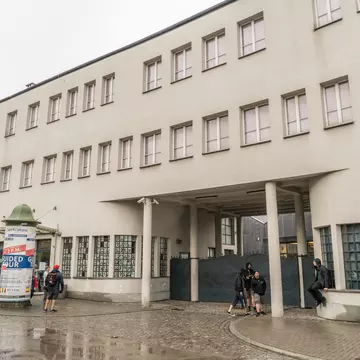
    Oskar Schindler’s Enamelware Factory

    About 400km east of Plac Bohaterów Getta is Oskar Schindler’s enamelware factory.

    reviewed

  13. Cistercian Abbey

    Until the construction of the Church of Our Lady Queen of Poland in 1977, Nowa Hutans used the two historic churches that had somehow managed to escape the avalanche of concrete. They are both on the southeastern outskirts of Nowa Huta, in the Mogiła suburb about 2.5km southeast of Plac Centralny (tram 15), and are worth a visit if you are in the area.

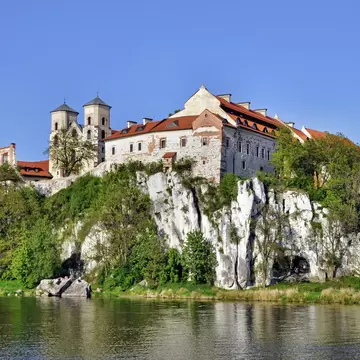
    Across the road from the small, shingled Church of St Bartholomew is the Cistercian Abbey , which consists of a church and monastery with a large garden-park behind it. The Cistercians came to Poland in 1140 and founded abbeys around the country, including this one in 1222. The church, open most of the day, has a large thr…

    reviewed

  14. L

    Podgórze

    The working-class suburb of Podgórze would pique few travellers' curiosities if it wasn't for the notorious role it played during WWII. It was here that the Nazis herded some 15,000 Jews into a ghetto and continued to empty it by way of deportations to the concentration camps, including one a short distance to the southwest in Płaszów.

    The centre of the ghetto was Plac Zgody, the ironically named 'Peace Square' that is today known as Plac Bohaterów Getta, where the process of selecting who would stay and who would be placed on the waiting train to one of the camps was made. Today it is marked by a memorial by Kraków architects Piotr Lewicki and Kazimierz Latak consisti…

    reviewed

  15. M

    Pauline Church of Ss Michael & Stanislaus

    This most esteemed church is commonly known as the Skałka (Rock) due to its location on a once-rocky promontory. Today's mid-18th-century Baroque church is associated with Bishop Stanisław (Stanislaus) Szczepanowski, patron saint of Poland. In 1079, the bishop was beheaded by King Bolesław Śmiały (Boleslaus the Bold): see the very tree trunk where the dirty deed was done, now in a place of honour next to the altar. Apparently the bishop's dismembered remains were tossed into a nearby pond, but the body miraculously re-formed, demonstrating the healing powers of the waters. Now the Skałka is a sort of national pantheon. The crypt underneath the church shelters the tombs of…

    reviewed

  16. N

    Adam Mickiewicz statue

    A few steps north from the Church of St Adalbert on Rynek Główny (the Main Market Square) is the Adam Mickiewicz statue surrounded by four allegorical figures representing the Motherland, Learning, Poetry and Valour. The szopki (Nativity scenes) competition is held beside the statue in early December.

    The flower stalls, usually to the north of the statue and traditionally run by women, have been trading on this site since medieval times. The area in between is the 'pasture' for Kraków's pigeon population, which the city - unbelievably - encourages. The area is currently fenced off as excavations for a possible underground shopping and entertainment complex are going on …

    reviewed

  17. O

    Remuh Cemetery

    Founded in the mid-16th century, it was closed for burials in the late 18th century, when a new and larger graveyard was established. During WWII Nazis vandalised and razed the tombstones, but during postwar conservation work some 700 gravestones, many of them outstanding Renaissance examples and dating back four centuries, were uncovered. It seems that the Jewish faithful themselves had buried the stones to avoid their desecration by foreign armies, which repeatedly invaded Kraków in the 18th century. The tombstones have been meticulously restored, making the place one of the best-preserved Renaissance Jewish cemeteries anywhere in Europe.

    reviewed

  18. P

    Kantor's Atelier

    Even in life it was hard to define Tadeusz Kantor, a master of both performance and visual arts, who blurred the line between genres. Poet, painter, set designer and actor, he delighted and confounded his audiences with his one-man avant-garde extravaganzas. The venue for his performances was the Cricot 2 Theatre - defunct since his death in 1990. But the Crikoteka archive documents his life work, maintaining a collection of set designs, costumes, photographs and videos. Kantor's Atelier is also open to the public, housing a small gallery of pieces that the artist created towards the end of his life.

    reviewed

  19. Q

    Crikoteka Archive

    Even in life it was hard to define Tadeusz Kantor, a master of both performance and visual arts, who blurred the line between genres. Poet, painter, set designer and actor, he delighted and confounded his audiences with his one-man avant-garde extravaganzas. The venue for his performances was the Cricot 2 Theatre - defunct since his death in 1990. But the Crikoteka archive documents his life work, maintaining a collection of set designs, costumes, photographs and videos. Kantor's Atelier is also open to the public, housing a small gallery of pieces that the artist created towards the end of his life.

    reviewed

  20. Auschwitz-Birkenau Museum Half-Day Trip from Krakow

    Auschwitz-Birkenau Museum Half-Day Trip from Krakow

    5 - 6 hours (Departs Krakow, Poland)

    by Viator

    Leave Krakow for a morning or afternoon to visit the UNESCO-listed Auschwitz-Birkenau Museum. This sobering half-day trip will have a lasting impact, commemorat…

    Not LP reviewed

    from USD$45.93
  21. Church of Our Lady Queen of Poland

    The Church of Our Lady Queen of Polandis otherwise known as the Arka Pana (Lord’s Ark). This interesting, though rather heavy, ark-shaped construction was the first new church permitted in Nowa Huta after WWII, and was completed in 1977 entirely by volunteer labourers. Up till then, Nowa Hutans used the two historic churches that had somehow managed to escape the avalanche of concrete. They are both on the southeastern outskirts of Nowa Huta, in the Mogiła suburb about 2.5km southeast of Plac Centralny (tram 15), and are worth a visit if you are in the area.

    reviewed

  22. Advertisement

  23. R

    Bird Service

    Bird Service is Poland’s No 1 specialist in bird-watching tours. It organises birding trips in eastern Poland, including the Białowieża and Biebrza National Parks and organises the Polish Bird Festival, held annually in the second week of May in northeastern Poland. This is a holiday package (from €400) that covers eight nights’ accommodation in an optimal bird-watching location, half-board and information. Bird Service also offers week-long bicycle tours along the Dunajec River in the Carpathian Mountains (from €420).

    reviewed

  24. S

    Mariacka Basilica

    The twin steeples of the Mariacka Basilica tower over the Rynek Główny, acting as a geographic and historic landmark. From here the bugler plays the hejnał every hour, marking the time and remembering the legend of the trumpeter of Kraków. Enter the side door into the church, which is a veritable museum of artistic masterpieces: wall paintings by Jan Matejko; windows by Stanisław Wyspiański and Józef Mehoffer; and the gilded pentaptych altarpiece by Wit Stwosz. You can also climb to the tall tower to get up close and personal with the bugler.

    reviewed

  25. T

    Old Synagogue

    Dating back to the end of the 15th century, the aptly named Old Synagogue is in fact the oldest Jewish house of worship in the country. It now houses a branch of the Museum of the History of Kraków. The prayer hall contains the original aron kodesh (the niche in the eastern wall where Torah scrolls are kept) and a reconstructed bimah (raised platform at the centre of the synagogue where the Torah is read). Adjacent rooms are dedicated to Jewish traditions and art, while upstairs there's a photographic exhibit.

    reviewed

  26. U

    Rynek Główny

    Measuring 200m by 200m, Kraków's Rynek Główny is the largest medieval town square in Europe and one of the finest urban designs of its kind. Its layout, based on that of a castrum (Roman military camp), was drawn up in 1257 and has been retained to this day, though the buildings have changed substantially over the centuries.

    Most of them now look neoclassical, but don't let the façades confuse you - the basic structures are much older, as can be seen by their doorways, architectural details and interiors.

    reviewed

  27. V

    Wawel Cathedral & Museum

    Poland's most important church is the 1364 Gothic beauty that sits atop Wawel Hill. Admire the central silver Shrine of St Stanislaus and the many chapels that ring the sanctuary, before descending into the tiny Poets' Crypt and the mazelike Royal Crypts. Finally, you can climb the 70 wooden steps to the top of the Sigismund Tower to see the great Sigismund Bell.

    Opposite the cathedral is the Cathedral Museum, which displays various ecclesiastical treasures and royal funerary regalia.

    reviewed