Lonely Planet Publications Postcards

Japan

The information below is provided by Lonely Planet readers and is not verified by Lonely Planet. For the official lowdown, contact your nearest embassy or check out our Travel Links.

Travel Tips

The hot towel you get at the start of a meal is for your hands ONLY, It is not for your face. It is bad manners to use it on your face but you can
probably get away with it as a tourist. Older men sometimes use it on their face in working class establishments, but they are considered rude for doing so. Also, refrain from wiping your nose on it.
Anonymous (May 06)

In Japan there are a lot of free wireless internet hotspots. In the center of the big towns sometimes you get one or more hotspots which are free to use. Even some train stations have indoor-wireless lan. At Narita Airport itâ??s not free, but when you start your internet connection you are asked for your credit card and can use this wireless access 24 hours for ¥500, which is fair price, I think.
Anonymous (Oct 05)

Also the best place to access money via ATM is at a post office as most bank ATMs wont issue money unless the card is Japanese and issued by that bank, however, the ATMs are only accessible in business hours and not on Sundays as the post office is closed. Travellers cheques and dollars take about 1/2 hr to exchange at a bank.
Anonymous, Australia (Jun 05)

I noticed that the Kyoto Tourist office has now been relocated. To find it go to the South End of Kyoto station and locate the South elevator (in the Isotan department store) and go up to the 9th (nine) floor. It is quite nice and big with Internet access desks (¥100 for 15 minutes), reading space, chatting space. Quite nice and with good view on the city.
Daniel Dourneau, France (Feb 05)

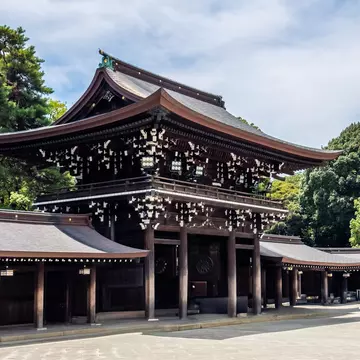
Visitors to shrines and temples can buy a little book of blank pages (ours has 50 pages and cost ¥1450) in which each shrine or temple will (for ¥300 yen, or ¥500 for Meiji-jingu, including two postcards) place the shrine or temple stamp and inscribe appropriate calligraphy. These are beautiful and diverse and make a most striking record of the visit. Most shrines or temples have a priest or shrine maiden who will do this; in only one case did a priest decline (at a local temple near To-ji in Kyoto) and at another, the shrine gave us a pre-stamped page which we have now glued in.
Shane McCarthy, Australia (Jan 05)

For Japan, nobody told us about the existence of luggage courier services. Travelling with a baby, we sure didn't have a spare pair of hands for dragging around all our luggage from Narita Airport to Wako-shi station in Saitama, some 1.5 hours (and TWO subway transfers) away, though somehow we survived. For all of you who will be taking more than just carry-on luggage, we recommend you enlist the help of the luggage courier companies to save your sanity as you go to and from the airport.
Amy, Canada (Mar 03)

Hotels were generally much cheaper locally than if booked through internet booking services. I had pre-booked a hotel through a Singapore based service - when I wanted another night on the return trip the rate was 30% lower and I was given a better room.

Staying near the station works well in Kyoto - the buses and metro lines all converge, there are lots of inexpensive places to eat in the area, and it is possible to get to many of the hotels directly from the station through tunnels and shopping centres. The journey to the best areas of old Kyoto is an easy (10 minutes/1 change) metro ride.
Ian Douglas, Australia (Mar 03)

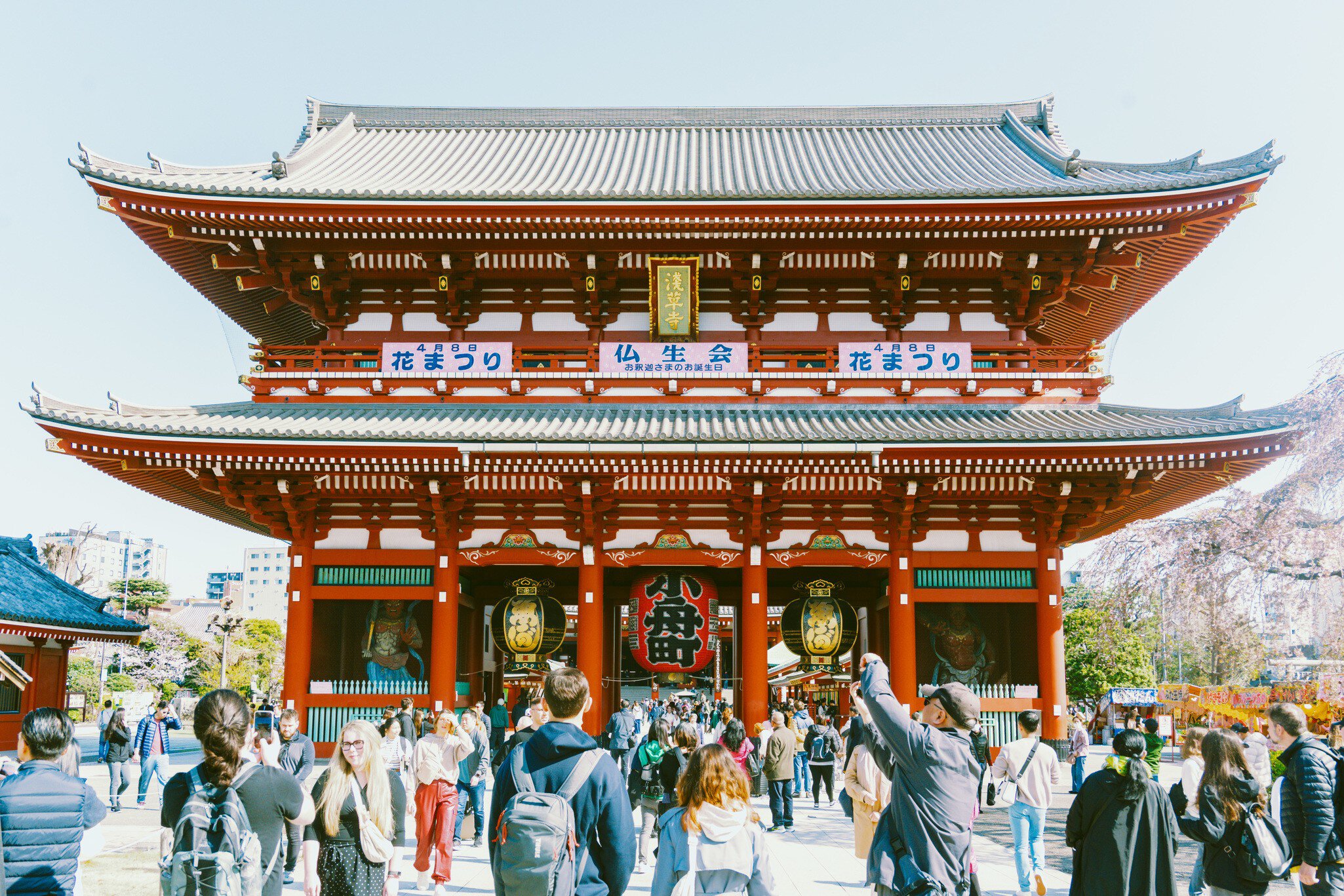
In Kyoto, a city that houses literally thousands of temples, a little planning goes a long way. Choose the four or five that seem the most intriguing, or at most, the essential eight. This will be more than enough. Sanjusangen-Do should make its way onto anyone's itinerary. Its lineup of a thousand images of the Buddhist deity Kannon, all crafted from Japanese cyprus in the twelth and thirteenth centuries, is an astonishing display of religious devotion.
Rip Noyes (Mar 03)

All travel guides warn against the cost of visiting Tokyo. It's our experience that Tokyo is not an expensive city to visit at all. This misunderstanding is widely spread. Even among our friends the question of prices in Tokyo is the first to meet us after returning home. This is such a shame because it keeps a lot of people from visiting this fantastic city. Tokyo is in fact a cheaper city than Copenhagen where we live. OK, Copenhagen is not the cheapest city in the world but we found Tokyo to be between 10 and 25% cheaper than our own capital. Tokyo has a lot to offer in shopping and restaurants. And there's something for every wallet. If you're travelling on a budget look outside Ginza and other high-flying centres. In Asakusa we visited several restaurants and ate until we felt bad for an absolutely fair price - even compatible with Bangkok or Manila cost wise.
Jacob Johansen, Denmark (Jan 03)

Moving About

The best and most efficient way to travel is by train using the Japan Rail Travel Pass for foreigners. You need to purchase this outside of Japan as you can not buy it when you are there. The details are available on the Japan Rail website.
Anonymous, Australia (Jun 05)

It is not always necessary to purchase a ticket for urban trains. In Tokyo and urban areas, most of the railways except for JR and Tokyo Monorail have introduced a common stored value magnetic card system called Pass Net. You buy a card (valued for ¥1000, ¥3000 or ¥5000) at the vending machine at a station and simply insert it into an automatic wicket just like a conventional ticket. The first sectional fare is deducted at the time of entry. You do the same at the destination and the balance fare is deducted. If the remaining value is not sufficient, or you are taking a train directly onto JR lines, you can buy a ticket at a vending machine with the card and cash.

JR has a similar card called an IO card (pronounced as E-O) in Tokyo and the suburban area. The card is not compatible with Pass Net. They have a conventional magnetic card and the new IO card. It is more convenient for short stay travellers to use a magnetic card since no deposit is required.
Kuramasu Yutaka, Japan (Mar 03)

There is a great little train journey from Niigata to Aizu-Wakamatsu (connects on to Koriyama Shinkansen). This trip, on a local diesel rail car, winds its way through the mountains and a hydro-power scheme. In January there was deep snow everywhere and great views from both sides of the train. The schedules and details for this journey are not in the otherwise excellent map/timetable available from major stations in Japan, which every Rail Pass user should request.

Another excellent trip, where I was again the only western face on the train was the journey from Ogori to Matsue around the Sea of Japan coast. After winding throught the mountains, the train then hangs above the beaches of the Sea of Japan coast most of the way to Matsue. Tsuwano makes a good en-route stop and in winter is almost deserted.
Ian Douglas, Australia (Mar 03)

Scams & Warnings

I noticed there are no warnings regarding robberies in Japan. There are many bag snatching incidents which occur when the victim is riding their bicycle and the assailant sidles up on their motorbike and snatches the bag from the bicycle's basket. I was a victim of this twice and when telling my Japanese friends about it they all shared similar experiences with me. The targets are almost always female. Also my apartment was broken into and my passport, cash, video camera and clothing were stolen. The police came to fingerprint and insisted it must have been a Chinese gang. Anyway, Japan is not a crime free country.
Gaynor Fairchild, Australia (Nov 02)

The Tokyo fish market is closed two Wednesdays a month. Either find out which ones they are, or don't go Wednesday. We met someone who went the wrong Wednesday and said the only people there were tired and dazed tourists wondering what was going on.
Ellen Simon, USA (Jun 03)

Most ATM's in Japan do not accept international visa cards, etc. in their machines as the magnetic strip on the back is a different size; ours is twice the width of their strips. Therefore the machine just spits it back out. At this stage you can only use Citibank ATM's.
Dianne Edlington, Australia (Apr 03)

When exchanging travellers cheques in smaller, regional post offices, you will need the address of someone who lives in Japan. We were turned away when unable to provide a resident's address - they would not accept our hostel's address without the name of a resident. Luckily for us we had a friend who lived in the area and were able to call to get their details. I suggest you obtain the name and address of the people who own/run your hostel for verification and to save a lot of confusion at the post office!
Fran Nicholson, Australia (Oct 02)

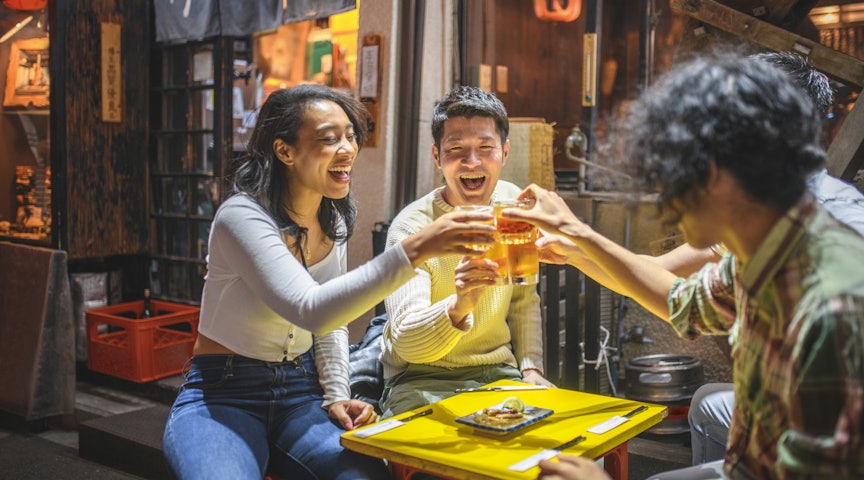
Most restaurants in Japan only take a reservation for a large group - 6 people or more. Also, once you make a reservation, many restaurants have a time limit of two hours. In addition to having to be on time, eat and get out, they will often only serve your group a set menu. Sometimes you are offered a few choices and it usually works out to your favour - a lot of dishes with enough food. However, if you are in a big group, it takes a while to get organised, so everyone should know about the time restriction, menu restriction and group size. If you are a group of four and it's a Friday or Saturday, be prepared to wait - sometimes up to two hours for a table. Eat early. Japanese love to sit, talk, and drink while ordering more dishes as the night goes on. Some people have been known to sit for hours, drinking, eating and talking while groups wait at the door.
Laura Coulter, Canada (Aug 02)

Gems, Highlights & Attractions

When i was in Nagasaki, a friend of mine took me out to visit Hashima Island. Known locally as "Gunkanjima"or Battleship Island. We hired a fishingboat to get out there as its about about 15 km from Nagasaki. Wow, what a treat! Picture Alcatraz Island but run down with deserted buildings. It used to be a mining community that was deserted in the 70's. Highly recommended day trip
Richard Lang, Canada (Aug 05)

We just experienced a fantastic bike ride in Hiroshima. If you already have a bike you can ride all the way from the city (and even from the red bridge at Misasa) along the Motoyasu river to the ferry port (or catch a tram there if you do not have a bike). From there catch a ferry to Ninoshima (¥310 one way). You can hire bikes on the island from the coffee shop near Ninoshima pier for ¥500. You can then ride the 16km flat paved road around the island (we saw one car) or crisscross it over the hills if you are up to it. This is a fantastic scenic ride and great insight into rural Japan.
Justin Dabner, Australia (Aug 05)

When visiting Hiroshima please check out the Hiroshima National Peace Memorial Hall for the Atomic Bomb Victims. This is NOT the massive rectangular shaped Memorial Museum. The Memorial Hall is extremely personal and moving. It is located in the Peace Park and is not well known by foreigners or Japanese outside the area. As you walk through the park heading toward the A-bomb dome you will see a clock set permanently at the time of 8:15 (the time the bomb was dropped) surrounded by rubble from the blast and then surrounded by grass, on your right. Get closer to it and you will see a small sign directing you in under the clock ...other than this sign, there is no advertisement for this amazing place. Once you enter (it's free admission) you are given a pamphlet which as well as giving you information and acts as an access card to use the computers. Inside there is a rememberance hall, a library, an exhibition room, a victims information area and more. Faces of the victims scroll continuously and computers are available for searching names and fates of people living in the area at the time. The temporary exhibition area offered stories told by surviving victims accompanied by images recorded at the time. The computers display 'electronic' books which allow you to access powerful stories written by survivors.
Danielle Irving, Australia (Nov 04)

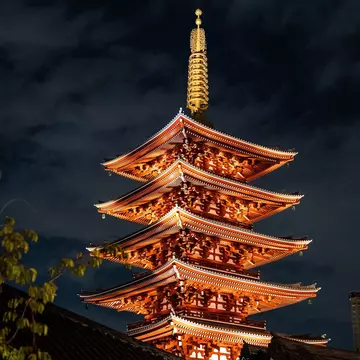
Nikko is an essential side trip from Tokyo, despite the apparent inconvenience of getting there. Beautiful temples and shrines are carved out of a pristine forest hollow. Keep an eye open for images of the famous "see no evil" monkeys, elephants designed by someone who'd never previously seen one, and the complex's enormous pagoda, apparently built without a foundation, but supported by a metal pole at its heart, making it quake-proof.
Rip Noyes (Mar 03)

January 2nd-5th - For the best New Year bargain sales (Hatsuri) in all of Japan, Sendai is the place to be. People travel to Sendai from all over Japan to buy what is called fukubukuro (bags with presents inside). You won't find deals better than these anywhere else in Japan. Thousands of people line up in the early hours of the morning to rush into the department stores. The best bargains are usually gone by the midday of the first day so it pays to be in early. Items on sale range from clothes and souviners to cars and houses! Anything left over usually stays on special for two weeks.

Held mid to late Autumn Sendai's Yosakoi Festival is popular among Japan's youth. Old meets new in a combination of loud beats and traditional dance movements. It apparently originated in Shikoku but I haven't seen it anywhere else as yet.
Simon Tipping & Jayne Hibbard, Japan (Jan 03)

Kamikochi is well worth a visit with at least a one night stay. Glorious hikes which are long and fairly easy, spectacular mountains, beautiful ponds and forests. Aim to stay away from the main tourist route and push up through the main valley. Accommodation is pretty expensive, but provides a real insight into contemporary Japanese culture.
Steven Bardy, Australia (Nov 02)

In the Okayama-ken Prefecture the Tourist Development Board run an 'international villa' on Shirasihi Island, a short journey by local train and ferry from Fukuyama on the main Shinkansen line. It's a beautiful island, with a tranquil village atmosphere and pleasant beach. There's good cycling to be had and you should spend at least two days there for maximum enjoyment/relaxation.
Tim Gomersall, UK (Oct 02)

A simple visit to a baseball game provides more insight into Japanese culture than can be learned from a fair sized bookcase of anthropological studies. For instance, fans do not cheer when the other team is batting, instead maintaining a respectful silence. English football fans like myself, expecting to find jeering in equal measure with applause and plenty of obscenities will be shocked to discover the white-gloved (think Italian traffic police) chant-masters, professional banner wavers and all manner of carefully orchestrated yet incredibly energetic supporting going on. Free balloons often appear for the middle of the 7th inning when songs are sung and balloons let skyward in a great rainbow cloud of whistling rubber. Sitting in the cheap seats starts at about ¥1000 and as well as being cheapest this is a wonderful way to meet all sorts of enthusiastic folks and you will be in the centre of the madness. The infield seating is more expensive and pretty tame. Hiroshima is a great place to catch a game, because the stadium is smack in the middle of town, right next to the A-bomb dome.
H Matthew Howarth, UK (Aug 02)

Check out Kawasaki's fertility festival. It's held once a year near Kawasaki station. This is one festival that you won't forget. Highlights include tranvestites, mikoshi (portable shrine) of a pink phallus, candy in various shapes and an unforgettable Parade.
Laura Coulter, UK (Apr 02)

ShinYokohama Ramen Museum: A museum on the history of ramen (a kind of noodle), with OK English explanation. The two basement floors are done in the style of Japan in the 1950's with about eight shops where you can try original ramen from all over the country (eg. Sapporo, Kyushu, Kyoto, Yokohama, etc). Go on a weekday though, not during holidays, it is very popular with Japanese people, having to wait 40 minutes for your bowl of steaming noodles is no exception!
Mathilde Teuben, Netherlands (Apr 02)

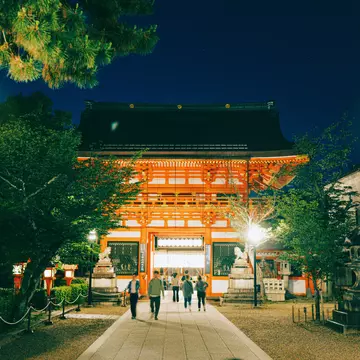
It was Monday, January seventh 2002 and I was walking at about two in the afternoon, in Gion (the suburb where all the geisha and maiko dance), when I saw a lot of Japanese photographers and even small television sets along the main Gion street: Hanami-koji. Becoming curious about what was going on, I hung on there for a while, and after a bit of time, a lot (I mean tens and tens) of geisha and maiko (all dressed up) came out from Gion Corner in small groups and started going in and out from the places where they usually dance. This went on for about one hour or two. Luckily I found a Japanese reporter that spoke English and she explained to me that it was a ritual happening at the beginning of each year, when the geisha and maiko meet the owners of the places where they dance and ask for giving them good business in the new year. There were so many that it was possible to watch them very close and for a long time (noticing all the aspects of their traditional dressing and make up), and take lots of nice pictures and even portraits. That's a kind of experience that could change the meaning of a trip to Japan, if done at the right time of the year, obviously.
Andrea Broglia, Australia (Mar 02)

Yarns, Fables & Anecdotes

A whole book could be written about toilets and we found your hint on collecting the free tissue sample invaluable. However I don't think you mention "wheel chair" toilets - always western style as we found the crouch style a bit tough on us oldies! Wheel chair toilets were always in stations and temple areas. In Kyoto at a temple there were 5 empty Japanese style toilets and a long queue for the only wheel chair toilet so obviously Japanese women don't like the others either! However be very careful if there is a flush button - DO NOT PRESS ANY RED BUTTON (by the toilet) - it rings an alarm! Also watch the mechanics of Japanese toilets! No, I do not have a toilet fixation - the first time I found no flush system and then the toilet flushed as I opened the door was quite fascinating.
Ann Tait, New Zealand (Apr 03)

While on the topic of food, I can't help but feel that a large, bold public warning should have been printed at the start of the food section warning against the danger that is wasabi. My first experience of this rocket fuel was on the flight up to Japan from Hong Kong. The soy sauce explained that you mixed in the leeks and the wasabi and then dipped in the noodles. The leeks I found, but I could see nothing marked wasabi. It was only when I placed the large lump of green goo that was nestled among the noodles into my mouth that I worked out that it was likely to be the wasabi. I was in tears for about the next 5 minutes.
Stephen Gowdy (Apr 03)

^ back to top

Hundreds of guides to thousands of places.
For travel info that gets you going, check out Lonely Planet's
Destination Japan.
It's happening right now. Read what travellers are saying on the Asia - North-East Asia Branch
advertising
advertising