Lonely Planet Publications Postcards

China

The information below is provided by Lonely Planet readers and is not verified by Lonely Planet. For the official lowdown, contact your nearest embassy or check out our Travel Links.

Visas, Embassies & Border Crossings

The United States consulate in Guangzhou has moved. I lost an entire day of travel because of this. The problem is also that their website is not up-to-date. I went 3 weeks ago and in front of the old building is a sign directing you to the new embassy which is about 45 minutes away by train. A real hassle. I'd recommend calling them up and getting the correct consulate location address and putting that in your guide for future
travellers.
Andrew Janowczyk, USA (Nov 05)

We booked our flight to Tibet in Kunming and everything looked good. The flight costed more then from Chengdu (2450 Rmb from Zhongdian 1900 RMB from Chengdu). We were told it was because we now had a permit for all of Tibet, so we didn't have to bother with it there. Good thing we thought, but it was not so. Flying out of Zhongdian, we didn't get a permit for anything. We called him and he said it is no problem. They will know in Tibet! Of course they didn't and we had to get new permits. So don't fall for his promise! Tibet was good though. But we had another problem there. We booked a jeep-tour to the nepaleese border. They promised us to get the permits for Gyantse, Sakya, Shegar and to the border. In the middle of the trip our driver did not want to drive us to Sakya. He said we had no permit. We called the agency and they confirmed that. There was no way for us to get to Sakya. Do double check everything with the agency or book somewhere else!
Anonymous (Aug 05)

Hong Kong : the special Shenzhen visa at the Lowu border now costs HK$150. It's not available to US passport holders! British passport holders also pay HK$150 - they will not get fined anymore! Also, you don't have to pay Hong Kong Airport tax anymore, it's incorporated in the ticket price.
Jens Behrens, Hong Kong (Jun 05)

In Nanning, there's actually a Vietnamese consulate you can go to directly to sort out a visa, instead of going through CITS. Not only that, but when I went, they were able to process it for me the same day! The cost when I went 2 days ago was Y600, and it was a Y30 round-trip taxi ride from the train station. Today, I'm already in Hanoi!

The address I have written down is in Chinese, but I found this info on www.mofa.gov.vn:
1ST floor, Touzi Dasha, 109 Minzu Avenue, Nanning.
Tel: (86-77) 1551 0562
Fax: (86-77) 1553 4738
Email: tlsqvn@rediffmail.com
Thanks for your great guide book, which basically kept me alive in China.
Greg Cameron, Canada (Feb 05)

The Thai consulate in Kunming can now process 60 day tourist visas in 24 hours instead of three working days, for the same low price of 110Y. It's only open from 9-11:30am and closes for all Thai, Chinese, and many Yunnanese holidays.
Don Henson, Thailand (May 02)

I just got a 60 day visa for China at the embassy in Delhi. I put down a long list of cities (over a dozen), spread out over the country and I put 60 days for the length of stay. The consular officer remarked that I had big plans - the explanation that china is a big country seemed logical to him. The same has worked for other people in other embassies. However, I heard to story of someone who asked for 60 days but put down only three cities. The consular officer in that case replied that 30 days would be enough.
Patrick Zoll, Switzerland (Mar 02)

In Kunming, the Lao consulate has moved to the main building and can be found on the left side of the corridor opposite the reception desk. Visa forms are to be filled out in English, and must be accompanied by one passport size photograph. A 15 day or 30 day visa can be collected on the third day after application, but for a 50 percent surcharge, next day service is available. The same surcharge applies for holiday and weekend collections. Australians and Western Europeans (except Germans) are charged Y270 for a 15 day visa, while Americans Canadians and Germans are charged Y382 for the same and communist and former communist countries considerably cheaper. No same day service, but very friendly staff.

It takes two weeks for the special Myanmar permit. During that time you can travel around, so make a phone call to arrange everything and wait two weeks.
Anonymous (Jan 02)

Chinese bureaucracy comes to the fore again when the two girls I had been travelling with for past few days are refused an extension on their visas simply because they arrived in Tibet on a group visa (which is a legal requirement), and thus didn't have an Entry date on their Passport - Catch 22 scenario or what - so they had to board a 46 hour train to Hong Kong to try to get out of the country by midnight on the 30th June and reapply for a new visa from there - which will probably be routine, but their whole trip is turned upside down due to such tetchy rules.
Paul Hannon, Australia (Jan 02)

If you have to take the bus to Macau (it costs 55Y, the trip takes 2-3hours), you can go to China hotel to buy the ticket. Buses depart from the parking behind the China hotel every hour and ten minutes and 40 minutes (example:9.10, 9.40, 10.10, 10.40 and so on). The buses terminate their trip at Zhuhai, in a subterranean gallery, so you have to walk up and you'll find yourself in a sort of square. You have to enter in a place that seems like a station but that is the border, you have to show your passport and fill in a departure paper because you are leaving China and the entrance paper because you're entering Macau and you are in Macau!
Sara Biscioni, Italy (Dec 01)

Visa for China- China Resource Building Visa office was closed (Nov 2001). Their security guard showed us a letter which said it was closed for renovation during July-Aug, but it was still closed! We were directed to 42 Kennedy rd. Very efficient service - seems like they have permanently relocated here. We got 60 days single entry for same price as 30 days, no problems. The building is just above the Hong Kong park, take the exit just above the aviary into Kennedy rd.
Jane and Paul Prowting, UK (Feb 02)

We went to Hong Kong with a visa from China, but when you want to go back, you need another entry, or like us a new visa to go back to China!!!!
Marieke and Sabine, Netherlands (Jan 02)

Travel Tips

I recently spent three weeks in China and found your book very useful. In your guide you listed the various types of power outlets used in the country and said that the Australian 3 pin angled plug was available,however we found that these outlets will only accept a plug with 3 pins not plugs with 2 pins such as phone chargers etc a suggestion may be to take an Australian double adaptor and this will overcome the problem.
David Crossman, Australia (Jun 06)

Also worth taking a look at the Sony Gallery, for the cleanest and most high tech toilet in Shanghai. Always made a pitstop when we were in the area. Heated seat, auto bidet, auto hand washing and drying. Fabulous.
Deborah Luke, Australia (Feb 06)

Shaolin Si Mountain in Henan, China:

1. There is now an entrance fee of 30 Yuan to get onto the mountain. They built a toll gate.

2. You can go up the one side and finish up on the other side. You don't need to do a round trip. We started at the Shaolin end and finished up somewhere at the other side.

3. When you get to the other side they will try to charge 110 Yuan for a taxi back to Shaolin. There is a town about 10km away. We walked for 2km and caught a motorbike taxi the rest of the way at a cost of 5 Yuan. Quite a bit cheaper. From this town you can catch a bus to Shaolin or one straight to ZhengZhou .
Christopher Krasowski, Canada (Apr 05)

There is no tipping at all in China . And on arrival at Guangzhou East off the train, if you have check-in luggage, when you collect it and the porter insists on taking it for you, they will expect a tip ( A firm, but a polite no should be suffice as the customs officers are only over your shoulder) . They followed us to the currency exchange desk and watched me change my money then led us to what I thought was a taxi rank only to see a small Tarago like van show up. After loading our luggage we got in then they refused to move until we paid 300RMB up front. I got that down to 200RMB. We then got moving only to find a police car almost run us off the road. Even more to our amazement, our pretend taxi driver continued with the police chase until I slammed the handbrake on. The police were polite to us foreigners but wouldn't let us go until we signed a police statement as to what happened. I refused fearing China wouldn't let me leave the country as I was a witness! They eventually let us go and apologised for the actions of the petty criminals and even got us our money back! They also got us a taxi and advised us that 10RMB is more than enough. If it doesn't look like a taxi, don't get in. All taxis have a meter and print out a receipt enroute (which the driver will give you).
Nick Racanelli , Australia (Aug 05)

Beijing : please note that the Hall of Prayer for Good Harvests (the symbol of Beijing ) in the Temple of Heaven is closed for restoration from 4 May 2005 to April 2006. Visitors are not informed when purchasing the entrance ticket to the park and there is no discount - even though the main attraction of the site is closed for a year. Also note that there is extensive restoration works currently ongoing at the Forbidden City - only the buildings along the main North-South axis of the Forbidden City are open to visitors. All other buildings on either side are covered in scaffolding. There was no indication on how long these works would take but judging by the extensive scaffolding on site, probably a year. Again, visitors are not informed of these works prior to purchasing the ticket (Y60 when I visited 7 June 2005).
Adriana Bishop , Switzerland (Jun 05)

During our 40 days in China, we did not use travellers cheques. Drawing cash at ATMs in Shanghai is not a problem. There are many banks that offer the ATM PLUS/VISA system. However in smaller towns, it can be hard to locate an ATM machine. In cities like Chengdu, Wuhan, Chongqing and Yichang look for China Merchants Bank which have their ATM machines linked to the PLUS/VISA system. The exchange rate beats travellers cheques or cash conversions.
Edwin Koh, New Zealand (Jan 05)

When you take a taxi and if you have the address you want to go written in Chinese, it is good to give this piece of paper upside down to the driver. This is because if you ask the taxi driver, if he knows that place, they never say "no I don't", they always say "Yeeeees". If you give this paper upside down and the driver doesn't turn it around and still says "Yeees", you know that he can't read. Then it is better to get that paper back and go to the next taxi. Well, it isn't absolutely sure that you get to the right address even when the driver turns the paper the right way but at least he can read it.
Tomi Vuorela, Finland (June 02)

I strongly suggest you warn travellers that the Chinese government has expanded public holidays for both October 1 (National Day) and May 1 (Labour Day) to one week each to stimulate the tourist economy! The result: for these two different weeks, millions of Chinese tourists, packed out tourist spots, heavily booked transportation and even more inflated prices. Those of us working here have little choice, but those making a short trip could find themselves in a real bind!
Maureen Gallagher, USA (May 02)

Walking the Wild Wall: Today I went to Huanghua. Huanghua to Zhuangdaokou Pass - Indeed, the wall is in a poor condition where the road and wall meet, but these days only about 15 meters south is a newly renovated staircase that puts you on the wall a lot earlier. It's good. However, there is a Y2 charge.

Getting There And Away: For those with not much time or maybe a little more money to spend, it might be nice to mention that around the Long Distance Bus Station at Dongzhimen there are many taxi drivers who will take you to these places and back. I would have had to wait for three buses to get on bus 916, but with not too much bargaining, Y200 got a friend and I round trip to Huanghua. The driver waited over six hours there. I believe it was more than worth it.
Jesse Weiner, USA (May 02)

Advice to those wanting to walk down the Karakoram Highway: take your own tent. I thought that since there were lots of little villages along the way, there'd be places to stay, and that there was sure to be locals who could be persuaded to take us in for a night. I didn't know that the Chinese Army patrol the Chinese side of the Highway checking that foreigners aren't staying with the local minorities. I also didn't know that locals could be punished for taking us in.
Yonnie Fung, Australia (Apr 02)

Phone calls to Hong Kong count as international, therefore, the dialing prefix from China needs to be 00852.

The Nanpu and Yangpu bridges are open until five in the evening, but the last admission tickets are sold at four. I arrived at four thirty one afternoon to find they wouldn't let me on.
Alex Lauder, UK (Mar 02)

Through a local friend, ask him/her to find a vacant unit to rent. In the major cities, there are many vacant units, some of a very high quality. The owners are usually working overseas or interstate and are weary of renting the units to locals for fear of never being able to evict them if they decide to overstay. Expect to pay one tenth of the cost of a much smaller room in a hotel of equivalent standard.
Walter (Mar 02)

There is no need to give up fine wines while backpacking in China. Check out the wine selection in any Chinese grocery store and you will find a surprisingly diverse selection to suit all budgets and tastes. At the bottom of the barrel are the wines with Chinese script labels. These are typically under US$1 but because we can't read the label are easily confused with fish oils, local vinagars and animal extracts. One step up and selling for around US$1 with an English/Chinese label is Natural Red and Natural White. This particular brand is great for making friends in the hard seat class of an overnight train. In the US$1 to US$3 range are labels such as Great Wall, Dynasty, Imperial Court and Tibet Red. These seem to be the appropriate wine for livening up a crowded backpacker dorimitory. Check under the beds for empty bottles to find out what the wines of choice were last night. Need to impress a Chinese host? Better bring a bottle of Qinmei or Kuei Hua Chen Cha. These start at US$5 and up depending on the vintage. Invited by a cadre to Party Headquarters? Time for a decadent splurge on imported French Bordeux starting at US$15 a bottle and available at upscale supermarkets.
Al Rowley, USA (Feb 02)

If you go by hard sleeper, I recommend you carry an inflatable backpack mat and sleep sheet. The Train company provides a blanket and pillow, but might not be clean. If you have the Bottom bunk, there is room for luggage under bunk. If you have the top bunk, you can lock your luggage above in a space over corridor. The middle bunk has no luggage storage. Also, hard sleeper not recommended for tall people as limited head room to sit when middle bunk down.
Kathy Smith (Feb 02)

"Monkey Island" is as you describe and mobile phones seem to be the current attraction for the monkeys. Apparently, ringing the stolen phone only makes them take it further into the forest.
Ron Ruth (Feb 02)

In addition to the soft seats, a useful tip is that the better trains are the fast trains. We call these trains K-trains, as there numbers all start with a "K".
Adeline Kee (Jan 02)

Pearl River Cruises, Guangzhou: I took an evening river trip from Tianzi Wharf Pier. Since I had gone out to dinner first, I took the last trip of the evening at 10:00 pm. It was a wonderful trip and one I can highly recommend except for the fact that most of the lights on the bridges and buildings are turned off at 10:30 pm, so the last half an hour of the trip was spent in darkness.
Alison Boutland, UK (Jan 02)

The best credit card to use would appear to be VISA, at least where ATMs are concerned. I have seen both American Express and Mastercard rejected, where VISA worked. Mine worked in most Bank of China and China Merchants Bank ATM's, although not in branches of other banks displaying the VISA sign.
Conor O'Brien, Ireland (Jan 02)

A few notes for bus riders in Beijing. First, it's not for the faint of heart. You'll only see the bravest of battle weary travellers on the buses in Beijing. Second, the ticket taker will ask you where you're going. They never speak English, so you'll have to know where you're going in Chinese. The ticket prices are different depending on how far you're traveling. Third, they're busy, so you would be mistaken to think they will announce your stop, even if you do know the name in Chinese. Fourth, sometimes the stops are announced on a recording in both Chinese and English, but be warned that sometimes the recording is not synchronized with the driver's stops, sort of like watching a poorly dubbed movie. Finally, unlike buses in the west, if you get a ticket (piao), the ticket taker usually asks you to show your ticket as you disembark. Almost too late, but that's the tradition.
Steven Tseng (Dec 01)

At the forbidden City in Beijing, note that if you rent the audio tour, you have to return it to the opposite end. If you pick it up at the South end, return it to the North end etc. This is where your deposited drivers licenses, passports, etc, will be. I was not the only person to go back to my entry point, only to have to walk all the way back to the opposite end.

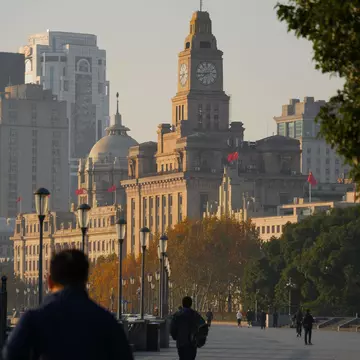
The Bund History Museum in Shanghai is very hard to find, but well worth visiting. At the North end of the Huangpu Gardens (Huangpu Gongyuan) on the bend, go down the steps below the three-pronged monument to the Heroes, turn left and then left again and go through a small door underneath the promenade marked with a plaque on the wall that says "Model Area" (I'm not kidding). I found it only because: a) there was a hand-written sign near the monument simply telling you to go down the stairs and turn left, and b) I asked several people in the parking area until I found someone who knew the answer.

Two strategies for avoiding Chinese taxi nightmare. Bring a map, show the driver where you are going and exactly how you want to go there. That way you can make sure they don't go around in circles, and that they take the main routes and not the small back alleys. You may feel and look a little foolish, but it's better than paying ten times more than you have to for a ride. Another way is when the driver asks you where you're going, if you know the route, you might try not telling them your final destination. Instead, guide them step by step. This strategy requires you to have fairly decent Chinese pronunciation and know where the next turn will be. Try to be reasonable in the amount of warning you give them to change lanes and take turns
Steven Tseng (Dec 01)

Huaqing Chi. If take the cable car up you have to choose: You can take the cable car down, or walk through Huaqing Chi. It's not possible to walk down without visiting the park (and pay the admission).

Qingcheng Shan: There is no cable car, but the boat is Y4 and the chair lift Y25 (Y40 up/down). We have tried to walk down back from Shanqing Gong to Siwang Guan and Yuqing Si, but we (with compass) and other tourists lost the way. The trails are not indicated at this side of the chair lift. The trails at the other side of the chair lift (West Side) are reasonabley indicated.

Hong Kong, northern side: It is possible to walk the Central Green Trail from the peak tram terminus (start at the left side of the railway) to the Victoria Peak. It is an unexpected beautiful green climb! You can take a map for free at the peak tram terminus. If you are at Victoria Peak and want to take the Central Green Trail down, walk to the east over Bakker Road (see the free map). After approximately ten minutes you reach a tennis field (not possible to miss it). Directly behind this tennis field, the Central Green Trail goes down.
Rudd Takken, Netherlands (Jan02)

In Kunming banks are open also on saturday and sunday from 8 in the morning to 5 in the afternoon. In Kunming there are no problems exchanging travel cheque and using credit cards in the banks, but friends using American express have had problems. There are no restaurants or shops you can use credit cards!

Banks are happy to receive american dollars and give you renminbi, but exchanging renminbi in US dollars or other currencies can be difficult. You have to keep your exchange receipts and you have to go to the same bank that gave you the money (or a bank with the same name). If you're going to Macau or Hong kong don't worry, because there, you can exchange whatever you want!
Sara Biscioni, Italy (Dec 01)

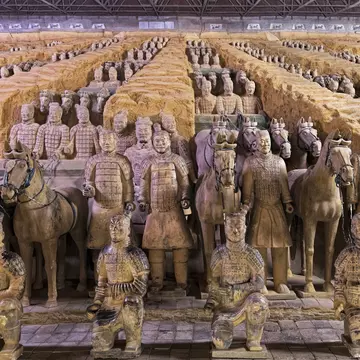
The terracotta-army is now a photography-zone (the first and the third hall, not the second one)! Don't use a flash, they don't love it, because there seems to be some colour on the figures that could be destroyed. There also is a no-flash sign at the entry.
Gernot Roth, Germany (Jan 02)

You can buy a through-ticket for all the sights for 120 yuan, so if you plan to see more than 3 of the sights it is worth it.
Toby Dalton and Christie Sunwoo (Jan 02)

In general the Chinese have entrance fees everywhere, if possible. I think that this is a quite new tendency in China. For instance just outside Lijiang you had to pay extra Y40 for entering an area heading towards the Snow Mountain, Tiger Leaping Gorge and Meadow Fields. Only the tourists are charged of this extra fee.
Britt and Per, Denmark (Jan 02)

Suzhou map page 342. There is now a long westward continuation of the road marked as Jingde Lu. Called Jinmen Lu it takes its name from the city gate that it leads from.
Colin Rees, UK (Jan 02)

There are cash points in Kumming and Dali (Yunnan province) which accept mistro and Cirrus.
Linzi Edge, UK (Jan 02)

It is already mentioned in the book, but I also highly recommend taking the bike tours with local people. They will find you! I paid 40Y, which included a delicious homemade lunch at the destination. I was alone, but these guides usually manage to gather other people as well. Individuals shouldn't hesitate to ask around.

There are a fair number of guest houses in Ping An - its an excellent place to stay!! It is still not too touristy. I was the only foreigner there.

Many travelers had a problem in Lijiang over October 1st and the national holiday. Many Hotels and guest houses raised their prices on short notice, without mentioning it on check in. I was staying in a small guesthouse and had checked in well before the 1st. They only told the other foreign guests and I the day before that the prices were going up. I was in a 15Y/bed dorm and the host wanted 200Y for the entire 4 bed dorm room. I had no choice but to leave.
Jessica Marteinson, Canada (Jan 02)

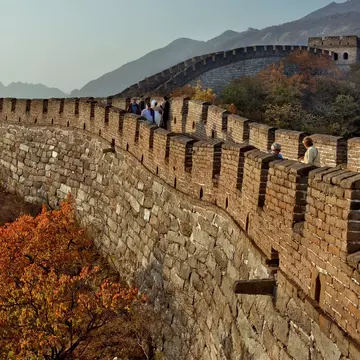
We went to the Great Wall and we advise travellers to first take the cable car and then walk over the beautifull wall. Not the other way around, because thats the heavy way. The wall is very steep over there and then you walk up in stead of down.
Marieke and Sabine, Netherlands (Jan 02)

The walk from Jinshaling to Simatai. The walk is fantastic but one down point is that you have to pay twice, both 30Y per person, once at each end of the wall! Apparently if you are forewarned and have no money in your wallet you can bargain with them at the Simatai end.
Geordie Williamson, (Feb 02)

I have been in Yunnan from December 2001 until January 2002. Bringing your International Student card or equivalent student identity card allows you to enjoy some discounts such as the entrance pass for Shi Lin in Kunming & Jade Pool Park in Lijiang. It is really worth it.

If you travel in Yunnan during non-peak season there is 20%-50% off hotel or guestroom rates. Even when I went there during Christmas I was still able to enjoy discounted room rates.
Karen Cheung, Hong Kong (Jan 02)

The best advice that I can give any one travelling in China, is to have a small notebook and a pen in the pocket. Every time that you meet someone who knows some English ask him to write for you the name, bus no., station name, or whatever you need. So you can show it to the people you meet on your way. The people are more than happy to assist you, and that way you can avoid some of the problems.
Motineta, Israel (Dec 01)

Taxis: The taxi system in all cities visited was superb. They are very easy to find and generally pretty cheap. All taxis have the meters installed that have electronic readings of the fare. The majority of drivers will automatically put the meter on, only once or twice did we have to insist that the driver put the meter on when he failed to do it straight off.
Jonathan Fursland, UK (Dec 01)

Beijing, train tickets: When we tried to get train tickets it was impossible to get them at the train station and easier to get them through a hotel.
Rosemarjin and Joost (Oct 01)

Shanghai: Cab hierarchy. There's definitely one in place. The best cabs I've found are ones with a green (or yellow) sign with a running blue man in the back vent window. These are reliable, knowledgable, and will get you where you need to go with the fewest bruises.
Anon, USA (Oct 01)

Always take your student card with you, you get a 50% discount for almost every tourist entrance fee, which are quite expensive otherwise! And don't forget a dictionary or phrasebook to explain that the card is not your driver's licence!
Vicky (Jun 01)

For safety's sake, when seeking a taxi on the street, you choose the taxi and don't let the taxi choose you. If you don't feel safe in a taxi, tell the driver to slow down (say 'kai man yidianr ba!') or exit the taxi.

As with many situations in China, you may be less likely to be 'taken for a ride' in a taxi if you are seen to have a mobile phone. This is because you could tell someone the number of the car you are riding in if any indicient were to arise.
Caitlin Cox (Jun 01)

Banks are non-existent in Pudong Airport at present. If you need to change money, do this at a bank in Shanghai. If you need to convert RMB back to dollars (or your own local currency) then you need to do this at the Bank of China on the Waitan (Bund). Remember, you will need the original slips given to you when you first exchanged money.

There is a big Bank of China on Dong Feng Lu where you can use credit cards to get RMB. None of the ATM's at any of the banks in Urumuqui (or anywhere near Xinjiang) will take foreign cards that use Cirrus or Electron.
Frank Dutton, China (May 01)

Money - We had a lot of difficulty in using our Visa Card to pay for things or even to get money from the bank. In Beijing not even the Bank of China allowed us to use Visa for withdrawal. They only wanted cash, and not any cash - American dollars!! They didn't even want to accept British pounds! It took us a whole morning to find a way to use our Visa Card. We had to go to the main branch of the Bank of China in Beijing. To conclude, we were lead to think that credit cards are easy to use there and accepted everywhere in Beijing, but our traumatic experiences advises travellers to take cash - American cash - to exchange there. It's much easier!!
Jorge Alves and Raquel Neto, Portugal (May 01)

XIAN- avoid the station touts. Catch the 306 bus as LP suggests, to visit the terracotta warriors. Note that these buses are green buses. There are white minivans that display the number 306 on their front windscreen. These buses are not the official 306 buses, and will take you to the terracotta warriors via a VERY scenic route (about 4 hours, stopping at various irrelevant museums and jade shops, when the trip should take 3/4 hours). Remember- GREEN buses.
Michele Kwik, Australia (May 01)

Probably the most important thing is don't let the Chinese stress you out, they are very forceful a lot of the time because they are invariably trying to make some money off you - laughing at this is the only way to cope! But its tiring so make sure you get away from the big sities and tourist haunts every once in a while to save your sanity.
Molly Fergusson, UK (Apr 01)

No matter what kind of camera you have, it is going to be very difficult to get pictures of the main sights. I would recommend buying postcards. Most of the main attractions sell them in packs of ten, and you can get some really nice shots. I am really glad I did this. If you are taking kids that have blonde hair, be prepared to stop every ten minutes (or less!) so the locals can have their pictures taken with them. Also, when you are bargaining you can get some small trinkets and shirts for a better price when you say that you have American dollars.
Suzanne Prymek, USA (Apr 01)

The only English/Pinyin/Chinese maps I could find was the widely popular red and white Beijing Tourist map sold at hotels and the Foreign Languages Bookstore on Wangfujing. I bought a Chinese map of Beijing for Y52. It is a good A-Z but you have to be careful with the characters. Most streets in Beijing are in Pinyin and Chinese so I recommend the Beijing Tourist map. The map in Chinese was good for knowing exactly where you were (or needed to go) because the Tourist map is missing some nooks and crannies.
Andre Martino, USA (Apr 01)

Dali: It's a very long way from the Dali airport into Dali. To avoid the breathtakingly expensive taxi ride to Old Dali, you need to take the public bus - even though everyone will support the taxi drivers' claim that you must take a taxi - and from there take public transportation to the old town.
Bonnie Baskin, USA (Feb 01)

NEVER attempt to travel while Chinese New Year is in progress or in the week before or after. I had read that it was a bad time but didn't realize just how bad until we were experiencing it. Our train to Shanghai was delayed for over 4 hours in Beijing and there was literally a stampede when the train was finally called!! We had major problems booking train tickets as you couldn't book any more than 4 days ahead and they put all the prices up.
Kate Pope, Australia (Feb 01)

When arriving in a bus/train station, walk away from the station as quickly as possible. This is where the scammers congregate and the sooner you get away from them the better off you are.

Spring Festival is a great time to be in China, but a horrible time to travel. All prices are jacked up around 10% to 30% and tickets are fairly hard to come by.

Buddhist monks generally hate being photographed. Taoistmonks generally dig it.
Matt Lee, China (Jan 01)

Take a phrasebook; this is not only useful for communicating but also provides a great source of entertainment. We sometimes spent hours with families playing with phrase books.

January is a perfect time to visit. The days are hot, but the nights and foggy mornings are cool.
Tony Ives, USA (Jan 01)

Moving About

Getting to Korea by Boat from Qingdao, China: Getting to the ferry terminal in Qingdao was a little crazy, but buying tickets was straightforward despite being the only non-Chinese or Korean traveller and speaking only bare basics in Chinese. You also have to pay a departure tax, which was a little confusing at first. Definitely recommend splashing out for the higher class cabin since it is 14-18 hours on the boat (4hours spent stationary in the harbour!). It was around 80yuan more (£5-6) but this difference meant sleeping in a spacious 4 bed (bunks) cabin with TV and table, as opposed to bedding down on a mattress on the floor with some 20 women in the female cabins and upto 30 in the male cabins, predominantly chain-smokers. The facilities are very open ??public' showers ?? no cubicles or curtains.
Adrienne Murray, UK (Oct 05)

Another hazard is Guangzhou's explosion in car use, it is now official policy to encourage the car at expense of older forms of transport and streets once designed for buses and bicycles are now crowded with drivers who apparently have little care or attention for pedestrians. In the meantime motorbikes and bicycles have been banned from city streets, but they have not disappeared, having taken instead to the pavements/sidewalks adding another element for the pedestrian to be aware of. Whilst back on the roads currently the strategy employed by drivers is to drive headlong into traffic and only stop for other vehicles/pedestrians at the last minute and only when a collision is imminent. What's more what motorbikes there are still on the road when not caught by the police race at top speed ignoring Canton 's new traffic light system. My point here is that when you cross the road you must have eyes all over the place and assume nothing. What's more when trying to talk with people most people on the street and in shops being northern migrants are speaking Mandarin whilst the native Cantonese is now rarely heard except in some of the older neighbourhoods. This why I now have to have the LP phrasebooks in both dialects when on previous trips I only needed the Cantonese one.
Alastor Coleby, UK (Aug 05)

In LP's 'Hong Kong & Macau' and 'China' guides there are sections about purchasing advance tickets on the Hong Kong - Guangzhou train service (albeit by phone). After some investigation I have found a website which allowed me to book online. Tickets can be booked up to 14 days in advance and upon submitting your booking with credit card details (Amex, visa preferred) a voucher is e-mailed to you which you print out and produce at Hong Kong's ??Hung Hom' station up to one hour before departure to receive your ticket. Following is the link to the website which I personally find very trustworthy as it is part of the KCRC (local train company) booking system: http://www.it3.kcrc.com/b2c/frmIndex.asp?strLang=Eng
Nick Racanelli, Australia (Aug 05)

Beware of taxis returning from the Summer Palace in Beijing (maybe others, but the Summer Palace , which is quite far from the centre of Beijing seems to be particularly vulnerable). It costs about 60 - 70 Yuan to get there and about 150 to get back! In fact, the meters and receipts (if you ask for one) are fake. If you return from the Summer Palace by taxi, make sure it drops you off at the hotel, as most hotels have closed circuit TV and they can identify the cab number. The driver will probably try to drop you off before reaching the main entrance, but insist. Try to make sure you have the right change (equal to the fare you paid going there) and just give this to the taxi driver, irrespective of what the meter says. Be prepared to put up with some arguments in Chinese, but if you are at the main lobby of the hotel you can enlist the concierge's help. If you do get change, check it carefully - I ended up with 50 roubles (worth about $1) instead of 50 Yuan (worth about $6). This is a minor irritant compared to the pleasure of visiting China , either for business or tourism or both (unavoidable!), but it's just as well to avoid even minor irritants.
Michael Cohen, USA (May 05)

China - Guilin. Travellers going to Kunming: DON'T take the direct train. Bus your way to Nanning first then take a train from there. Its is about Y100 cheaper and nine hours faster this way!
Vanessa Hayes, Australia (Apr 02)

Renting bikes in Beijing is without a question the way to go. Traffic is choked as it is, and the Chinese love to see foreigners peddling around. Beware though: it is illegal to have two people on one bike. As a foreigner, you'll make a more likely target for overzealous policemen/women who will charge you a 'whopping' 5 yuan for your offence (or more if the wish to push it). However, if your passenger is less stable on a bike, I would recommend running the risk of a fine, rather than the risk of a local hospital.
Wouter, Netherlands (Apr 02)

Three Gorges Dam: If you like to see the building side of the Three Gorges Dam, you have to take the stairways to the main street outside the railway-station (the mini- buses outside the train station do not go to the dam and for a taxi you have to pay far too much - so better go downstairs to the main street). Look for bus number four (it is not a yellow minibus - a normal big one). When you arrive at the last station of this line (bus number eight terminal) take bus number eight and step out at the dam's north-western end. There you can take another bus which takes you nearer to the dam.
Daniela and Ulf, Germany (Mar 02)

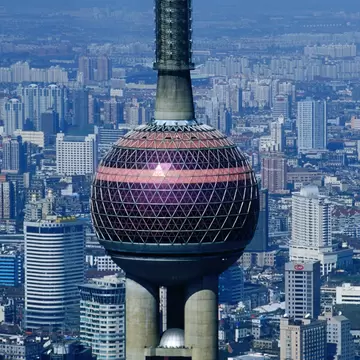
The pedestrian tunnel connecting downtown Shanghai to Pudong is a surreal experience. Its half transportation, half psychedelic amusement park ride. It seems entirely out of place, but then looking at the futuristic landscape of Pudong maybe it isn't.
Tom Frawley (Mar 02)

Hai Long Tun is a ruined medieval fortress dating back to the Ming Dynasty about 50 minutes outside Zunyi. And although there is not much left it is set in beautiful countryside and well worth a day out. It is also listed as a cultural relic of Guizhou. To get there you first need to get to Mao Cao Pu - a bus station within Zunyi city, which also houses a large statue of Mao. From here there is a regular stream of buses heading to Gaoping. The fare is Y2. Once in Gaoping you can take a moto or other private transport to the gate at "San Cha Ba", alternatively you can take the public bus to shawan which costs just Y1. There will be a few moto drivers hanging around by the gate on the main road at San Cha Ba but it is possible to walk all the way from here. Just follow the road for about 90 minutes and you will reach a small collection of wooden buildings at the foot of the climb up to the fortress and from there it is another 40 minutes to the top. Entrance is free and you can stay in the area - at the top or bottom - for around Y10 - 20. For those who favour tradition to comfort the rooms in the village at the bottom of the hill will certainly grab your attention, plus they are cheaper. The drawback is of course that you don't get the view when you wake up.
Matthew Perrement, China (Apr 02)

There is a "foreigners" counter at the Shanghai Railway Station (counter 49), though the English is not great, so it is still worth taking a phrasebook.
Francine Esterman, Australia (Mar 02)

In addition to the soft seats, a useful tip is that the better trains are the fast trains. We call these trains K-trains, as there numbers all start with a "K".
Adeline Kee (Jan 02)

It is worth pointing out that getting tickets to travel in the first week of October is a nightmare. This is a national holiday in China, the celebration of the foundation of the PCR, it can also can tie in with the mid Autumn Festival.

After Tickets are sold out, it is possible to buy tickets from the refunds window.

Bus number 302 from the temple bus station in the north of the city goes to the Giant Panda Research Base.

At the Shanghai Stadium Sightseeing Bus Center, we bought a round trip "tour" ticket that included admission to all sights in Zhouzhang. We were able to use the return portion of the ticket the next day. There were several buses shuttling back and forth to choose from.
Jennifer Wiger and Steve Baxa, USA (Jan 02)

Be warned that the official tourist map of Shanghai shows the metro lines in exactly the opposite of the colours shown on the maps in the metro stations. Green and red are reversed.

On the Naanjing Donglu in Shanghai, when you get tired, you can take a free tram along the pedestrianised section.

You can get a number five bus between Pudong Airport and Shanghai Railway Station. I was told you get it at the stop for the number 41 bus at the station, although I didn't take it myself and I don't know how much it costs.

When you travel by air within China on Chinese airlines, stay alert for changes in schedules, gates, etc. Don't expect this information to show up on boards at counters. It may be announced only in Chinese. On my trip to Xi'an, our flight was delayed because of bad weather and we deplaned and returned to the terminal by bus where we waited to reboard. There were a majority of westerners on the flight. After a while, some of us heard an announcement (had it translated for us), that we should go to the gate to reboard. We had to wait well over an hour for everyone to turn up, as some had not heard any announcement or seen any sign about reboarding.
Susan Shields, USA (Nov 02)

Upgrading on trains is not always possible. When there are no tickets, people buy platform tickets, then enter the trains and buy their tickets. Our carriage which had 120 seats, started with 150 people. Four hours later there were 180 people and by 2030, it was well over 200. The food trollies found it hard to get through and so did the conductors, people going to the toilet and smokers going to the carriage entrance. Inevitably, smokers lit up in the carriage, rubbish accummulated, the carriage became super hot and uncomfortable and there were many arguments and even a fist fight. I tried to upgrade, but it wasn't possible until the next morning, and by then there were over 250 people in the carriage. The smell and mess were something you would have to experience to believe.
John Carpenter, Australia (Feb 02)

Around Beijing: To Huanghua you can take bus 916, as written in the LP. From Huairou to Huanghuacheng you can take minibus 961, but I recommend a miandi. The frequency of minibus 961 is not high. I paid Y60, including the trip back to Huairou. There where no free miandi's at the wall for the trip back, so ask the driver to wait and take the same miandi back.

The trip to Chengdu from Xi'an is 17 hours.

Hong Kong, northern side: It is possible to walk the Central Green Trail from the peak tram terminus (start at the left side of the railway) to the Victoria Peak. It is an unexpected beautiful green climb! You can take a map for free at the peak tram terminus. If you are at Victoria Peak and want to take the Central Green Trail down, walk to the east over Bakker Road (see the free map). After approximately ten minutes you reach a tennis field (not possible to miss it). Directly behind this tennis field, the Central Green Trail goes down.
Rudd Takken, netherlands (Jan 02)

Timetables in the south. Well, I don't know how it is working in the rest of China, but in the south, expecially Kunming, Dali and Guilin, no matter what is written on timetable..don't trust it!! It is always better if you ask for information of the departure time to the ticket seller. And the departure time is written on your ticket, and this is the real departure time (no matter what timetable says!!), even if you are expected to enter the station half an hour before the train departs. If you miss your train the ticket is not refundable, but even if you are late you can try to speak to the ticket seller and after some time talking and talking she can decide to give you 80% refund! With us this has worked good! Talking about sleepers, there is a difference of price between the xia (lower), zhong (middle) and shang (the top one) sleepers. The lower one is the most expensive 'cause you can also sit on it, the top one is the cheapest beacuse you cannot sit on, but it is not so bad when you're sleeping because there's nobody walking in front of you at night!

Octupus card in Hong Kong is good value if you will be travelling on buses a lot. You have to pay correct change (not always easy), and you pay for the whole of the route from the point you get on to the end of that route. With an octupus card, you can swipe as you get on, then as you get off and the amount deducted from your card is only the value of the portion you travelled. if you forget to swipe when you get off, you pay for the full route as with cash.
Jane and Paul Prowting, UK (Feb 02)

Info for train travel from Shanghai to Beijing. Two new trains are now in service and they go from SH-BJ & BJ-SH daily. The soft sleeper is now with TV, disposable slippers and a magnetic swipe card as key. Hard sleepers resemble those soft sleepers in the older trains except a door is missing. They have a nice bar & restaurant too.
Lee Min, Malaysia (Jan 02)

Warning: In Suzhou, there are two series of bus numbers 1 - 5, those prefixed with the character you2 and those without. They run on very different routes but near enough within the city to cause confusion.
Colin Rees, UK (Jan 02)

How to buy train tickets (you don't really need to speak chinese, just fake it). They only need to know these things: Where you are going (look on the board for the train number); when (if you know the train number you just tell them the date); how many tickets, and what kind of tickets (Ying Wo: hard sleeper). The loud speakers and angry looking ticket sellers are intimidating, but all they want is to take your money and give you a ticket.
Thaddeus Beebe, USA (Jan 02)

To clarify, there's definitely a 6:30 bus from Sanjiang to Liping. There's also a bus from Sanjiang to Zhouxiang at 2:30. It takes four hours. That means that you can get from Yangshuo/Guilin to Zouxiang in 1 day! Much better than spending the night in Sanjiang. The bus to Zouxiang does not leave from the Sanjiang bus station. But if you go there, people in the ticket office can point out where to go. You should therefore, get to the ticket office of the bus station a bit in advance.
Ben Silverman, USA (Jan 02)

Find a cab driver whose registration number begins with a zero or one. It's not too hard. Those guys have have been driving around for a while. I once had a driver who had a registration number starting with zero - zero. He told me he had been driving for 23 years. The registration number is on the card with the guys picture on it, on the dashboard. It's the thing you write down when you're getting a hard time.
Steven Tseng, China (Aug 01)

Scams & Warnings

A group of us headed by bus from Shanghai for the Great Wall 4 hours away. When we arrived, there was road block at the base of the windy road. A tour bus with 30 people had crashed and 3 people died. 10 of us, Americans, Australians, Swedish and British got off the bus and proceeded to walk to Simutai. At 1:00pm a severe thunder and lightning storm hit. We were at the base of Simutai by now on foot. The mountain was closed to travelers due to a Greek woman being fatally struck by lightning from the storm we were walking in. At approximately 4:00pm on our walk to the entrance to the wall, we literally fell upon the couple lying on a small and narrow path at the bottom of the hill of the wall. The paper finally ran an article 4 days later. The Greek woman was hit by lightning with her cell phone and died. She and her boyfriend had taken cover in one of the towers. The article claimed all travelers are told in advance of the dangers of cell phones in storms at the Great Wall. Not one person or employee of the hotel, tour bus or ticket booth at the wall informed any of us of cell phone dangers in storms. No signs, no paper work, no flyers, nothing. The road behavior of the drivers in the area is very dangerous. To pass other cars on the one lane road, the Chinese drivers pull out into oncoming traffic and literally drive until they are only a few yards from oncoming cars.
Janet Van Ham, USA (Sept 05)

My wife and I took a taxi to Tiananmen and got a bit more local color than we expected. The cab dropped us - deliberately, as later became obvious - in the middle of a crowd of pedicabs. The drivers were offering rides around the square for 10 RMB, not much more than a dollar. Since they were so insistent, we obliged. Soon, our driver was recommending that we explore an area away from the square. I firmly declined, which turned out to be a good move. Soon he pulled up to the curb and demanded 300 RMB, 30 times the price we agreed upon ten minutes earlier. When I told him the price was ten, he pulled out a signboard that read "300 RMB". Just as he was doing that, a 'helpful' person came along who just happened to speak English. He assured us that 300 RMB was, if anything, on the low side and that we might also consider leaving a tip. By that time, the driver knew that I spoke Chinese, and was quite surprised when I addressed him in his own language: "We had just taken a taxi from Beijing University to Tiananmen for 35 RMB", I said so 10 RMB was more than enough for fifteen minutes in a mere pedicab. Who would fall for such a stupid scam? Did they think we were bumpkins? Since we were close to the square, the driver and his accomplice soon gave up and moved away. To others who go to Tiananmen: Beware!
Keith Acker, USA (Nov 04)

Yangshuo. China. Bank of China ATM. As we stayed two weeks in the area, we take out some yuan at the ATM of the Bank of China. It works fine. A few days later we hear from an English lady that she didn't receive the money but it was debited from her account in London. I ask her did you keep the receipt? She says no because it didnt work! How can she prove anything in that situation? Later we noticed that MANY tourists are in the same situation. We go inside the bank ask for the manager and with the help of our guide tell him that his ATM is not functioning properly. He reply yes I know. So we say why don't you close it and call for the maintenance? He does not do that, nor does he put a note on his ATM. Conclusion: The ATM system is not without risks.
Catherine & Richard Desomme-Koch, (Dec 02)

We thought we'd learned our lesson: No more talking to touts. When we got to Xian, once again we fell prey. We wanted to go to the Terracotta Warriors exhibit. Just like the book said, buses ran from close to the train station to the museum. Unfortunately, so did a minivan brazen enough to display a placard with the city bus number for the route. Again, the tout approached, promising direct, non-stop travel to the museum. He even managed to rope in some locals. Instead of going to the museum, the minivan stopped at a farcical, desolate exhibit about the First Emperor. The driver announced that we would next be stopping at a restaurant for lunch, and then who knows what. Disgusted, I got directions to the Terracotta Warrior Museum, which was only a mile away, and we left the group on foot. Interestingly, during our trip, one of the locals fooled into riding the van instead of the city bus got into a swearing match with the touts because they charged much more than the city bus for the service.
Tom Nelson, USA (Oct 02)

Last week I travelled into southern Hunan with two friends. We are interested in Chinese minorities, and we heard there were Dong, Miao, and other minority groups in the area. Actually, we purchased a local map that had the areas marked as Dong and Miao autonomous regions. After spending two days there we hopped on the bus to return to our school in Guizhou. Since the buses didn't run all through the night we had to stop and overnight in a city called Suining. It was about 9pm, so we went directly to a nearby hotel. As soon as we entered the hotel we knew something was wrong when one of the workers immediately picked up the phone to call the police. In a few minutes the police arrived and asked for our passports. They asked us if we knew we had entered a restricted area to foreigners, and we said no. (We had no way of knowing the area was restricted.) They said in the morning we should leave immediately, and they would escort us to the bus station. That night we were basically under 'house arrest' in the hotel with three police cars out front and several men waiting outside our hotel rooms. When we got up to go to breakfast, there was another policeman waiting for us to come out. He wasn't as nice as the other police. He asked for our passports and barked at us to get in the car. We were taken to the police station and held for questioning all morning. Finally, they accused us of breaking the law (Article 46) and fined us US$ 140. We told them we had no way of knowing this was a restricted area. It wasn't even marked as being restriced on the map, but they said it didn't matter. We had broken the law. According to China's policy each of us could be fined up to 500RMB and have our visas revoked. In the end, I was fined 500RMB and my friends were fined 300RMB each. This was because 'I should have known better' since I've lived in China longer. Later, the police told us it is possible to get a travel permit from Shaoyang city in Hunan. Otherwise, travellers will be fined like we were. The police also mentioned that there are four cities in this area that foreigners are not permitted to go to: Jingxian (Jingzhou), Suining, Huitong, and Tongdao. Three of these locations are all train stops along the way to Nanning from Huaihua. Ironically, many of the locals do not realize this area is off limits to foreigners.
John Harrill, USA (May 02)

Qingdao is a naval area, and there are many navy bases in the area. In fact, there is a rather large, but decrepit naval base at the western edge of town, out on a small peninsula at the end of tuandao road. It would be advisable to avoid wandering down the beach in this area. We did, and inadvertently wandered right around the gate to the base, which doesn't extend to the beach. We ended up walking all the way out to the lighthouse and back before we were stopped (still having little idea that the area was prohibited). But, we knew shortly thereafter when 3 guards escorted us to their HQ. After spending some time with the officers there we were taken to the police station. (Funny and ironic note: the guys escorting us to the police kept saying, America and China are friends; we are friends. We take you to police; it is our military rule). We told the police that we thought that area was a park and they eventually let us go.
Toby Dalton and Christie Sunwoo (Feb 02)

The 4-hours Wild Walk from Jinshanling to Simatai
We had planned to do the Wild Walk from Jinshanling to Simatai as described in the Lonely Planet and went by the local bus from Dongzhimen bus station in Beijing. We asked the bus driver, if this bus went to Jinshanling, and he answered by nodding his head. But later we found out that the ticket man had charged us the normal bus fare multiplied by 6 (50 Yuan each) and that the bus of course didn't go all the way to Jinshanling. Suddenly the bus stopped in the middle of the road (later we knew that the bus stopped just a few kilometres before the Miyun bus station). The ticket man told us that we should get off the bus here and continue our journey in a miandi, which was waiting for us just outside. Great we thought - the nice ticket driver had arranged everything for us but we were very wrong. The woman in the miandi drove a few metres, before she suddenly stopped the car, and another Chinese woman speaking fluently English jumped into the car. She told us that it would cost 150 Yuan to go to Jinshanling, be picked up at Simatai and to go back to Beijing. As we didn't quite know where we were, we decided to pay half the money in order to be taken to Jinshanling and hope for the best. The second woman jumped off the van, and we drove off. We got very suspicious, when another Chinese man jumped into the van a few minutes later. Luckily we were taken to the right place Jinshanling and were told that they would pick us up again in 4 hours at Simatai. After this experience on the local bus from Dongzhimen bus station I remembered that on the way the woman sitting next to the bus driver rang from her mobile phone, but of course I didn't understand, what she was talking about in Chinese. But she must have arranged the miandi to pick us up.At the entrance to Jinshanling Great Wall we paid 30 Yuan. Further on some Chinese were waiting. When we began climbing the Great Wall, two nice Chinese women followed us all the way. First I thought that they had been hired by the government to guide the tourists on this walk. But later at the end of the tour at Simatai it turned out that they both were making money by selling books with pictures of the Great Wall for 100 Yuan to the tourists . As we were not interested in buying their books, they got very angry with us, and it was very difficult to get rid of them. But we could see that the few other tourists, whom we meet on this trip, were also accompanied by a local Chinese.Half way to Simatai we had to pay an extra entrance fee of 40 Yuan - as we also experienced later on our China trip, the Chinese like to charge the tourists extra.Finally we arrived at Simatai, and though 1 hour too late our miandi with the female driver and the male fellow traveller were still waiting for us. We were a little angry that we were 1 hour too late, but we didn't care about it. Before driving off they asked for the money first, which we of course shouldn't have paid (the second mistake). I must admit that I got very suspicious as they didn't ask us to which place in Beijing we wanted to go, but we had to wait and see. After one hour they stopped the miandi at a bus stop in Miyun and told us that we could take the bus back to Beijing from here. But we decided to stay in the miandi until we were taken back to Beijing. Then the Chinese woman and man didn't quite know what to do and they drove around in the Miyun and stopped to make a phone call. We only dared to do this as we know that the Chinese get very severe punishments for hurting foreigners. After a while they drove us to Miyun bus station, where the woman paid a bus driver our bus fares to Beijing. We agreed and got on the bus back to Beijing. Believe it or not but the ticket man asked us later for the bus fares, after which I replied angrily that we had already paid. Another bus passenger was looking at us as he surely know that the ticket man tried to charge us twice for the bus fare.

Safely back in Beijing - our great walk from Jinshanling to Simatai was a little overshadowed by this bad getting cheated experience. Further more uncomfortable was the fact that about 5-6 Chinese were working together - like a kind of mafia - in order to overcharging tourists wanting to climb the Great Wall. The trick was so well organised that we surely weren't the first tourists to be badly cheated.
Britt and Per, Denmark (Jan 02)

There's a scam on at Tiger leaping gorge and people should be warned not to buy tickets before they get to the gorge. People will offer to sell you tickets on the bus on the way there, however, they are tickets for a nearby mountain but not for the gorge. It's quite a rip-off. And if you're going out to the Qiongzhu si in Kunming, don't believe the receptionists in Kunming who say that no bus leaves from in front of their hotels. Just hang out for 20 minutes or so and a red minivan is bound to come along.
Ben Silverman, USA (Jan 02)

One of the scams I met: I was accosted by a young female shop assistant and persuaded to buy a heavy knit silk top for which she readily accepted by counter-offer of Y60 instead of the Y165 she asked. She put it away in a bag as i paid the man who also worked in the shop. I went back to my hotel, untied the bag and found a shabby, old and dirty garment that you wouldn't give Y1 for. Fortunately I was able to go back straight away, find the right shop (not easy - they all look the same) and girl and get the goods I'd paid for, but often people won't be so fortunate.
Jean Leannane (May 01)

Gems, Highlights & Attractions

For seeing the grassland near Hailaer in Inner Mongolia, Jinzhanghan Mongolian Tribe can offer accommodation in Mongolian tents and food (and horse riding opportunities and sometimes folk music and dance performances too). Its site is on the bank of the River Moergela which has many bends in its course. The river adds much credit to the beautiful scenery. The site is accessible by taxi from Hailaer.

For Weihai, the 1:1 replica of "Ting Yuen", the flagship of the Northern Navy of Qing Dynasty is a new thing to see in town. It just opened a few months ago. The exhibition on board about the vessel itself and the 1894 Sino-Japanese War is quite informative, although ventilation under the deck where the exhibition locates is quite poor. Admission is RMB50 but when I visited it I was able to get a 20% discount by showing my bus ticket from Qingdao to Weihai.
Shiu-man Wan, Hong Kong (Aug 05)

I've been travelling in the Hunan province in China. There are quite a lot of nice places, however one is extraordinarily beautiful. It is called Fenghuang (characters for phoenix) . A Chinese friend introduced it to me to it, then I looked it up in the LP, but it isn't there. It is far better than Pingyao or other respected sightseeing spots in China. The old city is very well preserved. The main restoration began last April. It is the nicest old city i've ever seen in China. Situated beside a jade-green river in the between the green hills of Hunan province, there are astonishing views. On the river are numerous small kezhan (little guesthouses) where you can stay for 20rmb per night. The restaurants are right next to them. You can sit on the 2nd or 3rd floor listening to smooth music drinking your cocktail or hot chocolate. One of the main attractions is the hongqiao, red bridge. It reminds me very much of the goldbridge crossing the Nero in Florence. Shops and a restaurant are built on it.
Raimund Crone, Germany (Feb 05)

Beijing's Tiantan Gongyuan (Temple of Heaven Park) is surprisingly not as crowded as Beijing's other attractions, and is a nice getaway from the hustle and bustle of the city. You can easily spend a day here lounging around, strolling through the various nooks and crannies of the park and watching people fly kites. In my opinion, this park is a must visit.
Eugene Kim, USA (Jan 05)

The Chinese acrobats in Beijing are well worth seeing-amazing agility and flexibility. Must be seen to be believed
Karen Crawford, Australia (Aug 03)

This summer I was in China in Chongqing and found some real fun places, and thought I'd write you about it. The place to go to is Ciqikou (Chongqing old street). This is not just a street though, it's more like a village on the outskirts of the town. Bus 219 from the city centre to one of the last stops will take you a few steps back in history to the Ming and Qing dynasties. The village is located on the banks of the Jialing River, just a short drive from the city centre. It used to be the centre of a bustling ceramics trade. There are a couple of handicraft shops there (some beautiful things), but you can also wander away down little streets where you get to see China as it was a long time ago....life goes on there, as if there is no big city next door. If you're brave....lots of interesting street food to try, and very cheap. Also there are some people making the caramel animals....a beautiful craft and lots of fun to watch them make beautiful 'artwork' out of caramel. It was so nice to get away from the big city and get a taste of village life. Even in places around Lijiang I didn't get the same feeling as I did in Ciqikou.
Aukje de Gier, (Oct 02)

I saw a free movie at the Italian Embassy titled "I Love Beijing". The movie had English subtitles and there was a discussion in English after the movie with the Beijing film director. Good sources of what's happening are the publications "City Weekend" (bi-monthly) and Chinaweek "That's Beijing"-I believe Chinaweek also does other Chinese cities ("That's Shanghai", etc.). "That's Beijing" is a monthly magazine. You might find free events (like the movie at the Italian Embassy) in them.
Andre Martino, USA (Apr 02)

Another thing I would recommend to anyone going to China would be a farm trip. We did one in Fujin (end of the railway on route to Tongjiang on Russian border with Heilongjiang). Chinese ability would help a lot, but anyone can attempt it. Basically, commandeer a taxi and keep pointing directions until you get bored. We ended up in a three wheeled fibre glass rocket that looked like something out of the Jetsons. The driver was certainly confused, but followed instructions and by choosing the worst paved option each time, we soon ended up on a dirt track to nowhere. We spent about three hours in total, cruising through little villages, rice paddies, farmsteads, etc, occasionally stepping out to have a chat with interested locals (in between their screams of horrified laughter). Either way, it gave a fresh take on China, where we had become used to offensive people, acrid air and grey scenery. The air was pure, the people charming and the scenery amazing.
H Matthew Howarth, UK (May 02)

Hai Long Tun is a ruined medieval fortress dating back to the Ming Dynasty about 50 minutes outside Zunyi. And although there is not much left it is set in beautiful countryside and well worth a day out. It is also listed as a cultural relic of Guizhou. To get there you first need to get to Mao Cao Pu - a bus station within Zunyi city, which also houses a large statue of Mao. From here there is a regular stream of buses heading to Gaoping. The fare is Y2. Once in Gaoping you can take a moto or other private transport to the gate at "San Cha Ba", alternatively you can take the public bus to shawan which costs just Y1. There will be a few moto drivers hanging around by the gate on the main road at San Cha Ba but it is possible to walk all the way from here. Just follow the road for about 90 minutes and you will reach a small collection of wooden buildings at the foot of the climb up to the fortress and from there it is another 40 minutes to the top. Entrance is free and you can stay in the area - at the top or bottom - for around Y10 - 20. For those who favour tradition to comfort the rooms in the village at the bottom of the hill will certainly grab your attention, plus they are cheaper. The drawback is of course that you don't get the view when you wake up.
Matthew Perrement, China (Apr 02)

Most people (local tour groups) head for the Cloud Dispelling Pavillion (Paiyun Ding) to watch the sunset. The more spectacular view (and a much harder walk) is to go to the Red Cloud Peak. To get there keep on the same track as for the Cloud Dispelling Pavillion and look out for the sign-post to turn-off. We enjoyed the view (and peace) tremendously.
Adeline Kee (Jan 02)

Dali: The Khao San Road of the China backpacker circuit, even a street called Foreigner st full of cafes bars, bookshops and cheap guesthouses. Hired out bikes, heading (unintentionally) cross country, through ethnic minority villages, in a vain attempt to find a direct route to nearby lake,,, hired boat (bikes and all) across lake to islands and pristine monastery on far shore..Also checked out remote monastery hidden in mountains where local kids and foreigners alike trained i Tai Chi, Kung Fu etc all very secretive - don't tell Lonely Planet etc.
Paul Hannon, Australia (Jan 02)

I think they have done more work on Zhongshan park, since you all have been here. First off it's absolutely astounding that this huge beautiful park could be so well hidden in this concrete jungle we call Wuhan. There are ponds everywhere that you can paddle boat in. There is actually an amusement park at the back of the park that has a new rollercoaster (20 yuan for one ride), costly, but I guess if you're feeling roller coaster deprived. Also a ferris wheel, monorail type thing, scrambler, swinging pirate ship, log ride, some kind of whitewater rapids ride (this ride is very popular in America) bumper cars, childrens rides, haunted house, and much more. The amusement park is hidden in the back of the park and the front part is totally beautiful and relaxing. I guess the best part of this park is that it is free.
Heather Couch, USA (Jan 02)

Emei-shan was really great, with the beutiful nature and charming monkeys, though they stole some some fruits from my pockets.
Thomas Edlund (Jan 02)

Travel 300 km north of Hanoi to Sapa near the Chinese border. From there take a motorcycle taxi ride about 20 miles through lush, terraced, paddy field hillsides to the valley where the Red Xao people live. The valley is breathtakingly beautiful and the Red Xao tribe have lived there cultivating rice on the hillsides for millennia. In 1979 the area was the setting of some of the most fiercest fighting between the Chinese and Vietnamese in a border dispute. Now the whole valley is bathed in an almost surreal green, tropical glow and the tranquillity and silence is awesome. Climb to the top of one of the hills and the view of the while the valley itself looks like something sculptured from a dream. The place, it's sheer majesty, beauty, tranquillity and the welcome from the Red Xao make it a place you would want to visit time and time again.
Alam Chowdury, UK (Sep 01)

The number one attraction in Hankou (to put it in Chinese and to underline that this is my own opinion) is Yellow Crane Tower Park. The tower is sixth in a line that started about two thousand years ago. The site is one of the cultural centers of China as there is a almost two thousand year long tradition of poetry attached to that place. The park with all the memorial sites and the poems engraved in black stone slabs was just an unique experience. This park also has quite a few nice pavilions hidden amongst the trees, good for lonely thinkers.
Robert Ruprecht (Aug 01)

Lijiang is the home of the Naxi tribe, originally nomads from Tibet, a matriarchal system in which apparently the only role of the man is to provide what is necessary for the woman to bear children.

A Naxi woman may have many boyfriends over the period of a year - if a guy shows up at her doorstep in the evening and there is a pair of another man's shoes outside her door, he knows that he should come back some other day. There is no such thing as marriage or divorce in this society. The women raise all the children along with her current boyfriend and the issue of who the father is of a particular child is not important. The current boyfriend provides support for the women and her children but as soon as they stop getting along the support stops and the woman looks for another boyfriend. All disputes are resolved by a group of older women, the leaders of the society.
John Koehler (Jun 01)

On a recent visit to Nanjing, I came across the National Palace at 292 Change Jiang Rd, Nanjing. I found it most impressive both as an historical centre and because it was so clean and well cared for. I don't often see deather dusters used in China! I found the Memorial of the Nanjing Massacre very moving. The tribute to the German business man who saved so many Chinese as well documented and presented.
R. O'Donoghue, Australia (Jun 01)

There is one temple I would like to share because it can make your stay in Dun Huang more interesting. At the end of Dun Huang (near the beginning of the sand dunes) lies a Buddhist temple. It is called the ' Leiyin Temple'. The temple belongs to the Buddhist association of Dun Huang. It is a two gated temple with a traditional Buddhist altar. The monks are truly friendly and will give you a free tour around the complex, which is a rare thing because everything else in this part of China will cost you money - even if there is actually nothing to see. This temple breathes a relaxed non-tourist atmosphere in contrary to the sand dunes in Dun Huang and the Magao Caves. At the beginning of the temple there is a little temple shop were an old monk is selling typical Buddhist attributes for local prices.
Elmer Jutte, Netherlands (May 01)

Yarns, Fables & Anecdotes

I was surprised to learn that it should only take nine hours to reach Jiuzhai Gou park by bus from Chengdu since your guide suggested 2-3 days. There are now two paved roads which snake their way in this general direction. We took the right-hand one out, and the left-hand one back. The surfaces are fine, and the width perfectly adequate for two approaching buses to pass with the minimum of intimacies between wing mirrors. However the competitive overtaking manoeuvres which saw the nearside rear wheels take refreshing breaks in the cool mountain air over precipitous drops did little to instil confidence in an upgraded road network. Wakeful travellers observed rusting and horribly fresh reminders of the sport of bus rallying deep in the ravines below. At one particularly curvaceous point in the mountains I counted eleven buses in convoy ahead of us and six behind. I was beginning to form a picture of our future wilderness experience, helped along by the failure of the buses air con system to deal with the diesel exhaust filling the interior. China's dilution-is-the-solution-to-pollution approach to any effluent was working to great effect.

The journey to "Fairyland" did indeed take longer than the stated nine hours due largely to the spontaneous breaks about every thirty minutes, and the ever so tasteful souvenir spectaculars which have sprung up along the route (the tour guides supplement their meagre earnings every time they pull a bus into one these places). Bum-numb and adrenaline exhausted, we eventually arrived at our accommodation a few kilometres form the park entrance. Vegas eat your heart out! Bright yellow flashing neon palm trees and spectacular star-bursts filled the night air for mile after mile of my-chandelier-is-bigger-than-yours hotels. Anything less than five stars wouldn't get a look in these days. I was given an electronic key to room 2531. There were three floors above my head! Ok, the hotel was fine in its could be anywhere sort of way, but hardly what I came for.

We arrived at the Administrative Bureau of Scenic Spots (the park entrance) nice and early the next day to avoid the queues waiting to hand in tickets to get others in return (I wonder why?) It was 08-00 and I estimated there to be about two hundred fifty-seat buses in the car park on our arrival. That's ten thousand souls all looking for that panda in the park.

A huge electronic sign board flashed environmentally friendly messages to the awaiting masses telling them that every means had been taken to retain the pristine nature of this paradise. One message read "The soft breeze blows over the scriptured streamers, over the tops and the water-like free state of mind of the tourist". My mind was already turning to a gel!

Our little band of five became separated as the crush of the crowds conveyed us to whatever open bus door was nearest. I moved towards one but swear my feet never touched the ground in the process. Fortunately one of my fellow travellers had a death grip on my back pack and we were squirted into the same bus. The endless convoy growled and belched its way for two hours through the magnificent mountain scenery between Dragon Hole and Long Lake. Eventually our feet were allowed to touch the ground, or rather a wooden walkway. We were herded for several hours between scenic spots rendered largely invisible by the throngs and notice boards, proclaiming such wisdom as "Peace in mind is in this spot", "Birds are our friends" and (optimistically?) "No tossing here!" I only witnessed one person disappear over the unprotected edge of the walkway. Fortunately this was not in the tossing-prohibited zone or we would not have seen her again. The walkway followed the course of a lovely river valley through which the road had also been cut. Conveniently we were seldom more than a hundred meters from the road with its eye-catching loos, vendors, methane-burning engines and the Chinese equivalent of alpine cow bells - the bus horn.

Day two was reassuringly similar to day one, following a second environmentally sensitive road through equally fine mountain scenery from Mirror Lake to Sword Rock. It was not possible to take photos from the bus (the windows didn't open), but I developed a useful technique for taking pictures when on foot. Chinese folks do not share the Western concept of scenic solitude. Their foreground must contain a rigid, unsmiling friend. Waiting for an "empty" view was impossible, some body would always fill it. I got a friend to pose, and then duck quickly as the shutter fell creating the illusion of a sparsely populated alpine wilderness.

Visits to many other wonderful areas in Sichuan reinforced the gulf between Western and Chinese tourism. Relative to its population, there are few places for Chinese folk to visit. Cars being beyond the reach of most buses are the solution. Internal tourism is now very popular, and with the improvements in infrastructure, few places are any longer remote or inaccessible in China. I did meet some Australians who had enjoyed a horse-trek into the hills, but these opportunities are becoming less available as the more lucrative local tourism takes over. Pricing is also developing well. The 4 - 6 REM entrance tickets you quote are now in the region of 40 - 60.
Andrew Vardon, (Sept 02)

If you order snake at many restaurants, then the live snake gets brought to the table to check that the size is okay. The snake is then taken away and its throat and stomach are slit. The blood and gall bladder are drained into two glasses and a shot of rice vodka is added. These are then brought to the table for the customer to drink. The blood is said to increase virility. I can't remember what the gall bladder is meant to do. Both glasses taste more of rice vodka than anything else and it is a great trick to scare/impress visitors with.
Thom Kenrick (Nov 01)

I was invited to see a friends friends, who are in band which play in this bar every night. This was no Karaoke place - a trendy club with a genuine live band who really looked the part, playing local and Western music, but the choice of Western music was dubious to say the least. At the first interval after we arrived, the singer joined us - who looked quite hard really -I asked him what he sings - a bad move - and he responded - in broken English - of his fondness for such Boney -M classics as Brown Girl in the Ring and By the rivers of Babylon - I acknowledged that I had heard of this drivel - a worse move - and he invited me to sing with him. I politely declined and was saved from his insistent requests only by the fact that the rest of the band were raring to go. Needless to say bursting into Brown Girl in the Ring!! My relief was short-lived, as after the song he annouced my presence to the whole audience and requsted me again to join him on stage - only this time I had a posse of baying Chinese drinkers also demanding a hearing. Realising that I was the only Westerner in the place and discretion is the better part of valour in such situations, I slinked up to the stage - was handed a mike - and the band kicked into a riproaring Bryan Adams number - shock horror! I mumbled my way through, following the singers every lead (knowing that the only English he knew was the words to the songs) but the end was greeted by ecstatic applause and cheers -I didnt know whether through hilarity or what - I dived for my seat - only to be unceremoniously deposited back up on stage by a particularly vocal fan - as the singer demanded a further round of applause for "Mr Paul". It went from bad to worse - any one who ends up here in the future may be greeted by a crotchety local describing the night of Mr Paul's very Careless Whisper!! I was saved further embarrassment by a bizzarre halftime darts competition which lasted half the night -and slinked out of there after numerous offers of free drinks and requests for conversation from people who had patently no English but who wanted to share a drink nonetheless.
Paul Hannon, Australia (Jan 02)

The tour was primarily to the picturesque Alpine valley of Jiu Zhai Gou high in the Northern Sichuan mountains -a really gorgeous spot quite like Yosemite in California if anyone has been there. Ive mentioned the Chinese blatant disregard for rules of the road before - but the city slicker drivers wouldnt hold a candle to our Dr Death who careered around (James Bond style) mountain passes, collapsing overhangs, rockslides, 1000 metre drops, on dirt roads like his country's entire future hung on him passing everything in (and nore usually out of) sight with the last groan of the rattletrap's ever suffering engine... of course permanently leaning on his decibel shattering horn gave him Mau-like right of way over all and sundry on and off the road, I had to endure 12 hours of this maniac's death wish sitting shoved against the windscreen as the last seat on the bus suffered from a little dripping oil(and God knows whast else).
Paul Hannon, Australia (Jan 02)

The Chinese have some wonderful habits regarding food. One is that when they eat they put their face really close to the plate, open their mouths wide and sort of inhale the food making lots of noises. Actually, they are of the belief that if you don't make a lot of noise when you eat, you didn't like the food.
John Koehler (Jun 01)

^ back to top

Hundreds of guides to thousands of places.
For travel info that gets you going, check out Lonely Planet's
Destination China.
It's happening right now. Read what travellers are saying on the Asia - North-East Asia Branch
advertising
advertising