Things to do in Assisi
- Sort by:
- Popular
-
A
Basilica di San Francesco Lower Church
The Basilica di San Francesco Lower Church was built between 1228 and 1230. The stained-glass windows are the work of master craftsmen brought in from Germany, England and Flanders during the 13th century, and were quite an architectural feat at that time.
In the centre of the lower church, above the main altar, are four frescoes attributed to Maestro delle Vele, a pupil of Giotto, that represent what St Francis called 'the four greatest allegories'. The first was the victory of Francis over evil, and the other three were the precepts his order was based on: poverty, obedience and chastity.
Lorenzetti's triptych in the left transept ends with his most famous and controvers…
reviewed
-
B
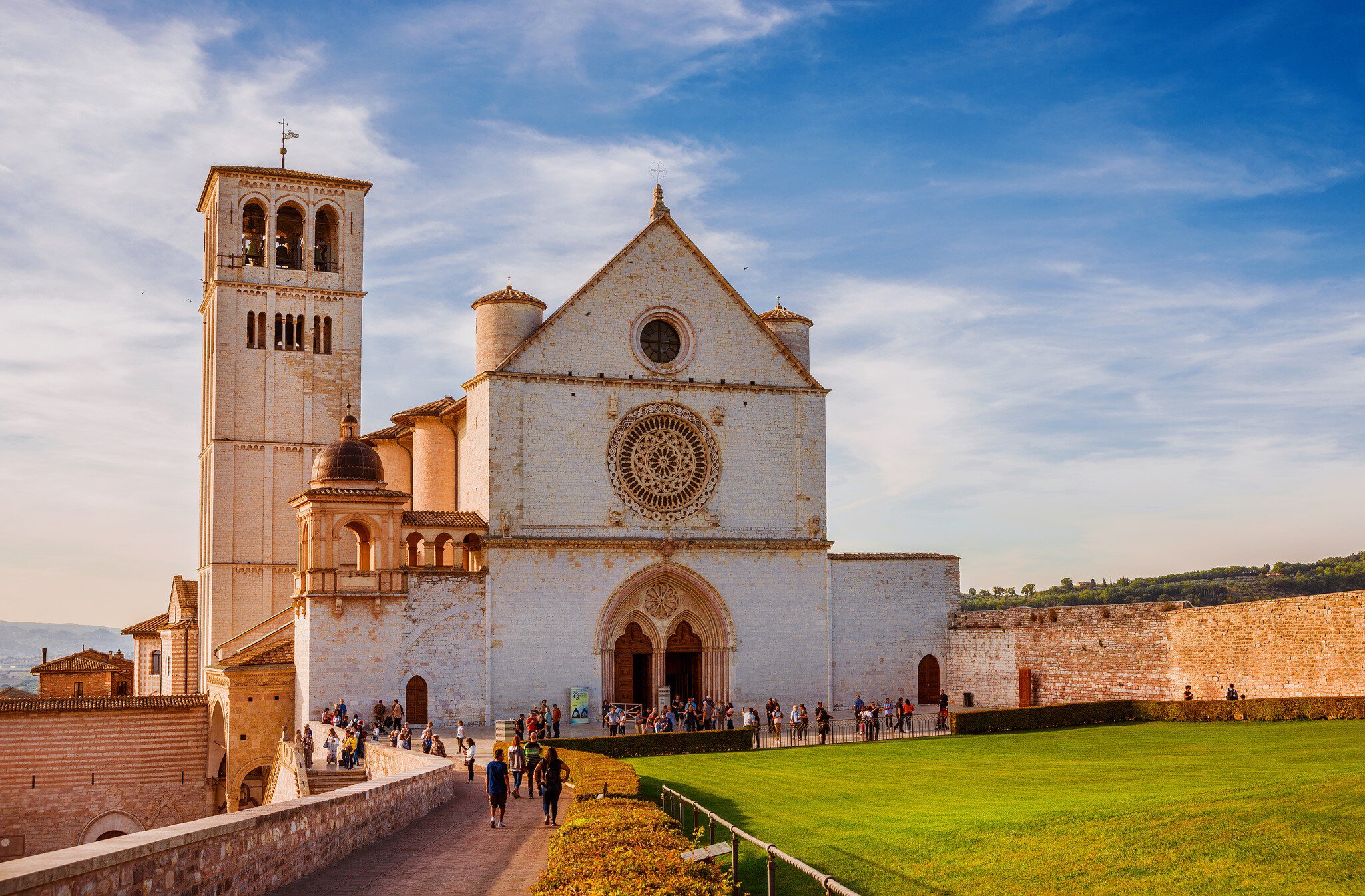
Basilica di San Francesco Upper Church
The Basilica di San Francesco Upper Church was built just after the lower church, between 1230 and 1253, and the change in style and grandiosity is readily apparent. One of the most famous pieces of art in the world is the 28-part fresco circling the walls. The fresco has been attributed to Giotto and his pupils for hundreds of years, but the question of who produced it is now under debate within the art-historian community.
The fresco starts just to the right of the altar and continues clockwise around the church. Above each image is a corresponding biblical fresco with 28 corresponding images from the Old and New Testament (possibly painted by Giotto, or Pietro Cavallin…
reviewed
-
Upper Church
The upper church was built just after the lower church, between 1230 and 1253, and the change in style and grandiosity is readily apparent. One of the most famous pieces of art in the world is the 28-part fresco circling the walls. The fresco has been attributed to Giotto and his pupils for hundreds of years, but the question of who produced it is now under debate within the art-historian community. The fresco starts just to the right of the altar and continues clockwise around the church. Above each image is a biblical fresco with 28 corresponding images from the Old and New Testaments (possibly painted by Giotto, or Pietro Cavallini, who might or might not have painted …
reviewed
-
C
Basilica di Santa Chiara
Basilica di Santa Chiara is 13th-century Romanesque, with steep ramparts and a striking facade. The white and pink stone that makes up the exterior here (the same stone that makes many buildings in Assisi look like they glow in the sunlight) came from nearby Subasio. The daughter of an Assisian nobleman, St Clare was a spiritual contemporary of St Francis and founded the Sorelle Povere di Santa Chiara (Order of the Poor Ladies), now known as the Poor Clares. She is buried in the church’s crypt. The Byzantine cross that is said to have spoken to St Francis is also housed here.
reviewed
-
Basilica di Santa Maria degli Angeli
A quick walk from the train station is the imposing Basilica di Santa Maria degli Angeli, built between 1565 and 1685 around the first Franciscan monastery and tiny Porziuncola Chapel. Perugino fans will appreciate his intact crucifixion, painted on the rear wall. St Francis died at the site of the Cappella del Transito on 3 October 1226.
reviewed
-
D
Tempio di Minerva
The Tempio di Minerva, facing Piazza del Comune and Palazzo dei Priori, is now a church but retains its impressive pillared façade with six fluted columns dating back to Roman times. The turn-of-the-millennium pagan temple, dedicated to the goddess of peace, is featured as the backdrop to the Homage to the Simple Man fresco in the Basilica's upper church.
reviewed
-
E
Accademia della Lingua Italiana Corsi di Lingua e Cultura Italiana
Accademia della Lingua Italiana Corsi di Lingua e Cultura Italiana runs a variety of courses, including Italian language, culture, singing, painting and cooking. It also offers free preparation for the CILS (Italian teacher abroad) course. There’s a maximum of 12 students per class and costs start at about €300 for two weeks of instruction.
reviewed
-
F
Rocca Maggiore
Dominating the city is the massive 14th-century Rocca Maggiore, an oft-expanded, pillaged and rebuilt hill-fortress offering 360-degree views of Perugia to the north and the surrounding valleys below. Walk up windy staircases and claustrophobic passageways to reach the archer slots that served Assisians as they went medieval on Perugia.
reviewed
-
G
Buca di San Francesco
Sample traditional Umbrian dishes and specialities of the house in a elegant medieval setting. Choose from bruschetta, local sausage, spaghetti alla buca (house specialty spaghetti made with roasted mushrooms), gnocchi and homemade desserts, and from the extensive wine list with the help of one of Assisi's only sommeliers.
reviewed
-
H
Eremo delle Carceri
Find out why St Francis chose the caves of Eremo delle Carceri as his hermitage. The carceri (isolated places, or ‘prisons’) along the slopes of Monte Subasio are as peaceful today as in St Francis’ time. These days, many use the locale as a jumping-off point for contemplative walks or picnics under the oaks.
reviewed
Advertisement
-
I
Trattoria Pallotta
Head through the Volta Pinta (Painted Vault) off Piazza del Comune, being careful not to bump into someone as you gaze at the 16th-century frescoes above you, into this gorgeous setting of vaulted brick walls and wood-beamed ceilings. They cook all the Umbrian classics here: rabbit, homemade strangozzi, even pigeon.
reviewed
-
J
Gran Caffè
This elegant place has the most fabulous gelati, mouth-watering pastries and cakes, and a great selection of drinks. Try the tè freddo alla pesca (iced tea with peach) on a hot day, or choose from a selection of delicious hot chocolates and coffee when the weather is cool. Remember it costs much more to sit.
reviewed
-
Santuario di San Damiano
The Santuario di San Damiano is where St Francis first heard the voice of God and where he wrote his Canticle of the Creatures. The serene locale is popular with pilgrims, as you can practically feel the spirit of St Francis and St Clare (who died here in 1253) at the simple church.
reviewed
-
K
Grotta Antica
Abele - hotel proprietor, lawyer and chef - is from Liguria, so you can rest assured that although there are only a handful of menu items, you needn't look past the pesto dishes for a cheap and filling main course. His prices on wine can't be beaten anywhere in Assisi.
reviewed
-
L
Duomo di San Rufino
The 13th-century Romanesque Duomo di San Rufino, remodelled by Galeazzo Alessi in the 16th century, contains the fountain where St Francis and St Clare were baptised. The facade is festooned with grotesque figures and fantastic animals.
reviewed
-
Lower Church
The lower church was built between 1228 and 1230. The stained-glass windows are the work of master craftsmen brought in from Germany, England and Flanders during the 13th century, and were quite an architectural feat at that time.
reviewed
-
M
Foro Romano
From the basilica, take Via Santa Chiara or Corso Mazzani back to Piazza del Comune, which once was the site of a partially excavated Foro Romano. Some of the shops on the piazza open their basements to reveal Roman ruins.
reviewed
-
N
Medio Evo
Traditional Umbrian dishes are served in fabulous vaulted 13th-century surroundings, including rabbit stew (€12) and truffle omelettes (€10). The early 6.45pm opening time is geared for, and highly appreciated by, non-Italian tourists.
reviewed
-
O
Chiesa Nuova
The Chiesa Nuova was built by King Philip III of Spain in the 1600s on the spot reputed to be the house of St Francis’ family. Mass is said daily at 7am, with an extra service on holidays at 10am.
reviewed
-
Monte Subasio
A popular spot for hikers is nearby Monte Subasio. Local bookstores sell all sorts of walking and mountain-biking guides and maps for the area and the tourist office can help with brochures and maps as well.
reviewed
Advertisement
-
Assisi to Orvieto
7 days (Assisi)
Discover medieval hill top towns, olive groves and rustic farm houses on foot.
Not LP reviewed
from USD$1,260 -
Angelucci Andrea Cicli Riparazione Noleggio
Bicycle rentals are available at Angelucci Andrea Cicli Riparazione Noleggio in Santa Maria degli Angeli.
reviewed
-
P
Pinacoteca Comunale
The city's Pinacoteca Comunale displays Umbrian Renaissance art and frescoes from Giotto's school.
reviewed