Things to do in Lecce
-
A
Piazza del Duomo
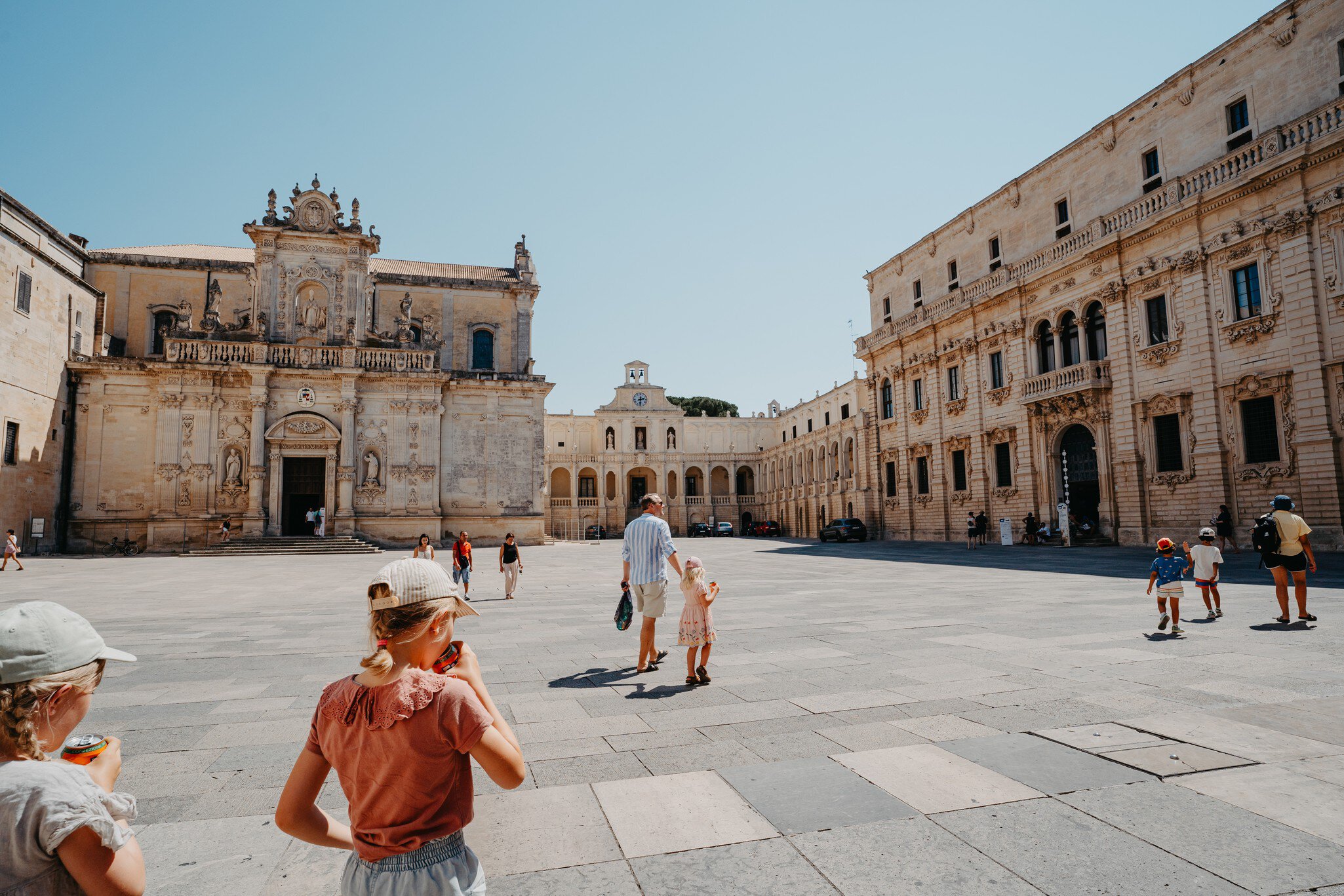
The geographical heart of Lecce is the Piazza del Duomo, although it feels cut off from the city. It's a clever trick, intended by the architects who designed it; first they set it back down a small alley off the main corso, then they enclosed it with operatic buildings, leaving just one narrow access flanked by imposing entrance piers. In the past this could be closed by a huge oak door, although that is long gone.
It is quite ingenious, and even now as you walk into the square you experience a feeling of wonder as the drama of the piazza reveals itself to you.
reviewed
-
B
Gelateria Natale
One of the best ice-creams in Lecce is available here. You might have to queue but this will give you time to choose. It’s also a fabulous confectioner, gleaming with jewel-like treats, truffles, panna cotta and dark chocolate cakes that pool like oil slicks on golden plates.
reviewed
-
C
La Rusticana
A fiendishly popular place for takeaway is La Rusticana, where you can fill up on rustica, a confection of puff pastry, mozzarella cheese and tomato.
reviewed
-
Awaiting Table
Silvestro Silvestori’s splendid cooking and wine school provides day or weeklong courses with tours, tastings and noteworthy lecturers.
reviewed
-
D
Cathedral
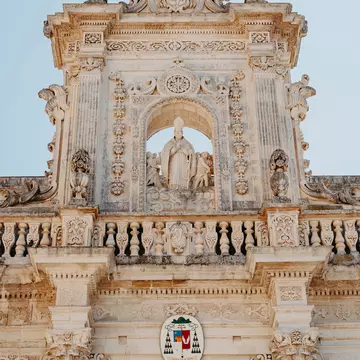
Piazza del Duomo is a baroque feast, the city’s focal point and a sudden open space amid the surrounding enclosed lanes. During times of invasion the inhabitants of Lecce would barricade themselves in the square, with its conveniently narrow entrances. The 12th-century cathedral is one of Giuseppe Zimbalo’s finest works – he was also responsible for the towering, 68m‑high bell tower. The cathedral is unusual in that it has two facades, one on the western end and the other, more ornate, facing the piazza. It’s framed by the 15th-century Palazzo Vescovile (Episcopal Palace) and the 18th-century Seminario, designed by Giuseppe Cino.
reviewed
-
AGTRP
You don't need a guide to enjoy Lecce, but to the untutored eye one baroque church can look very much like another. So if you're serious about architecture it's well worth considering a local guide. Simona Melchiorre is a fluent English-speaking guide and the current president of the AGTRP. If you want to get in touch with skilled guides speaking a variety of languages visit the site. An average three-hour tour costs around €85, although it does depend on the number of people and the itinerary.
reviewed
-
E
Roman Amphitheatre
Below the ground level of Piazza Sant’Oronzo is the restored 2nd-century-AD Roman amphitheatre, discovered in 1901 by construction workers. It was excavated in the 1930s to reveal a perfect horseshoe with seating for 15,000. Nearby rises the Colonna di Sant’Oronzo, a statue of Lecce’s patron saint, perched precariously on the second pillar from Via Appia – the Roman road that stretched from Rome to Brindisi.
reviewed
-
F
Museo Provinciale
The Museo Provinciale stylishly covers 10,000 years of history, from Palaeolithic and Neolithic bits and bobs to a handsome display of Greek and Roman jewels, weaponry and ornaments. The stars of the show are the Messapians, who were making jaunty jugs and bowls centuries before the Greeks arrived to give them any pottery lessons. There are also some excellent temporary exhibitions.
reviewed
-
G
Cucina Casareccia
Ring the bell to gain entry here. This place feels more like a private home, with its patterned cement floor tiles, desk piled high with papers, and charming owner Carmela Perrone. She’ll whisk you through a dazzling array of Salentine dishes from the true cucina povera (cooking of the poor), including horsemeat done here in a salsa piccante (spicy sauce). Booking is a must.
reviewed
-
H
Trattoria di Nonna Tetti
A warmly inviting restaurant that is popular with all ages and budgets and serves a wide choice of traditional dishes. Try the most emblematic Pugliese dish here – braised wild chicory with a puree of boiled dried fava beans, along with very more-ish contorni (side dishes) like patate casarecce (home-made thinly sliced fries).
reviewed
Advertisement
-
I
Alle due Corti
For a taste of sunny Salentina, check out this no-frills, fiercely traditional restaurant. The seasonal menu is classic Pugliese, written in a dialect that even some Italians struggle with. Go for the real deal with a dish of tajeddha (layered potatoes, rice and mussels) or ciceri e tria (crisply fried pasta with chickpeas).
reviewed
-
J
Basilica di Santa Croce
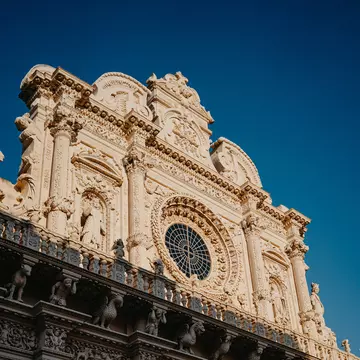
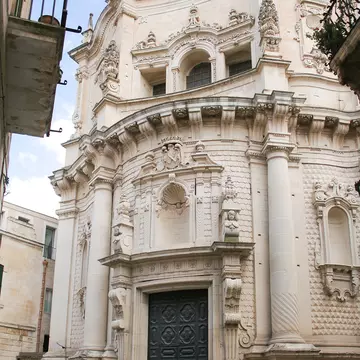
It seems that hallucinating stonemasons have been at work on the Basilica di Santa Croce. Sheep, dodos, cherubs and beasties writhe across the facade, a swirling magnificent allegorical feast. Throughout the 16th and 17th centuries a team of artists – under Giuseppe Zimbalo – laboured to work the building up to this pitch.
reviewed
-
K
Colonna di Sant'Oronzo
Beside the sunken arena of the Roman amphitheatre rises the Colonna di Sant'Oronzo, a copperplate statue of Lecce's patron saint perched precariously on the second pillar of the Appian Way. It was supposedly donated to the city of Lecce as a sign of thanks to Sant'Oronzo (Lecce's patron saint) for saving Brindisi from the plague in 1656.
reviewed
-
L
Obelisk
Just outside Porta Napoli, a commemorative obelisk recalls another Spanish overlord, Ferdinand I, King of the Two Sicilies. It was carved by local sculptor Vito Carluccio in 1822-26, and depicts panels of mythological and historical symbolism relating to Lecce, Taranto, Brindisi and Gallipoli, the four districts of the Terra d'Otranto.
reviewed
-
M
Castello di Carlo V
Lecce’s 16th-century Castello di Carlo V was built around a 12th-century Norman tower to the orders of Charles V. It consists of two concentric trapezoidal structures. It’s been used as a prison, a court, and military headquarters; now you can wander around the baronial spaces and visit the occasional art exhibition.
reviewed
-
N
Porta Napoli
The main city gate, Porta Napoli, was erected in 1548 in anticipation of a state visit from Charles V. It's a typically militaristic effort by General Acaja (builder of the castle), who modelled it on a Roman triumphal arch and gave it a pointy pediment carved with toy weapons and an enormous Spanish coat of arms. Subtle it is not.
reviewed
-
O
Osteria degli Spiriti
Possibly the best restaurant in Lecce with the Slow Food badge of approval and an intimate vaulted dining room. The menu is also more varied than usual with some Sicilian-inspired dishes such as caponata and arancini. Otherwise, the orecchiette with chickpeas and clams and the lamb stand out.
reviewed
-
Ciclovagando
The countryside surrounding Lecce is perfect for cycling. Ciclovagando organise guided full-day tours, including bike rental and helmets, with a choice of three to four itineraries. Each tour covers approximately 20km and they depart daily from Lecce (as well as Matera, Trani and Castellana Grotte).
reviewed
-
P
Palazzo Marrese
North from Piazza del Duomo, Via Palmieri takes you past more stately palazzi from the 17th and 18th centuries, the most notable being Palazzo Marrese with its four female caryatids flanking the door. It is set back on Piazetta Ignazio Flaconieri and stands beside Palazzo Palmieri.
reviewed
-
Q
Trumpet
Another good drinking den popular with the football crowd because of its enormous wide-screen TV. It fills up with regulars late in the evening. Aside from the huge glasses of wine, you can get an excellent meal here. The grilled steak, potatoes and salad is more than enough for two people.
reviewed
Advertisement
-
R
Chiesa del Rosario
A notable baroque church is Chiesa del Rosario which was the last work of Giuseppe Zimbalo. Instead of the intended dome roof, it ended up with a quick-fix wooden one following Zimbalo’s death before the building was completed.
reviewed
-
S
Chiesa dei SS Nicolò e Cataldo
The Chiesa dei SS Nicolò e Cataldo, near Porta Napoli, was built by the Normans in 1180. It got caught up in the city’s baroque frenzy and was revamped in 1716 by the prolific Cino, who retained the Romanesque rose window and portal.
reviewed
-
T
Borgo Antico
Probably the most pricey place in Lecce, Borgo Antico is a tiny restaurant, again specialising in fish. Dine in refined rusticity on Gallipoli-inspired dishes such as maccheroncino with prawns and clams or potato gnocchi with shrimps.
reviewed
-
U
Mamma Lupa
Looking and tasting suitably rustic, this osteria serves proper peasant food – such as roast tomatoes, potatoes and artichokes, or horse meatballs – in snug surroundings with just a few tables surrounded by dark ochre walls.
reviewed
-
V
Teatro Politeama Greco
Lecce's only real theatre and the most important in the Salentine, the Teatro Greco hosts an interesting programme of theatre exploring Pugliese and Salentine issues and traditions. It also stages opera and classical concerts.
reviewed