Tehran Sights

  1. Abkar Miniature Museum

    The Abkar Miniature Museum is a small, specialist museum that displays miniatures by the artist Clara Abkar.

    Read more about Abkar Miniature Museum

  2. Aks Khaneh

    The Aks Khaneh is one of the highlights of the Golestan complex. The photographs depicting Qajar court life are fascinating; look particularly for the picture showing the inside of a Zoroastrian tower of silence, with bodies in varying states of decay, and the shot of 'freaks and dwarfs'.

    Read more about Aks Khaneh

  3. Azadi Sports Stadium

    Iran's favourite sport is football (soccer), which is played at several smaller stadiums and the giant-sized, 100,000-capacity Azadi Sports Stadium. Matches are normally played on Thursdays and Fridays but to find out where, your best bet is to ask a man working in your hotel. If you can make it to the big Tehran derby between Esteqlal and Persepolis, do - assuming you are not a woman, that is.

    Read more about Azadi Sports Stadium

  4. Azadi Tower

    Way out west at the end of Azadi Ave is the inverted Y-shaped Azadi Tower, built to commemorate the 2500th anniversary of the Persian Empire in 1971. After being closed for years the underground gallery, Quran museum, cinema and, best of all, the viewing platform finally reopened in 2006.

    Read more about Azadi Tower

  5. Behzad Museum

    Contains paintings by the artist Behzad.

    Read more about Behzad Museum

  6. Carpet Museum

    The two floors of the Carpet Museum house more than 100 pieces from all over Iran, dating from the 17th century to the present day; the older carpets are mostly upstairs. The museum itself was designed by Queen Farah Diba and mixes '70s-era style with carpet-inspired function - the exterior is meant to resemble threads on a loom, which cool down the main building by casting shadows on its walls. You will often see weavers working on a loom on the ground floor and questions are welcome.

    Read more about Carpet Museum

  7. Darakeh & Darband

    On a sunny day few things could be nicer than fleeing the traffic fumes for the foothills of the Alborz Mountains and the walking trails of Darakeh and Darband. Both the trails strike north, passing waterfalls and crossing streams. They are crowded on Thursday afternoon and Friday and make a great place to meet Tehranis in a relaxed, social atmosphere.

    Read more about Darakeh & Darband

  8. Emarat-e Badgir

    The recently restored Emarat-e Badgir was first erected in the reign of Fath Ali Shah. The interior has typically ostentatious mirror work and is worth a quick look, though upstairs no longer seems to be open.

    Read more about Emarat-e Badgir

  9. Ethnographical Museum

    The Ethnographical Museum is near the main entrance to the Golestan Palace complex. The world's slowest renovation has lasted more than three years so far, but staff told us it should be open in 2009, insh ' Allah (if God wills it).

    Read more about Ethnographical Museum

  10. Farshchian Museum

    Specialises in the works of Mahmoud Farshchian.

    Read more about Farshchian Museum

  11. Advertisement

  12. Glass & Ceramics Museum

    The impressive Glass & Ceramics Museum is housed in a beautiful Qajar-era building. Built as a private residence for a prominent Persian family, it later housed the Egyptian embassy and was converted into a museum in 1976.

    Read more about Glass & Ceramics Museum

  13. Golestan Palace Complex

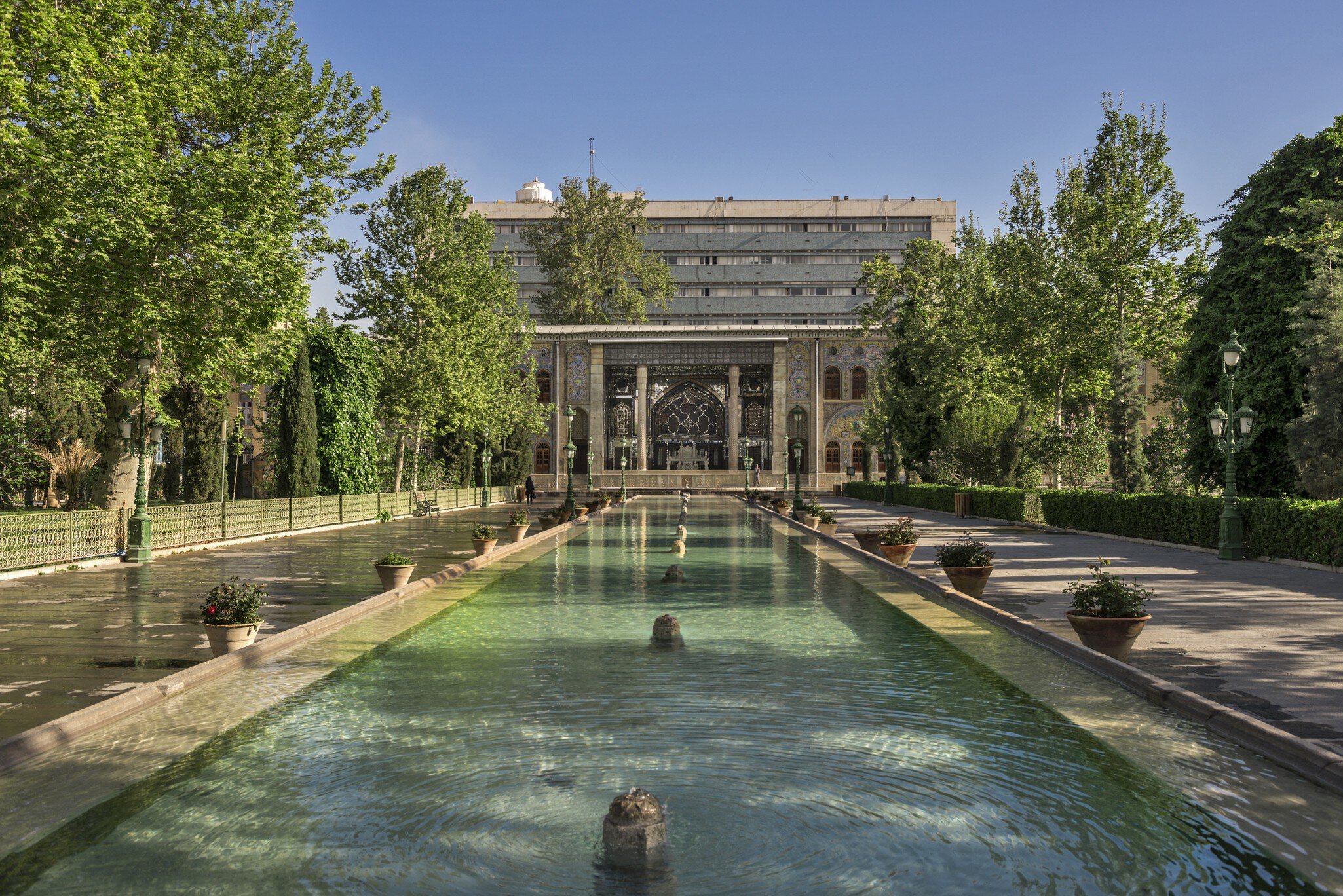
    In what was once the heart of Tehran is this monument to the glories and excesses of the Qajar rulers. A short walk south from Imam Khomeini Sq, the is made up of several grand buildings set around a carefully manicured garden. Admission isn't expensive but, annoyingly, you must buy a separate ticket for each building, and all at the front gate. If you ask, they might also give you an informative printed guide.

    Read more about Golestan Palace Complex

  14. Green Palace

    At the uphill end of the complex, the more classical-looking Green Palace was built at the end of the Qajar era and extensively remodelled by the Pahlavis. Shah Reza lived here for only a year and apparently found the bed, if not the mirror stalactites on the ceiling, a little too soft. It was later used as a private reception hall (upstairs) and residence (downstairs) for special guests.

    Read more about Green Palace

  15. Howze Khaneh

    The Howze Khaneh is named for the small pool and fountain in the centre of the room. It houses a collection of paintings and sculptures of 19th-century European royalty - generously given to their Qajar counterparts by the same European monarchs.

    Read more about Howze Khaneh

  16. Imam Khomeini Mosque

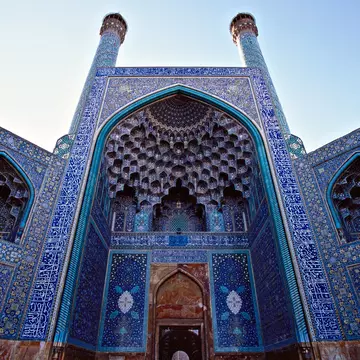
    Tehran has surprisingly few interesting mosques and mausoleums but one that's well-worth visiting is the Imam Khomeini Mosque (Shah Mosque). This is very much a working mosque, one of the largest and busiest in Tehran. The building itself, though dating from the early 18th century, is not the attraction; rather, you come here to see Islam in action.

    Read more about Imam Khomeini Mosque

  17. Iran Ebrat Museum

    There is nothing subtle about the Ebrat Museum, a one-time prison of the shah's brutal secret police that now exhibits that brutality with an equal measure of pro-revolution propaganda. The prison is an incongruously attractive building, wings radiating from a circular centre. But what went on here was not attractive at all.

    Read more about Iran Ebrat Museum

  18. Iranian Photographers' Centre

    The Iranian Photographers' Centre has rolling exhibits of the work of local and, occasionally, international photographers. The adjoining shop sells and processes slide film and sells pro equipment. Not surprisingly, it's a good place to meet Iranian photographers.

    Read more about Iranian Photographers' Centre

  19. Ivan-e Takht-e Marmar

    The Ivan-e Takht-e Marmar is a mirrored, open-fronted audience hall dominated by a magnificent throne. The throne is supported by human figures and constructed from 65 pieces of yellow alabaster from mines in Yazd. It was made in the early 1800s for Fath Ali Shah, a monarch who managed a staggering (and quite likely very tiring) 200-odd wives and 170 offspring. This hall was used on ceremonial occasions, including the Napoleon-style self-coronation of Reza Shah in 1925.

    Read more about Ivan-e Takht-e Marmar

  20. Madraseh va Masjed-e Sepahsalar

    The Madraseh va Masjed-e Sepahsalar, at the eastern end of Jomhuri-ye Eslami Ave, is one of the most noteworthy examples of Persian architecture of its period, as well as one of the largest. Built between 1878 and 1890, it's famous for its multiple minarets and poetry inscribed in several ancient scripts in the tiling. It still operates as an Islamic college and is usually open to male members of the public on Fridays only.

    Read more about Madraseh va Masjed-e Sepahsalar

  21. Mehrva Gallery

    Below the popular Café Hafta-do Hasht, English-speaking Mehrva's gallery exhibits contemporary art in a mix of media, but primarily painting and photography.

    Read more about Mehrva Gallery

  22. Advertisement

  23. Milad Tower

    Ten years in the making, Milad Tower is the fourth tallest tower and (in early 2008) 12th tallest freestanding structure in the world. Standing 435m high, including 120m of antenna, the tower bears a striking resemblance to Toronto's CN Tower, with the octagonal concrete shaft tapering from the base to a pod with 12 floors. The pod was due to open in 2008 and will be home to an observation deck, a revolving restaurant, a 'sky dome' and various TV, radio and traffic control functions.

    Read more about Milad Tower

  24. Military Museum

    The Military Museum is housed inside and around another palace that belonged to the shah's nephew Shahram; just look for the helicopter.

    Read more about Military Museum

  25. Mir Emad Calligraphy Museum

    The Mir Emad Calligraphy Museum houses samples of Iranian calligraphy from different periods.

    Read more about Mir Emad Calligraphy Museum

  26. Museum of Ethnological Research

    The Museum of Ethnological Research is a small, specialist museum with a waxworks and ethnological artefacts.

    Read more about Museum of Ethnological Research

  27. Museum of Fine Arts

    The Museum of Fine Arts is in one of the more impressive buildings and houses some charming Persian oil paintings dating back to the 18th century and some beautiful inlaid furniture.

    Read more about Museum of Fine Arts