Things to do in Jakarta
-
A
Taman Impian Jaya Ancol
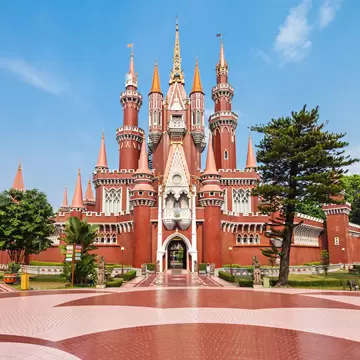
Along the bay front, between Kota and Tanjung Priok, the people’s ‘Dreamland’ is built on land reclaimed in 1962. This 300-hectare, landscaped recreation park, providing non-stop entertainment, has hotels, theatres and a variety of sporting and leisure facilities including bowling. It’s easily the city’s best entertainment for kids in the city.
Taman Impian Jaya Ancol’s prime attractions include Pasar Seni (Art Market), and Seaworld (Tel: 641 0080; www.seaworldindonesia.com; Mon-Fri 30,000Rp, Sat & Sun 40,000Rp; 9am-6pm), with its ‘sharkquarium’, dugongs and turtles. At the Gelanggang Samudra (Tel: 640 6677; Mon-Fri 40,000Rp, Sat & Sun 50,000Rp; 11am-6pm Mon-Thu…
reviewed
-
B
Taman Fatahillah
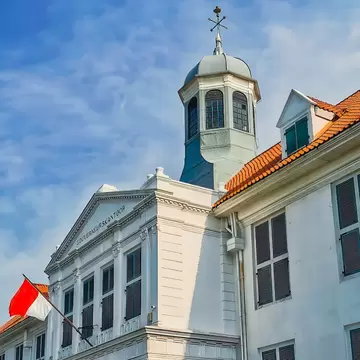
The old town of Batavia, now known as Kota, was once the hub of Dutch colonial Indonesia. Much of the one-time grandeur has now rotted, crumbled or been bulldozed away, but Taman Fatahillah, Kota's central cobblestone square, is still reminiscent of the area's heyday.
To reach Taman Fatahillah, you can either take the Korridor I bus from Blok M or Jl Thamrin to Kota train station and walk, or take a city train from Gondangdia, near Jl Jaksa, to the train station. A taxi will cost around 15,R from Jl Thamrin.
reviewed
-
C
Lara Djonggrang
An attractive selection of dishes from around the archipelago, stunning decor that mixes traditional Indonesian flair with North African charm, atmospheric lighting and a great wine list make this one stunning place to eat.
reviewed
-
D
Sate Khas Senayan
Excellent two-storey air-con restaurant at the northern end of Jl Jaksa, renowned for its superb sate, rawon buntut (oxtail stew) and other classic Indonesian dishes.
reviewed
-
Museum Nasional
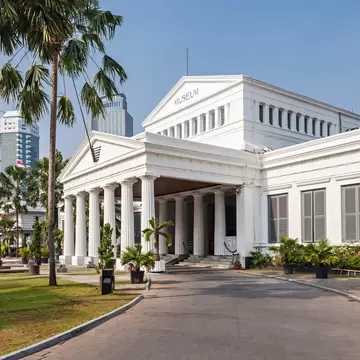
On the western side of Merdeka Sq, the Museum Nasional, built in 1862, is the best of its kind in Indonesia and one of the finest in Southeast Asia. It has an enormous collection of cultural objects of the various ethnic groups around the country - costumes, musical instruments, model houses and so on - and numerous fine bronzes from the Hindu-Javanese period, as well as many interesting stone pieces salvaged from the Central Javanese and other temples.
There's also a superb display of Chinese ceramics dating back to the Han dynasty (300 BC to AD 220), which was almost entirely amassed in Indonesia.
Just outside the museum is a bronze elephant that was presented by the Kin…
reviewed
-
E
Museum Bahari
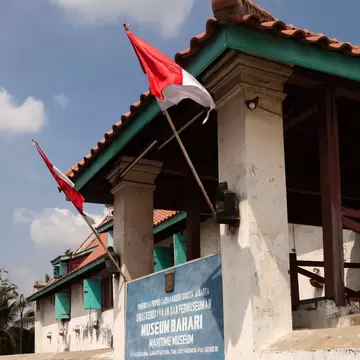
Near the entrance to Sunda Kelapa, several old VOC warehouses (dating back to 1652) have been converted into the Museum Bahari. This is a good place to learn about the city’s maritime history, and though the wonderful old buildings (some renovated) are echoingly empty there are some good information panels (in English and Bahasa Indonesia). Under the heavy wooden beams of the vast old storage premises are various random exhibits: a sextant (used for astronomical navigation), various traditional boats from around Indonesia, the shell of a giant clam, plenty of pickled fish and a lighthouse lamp or two. The sentry posts outside are part of the old city wall. Just before the…
reviewed
-
F
Ragunan Zoo
Jakarta's Ragunan Zoo is 16km south of the city centre in the Pasar Minggu area. As home to 4000 animals, this large zoo has a good collection of Indonesian wildlife including Komodo dragons. It's not world class (some of the enclosures are depressingly small), but this is by far the best zoo in Indonesia, and its new primate enclosure, featuring orang-utans and gorillas, is a highlight. From Jl Thamrin take bus 19.
reviewed
-
G
Museum Wayang
This puppet museum has one of the best collections of wayang puppets in Java and its dusty cabinets are full of a multitude of characters. The collection includes puppets from not only Indonesia but also China, Vietnam, India, Cambodia and Europe, and masks used by dancers. There are free wayang performances here on Sunday at 10am.
reviewed
-
Sunda Kelapa
A kilometre north of Taman Fatahillah, the old port of Sunda Kelapa is full of magnificent Makassar schooners (pinisi). The dock scene here has barely changed for centuries, and porters unload cargo from these sailing ships by hand and trolley. Sadly, the port itself is rundown and its waters grotesquely polluted these days.
reviewed
-
Eastern Promise
A classic British-style pub in the heart of Kemang, with a pool table, a welcoming atmosphere and filling Western and Indian grub. Service is prompt and friendly, the beer’s cold and there’s live music on weekends. It’s a key expat hang-out.
reviewed
Advertisement
-
H
Holland Bakery
Just across the road from Popeye's, Holland Bakery sells a menagerie of sticky buns and cakes from beneath its trademark rotating windmill.
reviewed
-
I
Face Bar
Part of the Lan Na Thai, Hazara and El Wajh venue, this hip lounge bar has plenty of subdued reds and dark woods.
reviewed
-
Bikram Yoga
Bikram Yoga gets good reports for its hot yoga, Vinyasa, Asthanga and beginners’ classes.
reviewed
-
J
Popeye’s
Flies the flag for junk-food fetishists, serving an assortment of deep-fried fish and chicken.
reviewed
-
K
Kafe Pisa
Rustic Mediterranean décor, an outside area, and decent pasta, pizza and ice cream.
reviewed
-
L
Café Batavia
The place for a cocktail or just a cool Bintang in north Jakarta.
reviewed
-
M
Taman Mini Indonesia Indah
In the city’s southeast, near Kampung Rambutan, Taman Mini Indonesia Indah is a ‘whole country in one park’. This 100-hectare park has full-scale traditional houses for each of Indonesia’s provinces, with displays of regional handicrafts and clothing, and even a mini-scale Borobudur. Museums, theatres and an IMAX cinema are scattered throughout the grounds, which all command additional entrance fees. Free cultural performances are staged in selected regional houses (usually around 10am); Sunday is the big day for cultural events, but shows are also held during the week.
Taman Mini is about 18km from the city centre; allow about an hour to get there and at least th…
reviewed
-
Monas
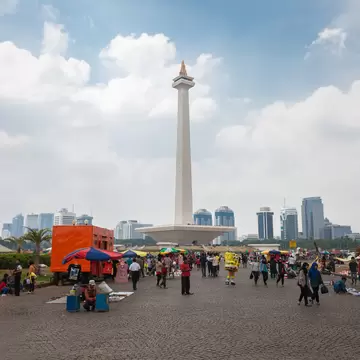
Ingloriously dubbed 'Soekarno's final erection', this 132m-high Monas, towering over Merdeka Sq, is both Jakarta's principal landmark and the most famous architectural extravagance of the former dictator. Begun in 1961, this typically masculine column was not completed until 1975, when it was officially opened by Soeharto.
The National Monument is allegedly constructed 'entirely of Italian marble', and is topped with a sculpted flame, gilded with 35kg of gold leaf. The highlight of a visit are the smoggy views of Jakarta from the top of the monument (adult/child around Rp5000/around Rp2500). Avoid Sunday and holidays, when the queues for the lift are long.
In the base of t…
reviewed
-
N
Gereja Sion
Near the Kota train station, the Gereja Sion dates from 1695 and is the oldest remaining church in Jakarta. Also known as Gereja Portugis (Portuguese Church), it was built just outside the old city walls for the so-called 'black Portuguese' - the Eurasians and natives captured from Portuguese trading ports in India and Malaya and brought to Batavia as slaves.
The exterior of the church is very plain, but inside there are copper chandeliers, a baroque pulpit and the original organ. Although more than 2000 people were buried in the graveyard during 1790 alone, very few tombs remain.
reviewed
-
O
Stadium
The big daddy of Jakarta’s scene, this club has the heritage (established in 1997), the reputation (DJs including Sasha and Dave Seaman have spun here), the capacity (around 4000), the sound system and the crowd. There are four levels, but the main room is where the prime dance-floor action is – a dark, cavernous space of pounding beats full of clubbers in sunglasses. This ain’t no disco – alcohol is not the drug of choice, and Stadium has a distinctly underground vibe. Its weekend session is totally hardcore – beginning on Thursday evening and running until Monday morning.
reviewed
Advertisement
-
Monas
Ingloriously dubbed ‘Sukarno’s final erection’, this 132m-high national monument, towering over Merdeka Sq, is both Jakarta’s principal landmark and the most famous architectural extravagance of the former president. Begun in 1961, this typically masculine column was not completed until 1975, when it was officially opened by Suharto. The monument is constructed from Italian marble, and is topped with a sculpted flame, gilded with 35kg of gold leaf.
reviewed
-
Dunia Fantasi
The biggest draw card is Dunia Fantasi, a fun park that must have raised eyebrows at the Disney legal department. Spectacular rides here include the Halilintar twisted roller-coaster ride, the Niagra flume ride and a Ferris wheel. The park gets very crowded on weekends, but on weekdays it’s fairly quiet. Take a bus or city train to Kota train station, then bus 64, 65, 125 or angkot 51. A taxi will cost around 45,000Rp from Jl Thamrin.
reviewed
-
P
Jin de Yuan
At the western end of the Petak Sembilan street market is the large Chinese Buddhist temple compound of Jin de Yuan, which dates from 1755 and is one of the most important in the city. The main structure has an unusual roof crowned by two dragons eating pearls, while the interior is richly atmospheric: dense incense and candle smoke cloud the Buddha statues, ancient bells and drums. There’s some wonderful calligraphy too.
reviewed
-
Q
VOC Galangan
Occupying the premises of a beautifully restored warehouse that dates back to 1628, this is a fabulously atmospheric cafe – enjoy a drink or meal inside the beamed interior or on the terrace, which overlooks a grassy courtyard where there’s a vintage car and horse-buggy carriage. Manager Derek Courbois runs a tight ship, and prices are very reasonable for dishes like gado gado (13,500Rp) given the setting.
reviewed
-
National History Museum
In the base of the monument Monas, the National History Museum tells the story of Indonesia’s independence struggle in 48 dioramas using Thunderbirds-like models. The numerous uprisings against the Dutch are overstated but interesting; Sukarno is barely mentioned and the events surrounding the 1965 coup are a whitewash.
reviewed