Things to do in Rajasthan
-
A
Mehrangarh
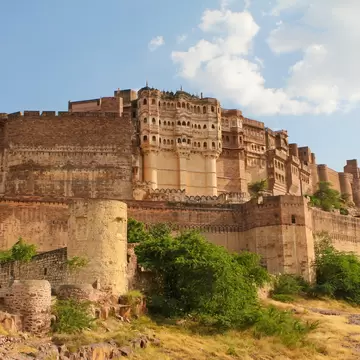
Still run by the descendants of the Maharaja of Jodhpur, Mehrangarh is captivating. As you approach, the walls soar overhead in a mesmerising demonstration of the skills of the builders. Cast off your audio-tour prejudices, as this tour, covered by the foreign-visitor admission charge (which also includes camera fees), is terrific, with a mix of history, information and dramatically narrated anecdotes. It’s a real treat to wander around at your leisure, taking a fix of information when you feel like it. Personal guides are available for Rs150.
reviewed
-
B
Navjyoti Tailors
Pushkar is a good place to get clothes made and a reliable option is Navjyoti Tailors.
reviewed
-
C
JG Art & Crafts
Abhay Kumar is the proprietor of this excellent store, which has a cheap and reliable international courier service, and all kinds of handicrafts and fabrics.
reviewed
-
D
Gallops
This is a spiffy air-conditioned cafe with a camel leather–clad lounge area with big windows. There is real, and very good, espresso coffee, but at Rs100 a cappuccino, you would have to be keen. The menu also features pricey Indian and Chinese veg and nonveg, including tandoori specials.
reviewed
-
Vino Desert Safari
Recommended operator Vino Desert Safari offers half-day to 13-day trips (Rs500 to 1500 per day, depending on how much luxury you require and how much you use a jeep).
reviewed
-
E
Jantar Mantar
Near the City Palace is Jantar Mantar, an observatory begun by Jai Singh in 1728, which at first glance looks like a collection of mammoth, bizarre sculptures. The guided tour (30 minutes to one hour) is well worthwhile; guides provide explanations of how each of the fascinating instruments work, and how – through watching, recording and meticulous calculation – Jai Singh measured time by the course of the sun’s shadow and charted the annual progress through the zodiac. Each construction has a specific purpose, such as calculating eclipses. The most striking instrument is the sundial, with its 27m-high gnomon; the shadow this casts moves up to 4m per hour.
reviewed
-
F
Bagore-Ki-Haveli
This gracious 18th-century haveli museum, on the water’s edge near Gangaur Ghat, was built by a former prime minister and has been carefully restored. There are 138 rooms set around courtyards. Some recreate the times when the house was inhabited, others have cultural displays, including the world’s (rather saggy) biggest turban! The haveli also houses an interesting art gallery, with contemporary and folk art, and world-famous monuments lovingly carved out of polystyrene. The upper courtyard makes an atmospheric setting for fabulous Rajasthani dance performances at 7pm.
reviewed
-
G
City Palace Museum
The City Palace museum includes the Mor Chowk, with its lavish mosaics of peacocks, the favourite Rajasthani bird. The Manak (Ruby) Mahal has glass and mirrorwork, while Krishna Vilas has a remarkable collection of miniatures (no photography allowed). In the Bari Mahal there is a pleasant central garden. The Moti Mahal has beautiful mirrorwork and the Chini Mahal is covered in ornamental tiles.
More wall paintings can be seen in the Zenana Mahal. There's a large tiger-catching cage near the Zenana Mahal entrance.
reviewed
-
H
Omelette Shop
Just through the gate (by the inner arch – surrounded by imitators) on the northern side of the square, the Omelette Shop claims to go through several thousand eggs a day – the egg man has been doing his thing for over 30 years. Two tasty, spicy boiled eggs cost Rs10, and an oily two-egg omelette with chilli, coriander and four pieces of bread Rs15.
reviewed
-
I
Saffron
Run by the folks in charge of Nanchana Haveli, the veg and nonveg food here is superb, plus it has a great setting on a sandstone terrace overlooking Gandhi Chowk. Evening time is especially atmospheric. The Indian dishes are hard to beat, though the Italian comes a close second.
reviewed
Advertisement
-
J
On the Rocks
This leafy garden restaurant (candle-lit in the evening) is frequented by families and tour groups. It has tasty Indian cuisine, including lots of barbecue options, a small playground and a cave-like bar, Rocktails (open 7.30pm to 11pm), with a dance floor (couples only).
reviewed
-
K
Cafe Edelweiss
The Savage Garden folks run this itsy piece of Europe that appeals to homesick and discerning travellers. The cake tray, including cinnamon rolls, apple pies and chocolate cake, disappears quickly, and it’s tough to get a seat. The coffee (Rs30 to Rs40) is pretty good.
reviewed
-
L
Kalinga Restaurant
This restaurant near the train station is smart and popular, with a bright, classy ambience and AC. It has a well-stocked bar, and tasty veg and nonveg North Indian dishes – tandoori and curries. Try the lal maans, a mouthwatering Rajasthani mutton curry.
reviewed
-
M
Hari Om Jewellers
Following the famous footsteps of Hari Om, Roop Kishore Soni is a silversmith who makes delicate silver rings and bracelets. Visitors have commissioned personalised wedding rings here. There’s also a shop inside the fort, or visit this home address.
reviewed
-
N
Maharaja Sawai Mansingh Sangeet Mahavidyalaya
This is an excellent music school located behind Tripolia Gate. Tuition (per month from Rs500) is given in dance and in Indian instruments such as tabla (pair of drums) and bakhawas (double-sided drum).
reviewed
-
O
Handloom House
This is a huge department store thronged with locals. Alongside some questionable clothes are mountains of fixed-price bandhani, silk saris and woollen shawls.
reviewed
-
Trattoria
This Italian restaurant offers wood-fired pizzas and pasta dishes - even Italians recommend it. It's on the candlelit rooftop, and offers a rare chance to eat outside in Jaipur. It's behind Amber Tower.
reviewed
-
P
Maharani Art Exporters
Maharani Art Exporters is one of the better bets for quality replica antiques.
reviewed
-
Q
Dargah of Khwaja Muin-ud-din Chishti
Situated at the foot of a hill and in the old part of town is the dargah of Khwaja Muin-ud-din Chishti, India's most important Muslim pilgrimage site. This is the tomb of a Sufi saint Khwaja Muin-ud-din Chishti, who came to Ajmer from Persia in 1192 and died here in 1236. The tomb gained its significance during the time of the Mughals - many emperors added to the buildings here. Construction of the shrine was completed by Humayun, and the gate was added by the nizam (ruler of Hyderabad).
Akbar used to make the pilgrimage to the dargah from Agra every year. You have to cover your head in certain parts of the shrine, so remember to take a scarf or cap, although there are pl…
reviewed
-
R
Jaisalmer Fort
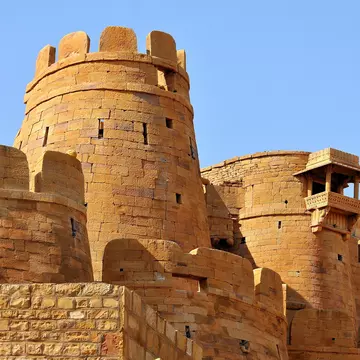
Jaisalmer Fort is a living fort - about 25% of the old city's population resides within its walls. As well as a palace and various temples, its carless streets are packed with houses, handicraft shops and beauty parlours, and honeycombed with narrow, winding lanes paved in stone.
Built in 1156 by the Rajput ruler Jaisala and reinforced by subsequent rulers, Jaisalmer Fort was the focus of a number of battles between the Bhattis, the Mughals of Delhi and the Rathores of Jodhpur. The lower layer of the fort's three walls is composed of solid stone blocks, which reinforce the loose rubble of Trikuta Hill. The second wall snakes around the fort, and between this and the third…
reviewed
Advertisement
-
Sajjan Garh (Monsoon Palace)
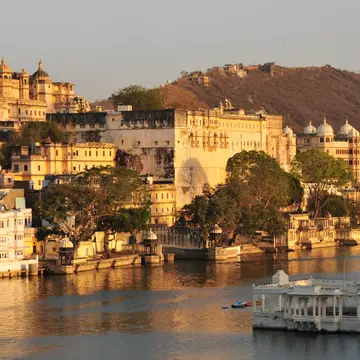
Perched on the top of a distant mountain range like a fairy-tale castle, this neglected late-19th-century palace was constructed by Maharaja Sajjan Singh. Originally an astronomical centre, it later became a monsoon palace and hunting lodge. Now government-owned, it’s open to the public, but there is not much to see inside, apart from a dreary nature interpretation centre and empty rooms screaming potential. Come for the breathtaking sunset views.
reviewed
-
Ranthambore National Park
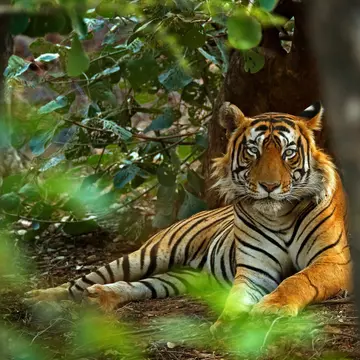
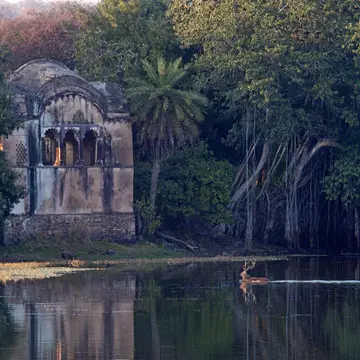
This national park is 1334 sq km of wild jungle scrub hemmed in by rocky ridges. At its centre is the 10th-century Ranthambore Fort, and scattered nearby are ancient temples and mosques, crocodile-filled lakes, chhatris (cenotaphs) and hides. The park was a maharajas’ hunting ground till 1970 – a curious 15 years after it had become a sanctuary.
reviewed
-
S
Peacock Rooftop Restaurant
Overlooking Hathroi Fort – and most of Jaipur – this multilevel rooftop restaurant with an extraordinary peacock canopy has excellent views and food to match. Sit in the quirky iron furniture or upstairs in the romantic nook to enjoy superb Indian and Chinese dishes, or even a pizza. There are great value thalis (veg and nonveg starting at Rs50) and Western breakfasts.
reviewed
-
T
Whistling Teal
This restaurant with superlative curries and exemplary service is entered through the foyer of the Raj Palace Hotel. Set well back from the street in a putting-green-perfect garden, here you can drink cocktails or smoke a hookah in saddles at the bar. The espresso coffee is the real thing – there is also a small coffee bar fronting Bhattiyani Chohtta.
reviewed
-
U
Salim Singh-ki-Haveli
This private haveli has an amazing, distinctive shape – the top storey mushrooms out into a mass of carving, with graceful arched balconies surmounted by pale blue cupolas. It was built about 300 years ago; part of it is still occupied. Salim Singh was a fearsome prime minister when Jaisalmer was the capital of a princely state.
reviewed