go to content go to search box go to global site navigation

Provence

Sights in Provence

‹ Prev

of 5

  1. A

    Palais des Papes

    The immense Palais des Papes is the world’s largest Gothic palace and is a UNESCO world-heritage site. Built when Pope Clement V abandoned Rome in 1309 to settle in Avignon, it was the seat of papal power for 70-odd years. The immense scale, cavernous stone halls and vast courtyards testify to the popes' wealth; the 3m-thick walls, portcullises and watchtowers emphasise their insecurity.

    Today, it takes imagination to picture the former luxury of these vast, bare rooms, but PDA-style audio-video guides introduced in 2012 show 2- and 3D imagery of the once sumptuous furnishings. Even without, you can see the splendour in the 14th-century chapel frescoes, painted by…

    reviewed

  2. B

    Le Corbusier’s Unité d’Habitation

    Visionary architect Le Corbusier redefined urban living in 1952 with the completion of this vertical, 337-apartment ‘garden city’, also known as Cité Radieuse (Radiant City). Along its darkened hallways, primary-coloured downlights create eerie tunnels leading to a mini-supermarket, architectural bookshop and panoramic rooftop ‘desert garden’. However forward-thinking the architecture, it has esoteric appeal: many just see a concrete apartment block.

    For Le Courbusier lovers, stay at Hôtel Le Corbusier, two floors in the middle of the tower. ‘Cabins’ are tiny cells; studios look sharp, particularly those with sea views and Le Corbusier chairs, but for design…

    reviewed

  3. City Walls

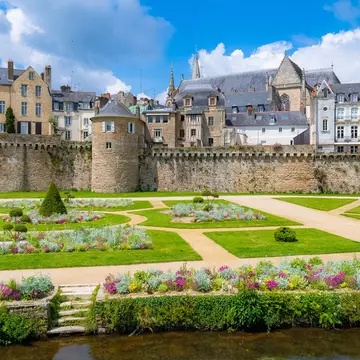
    Wrapping around the city, Avignon's ramparts were built between 1359 and 1370. They were restored during the 19th century, minus their original moats - though even in the 14th century this defence system was hardly state-of-the-art, lacking machicolations (openings in the parapets for niceties like pouring boiling oil on attackers or shooting arrows at them).Within the walls are a wealth of fine museums - the Avignon Passion booklet lists the whole gamut.

    The Avignon Passion pass entitles you to 20% to 50% discounted entry on your second and subsequent visits to museums and monuments (the equivalent of student prices), as well as reduced prices on the tourist office…

    reviewed

  4. C

    Musée de l'Arles et de la Provence Antique

    The fabulous story of Roman Arles takes centre stage at the state-of-the-art showpiece Musée de l'Arles et de la Provence Antiques. Within the triangular structure, which is fronted by a striking cobalt-blue façade, you can trace the area's evolution from 2500 BC through to the end of antiquity in the 6th century AD, or hone in on thematic aspects of trade, the economy and day-to-day life.

    Highlights include Roman statues, artefacts, and a renowned assortment of early Christian sarcophagi from the 4th century.

    reviewed

  5. D

    Théâtre Antique

    Still regularly used for alfresco concerts and plays, the Théâtre Antique dates from the end of the 1st century BC. For hundreds of years it was a source of construction materials, with workers chipping away at the 102m-diameter structure (the column on the right-hand side near the entrance indicates the height of the original arcade).

    reviewed

  6. E

    St Bénézet's Bridge

    The fabled Pont St-Bénézet (St Bénézet's Bridge) was completed in 1185, a bridge linking Avignon with the settlement across the Rhône that later became Villeneuve-lès-Avignon. The 900m-long wooden structure was repaired and rebuilt several times before all but four of its 22 spans were washed away in the mid-1600s.

    reviewed

  7. F

    Trompe l'Œil Portrait

    To peek at Avignon's nine popes in their fashionable garbs of the day, seek out their trompe l'œil portrait on the side of the conseil général (general council) building.

    reviewed

  8. G

    Les Trains Touristiques d'Avignon

    Trundling a 40-minute circuit around town, the little tourist trains Les Trains Touristiques d'Avignon are a winner with kids and adults alike.

    reviewed

  9. Cézanne Sights

    His star may have reached its greatest heights after his death, but the life of local lad Paul Cézanne (1839–1906) is treasured in Aix. To see where he ate, drank, studied and painted, follow the Circuit de Cézanne (Cézanne Trail), marked by footpath-­embedded bronze plaques inscribed with the letter C. An informative English-language guide to the plaques, Cézanne’s Footsteps, is available free from the tourist office.

    Though none of his works hang here, Cézanne’s last studio, Atelier Paul Cézanne, 1.5km north of the tourist office on a hilltop, is a must for any Cézanne fan. It’s painstakingly preserved as it was at the time of his death, strewn with his tools…

    reviewed

  10. H

    Le Panier

    From the Vieux Port, hike north up to this fantastic history-woven quarter, dubbed Marseille’s Montmartre as much for its sloping streets as its artsy ambience. In Greek Massilia it was the site of the agora (marketplace), hence its name, which means ‘the basket’. During WWII the quarter was dynamited and afterwards rebuilt. Today it’s a mishmash of lanes hiding artisan shops, ateliers (workshops) and terraced houses strung with drying washing.

    Its centerpiece is Centre de la Vieille Charité; nearby Cathédrale de la Major stands guard between the old and ‘new’ ports with a ‘stripy’ facade made of local Cassis stone and green Florentine marble. Creative art…

    reviewed

  11. Advertisement

  12. I

    Parc National du Mercantour

    The Mercantour National Park is Provence at its most majestic. Europe's highest mountain pass, Col de Restefond la Bonette (2802m/9190ft), strides through the Vallée de l'Ubaye, the park's most northern and wildest area. Come winter, the Ubaye and its southern sisters, the Vallées du Haut Verdon and de la Tinée, offer fine skiing.

    The Vallées de la Vésubie, des Merveilles and de la Roya offer a heady mix of gorges, ageless rocks and white waters, all within easy reach of the Côte d'Azur. The park is home to a dazzling array of birds, including the golden eagle and the bearded vulture. Its higher-altitude plains shelter marmot, mouflon and chamois (a mountain…

    reviewed

  13. J

    Église St-Trophime

    This Romanesque-style church was built in the late 11th and 12th centuries on the site of several earlier churches. On the western portal the intricately sculpted tympanum depicts St Trophime, a late 2nd- or early 3rd-century bishop of Arles, holding a spiral staff. The treasury contains bone fragments of Arles’ bishops who were later canonised.

    Next door, the evocative 12th- to 14th-century Cloître St-Trophime hosts excellent exhibitions.

    reviewed

  14. K

    Les Arènes

    Slaves, criminals and wild animals (including giraffes) met their dramatic demise before a jubilant 20,000-strong crowd during Roman gladiatorial displays at Les Arènes, built around the late 1st or early 2nd century AD. During the early medieval Arab invasions the arch-laced circular structure, which is 136m long, 107m wide and 21m tall, was topped with four defensive towers to become a fortress. Indeed, by the 1820s, when the amphitheatre was returned to its original use, there were 212 houses and two churches that had to be razed on the site.

    Buy tickets for bloody bullfights, bloodless courses Camarguaises, theatre and concerts at the Bureau de Location.

    reviewed

  15. Vieil Aix

    Art, culture and architecture abound in Aix and is a stroller’s paradise, especially the mostly pedestrian old city, Vieil Aix.

    The graceful cours Mirabeau is the heart of Aix. Cafés spill onto the sidewalks on the sunny northern side. The southern side shelters a string of elegant Renaissance hôtels particuliers (private mansions). The mossy fontaine d’Eau Thermale, at the intersection of cours Mirabeau and rue du 4 Septembre, spouts 34°C water, a pleasant hint of what awaits at the Thermes Sextius.

    South of cours Mirabeau, Quartier Mazarin was laid out in the 17th century, and is home to some of Aix’ finest buildings. Further south still is the peaceful parc…

    reviewed

  16. L

    Basilique Notre Dame de la Garde

    Everywhere you go in Marseille, you see the opulent, domed 19th-century Romano-Byzantine basilica occupying Marseille's highest point, La Garde (162m). Built between 1853 and 1864, it is ornamented with coloured marble, murals depicting the safe passage of sailing vessels and superbly restored mosaics. The hilltop gives 360-degree panoramas of the city’s sea of terracotta roofs below.

    The church's bell tower is crowned by a 9.7m gilded statue of the Virgin Mary on a 12m-high pedestal. Bullet marks and shrapnel scars on the northern facade evidence the fierce fighting of Marseille's Battle of Liberation (15–25 August 1944). It’s a 1km walk from the Vieux Port; or take…

    reviewed

  17. M

    Unité d'Habitation

    Visionary architect Le Corbusier redefined urban living in 1952 with the completion of his vertical, 337-apartment ‘garden city', Unité d'Habitation , also known as Cité Radieuse (Radiant City). Along its darkened hallways, primary-coloured downlights create eerie tunnels leading to a minisupermarket, architectural bookshop and panoramic rooftop ‘desert garden'.

    Even if you're not staying at the onsite Hôtel Le Corbusier, you can arrange to visit this tour de force, including its private apartments, or dine at its restaurant, with sweeping views of the Mediterranean - and of the proliferation of high-rises that Le Corbusier inspired. Catch bus 83 or 21 to the Le…

    reviewed

  18. Îles du Frioul

    A few hundred metres west of Île d’If are the Îles du Frioul, the barren dyke-linked white-limestone islands of Ratonneau and Pomègues. Sea birds and rare plants thrive on these tiny islands (each about 2.5km long, totalling 200 hectares). Ratonneau has three beaches. Boats to Château d'If also serve the Îles du Frioul (€10 return, 35 minutes).

    reviewed

  19. N

    Centre de la Vieille Charité

    In the heart of Le Panier is Centre de la Vieille Charité, built as a charity shelter for the town’s poor. Marseille architect and sculptor Pierre Puget (1620–94), born in the house opposite 10 rue du Petit Puits, designed the stunning arched sienna-stone courtyard. The complex now houses rotating exhibitions and the beautiful Musée d'Archéologie Méditerranéenne and Musée d'Arts Africains, Océaniens & Amérindiens. It's free to enter the grounds and sunny cafe.

    reviewed

  20. O

    Pont St-Bénézet

    According to legend, pastor Bénezet had three saintly visions urging him to build a bridge across the Rhône. Completed in 1185, the bridge linked Avignon with Villeneuve-lès-Avignon, controlling trade at this vital crossroads. It was rebuilt several times, before all but four of its spans were washed away in the mid-1600s.

    Don't be surprised if you spot someone attempting a dance. In France, Pont St-Béezet is known as the Pont d’Avignon, from the chirpy nursery rhyme: 'Sur le pont d’Avignon / L’on y danse, l'on y danse...' (On Avignon Bridge, all are dancing...).

    If you don't want to pay to visit the bridge, you can see it free from the Rocher des Doms…

    reviewed

  21. P

    Centre de la Vieille Charité

    Marseille architect and sculptor Pierre Puget (1620–94) was born in the house opposite 10 rue du Petit Puits, and designed the arcaded courtyard of the Centre de la Vieille Charité. Initially built as a charity shelter for the town’s poor, the stunning arched pink-stone courtyard now houses Marseille’s beautiful Musée d’Archéologie Méditerranéenne (Museum of Mediterranean Archeology) and Musée d’Arts Africains, Océaniens & Amérindiens (Museum of African, Oceanic & American Indian Art). The latter contains a striking collection of masks from the Americas, Africa and the Pacific.

    reviewed

  22. Advertisement

  23. Q

    Centre Chorégraphique National

    Long at the forefront of contemporary dance, Aix is home to France's first purpose-built choreography centre, the Centre Chorégraphique National (CNN, National Choreographic Centre; rue des Allummettes). This glass, steel and black-concrete box, Pavillon Noir, houses a 378-seat auditorium, roof deck and glass-walled rehearsal studios.

    The skeletal building, masterminded by French architect Rudi Ricciotti, allows passers-by to peer into the illuminated studios to watch the agile artistry of dancers.

    reviewed

  24. R

    Musée d'Arts Africains, Océaniens & Amérindiens

    Initially built as a charity shelter for the town's poor, the stunning arched pink-stone courtyard of the Centre de la Vieille Charité now houses Marseille's beautiful Musée d'Archéologie Méditerranéenne and Musée d'Arts Africains, Océaniens & Amérindiens. The latter houses a diverse and often striking collection, including masks from the Americas, Africa and the Pacific.

    reviewed

  25. S

    Château d'If

    Immortalised in Alexandre Dumas’ classic 1844 novel Le Comte de Monte Cristo (The Count of Monte Cristo), 16th-century fortress-turned-prison Château d’If sits on the 30-sq-km island, Île d’If, 3.5km west of the Vieux Port. Political prisoners were incarcerated here, along with hundreds of Protestants, the Revolutionary hero Mirabeau, and the Communards of 1871.

    Frioul If Express boats leave for Château d'If from the Vieux Port. Over 15 daily departures in summer, fewer in winter (€10 return, 20 minutes).

    reviewed

  26. T

    Fondation Victor Vasarely

    This thrilling gallery and national historical monument, 4km west of the city, was designed by Hungarian optical art innovator Victor Vasarely (1906–1907). Though in need of repairs, the building is a masterpiece: 16 interconnecting six-walled galleries, purpose-built to display and reflect the patterning of the artist's 44 acid-trip-ready, floor-to-ceiling geometric artworks.

    reviewed

  27. U

    Van Gogh trail

    Accompanied with a brochure (in English) handed out by the tourist office, the evocative Van Gogh trail, a walking circuit of the city marked by footpath-embedded plaques, takes in spots where Van Gogh set up his easel to paint canvases such as Starry Night Over the Rhône (1888). At each stop there's a lectern-style signboard with a reproduction of the painting and interpretative information (also in English).

    reviewed