go to content go to search box go to global site navigation

Fontainebleau

Things to do in Fontainebleau

‹ Prev

of 2

  1. A

    Château de Fontainebleau

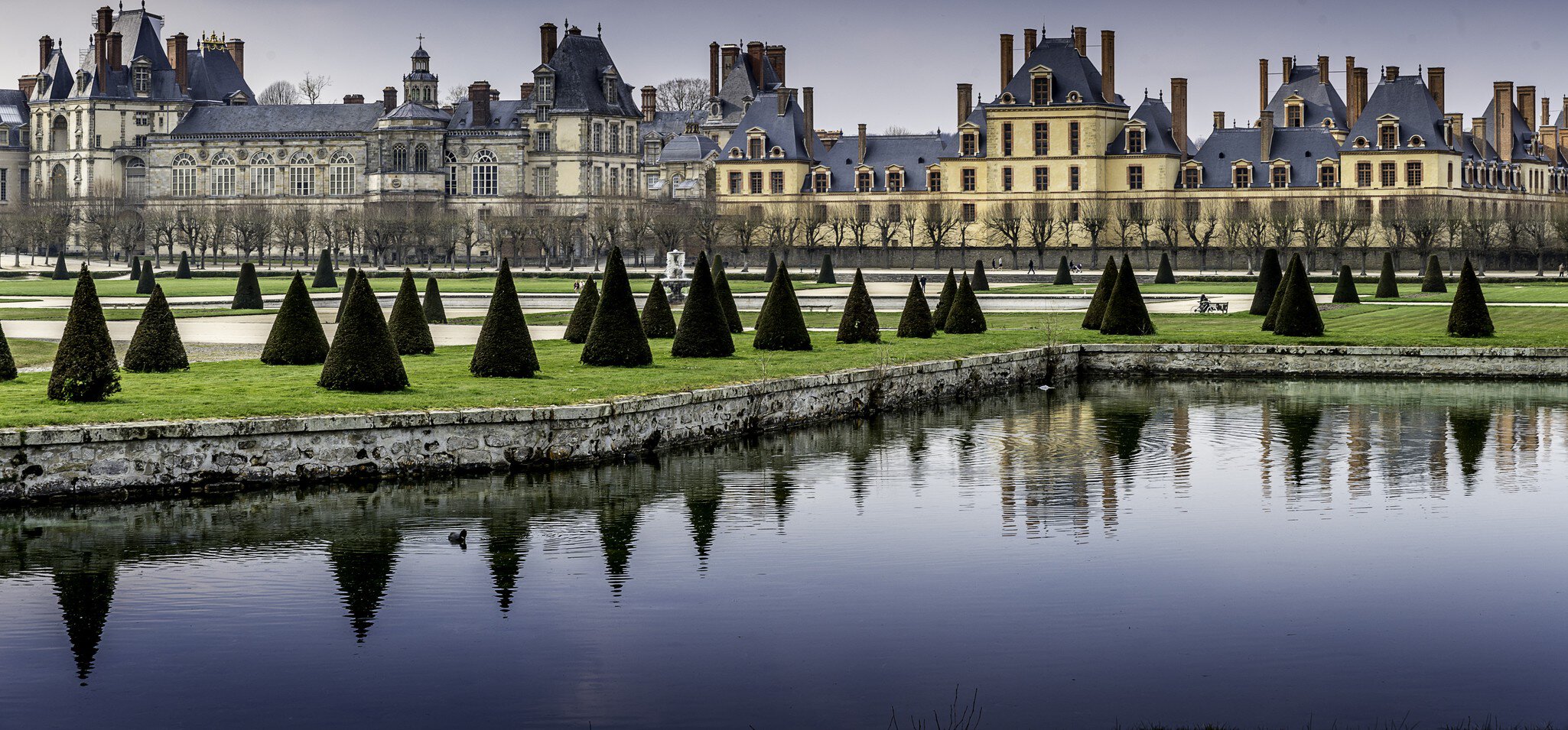
    The enormous, 1900-room Château de Fontainebleau, whose list of former tenants and their guests reads like a who's who of French royalty and aristocrats, is one of the most beautifully decorated and furnished châteaux in France. Every square centimetre of wall and ceiling space is richly adorned with wood panelling, gilded carvings, frescos, tapestries and paintings. The parquet floors are of the finest woods, the fireplaces are ornamented with exceptional carvings, and many pieces of furniture date back to the Renaissance era.

    The first château on this site was built in the early 12th century and enlarged by Louis IX a century later. Only a single medieval tower…

    reviewed

  2. Forêt de Fontainebleau

    This 20,000-hectare Forêt de Fontainebleau, which begins 500m south of the chateau and surrounds the town, is one of the prettiest woods in the region. The many trails - including parts of the GR1 and GR11 - are excellent for jogging, walking, cycling, horse riding and climbing. The area is covered by IGN's 1:25,000-scale Forêt de Fontainebleau map. The tourist office sells the Guide des Sentiers de Promenades dans le Massif Forestier de Fontainebleau, whose maps and text (in French) cover almost 20 walks in the forest, as well as the comprehensive La Forêt de Fontainebleau, published by the Office National des Forêts, with almost three dozen walks.

    reviewed

  3. Château de Vaux-le-Vicomte Fountain Displays

    Visitors swoon over the beautifully furnished Château de Vaux-le-Vicomte's interior, including its fabulous dome. In the vaulted cellars an exhibition looks at Le Nôtre’s landscaping of the formal gardens, where there are elaborate fountain displays in season. The collection of 18th- and 19th-century carriages in the château stables, included in the château visit, forms the Musée des Équipages (Carriage Museum). At weekends and school holidays, rent prince, princess or musketeer costumes for the kids (aged four to 12) to prance around in. Fun seasonal events include Easter-egg hunts.

    reviewed

  4. B

    Musée Napoléonien d’Art et d’Histoire Militaire

    The Petits Appartements (Small Apartments) were the private apartments of the emperor Napolean and empress Josephine; the Musée Napoléon 1er (Napoleon I Museum) contains uniforms, hats, coats, ornamental swords and knick-knacks that belonged to Napoleon and his relatives. True aficionados can get a second dose of him at the town’s Musée Napoléonien d’Art et d’Histoire Militaire, six rooms of military uniforms and weapons in the 19th-century Villa Lavaurs in town.

    reviewed

  5. C

    Chapelle de la Trinité

    The spectacular Chapelle de la Trinité, whose ornamentation dates from the first half of the 17th century, is where Louis XV married Marie Leczinska in 1725 and where the future Napoleon III was christened in 1810. Galerie François 1er, a jewellery box of Renaissance architecture, was decorated from 1533 to 1540 by Il Rosso, a Florentine follower of Michelangelo. In the wood panelling, François I's monogram appears repeatedly along with his emblem, a dragon-like salamander.

    reviewed

  6. D

    chateau gardens

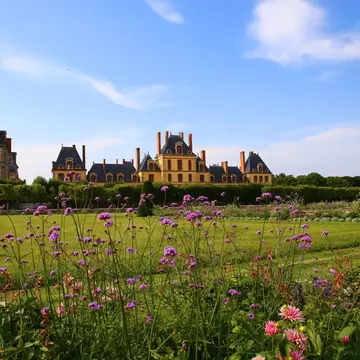
    The chateau gardens are quite extraordinary. On the northern side of the chateau is the Jardin de Diane, a formal garden created by Catherine de Médicis. Le Nôtre's formal, 17th-century Jardin Français (French Garden), or Grand Parterre, is east of the Cour de la Fontaine (Fountain Courtyard) and the Étang des Carpes (Carp Pond).

    The informal Jardin Anglais (English Garden), laid out in 1812, is west of the pond (closes one hour before the other gardens).

    reviewed

  7. Musée Napoléon I

    The Petits Appartements were the private rooms of the emperor and empress, and the Musée Napoléon 1er contains personal effects - such as uniforms, hats, coats, ornamental swords - and knick-knacks that belonged to Napoleon and his relatives. Neither has fixed opening hours and a one-hour guided tour is an additional cost.

    reviewed

  8. E

    Le Franklin Roosevelt

    If the Fontainebleau regular is not in Le Ferrare, it’s a dead cert you’ll find him here. A great brasserie, with wooden panelling, red banquette seating and oodles of atmosphere, the Franklin keeps weekday punters happy with a good-value salades composées (salads of fresh and cooked vegetables with meat or fish; €10).

    reviewed

  9. F

    Top Loisirs

    If you would like to visit Forêt de Fontainebleau, contact Top Loisirs about equipment hire and instruction. Two gorges worth visiting are the Gorges d’Apremont, 7km north-west near Barbizon, and the Gorges de Franchard, a few kilometres south of Gorges d’Apremont.

    reviewed

  10. Cour du Cheval Blanc

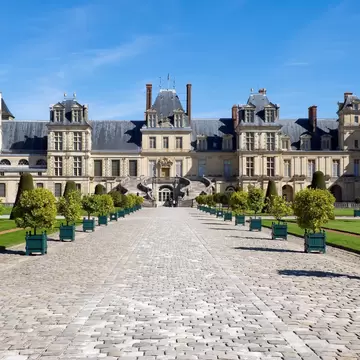
    The largest courtyard is the Cour du Cheval Blanc, from where you enter the chateau. Napoleon, about to be exiled to Elba in 1814, bade farewell to his guards from the magnificent 17th-century double-horseshoe staircase here. For that reason the courtyard is also called the Cour des Adieux (Farewell Courtyard).

    reviewed

  11. Advertisement

  12. Cour Ovale

    As successive monarchs added their own wings to the chateau, five irregularly shaped courtyards were created. The oldest and most interesting is the Cour Ovale, no longer oval but U-shaped due to Henri IV's construction work. It incorporates the keep, the sole remnant of the medieval chateau.

    reviewed

  13. Salle de Bal

    The Salle de Bal, a 30m-long ballroom dating from the mid-16th century that was also used for receptions and banquets, is renowned for its mythological frescoes, marquetry floor and Italian-inspired coffered ceiling. Large windows afford views of the Cour Ovale and the gardens.

    reviewed

  14. G

    Crêperie Ty Koz

    Tucked away in an attractive courtyard, this Breton hidey-hole cooks up sweet crêpes and savoury galettes whipped up with traditional black wheat. Order a regular simple or double-thickness pourleth and wash it down with some traditional Val de Rance cider.

    reviewed

  15. H

    La Rose de l'Orient

    This Lebanese eatery and traiteur (caterer) is the spot for a fast cheap lunch courtesy of two sisters, one of whom cooked for diplomats in Paris before launching her own business. Sit at one of five plastic tables inside or take away a picnic of meze (€1 to €3) and pita bread.

    reviewed

  16. Petits Appartements

    The Petits Appartements were the private rooms of the emperor and empress, and the Musée Napoléon 1er (Napoleon I Museum) contains personal effects - such as uniforms, hats, coats, ornamental swords - and knick-knacks that belonged to Napoleon and his relatives.

    reviewed

  17. I

    Le Caveau des Ducs

    With its exposed beams, red tapestries and intimate stone cellars, not to mention the warm fire in winter, this makes an atmospheric little spot for a meal. The cellar dates from the 17th century, and there's a small terrace open during the warmer months.

    reviewed

  18. Château de Vaux-le-Vicomte

    Privately owned Château de Vaux-le-Vicomte and its magnificent French-styled gardens, 20km north of Fontainebleau, were designed and built as a precursor to Versailles by Le Brun, Le Vau and Le Nôtre between 1656 and 1661.

    reviewed

  19. J

    Le Ferrare

    If you want to know where locals lunch, pile into this quintessential bar/brasserie with typical fare and a blackboard full of Auvergne specialities. The plat du jour (daily special) is a snip at €9.

    reviewed

  20. K

    La Table des Maréchaux

    Tucked in fancy Hôtel Napoléon, this romantic restaurant with its flowery interior-courtyard garden is a must in summer. Cuisine is inventive: traditional French inspired by foreign flavours and exotic spices.

    reviewed

  21. L

    Le Grand Café

    This modern café is spacious and airy, with a long, welcoming bar and a warm atmosphere. It's a good place for coffee, simple meals and crêpes; on weekends food is served all day long.

    reviewed

  22. Advertisement

  23. Musée National des Prisons

    Fontainebleau’s Musée National des Prisons is a gruesome portrait of French prisons from the 17th century to the present in a magnificent 19th-century prison with 30 cells.

    reviewed

  24. M

    Reelbooks

    English bookshop with new and second hand titles, and a great notice board crammed with ads aimed at the large local Anglophone community.

    reviewed

  25. N

    Au Vague à Lame

    This cheerful café-restaurant with a nautical theme is the place for Breton specialities as well as mussels and fresh oysters.

    reviewed

  26. O

    Grands Appartements

    The Grands Appartements inside the Château de Fontainebleau include a number of outstanding rooms.

    reviewed

  27. Centre Sportif d’Equitation Militaire

    This is where mounted French army officers and 50 military horses are trained each year.

    reviewed