Things to do in England
-
A
National Gallery
Gazing grandly over Trafalgar Sq through its Corinthian columns, the National Gallery is the nation's most important repository of art. Four million visitors come annually to admire its 2300-plus Western European paintings, spanning the years 1250 to 1900. Highlights include Turner's The Fighting Temeraire (voted Britain's greatest painting), Botticelli's Venus and Mars and van Gogh's Sunflowers. The medieval religious paintings in the Sainsbury Wing are fascinating, but for a short, sharp blast of brilliance, you can't beat the truckloads of Monets, Cézannes and Renoirs.
reviewed
-
B
Westminster Abbey
If you're one of those boring sods who boast about spending months in Europe without ever setting foot in a church, get over yourself and make this the exception. Not merely a beautiful place of worship, Westminster Abbey serves up the country's history cold on slabs of stone. For centuries the country's greatest have been interred here, including most of the monarchs from Henry III (died 1272) to George II (1760).
Westminster Abbey has never been a cathedral (the seat of a bishop). It's what is called a 'royal peculiar' and is administered directly by the Crown. Every monarch since William the Conqueror has been crowned here, with the exception of a couple of unlucky Eds…
reviewed
-
C
Natural History Museum
This mammoth institution is dedicated to the Victorian pursuit of collecting and cataloguing. Walking into the Life galleries (Blue Zone) in the 1880 Gothic Revival building off Cromwell Rd evokes the musty moth-eaten era of the Victorian gentleman scientist. The main museum building, with its blue and sand-coloured brick and terracotta, was designed by Alfred Waterhouse and is as impressive as the towering diplodocus dinosaur skeleton in the Central Hall just ahead of the main entrance. It’s hard to match any of the exhibits with this initial sight, except perhaps the huge blue whale just beyond it. Children, who are the main fans of this museum, are primed for more…
reviewed
-
D
British Museum
The country's largest museum and one of the oldest and finest in the world, this famous museum boasts vast Egyptian, Etruscan, Greek, Roman, European and Middle Eastern galleries, among many others.
Begun in 1753 with a 'cabinet of curiosities' bequeathed by Sir Hans Sloane to the nation on his death, the collection mushroomed over the ensuing years partly through plundering the empire. The grand Enlightenment Gallery was the first section of the redesigned museum to be built (in 1820).
Among the must-sees are the Rosetta Stone, the key to deciphering Egyptian hieroglyphics, discovered in 1799; the controversial Parthenon Sculptures, stripped from the walls of the…
reviewed
-
E
Tower Bridge
London was still a thriving port in 1894 when elegant Tower Bridge was built. Designed to be raised to allow ships to pass, electricity has now taken over from the original steam engines. A lift leads up from the northern tower to the overpriced Tower Bridge Exhibition, where the story of its building is recounted within the upper walkway. The same ticket gets you into the engine rooms below the southern tower. Below the bridge on the City side is Dead Man's Hole, where corpses that had made their way into the Thames (through suicide, murder or accident) were regularly retrieved.
reviewed
-
F
Tate Modern
One of London's most popular attractions, this outstanding modern and contemporary art gallery is housed in the creatively revamped Bankside Power Station south of the Millennium Bridge. A spellbinding synthesis of funky modern art and capacious industrial brick design, the eye-catching result is one of London's must-see sights. Tate Modern has also been extraordinarily successful in bringing challenging work to the masses while a stunning extension is under construction, aiming for a 2016 completion date.
The multimedia guides (£3.50) are worthwhile and there are free 45-minute guided tours of the collection's highlights (Level 3 at 11am and midday; Level 5 at 2pm and…
reviewed
-
G
St Paul's Cathedral
Dominating the City with one of the world's largest church domes (around 65,000 tons worth), St Paul's Cathedral was designed by Christopher Wren after the Great Fire and built between 1675 and 1710. The site is ancient hallowed ground with four other cathedrals preceding Wren's masterpiece here, the first dating from 604. As part of the 300th anniversary celebrations, St Paul's underwent a £40 million renovation project that gave the church a deep clean.
The dome is famed for sidestepping Luftwaffe incendiary bombs in the 'Second Great Fire of London' of December 1940, becoming an icon of dogged London resilience during the Blitz. Outside the cathedral, to the north,…
reviewed
-
H
Buckingham Palace
With so many imposing buildings in the capital, the Queen’s palatial London pad can come as a bit of an anticlimax. Built in 1703 for the Duke of Buckingham, Buckingham Palace replaced St James's Palace as the monarch's official London residence in 1837. When she’s not giving her famous wave to far-flung parts of the Commonwealth, Queen Elizabeth II divides her time between here, Windsor and Balmoral. To know if she’s at home, check whether the yellow, red and blue standard is flying.
Nineteen lavishly furnished State Rooms – hung with artworks by the likes of Rembrandt, van Dyck, Canaletto, Poussin and Vermeer – are open to visitors when HRH (Her Royal Highness)…
reviewed
-
I
Trafalgar Square
In many ways this is the centre of London, where rallies and marches take place, tens of thousands of revellers usher in the New Year and locals congre-gate for anything from communal open-air cinema to various political protests. The great square was neglected over many years, ringed with gnarling traffic and given over to flocks of feral pigeons. But things changed in 2000 when Ken Livingstone became London Mayor and embarked on a bold and imaginative scheme to transform it into the kind of space John Nash had intended when he designed it in the early 19th century. Traffic was banished from the northern flank in front of the National Gallery and a new pedestrian plaza…
reviewed
-
J
Shakespeare's Globe
Today's Londoners may flock to Amsterdam to misbehave but back in the bard's day they'd cross London Bridge to Southwark. Free from the city's constraints, men could settle down to a diet of whoring, bear-bating and heckling of actors. The most famous theatre was the Globe,where a genius playwright was penning box-office hits such as Macbeth and Hamlet.
The original Globe – known as the 'Wooden O' after its circular shape and roofless centre – was erected in 1599. Rival to the Rose Theatre, all was well but did not end well when the Globe burned down within two hours during a performance in 1613 (a stage cannon ignited the thatched roof). A tiled replacement fell foul of…
reviewed
Advertisement
-
K
TopShop & Topman
Topshop is the ‘It’-store when it comes to high-street shopping. Encapsulating London’s supreme skill at bringing catwalk fashion to the youth market affordably and quickly, it constantly innovates by working with young designers and celebrities. It’s the store that famously runs the popular Kate Moss collection. It has an entire floor dedicated to accessories (hair clips, tights, sunglasses, you name it). And if the store’s five floors intimidate you, you can book an appointment with a personal shopper.
reviewed
-
L
Tsunami
The food at this celebrated restaurant exhibits the style and taste you'd expect from an ex-Nobu chef. The sushi is exquisite, but it's the more unusual dishes, like ebi prawns wrapped in Greek pastry and butternut squash, and especially the mint-tea duck with pear and sweet honey miso, that will really bowl you over.
reviewed
-
M
York Minster
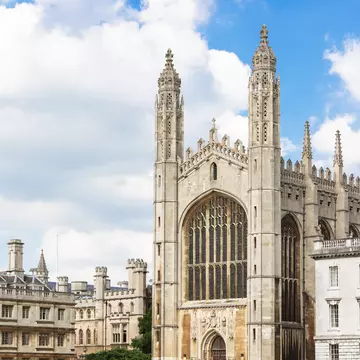
Not content with being Yorkshire's most important historic building, the awe-inspiring York Minster is also the largest medieval cathedral in all of Northern Europe. Seat of the archbishop of York, primate of England, it is second in importance only to Canterbury, home of the primate of all England – the separate titles were created to settle a debate over whether York or Canterbury was the true centre of the English church.
But that's where Canterbury's superiority ends, for York Minster is without doubt one of the world's most beautiful Gothic buildings. If this is the only cathedral you visit in England, you'll still walk away satisfied – so long as you have the…
reviewed
-
N
Churchill Museum & Cabinet War Rooms
Down in the bunker where Prime Minister Winston Churchill, his cabinet and generals met during WWII, £6 million has been spent on a huge exhibition devoted to ‘the greatest Briton’. This whizz-bang multimedia Churchill Museum joins the highly evocative Cabinet War Rooms, where chiefs of staff slept, ate and plotted Hitler’s downfall, blissfully believing they were protected from Luftwaffe bombs by the 3m slab of concrete overhead. (Turns out it would have crumpled like paper had the area taken a hit.) Together, these two sections make you forget the Churchill who was a maverick and lousy peacetime politician, and drive home how much the cigar-chewing, wartime PM was a…
reviewed
-
O
Science Museum
With seven floors of interactive and educational exhibits, this spellbinding museum will mesmerise young and old.
The Energy Hall, on the ground floor, displays machines of the Industrial Revolution, including Stephenson's innovative rocket (1829). Nostalgic parents will delight in the Apollo 10 command module in the Making the Modern World gallery.
An intriguing detour on the 1st floor is Listening Post, a haunting immersion into the 'sound' and chatter of the internet interspersed with thoughtful silence.
The History of Computing on the 2nd floor displays some intriguing devices, from Charles Babbage's ana-lytical engine to hulking valve-based computers.
The 3rd-floor…
reviewed
-
P
Southwark Cathedral
Although the central tower dates from 1520 and the choir from the 13th century,Southwark Cathedral is largely Victorian. Inside are monuments galore, including a Shakespeare Memorial. Catch evensong at 5.30pm on Tuesdays, Thursdays and Fridays, 4pm on Saturdays and 3pm on Sundays.
reviewed
-
Q
Sir John Soane's Museum
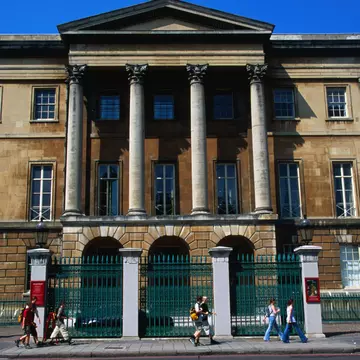
This little museum is one of the most atmospheric and fascinating sights in London. The building is the beautiful, bewitching home of architect Sir John Soane (1753–1837), which he left brimming with surprising personal effects and curiosities, and the museum represents his exquisite and eccentric taste.
Soane was a country bricklayer’s son, most famous for designing the Bank of England. In his work and life, he drew on ideas picked up while on an 18th-century grand tour of Italy. He married a rich woman and used the wealth to build this house and the one next door, which was opened as an exhibition and education space in late 2007. The heritage-listed house is largely…
reviewed
-
R
Museum Of Science & Industry
The city’s largest museum comprises 2.8 hectares in the heart of 19th-century industrial Manchester. It’s in the landscape of enormous, weather-stained brick buildings and rusting cast-iron relics of canals, viaducts, bridges, warehouses and market buildings that makes up Castlefield, now deemed an ‘urban heritage park’. If there’s anything you want to know about the Industrial (and post-Industrial) Revolution and Manchester’s key role in it, you’ll find the answers among the collection of steam engines and locomotives, factory machinery from the mills, and the excellent exhibition telling the story of Manchester from the sewers up. With more than a dozen permanent…
reviewed
-
S
No 1 Royal Crescent
Superbly restored to the minutest detail of its 1770 magnificence, the grand Palladian town house No 1 Royal Crescent is well worth visiting to see how people lived during Bath's glory days; staff dressed in period costume complete the effect.
The crowning glory of Georgian Bath and the city's most prestigious address, Royal Crescent, is a semicircular terrace of magnificent houses decorated with a continuous façade of Ionic columns. Designed by John Wood the Younger (1728-82) and built between 1767 and 1775, the houses would have originally been rented by the season by wealthy socialites.
A walk along Brock St leads to The Circus, a magnificent circle of 30 houses.…
reviewed
-
T
Battersea Park
With its Henry Moore and Barbara Hepworth sculptures, these 50 hectares of gorgeous greenery stretch between Albert and Chelsea Bridges. The park’s tranquil appearance belies a bloody past: it was the site of an assassination attempt on King Charles II in 1671 and of a duel in 1829 between the Duke of Wellington and an opponent who accused him of treason. The Peace Pagoda, erected in 1985 by a group of Japanese Buddhists to commemorate Hiroshima Day, displays the Buddha in the four stages of his life.
Refurbishment has seen the 19th-century landscaping reinstated and the grand riverside terraces spruced up. At the same time, the Festival of Britain pleasure gardens,…
reviewed
Advertisement
-
U
Museum Gardens
A peaceful 4 hectare city-centre oasis that houses a wealth of medieval history, much of it in picturesque tatters. Assorted ruins and buildings include the Museum Gardens Lodge dating from 1874 and a 19th-century working observatory. The abbey ruins make a suitably evocative backdrop for Mystery Plays held in the gardens every four years.
Take time out from York's summertime tourist hordes to wander past the abbey's Hospitium and Gatehall entrance, the Victorian Gothic Gardens Lodge and a VIP accommodation lodge dating from 1470. Then plunge into the Yorkshire Museum and its fine collection of Roman, Anglo-Saxon, Viking and medieval remains. Pride of place goes to the…
reviewed
-
V
Beatles Story
Liverpool's most popular museum won't illuminate any dark, juicy corners in the turbulent history of the world's most famous foursome – there's ne'er a mention of internal discord, drugs or Yoko Ono – but there's plenty of genuine memorabilia to keep a Beatles fan happy. Particularly impressive is the full-size replica Cavern Club (which was actually tiny) and the Abbey Rd studio where the lads recorded their first singles, while George Harrison's crappy first guitar (now worth half a million quid) should inspire budding, penniless musicians to keep the faith. The museum is also the departure point for the Yellow Duckmarine Tour. You can also get a combo ticket for the…
reviewed
-
W
Bethnal Green Working Men’s Club
As it says on the tin, this is a true working men’s club, which has opened its doors and let in all kinds of off-the-wall club nights, including trashy burlesque, vintage nights of all eras, beach parties and bake offs. Expect sticky carpets, a shimmery stage set and a space akin to a school-hall disco.
reviewed
-
X
Gordon Ramsay
One of Britain’s finest restaurants and London’s longest-running with three Michelin stars, this is hallowed turf for those who worship at the altar of the stove. It’s true that it’s a treat right from the taster to the truffles, but you won’t get much time to savour it all. Bookings are made in specific sittings and you dare not linger; book as late as you can to avoid that rushed feeling. The blowout tasting Menu Prestige (£120) is seven courses of absolute perfection.
reviewed
-
Y
Gordon Ramsay at Claridge’s
This match made in heaven – London’s most celebrated chef in arguably its grandest hotel – will make you weak at the knees. A meal in the gorgeous art deco dining room is a special occasion indeed; the Ramsay flavours will have you reeling, from the Thai-spiced lobster ravioli with lemongrass and coconut to the chorizo-studded John Dory with Jersey Royals and asparagus and morel velouté, all the way to the cheese trolley, whether you choose from the French or British selections. Consider the six-course tasting menu (£80).
reviewed