Things to do in Macau
-
A
Lord Stow’s Café
Though the celebrated English baker Andrew Stow passed away, his cafe and Lord Stow’s Bakery (1 Rua da Tassara) keep his memory well alive by serving his renowned pastéis de nata, a warm egg-custard tart (MOP$6) and cheesecake (MOP$14) in unusual flavours, including black sesame and green tea. The Lord Stow’s Garden Café (105 Rua da Cordoaria) near the Coloane bus stop has a very relaxed atmosphere on its patio.
reviewed
-
B
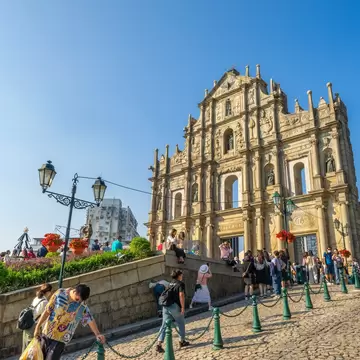
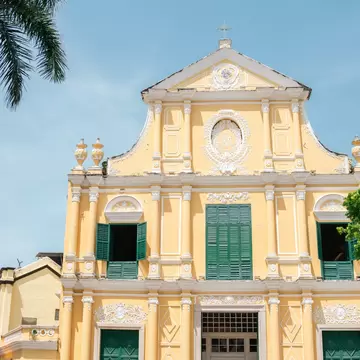
Ruins of the Church of St Paul
The most treasured icon in Macau, the facade and stairway are all that remain of this early-17th-century Jesuit church, called Tai Sam Ba in Cantonese. With its statues, portals and engravings that effectively make up a ‘sermon in stone’ and a Biblia pauperum (Bible of the poor), the church was one of the greatest monuments to Christianity in Asia, intended to help the illiterate understand the Passion of Christ and the lives of the saints. The church was designed by an Italian Jesuit and completed by early Japanese Christian exiles and Chinese craftsmen in 1602. It was abandoned after the expulsion of the Jesuits in 1762 and a military battalion was stationed here. I…
reviewed
-
C
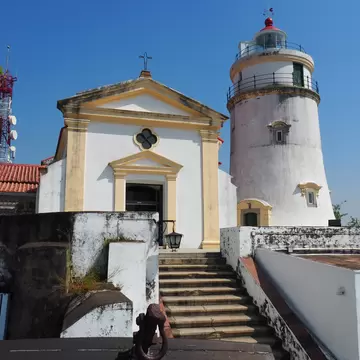
Guia Fort
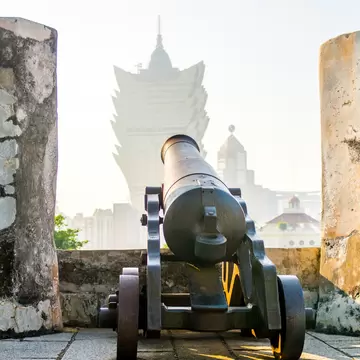
This fortress atop the highest point on the peninsula was built in 1638 to defend the border with China. Storm warnings were sounded from the bell in the Chapel of Our Lady of Guia, built in 1622. The walls of the little church have interesting frescoes discovered recently, and there’s a colourful choir loft above the main entrance. On the floor below is a tombstone with the inscription (in Latin) : ‘Here lies at this gate the remains of a Christian, by accident, for his body does not deserve such an honourable sepulchre’. It’s believed the deceased was buried here in 1687. The 15m-tall Guia Lighthouse (Farol da Guia; 1865) is the oldest lighthouse on the China co…
reviewed
-
Macao Tea Culture House
The picturesque Lou Lim Ioc Chinese garden was originally owned by Lou Wa Sio back in the 19th century and later inherited by his son Lou Lim Ioc. Now it’s open to the public and local people use the park to practise t’ai chi or play traditional musical instruments. It contains huge shady trees, lotus ponds, golden bamboo groves, grottoes and a bridge with nine turns (since evil spirits can only move in straight lines). The Victorian-style Lou Lim Ioc Garden Pavilion was where the Lou family received guests, including Dr Sun Yat-sen, and is now used for exhibits and for recitals during the Macau International Music Festival in late October/November. Adjacent to the ga…
reviewed
-
D
Ou Mun Café
This much-loved Macanese cafe closed down for a while, but it has come back with a modern facelift, decorated with colourful stained glass. The freshly made Portuguese pastries and chocolates are still here.
reviewed
-
E
A-Ma Temple
North of Barra Hill is a temple dedicated to the goddess A-Ma and Macau’s namesake – called Ma Kok Miu in Cantonese. She is better known as Tin Hau. This is the oldest temple in Macau and was probably standing when the Portuguese arrived, although the present one may only date back to the 17th century. At the entrance is a large boulder with a coloured relief of a lorcha (a traditional sailing vessel of the South China Sea). During the A-Ma Festival sometime between late April and early May, it is crowded with pilgrims. If you can only visit one temple in Macau, make it this one.
reviewed
-
F
Grand Lisboa Casino
Connected to its little sister (Lisboa Casino) by a footbridge is the plush Grand Lisboa, with its glowing golden-bulb exterior and a truly kitsch flaming-torch-shaped towering structure. The interior ventilation works much better than Lisboa Casino and people are gaming with slightly more manners here. The famous Crazy Paris Cabaret, featuring a multitude of leggy women onstage strutting around in a couple of beads and a feather, is also held here.
reviewed
-
G
MGM Grand Casino
This MGM Grand is much smaller than its mother in Vegas, but its gentility and modern design with innovative lighting make it a casino with taste and class. It’s more for unruffled high-rollers, meaning it has a more relaxing atmosphere.
reviewed
-
H
Mp3
With live shows and music, plus the unbeatable all-you-can-drink at around MOP$100 during happy hour, this has become a popular spot along the strip. DJs spin all kinds of music while drag queens and pose dancers dazzle your eyes.
reviewed
-
I
Litoral
This restaurant has a cheerful ambience that attracts locals and tourists alike. Apart from the authentic Macanese fare, including baked duck rice, it’s renowned for its homemade shrimp soup served in a bread bowl.
reviewed
Advertisement
-
J
Venetian
Occupying the Cotai Strip, this ersatz Doge's Palace is a minimalist's nightmare – a vast hotel, gambling and shopping city within a city, that recreates Venetian icons, right down to the canals and singing gondoliers.
reviewed
-
K
Taipa House Museum
The most beautiful sight on Taipa is this unusual museum, formed by five lime-green villas. The villas were summer residences built in 1921 by wealthy Macanese. Three hold permanent exhibitions, while the other two are used for receptions and special exhibitions. The House of the Regions of Portugal (Casa das Regiões de Portugal) has costumes and examines traditional Portugal. The House of the Islands (Casa das Ilhas) looks at the history of Taipa and Coloane, with displays devoted to the islands’ traditional industries: fishing and the manufacture of oyster sauce, shrimp paste and fireworks. The last is the Macanese House (Casa Macanese), a residence in local style; i…
reviewed
-
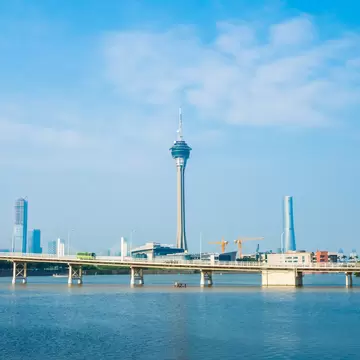
AJ Hackett
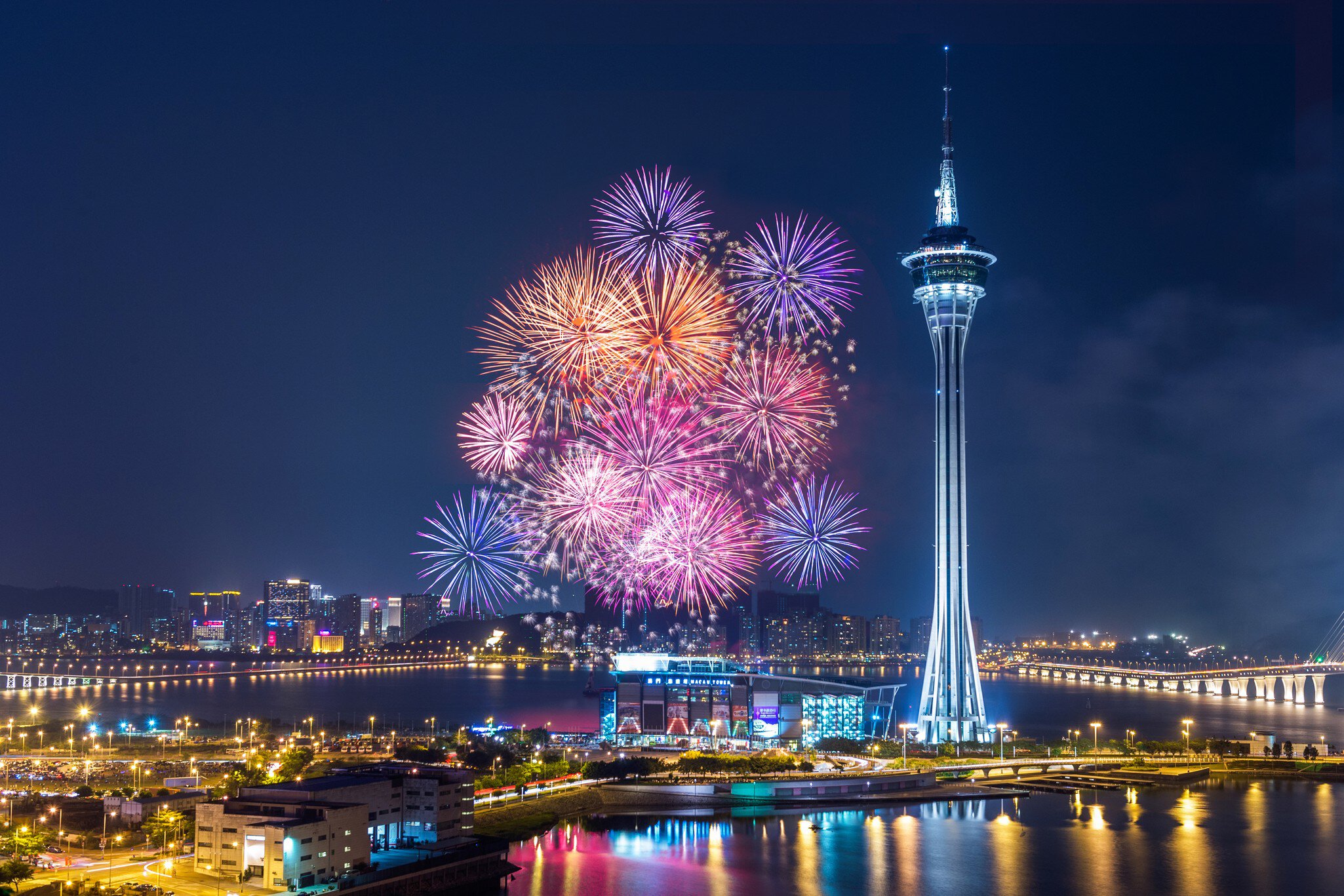
Macau Tower, at 338m, is the 10th-tallest freestanding structure in the world; it stands on the narrow isthmus of land southeast of Avenida da República. The tower houses observation decks on the 58th and 61st floors, and restaurants and bars such as the revolving 360° Café on the 60th floor, and the 180° Lounge one floor below it. If none of this takes your fancy, you might be interested in the activities of the New Zealand–based extreme-sports company AJ Hackett , which organises all kinds of adventure climbs up and around the tower. The intrepid will go for the Mast Climb (MOP$1688), in which you go up and down the mast’s 100m of vertical ladders to the top in two hour…
reviewed
-
L
Macau Museum
To interactively grab the essence of the history of Macau, head to this excellent museum housed in the Monte Fort. On the first level, the Genesis of Macau exhibit takes you through the early history of the territory, with parallel developments in the East and the West compared and contrasted. The highlight here is the elaborate section devoted to the territory’s religions. On the second level (Popular Arts & Traditions of Macau), you’ll see and hear everything from a re-created firecracker factory and a chá gordo (fat tea) of 20 dishes enjoyed on a Sunday, to the recorded cries of street vendors selling items such as brooms and scrap metal. Do not miss the recording…
reviewed
-
M
A-Ma Statue
Atop Alto de Coloane (176m), this 20m-high white jade statue of the goddess who gave Macau its name was erected in 1998. Below it is Tian Hou Temple (8am-7.30pm), which, together with the statue, form the core of A-Ma Cultural Village, a religious complex with a museum, retreat and medical centres, plus a vegetarian restaurant. It’s popular with Fujianese and Taiwanese worshippers, and is rather commercial. You’ll probably see traders selling stuff supposedly meant to bring luck and wealth, including birds and turtles. Still, it’s a good spot to get a bird’s-eye view of Hác Sá beach on a clear day. A free bus runs from the A-Ma ornamental entrance gate on Estrad…
reviewed
-
N
IACM Gallery
Facing Largo do Senado to the west is Macau’s most important historical building, the 18th-century ‘Loyal Senate’, which now houses the Instituto para os Assuntos Cívicos e Municipais (IACM; Civic and Municipal Affairs Bureau). It is so named because the body sitting here refused to recognise Spain’s sovereignty during the 60 years that it occupied Portugal. In 1654, a dozen years after Portuguese sovereignty was re-established, King João IV ordered a heraldic inscription to be placed inside the senate’s entrance hall, and this can still be seen today. To the right of the entrance hall is the IACM Gallery, which features changing exhibits. On the 1st floor is …
reviewed
-
O
Senate Library
Facing Largo do Senado to the west is Macau’s most important historical building, the 18th-century ‘Loyal Senate’, which now houses the Instituto para os Assuntos Cívicos e Municipais (IACM; Civic and Municipal Affairs Bureau). It is so named because the body sitting here refused to recognise Spain’s sovereignty during the 60 years that it occupied Portugal. In 1654, a dozen years after Portuguese sovereignty was re-established, King João IV ordered a heraldic inscription to be placed inside the senate’s entrance hall, and this can still be seen today. To the right of the entrance hall is the IACM Gallery, which features changing exhibits. On the 1st floor is …
reviewed
-
P
Lou Lim Ioc Garden
This picturesque Chinese garden was originally owned by Lou Wa Sio back in the 19th century and later inherited by his son Lou Lim Ioc. Now it’s open to the public and local people use the park to practise t’ai chi or play traditional musical instruments. It contains huge shady trees, lotus ponds, golden bamboo groves, grottoes and a bridge with nine turns (since evil spirits can only move in straight lines). The Victorian-style Lou Lim Ioc Garden Pavilion was where the Lou family received guests, including Dr Sun Yat-sen, and is now used for exhibits and for recitals during the Macau International Music Festival in late October/November. Adjacent to the garden is the…
reviewed
-
Q
Koi Kei
On Rua de Felicidade – the ‘street of happiness’ but more commonly known as ‘street of souvenirs’ – a cluster of shops sell Chinese pastries original to Macau. Koi Kei specialises in phoenix rolls (shredded pork wrapped with seaweed) and peanut candies. Choi Heong Yuen (70-72 Rua de Felicidade), going strong for over 70 years, is Macau’s most popular place for h a ng-y à n-béng (almond-flavoured biscuits). Both shops have numerous outlets, but Felicidade has the more elaborate choices. Other Macau specialities you might want to try include nougats, preserved apricots and y u k-gàwn, dried sweet strips of pork and other meats. The shops usually open from 1…
reviewed
-
R
Choi Heong Yuen
On Rua de Felicidade – the ‘street of happiness’ but more commonly known as ‘street of souvenirs’ – a cluster of shops sell Chinese pastries original to Macau. Koi Kei (74 Rua de Felicidade) specialises in phoenix rolls (shredded pork wrapped with seaweed) and peanut candies. Choi Heong Yuen, going strong for over 70 years, is Macau’s most popular place for h a ng-y à n-béng (almond-flavoured biscuits). Both shops have numerous outlets, but Felicidade has the more elaborate choices. Other Macau specialities you might want to try include nougats, preserved apricots and y u k-gàwn, dried sweet strips of pork and other meats. The shops usually open from 10am…
reviewed
Advertisement
-
Coloane Village
Tourism has given the economy in Coloane Village a big boost, but it is still a sleepy fishing village in character. The narrow lanes flanked by temples still ooze old-world charm and make strolling a joy. The bus drops you off in the village’s attractive main square; Coloane market is on the eastern side. To the west is the waterfront. From here a sign points the way north to the Sam Seng Temple (2 Rua dos Navegantes), a small, family altar-like temple. Just past the temple is a quaint old wharf and beyond that, about a dozen junk-building sheds, although a fire in 1999 destroyed many of the sheds.
reviewed
-
S
Museum of Sacred Art & Crypt
This small museum behind the ruins of the Church of St Paul contains polychrome carved wooden statues, silver chalices, monstrances and oil paintings, including a copy of a 17th-century painting depicting the martyrdom of 26 Japanese Christians by crucifixion at Nagasaki in 1597. The adjoining crypt contains the remains of the martyrs, as well as those of Vietnamese and other Japanese Christians killed in the 17th century. Also here is the recently unearthed tomb of Alessandro Valignano, the Jesuit who founded the College of the Mother of God and is credited with establishing Christianity in Japan.
reviewed
-
T
Chapel of Our Lady of Guia
Guia Fort atop the highest point on the peninsula was built in 1638 to defend the border with China. Storm warnings were sounded from the bell in the Chapel of Our Lady of Guia, built in 1622. The walls of the little church have interesting frescoes discovered recently, and there’s a colourful choir loft above the main entrance. On the floor below is a tombstone with the inscription (in Latin) : ‘Here lies at this gate the remains of a Christian, by accident, for his body does not deserve such an honourable sepulchre’. It’s believed the deceased was buried here in 1687.
reviewed
-
U
Museum of the Holy House of Mercy
In the heart of Largo do Senado is the oldest social institution in Macau, established in 1569, which served as a home to orphans and prostitutes in the 18th century. Today it’s a museum containing items related to the House, including religious artefacts; Chinese, Japanese and European porcelain; the skull of its founder and Macau’s first bishop, Dom Belchior Carneiro; and a portrait of Martha Merop, an orphan who became a tycoon and a patron of the House. The restaurant in the basement serves very affordable and decent meals during lunch time.
reviewed
-
V
Seac Pai Van Park
At the end of Cotai, this 20-hectare park, built in the wooded hills on the western side of the island, has somewhat unkempt gardens sprouting species of plants and trees from around the world, a children’s zoo, a lake with swans and other waterfowl, and a walk-through aviary, which contains rare birds. The Museum of Nature & Agriculture has traditional farming equipment, dioramas of Coloane’s ecosystem and displays cataloguing a wide range of the island’s fauna and flora.
reviewed