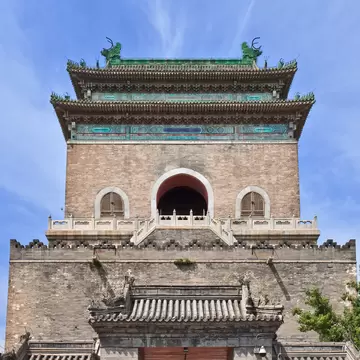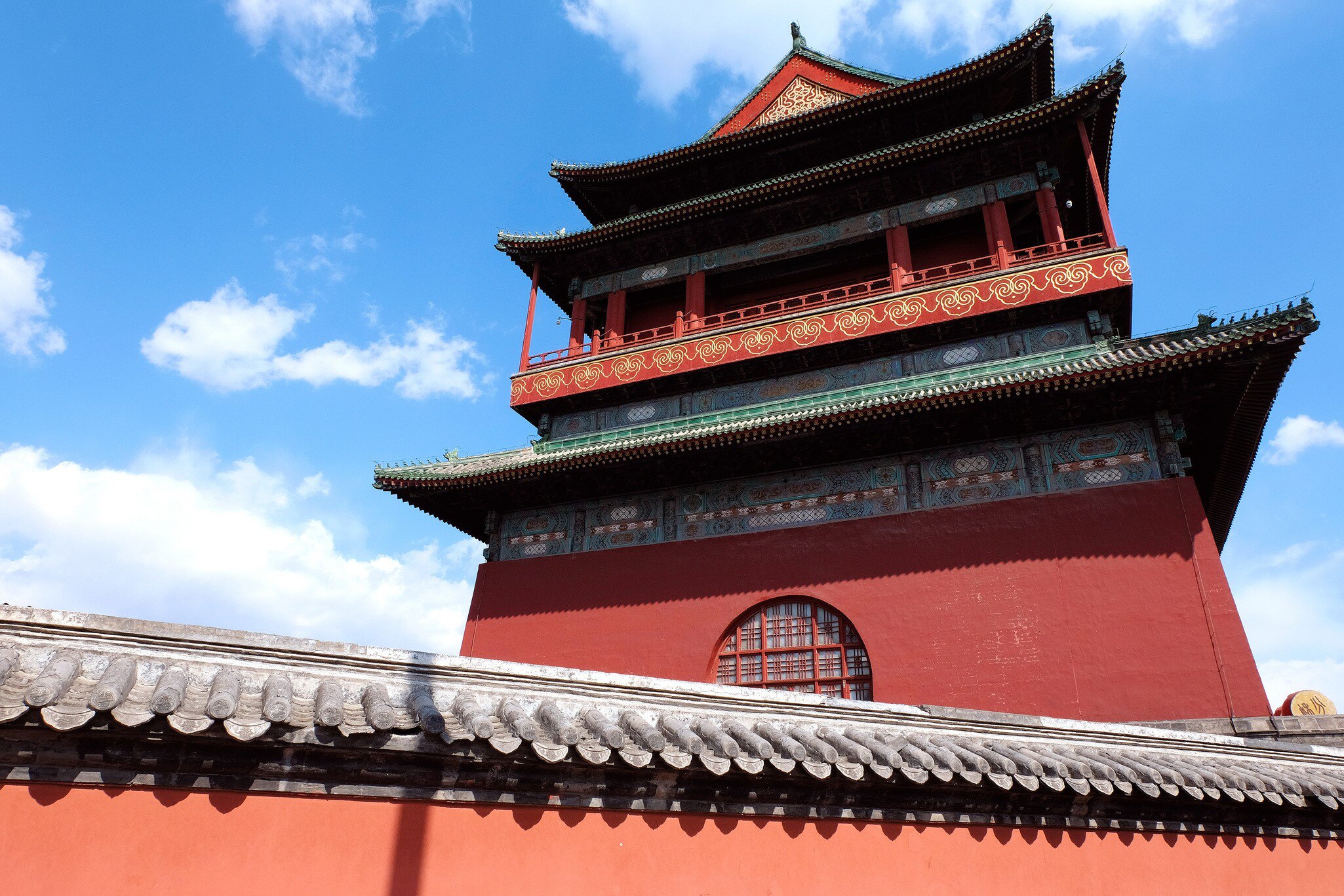
Venerable bastions of timekeeping, the Drum Tower (鼓楼, Gǔlóu; Gulou Dongdajie, 鼓楼东大街) and its counterpart the Bell Tower were for centuries the tallest buildings in Beijing, lording it over the surrounding hutong. Up in the 46m-high tower, the great drums would beat to sound the curfew after nightfall in the Qing dynasty, and thereafter every two hours to coordinate the patrols of the city's night watch.
Climb the steep stairway to the 2nd floor to see the Night Watchman’s Drum, the sole survivor of the original 25 drums. The drummers would have known exactly when to strike their instruments, thanks to a water clock (clepsydra), a copy of which is on display in the tower.
Originally built in 1272, the Drum Tower (and the Bell Tower to the north) are aligned on Beijing's central axis, at the heart of the former Mongol-led Yuan capital of Dàdū, as Beijing was then known. The tower was rebuilt by Emperor Yongle as part of his grand plan for Ming dynasty Beijing. Since then it has been destroyed and rebuilt several times (the current edition dates to around 1894).
In 1924, after Puyi (the "Last Emperor") had been evicted from the Forbidden City, the timekeeping functions of the towers ceased. The Drum Tower became a library for a time, and the Bell Tower a cinema.
On the ground floor is a good exhibition on traditional timekeeping in China. A drumming troupe stages a brief performance on replica drums on the 2nd floor every hour on the hour from 10am to 5pm; there's no performance at noon. Performances end at 4pm from November through March.