La PazThings to do

Things to do in La Paz

‹ Prev

of 6

  1. A

    Alexander Coffee & Pub, Santa Barbara

    Trendy café serving all manner of java drinks, pastries and sandwiches. It's the place for a cappuccino hit, and has reliably good fruit juices and tasty snacks, from pastries to vegetarian quiche – don’t miss the torte de quinoa.

    reviewed

  2. B

    Café La Terraza, Sopocachi

    This stylish chain offers quality espresso and other coffee treats, as well as rich chocolate cake and cooked breakfasts that include North American-style pancakes and huevos rancheros (spicy scrambled eggs).

    reviewed

  3. C

    Museo de Arte Contemporáneo

    Better modern art may be found in various other collections around town, but this private museum wins the gold star for the most interesting building: a restored 19th-century mansion (only one of four left on the Prado) with a glass roof and stained-glass panels designed by Gustave Eiffel. The museum’s eclectic collection housed over three floors is a mix of reasonable – but not mind-blowing – Bolivian and international work. You might catch an interesting temporary exhibition.

    reviewed

  4. D

    Coca Museum

    Chew on some facts inside the small, slightly tired Coca Museum, which explores the sacred leaf’s role in traditional societies, its use by the soft-drink and pharmaceutical industries, and the growth of cocaine as an illicit drug. The displays (ask for a translation in your language) are educational, provocative and evenhanded.

    reviewed

  5. E

    El Arriero

    This Argentine grill restaurant is a spacious, cheery place for a serious protein injection. The chunky meat is kept warm on a table-side grill, while a series of even larger cuts (B$140) feed three or four. There’s a decent salad bar, but it’s no vegetarian hangout! Good, if pricey, wine selection.

    reviewed

  6. F

    Tambo Colonial

    Known for its salad bar and excellent mains such as trout in white-wine sauce, llama medallions with mushroom sauce, and veggie lasagna. Afterward indulge in what may be the best chocolate mousse south of the equator.

    reviewed

  7. G

    Café Banaís

    Popular with tourists of all ages for its sunny window seats, handy location next to Plaza San Francisco, and Western-style breakfasts and gourmet sandwiches. Best of all, they know how to make a half-decent coffee.

    reviewed

  8. H

    Mirador Laikakota

    The Mirador Laikakota - part of Kusillo Cultural Complex & Children's Museum - is in a tranquil park setting and is perfect for kids.

    reviewed

  9. I

    Peña Marka Tambo

    A less expensive - and some claim more traditional - peña. The food is okay, but the music is better.

    reviewed

  10. J

    Liliana Castellanos

    Sells stunning llama and alpaca fashion items.

    reviewed

  11. Advertisement

  12. K

    Dumbo’s

    A popular ice-cream parlor along the Prado.

    reviewed

  13. L

    Mercado de Hechicería

    The city's most unusual market, 'Witches' Market', lies amid lively tourist artesanía (local handcraft) shops. What they're selling isn't exactly witchcraft in the Hollywood sense; the merchandise is mainly herbs and folk remedies, as well as a few more unorthodox ingredients intended to manipulate the various spirits worshipped by the local Aymará people.

    If you're building a new house, for example, you can buy a llama fetus to bury beneath the cornerstone as a cha'lla (offering) to Pachamama, encouraging her to inspire good luck therein. This practice is strictly for poor campesinos, however; wealthier Bolivians are expected to sacrifice a fully functioning llama. If …

    reviewed

  14. Islas Flotantes

    The unique Islas Flotantes (floating islands) of the Uros people are Lake Titicaca's top tourist attraction. Although their popularity has led to massive over-commercialization, there is still nothing quite like them anywhere else in the world. The biggest island has several buildings, including a school, post office and an overabundance of souvenir shops.

    Always a small tribe, the Uros began their unusual floating existence centuries ago in an effort to isolate themselves from aggressors. Today, several hundred people still live on the islands and eke out a living with fishing and tourism. The inhabitants of the most touristed islands have also built rickety observation …

    reviewed

  15. M

    San Pedro Prison

    San Pedro's fame is that it functions unlike any other prison: there are no guards inside, the inmates don't wear uniforms, there are no curfews and the prisoners have to work to be able to pay for their cells, which they have to rent or buy depending on their financial situation. This infamous prison is now quite a hard place to visit.

    Inside, it's like a little town. The prison is divided into eight areas. There is a clear hierarchy between the different areas, and some are richer, brighter and (supposedly) safer, while others are dark, dingy and rough. During the day, the violence is contained and prisoners play cards, football and do their work, but life gets rough at…

    reviewed

  16. N

    La Paz Cemetery

    As in most Latin American cemeteries, bodies are buried in the traditional Western way or placed in a crypt. Within 10 years, they are disinterred and cremated. After cremation, families purchase or rent glass-fronted spaces in the cemetery walls for the ashes, affix plaques and mementos of the deceased and place flowers behind the glass door.

    Each wall has hundreds of these doors, and some of the walls have expanded upward to such an extent that they resemble three- or four-story apartment blocks. As a result the cemetery is an active place, full of people passing through to visit relatives.

    There are also huge family mausoleums, as well as sections dedicated to mine wor…

    reviewed

  17. Alasitas

    During Inca times the Alasitas ('Buy From Me' in Aymará, in Spanish it's Comprame) fair coincided with the spring equinox (September 21), and was intended to demonstrate the abundance of the fields. The date underwent some shifts during the Spanish colonial period, which the campesinos weren't too happy about. In effect they decided to turn the celebration into a kitschy mockery of the original.

    'Abundance' was redefined to apply not only to crops, but also to homes, tools, cash, clothing and, lately, cars, trucks, airplanes and even 12-story buildings. The little god of abundance, Ekeko ('dwarf' in Aymará), made his appearance and modern Alasitas traditions are now cele…

    reviewed

  18. Mercado Negro & Upper Market Areas

    The area from Plaza Pérez Velasco to the cemetery has a largely indigenous population and is always bustling. Traffic honks through the narrow cobbled streets, cholitas (Quechua or Aymará women) rush about making purchases and pedestrians jostle with sidewalk vendors.

    The Mercado Negro (Black Market), roughly within the area around Max Parades, Tumusla, Tamayo and Santa Cruz, is the place where undocumented merchandise, much of it bootlegged, is sold along with just about everything else.

    In the case of CDs and DVDs, vendors make no effort to conceal the origins: the covers are merely photocopied. It also stocks imitation designer clothing and inexpensive camera film. Th…

    reviewed

  19. Valle de la Luna

    About 10km down the canyon of the Río Choqueyapu from the city center, Valle de la Luna is a slightly over-hyped place, though it’s a pleasant break from urban La Paz. It could be easily visited in a morning or combined with another outing such as a hike to Muela del Diablo to fill an entire day. It isn’t a valley at all, but a bizarre, eroded hillside maze of canyons and pinnacles technically known as badlands. Several species of cactus grow here, including the hallucinogenic choma (San Pedro cactus). Unfortunately, urban growth has caught up to the area, making it less of a viewpoint than it otherwise might be. Note: readers have reported muggings in recent years, …

    reviewed

  20. O

    Cathedral & Plaza Murillo

    A relatively recent addition to La Paz's collection of religious structures, the 1835 cathedral is an impressive structure. The cathedral's sheer immensity, with its high dome, hulking columns, thick stone walls and high ceilings, is overpowering, but the altar is relatively simple. Inside, the main attraction is the profusion of stained-glass work.

    Beside the cathedral is the Presidential Palace, and in the center of Plaza Murillo, opposite, stands a statue of President Gualberto Villarroel. In 1946, he was dragged from the palace by vigilantes and hanged from a lamppost in the square. Interestingly enough, Don Pedro Domingo Murillo, for whom the plaza was named, met a s…

    reviewed

  21. P

    Iglesia de San Francisco

    The hewed stone basilica of San Francisco reflects an appealing blend of 16th-century Spanish and mestizo (indigenous-Spanish) trends. The facade is decorated with stone carvings of natural themes while the mass of rock pillars and stone faces in the upper portion of the plaza is intended to honor Bolivia's three great cultures - Tiahuanaco, Inca and modern.

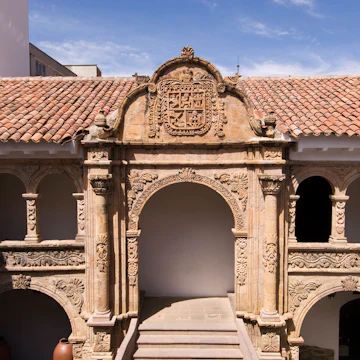
    The cloisters and garden of the recently opened Museo San Francisco, adjacent to the basilica, beautifully revive the history and art of the city's landmark. There are heavenly religious paintings, historical artifacts, an interesting anteroom and a Godlike, if quirky, view from the roof.

    reviewed

  22. Advertisement

  23. Q

    Museum

    Near Plaza Murillo, this museum - Museo Nacional del Arte is housed in the former Palacio de Los Condes de Arana. This stunning building was constructed in 1775 of pink Viacha granite and has been restored to its original grandeur, in Mestizo (mixed) baroque and Andino baroque styles. In the center of a huge courtyard, surrounded by three stories of pillared corridors, is a lovely alabaster fountain. The various levels are dedicated to different eras, from pre-hispanic works to contemporary art, with an emphasis on religious themes. Highlights include works by former Paceño Marina Nuñez del Prado. There are regular temporary exhibitions on the ground floor.

    reviewed

  24. R

    Pronto Dalicatessen

    Eating here is like having sex for the first time: definitely experimental, shockingly foreign, but surprisingly delicious in the end. When the restaurant's name contains an Italian 'Pronto' and a punned 'Dalicatessen', you know you're in for a surreal fusion. Think goat ravioli with Asian curry sauce or quinoa spaghetti with coca béchamel sauce, and you get the sensation.

    The climax has to be the 'Paranoia of textures and tastes of Daliano chocolate'. Coupled with the discreet cover song of Madonna's 'Like a Virgin' (we kid you not), you'll agree that, for a high price, this restaurant is the place to be sated.

    reviewed

  25. S

    Gravity Assisted Mountain Biking

    Many different operators offer a range of rides. One of the best known is Gravity Assisted Mountain Biking, a knowledgeable, highly regarded and professional outfit that has an excellent reputation among travelers. In addition to the trip to Coroico (B$600 per person), it offers a Ghost Ride ( whooo! in every respect – think riding to a ‘castle’ in the jungle at night; B$680) plus several rides around La Paz, including road and single-track trips around the Zongo Valley, Sorata and beyond (from B$600). Discounts are offered on second rides.

    reviewed

  26. T

    Museo Nacional de Arqueología

    Two blocks east of the Prado, this museum holds a small but well-sorted collection of artifacts that illustrate the most interesting aspects of the Tiwanaku culture’s five stages – those that weren’t stolen or damaged during the colonial days. Some of the ancient stonework disappeared into Spanish construction projects, while valuable pieces found their way into European museums or were melted down for royal treasuries. Unfortunately there are no explanations in English, only Spanish. Also holds excellent temporary exhibitions.

    reviewed

  27. Textile Museum

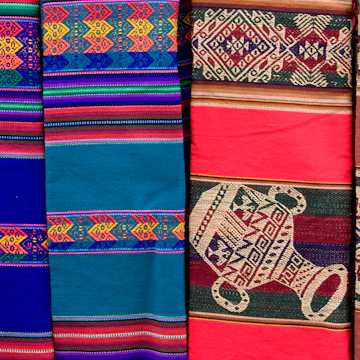
    Fans of Bolivia’s lovely traditional weaving consider this small textile museum - Museo de Textiles Andinos Bolivianos, a must-see. Examples of the country’s finest traditional textiles (including pieces from the Cordillera Apolobamba, and the Jal’qa and Candelaria regions of the Central Highlands) are grouped by region and described in Spanish. The creative process is explained from fiber to finished product. The gift shop sells museum- quality originals; 90% of the sale price goes to the artists.

    reviewed