Mar 24, 202511 min read
The 14 Best Things to Do in Graz, AustriaMar 24, 2025
11 MIN READ

Writer
From iconic landmarks to local markets, find out what to see and do in this charming Austrian destination. canadastock/Shutterstock

Writer
Highlights
Editors round up 14 things to do in Graz, Austria, from palaces to festivals.
Climb the Schlossberg for city views, stop at the clocktower and stroll through Hauptplatz.
Architecture lovers can compare the 'Friendly Alien' Kunsthaus Graz with baroque Schloss Eggenberg.
The Landeszeughaus's 32,000 objects make it the world's largest preserved historical armory.
Lonely Planet may earn a commission from affiliate links on our site. All recommendations and reviews reflect our own independent opinions.
Despite often playing second (or third) fiddle to the infinitely more visited Vienna and Salzburg, Graz is a wonderfully vibrant city that is very hard not to fall in love with. As well as having been crowned European Capital of Culture back in 2003 (the first city in Austria to enjoy this accolade), it was named a UNESCO City of Design in 2011, and its historic core is a UNESCO World Heritage site.
Sitting astride the River Mur, Austria’s second-largest city has museums, galleries, festivals and cultural events aplenty, breathtaking Renaissance, baroque and modern architecture, hidden courtyards, cycle paths, parks and green spaces, cultural flair and a lively student fizz. And the old town, or Altstadt, has a charming atmosphere, with narrow streets, picturesque squares, and medieval buildings, perfect for exploring on foot.
Here’s our guide to the 14 best things to do in Graz.
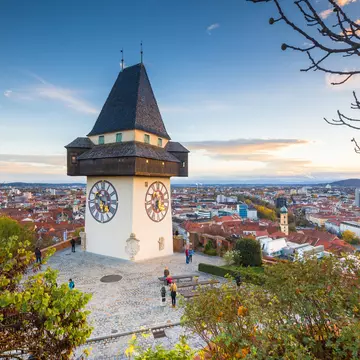
A must-see on your visit to Graz, the prominent mid-16th century clocktower on the Schlossberg is one of the most iconic sights in the city, and the most recognizable symbol of old Graz. The bell that sounds the hours is the oldest bell in Graz, dated 1385, and the clock mechanism from 1712 is still working – although it has been powered by electricity since the mid-20th century.
The clock face itself has one oddity. Look closely and you’ll notice the two hands are reversed – the longer hand points to the hours, not the minutes. That’s because originally, the clock just had one hand to indicate the hours – and when a shorter hand was added later, it was decided to leave the original hour hand in its place and use the newer short hand for minutes.
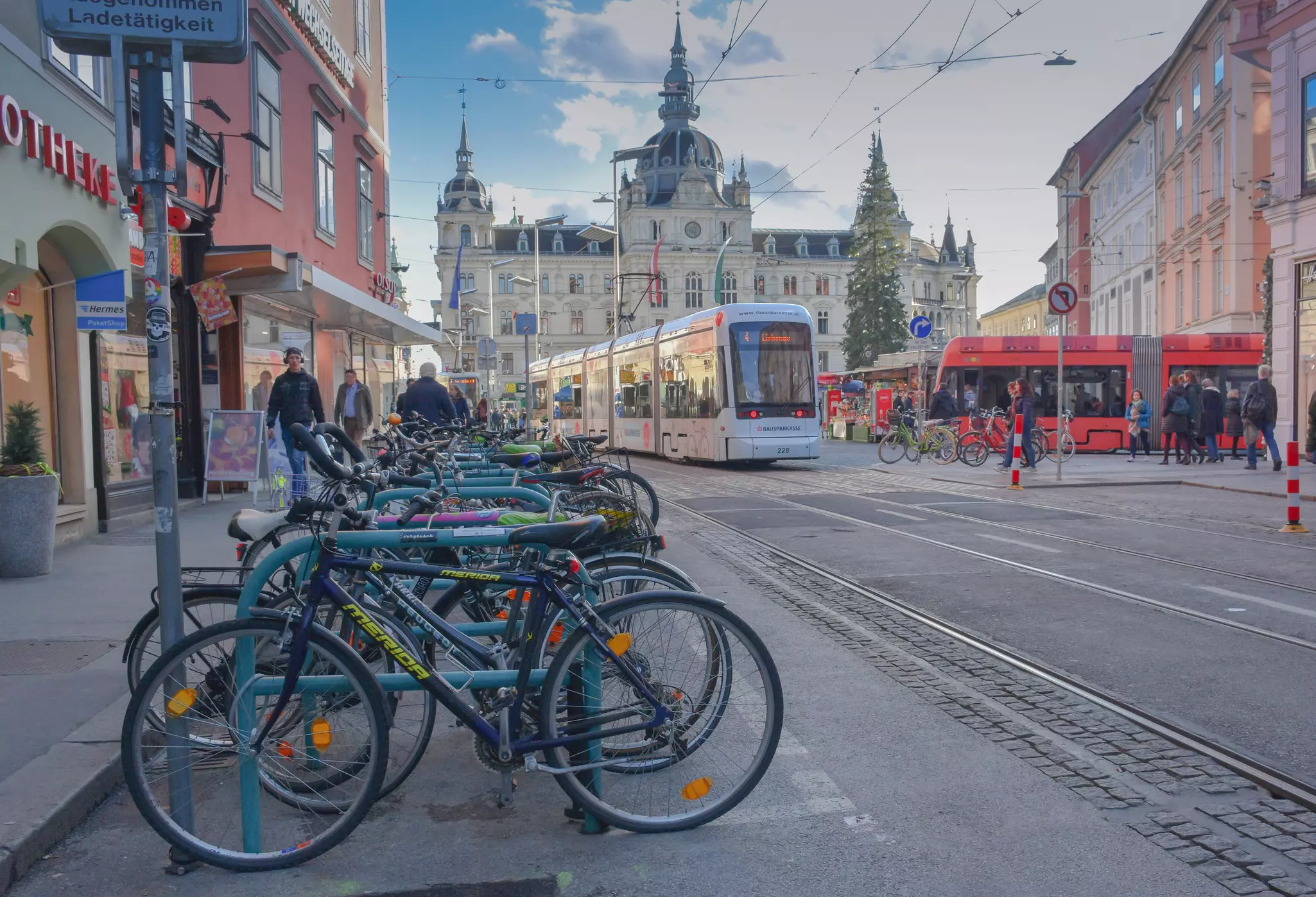
The city's main square, or Hauptplaz, is at the corner of Herrengasse and Sporgasse, where weekly markets (and executions) were held during the Middle Ages. A large, open space, it is surrounded by beautiful old merchant’s houses on one side, including the Luegghaus with its elaborate stucco decoration, and the Rathaus (Town Hall) stands at the other end. Considered the heart of the city, this area is home to several market stalls selling sausages, dairy products, fruit, ice cream, and more.
Next to the Grazer Dom cathedral is one of the most striking buildings in Graz. This is the Mausoleum of Ferdinand II, part of St. Catherine’s Church, complete with soaring turquoise domes. Ferdinand had his court artist Giovanni Pietro de Pomis, originally from northern Italy, start work on the mausoleum and church in 1614.
The rather grand, red-marble sarcophagus in the mausoleum contains the remains of Maria of Bavaria, Ferdinand’s mother – the final resting place of Ferdinand himself is simply indicated by a tablet on the wall. The mausoleum is a prime example of the manifestation of Roman art movements in the High Baroque period of Styria.
Planning tip: Note that the mausoleum is closed from November 1 to March 31.
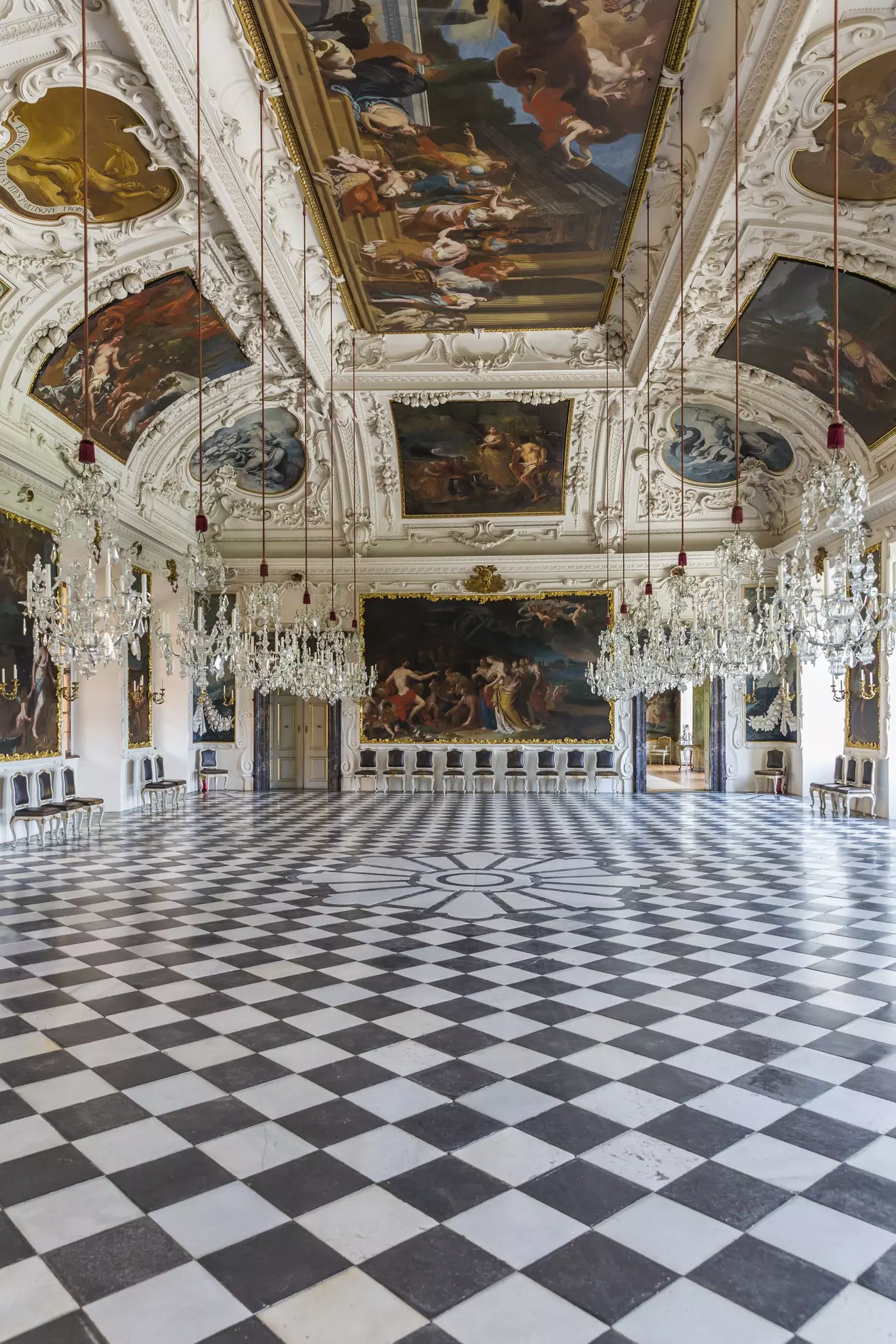
On the western side of Graz, Schloss Eggenberg is a stunning baroque palace, backed by wooded hills set amid beautiful parkland. The palace, designed by the north Italian artist and architect Giovanni Pietro de Pomis, includes a wealth of allegorical detail and number symbolism, from the total number of windows (365, in accordance with the days of the year) to the total number of rooms on each floor (31, the maximum number of days in a month).
The 24 state rooms are centered around a large Planetensaal (Planetary Room), and together these are painted with an extraordinary series of ceiling paintings – some 500 of them – by the baroque painter Hans Adam Weissenkircher. The paintings blend Biblical stories with scenes from Greek and Roman mythology, historical events and references to the Eggenbergs themselves, along with astronomical symbolism including the seven planets known at the time and the 12 signs of the zodiac.
Detour: Hidden away down a side street behind the Priest’s Seminary is Glockenspielplatz – a lively spot crammed with tables and parasols and surrounded by cafes, restaurants and bars. This is where you’ll find Graz’s beloved glockenspiel, installed above the facade of a house.
The artificial Mur Island (Murinsel), on the River Mur, brings together striking modern architecture, a cafe, shop, and open-air auditorium used for concerts and outdoor cinema. Designed by New York architect Vito Acconci in 2003, the organic-shaped, glass and steel construction is linked to each bank by a pedestrian bridge.
Symbolically, the island links what were historically the two very different halves of Graz – the more affluent old historic core with its palaces and elegant squares; and on the right bank, the more underprivileged part of the city, which had grown up following the arrival of the railway and various industries in the second half of the 19th century.
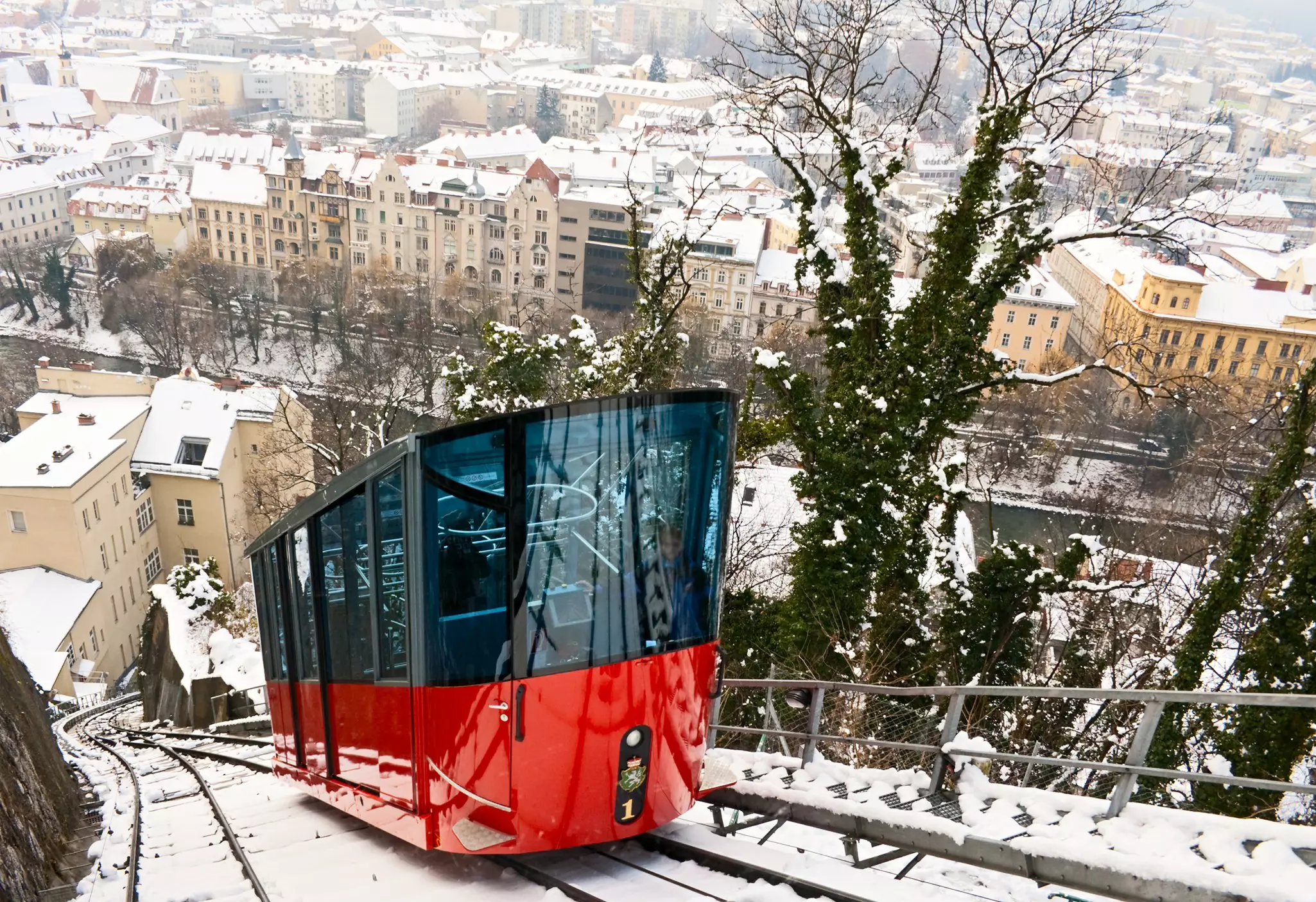
Schlossberg, the city’s green hill, stands at 473m (1551ft) high above the left bank of the Mur, an omnipresent landmark and a place to escape and gaze over the city below.
There are four main ways to get to the top of Schlossberg – and five ways down. The best way to approach the Schlossberg is via the Kriegssteig, the steep staircase zigzagging across the cliff face above Schlossbergplatz. Other options are a glass lift inside the left-hand tunnel at the end of Schlossbergplatz; the WWII tunnels, which also start at the end of Schlossbergplatz; and a funicular, the Schlossbergbahn, which was built in 1894 and has a gradient of 61 percent. For the descent, you also have the option of the slide – billed as the highest underground slide in the world, 175m (574ft) long reaching speeds of up to 30km/hr (18mph).
Up on top of the Schlossberg you’ll find the Bell Tower, the restored casemates (now a stage used for concerts and opera performances) and the Schlossberg branch of the Graz Museum.
Planning tip: The main thing to do up here is relax and enjoy the view, either in one of the cafes, or in the beautiful garden on the Bürgerbastei – a restored bastion below the clocktower, which has one of the best views out over the rooftops of Graz.
The cathedral of Graz, Grazer Dom, was built in the mid-15th century and received a baroque makeover in the 17th and 18th centuries, including the marble high altar and the pulpit, but several traces of the original late Gothic church remain. These include the main portal which dates from 1456, and fragments of 15th-century frescoes of the interior. Note the two inlaid chests on either side of the chancel entrance, originally bridal chests of Paola Gonzaga.
Detour: Across the road from Grazer Dom, beside the triple-arched Burgtor (one of the original city gates), is the Burg and its Gothic, double spiral staircase or Doppelwendeltreppe, dating from 1499. The stone stairs part and then rejoin at each floor, leading some to interpret it as a symbol of eternity, while to others it is a symbol of reconciliation.
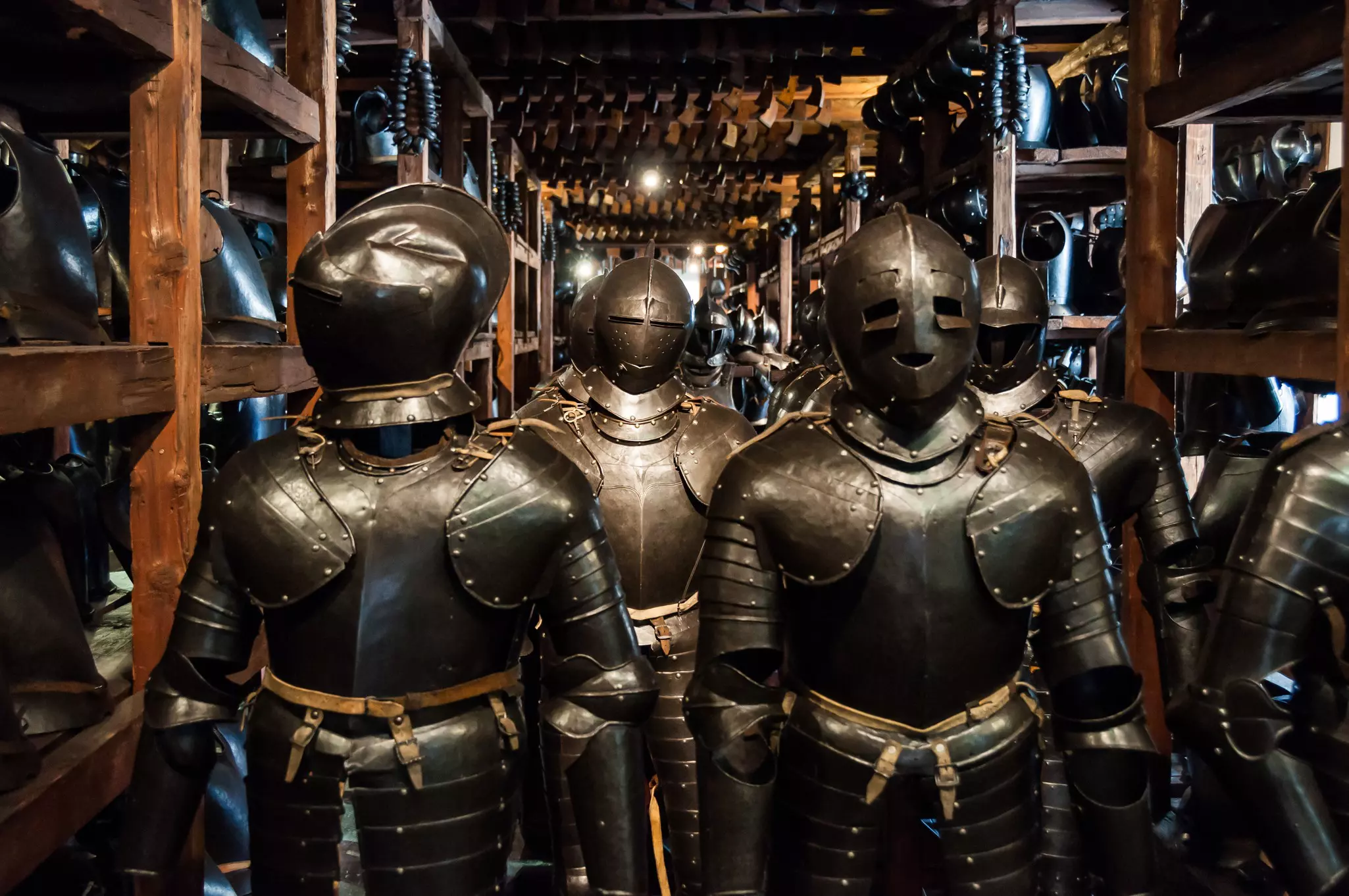
The Styrian Armory (Landeszeughaus) is the world’s largest preserved historical armory, with a staggering 32,000 objects on display. Spanning a period from the 15th to the 18th centuries, the collection ranges from the sabers carried by light cavalry to huge broadswords, delicately inlaid firearms, the halberds and pikes used by foot soldiers, and all the other accouterments of warfare in between – bullet molds, powder flasks, bayonets – all beautifully preserved. Among all the armor is an early-16th-century horse’s armor from Innsbruck.
Planning tip: There are guided tours of the Armory in English at 12: 30pm daily except Monday (there are others in German), and you need to reserve a place on these in advance; otherwise, there are audio guides in several languages.
Graz has plenty of green spaces such as parks, gardens and beaches besides the Schlossberg, where you can enjoy a picnic, stroll or swim. Stroll through the Stadtpark, a well-manicured swathe of green which sweeps around the eastern side of the city’s historic core with broad, winding paths, cafes, old chestnut trees and oodles of space. Visit the Botanical Garden, northeast of the city center with modern, cutting-edge glasshouses, or wander around the Kunstgarten, which features contemporary art in a garden setting, south of the Hauptbahnhof.
If you’re looking for more activity, stop by Stadtstrand, a recreation area on the banks of the Mur, south of the center. You can rent SUPs and kayaks – it’s easily reached by bike along the river. Or, if you’re looking to take a dip, head to the Schwarzlsee, a swimming lake and recreation area beside the airport.
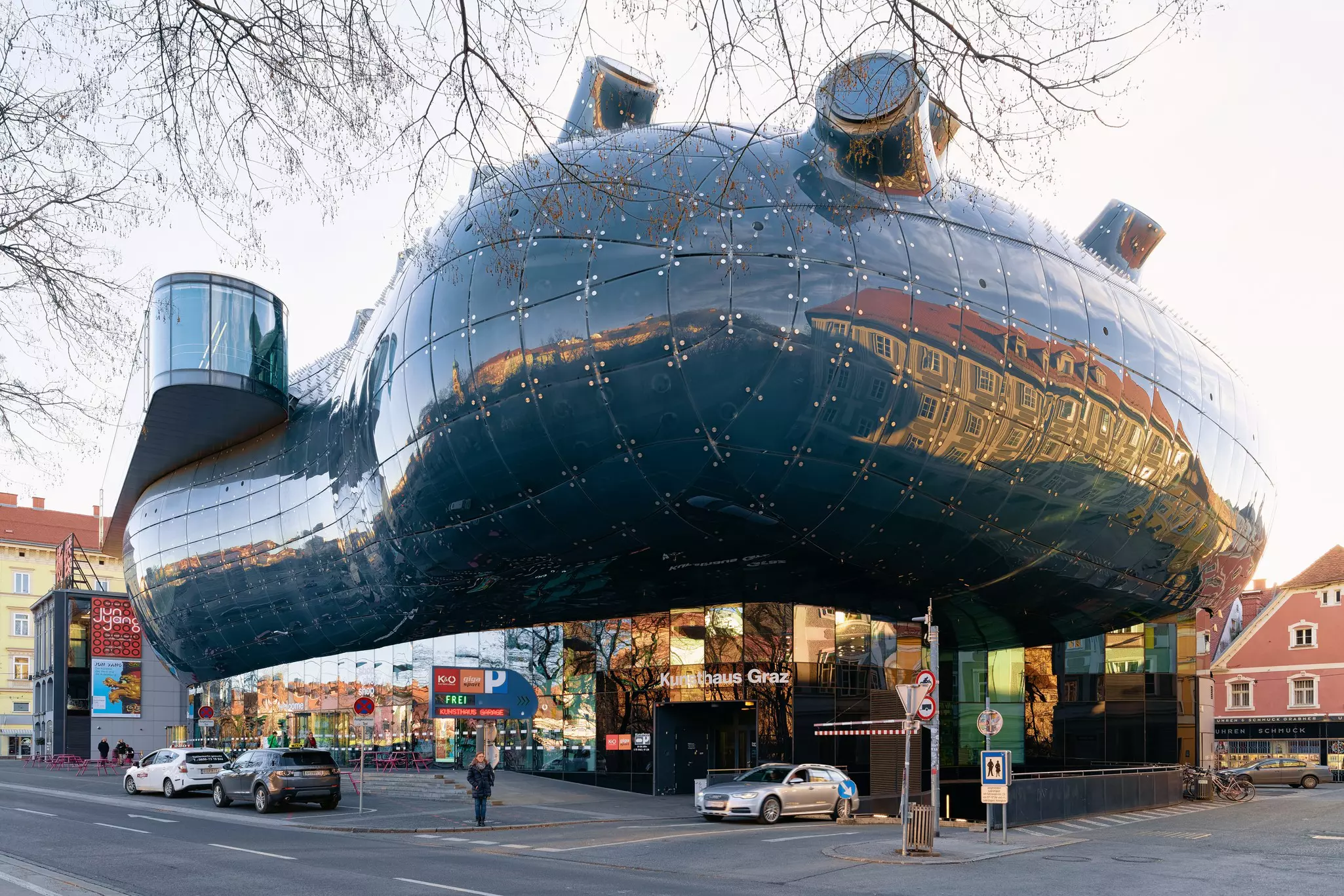
Nothing is more emblematic of modern Graz than the Kunsthaus. Opened in 2003, this stunning example of contemporary architecture stands out with its biomorphic design and vibrant blue exterior, creating a stark contrast to the traditional gabled buildings and their red-tiled roofs that surround it. Some have likened it to a giant sea slug, others to an oversized baby hippo – but the nickname that has stuck is “The Friendly Alien.”
The Kunsthaus located on the bank of the Mur, features a distinctive roof with vent-like nozzles and is connected to the historic Iron House, a 19th-century cast-iron building. The Iron House's former cafe is now the Camera Austria exhibition space, while the ground floor hosts the Kunsthauscafé. The museum's location in a once underdeveloped area has contributed to the rise of one of Graz's trendiest neighborhoods, and its rolling exhibitions showcase contemporary art by artists like Sol LeWitt and Ai Weiwei.
Local tip: Make sure you check out the view from the furthest nozzle (the “naughty nozzle”) in the upper-floor exhibition space. This one doesn’t point towards the sky, but towards that iconic landmark of “old” Graz, the clocktower, framing it very deliberately.
The Landhaus (Styria’s regional parliament) stands on Herengesse in a beautiful Renaissance palace dating from the mid-16th century. The highlight of the Landhaus is its arcaded courtyard, with arches set on three levels. It feels as though you have stumbled into a palace in Lombardy transposed to the heart of Styria. Concerts and other events are held in the courtyard throughout the year, and it’s here that you’ll find the city’s ice nativity scene at Advent.
Local tip: Beside the entrance to the Landhaus is the so-called Rumortafeln from 1588 – a notice prohibiting the genteel rulers, lords and landowners of Styria from drawing their sword or a knife, or getting into a brawl while inside the building.
Graz is home to over 300 urban farmers and 14 farmers markets. To factor all this market-browsing and food-buying potential into your stay, aim to include at least one picnic – Augarten Park beside the Mur, Stadtpark or the nearby Burggarten are some of the many good spots for picnicking in the city.
Stop by one of the many farmers markets as you plan your picnic, like Graz’s largest farmers market on Kaiser-Josef-Platz, behind the Opera House. Farmers markets are open 6am to 1pm, Monday to Saturday, so it’s best to go in the morning. Choose from fresh fruit and vegetables, local cheeses, cured ham and smoked sausages, crusty farmhouse bread, juice, freshly cut flowers and more.
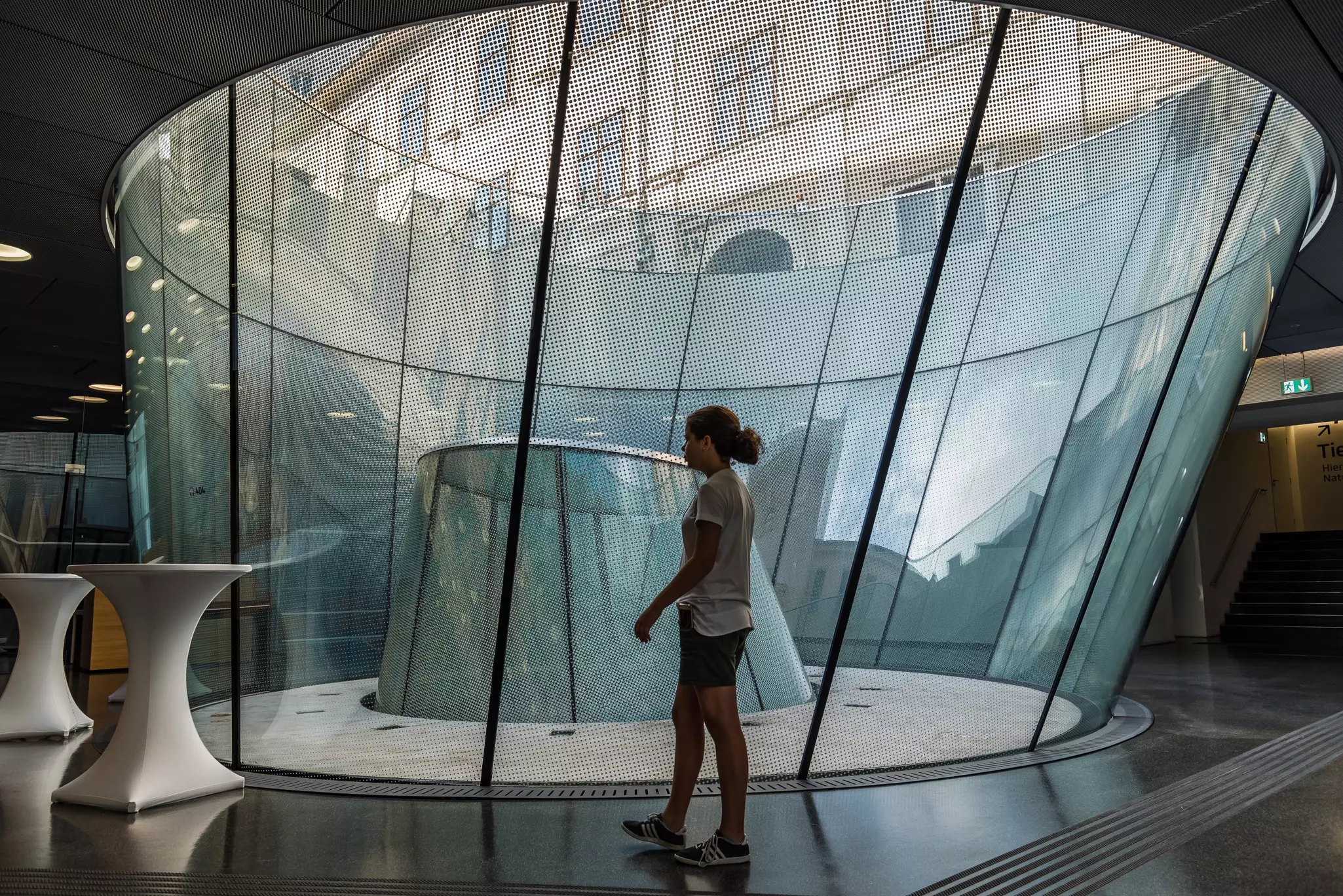
Opened in 2011, the Joanneumsviertel (Joanneum Quarter) is a major cultural center in the city’s historic core, transformed from a group of historic buildings and now home to several museums. These include the excellent Neue Galerie Graz and Bruseum, the former of which has a collection of modern paintings, sculptures, prints and photography from the 19th and 20th centuries. The Bruseum focuses on the work of Styrian-born painter and performance artist Günter Brus.
Local tip: The Joanneumsviertel also houses the Natural History Museum, with a particularly interesting geology section, and the COSA Centre for Scientific Activities, which is especially good for kids.
It should come as no surprise that a university town with such a strong passion for the arts has plenty of festivals. From the International Storytelling Festival in May to the Festival of Fashion in September, and Klangnacht, a mesmerizing light and sound festival in October, there's always something creative and vibrant happening throughout the year.
There’s also Elevate in March, which bills itself as a festival of “music, arts and political discourse”; Springfestival in June with live electronic music and art installations; Design Month in May which condenses all of the city’s creative energy into a one month festival; Aufsteirern in September, showcasing traditional music, dance, food and crafts; and Steirischer Herbst in September/October, an edgy, contemporary performing-arts festival that has been running for over 50 years.
This article was adapted from Lonely Planet’s Austria guidebook, published in June 2024.
Explore related stories