Feb 22, 202615 min read
The 12 Best Places to Visit in ArmeniaFeb 22, 2026
15 MIN READ

Writer
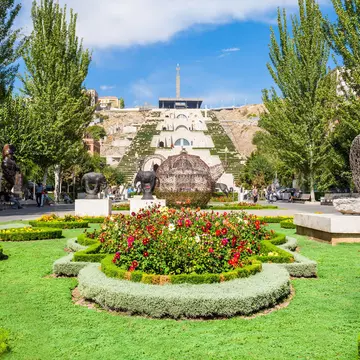
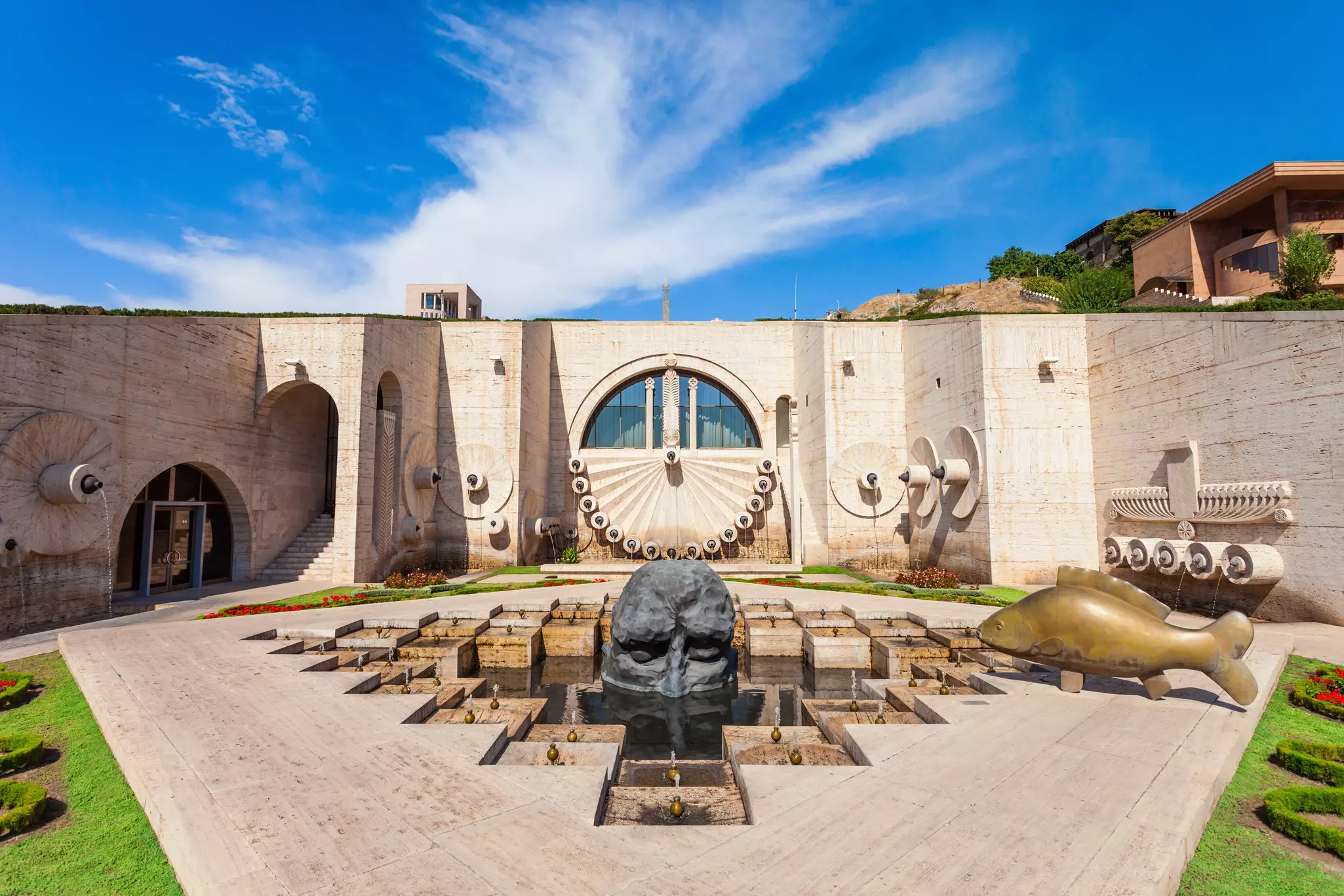
View from the Alexander Tamanyan–designed Cascade complex. Damian Pankowiec/Shutterstock

Writer
Highlights
Editors pick 12 Armenian destinations from Yerevan to canyon monasteries and wine country.
Gyumri – Armenia's second city – charms with Art Nouveau buildings built from volcanic tuff.
Visit Alaverdi's UNESCO-listed Haghpat and Sanahin monasteries, then gaze over vast Lake Sevan.
Head south for Areni wine, Tatev's world-record cable car and Noravank's red-cliff monastery.
Lonely Planet may earn a commission from affiliate links on our site. All recommendations and reviews reflect our own independent opinions.
Wedged between Türkiye, Georgia and Azerbaijan in the South Caucasus region, Armenia is often overlooked by travelers, but there are many good reasons to put Armenia on your radar. Landlocked and mountainous, Armenia offers a unique mix of tradition, stunning landscapes and historic sites that date back millennia. There's plenty to see and do here, from visiting the world’s oldest winery to riding the longest nonstop reversible cable car in the world.
But where should you go to get the best from Armenia? Almost everyone starts by exploring the captivating streets and art museums of Yerevan, the nation's capital, but other highlights include jaw-dropping canyon views in Debed, mesmerizing UNESCO-protected monasteries in Alaverdi, and the azure expanse of Lake Sevan.
Always factor in the Armenian climate – the mountains can be chilly in winter, while the lowlands bake in summer. The last spring and early fall are the sweet spots for exploring the whole country; for hikers, the mountains are the best place to be during the sultry summer.
Whether this is your first visit or you are returning to explore the Caucasus in depth, here are the best places to visit in Armenia.
Best for experiencing the Armenian way of life
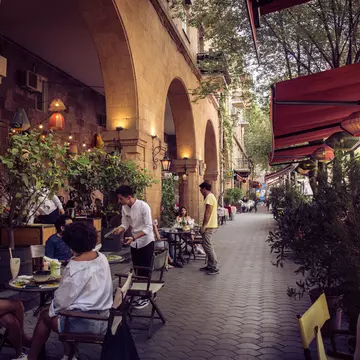
Leave your preconceptions at home, because Yerevan will almost certainly confound them. Armenia's capital city is full of contradictions – top-of-the-line Mercedes sedans share the roads with Ladas so old they should be in museum collections; traditional pandoks (taverns) serving khorovats (barbecued meat) sit next to chic wine and cocktail bars; and street fashions range from Kardashian-chic to babushka with many weird and wonderful variations in between.
Republic Square, with its towering tuff-stone masterpieces of Armenian architecture, is the beating heart of the “Pink City." The nearby History Museum of Armenia is a must-visit – partly due to its extraordinary collection of Bronze Age artifacts and its 5500-year-old leather shoe (arguably the world’s oldest).
Nearby is the Cafesjian Center for the Arts, or Cascade Complex, an arts center ornamented with sculptures, 572 stone steps and 15 small fountains symbolizing Armenia’s 15 provinces. For the best views of the city, ride the escalators and climb up to Victory Park to view the mighty 22m-high Mother Armenia Monument.
Planning tip: Yerevan’s city center is easily walkable with plenty to see, but take a peek at the Soviet-era metro – it's worth a ride just for its architecture, though it’s of limited value for getting around, with just one line and 10 stops.
Best for Art Nouveau architecture
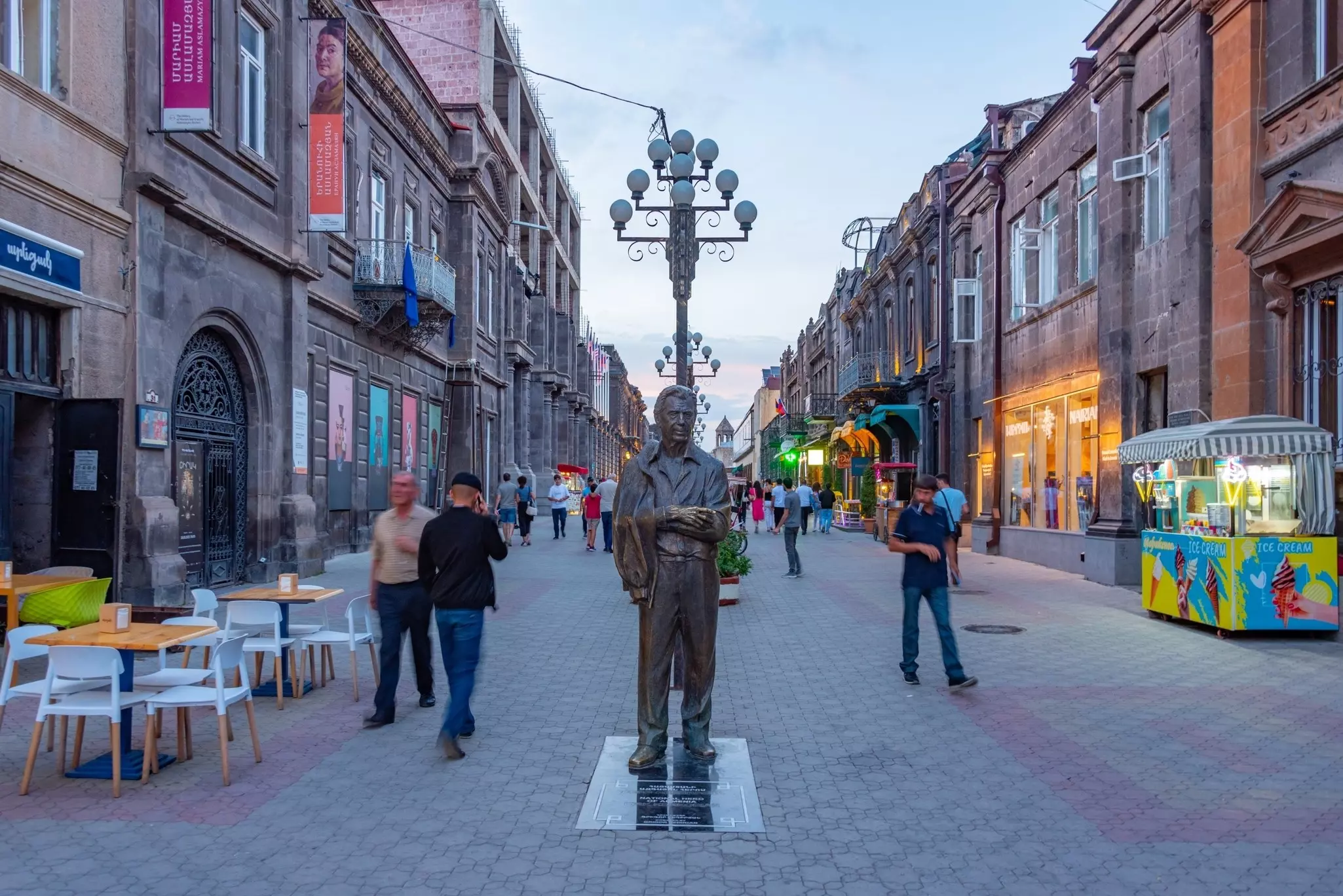
Armenia’s second city, Gyumri is the nation's historic and artistic hub. Dating back 2500 years, the town has many stunning 19th-century buildings constructed from volcanic tuff, with fine stone engravings and often colorful doors. It's well worth a detour.
Tragically affected by the devastating 1988 Spitak earthquake, Gyumri has been able to restore most of its architectural glory. On a walk through its historic streets, you can visit arty galleries, meet passionate locals and feel the excitement of a city undergoing a renaissance.
The best example of Gyumri’s Art Nouveau style is the Surp Amenaprkich (All Saviours Church) on Vardanants Sq, adorned with a mixture of black- and apricot-colored tuff and featuring beautiful frescoes inside. Across the square, Surp Astvatsatsin (Holy Mother of God Church) buzzes with activity all day long and has paintings and sculptures inside and out. Another noteworthy building is the Museum of National Architecture and Urban Life, which has intricately carved wooden balconies.
Planning tip: The best, and most scenic, way to get from Yerevan to Gyumri is via the express train, which runs only on weekends and takes just over 2 hours, offering views of the Armenian countryside on the way.
Best for stunning ancient monasteries
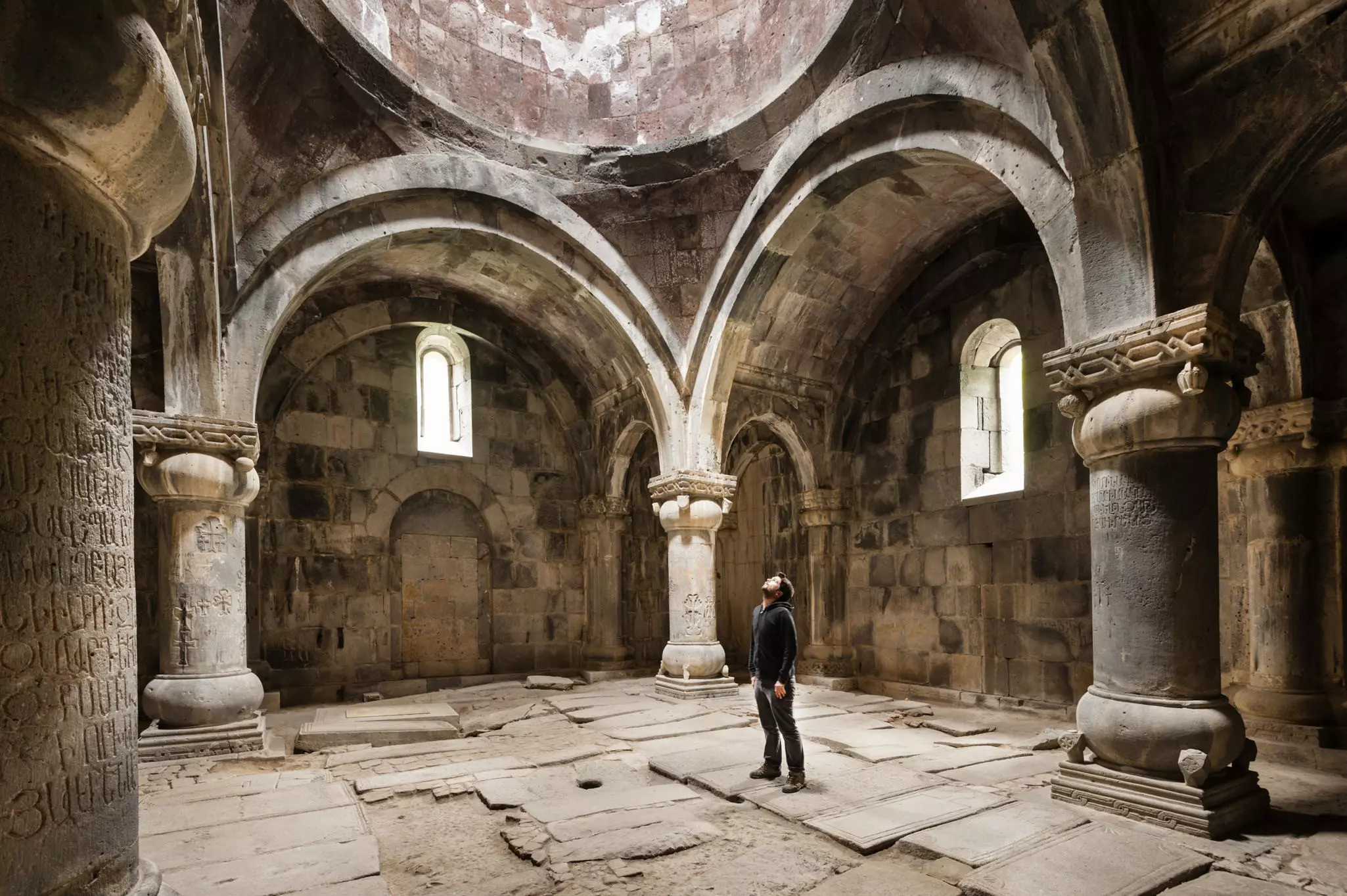
The closest Armenian city to the Georgian border, Alaverdi is a rather unremarkable industrial town at the bottom of the Debed River gorge. However, nearby are two UNESCO World Heritage-listed medieval monasteries that might just be the most visited sites in Armenia.
Founded in the 10th century, Haghpat Monastery has some of the most spectacular views of any of Armenia’s medieval monasteries; it's about 4km east of Alaverdi, above the village of the same name. Alaverdi's second must-visit monastery is Sanahin Monastery on the south side of the Debed River. This spectacular religious complex is packed with ancient khachkars (carved memorial steles), darkened chapels and medieval study halls, and there's a large cemetery behind.
The town is also home to one of the country’s friendliest guesthouses, Iris Bed & Breakfast, whose owners share their wisdom of the Armenian kitchen through cooking masterclasses. Soviet history enthusiasts can visit the Mikoyan Museum, a shrine to the notorious Alaverdi-born Mikoyan brothers who shaped the history of the communist empire.
Planning tip: Coming from Yerevan, Tbilisi-bound busesand marshrutky (shared taxis) run to Alaverdi several times daily, with local services to the Sanahin and Haghpat monasteries. Be prepared for long, steep climbs if you walk to the monasteries from the city center.
Best for scenic mountain hikes
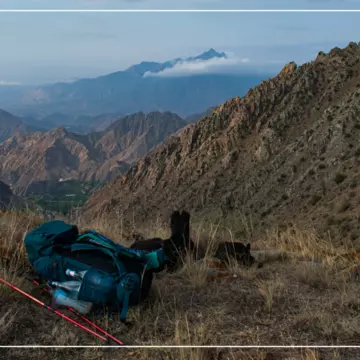
The mountains around the town of Dilijan and its eponymous national park are perfect hiking territory, even in the height of summer, except on days when the weather is particularly toasty. The highlight for walkers is tackling sections of the red-and-white marked Transcaucasian Trail, which stretches up to Georgia and down to Meghri. Contact Hike Armenia in Yerevan before you come for trail advice and other hiking tips.
On a rainy day in Dilijan, your best bet is the Dilijan Local Lore Museum and Art Gallery. The entry fee is pricey, but the museum has an eclectic collection of European and Armenian art from the 16th to 20th centuries, as well as an archaeology exhibition downstairs featuring axes and chainmail.
Planning tip: Marshrutky run from Yerevan's Northern Bus Station to Dilijan or you can come by chartered taxi.
Best for carefree spa relaxation
Around 170km southeast of Yerevan, a journey of around 4 hours by bus or marshrutky, Jermuk is famed for its natural hot springs. A spa day in Jermuk looks something like this: you'll wake up in a luxurious resort and eat a healthy breakfast before a meeting with a doctor, who will recommend a line-up of treatments depending on your ailments and physical health, ranging from mineral baths to aromatherapy.
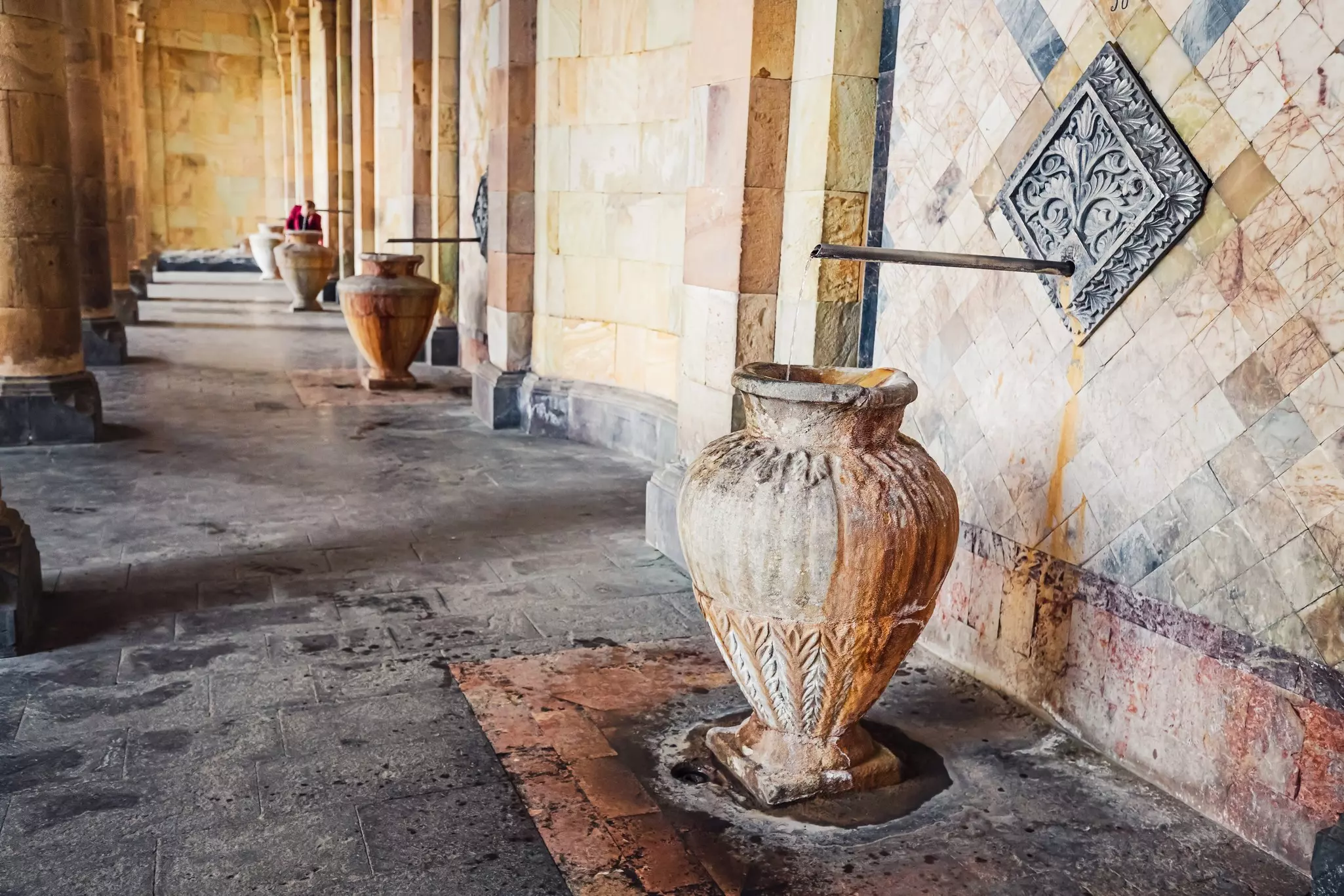
After your treatment, you can have lunch and hang out by the pool or take a silent meander through this calm resort town to the Gallery of Waters, where you can sip mineral water credited with healing properties, emerging from pipes at temperatures of 30°C (86°F) to 55°C (131°F). After dinner and a restful night's sleep, you'll repeat the process for up to 18 days, or even longer, depending on what the doctor recommends.
If you're looking for a stylish place to stay, check out the 2019-built Jermuk Hotel & Spa; it has beautiful gardens that are ideal for post-spa relaxation. Grand Resort Jermuk is another fantastic accommodation choice with its own spa center.
Detour: Jeeps parked behind the Grand Resort Jermuk take groups to natural geysers in the hills that bubble like a mountain Jacuzzi. A hot springs trip takes a couple of hours, depending on how long you want to swim, and drivers charge per vehicle, not per person.
Best for outdoor fun and intriguing religious architecture
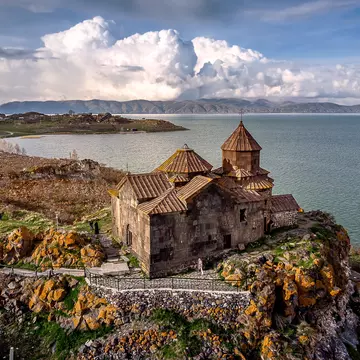
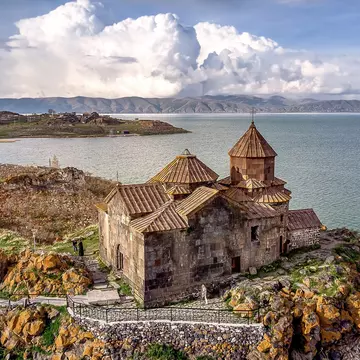
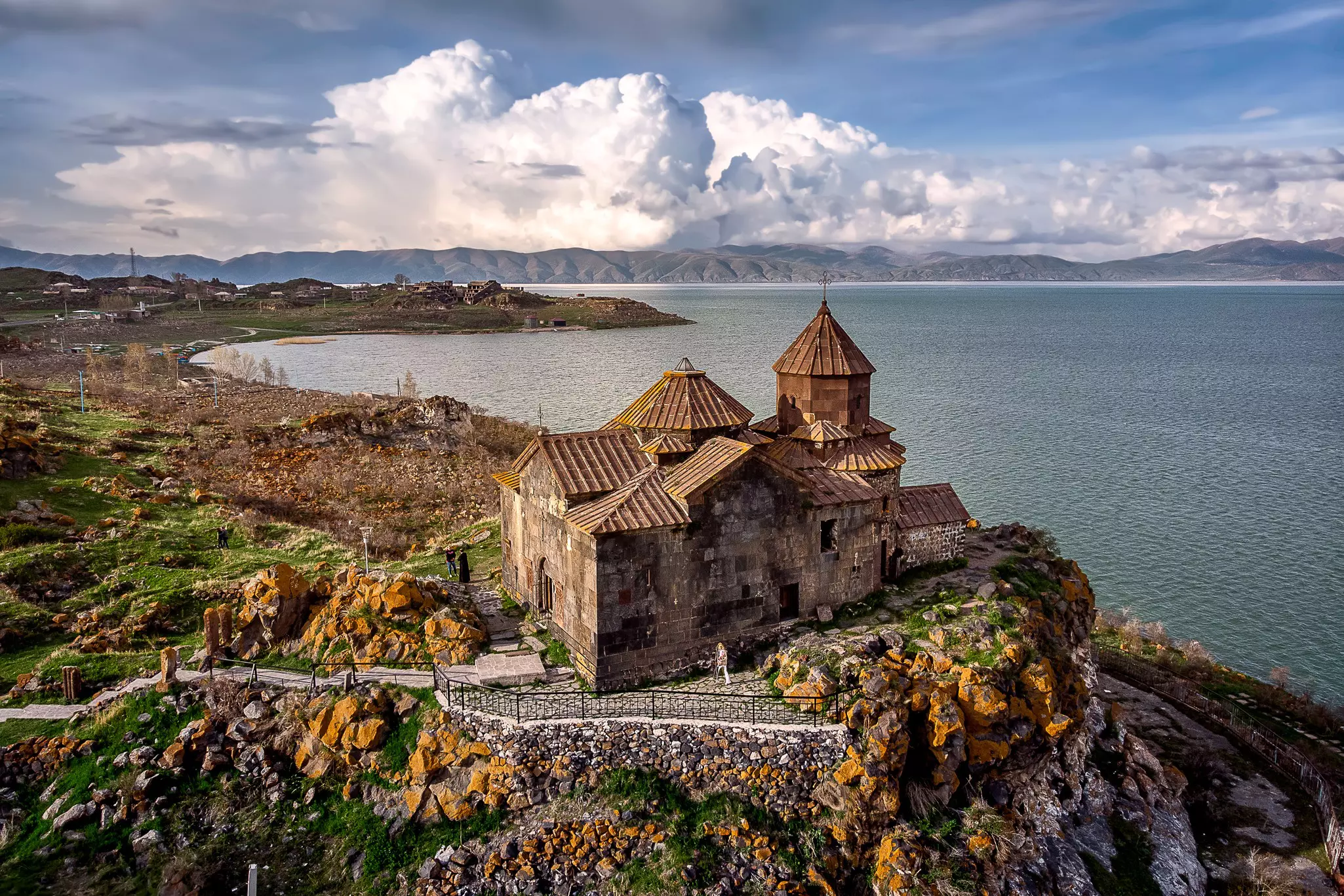
About 70km northeast of Yerevan, Lake Sevan is the largest lake in the South Caucasus and one of the largest high-altitude freshwater lakes in the world. Its colors and shades can change from royal blue to an enchanting Maldives-like turquoise, which, while visually exquisite, is indicative of toxic algae blooms. Always check locally to see if it's safe to swim before diving in.
Even if you don't take a dip, the scenery is dramatic year-round. Be sure to visit Sevanavank, one of Armenia’s most popular monastic sites, which teems with tourists throughout the summer. A pagan temple once occupied this elevated bluff overlooking the lake, but it was replaced by a now-ruined church in 305 CE, followed by the construction of two more churches in the 9th century. Coming here feels like a mini pilgrimage, with spectacular views over the lake.
On the lake's western shore lies what could be Armenia’s most culturally significant site (other than its monasteries, of course) – the breathtaking Noratus Cemetery, which has the largest collection of khachkar stelae in Armenia, some dating back to the 10th century.
Planning tip: Marshrutky and the summer-only slow train from Yerevan run to the town of Sevan, the main getaway to the lake. Unless you have your own vehicle, the only way to get to the eastern shore is to pay for a private taxi. Note that this side of the lake sees little traffic – you might have to wait a while for a ride back to Sevan, so consider booking a return trip.
Best for phantasmagoric caves
After Gyumri, Goris has the best collection of pre-Soviet 19th-century architecture in the country. Enchanting stone buildings and intricately carved wooden balconies overlook quiet streets lined with humble, friendly guesthouses. The town is about 140km southeast of Yerevan, with marshrutky taking up to 5 hours.
While in Goris, walk around the town’s magical streets, stopping for a photo at its miniature version of the Eiffel Tower (you know you want to), before walking from the town cemetery up to clusters of volcanic pinnacles punctuated by caves used to shelter cows for awesome views.
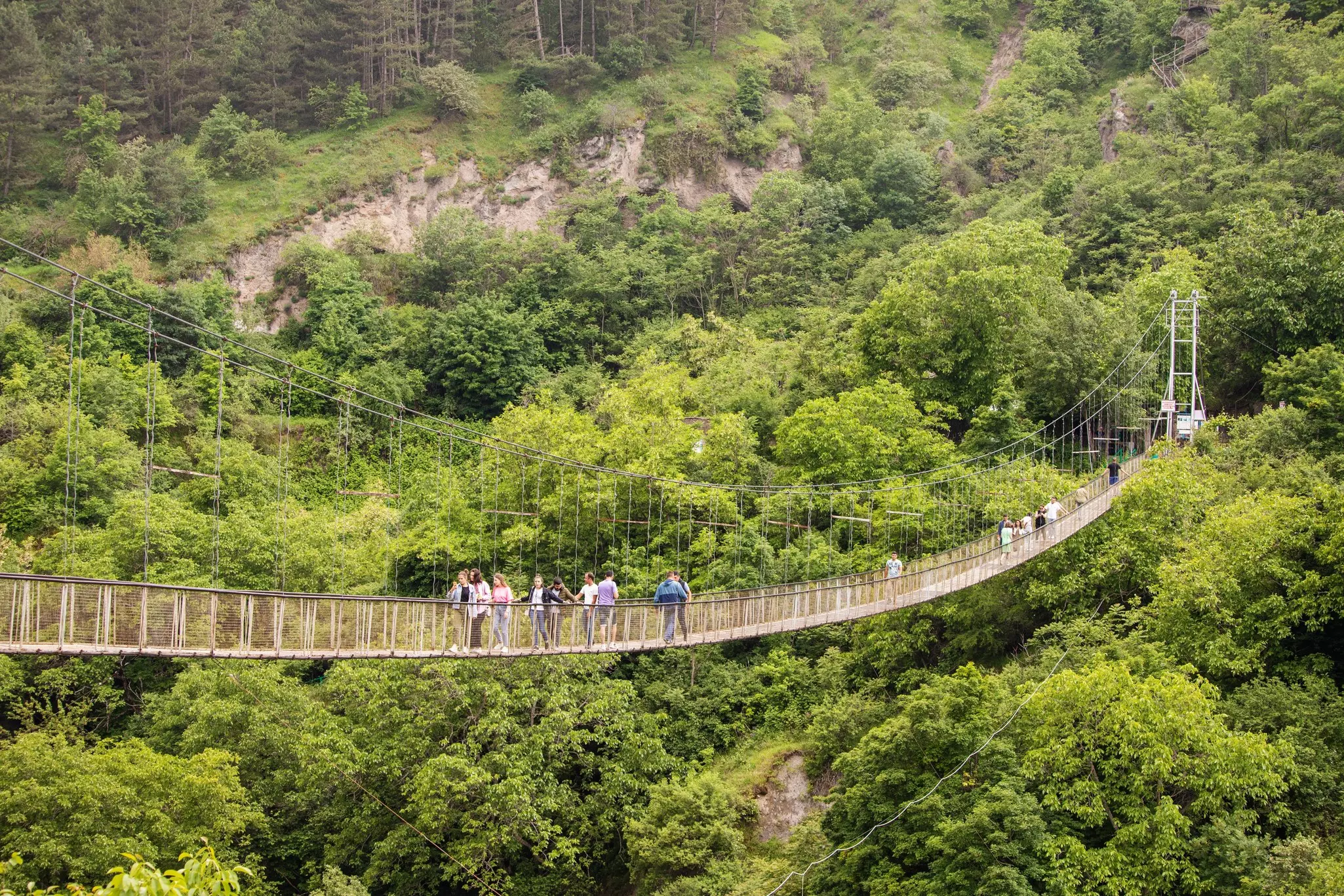
Less than 15km east lie the cone-shaped cliffs of Khndzoresk, a village of ancient cave dwellings and churches, accessed via a vertiginous, 160m-long suspension bridge. Some of the caves were inhabited until the 1950s.
Planning tip: Every June, the village of Khot near Goris hosts a lively sheep shearing festival where local shepherds show off their skills to see who is the best shearer in the region. There’s also a fashion show of traditional Armenian clothing and live bands.
Best for wine tastings
The discovery of a 6100-year-old winery in a cave near Areni in 2008 was like a loudspeaker announcement, broadcasting that Georgia wasn’t the only country in the South Caucasus for wine lovers. Nowadays, there are more than 200 wine producers dotted around Armenia, with most of them taking advantage of the dry soils around Areni.
Several wineries offer tastings of their wines, served in view of, and sometimes among, the grapevines. If you only have time to visit one winery, make it Momik WineCube, which offers tastings in its pretty, 50-year-old vineyard grounds. Another great choice is Trinity Canyon Winery, with four wine varieties to try. Wines are typically paired with fruit and salty cheeses.
It’s also possible to visit the winery cave, even as archaeologists continue to excavate, but Areni would be worth visiting even if it didn’t have a single grape. The area is surrounded by high-contrast sandy cliffs with strange rock formations reminiscent of the US Southwest.
Planning tip: Areni town itself doesn’t have many good hotels or restaurants; there are more amenities in the nearby town of Yeghegnadzor, served by marshrutky from Yerevan, which is an excellent base for exploring the south of the country.
Best for discovering Armenia’s rich Christian history
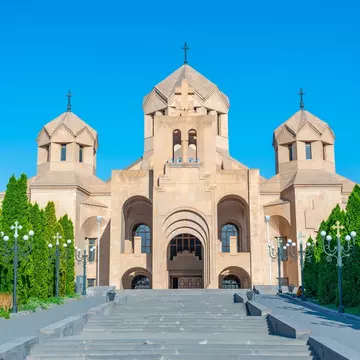
Armenia is proud to call itself the world’s first Christian nation. After being converted by Christian apostles in the 3rd century CE, Saint Gregory the Illuminator refused to partake in pagan rites, earning him the wrath of King Tiridates III, who imprisoned him as a heretic in a pit of snakes for a decade. Gregory’s survival in such hellish conditions so impressed the king that he abandoned his skepticism and converted to Christianity himself in 301 CE, taking the rest of the country with him.
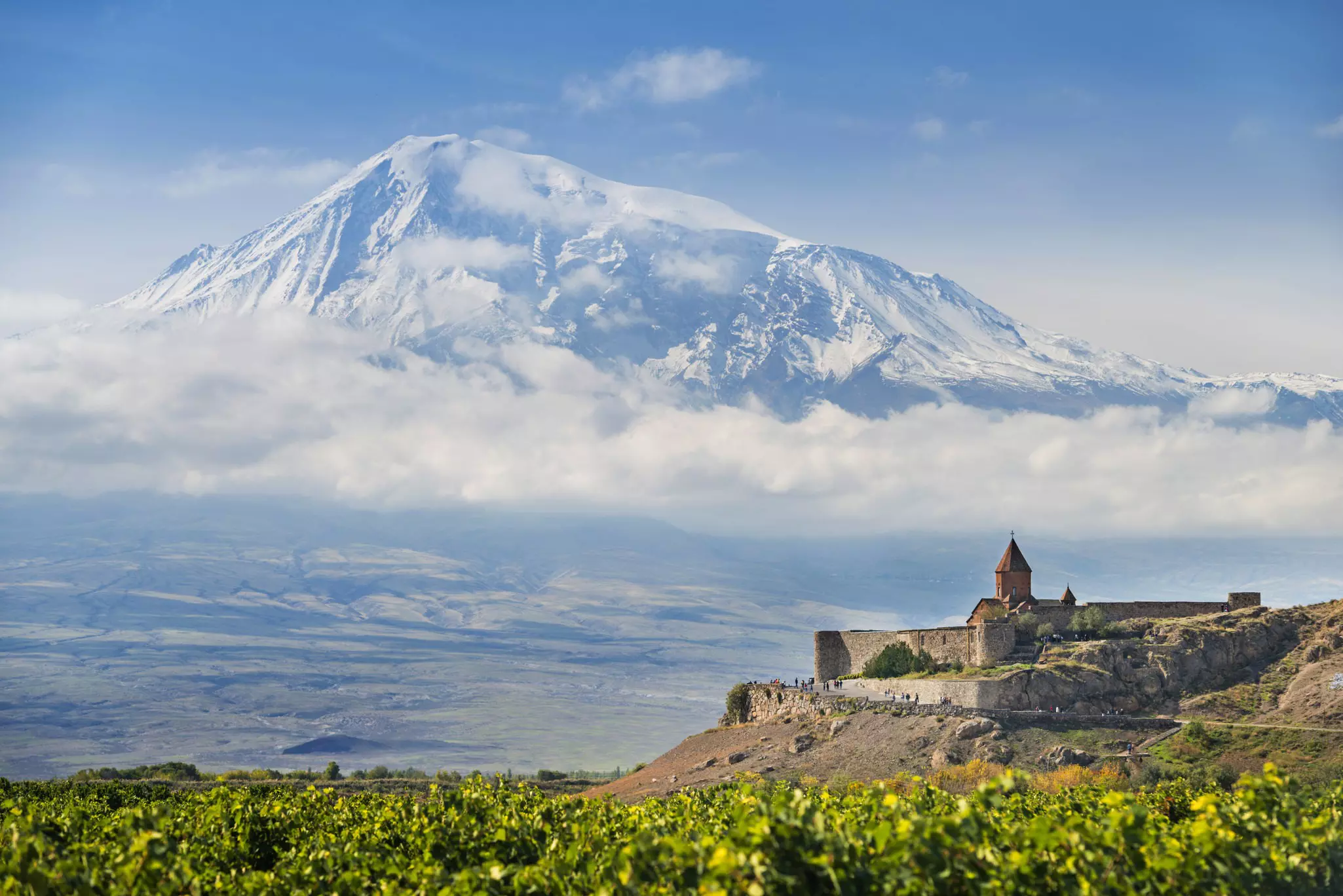
Experience this fascinating piece of history first-hand with a visit to Khor Virap Monastery, where you can climb into the torture pit (now snake-free) and gaze out over awesome views from the hilltop toward 5137m Mt Ararat. The picturesque 17th-century Surp Astvatsatsin Church crowns this fascinating religious complex, with its striking, ochre-colored, conical dome.
Planning tip: Buses and marshrutky cover the 40km south trip from Yerevan, but it's easiest to come by taxi. In the same area, you can check out Artashat, marked by the ruins of the capital built by Trdat the Architect for King Artashes I in the 2nd century BC.
Best for breathtaking canyon vistas
The tiny rural village of Tatev is perched on a 1600m-high plateau overlooking the Vorotan River, offering jaw-dropping views over its canyon. Get across in style via the Wings of Tatev Aerial Tramway, the longest nonstop reversible cable car in the world. The trip across the gorge is breathtaking, and a recorded commentary explains a bit about what you’re seeing.
Once across, follow the crowds to Tatev Monastery, originally founded in the 4th century. The bishops of Syunik built the domed main church, Surp Poghos-Petros (St Paul and St Peter), in the 9th century to house important relics. In the courtyard, look for the 8m-high octagonal pillar topped by a khachkar, which is said to have predicted seismic activity (or the roar of the hooves of approaching armies) by its movements.
Major restorations brought Tatev Monastery back to life in 2018, and it’s now one of Armenia’s most popular monasteries, with the faithful lining up to be blessed most days. Take your time to wander around the complex; there are stairs to climb, tiny doorways to duck through and plenty of pretty views.
Planning tip: The best way to reach Tatev is to travel by bus or marshrutky to Goris and to hire a taxi from there.
Best for medieval splendor
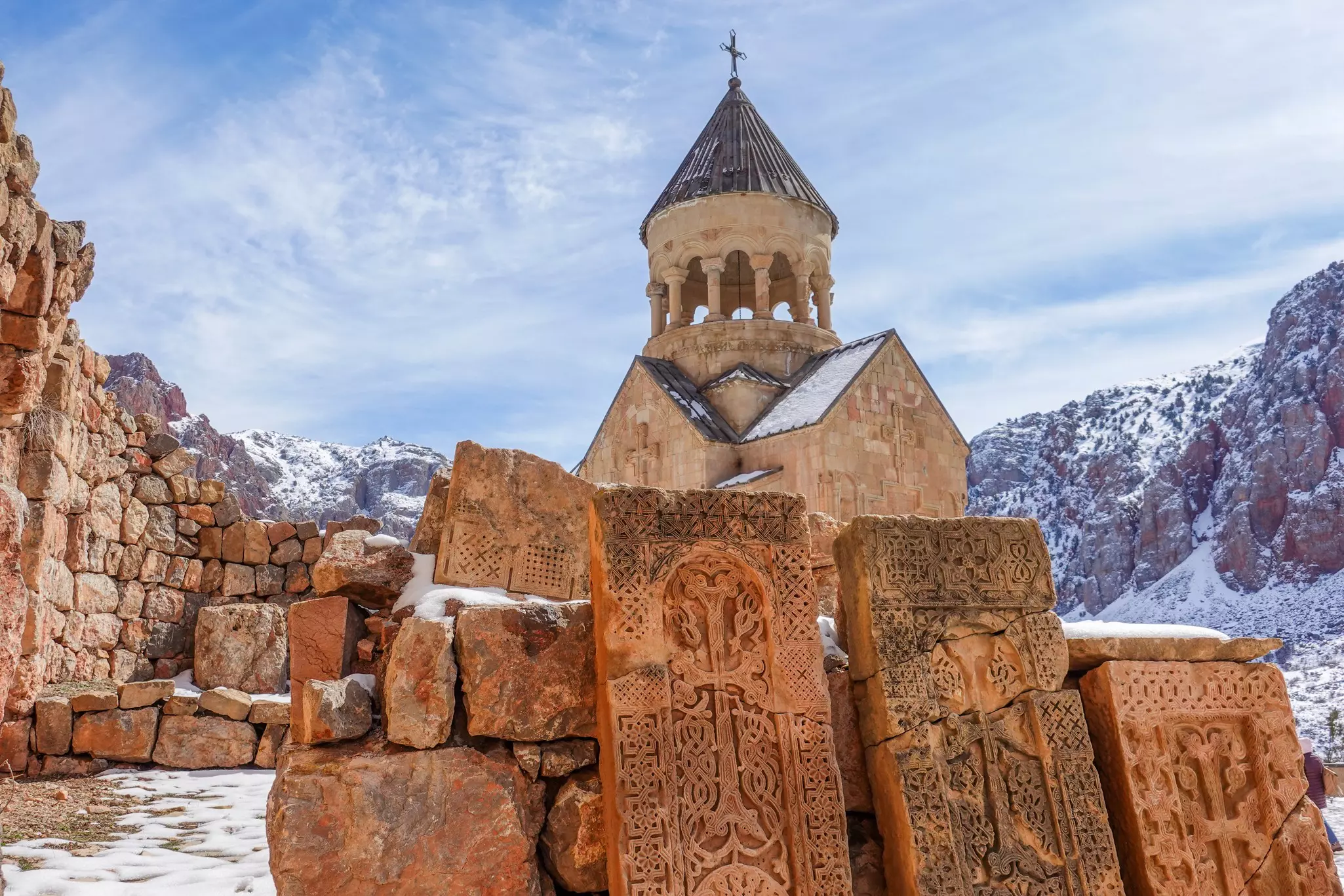
If you visit just one monastery in Armenia, make it Noravank, founded by Bishop Hovhannes in 1205. Seeing Noravank in the early morning or the late afternoon, when the reddish hues of the dramatic cliffs surrounding it are accentuated by the setting sun, is a spiritual moment regardless of your beliefs.
The complex includes the Surp Astvatsatsin Church, a masterpiece by Armenian architect and sculptor Momik from 1339, which has matching steps leading up to a circular, dome-covered balcony that was rebuilt during extensive renovations in the 1990s. The theory is that Momik made the steps narrow as a sign of faith (walking up is a challenge) and to keep out inquisitive wildlife. Unfortunately, visitors can no longer climb up for safety reasons, but you can (and should) explore the main hall.
In front of the main church is a well you can climb into, as well as an older church, Surp Karapet, which was designed by architect Siranes. Look up at Momik’s magnificent sculpture above the door depicting God holding the head of Adam.
Behind the churches is a set of intricate khachkars and a museum dedicated to Momik, displaying copies of his designs from ancient books now protected in Yerevan’s Matenadaran library. Also here are coins found at Noravank, and ingredients used to make healing oils for Armenian Apostolic Church ceremonies. Ask the ticket employee for a tour.
Planning tip: Women with short shorts or skirts are provided with a long cloth to wear at the entrance. Get to Noravank by taking a bus or marshrutky to Yeghegnadzor, then a taxi from there.
Best for pre-Christian heritage
Less than an hour east of Yerevan are two of Armenia’s most spectacular sites – the spectacular and handsomely restored Garni Temple and the historic Geghard Monastery. The easiest way to see both is by hiring a car and driver from Republic Square, or with your own vehicle.
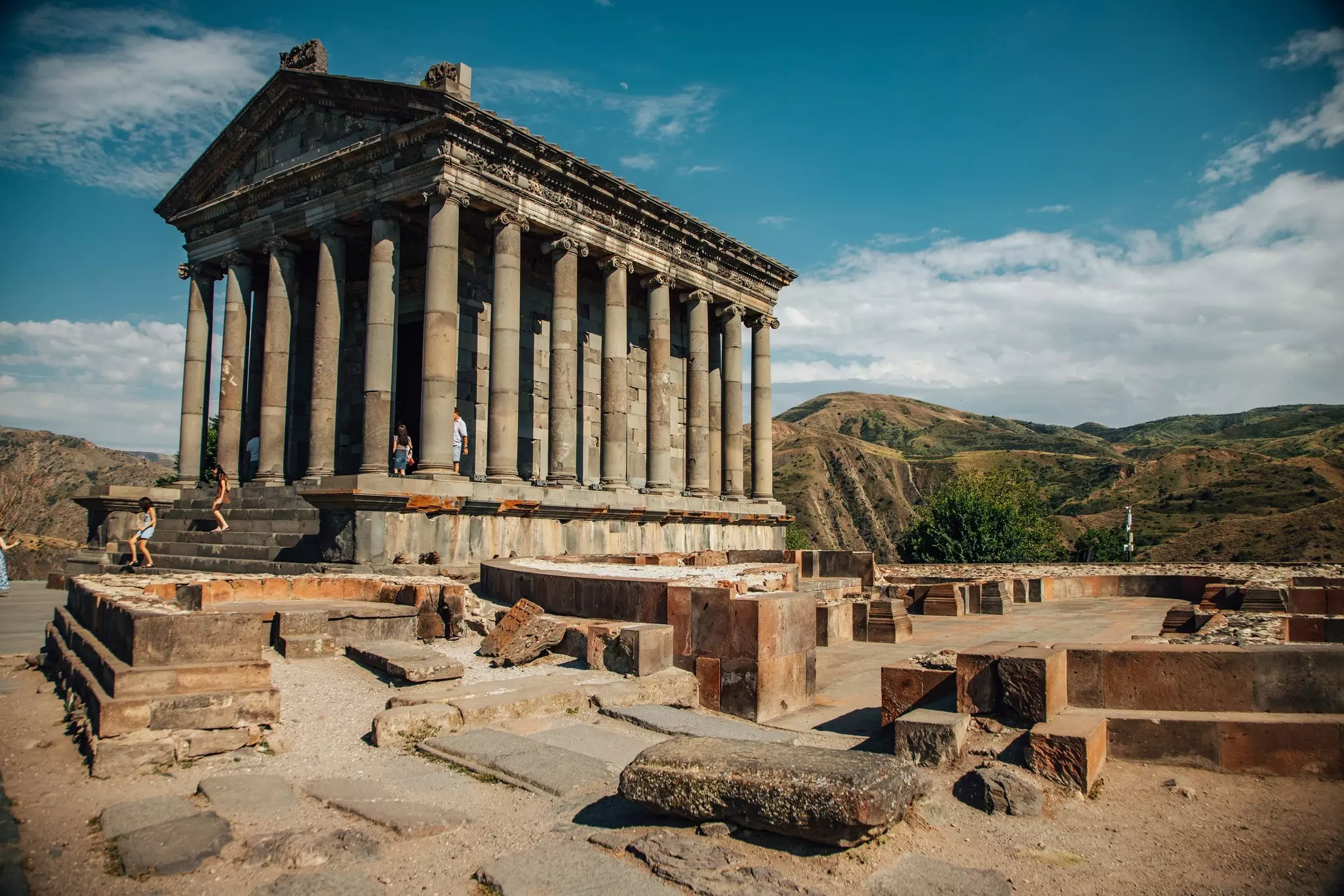
Garni Temple is an astonishing, 2000-year-old pillared temple in the classic Hellenistic style – the only such building in the former Soviet Union. First raised in 77 CE, it was rebuilt between 1969 and 1975 after being toppled by earthquakes and invasions during the medieval period.
On the drive to Garni, you’ll pass Charent’s Arch, a stone archway built by architect Rafael Israelyan in 1957 to frame the perfect hilltop view of Mt Ararat in the distance. In the Garni Gorge below the temple are outcrops made up of basalt columns that look like the tubes of an organ, known locally as the Symphony of Stones. Walk the cobblestone walkway near the Azat Bridge for the best close-up views.
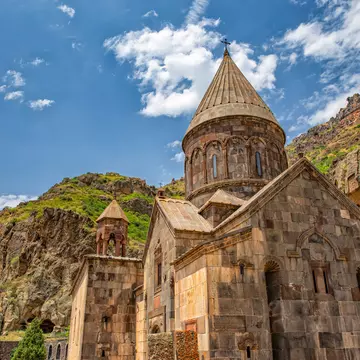
Your tour or drive will finish at the World Heritage-listed Geghard Monastery, founded in the earliest days of Christianity in Armenia. The main stone church, Surp Astvatsatsin, was built in 1215 and houses a chapel with holy spring water that locals line up to touch.
Steps left of the entrance lead to a passageway with Armenian memorial stone khachkars and a 13th-century burial vault carved directly out of the rock. The hills outside the monastery are filled with caves built by monks, and the road leading up is crammed with vendors selling sujukh (a sweet made from walnuts and grape syrup) and gata (sweet pastries).
Planning tip: Vehicles lined up around Yerevan’s Republic Square offer affordable trips to most of the sites beyond Yerevan, though without a guide. Pricier tours visit Garni and Geghard with a guide to put the sites into context.
This article was adapted fromLonely Planet's Georgia, Armenia & Azerbaijan guide, published in July 2024.
Explore related stories