Things to do in Spain
-
A
Park Güell
North of Gràcia and about 4km from Plaça de Catalunya, Park Güell is where Gaudí turned his hand to landscape gardening. It’s a strange, enchanting place where his passion for natural forms really took flight – to the point where the artificial almost seems more natural than the natural.
Park Güell originated in 1900, when Count Eusebi Güell bought a tree-covered hillside (then outside Barcelona) and hired Gaudí to create a miniature city of houses for the wealthy in landscaped grounds. The project was a commercial flop and was abandoned in 1914 – but not before Gaudí had created 3km of roads and walks, steps, a plaza and two gatehouses in his inimitable manner.…
reviewed
-
B
La Sagrada Família
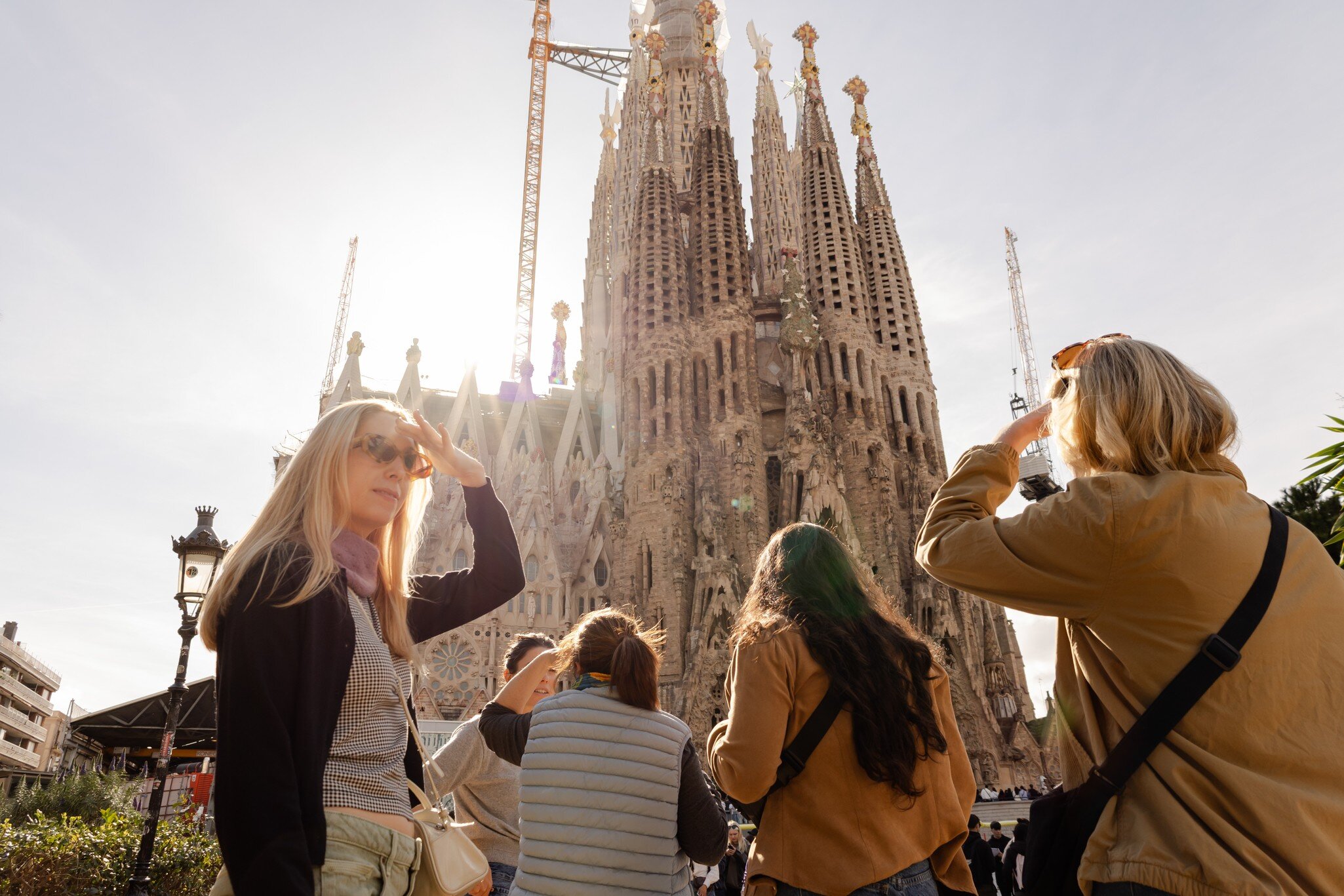
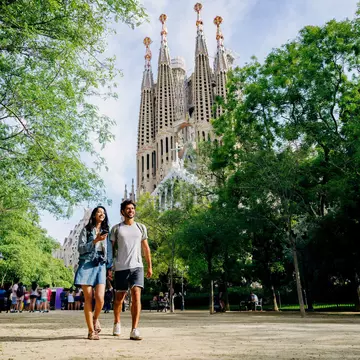
If you have time for only one sightseeing outing, this should be it. La Sagrada Família inspires awe by its sheer verticality, and in the manner of the medieval cathedrals it emulates, it’s still under construction after more than 100 years. When completed, the highest tower will be more than half as high again as those that stand today.
Unfinished it may be, but it attracts around 2.8 million visitors a year and is the most visited monument in Spain. The most important recent tourist was Pope Benedict XVI, who consecrated the church in a huge ceremony in November 2010.
The Temple Expiatori de la Sagrada Família (Expiatory Temple of the Holy Family) was Antoni Gaudí’s…
reviewed
-
C
Centro de Arte Reina Sofía
Home to Picasso’s Guernica, arguably Spain’s single most famous artwork, and a host of other important Spanish artworks, the Centro de Arte Reina Sofía is Madrid’s premier collection of contemporary art. In addition to plenty of paintings by Picasso, other major drawcards are works by Salvador Dalí (1904-89) and Joan Miró (1893-1983).
The collection principally spans the 20th century up to the 1980s (for more recent works, visit the Museo Municipal de Arte Contemporáneo). The occasional non-Spaniard artist makes an appearance (including Francis Bacon’s 1966 Lying Figure), but most of the collection is strictly peninsular.
The permanent collection is displayed…
reviewed
-
D
Gamaya
A breath of fresh laid-back Ibiza air runs through this new ladies’ wear store tucked away on a street that has gone from near abandonment in the 1990s to become a delightful shopping lane today. The lady who runs this shop designs the breezy summer dresses, pants-and-tops combinations and prints herself.
reviewed
-
-
E
Alhambra
The sheer red walls of the Alhambra rise from woods of cypress and elm. Inside is one of the more splendid sights of Europe, a network of lavishly decorated palaces and irrigated gardens, a World Heritage Site and the subject of scores of legends and fantasies.
But at the height of summer, some 6000 visitors tramp through daily, making it difficult to pause to inspect a pretty detail, much less mentally transport yourself to the 14th century. Schedule a visit in quieter months, if possible; if not, then book in advance for the very earliest or latest time slot.
The Alhambra takes its name from the Arabic al-qala’a al-hamra (the Red Castle). The first palace on the site…
reviewed
-
F
Casa Batlló
One of the strangest residential buildings in Europe, this is Gaudí at his hallucinogenic best. The facade, sprinkled with bits of blue, mauve and green tiles and studded with wave-shaped window frames and balconies, rises to an uneven blue-tiled roof with a solitary tower.
It is one of the three houses on the block between Carrer del Consell de Cent and Carrer d’Aragó that gave it the playful name Manzana de la Discordia, meaning ‘Apple (Block) of Discord’. The others are Puig i Cadafalch’s Casa Amatller and Domènech i Montaner’s Casa Lleó Morera. They were all renovated between 1898 and 1906 and show how eclectic a ‘style’ Modernisme was.
Locals know…
reviewed
-
G
Babylon Idiomas
This small school offers a high degree of flexibility – you can study for a week or enlist for a half-year intensive course in Spanish. The big selling point is class size, with a maximum of eight students per class. A week of tuition (30 hours plus five hours of culture) costs €260.
reviewed
-
H
Plaza Mayor
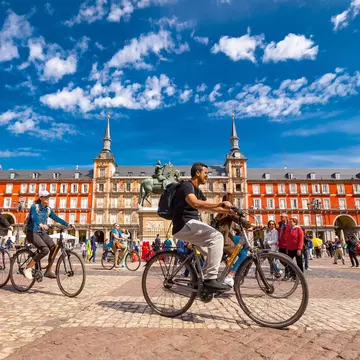
For centuries the centrepiece of Madrid life, the stately Plaza Mayor combines supremely elegant architecture with a history dominated by peculiarly Spanish dramas. Pull up a chair at the outdoor tables around the perimeter or laze upon the rough-hewn cobblestones as young madrileños have a habit of doing. All around you, the theatre that is Spanish street life buzzing through the plaza provides a crash course in why people fall in love with Madrid.
Ah, the history the plaza has seen! Designed in 1619 by Juan Gómez de Mora and built in typical Herrerian style, of which the slate spires are the most obvious expression, its first public ceremony was suitably auspicious –…
reviewed
-
I
Parque del Buen Retiro
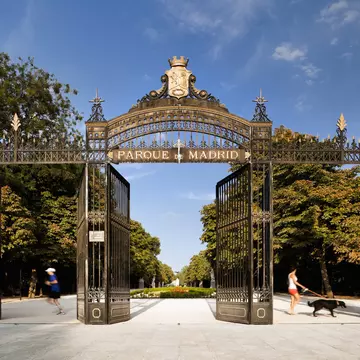
The glorious gardens of El Retiro are as beautiful as any you’ll find in a European city. Littered with marble monuments, landscaped lawns, the occasional elegant building and abundant greenery, it’s quiet and contemplative during the week but comes to life on weekends. Put simply, this is one of our favourite places in Madrid.
Laid out in the 17th century by Felipe IV as the preserve of kings, queens and their intimates, the park was opened to the public in 1868 and ever since, whenever the weather’s fine and on weekends in particular, madrileños from all across the city gather here to stroll, read the Sunday papers in the shade, take a boat ride or nurse a cool…
reviewed
Advertisement
-
J
Cafè Zurich
It doesn’t have the atmosphere of the cafe of the same name that once occupied this prime spot, but not even the hardest of hearts can deny the location is impeccable. Pull up an outdoor pew for the human circus that is Plaça de Catalunya, or huddle over a paper on the mezzanine on a winter’s day. In summer it stays open as late as 1am.
reviewed
-
K
Museo Guggenheim
Opened in September 1997, Bilbao’s Museo Guggenheim lifted modern architecture and Bilbao into the 21st century – with sensation. It boosted the city’s already inspired regeneration, stimulated further development and placed Bilbao firmly in the world art and tourism spotlight.
Some might say, probably quite rightly, that structure overwhelms function here and that the Guggenheim is more famous for its architecture than its content. But Canadian architect Frank Gehry’s inspired use of flowing canopies, cliffs, promontories, ship shapes, towers and flying fins is irresistible.
Like all great architects, Gehry designed the Guggenheim with historical and geographical…
reviewed
-
L
Museo Thyssen-Bornemisza
One of the most extraordinary private collections of predominantly European art in the world, the Museo Thyssen-Bornemisza is a worthy member of Madrid’s ‘Golden Triangle’ of art. Where the Museo del Prado or Centro de Arte Reina Sofía enable you to study the body of work of a particular artist in depth, the Thyssen is the place to immerse yourself in a breathtaking breadth of artistic styles. Most of the big names are here, sometimes with just a single painting, but the Thyssen’s gift to Madrid and the art-loving public is to have them all under one roof. Its simple-to-follow floor plan also makes it one of the most easily navigable galleries in Madrid. Not surprisingly,…
reviewed
-
Alhambra Night Tour
The Palacios Nazaríes are romantically lit in the evening and are truly heart-flutteringly beautiful. You won’t get to see as much as on a day visit, but you won’t have to deal with the same crowds either.
reviewed
-
M
Babylon Idiomas
Intensive 20-/30-hour per week courses cost €155/235 per week.
reviewed
-
N
Albayzín
On the hill facing the Alhambra across the Darro valley, Granada's old Muslim quarter, the Albayzín, is an open-air museum in which you can lose yourself for a whole morning. The cobblestone streets are lined with gorgeous cármenes (large mansions with walled gardens, from the Arabic karm for garden). It survived as the Muslim quarter for several decades after the Christian conquest in 1492.
Plaza del Salvador, near the top of the Albayzín, is dominated by the Colegiata del Salvador, a 16th-century church on the site of the Albayzín's main mosque; the mosque's horseshoe-arched patio, cool and peaceful, survives at its western end.
The Arco de las Pesas, off Plaza Larga,…
reviewed
-
O
Tupperware
A Malasaña stalwart and prime candidate for the bar that best catches the enduring rockero spirit of Malasaña, Tupperware draws a 30-something crowd, spins indie rock with a bit of soul and classics from the ’60s and ’70s, and generally revels in its kitsch (eyeballs stuck to the ceiling, and plastic TVs with action-figure dioramas lined up behind the bar). By the way, locals pronounce it ‘Tupper-warry’.
reviewed
-
P
Los Bebés de Chamberí
This small shop showcases that wonderful individuality of Spanish children’s clothes; you’ll leave laden with bags for your own kids and for friends back home.
reviewed
-
Q
Mercat de la Boqueria
Shop in the Mercat de la Boqueria, one of the world’s great produce markets, and complement with any other necessities from a local supermarket.
reviewed
-
R
Local Café Bar Lounge
With its swirling colour scheme, funky soul, disco and deep House beats and a predominantly gay crowd, Local is Chueca in a nutshell.
reviewed
Advertisement
-
S
Palacio Nazaríes
This is the Alhambra's true gem, the most brilliant Islamic building in Europe, with its perfectly proportioned rooms and courtyards, intricately moulded stucco walls, beautiful tiling, fine carved wooden ceilings and elaborate stalactite-like muqarnas vaulting, all worked in mesmerising, symbolic, geometrical patterns. Arabic inscriptions proliferate in the stuccowork.
The Mexuar, through which you normally enter the palace, dates from the 14th century and was used as a council chamber and antechamber for audiences with the emir. The public would have gone no further.
From the Mexuar you pass into the Patio del Cuarto Dorado, a courtyard where the emirs gave audiences,…
reviewed
-
T
Palacio Real
You can almost imagine how the eyes of Felipe V, the first of the Bourbon kings, lit up when the alcázar (Muslim-era fortress) burned down in 1734 on Madrid’s most exclusive perch of real estate. His plan? Build a palace that would dwarf all its European counterparts. The Italian architect Filippo Juvara (1678-1736), who had made his name building the Basilica di Superga and the Palazzo di Stupinigi in Turin, was called in but, like Felipe, he died without bringing the project to fruition. Upon Juvara’s death, another Italian, Giovanni Battista Sacchetti, took over, finishing the job in 1764.
The result was an Italianate baroque colossus with some 2800 rooms, of…
reviewed
-
U
Apes' Den
The Rock's most famous inhabitants are the tailless Barbary Macaques, the only free-living primates in Europe. Some of the 240 apes hang around the Apes' Den near the middle cable-car station; the others can often be seen at the top cable-car station and the Great Siege Tunnels. Legend has it that when the apes (which may have been introduced from north Africa in the 18th century) disappear from Gibraltar, so will the British.
When numbers were at a low ebb during WWII, the British brought in simian reinforcements from Africa. Recently, however, their numbers have been increasing rapidly and a range of control measures from contraceptive implants to 'translocation' to…
reviewed
-
V
Fundació Joan Miró
Joan Miró, the city’s best-known 20th-century artistic progeny, bequeathed this art foundation to his hometown in 1971. Its light-filled buildings, designed by close friend and architect Josep Lluís Sert (who also built Miró’s Mallorca studios), are crammed with seminal works, from Miró’s earliest timid sketches to paintings from his last years.
Sert's shimmering white temple to the art of one of the stars of the 20th-century Spanish firmament is considered one of the world's most outstanding museum buildings; the architect designed it after spending much of Franco's dictatorship years in the US, as the head of the School of Design at Harvard University. The…
reviewed
-
W
Montserrat
Montserrat (Serrated Mountain) is the spiritual heart of Catalonia and your best opportunity to enjoy awesome scenery on a day trip from Barcelona. Comprising a massif of limestone pinnacles rising precipitously over gorges, this wondrous place has drawn hermits (er, independent travellers) since the 5th century.
Montserrat, 50km (31mi) northwest of Barcelona, has weird rocky crags, ruined hermitage caves, a monastery and hordes of tourists from the Costa Brava. The Monestir de Montserrat was founded in 1025 to commemorate numerous visions of the Virgin Mary. Today it houses a community of about 80 monks, and pilgrims come to venerate La Moreneta (the Black Virgin), a…
reviewed