Things to do in Andalucía
-
A
Alhambra
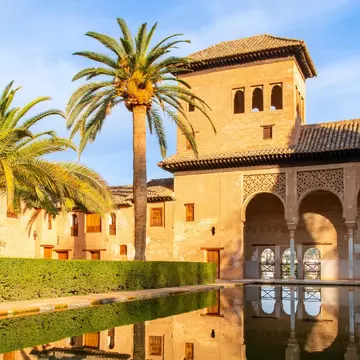
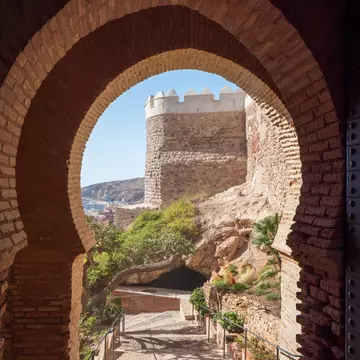
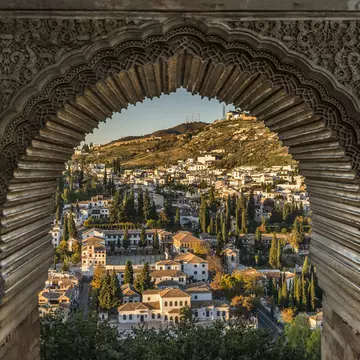
Stretched along the top of the hill known as La Sabika, the Alhambra is the stuff of fairy tales. From outside, its red fortress towers and walls appear plain, if imposing, rising from woods of cypress and elm, with the Sierra Nevada forming a magnificent backdrop.
Try to visit first thing in the morning (8.30am) or late in the afternoon to avoid the crowds, or treat yourself to a magical night by visiting the Palacio Nazaríes.
The Alhambra contains two outstanding sets of buildings: the Palacio Nazaríes and the Alcazaba (Citadel). Also within its walls you’ll find the Palacio de Carlos V, the Iglesia de Santa María de la Alhambra, two hotels, several bookshops and souve…
reviewed
-
Alhambra
The Alhambra walls tease you and reveal little, but inside the marvellously decorated emirs' palace, Palacio Nazaríes (Nasrid Palace), Generalife (the Alhambra's gardens), and dozens of courtyards, the nooks and crannies are filled with beautiful decorations and fascinating stories from the days of Alhambra's glory.
The spell can be shattered by the average 6000 visitors who traipse through this Unesco World Heritage site each day, so try to visit first thing in the morning or late in the afternoon.
reviewed
-
B
Albayzín
On the hill facing the Alhambra across the Darro valley, Granada's old Muslim quarter, the Albayzín, is an open-air museum in which you can lose yourself for a whole morning. The cobblestone streets are lined with gorgeous cármenes (large mansions with walled gardens, from the Arabic karm for garden). It survived as the Muslim quarter for several decades after the Christian conquest in 1492.
Plaza del Salvador, near the top of the Albayzín, is dominated by the Colegiata del Salvador, a 16th-century church on the site of the Albayzín's main mosque; the mosque's horseshoe-arched patio, cool and peaceful, survives at its western end.
The Arco de las Pesas, off Plaza Larga,…
reviewed
-
-
C
Palacio Nazaríes
This is the Alhambra's true gem, the most brilliant Islamic building in Europe, with its perfectly proportioned rooms and courtyards, intricately moulded stucco walls, beautiful tiling, fine carved wooden ceilings and elaborate stalactite-like muqarnas vaulting, all worked in mesmerising, symbolic, geometrical patterns. Arabic inscriptions proliferate in the stuccowork.
The Mexuar, through which you normally enter the palace, dates from the 14th century and was used as a council chamber and antechamber for audiences with the emir. The public would have gone no further.
From the Mexuar you pass into the Patio del Cuarto Dorado, a courtyard where the emirs gave audiences, wi…
reviewed
-
D
Mirador San Nicolás
Callejón de San Cecilio leads to the Mirador San Nicolás, a lookout with unbeatable views of the Alhambra and Sierra Nevada. Come back here later for sunset (you can't miss the trail then!). At any time of day take care: skilful, well-organised wallet-lifters and bag-snatchers operate here.
reviewed
-
E
La Trattoria
The Alameda is lined with restaurants and cafes. First-class food and efficient service make La Trattoria one of the best and busiest Italian eateries in town.
reviewed
-
F
Café Fútbol
No Raúl or Fábregas, but plenty of art nouveau decor and fresh churros.
reviewed
-
G
-
H
Mezquita
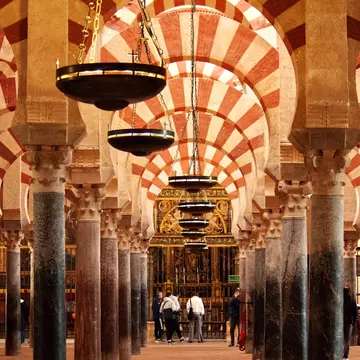
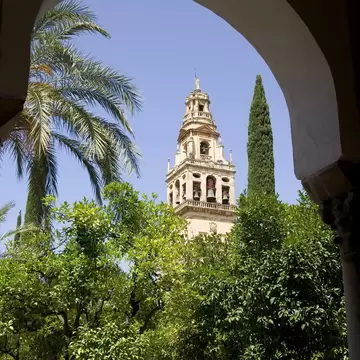
Founded in 785, Córdoba’s gigantic mosque is an architectural hybrid that has experienced two big ‘modern’ changes: a 16th-century cathedral plonked right in the middle; and the closing of 19 once-important doorways, which would have filled the original Mezquita with light.
The main entrance is the Puerta del Perdón, a 14th-century Mudéjar gateway on Calle Cardenal Herrero, with the ticket office immediately inside. Beside the Puerta del Perdón is a 16th- and 17th- century tower built around the remains of the Mezquita’s minaret. Inside the gateway is the aptly named Patio de los Naranjos (Courtyard of the Orange Trees), originally the mosque’s ablutions courtyard,…
reviewed
Advertisement
-
I
Tomb of Christopher Columbus
Inside the cathedral's southern door stands the Tomb of Christopher Columbus, an elaborate monument dating from 1902 with four sepulchre-bearers representing the four kingdoms of Spain at the time of Columbus' 1492 voyage: Castile, León, Aragón and Navarra. But are the bones within really those of the great explorer?
The tomb holds bones brought back from the Caribbean in 1899 and long thought to be Columbus'. However, the Dominican Republic in the Caribbean claims that Columbus' bones lie beneath a monument in its capital, Santo Domingo. Since 2003 researchers have been conducting tests on various bones from the Seville cathedral tomb and elsewhere to try to resolve th…
reviewed
-
J
Capilla Real
The Royal Chapel, adjoining the cathedral, is Granada's outstanding Christian building. Catholic Monarchs Isabella and Ferdinand commissioned this elaborate Isabelline-Gothic-style mausoleum. It was not completed until 1521, hence their temporary interment in the Convento de San Francisco.
The monarchs lie in simple lead coffins in the crypt beneath their marble monuments in the chancel, which is enclosed by a stunning gilded wrought-iron screen created in 1520 by Bartolomé de Jaén. The sacristy contains a small but impressive museum with Ferdinand's sword and Isabella's sceptre, silver crown and personal art collection, which is mainly Flemish but also includes Bottic…
reviewed
-
The Cathedral
For three centuries following the Reconquista (Reconquest) in 1236, the Mezquita remained largely unaltered save for minor modifications such as the Mudejar tiling added in the 1370s to the Mozarabic and Almohad Capilla Real (located nine bays north and one east of the mihrab, and now part of the cathedral).
In the 16th century King Carlos I gave permission (against the wishes of Córdoba's city council) for the centre of the Mezquita to be ripped out to allow construction of the Capilla Mayor (the altar area in the cathedral) and coro (choir).However, the king was not enamoured with the results and famously regretted: 'You have built what you or others might have built …
reviewed
-
Parque de María Luisa & Plaza de España
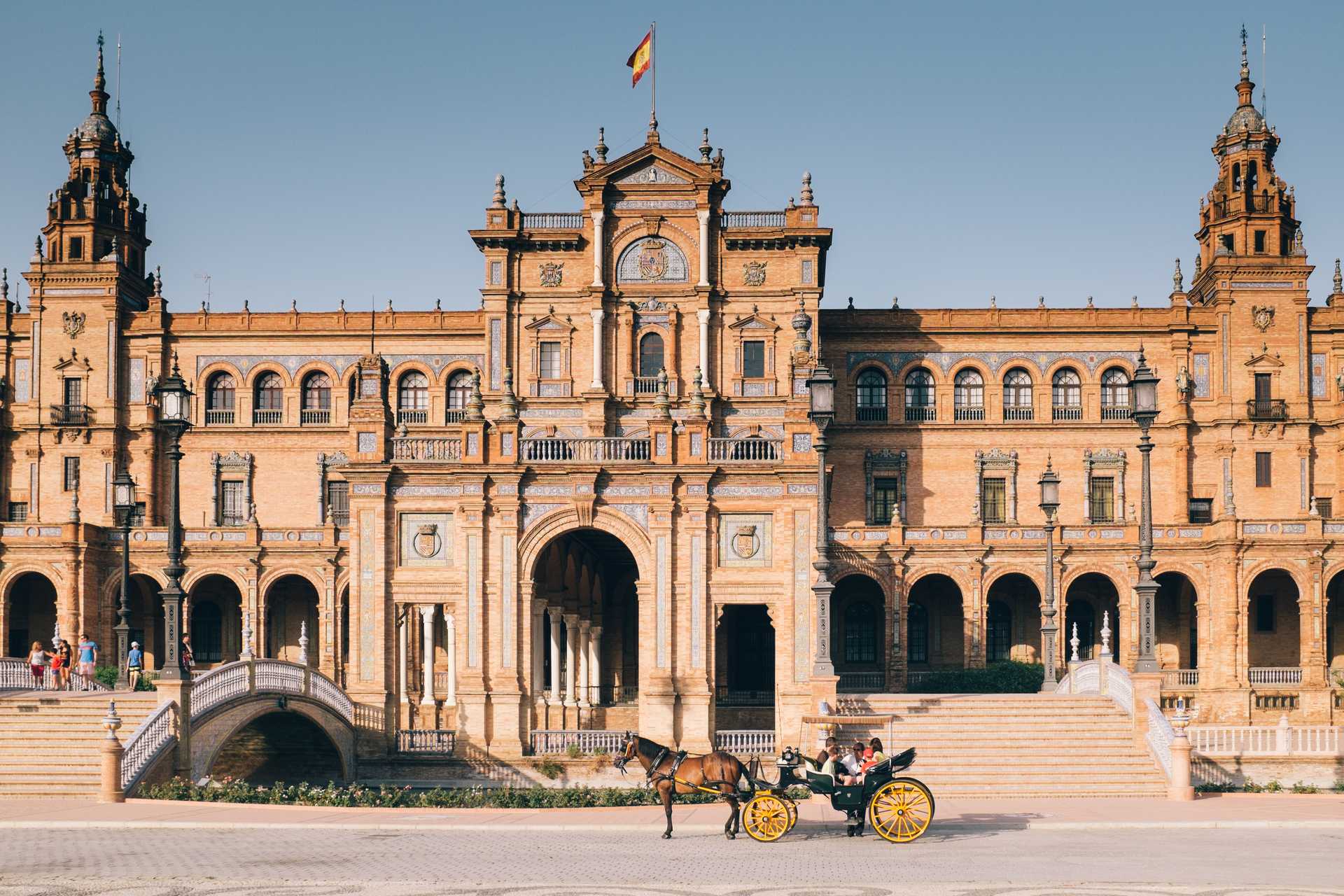
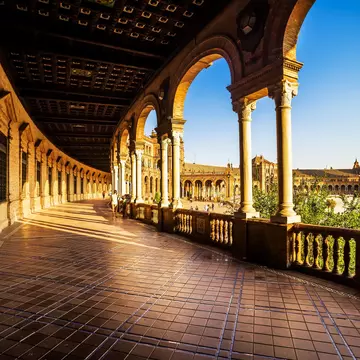
A large area south of the former tobacco factory (Antigua Fábrica de Tabacos) was transformed for Seville’s 1929 international fair, the Exposición Iberoamericana, when architects adorned it with fantastical buildings, many of them harking back to Seville’s past glory or imitating the native styles of Spain’s former colonies. In its midst you’ll find the large Parque de María Luisa, a living expression of Seville’s Moorish and Christian past.
Plaza de España, one of the city’s favourite relaxation spots, faces the park across Avenida de Isabel la Católica. Around it is the most grandiose of the 1929 buildings, a semicircular brick-and-tile confection featurin…
reviewed
-
K
El Gato Lounge
If it's a louder ambience you're looking for, you'll find the pink party at the mega clubs and gay bars in Torremolinos. That's right, the 'in crowd' goes to Torremolinos for fun!! What had turned into a decayed symbol of a better past is now making a comeback. New bars, restaurants and clubs are opening and the area is becoming one of the major gay holiday destinations in Spain.
La Nogalera (close to Torremolinos train station) is the centre of BLGT - bi, lesbian, gay and transgendered - tourism in the province. Here, the variety of bars, pubs, clubs and discos guarantees a good time. Check out the new and trendy El Gato Lounge, where cool cats chill over a beer and a bi…
reviewed
-
L
Alcázar
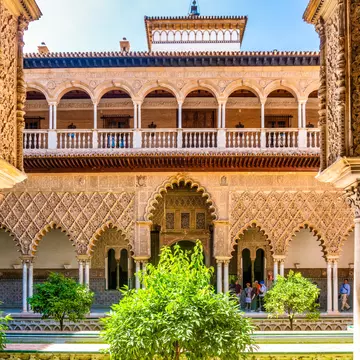
Residence of many generations of kings and caliphs, the Alcázar is Seville’s answer to Granada’s Alhambra. It stands south of the cathedral across Plaza del Triunfo and is wheelchair accessible. This intriguing complex is intimately associated with the life and loves of the extraordinary Pedro I of Castilla (1350–69).
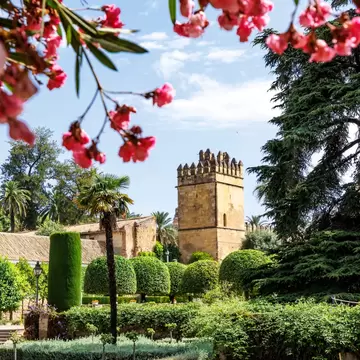
Originally founded as a fort for the Cordoban governors of Seville in 913, the Alcázar has been expanded and rebuilt many times in its 11 centuries of existence. The Catholic Monarchs, Ferdinand and Isabella, set up court here in the 1480s as they prepared for the conquest of Granada. Later rulers created the Alcázar’s lovely gardens.
reviewed
-
M
Cathedral
Seville’s immense cathedral, officially the biggest in the world, is awe-inspiring in its scale and sheer majesty. It stands on the site of the great 12th-century Almohad mosque, with the mosque’s minaret (the Giralda) still towering beside it. After Seville fell to the Christians in 1248 the mosque was used as a church until 1401. Then, in view of its decaying state, the church authorities decided to knock it down and start again. ‘Let us create such a building that future generations will take us for lunatics’, they decided (or so legend has it). The result is a cathedral measuring 126m long and 83m wide.
reviewed
-
N
Plaza de España
Plaza de España, a rather isolated and relaxing spot with its fountains and mini-canals, faces the northeastern side of Parque de María Luisa across Avenida de Isabel la Católica. Curving round the plaza is the most grandiose of the 1929 Exposición buildings, a brick-and-tile confection featuring Seville tilework at its gaudiest, with a map and historical scene for each Spanish province - all designed by the leading Iberoamericana architect, Sevillan Aníbal González.
reviewed
-
O
Los Coloniales
It might not look like much from the outside but trust us; this is something very special. It’s hard to pick a favourite dish as everything is outstanding, but we’d never turn down a plate of chorizo a la Asturiana, a divine spicy sausage in an onion sauce served on a bed of lightly fried potato. To follow up try the aubergines in honey. There is another, inferior and more touristy branch, Taberna Los Coloniales, on Calle Jimios near the cathedral.
reviewed
-
P
Vinería San Telmo
If the thought of the Andalusian-Basque dishes on offer here – such as foie gras with quails eggs and lychees or exquisitely cooked bricks of tuna or maybe the rascacielos de tomate, berenjena, queso de cabra y salmón (which roughly translates into a pyramid of tomato, aubergine, goats cheese and salmon) – don’t make you drool with expectation then you’re probably dead. In our opinion this is the best place to eat in Barrio de Santa Cruz.
reviewed
Advertisement
-
Granada City Hop-on Hop-off Tour
2 days (Departs Granada, Spain)
by Viator
Explore one of the most beautiful cities in Spain with this 48 hour ticket. See the main sights of Granada as you hop-on and hop-off at 40 conveniently located …Not LP reviewed
from USD$22.55 -
Q
Monasterio de La Cartuja
An architectural gem stands 2km northwest of the city centre, reached by bus 8 from Gran Vía de Colón. La Cartuja Monastery was built between the 16th and 18th centuries and features a church bursting with gold, marble and sculptures and an exuberantly baroque sacristy.
reviewed
-
R
Clandestino
A trendy warehouse-style restaurant with an exciting menu that fuses northern European and Latin cuisines. A good selection of vegetarian dishes is headed by silky felafel patties on a salad dressed with alfalfa sprouts and a dill yoghurt vinaigrette.
reviewed
-
S
Casa de la Memoria de al-Andalus
This flamenco tablao in Santa Cruz is probably the most intimate and authentic nightly flamenco show, offering a wide variety of flamenco styles in a room of shifting shadows. Space is limited to 100, so reserve tickets in advance.
reviewed
-
T
La Tetería
Emulating many of Granada’s teterías, this inviting establishment near the Picasso museum complements a full menu of exotic teas with some heavenly homemade cakes and one of the best bowls of breakfast granola you’re ever likely to taste.
reviewed