St PetersburgThings to do

Things to do in St Petersburg

‹ Prev

of 20

  1. A

    State Hermitage Museum

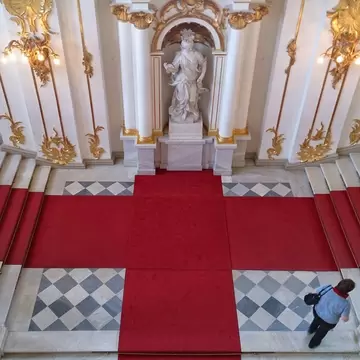
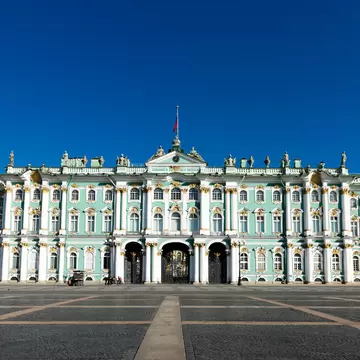
    There are art galleries, there are museums, there are the great museums of the world and then there is the Hermitage. An unrivalled collection of art treasures housed in the magnificent palace from which the Romanov tsars ruled the Russian Empire, the State Hermitage will inevitably be the focus of any first visit to St Petersburg, and rightly so. At the information kiosk of the State Hermitage Museum you can pick up a free colour map of the museum, available in most European languages. Immediately after ticket inspection you can hire an audio guide (R250) with recorded tours in English, German, French, Italian or Russian. Groups enter from the river side of the Winter Pa…

    reviewed

  2. B

    Mariinsky Theatre

    Home to the world-famous Kirov Ballet and Opera company, a visit here is a must, if only to delight in the sparkling glory of the interior. Use the website to book and pay for tickets in advance of your visit to the theatre and to the acoustically splendid new concert hall, which is nearby. The theatre-themed souvenirs are for sale in the Mariinsky gift shop. None of it is cheap, but where else can you get a ‘Property of Kirov Ballet’ T-shirt?

    reviewed

  3. C

    NEP

    Waitresses clad in Red Army khaki, a decor of Soviet regalia and a menu of fun-poking takes on proletariat fare make this communist theme restaurant an amusing if pricey choice. Some English spoken.

    reviewed

  4. D

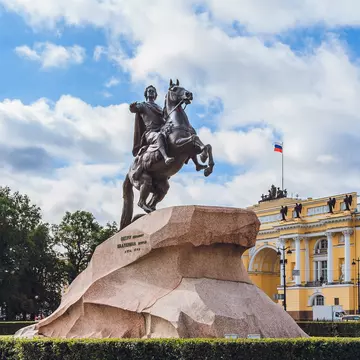
    Bronze Horseman

    The most famous statue of Peter the Great was immortalised as the Bronze Horseman in the poem by Pushkin. With his mount rearing above the snake of treason, Peter’s enormous statue stands at the river end of pl Dekabristov. The statue was sculpted over 12 years for Catherine the Great by Frenchman Etienne Falconet. Its inscription reads ‘To Peter I from Catherine II – 1782’. Many have read significance into Catherine’s linking of her own name with that of the city’s founder: she had no legitimate claim to the throne and this statue is sometimes seen as her attempt to formalise the link (philosophical, if not hereditary) between the two monarchs. The significance of the in…

    reviewed

  5. E

    Aquarel

    Aquarel combines a wonderful setting with fantastic fusion cuisine. Indeed, this is the place that pioneered fusion cuisine in the city, and the kitchen continues to artfully combine Russian, Mediterranean and Asian elements into some uniquely delicious dishes. This food fest takes place on a slickly decked-out boat, moored on the Neva River, offering amazing views of the façade of the Hermitage and the lights of Birzhevoy most. Unfortunately, service can be snooty and – even worse – slow, which is unacceptable for an otherwise high-class (and high-price) joint. There is a cheaper café on the top floor serving pasta and pizza and other simple fare.

    reviewed

  6. F

    Hermitage Theatre

    This austere neoclassical theatre – once the private theatre of the imperial family – stands on the site of the original Winter Palace of Peter I. At the behest of Catherine the Great, Giacomo Quarenghi designed the theatre to resemble an amphitheatre, with statues of Apollo and the Muses occupying the niches. During the Soviet period, this hall was used more often for lectures and such, but it reopened as a theatre in the 1980s. Appropriate for the setting, performances range from Tchaikovsky to Tchaikovsky. Some of the musical festivals also use this venue for performances.

    reviewed

  7. G

    Pravda

    There is nothing new about a retro Soviet-themed restaurant, but somehow it never grows tired: the propaganda posters, the portraits of Lenin, the Internationale. This so-called ‘art café’ actually promises ‘communist lunches’, which is rarely the object of such nostalgia. But the place is fun, as is the menu of old-fashioned Soviet favourites (and its prices really do hark back to the Soviet period!).

    reviewed

  8. H

    Kavkaz

    Another long-standing favourite, Kavkaz means ‘Caucasus’ and features excellent Georgian fare. It’s a casual affair: the basement digs are not so impressive to look at, but the portions are generous and the food – served on large wooden platters – is consistently delectable. This is the place to experience the legendary Georgian hospitality (and shashlyk and wine etc).

    reviewed

  9. I

    Summer Palace

    St Petersburg’s first palace is the modest, two-storey Summer Palace in the summer garden’s northeast corner. Built for Peter from 1710 to 1714, it is pretty well intact with little reliefs around the walls depicting Russian naval victories. Inside it’s stocked with early-18th-century furnishings of limited appeal.

    reviewed

  10. J

    Mendeleev Museum

    In the twelve Colleges, the building where Dmitry Mendeleev invented the periodic table of elements now contains the Mendeleev Museum. His cosy study has been lovingly preserved and you can see his desk (where he always stood rather than sat) and some early drafts of the periodic table.

    reviewed

  11. Advertisement

  12. K

    Datscha

    If you are up for a night of bar-hopping, you can't do better than Dumskaya ul. Datscha is crammed into a crumbling, classical façade, along with three other hot spots for drinking and music. Shabby chic décor, cheap drinks and a strict 'no house or techno' policy.

    reviewed

  13. L

    St Isaac’s Cathedral

    The golden dome of St Isaac’s Cathedral, looming just south of pl Dekabristov, dominates the St Petersburg skyline. Its obscenely lavish interior is open as a museum, although services are held in the cathedral on major religious holidays.

    reviewed

  14. M

    Lya Rus

    Another kitschy Russian country house, this is a sweet place to sample hearty peasant soups and sip vodka while you watch traditional Russian song and dance. Typical for this type of place, the décor is folksy and the food is filling.

    reviewed

  15. N

    Zoom Café

    Popular boho/student hangout with regularly changing art exhibitions. Serves unfussy tasty European and Russian food; has wi-fi access, a very relaxed ambience and a no-smoking zone.

    reviewed

  16. O

    Restaurant Garçon

    New branch for the city’s best-value French restaurant, providing a relaxed Parisienne atmosphere. The chef makes his own foix gras.

    reviewed

  17. P

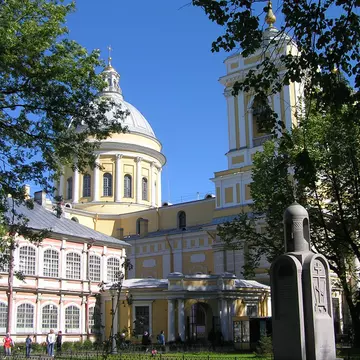
    Alexander Nevsky Monastery

    The Alexander Nevsky Monastery - named for the patron saint of St Petersburg - is the city's most ancient and eminent monastery. Peter the Great made a mistake when he founded the Alexander Nevsky Monastery on this spot at the far end of Nevsky pr. He wrongly thought that this was where Alexander of Novgorod had beaten the Swedes in 1240. Nonetheless, in 1797 it became a lavra, the most senior grade of Russian Orthodox monasteries.

    Today it is a working monastery that attracts the most devout believers - a revered and holy place - and the gravesite of some of Russia's most famous artistic figures.

    You can wander freely around most of the grounds, but you must buy tickets f…

    reviewed

  18. Q

    Pushkinskaya 10

    This legendary locale is a required stop for anyone who is interested in the contemporary art and music scene in St Petersburg. The former apartment block – affectionately called by its former street address – contains studio and gallery space, as well as the cool music clubs Fish Fabrique and Experimental Sound Gallery (GEZ-21) and an assortment of other shops. It offers a unique opportunity to hang out with local musicians and artists, who are always eager to talk about their work. The story of Pushkinskaya 10 goes back to 1988, when a group of artists/squatters took over the condemned apartment block. The decrepit building became ‘underground central’, as artists a…

    reviewed

  19. R

    Dvortsovaya Pl (Palace Sq)

    It is no secret where St Petersburg’s heart lies. Although it’s no longer the hub of the city, there can be little doubt that the vast expanse where Nevsky pr meets the Neva River and Dvortsovaya nab is simply one of the most striking squares in the world, still redolent of imperial grandeur almost a century after the end of the Romanov dynasty. For the most amazing first impression walk from Nevsky pr, up Bolshaya Morskaya ul and under the triumphal arch. The square’s most impressive building is the incredible green, white and gold Winter Palace (Zimny Dvorets), a rococo profusion of columns, windows and recesses, topped by rows of larger-than-life statues. A resid…

    reviewed

  20. S

    Trinity Cathedral

    The Trinity Cathedral boasts stunning blue cupolas emblazoned with golden stars. Slow but careful restoration of this cathedral has been underway for several years. In 2006, a fire that started in the scaffolding caused the 83m-high central cupola to collapse – it was a major setback to reconstruction efforts. Nonetheless, the renovation continues, and the smaller renovated cupolas act as a shining example of what is to come. Construction of this vast cathedral began in 1828, according to a design by Vasily Stasov. The cathedral was consecrated in 1835 and functioned as the chapel for the Izmailovsky Guards, who were garrisoned next door. In honour of the Russian victory …

    reviewed

  21. T

    Mikhailovsky Castle (Engineer’s Castle)

    A much greater Summer Palace used to stand at the south end of the Summer Garden. But Rastrelli’s fairy-tale wooden creation for Empress Elizabeth was knocked down in the 1790s to make way for the bulky Mikhailovsky Castle. The son of Catherine the Great, Tsar Paul I, was born in the wooden palace and he wanted his own residence on the same spot. He had the current edifice built complete with defensive moat as he (quite rightly) feared assassination. But this erratic, cruel tsar only got 40 days in his new abode before he was suffocated in his bedroom in 1801. The style is a bizarre take on a medieval castle, quite unlike any other building in the city. In 1823 it became …

    reviewed

  22. Advertisement

  23. U

    Kresty Prison

    Kresty is St Petersburg’s main holding prison; if you’re busted here, Kresty’s where they take you to await whatever it is that awaits you. You wouldn’t want to find out: conditions are much better now than when the prison was at its most crowded, but it is still hardly a pleasant place. Kresty is the oldest working prison in Russia, built in 1892. Tours visit the holding areas, the grounds and a small museum. This definitely constitutes a unique day out in the city. You will have a chance to see the six-bunk cells and the frightening solitary-confinement closets. Inmates are on site – working, walking or peeking out at you through slats in their cells. Guests are advised…

    reviewed

  24. V

    Pl Dekabristov (Decembrists’ Sq)

    Centred on the famed statue of the Bronze Horseman, pl Dekabristov (Decembrists’ Sq) is named after the first attempt at a Russian revolution – the Decembrists’ Uprising of 14 December 1825. The Decembrists were young officers who were inspired by radical ideas from France during the Napoleonic campaigns and wanted to introduce constitutional monarchy. Ineptly, they set up their protest on the same day as the swearing-in ceremony of the new tsar, Nicholas I. After repeated attempts by Nicholas’ ministers to reason with the rebels, they were fired upon. Many officers and bystanders died as a result. Most of the leaders later ended up on the gallows or in Siberia. The domin…

    reviewed

  25. W

    Geological Museum

    Located in the upper floors of the geology faculty of the university, this huge room contains several kilometres of fossils, rocks and gems – a veritable treasure chest of geological finds. The precious and semiprecious stones will certainly have you gawking at Mother Nature’s handiwork: sparkling amethyst crystals (one from the Altai mountains that is 1.5m long!); huge chunks of malachite from the Urals; and a gorgeous gypsum ‘rose’ from Astrakhan. Also on display are prehistoric rocks and fossils, dinosaur fragments, animal skulls and mammoth tusks. The centrepiece of the museum is a huge map of the Soviet Union made entirely of precious gems. The winner of the Paris Wo…

    reviewed

  26. X

    Strelka

    Among the oldest parts of Vasilevsky Ostrov, this eastern tip is where Peter the Great first wanted his new city's administrative and intellectual centre. In fact, the Strelka became the focus of St Petersburg's maritime trade, symbolised by the colonnaded Customs House (now the Pushkin House).

    The two Rostral Columns, archetypal St Petersburg landmarks, are studded with ships' prows and four seated sculptures representing four of Russia's great rivers: the Neva, the Volga, the Dnieper and the Volkhov. These were oil-fired navigation beacons in the 1800s (their gas torches are still lit on some holidays).

    The Strelka has one of the best views in the city, with the Peter & …

    reviewed

  27. Y

    Nabokov Museum

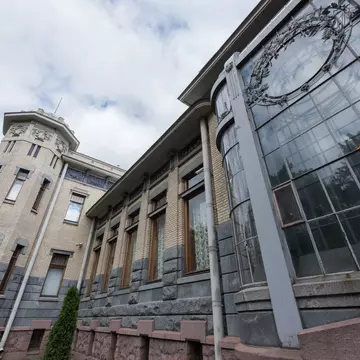
    This lovely 19th-century town house was the suitably grand childhood home of Vladimir Nabokov, infamous author of Lolita and arguably the most versatile and least classifiable of modern Russian writers. Here Nabokov lived with his wealthy family from his birth in 1899 until the revolution in 1917, when they sensibly left the country. The house features heavily in Nabokov’s autobiography Speak, Memory, in which he refers to it as a ‘paradise lost’. Indeed, he never returned, dying abroad in 1977. There’s actually relatively little to see in the museum itself, save for some charming interiors (don’t miss the gorgeous stained-glass windows in the stairwell, which are not t…

    reviewed