Japan Tips & articles

How to eat politely in Japan (and other etiquette tips)

Note: Javascript is disabled in your browser.
To see the gallery in all its glory, you'll need to enable Javascript.

Cold soba noodle dish, Kyoto

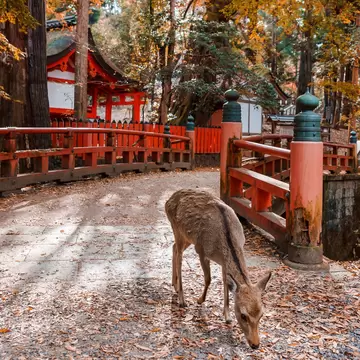
If you’re visiting Japan soon – and the end of August is a great time, with autumn leaves starting to change colour – there are some things you should know first. In this extract from Lonely Planet Magazine (Aug 2010), we give you some starting tips for impressing the locals with your cultural know-how.
Eating:

  • Chopsticks in rice. Do not stick your hashi (chopsticks) upright in a bowl of rice. This is how rice is offered to the dead in Buddhist rituals. Similarly, do not pass food from your chopsticks to someone else’s. This is another funereal ritual.
  • Polite expressions. When eating with other people, especially when you’re a guest, it is polite to say ‘itadakimasu’ (literally, ‘I will receive’) before digging in. This is as close as the Japanese come to saying grace. Similarly, at the end of the meal, you should thank your host by saying ‘gochiso-sama deshita’, which means ‘It was a real feast’.
  • Kampai. It is bad form to fill your own glass. You should fill the glass of the person next to you and wait for them to reciprocate. Raise your glass a little off the table while it is being filled. Once everyone’s glass has been filled, the usual starting signal is a chorus of ‘kampai’, which means ‘cheers!’
  • Slurp. When you eat noodles in Japan, it’s perfectly OK, even expected, to slurp them. In fact, one of the best ways to find ramen (egg noodle) restaurants in Japan is to listen for the loud slurping sound that comes out of them.

Shoes:

Take your shoes off when entering a private home or anywhere with a tatami floor. Sometimes slippers are provided, with a separate set for the toilet.

Making a payment:

In a shop, instead of handing cash to the assistant, place your money on the small tray they keep next to the till.

Visiting a shrine:

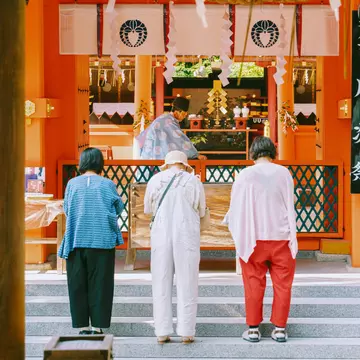
Entering a shrine can be a bewildering experience. Just past the gate you’ll find a chozuya (trough of water) with a hishaku (long-handed ladle) to purify yourself. Take a ladle, fill it with water, pour some over one hand, then transfer the spoon and pour water over the other hand. Finally, pour water into your cupped hand and rinse your mouth, spitting the water onto the ground.

Public baths:

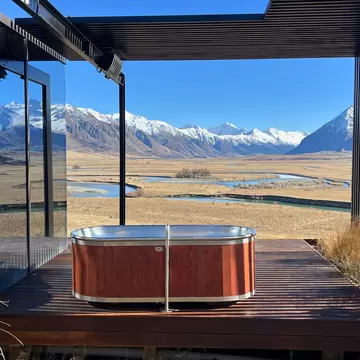
Bathing at an onsen (hot spring) or sento (public bath) is a quintessentially Japanese experience. Baths are separated by gender, and the changing room will have baskets or lockers for storing clothes and a bath towel. Bring a washcloth and toiletries with you into the bathing area (soap and shampoo are often provided). There will be a row of taps along one wall. Find an empty spot and scrub yourself down.

Once you’re clean, rinse completely before going anywhere near the baths. The communal baths are meant for soaking and shouldn’t be adulterated  by soap, or – shock horror – dirt.

Onsen or sento may have a variety of baths with varying temperatures, cold pools, saunas or even an electric bath. If there’s a rotenburo (outdoor bath), you should give it a try. There’s nothing more satisfying than soaking in the open air with steam curling around your ears as you contemplate the night sky.

Food tips by Chris Rowthorn, coordinating author of Lonely Planet Japan

If you found this article handy, there is plenty more advice and inspiration in the Lonely Planet Magazine – subscribe and get your travel info delivered straight to your door. (Currently only available for delivery to UK addresses.)

Comments

  1. 11 August 2010 5:57PM kafeimi Report this comment

    Nice article, although I would love to see a more comprehensive guide for eating etiquettes in Japan and other countries. The article fails to mention one big issue regarding eating etiquettes in Japan: FINISH YOUR DINNER!!! It is regarded as an insult to the chef and host if you don't finish your dinner (It means you didn't enjoy the food).

    For more eating etiquettes and use of chopsticks in different countries go to http://www.eatoutzone.com/Chopsticks.htm Although they also fail to mention that it is absolutely important to finish your meals in Japan. Coincidently it is/used to be considered rude to finish all the plates in China, signifying that the meal was not sufficient for you and thus is an insult to the host. (there have been campaigns in Hong Kong and mainland China to halt this wasteful tradition, and it seems to have had some result).

  2. 21 September 2010 12:56AM funkydelicguy Report this comment

    is it disrespectful to ask for a spoon and fork if you don't know how to use chopsticks?

  3. 21 September 2010 5:14AM dawiez Report this comment

    Thank you for sharing these wonderful thoughts and ideas! These etiquettes are surely a big help for anyone who has not been to Japan or anyone who have never experience the Japanese culture.

  4. 25 September 2010 5:53AM esraa Report this comment

    Thanks,that is really useful I am going to Japan soon.

  5. 28 September 2010 4:37PM pangalacticblaster Report this comment

    How about change the title to "How to eat politely in (East)Asia? Do you believe using chopstick country is only Japan? How silly... Japan is not that big part of Asia, please think about Korea and China also.

  6. 16 October 2010 8:00AM babu6 Report this comment

    @pangalacticblaster How about change the title to "How to not be (very) ignorant?" Just because this is etiquette in Japan doesn't mean it has any weight in any other Asian country. You're the silly one for assuming that all chopstick related etiquette is the same throughout Asia. Go spread your nonsense elsewhere

  7. 23 October 2010 9:03AM dijitol151 Report this comment

    @pangalacticblaster. The title reads how to eat politely in "JAPAN". specifically "JAPAN" not "ASIA" if you notice the tab you chose to get here, it reads "asia/JAPAN. and where do you get the assumption that they singled out japan as the only chopstick using country?

  8. 6 January 2011 3:19PM gkkeith Report this comment

    @funkydelicguy when I was in Tokyo, I was subtly provided a fork once or twice when it was noticed that I was struggling with chopsticks - I can manage most bite size food but have difficulty with rice, even if it's sticky. I think it was important to have made the effort with the chopsticks even just as a courtesy - like learning please and thank you in the language of the country you are visiting.

    @dijitol151 and @babu6 - I agree, this article is about Japan and to address chopstick etiquette in other countries would be either a much longer or separate piece, I don't think it's necessary to come down so hard on someone about a simple comment though...

  9. 4 February 2011 1:36PM joolz2 Report this comment

    You should also mention that when using an onsen the etiquette is to go naked. The first time I went in one I wore my bikini. The (naked) Japanese girls in there were vey polite about it, but I'm sure they thought I was an idiot.

Add a comment

Sign in or register to add your comment.

Things to do