Things to do in Burgundy & The Rhône
-
Vieux Lyon's Traboules
The most celebrated of Vieux Lyon's traboules include those linking 27 rue St-Jean with 6 rue des Trois Maries; 54 rue St-Jean with 27 rue du Bœuf (push the intercom button to buzz open the door); 10 quai Romain Rolland with 2 place du Gouvernement; 17 quai Romain Rolland with 9 rue des Trois Maries; and 31 rue du Bœuf with 14 rue de la Bombarde. Although a couple of Vieux Lyon's traboules date from Roman times, most were constructed by canuts (silk weavers) in the 19th century to facilitate the transport of silk in inclement weather. Resistance fighters found them equally handy during WWII. Guided tours available.
reviewed
-
A
Musée des Beaux-Arts
This stunning and eminently manageable museum showcases France's finest collection of sculptures and paintings outside Paris from antiquity on. Highlights include works by Rodin, Rubens, Rembrandt, Monet, Matisse and Picasso. Pick up a free audio guide and be sure to stop for a drink or meal on the delightful stone terrace off its café-restaurant and take time out in its tranquil cloister garden.
reviewed
-
B
Basilique Notre Dame de Fourvière
Crowning the hill – with stunning city panoramas from its terrace – the 66m-long, 19m-wide and 27m-high basilica is lined with intricate mosaics and a superb example of late-19th-century French ecclesiastical architecture. One-hour discovery visits take in the main features of the basilica and crypt; rooftop tours climax on the stone-sculpted roof.
reviewed
-
C
Cathédrale St-Jean
This partly Romanesque cathedral, seat of Lyon’s 133rd bishop, was built between the late 11th and early 16th centuries. The portals of its Flamboyant Gothic facade, completed in 1480, are decorated with 280 square stone medallions. Don’t miss the astronomical clock in the north transept chiming at noon, 2pm, 3pm and 4pm daily.
reviewed
-
D
Centre Commercial La Part-Dieu
Adjacent to the Part-Dieu train station, Lyon's vast indoor shopping centre is dominated by a pencil-shaped tower nicknamed le crayon.
reviewed
-
E
Decitre
Stocks foreign-language fiction including English (very limited travel section).
reviewed
-
F
Musée des Beaux-Arts
Housed in the eastern wing of the Palais des Ducs, these sprawling galleries make up one of the most outstanding museums in France. The rooms themselves are works of art and a special chance to be inside this monumental building.
The star is the wood-panelled Salle des Gardes (Guards' Room), once warmed by a gargantuan Gothic fireplace. It houses the ornate, carved late-medieval sepulchres of dukes John the Fearless and Philip the Bold (by Jean de Marville, Claus Sluter and Claus de Werve), as well as three impossibly intricate gilded Gothic retables from the 1300s. Rogier Van der Weyden's portrait of Philip the Good hangs here as well.
The modern and contemporary art secti…
reviewed
-
G
Hôtel-Dieu des Hospices de Beaune
Built in 1443 by Nicolas Rolin, the chancellor to Philippe-le-Bon, and used as a hospital until 1971, this magnificent Gothic hospital building is famously topped by stunning turrets and pitched rooftops covered in multicoloured tiles. Fascinating interior highlights include the barrel-vaulted Grande Salle (look for the dragons and peasant heads up on the roof beams); the mural-covered St-Hughes Room; an 18th-century pharmacy where the nuns made their own medicaments and which is lined with flasks once filled with volatile oils, unguents, elixirs and powders such as beurre d'antimoine (antimony butter) and poudre de cloportes (woodlouse powder); the huge kitchens, with th…
reviewed
-
H
Palais des Ducs et des États de Bourgogne
Once home to Burgundy's powerful dukes, this monumental palace is the focal point of old Dijon. Given a neoclassical facade in the 17th and 18th centuries while serving as the seat of the States-General (Parliament) of Burgundy, it overlooks place de la Libération, a magnificent semicircular public square designed by Jules Hardouin-Mansart (one of the architects of Versailles) in 1686.
The western wing is occupied by Dijon's Hôtel de Ville (City Hall). Inside the arch that's across the street from 92 rue de la Liberté is Escalier Gabriel (1730s), a grand marble stairway with gilded railings that's named after its architect.
The eastern wing houses the outstanding Musée d…
reviewed
-
Chantier Médiéval de Guédelon
Chantier Médiéval de Guédelon is 45km southwest of Auxerre and 7km southwest of St-Sauveur-en-Puisaye. A team of skilled artisans, aided by archaeologists, has been hard at work building a fortified castle here since 1997 using only 13th-century techniques. No electricity or power tools here: stone is quarried on site using iron hand tools forged by a team of blacksmiths, who also produce vital items like door hinges. Clay for tiles is fired for three days using locally cut wood and the mortar, made on site with lime, is transported in freshly woven wicker baskets. A very worthwhile guided tour, sometimes in English, costs €2 per person. Wear closed shoes, as the site …
reviewed
Advertisement
-
Traboules - Guided Tour
There's more to parts of Lyon than meets the eye. Beneath the city in Vieux Lyon and Croix Rousse, dark and dingy traboules wind their way through apartment blocks, under streets and into courtyards. In all, 315 passages link 230 streets and have a combined length of 50km. Genuine traboules cut from one street to another, often wending their way up fabulous spiral staircases en route. Passages that fan out into a courtyard or lead into a cul de sac are not traboules, but rather miraboules.
The tourist office runs guided traboule tours and distributes a free map of Croix-Rousse and Vieux Lyon marked up with all the traboules alongside interesting courtyards, building façad…
reviewed
-
I
Musée des Confluences
The incredible Musée des Confluences, a spacey science- and society-focused museum is as much stunning piece of contemporary architecture as museum. It is housed in a futuristic steel-and-glass transparent crystal topped by a floating 'cloud'. Inside, three of the 10 vast exhibition areas grapple with eternal questions like 'Where do we come from?', 'Where are we going?' and 'Who are we and what are we doing?'.
Remaining spaces home in on hot issues of the future - cloning, genetically modified organisms, global warming and so on. Two auditoriums, a café, restaurants, shop and riverside garden complete the ambitious cultural ensemble, the creation of world-famous Austri…
reviewed
-
Compostela Trail - the Beginning
5 days (Le Puy-en-Velay)
A delightful walk through the volcanic highlands of the Haute-Loire region in south central France.
Not LP reviewed
from USD$660 -
J
Place des Terreaux
The centrepiece of the Presqu'île's beautiful central square is a 19th-century fountain made of 21 tonnes of lead and sculpted by Frédéric-Auguste Bartholdi (of Statue of Liberty fame). The four horses pulling the chariot symbolise rivers galloping seawards. The Hôtel de Ville (Town Hall) fronting the square was built in 1655 but given its present ornate facade in 1702. When Daniel Buren's polka-dot 'forest' of 69 granite fountains (embedded in the ground across much of the square) are on, join the kids in a mad dash as the water dances up, down, disappears for a second and gushes back again.
reviewed
-
Abbaye de Pontigny
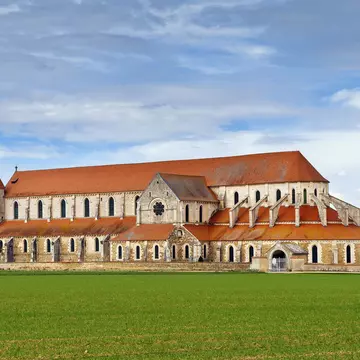
Abbaye de Pontigny, founded in 1114, rises from the lush mustard fields 25km north of Auxerre. The spectacular abbatiale (abbey church) is one of the last surviving examples of Cistercian architecture in Burgundy. The simplicity and purity of its white-stone construction reflect the austerity of the Cistercian order. On summer days sunshine filtering through the high windows creates an amazing sense of peace and tranquillity. Discovering Pontigny (€2.50), on sale in the gift shop, points out fascinating architectural details.
reviewed
-
Mère Brazier
Chef Mathieu Vianney has reinvented the mythical early-20th-century restaurant that earned Mère (Eugénie) Brazier Lyon's first trio of Michelin stars in 1933 (a copy of the original guidebook takes pride of place). Brazier was also the first-ever chef to earn two sets of three Michelin stars, a feat only equalled decades later by Alain Ducasse. Vianney is doing admirable justice to Brazier's legacy, claiming two Michelin stars himself for his assured cuisine accompanied by an impressive (and impressively well-priced) wine list.
reviewed
-
K
Musée Lumière
Cinema's glorious beginnings are showcased at the art nouveau home of Antoine Lumière, who moved to Lyon with sons Auguste and Louis in 1870. The brothers shot the first reels of the world's first motion picture, La Sortie des Usines Lumières (Exit of the Lumières Factories) here in one of their father's photographic factories in the grounds on 19 March 1895. Today the former factory houses the Hangar du Premier Film cinema. It's located 3km to the southeast of place Bellecour along cours Gambetta.
reviewed
-
Walking in the Auvergne
7 days (St Bonnet le Froid)
Explore on foot France's impressive 'Massif Central' from a comfortable hotel base.
Not LP reviewed
from USD$860 -
Croix Rousse's Traboules
Step into the underworld of Croix Rousse's traboules at 9 place Colbert, crossing cours des Voraces - renowned for its monumental staircase that zigzags up seven floors - and emerging at 29 rue Imbert Colomès. Other well-known traboules in this fashionable quarter include those linking 1 place Colbert with 10 montée St-Sébastien and 9 place Colbert with 14bis montée St-Sébastien; and the plethora of passages on rue des Capucins: at Nos 3, 6, 13, 22 and 23.
reviewed
-
L
Musées Gadagne
Housed in a 16th-century mansion built for two rich Florentine bankers, this newly reopened museum incorporates an excellent local history museum covering the city’s layout as its silk-weaving, cinema and transportation evolved, and an international puppet museum paying homage to Lyon’s iconic puppet, Guignol. On the 4th floor, a café adjoins tranquil, terraced gardens, here since the 14th century and laid out two centuries later.
reviewed
Advertisement
-
M
Cathédrale St-Bénigne
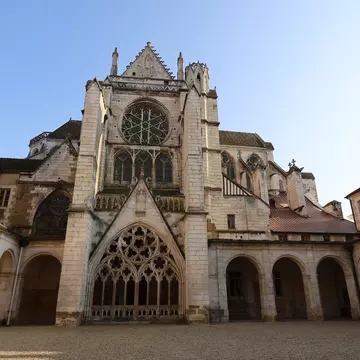
Situated above the tomb of St Benignus (who is believed to have brought Christianity to Burgundy in the 2nd century), this Gothic-style church with multicoloured roof tiles was built around 1300 as an abbey church. Some of Burgundy's great figures are buried here. The crypt is all that remains of an 11th-century Romanesque basilica and is a maze of arched tunnels, carved capitals and inlaid floors. Guided tours are available.
reviewed
-
L'Auberge du Pont de Collonges
Heading some 6.5km north of central Lyon via quai Georges Clemenceau brings you to this triple-Michelin-starred restaurant of the city's most decorated chef, Paul Bocuse. Classics include the likes of sea bass stuffed with lobster mousse in a puff-pastry shell, and thyme-roasted rack of lamb, as well as Bocuse's signature soupe VGE (truffle soup created for former French president Valéry Giscard d'Estaing in 1975).
reviewed
-
Taste of Burgundy
8 days (Dijon)
Explore the canalways and the famous vineyards of Burgundy by bike.
Not LP reviewed
from USD$1,360 -
N
St Jean Délices
For the sweetest souvenirs, this enticing spot sells all eight varieties of Lyon's specialty sweets made by traditional local confectioners including les coussins de Lyon (Curacao-flavoured dark chocolate in sugary almond paste) and les pralines rouges (almonds in red vanilla-flavoured caramelised coating, which is a fixture of local desserts and patisseries), as well as handmade chocolates.
reviewed
-
Château de Sully
This Renaissance-style château , on the outskirts of the village of Sully (15km northeast of Autun along the D973), has a beautifully furnished interior and a lovely English-style garden. It was the birthplace of Marshall MacMahon, Duke of Magenta and president of France from 1873 to 1879, whose ancestors fled Ireland several centuries ago and whose descendents still occupy the property.
reviewed