Zhejiang
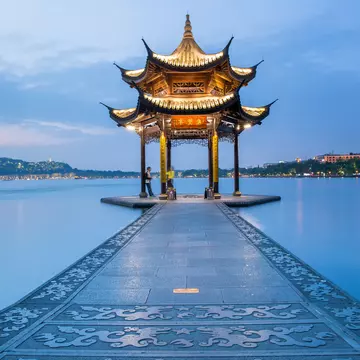
It's Hángzhōu, the handsome capital city, that lands Zhèjiāng (浙江) on many a traveller's itinerary. Home to picture-perfect landscapes of classical Chinese beauty (and just a short train ride from Shànghǎi), Hángzhōu is the obvious highlight. Yet the province offers so much more. There are water towns with spiderweb networks of canals and restored Ming and Qing dynasty merchants' homes (Wūzhèn and Nánxún), also in easy striking distance. Among the thousands of islands dotting a ragged and fragmented shoreline is the island of Pǔtuóshān, one of China's four most important Buddhist pilgrimage sites. More intrepid travellers can head west, where ancient villages retain their traditional architecture and bucolic charms. Meanwhile travellers looking for the opposite of intrepid can hole up in one of the stylish resorts nestled among the hillside bamboo groves and tea fields of naturally cool Mògànshān.


Trusted Partner
Dreaming of Zhejiang? Protect your trip
Travel with confidence. Protect your trip and your wallet.
We don’t represent World Nomads, we receive a fee from quotes using this link. This is not a recommendation to buy travel insurance.
Top places to visit in Zhejiang
Discover the best attractions in Zhejiang from must-see sights to unexpected hidden gems.
-
-
 Attraction in HangzhouJingci Temple
 - Attraction in ZhejiangBǎijiānlóu
- Attraction in HangzhouLongjing Tea Village
-
 Attraction in HangzhouLingyin Temple
 - Attraction in HangzhouConfucius Temple
- Attraction in ZhejiangSouth Sea Guanyin
- Attraction in HangzhouSix Harmonies Pagoda
Get a book. Get inspired. Get exploring.
in partnership with getyourguide
Book popular activities in Zhejiang
Lonely Planet may earn a commission from affiliate links on our site. All recommendations and reviews reflect our own independent opinions.
Zhejiang and beyond
- destinationHangzhou