Advertisement

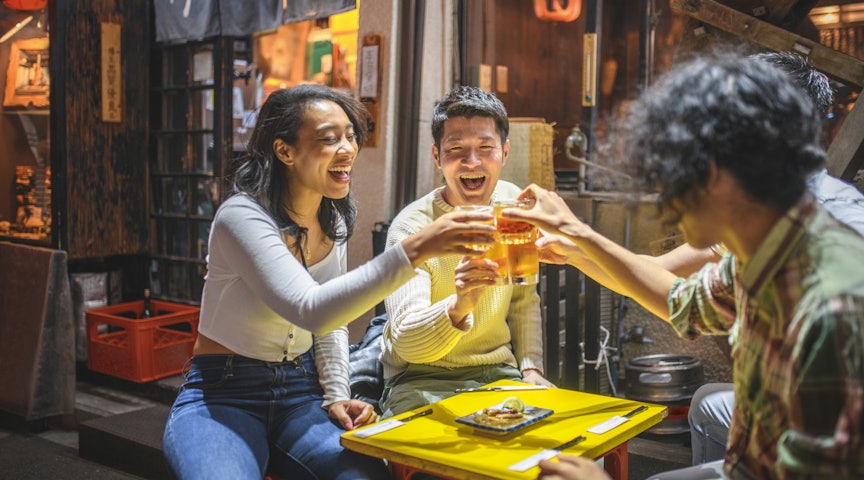
Sakae entertainment district at night in Nagoya, Japan. Kingmaya Studio/Shutterstock
Japan’s fourth-largest city, Nagoya lacks the celebrity status of Tokyo, Kyoto and Osaka, but there are plenty of reasons to step off the train at busy Nagoya Station.
Without the crush of mass tourism, Nagoya makes for a very appealing package for a few days, with everything from great eating, lively nightlife and family attractions to ancient shrines and fortifications restored after the bombing raids of WWII. Its handy location on the Tōkaidō Shinkansen (Bullet Train) line linking Tokyo, Mt Fuji, Osaka and Kyoto, makes it an easy add-on to a trip around Japan’s blockbuster tourist sites.
Though large areas of the ancient city were destroyed during WWII, Nagoya still manages to hit the sweet spot between old and new, with plenty of traditional culture dotted around its neon-lit cityscape. Come and experience one of Japan’s most vibrant and modern yet laid-back industrialized cities with our pick of the best things to do in Nagoya.
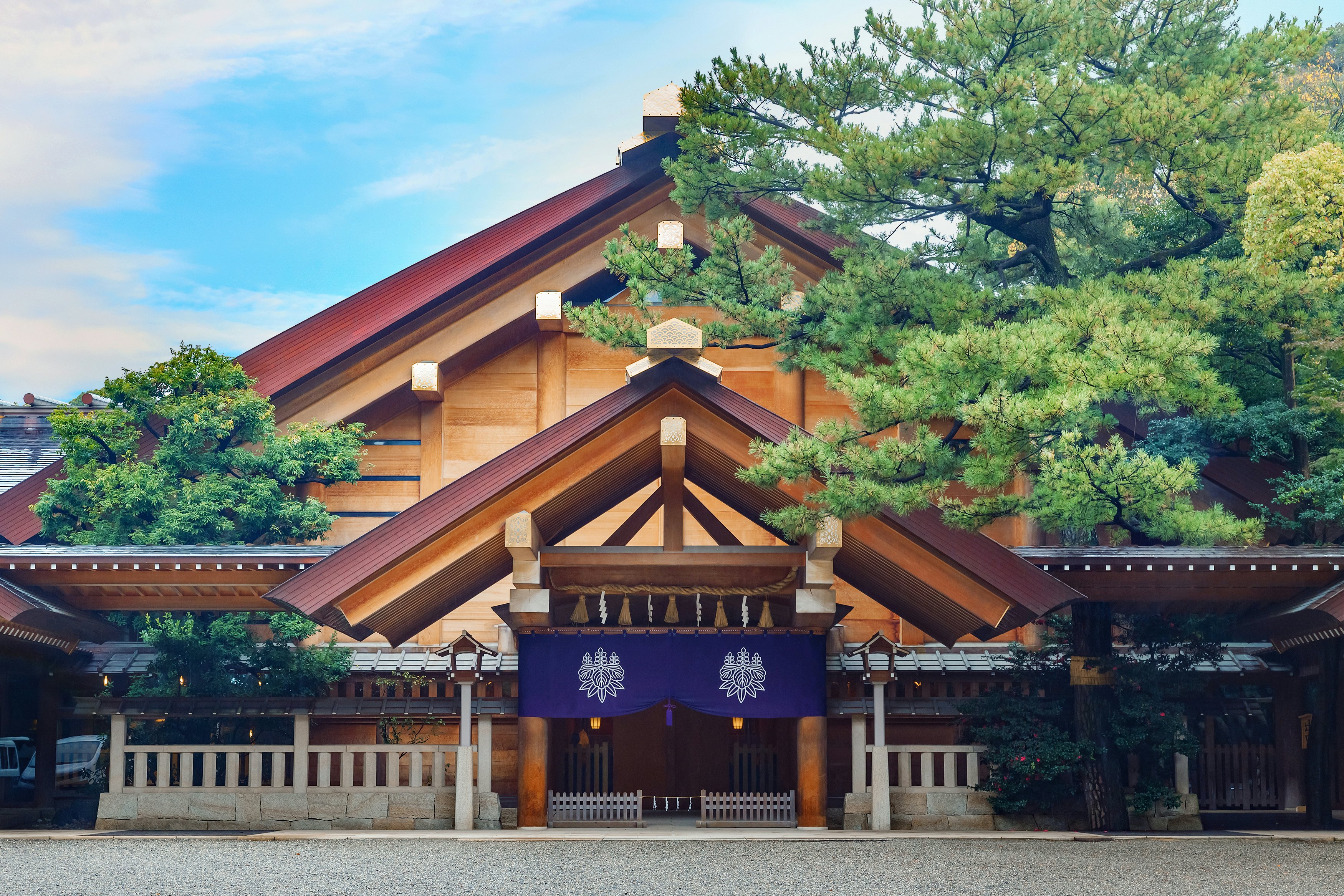
1. Step back into history at the Atsuta-jingū shrine
Founded more than 1900 years ago, Atsuta-jingū is one of Japan’s most sacred Shintō shrines. Sprawling across a large area of forest, flanked by towering cypress trees, it’s a peaceful place to stroll, observing worshippers going about their business.
Advertisement
Some nine million devotees come here each year to pay homage at the shrine housing the ancient sword known as Kusanagi-no-tsurugi. This is one of the Three Sacred Treasures that form the revered Imperial Regalia – legend has it that the sword was handed to the imperial family by Amaterasu Omikami, the Sun Goddess.
Visitors are not permitted to view the sacred sword or enter the temple, but you can see other famous swords at the shrine’s Kusanagi-kan museum, and the Bunkaden Treasure Hall, displaying items from a collection of more than 4000 Tokugawa-era swords, masks and paintings.
Planning tip: Religious sites, such as Buddhist temples and Shintō shrines, don’t have dress codes, but in order to be culturally respectful, there are other things to beware of. Wash your hands before entering a shrine and only speak in quiet tones to allow all visitors to enjoy the tranquility.
2. Soak up Japanese culture at Tokugawa Art Museum
The collection at the respected Tokugawa Art Museum includes some 10,000 priceless artworks. Among its treasures are nō masks from medieval dance-dramas, ceramics, paintings and prints, and samurai swords and armor.
Its most famous exhibit is the 12th-century scroll of The Tale of Genji. This is the oldest surviving pictorial version of Japan’s oldest novel, and due to its fragility, it’s only displayed once a year in late November; at other times, you must make do with a video recording.
Planning tip: Don’t miss the museum’s magnificent Japanese garden, Tokugawa-en, a contemporary reconstruction of a garden destroyed in 1945. Its mix of woodland, flower gardens, ponds, bridges and water features – wrapped around a traditional-style teahouse – is simply superb.

3. Hunt for vintage clothing in Ōsu shopping district
Young people in Japan love fashion, and the more vintage the better. If you’re in the market for a pair of secondhand cowboy boots, a paisley shirt or a discount Vivienne Westwood jacket, you’re in luck in Nagoya’s Ōsu district.
The area is home to hundreds of cool vintage boutiques, spread out along Akamon-dōri, Banshō-ji-dōri and Niomon-dōri. Be sure to check out the shops tucked away in narrow alleyways off the main streets, and take a moment to admire the vibrant street art.
Planning tip: If you’re looking for something even older, there’s a popular antique and flea market held every month on the 18th and 28th in front of Ōsu Kannon, a Buddhist temple that can trace its roots back to 1333.
4. Explore the Nagoya City Art Museum
Close to the city planetarium, the Nagoya City Art Museum is housed in a striking modern building designed by renowned architect Kisho Kurokawa. This respected art museum features a collection of around 8500 artworks from across the world.
Highlights include masterpieces by artists such as Frida Kahlo, Modigliani, and several key Mexican Renaissance painters, as well as contemporary art and works by Japanese artists. The museum’s architecture is a work of art in itself, offering a visually engaging setting for diverse exhibitions.
Detour: For a different perspective on the local art scene, visit the Noritake Garden Gallery, with exhibits of paintings, sculptures and ceramic works in an attractive parkside setting on the site of a former ceramics factory.
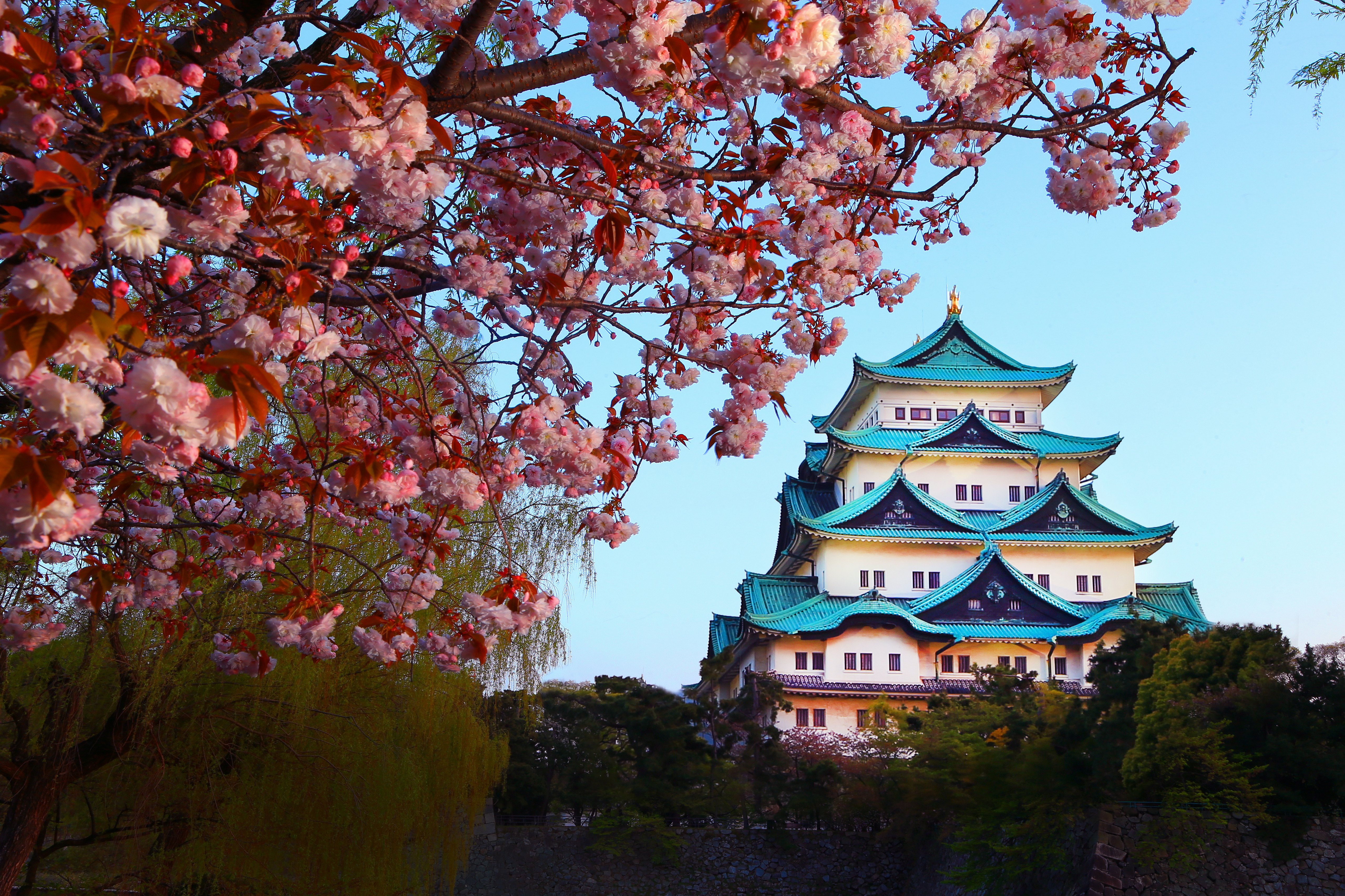
5. Appreciate the grand architecture of Nagoya-jō (Nagoya Castle)
Founded back in 1615, Nagoya-jō is the city’s showpiece castle. Like many places in Nagoya, it was destroyed during WWII but reconstructed using steel and concrete in 1959. While you can admire the main keep from outside, the interior has been closed to the public for years, after its structure was deemed vulnerable to earthquakes.
There are plans to demolish the keep and rebuild it in timber using traditional Japanese woodcrafting techniques, staying faithful to the castle’s original design, which was recorded in early survey documents. Unfortunately, construction has been plagued by delays, so there is no specific schedule for the project.
It’s still well worth visiting Nagoya-jō to view the 17th-century Honmaru Palace. For 400 years, this was the exclusive domain of the city’s feudal lords and samurai before being destroyed during WWII. A remarkable reconstruction project in 2009 restored the palace to its original grandeur, using hinoki (cypress wood), traditional Japanese carpentry techniques, and Edo-period plans and historical records.
Advertisement
Inside, you can see 31 straw-scented tatami-floored rooms, with shoji (latticed paper doors) and gold-leaf-gilded fusuma sliding screens. It gives a powerful sense of the refined but regimented lives of its Edo-period occupants.
Planning tip: Beyond the palace, surrounding the castle watchtowers, gates and moat, is the beautiful Ninomaru-teien garden, with a number of quaint teahouses that you can explore.
6. Taste Nagoya's delightful local specialites
Nagoyans love their food and are prepared to line up around the block to get it. Be sure to try some of the popular foods of Nagoya, including udon and kishimen noodles and miso-katsu (miso sauce poured over fried pork cutlets).
At Misen near Nagoya station, you can slurp down the local specialty of spicy “Taiwan” ramen (created by a Taiwanese chef, but invented in Nagoya). The original location of Atsuta Horaiken Honten, between Atsuta-jingū and the Hori River, has been serving hitsumabushi (eel basted in a sweet and sticky sauce served over rice) since 1873.
Offering a Nagoya take on tonkatsu (deep-fried pork cutlets), Yabaton Honten is famed for its miso-katsu, slathered in a savory miso-based sauce. For soupy miso-nikomi udon, another Nagoya speciality, check out the original branch of Yamamotoya Sōhonke Honke.
Planning tip: Many of Nagoya’s most iconic restaurants don’t take reservations; to avoid waiting an hour (or more) in line at peak times, plan for a slightly earlier or later dinner.

7. See robots in action at the Toyota Commemorative Museum of Industry & Technology
In Nagoya, there’s no name more famous than Toyota, the automobile giant that produced its first car here in 1936. At the Toyota Commemorative Museum of Industry & Technology, you’ll learn how Toyota was originally founded in 1919 as a weaving machine company – yes, the very first Toyota was a loom!
Most of the museum, of course, is devoted to automobiles. Alongside displays of Toyotas from all eras, you can see fascinating demonstrations showing how modern cars are assembled, from parts pressed from sheet metal to the finished product. The robots alone are worth the entry fee, from the specialist bots that work the assembly lines to mechanical maestros playing the violin.
Detour: Looking for some more unique museum experiences? Check out the SCMAGLEV & Railway Park, where you can scramble aboard one of the world’s fastest trains, with a top speed of 581km/h, and try simulators that let you drive a bullet train. Or head to the Nagoya City Science Museum to view the world’s largest planetarium, artificial tornados, and a deep-freeze lab with an artificial aurora borealis.
8. Go to Legoland Japan, the best thing to do as a family
If you're visiting with kids, good luck saying no to a trip to Legoland Japan! This phenomenally popular theme park is set by the coast to the south of Nagoya, and you can easily fill a day (or days) here with kid- and child-at-heart-friendly entertainment.
Highlights include miniature Lego recreations of Japanese cities, a Lego factory, live stage performances and fun-filled theme-park rides. The on-site resort offers plenty of hotel and dining package options too.
Planning tip: Get to Legoland on the Aonami underground line; the park is a 5-minute walk from Kinjofuto Station, the last stop on the line.

9. Visit Sakae at night for its pubs, bars and clubs
What Shinjuku is to downtown Tokyo, Sakae is to Nagoya – a pulsating, neon-lit strip of bars, clubs and izakaya (pub-eateries). Most of the action is centered on the shopping area around Sakae’s station, which morphs into a nightlife haunt as offices close. Sakae has a familiar entertainment district setup, with blinking neon signs and a staggering array of bars, pubs, clubs and restaurants, stacked up inside high-rise buildings.
For a slightly different mood, head underground to the Central Park mall for subterranean shopping and casual dining. Nearby Nishiki is another popular nightlife district. Its narrow alleyways are filled with old-style izakayas, offering a more intimate and traditional Japanese nightlife experience.
Planning tip: Before you head out for the night, check the last train times. Some of Nagoya's subway lines stop running just before midnight, with others going to around 1am.
10. Enjoy a day trip in the fantasy lands of Ghibli Park
If you’re a fan of the whimsical storytelling of Studio Ghibli, then we probably don’t need to tell you about Ghibli Park, a brand-new attraction dedicated to the animation studio’s much-loved anime films.
While it’s touted as a theme park, don’t come expecting amusement park rides; instead, visitors wander through a fantasy landscape featuring recreations of famous Studio Ghibli scenes, on the site where Aichi province hosted the World Expo in 2005.
Ghibli’s Grand Warehouse is the park’s centerpiece, with recreations of settings from many of the studio’s most iconic movies. Kids will love the interactive exhibits that let you star in a Studio Ghibli film, and you can pop into the cinema to enjoy exclusive short films shown only at this park and Tokyo's Ghibli Museum in Mitaka.
Planning tip: It’s wise to book well ahead; tickets are released 3 months in advance and go on sale online on the 10th of each month, often selling out quickly. The easiest way to get here is by taking the Higashiyama subway line from Nagoya Station to Fujigaoka and changing to the Linimo Mag-Lev train.

11. Marvel at Sakae’s space-aged landmarks and architecture
Beyond nightlife, Sakae is also home to some of Nagoya’s best-known landmarks. Dating to 1954, the Chubu Electric Power Mirai Tower (formerly Nagoya TV Tower) was the first radio tower of its type in Japan, pre-dating the more famous towers in Tokyo, Yokohama and Osaka.
For the best view in town, head for the Sky Promenade at Midland Square, Nagoya’s tallest building. Set at 247m, this is Japan’s tallest open-air observation deck and you can enjoy 360-degree views over the city.
The UFO-like Oasis 21 is another contemporary architectural landmark, combining a bus terminal, restaurants and a popular shopping complex, set beneath an angled disk that is illuminated each evening.
Then there is the 52m-high Ferris wheel, Sky Boat, a unique construction built into the side of the Sunshine Sakae building. It’s most fun at night, when the framework and the street below are brightly illuminated.
Planning tip: It’s easy to explore Nagoya on the subway system, with six lines and stops and routes clearly signposted in English and Japanese. The handy Meijō line connects Sakae, Nagoyajo (for the castle) and Ōzone (for the Tokugawa Art Museum).
12. Take the train to the scenic castle town of Inuyama
About 25km north of Nagoya, the town of Inuyama is the setting for the eye-catching Inuyama-jō castle, one of the region’s top drawcards. A designated National Treasure, the castle dates back to 1537, and despite extensive restoration, it remains one of Japan’s oldest surviving wooden castles.
At the base of the keep lies Inuyama’s Edo-era old town, which is packed every weekend with tourists browsing the cute shops and restaurants. Stop by the Karakuri Exhibition Room to view Edo- and Meiji-era karakuri ningyō (marionettes) and the Inuyama Artifacts Museum for an overview of the city’s castle and cultural heritage.
Detour: Accessible from Nagoya by bus or local train, the historic town of Gujō-Hachiman has another interesting castle, with a wooden keep erected in 1933 over the ruins of the original castle, which was torn down in 1870 after the Meiji Restoration. This surrounding town has a tranquil and less touristy vibe, and you can visit century-old merchants’ homes and artisan workshops along its cobbled streets.
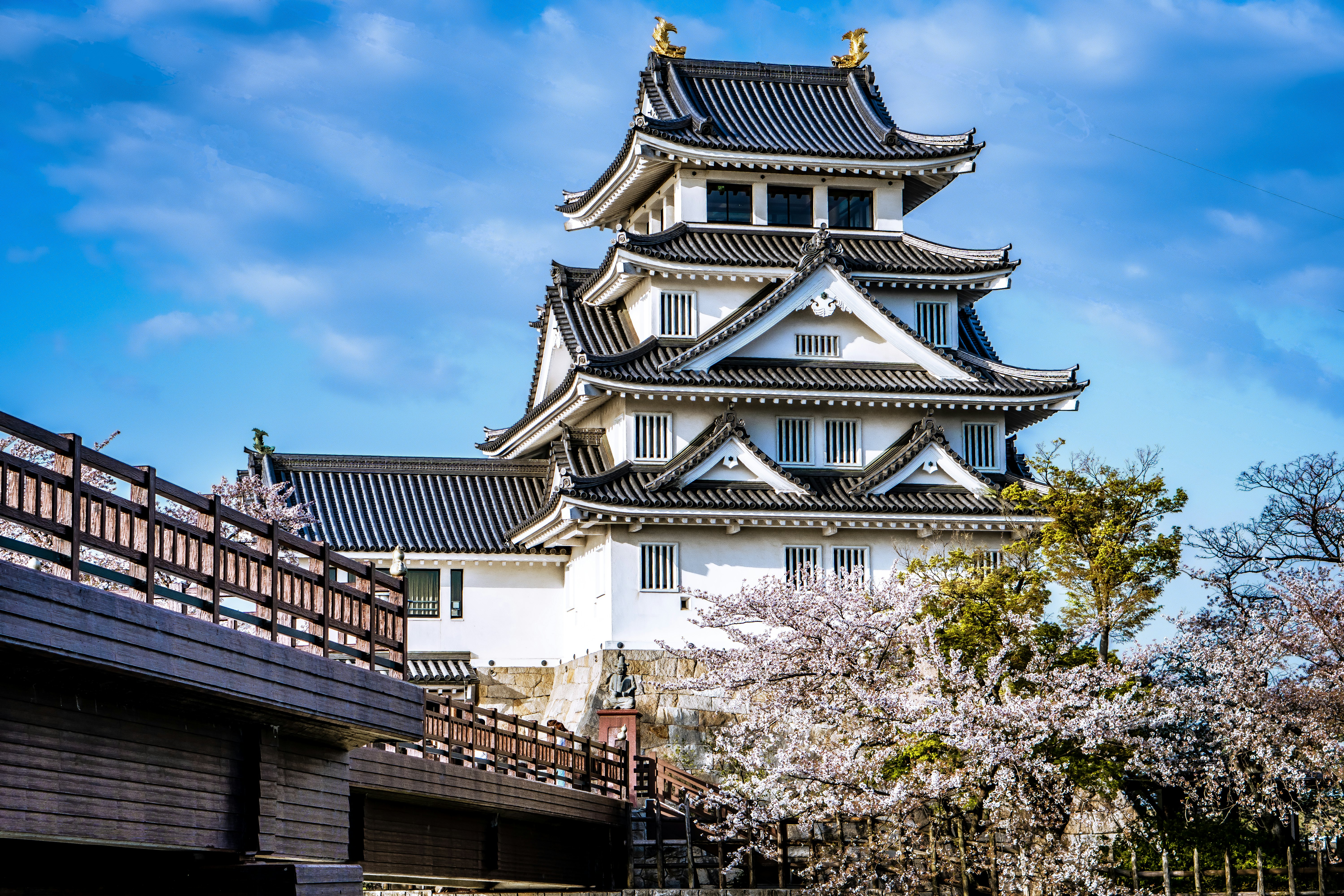
13. Experience a living museum in Gifu
Set along the banks of the Nagara River, about 43km northwest of Nagoya, the scenic provincial capital of Gifu is a sprawling industrialized city centered on a cluster of atmospheric historical sights.
Few tourists venture far beyond resplendent Gifu-kōen park, with its striking, three-story vermillion pagoda and lush foliage that blazes with fall color in November. Here, you’ll find the city’s premier cultural attractions, including the enchanting Gifu-jō, a four-tiered castle built in 1956 to replace the version destroyed in WWII, with displays of samurai swords and armor.
The castle sits at the top of forested Kinka-zan
park, with hiking trails leading to the summit (allow about an hour),
plus a cable car for those who prefer to take the easy route. It has
such a commanding position that the magnificent 360-degree views stretch
as far as Nagoya. In summer, the keep is illuminated at night, making
it an especially atmospheric time to visit.
Planning tip: Get to Gifu from Nagoya on Japan Railways' convenient JR Limited Express Hida train; it leaves Nagoya Station 10 times a day, arriving 20 minutes later.
This article was adapted from Lonely Planet’s Japan guidebook, published in March 2024.
Advertisement
Take your Japan trip with Lonely Planet Journeys
Time to book that trip to Japan
Lonely Planet Journeys takes you there with fully customizable trips to top destinations – all crafted by our local experts.