Oct 4, 202613 min read
12 Best Places to Visit in WalesOct 4, 2026
13 MIN READ

Writer
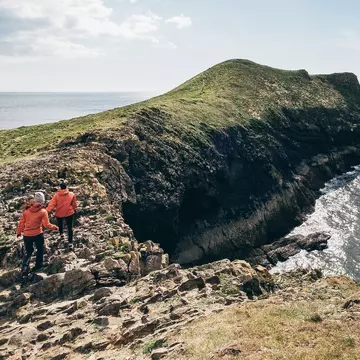
Hiking at Rhossili Bay, Wales. attilio pregnolato/Shutterstock

Writer
Highlights
Writer Kerry Walker picks 12 favorites in Wales, from rugged mountains to puffin islands.
Head for the summit in Eryri (Snowdonia) or to the bracken-cloaked moors of Bannau Brycheiniog (Brecon Beacons).
Cardiff rewards culture lovers with its castle, Bute Park and the National Museum Cardiff.
For literary wanderers, try Hay-on-Wye; for wild coasts, go to Pembrokeshire or the Gower Peninsula.
Lonely Planet may earn a commission from affiliate links on our site. All recommendations and reviews reflect our own independent opinions.
Wales appears small on a map of Europe, it’s true. But looks can deceive. Encompassing heathery moors and sheep-nibbled slopes, ruined medieval castles and charismatic market towns, castaway coves and puffin-populated islands, this pocket-sized nation is one of a kind. Whether you’re wending along a remote single-track lane into hills brimming with beauty and legend, clambering up a hulking mountain as the morning mist rises, kicking off your boots in a timber-beamed pub over pints of ale and singsong voices, or peering up at distant galaxies in some of Britain’s darkest skies, Cymru (Welsh for Wales) touches deep, in every season.
We’ve combed the country to bring you 12 of our top places to visit. But let’s face it: anyone who visits Wales quickly finds their own favorite spots, too.
To continue planning your trip, download the Lonely Planet app, or check out our Wales guidebook.
Best for coastal hikes
More gritty than obviously pretty, Swansea packs a hefty cultural punch, with its coolly revamped Maritime Quarter (crowned by the National Waterfront Museum) and the enduring legacy of 20th-century bad-boy Welsh poet Dylan Thomas. Follow in his lyrical footsteps all over his hometown, taking in his Edwardian birthplace, where he penned two-thirds of his work, and going for a pint in the 17th-century No Sign Wine Bar, one of his many beloved watering holes.
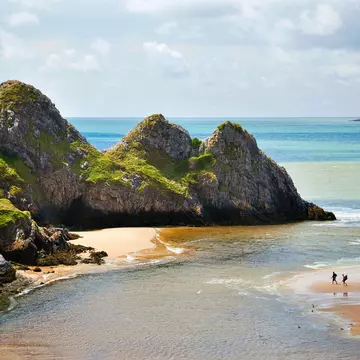
After a day or two in town, you’ll be craving a blast of refreshing sea air and a bracing coastal walk, and the Gower National Peninsula, just west of Swansea, delivers. Pin down your favorite beach – candidates include Oxwich Bay and Rhossili, with their pounding surf, expansive sands and rippling dunes; or cliff-hugged beauties like Brandy Cove, where pirates once stashed their booty.
Planning tip: Gower’s glorious coast is best explored on foot on the 39-mile coastal path from Mumbles to Crofty.
Best for mountains
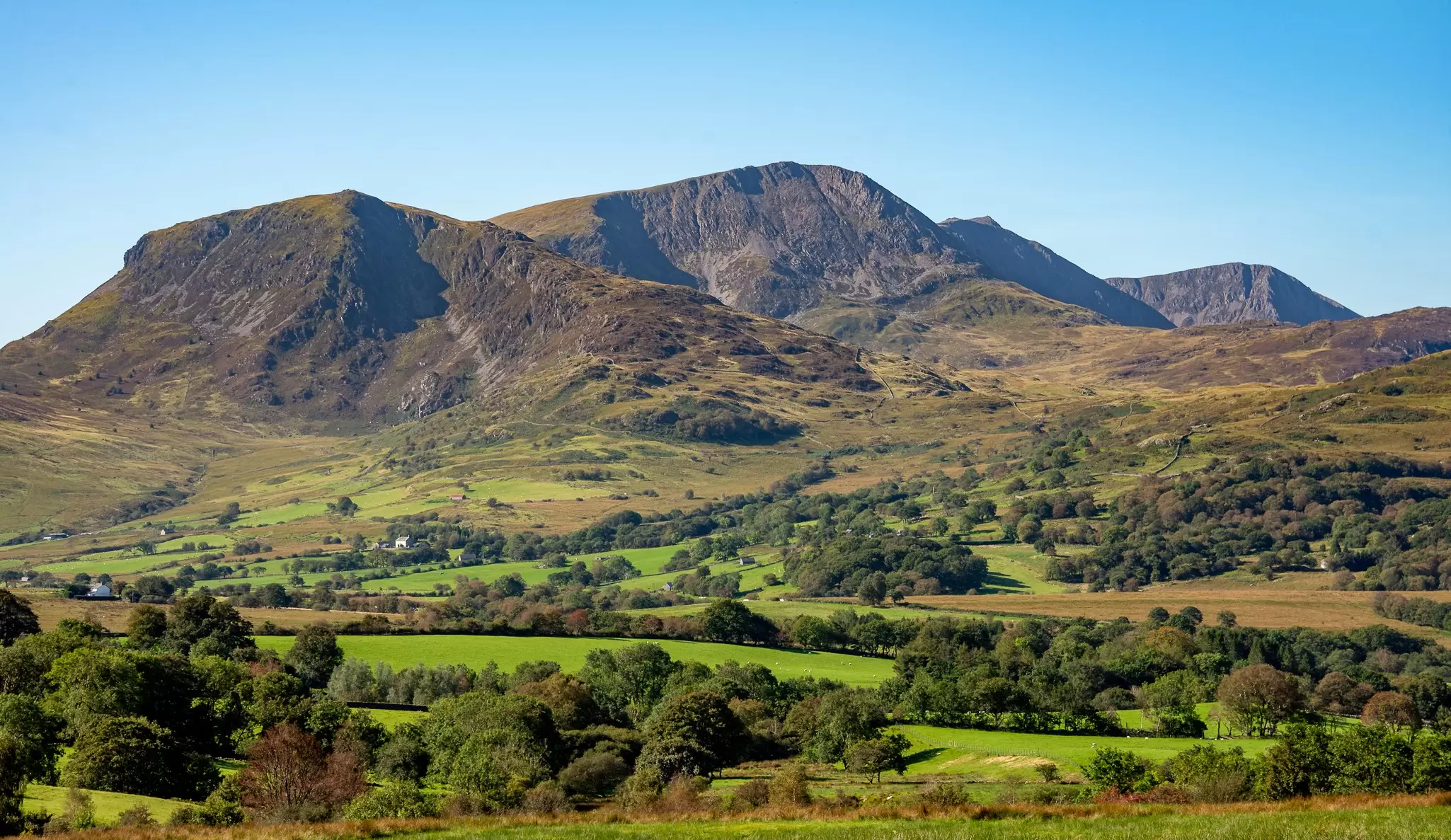
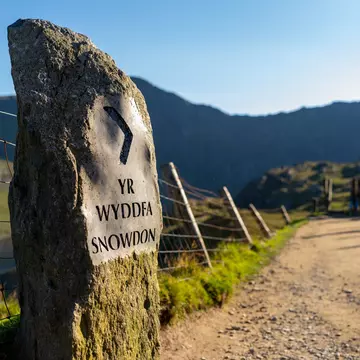
If you love nothing more than a mountain, Eryri comes out on top – quite literally. Spreading across the country’s northwest, this spectacularly buckled and contorted region welcomes hikers in their thousands to the summit of mighty Yr Wyddfa (Snowdon), the country’s loftiest peak, at 1085m. Yet time it right or stray from the trail and you can still find pockets of peace and true wilderness. Glowering crags, deeply gouged valleys, thundering rivers and falls, inky blue lakes of myth, and endless miles of hiking and biking trails: beauty here comes with a shot of adventure.
And Yr Wyddf is just one peak experience among many. Other equally enchanting hikes dip into the remote, glacier-scoured, waterfall-splashed Ogwen Valley up to Glyder Fawr via the Devil’s Kitchen, or climb the boulder-strewn slopes of Cader Idris, at 893m, where lore has it a giant carved out a chair to peer up at the night skies. Speaking of skies, the national park’s International Dark Sky Reserve dazzles with some of the country’s starriest.
Planning tip: Still set on summiting Yr Wyddfa? To dodge the hiking crowds, avoid summer weekends and eschew the popular Llanberis Path in favor of quieter, lesser-known, more-challenging routes like the Rhyd Ddu and Snowdon Ranger paths.
Best for book lovers

If your idea of a good time is spending hours browsing musty secondhand bookshops in search of rare, well-thumbed tomes, Hay-on-Wye will be your heaven. Deep in the Black Mountains and close to the English border, this cute-as-a-button Georgian market town has carved out a reputation as the UK’s literary capital. You could spend days lost in its bookshops (standouts include three-floor Richard Booth’s) – but don’t forget to factor in time for walking and canoeing along the River Wye, and for relaxed afternoons spent curled up with a novel in one of the town’s artsy cafes.
To truly revel in Hay’s literary vibe, time your visit to the main event: the Hay Festival in late May and early June, an 11-day cultural feast of readings, poetry, discussions, workshops, book signings and concerts that attracts the crème de la crème of the publishing world.
Planning tip: Rent wheels for a road trip to remember, heading south into the thrillingly wild Vale of Ewyas. As you cross the snaking Gospel Pass, Wales’ highest road at 549m, landscapes of lonely moors and wooded heights unravel. (These provided inspiration for Bruce Chatwin’s On the Black Hill.) Halfway along you’ll reach the evocative ruins of Augustinian Llanthony Priory, immortalized in 1794 by JMW Turner.
Best for mining heritage
The tradition of mining runs deep in Wales. At the height of the Industrial Revolution, the country’s rich deposits helped to stoke the world’s coal stoves and put slate on roofs all over the world. For a brush with this rich heritage, head to the dramatically scarred South Wales Valleys and UNESCO-designated Blaenavon, which rekindles the flames of its industrial past at the Big Pit National Coal Museum.
In a space that was an active mine from 1880 until the 1980s, exhibits are presented in mining galleries and at pithead baths. Kitted out with helmet and headlamp, you’ll descend in a pit cage to a dark maze of shafts, coalfaces, engine houses and stables. You can’t help but be moved by the stories recounted by the ex-miner guides, who spent a tough life cutting coal, breathing in dust and barely glimpsing daylight.
Planning tip: It’s free to visit Big Pit, but during busy times it’s worth paying £8 for a Job-A-Knock ticket, which lets you book timed slots for underground tours in advance.
Best for walking
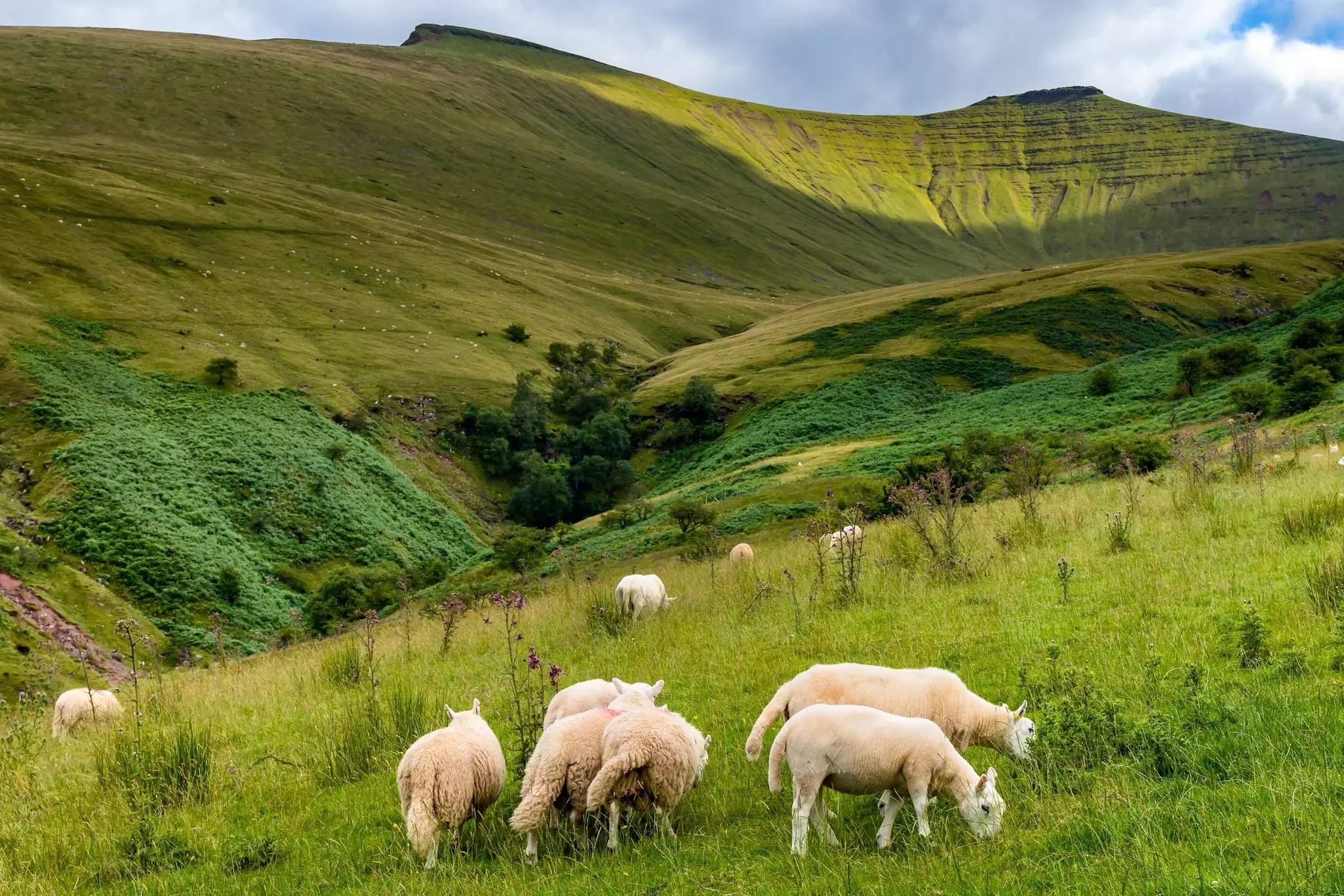
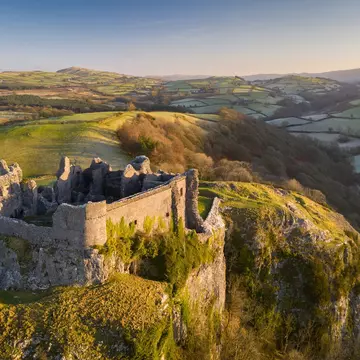
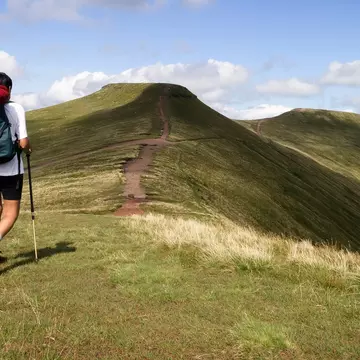
Rolling like great waves across the country’s southeast, the bare, flat-topped summits and bracken-cloaked moors of Bannau Brycheiniog are Welsh wilderness with the volume turned up. Heightwise, these mountains can’t rival those in Eryri, but they bring just as much drama, their fins swooping above glacier-carved valleys, patchwork-quilted hills and fern-flecked forests. While everyone wants to bag Pen-y-Fan, the highest peak at 886m, there’s much more to discover.
Muddy your boots on other memorable trails, such as those at Llyn-y-Fan Fach in the park’s west, where verdant slopes drop to a glacial cirque lake steeped in Lady of the Lake myth; Iron Age hill fort Crug Hywel; and the Blorenge near Abergavenny (Y Fenni), where arresting views of the Black Mountains and Severn Estuary open up.
After a long day’s stomp, beamed country pubs, idyllic villages like Crickhowell and food-loving market towns like Y Fenni encourage you to rest and indulge. And when night falls and it’s silent but for bleating sheep, stars glitter in Wales’ first International Dark Sky Reserve.
Planning tip: Trains stop on the national park’s periphery, at Y Fenni, Llandeilo, Llangadog and Llandovery; to reach the remotest reaches, you’ll need your own wheels. Be prepared to go at tractor’s pace on single-track roads.
Best for beaches
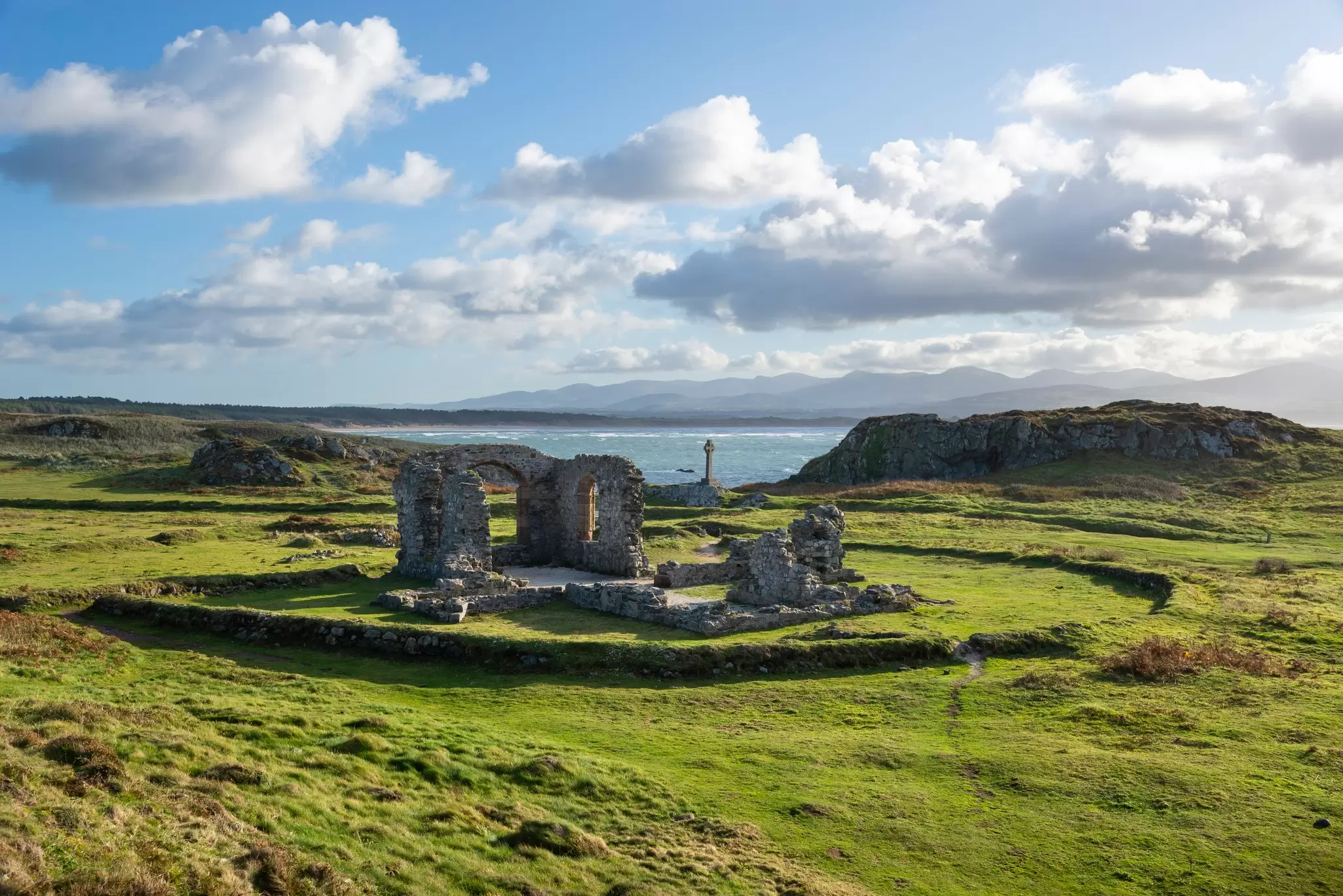
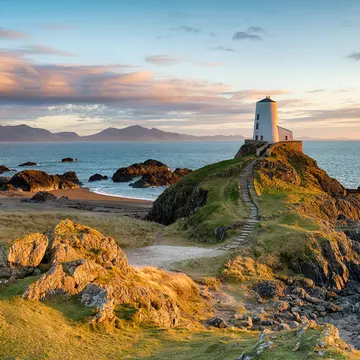
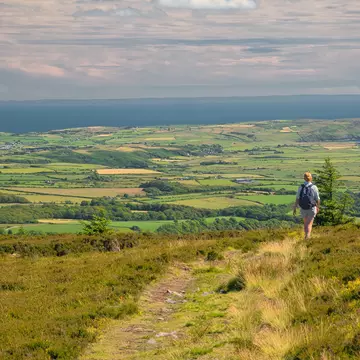
Across from Eryri’s dark, rugged peaks and well battered by waves from the Irish Sea, Ynys Môn off Wales’ northwest coast is a wild beauty. Cross the Menai Strait and you’ll be faced with some of the country’s finest beaches – from bays lashed by booming waves to cliff-clasped coves. Stitched together by the multiday Anglesey Coastal Path, the island’s 130-mile coast is an Area of Outstanding Natural Beauty.
Yet Ynys Môn doesn’t rest on looks alone: dotted with Iron Age hill forts, standing stones and ancient burial chambers, this island runs deep with Celtic history (lore has it this is where St Patrick first washed up on Welsh shores). Top beach billing goes to Traeth Lligwy, a vast swathe of blond sand and rock pools; dune-flanked Traeth Mawr in Aberffraw; and pine-fringed, 3-mile-long Traeth Llanddwyn.
Planning tip: Visit at low tide to skip over to Ynys Llanddwyn and its 16th-century ruined chapel, which will forever be associated with the earlier Celtic nunnery that stood here and its connections to St Dwynwen, patron saint of lovers (consider him the Welsh St Valentine).
Best for puffins
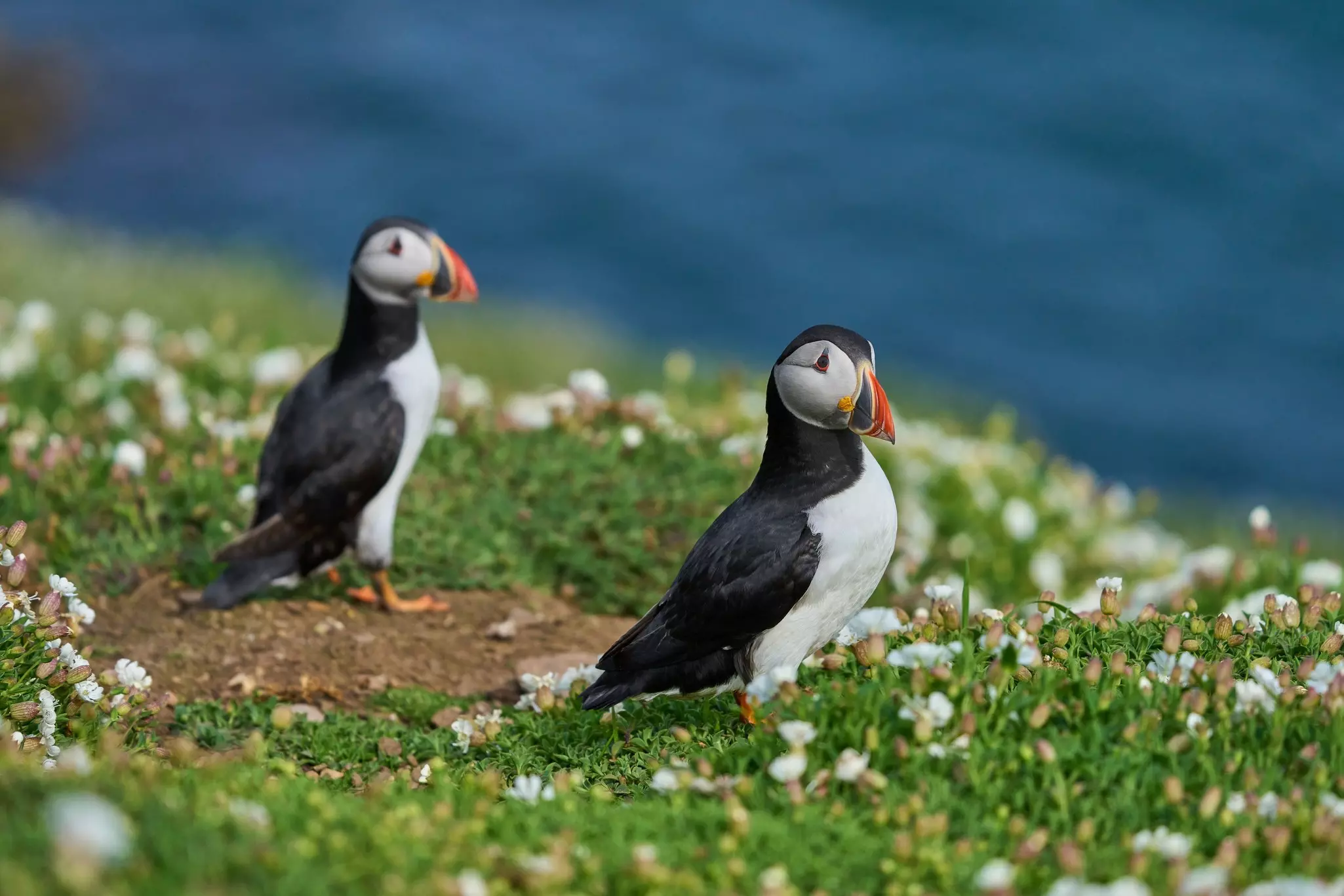
As you cross choppy waters on a little blue boat and spot cliffs reaching high above the tide-ripped Atlantic, Skomer Island emerges like a vision off Pembrokeshire’s southwest coast. In lashing rain or dazzling sunshine, this island is pure magic for binocular-wielding bird-watchers.
Guillemots, razorbills, kittiwakes and peregrines, terns, fulmars, choughs, red-billed oystercatchers are everywhere. But – cutting to the chase – the puffins are the true stars here. And with 52,000 of them hanging out during the summer season, you’ll never get closer to these adorable, clownlike birds.
Bring a picnic and hike the 4-mile circular trail over wildflower-stippled cliffs to The Wick, where puffin close-ups are guaranteed. You’ll see them darting in and out of their burrows, gathering for chats, launching themselves off cliffs and bringing in sand eels for their pufflings.
Book well ahead to stay overnight at the Old Farm, and head out with the midnight twitchers to see Manx shearwaters dive-bombing burrows. The island is home to the world’s largest colony of these birds, who fly here each year from their wintering ground in South America.
Planning tip: From Tuesday to Sunday, April to August, boats depart Martin’s Haven for Skomer Island half-hourly from 10am to noon (book online), returning from 3pm and on; the crossing takes 15 minutes. There is a reduced service in September.
Best for poetic landscapes
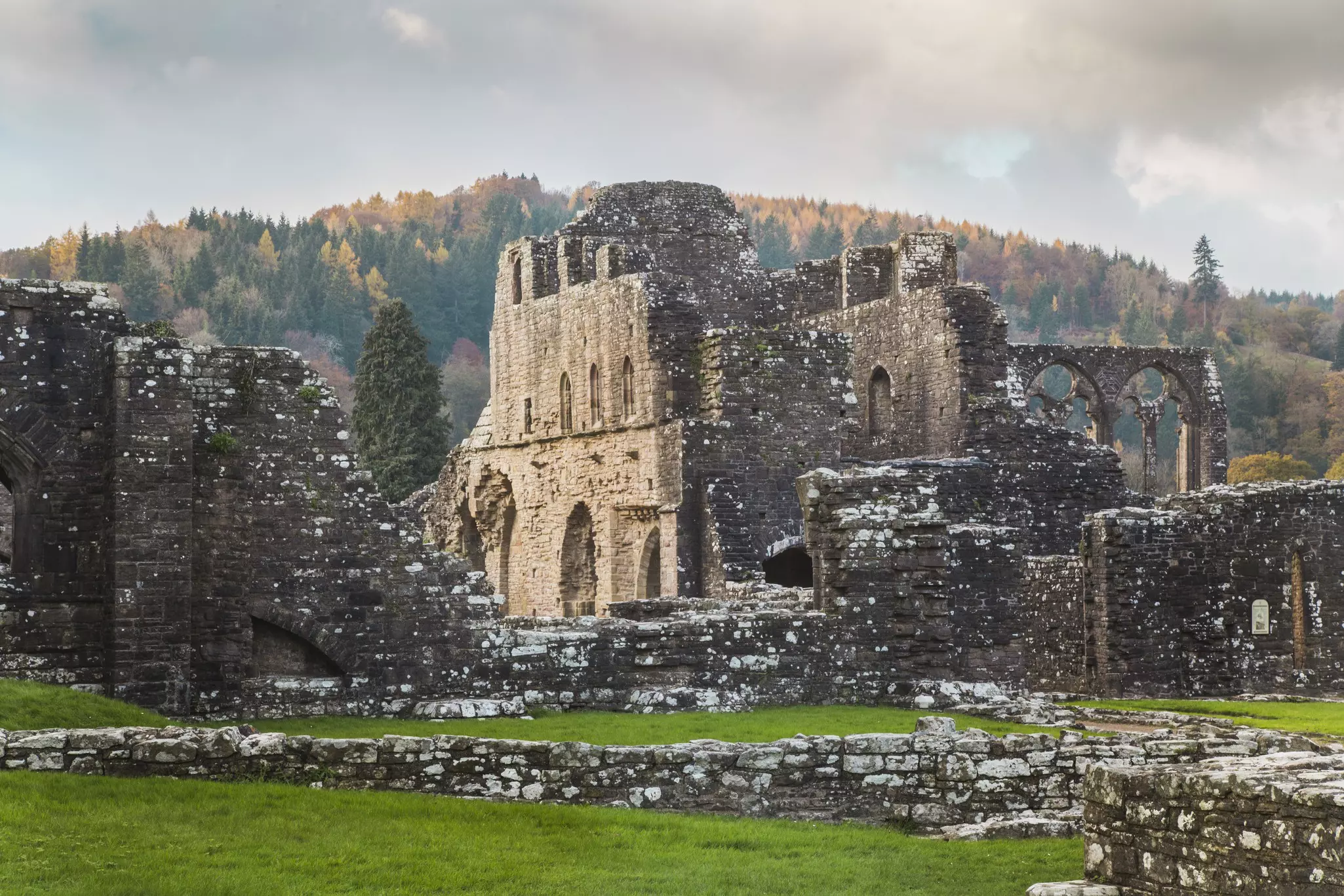
As it twists and turns along the English-Welsh border (from just south of Hereford to castle-crowned Chepstow), the River Wye flows through the steep-sided, thickly wooded Wye Valley and past some of Wales’ most compelling landscapes. Romantic? You bet. Often dubbed the birthplace of British tourism, this is where artistically minded, poetically inclined souls took to the water as they set out on the Wye Tour some 250 years ago. And the valley still looms large in the imagination today, having inspired the likes of Wordsworth, Coleridge and Turner.
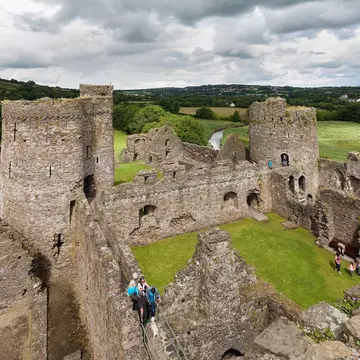
Whether seen veiled in mist, in the tawny-gold colors of autumn or in the hazy light of a summer sunset, this valley is a knockout. High up on your list should be the haunting Gothic ruins of Tintern Abbey (arrive early to dodge the crowds) and Symonds Yat Rock, with far-reaching views of the Wye, Forest of Dean and – if you’re lucky – peregrine falcons.
Planning tip: Lace up your hiking boots, as the Wye Valley is made for exploring on foot. For soul-soaring views, trudge up to the Devil’s Pulpit above Tintern, or hook onto the long-distance Offa’s Dyke.
Best for prehistory
Stonehenge gets all the love, but many an archaeologist will tell you that its famous bluestones most likely hail from the wind-battered, drizzle-lashed moors of the Preseli Hills in northern Pembrokeshire. Opening a fascinating window onto prehistory, these cairn-dotted heights are a giant treasure hunt for anyone interested in the mysteries of past civilizations. They’re jam-packed with standing stones, Iron Age hill forts, burial chambers and Arthurian legends.
As a starting point, trek from Newport up Mynydd Carningli (Mountain of Angels), an extinct volcano topped by an Iron Age hill fort and sprinkled with hut circles, and visit Pentre Ifan, Wales’ largest megalithic tomb.
Planning tip: For a deeper dive still, lace up your boots and brave the bog on the 7-mile Golden Road, once part of a 5000-year-old trade route between Wessex and Ireland. Along the route, you’ll pass Carreg Coetan Arthur, a Neolithic burial chamber with links to Arthurian legend.
Best for castaway fantasies
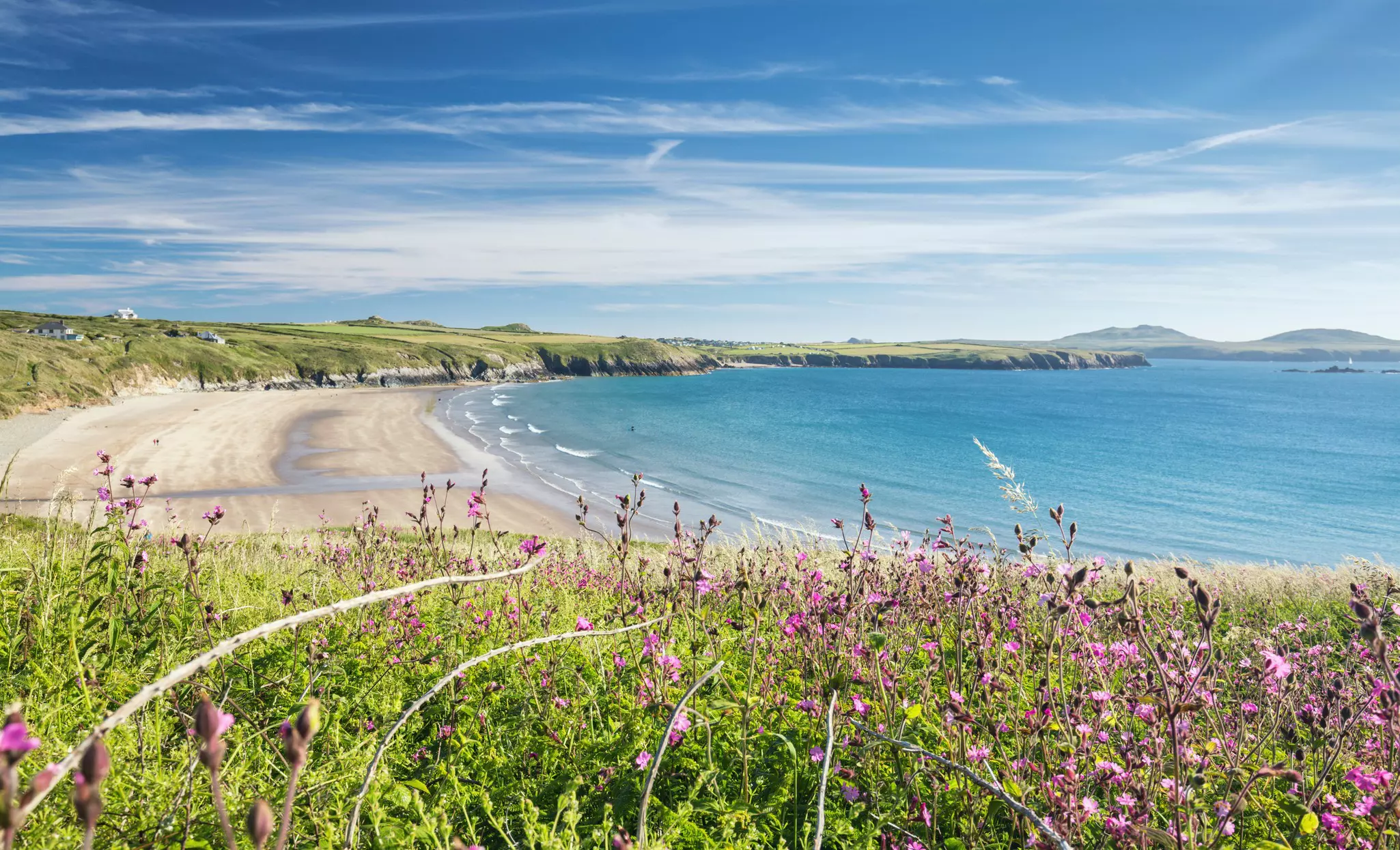
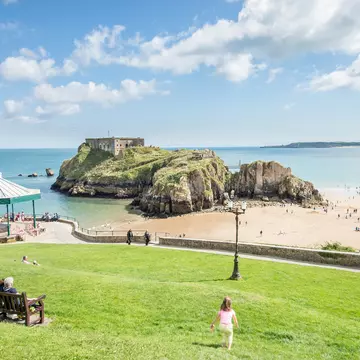
With smugglers’ coves; dune-backed beaches; stratified limestone eroded into arches, blowholes and sea stacks; and knobbly volcanic rocks that have been around since dinosaurs walked the earth, Pembrokeshire Coast National Park wraps up some of Wales’ most impressive coastal scenery. All of the joy here is outdoors: striding along the 186-mile Pembrokeshire Coast Path, foraging for shells and edible seaweed among rock pools with childlike glee, or embracing the water and elements while sea kayaking or surfing.
Choose your base wisely. Birthplace of Wales’ patron saint in 500 CE, St Davids is an instant heart stealer, topped off by a resplendent medieval cathedral. Other charmers include pretty Solva, a pastel-painted village wedged onto a deep harbor; seaside-y Tenby and Saundersfoot; and Newport, with its galleries, street cafes and restaurants championing regional produce.
Planning tip: Haverfordwest is Pembrokeshire’s biggest transportation hub and is well connected to the rest of Wales by train. Coastal buses can be useful for hikers, with services including the summer-only Puffin Shuttle (St Davids–Marloes), Celtic Coaster (St David’s Peninsula) and Strumble Shuttle (Newport–St Davids).
Best for culture
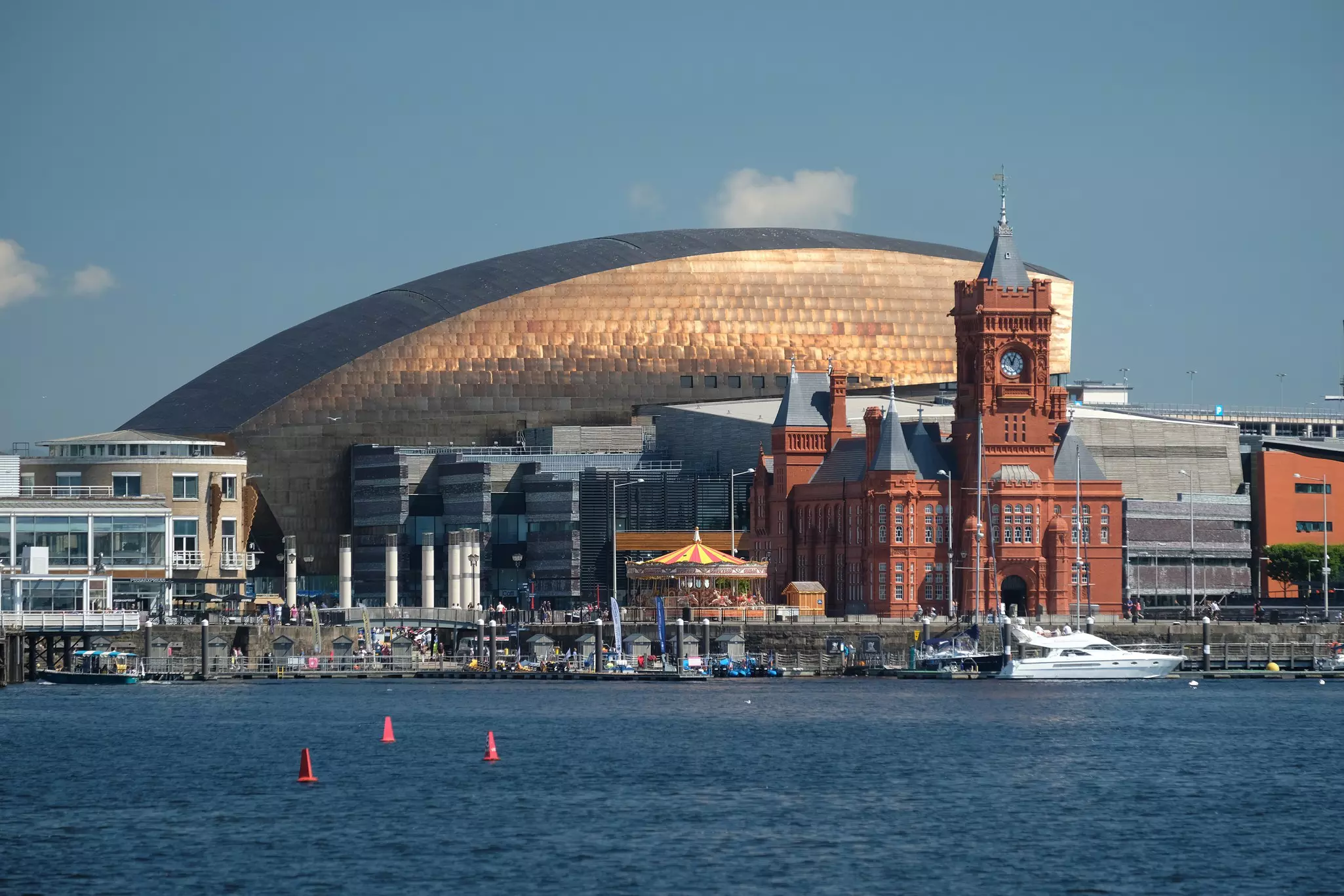
Built grand from the riches of coal mining and revived for the millennium, Welsh capital Cardiff moves from past to present without skipping a cultural beat. Gone is the grime of its industrial age. In its place is a thriving, energetic city, with vibrant arts offerings and upbeat food and nightlife scenes, plus an outstanding collection of parks, museums and concert halls that could easily occupy you for days.
Winging you from its Roman origins to the romance of mock-Gothic, Cardiff Castle is unmissable, as is the adjacent Bute Park on the banks of the River Taff. The nearby National Museum Cardiff showcases everything from dinosaur bones to impressionist masterpieces in a grand neoclassical building. For a glimpse of Cardiff’s changing face, head down to the revamped waterfront, Cardiff Bay, where you’ll be struck by architectural big hitters like the shimmering, bronze-tiled Wales Millennium Centre.
Planning tip: Ticking off many sights from the water, the Aquabus is a relaxed, scenic way to get from the city center to the bay.
Best for vintage trains and aqueduct canals
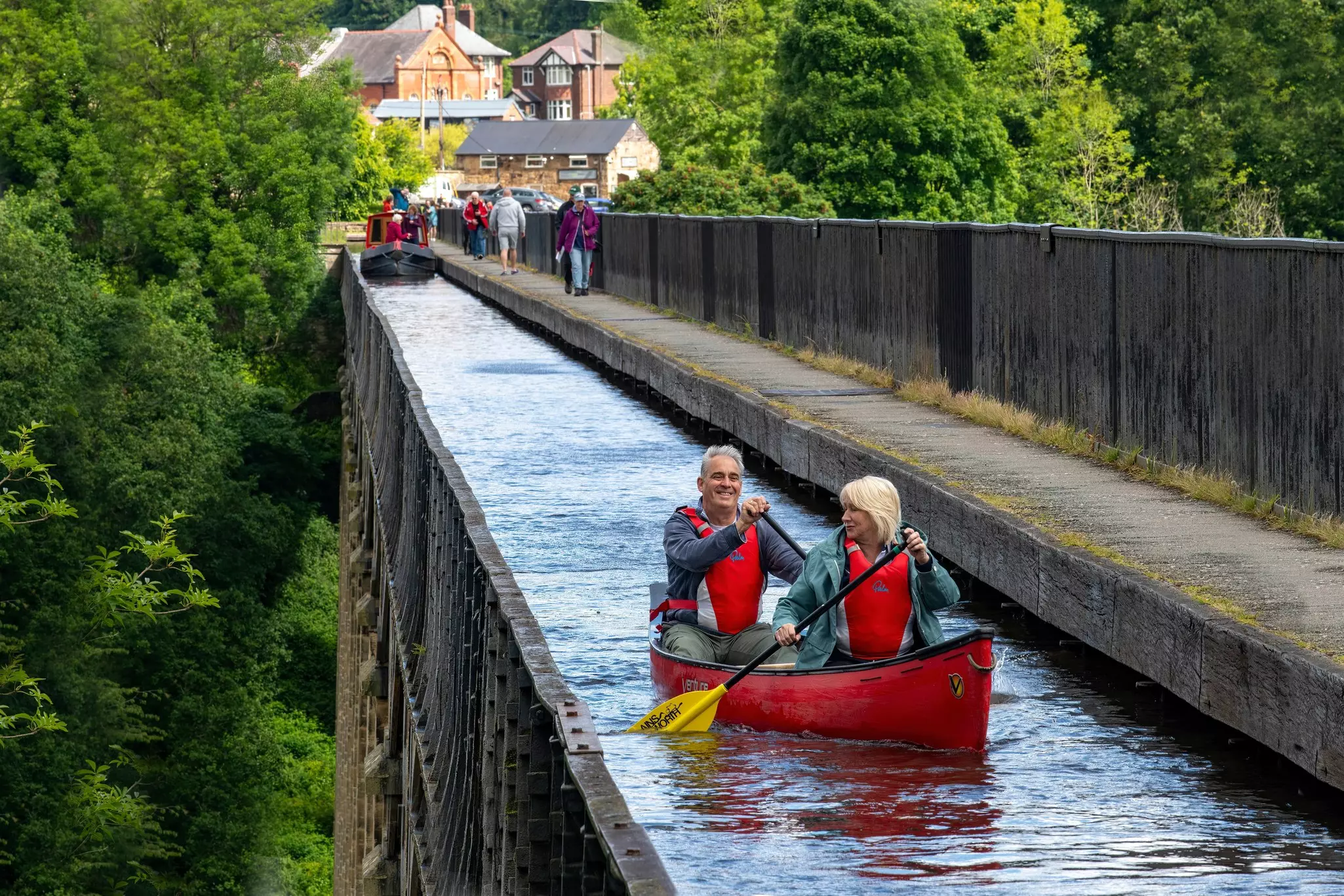
Hugging the banks of the waterfall-splashed River Dee and hemmed in by wooded hills, Llangollen sits prettily on southern fringes of the Clwydian Ranges and Dee Valley Area of Outstanding Natural Beauty in North Wales. The region is all about slow travel and back-to-nature adventures. Chug through the countryside to Corwen on the vintage, standard-gauge Llangollen Railway; hook onto the ancient national trail Offa’s Dyke Path; or bounce through rapids and currents white water rafting down the River Dee.
Culturally, the showstopper is the UNESCO-designated Pontcysyllte Aqueduct, a 38m-high, 307m-long, 3.5m-wide marvel designed by preeminent Georgian engineer Thomas Telford. Stretching across the River Dee, it’s the highest canal aqueduct ever built – and you can cross it by foot, canoe or kayak.
Planning tip: Time your visit to catch July’s International Musical Eisteddfod and Fringe Festival, a feast of concerts, competitions, comedy, dance and art.
Book your Wales trip with Lonely Planet Journeys
See Wales how it's meant to be seen
Planned by local experts and tailored to you, Lonely Planet Journeys handles the logistics so you can just enjoy the trip. Tell us what you want and we'll build your Wales itinerary from scratch, or browse our bookable trips to get inspired.


Explore related stories