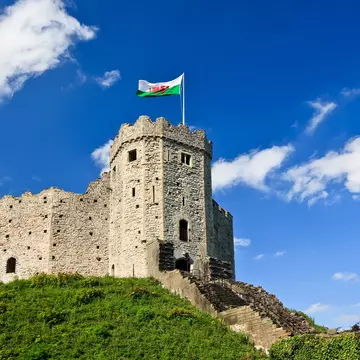
Imposing Chepstow Castle perches atop limestone cliffs overhanging the river, guarding the main river crossing from England into South Wales. It is among Britain's oldest castles – building started in 1067, under a year after William the Conqueror invaded England – and the nation's oldest post-Roman stone-built structure. The impressive Great Tower dates from the 1060s and includes bricks plundered from Caerwent, a nearby Roman town. It was extended over the centuries, resulting in a long, narrow complex snaking along the hill.
There are plenty of towers, battlements and wall walks to explore, and lots of green space in between. Keep an eye out for the primitive latrines extending over the river and for Europe's oldest surviving castle door, a massive wooden barrier dated to before 1190 and used in the main gateway until 1962.
A cave in the cliff below the castle (sadly, no longer accessible to the public) is one of many places where legend says King Arthur and his knights are napping until the day they're needed to save Britain.
Once the entire town was wrapped in fortified walls, bolting it to the castle. Vestiges of the 13th-century Port Wall edge the western side of the town center, while Chepstow's main street, High St, passes through the Gate House, the original city gate, which was restored in the 16th century.
Tickets must be purchased in advance via the Cadw website.