Aug 19, 20268 min read
13 Best Things to Do in StockholmJan 6, 2026
7 MIN READ

Writer
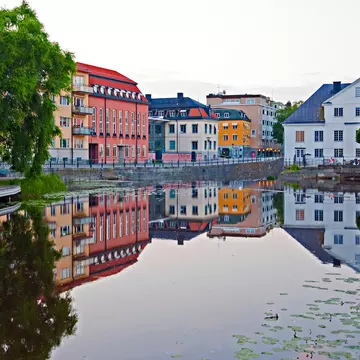
The Fyris River in Uppsala, Sweden. SorenP/Getty Images

Writer
Highlights
Writer Becky Ohlsen picks four Stockholm day trips for palaces, islands and Vikings.
Head to Uppsala and Gamla Uppsala for ancient burial mounds, or take the Vaxholm ferry.
Tour Drottningholm Slott, a royal palace where the theater still uses 18th-century stage machinery.
Sail to Birka on Lake Mälaren, a UNESCO Viking trading center founded around 760 CE.
Lonely Planet may earn a commission from affiliate links on our site. All recommendations and reviews reflect our own independent opinions.
There’s a profusion of exciting things to see in Sweden's capital city, but take a day trip beyond Gamla Stan (Stockholm's ever-popular old town), and you could include country palaces, windswept islets and Viking culture in your itinerary too. The excellent – and accessible – public transportation network of trains, metros, buses and ferries makes it easy to explore, and the convenient SL Travelcard allows unlimited travel on most local transit within a set time period (a 24-hour pass costs 180 SEK). Alternatively, get a single journey ticket (43 SEK) that lasts for 75 minutes – most of these sights are under an hour away from the city.
From Drottningholm Slott to Vaxholm in the Stockholm Archipelago, here are the best day trips from Stockholm, perfect for fans of history and the outdoors.
Travel time: 40 minutes to 1 hour each way
How to travel: Train or bus
A lively college town that's rich in history, Uppsala is one of Sweden’s oldest cities, dating back to the 3rd century. It’s also next door to one of the most important pre-Viking sites in the country.
The city’s 40,000 students create a youthful buzz that you’ll quickly feel in the numerous stylish-but-unpretentious cafes and bars. Cobblestone pathways thronged with bicycles lead to the banks of the Fyris River, which flows through the center of town. A squat, pink castle tops a hill above, with a royal garden stretching out below. Budding scientists will enjoy the Linnémuseet and adjoining botanical garden, a replica of famed botanist Carl von Linné’s workspace. History buffs will have plenty to absorb, starting with the treasure-filled Museum Gustavianum or the skyline-defining Domkyrka (Cathedral). But the big draw is Gamla (Old) Uppsala, just up the road.
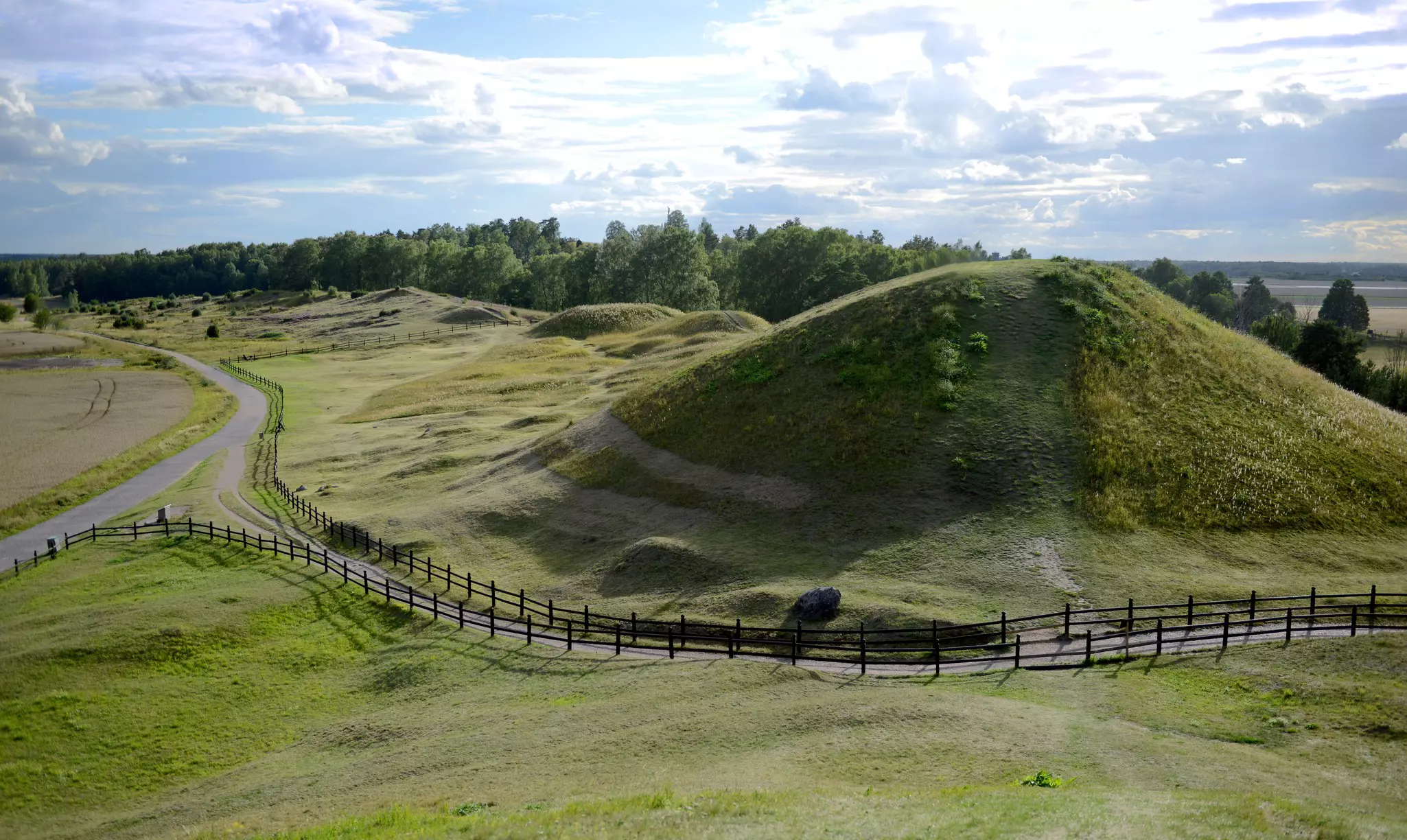
A gorgeous, 2.5-mile bike ride north, this fascinating archaeological site was once a flourishing 6th-century religious center where – allegedly – human sacrifices took place. Its 300 mounds, dating from the 6th to 12th centuries, make it one of Sweden’s largest and most important ancient burial sites. You can learn more in the adjoining Gamla Uppsala Museum, or wander on your own, reading the informative plaques throughout the site.
If you feel like strolling or cycling further, Eriksleden is a 6km “pilgrim's path” between the cathedral in Uppsala and the church in Gamla Uppsala. Its namesake, Erik the Holy, became King of Sweden around 1150 – until the Danes beheaded him 10 years later. The story is that his head rolled down the hill; where it stopped, a spring rose up. The main trail also provides access to a ridged wilderness hiking area called Tunåsen, with a panoramic viewpoint (follow signs along Eriksleden just south of Gamla Uppsala to “Utsiktsleden”).
How to get to Uppsala and Gamla Uppsala from Stockholm: SL commuter trains run frequently (every 30 minutes or more) from Stockholm’s Central Station and City Station to Uppsala’s central station, taking 40 minutes to an hour. Bus 801 goes frequently from Stockholm Cityterminalen to Uppsala station via Arlanda Airport in about 45 minutes. Buses for Gamla Uppsala leave from Stora Torget in central Uppsala.
Travel time: 50 minutes each way
How to travel: Ferry
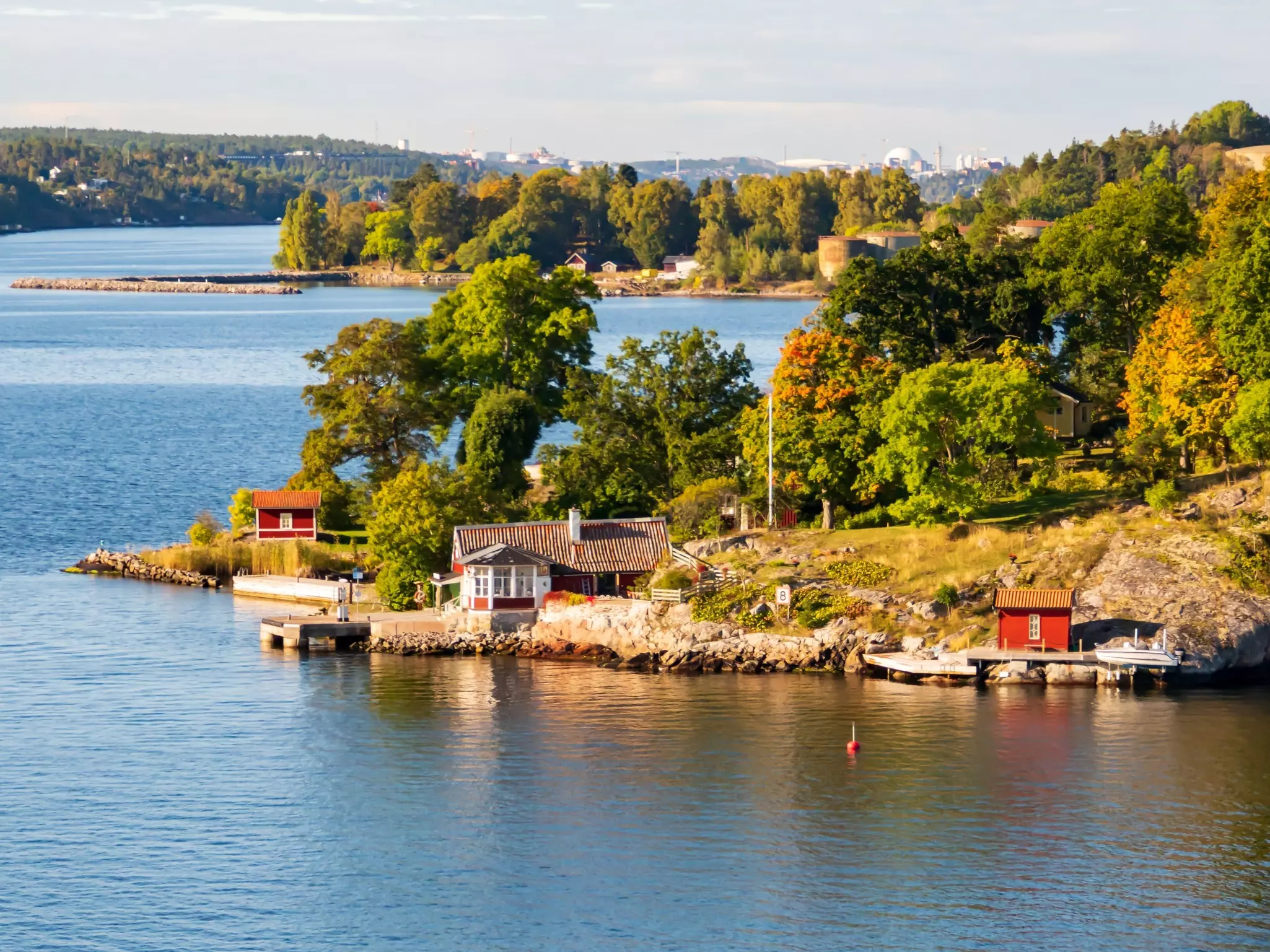
Stockholmers tend to get misty-eyed when they talk about the archipelago, understandably. This is where the most iconic images of the area come from: little red wooden huts and cabins, deep forests, rocky beaches and low slabs of rock dotted with sunbathing Swedes. The islands are scattered between the city and the Baltic Sea and are a must-visit if you’re in the capital.
There are many thousands of islands in the archipelago, with the count ranging from 14,000 to 100,000 (the general consensus is 24,000), but not all are inhabited or visitable. Some are quite far-flung, but many of the islands with regular ferry service are much closer to the city than many visitors imagine. Several can be seen on a day trip, or you can hop on a round-trip boat to get a look at them from the water. The nominal "capital" of the region is Vaxholm, a good place to start.
There are plenty of reasons to visit Vaxholm, the most obvious being that this is the closest archipelago island to Stockholm, making it a handy introduction to the region. But Vaxholm is more than just a gateway, with its cobbled sloping streets, candy-colored wooden houses, excellent restaurants (like the waterfront seafood mainstay Melanders) and idiosyncratic shops making it a charming destination on its own.
The oldest part of Vaxholm is Norrhamn, just north of the town hall; here you’ll find a typical 19th-century fisher’s house among other historic buildings. Along the waterfront, take a gander at the eye-catching art nouveau Waxholms Hotell. The island's most prominent sight is the imposing Vaxholm Fortress, originally built in 1544, when King Gustav Vasa ordered its construction to protect the Swedish capital and mainland. It repelled an attack by the Danes in 1612 and the Russians in 1719, among others. There are frequent ferries throughout the day to the island fort.
How to get to Vaxholm from Stockholm: Waxholmsbolaget boats reach most of the visitable islands in the archipelago. Tickets are bought on board, and prices vary depending on how long your journey is. Ferries leave from Stockholm’s Strömkajen, in front of the Grand Hotel, several times a day depending on the season; it takes around 50 minutes to get to Vaxholm. Most islands in the archipelago have good boat connections. Check schedules in advance – although there are worse places in the world to get stranded!
Travel time: 1 hour each way
How to travel: Metro and bus
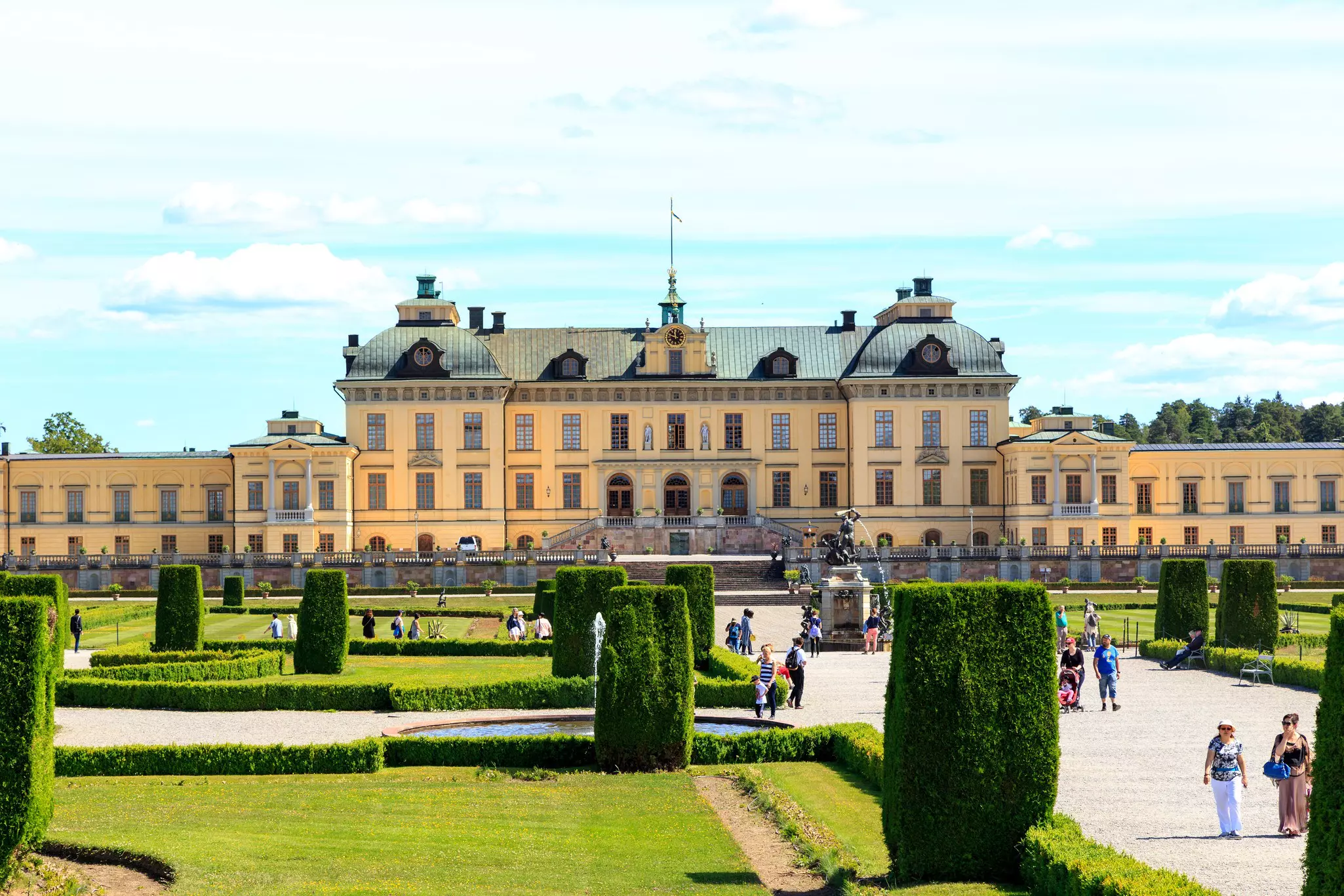
The grand 17th-century palace of Drottningholm is home to the royal family for part of the year – and open for informative, 1-hour guided tours for visitors all year long (in English three times daily from June to August, and on weekends for the rest of the year).
The tour will take you through the highly ornamented State Bedchamber of Hedvig Eleonora, with its opulent baroque interior (it’s the envy of everyone on Pinterest). The library of Lovisa Ulrika is a bright and impressive room, with most of its original 18th-century fittings intact (even if most of her 2000 books have been moved to the Royal Library in Stockholm for safekeeping).
Completed in 1766, the royal Slottsteater is in a remarkable state of preservation. Performances held here in summer still use the original 18th-century machinery to create dramatic effects (the wind machine is particularly impressive). At the far end of the royal gardens, Kina Slott is a lavishly decorated Chinese pavilion that features some of the finest rococo chinoiserie interiors in Europe.
The palace grounds are open for individual roaming, with the geometric gardens, set at an angle for maximum impact, worth the trip all by themselves.
How to get to Drottningholm Slott from Stockholm: Take the tunnelbana (metro) to Brommaplan, then change to the bus to Drottningholm. There’s also a well-marked bicycle path from the center of Stockholm to the palace (13km). In summer, regular boat services leave for Drottningholm from Klara Mälarstrand.
Travel time: 2 hours each way
How to travel: Boat tour
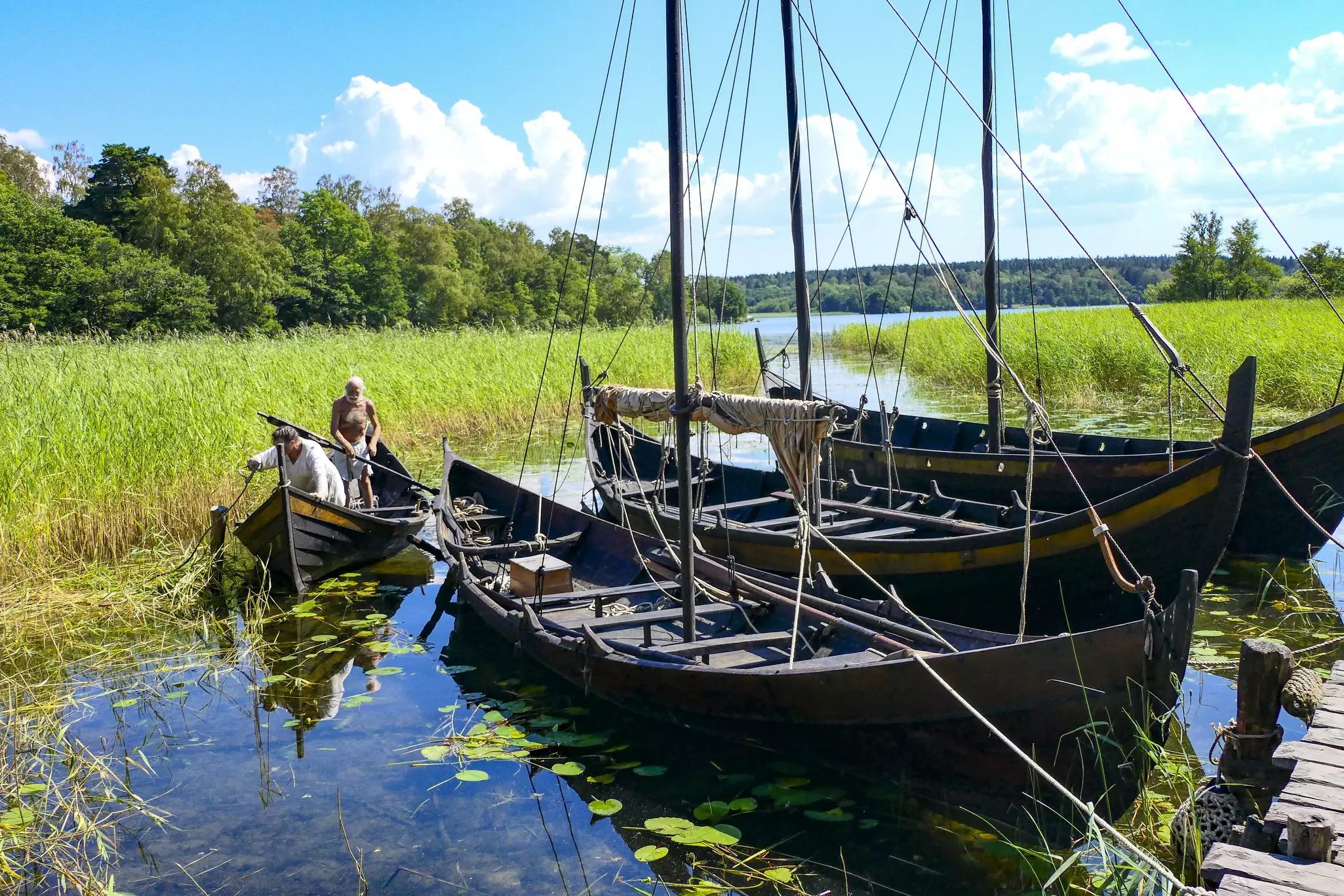
On the island of Björkö in Lake Mälaren, the historic Viking trading center of Birka makes for a memorable day trip. This UNESCO World Heritage site was founded around 760 CE to expand and control trade in the region. While not much remains today (other than a cemetery with some 3000 graves and a beautiful Swedish island), the fun in visiting here is imagining the place bustling with traders and craftspeople centuries ago. The site also contains excavated remains of a defensive fort and the harbor.
If your imagination needs jump-starting, visit the superb Birka Museum, where exhibits include artifacts from the excavations, copies of the most impressive objects uncovered and a scale model of the village as it would have looked in Viking times.
How to get to Birka from Stockholm: Strömma Kanalbolaget runs round-trip cruises to Birka from various locations in Stockholm. Since the trip takes 2 hours each way (the boat ride is glorious), plan on a full-day outing. Cruise prices include museum admission and a guided tour in English of the settlement’s burial mounds and fortifications.
Explore related stories