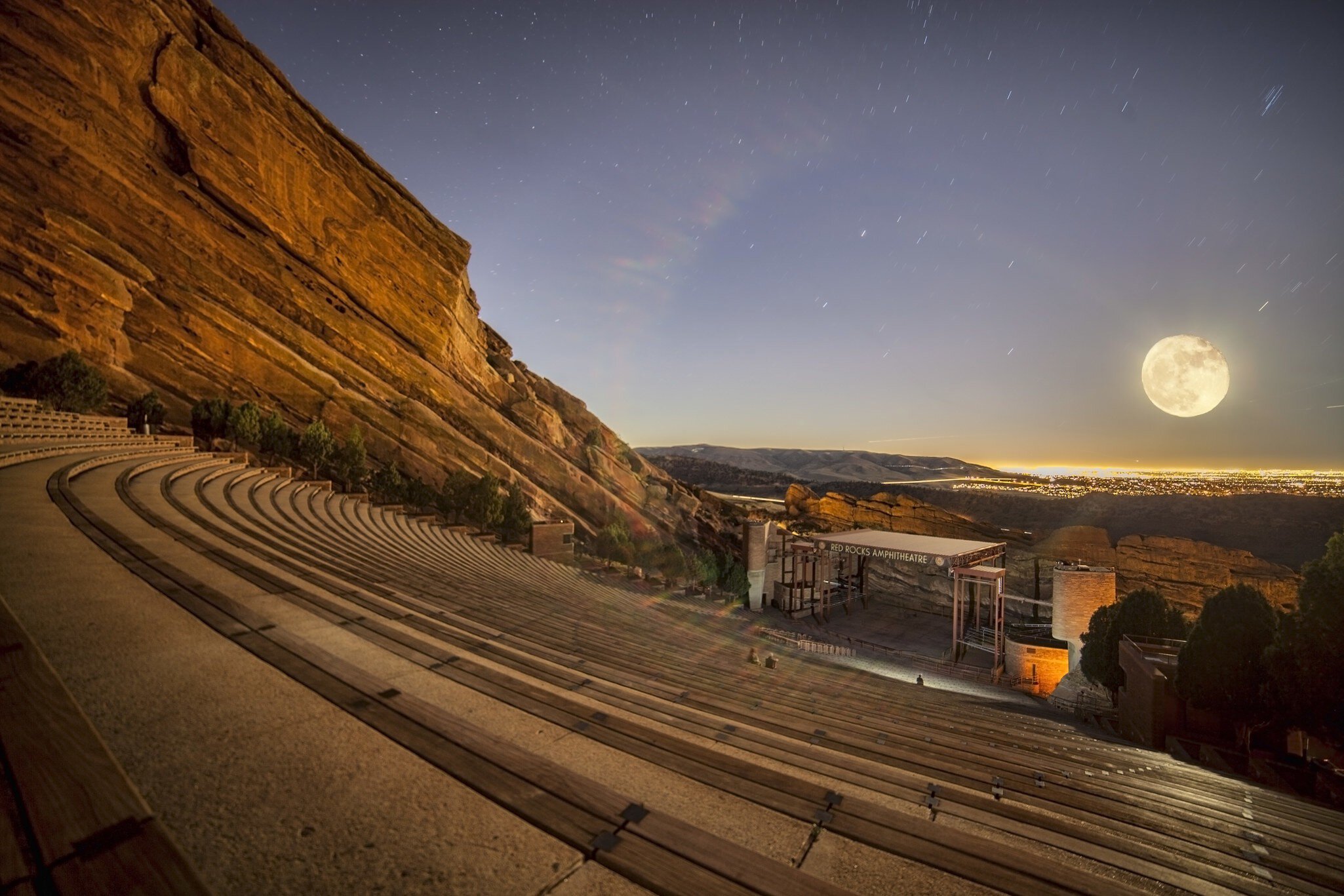
When the setting sun brings out the rich orange glow of the 300ft-high sandstone formations flanking the stage and the band launches into just the right tune, seeing a show at Red Rocks Park and Amphitheatre is an almost primal experience, wholly befitting the park’s 19th-century nickname, Garden of Angels. The music reverberating off the rock, people dancing in the stacked terraces, the curtain of dark sky above and the red monoliths standing guard on either side – for many, it’s one of the top reasons to visit Colorado all by itself.
Red Rocks, on the southeastern fringes of Denver, may well be the world’s most iconic outdoor concert venue, including legendary performances by the likes of the Grateful Dead, Stevie Wonder, U2, Diana Ross, Radiohead and Coldplay. The acoustics are so renowned that many artists record live albums here. The capacity runs upward of 9000 seats, each one with stunning views.
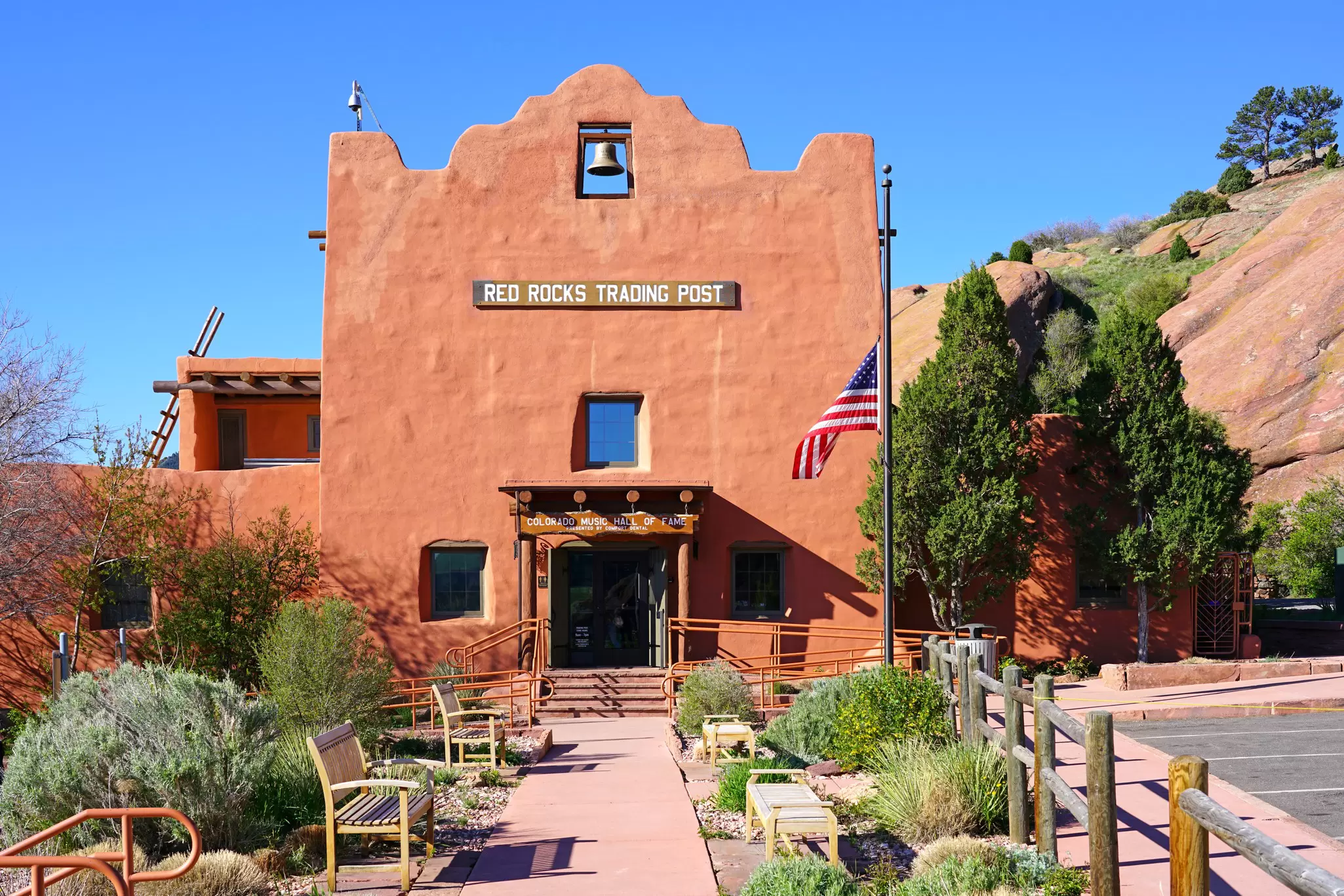
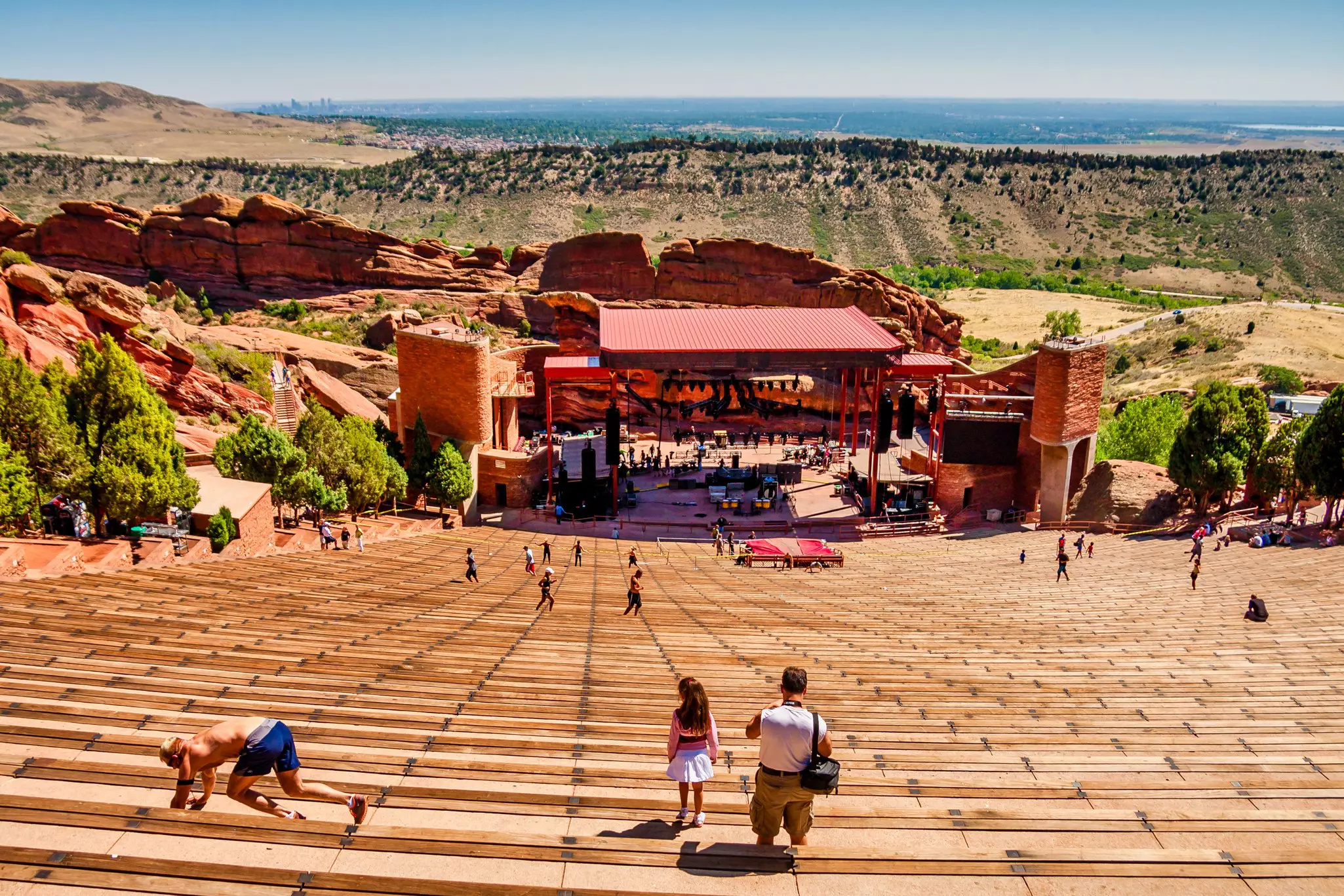
But even if you can’t make a show, the 816 acres of parkland that surround the amphitheater are free to visit, and many people come on a day trip from Denver just to check out the famed venue. A visitors center and trading post are accessible from the parking lot. There are miles of hiking trails, and although climbing the rocks is prohibited, the 250-plus steps that lead to the top of the theater offer views of both the park and Denver.
Why Red Rocks Is Red
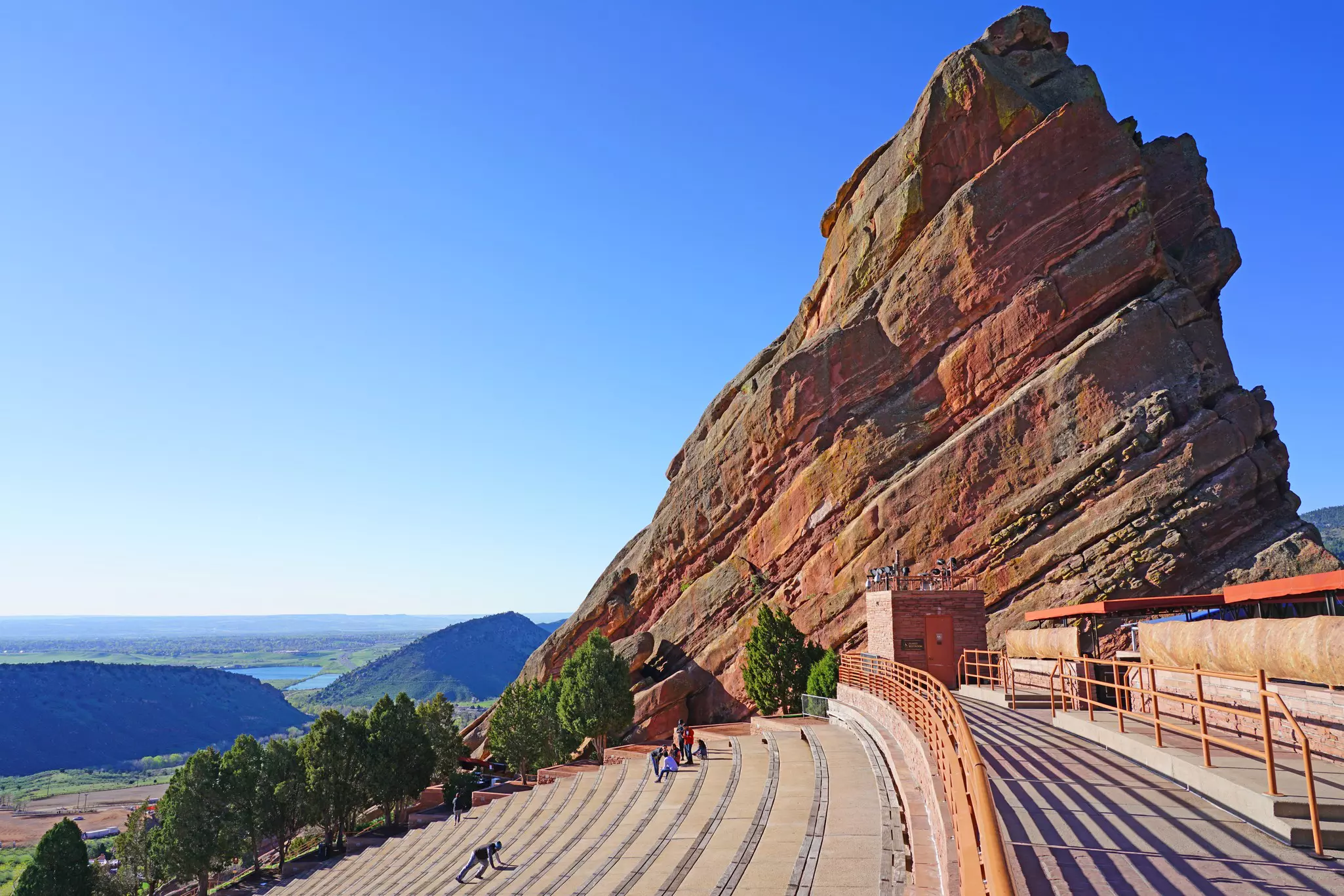
The color of the rocks at Red Rocks Amphitheatre is the result of iron oxide, or rust, which is naturally present in the local sandstone. Over 300 million years ago, sedimentary rock containing iron formed, and exposure to oxygen turned it a rich brick red. Geological forces later thrust the rocks upward, creating the formations seen today.
The History of Red Rocks Park and Amphitheatre
Red Rocks was once a sacred gathering place for music and dance for the Ute people, the Indigenous inhabitants of the Great Basin and Colorado Plateau. After the region was colonized by European settlers, this natural basin continued to play an important role in local life, and it was converted into a public park in 1878. The rocky basin was later used informally as a makeshift performance space, and in the early 1900s, John Brisben Walker produced several concerts here on a temporary stage before the city of Denver purchased the land and built a stage and seating in 1927.
It wasn't until the 1940s that the Civilian Conservation Corps built a formal outdoor venue with seats and a stage. The debut show on this crag-framed stage was by the lyric soprano Helen Jepson in 1941. It took a further 23 years before the venue made the logical leap to hosting rock music in an amphitheater made of rock, doing so in style when it hosted the Beatles in 1964.
Since then, some of the biggest names in rock, country, soul and other popular genres have played Red Rocks, including Blues Traveler, who have played here almost every Fourth of July since 1993, and Widespread Panic, who have clocked more than 70 shows at this legendary venue.
Going to a Performance at Red Rocks
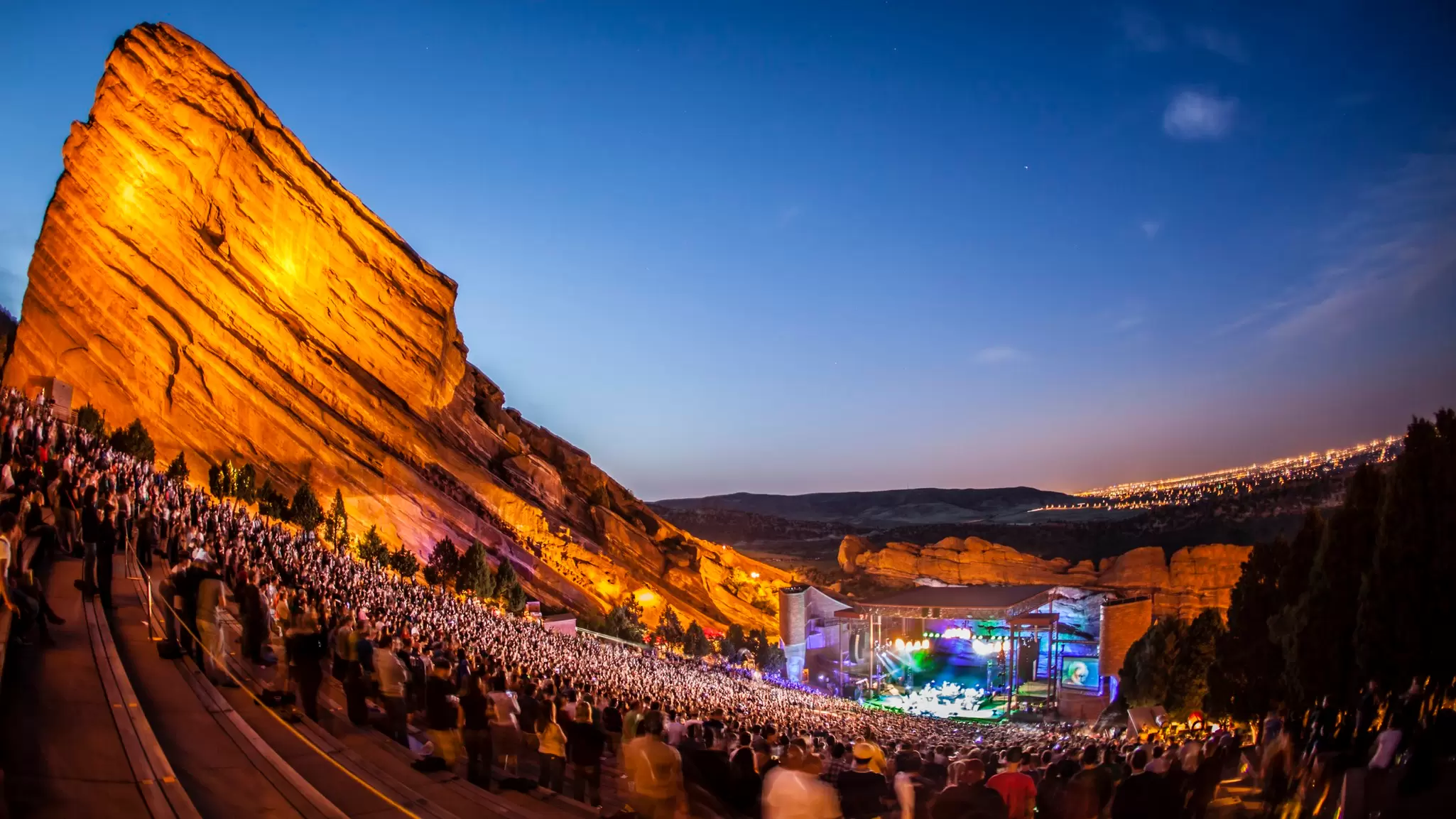
The quintessential Red Rocks experience is attending a live performance. From April to November, the venue hosts a packed schedule of big-name musicians, symphony orchestras and solo artists. The lineup is on the Red Rocks website, where you can also purchase tickets, the prices of which vary by show. You can save on service fees if you buy directly from the on-site box office or at Denver’s Coliseum. Despite being a relatively big venue, shows often sell out quickly – sometimes within minutes of tickets going on sale.
Seating is on wide, wooden terrace benches built into the amphitheater’s steep natural incline, with more than 9500 seats spread across 70 rows, but there are no bad seats. The lower the number, the closer you are to the stage; the higher the number, the better the views. Concerts typically start at sunset, with the rocks aglow and the city lights twinkling beyond.
There are two vast parking lots, but they fill up, and leaving can take ages. Take a rideshare or shuttle if that will annoy you.
Many concertgoers bring a blanket or a cushion, particularly for events like Film on the Rocks. For concerts, you'll probably be on your feet the entire time. It’s cool at night at this altitude, so don't forget to dress in light layers for summer shows.
Things to Do at Red Rocks
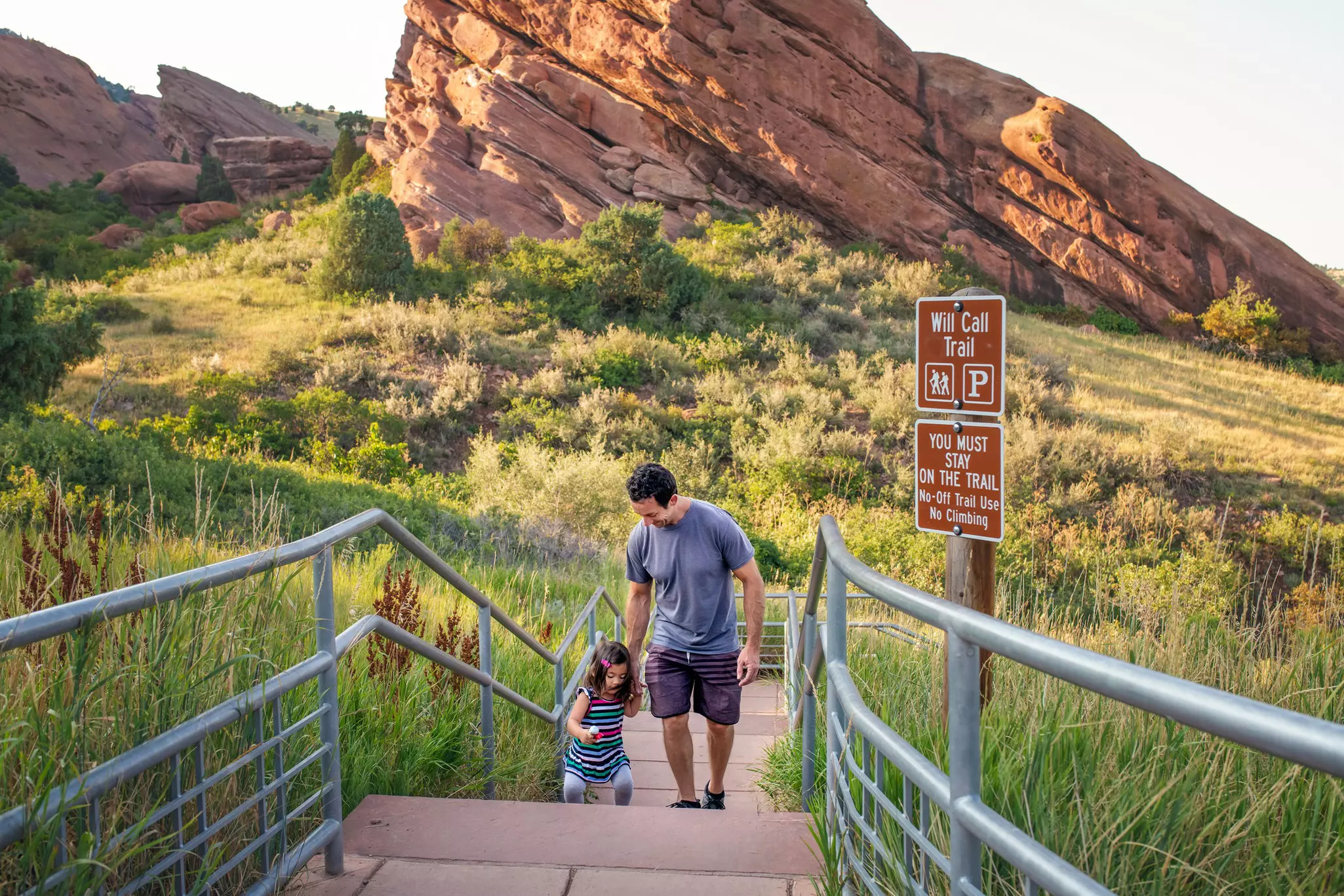
Taking in a show is just the start of the Red Rocks experience. Before the performance – or even if you skip seeing a show completely – there are lots of other ways to enjoy this setting. Indeed, it's one of the most popular things to do in Colorado.
Attend a Film Screening
If a concert isn’t in the cards, Films on the Rocks is a fun runner-up. On summer evenings, the Denver Film Society projects classic and cult films onto a huge screen, converting the venue into a large-scale outdoor movie theater. Screenings are packed with locals on blankets, noshing and chitchatting, and there’s a laid-back community vibe. Preshow performances by up-and-coming comedians and bands kick off the evening, then as the sunlight fades and the stars emerge, the movie begins.
Join a Yoga Session
If morning is your jam, come at sunrise for Yoga on the Rocks. At this regularly scheduled summer weekend class, thousands of yogis set up their mats along the terraced seating. Led by some of Denver’s top yoga instructors, the all-levels classes costs around the same as a drop-in class in town, but the peaceful outdoor setting is unmatched. The morning air, the expansive views and the sun rising over the red rock all add to a sense of tranquility and connection. Bring your own yoga mat.
Take in the Views
Red Rocks is a Denver Mountain Park, one of a handful of parks located within 60 miles of Denver that are maintained by the city. Because of this, the amphitheater and the land surrounding it are free to visit and open to the public from sunrise to sunset.
Come during the day to wander through the theater, snap photos next to the stage (or on the stage if you’re lucky!) and admire the iconic monoliths – Ship Rock and Creation Rock – that help create the remarkable acoustics. You can also join locals working out on the steep stairs, a common sight year-round.
To see Red Rocks’ famous 360-degree panoramic views, head to the landing above the highest row of seats. (On event nights, the amphitheater closes at 2pm.)
Hit the Hiking Trails
Red Rocks has a collection of walking trails winding through its 800-plus acres. Each showcases the park’s stunning geology, offering sweeping views extending to downtown Denver. Most have interpretive signs that detail the area’s history, geology and plant life.
For a moderately easy hike, try Trading Post Trail, a 1.4-mile loop weaving through the heart of the park, past meadows and between towering red rock formations. The trail starts at the namesake Trading Post, a historic building with a souvenir shop, snack bar and bathrooms – perfect for a pre- or posthike pit stop.
For a longer, more strenuous hike, hit Red Rocks Trail. This 6-mile out-and-back hike begins near the lower north parking lot and connects to the Morrison Slide Trail in the neighboring Matthews/Winters Park. The trail climbs through rocky terrain to higher elevations, with views of the foothills and mountains beyond. Sightings of prairie dogs, red foxes and mule deer are common in the early mornings and late afternoons. Alternatively, take the Red Rocks Trail to the Dakota Ridge Trail, an out-and-back 4-mile route that follows the rocky spine of Dinosaur Ridge.
Whatever trail you choose, remember to stay hydrated, an important consideration at this elevation; look for fill stations at the visitors center and inside the venue. Note that you may encounter horse riders and mountain bikers on the multiuse Red Rocks Trail.
Accessibility at Red Rocks
Two rows of seating at Red Rocks are wheelchair accessible for shows and screenings, and other rows are set aside for people with limited mobility and visitors with a visual or hearing impairment. There’s a dedicated accessible shuttle for visitors with disabilities during events.
Where to Eat at Red Rocks
For daytime sit-down dining in the park, make a reservation at Ship Rock Grille, open 10:30am–2:30pm, or for a drink with a rocky landscape view, head to the Row 71 bar. There are more places to eat and drink near the junction of Bear Creek Ave and State Hwy 93.
Most locals drive up early for shows, toting coolers full of food and drinks to hang out in the parking lot and have a picnic. You can bring food into the show, but you can't bring booze. Beer, wine, alcoholic and nonalcoholic smoothies, coffee, water and soda are available for purchase inside. The food vendors inside are expensive, crowded and not great. Concession stands serve everything from pizza, smoky BBQ, and Greek gyros to fries, corn dogs and funnel cakes.
Outside the park, there aren't many choices nearby. Morrison, a tiny town hidden from the Denver skyline by the Hogback rock formations, echoes the feel of some of Colorado's remote mountain towns. Its casual cafes can be a good stop if you want dinner before a show or lunch after hiking.
Where to Stay Near Red Rocks
There is only one B&B in town, the Cliff House Lodge. The decor might be a little overboard, but all the cottages have hot tubs and the garden is a peaceful place to relax.
Planning Tips for Visiting Red Rocks Park and Amphitheatre
You’ll have a more rewarding visit if you follow these tips.
Arrive early – tailgating is a preconcert ritual, and you’ll avoid the bumper-to-bumper traffic.
Be ready for uphill walking. Parking is on a steep hillside below the amphitheater, and the seating is on a slope.
Wear layers, even in summer. Temperatures drop quickly after sunset.
Bring a credit card, as the venue is cashless; this also applies to the vendors.
Consider taking a round-trip shuttle from Denver; it can be pricey but is convenient.
Smoke weed (or pop gummies) at your own risk. You’ll see plenty of folks lighting up, but while the use of marijuana has been legalized in Colorado, it’s illegal to partake in public.