Jul 17, 202612 min read
17 Best Things to Do in LuxembourgJul 17, 2026
12 MIN READ

Writer
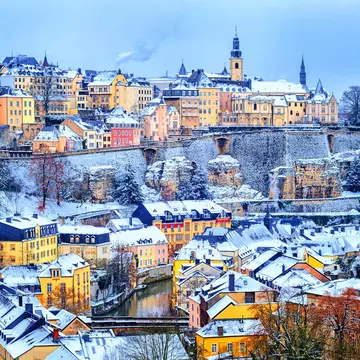
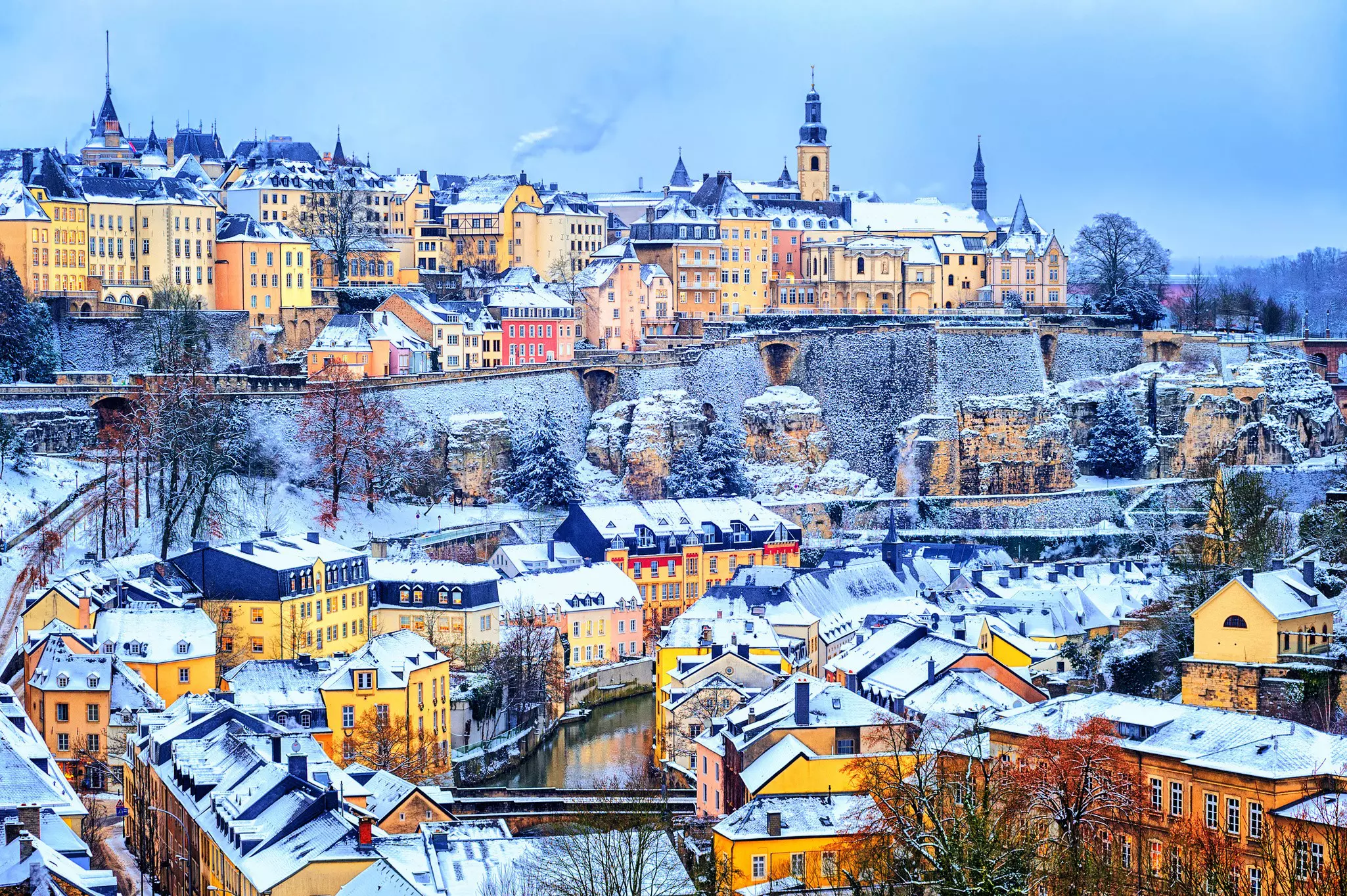
The Old Town of Luxembourg City in winter. Adobe Stock
Writer
Lonely Planet may earn a commission from affiliate links on our site. All recommendations and reviews reflect our own independent opinions.
From exploring the industrial history of the Belval quarter to touring big-hitting museums and visiting the Palais Grand-Ducal, there are plenty of rewarding, culturally rich ways to spend time in Luxembourg.
Beyond Luxembourg City, this tiny European nation is a place of pretty woodland footpaths and quaint castle-topped villages. This may come as a surprise to first-time visitors, thanks to common perceptions of Luxembourg as a somewhat drab, business-oriented hub for banking and EU institutions.
Gourmets will love the thriving wine industry on the banks of the Moselle River. A superb dining scene ranges from simple local cuisine drawing on rural traditions to a glittering firmament of Michelin-starred fine dining.
With modest distances between sights, Luxembourg is great destination for travelers with limited time – and even on a short break, it’s possible to hit all of the nation’s highlights. Start planning your next trip with this list of the best things to do in Luxembourg.
Luxembourg City’s UNESCO-listed Old Town (or Haute Ville) is a layer cake of bastion walls, viewpoints and paved footpaths winding through parks. The remains of medieval fortresses are poised above the Alzette and Pétrusse rivers.
The atmospheric Grund quarter lies along the riverbanks below, while the contrastingly brash European Quarter – home to most of the city’s government institutions – sits on the Kirchberg Plateau, across the red Pont Grande-Duchesse Charlotte.
The Old Town’s attractions include the Musée d’Histoire de la Ville de Luxembourg, Cathédrale Notre-Dame and the biweekly Stater Maart market on Place Guillaume II. In between sightseeing, stop at restaurant such as Ville Haute’s Pizzeria Bacchus for a quick lunch, or Restaurant Clairefontaine for deluxe French cuisine.
Planning tip: Since 2020, public transport in Luxembourg City has been free to use, including the useful tram linking the train station, the European Quarter and the airport. The Pfaffenthal-Kirchberg funicular and two tall public elevators are handy for dealing with the steep cliff ascents between the upper and lower city.
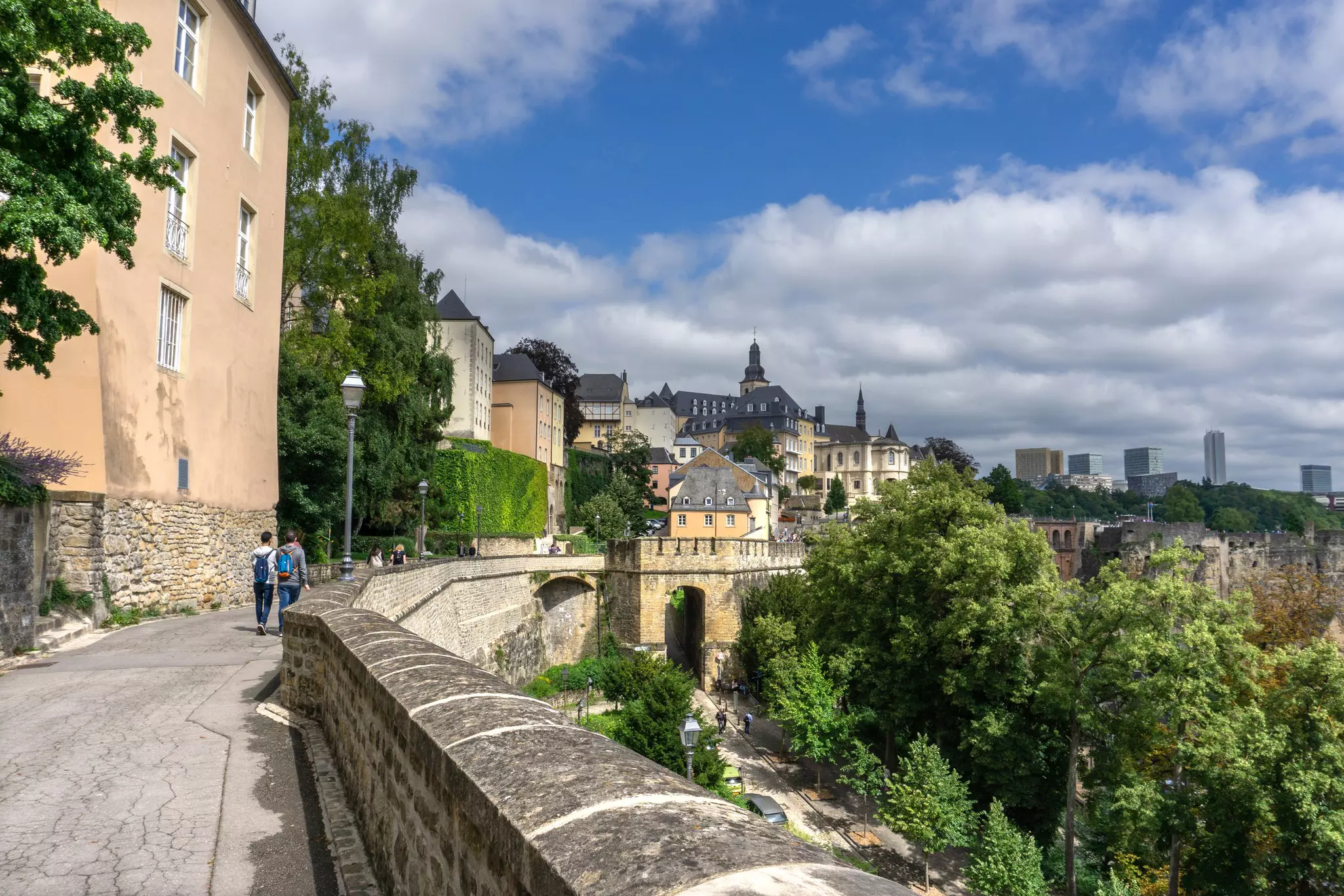
Near the Musée d’Histoire de la Ville de Luxembourg, the glorious Chemin de la Corniche pedestrian promenade beckons for an elegant stroll. “Europe's most beautiful balcony” traces the city’s 17th-century ramparts.
Gorgeous views across the river canyon take in the hefty fortifications of the Wenzelsmauer (Wenceslas Wall), built to protect the valley in the 14th century. The rampart-top walk continues along Blvd Victor Thorn to the Dräi Tier (Triple Gate) tower, an iconic city landmark.
Planning tip: Along the Chemin de la Corniche, you’ll find the impressive Dinselpuert gate. It’s topped by the well-restored Tour Jacob, which has a video presentation about the city walls and their historical significance (April to October only).
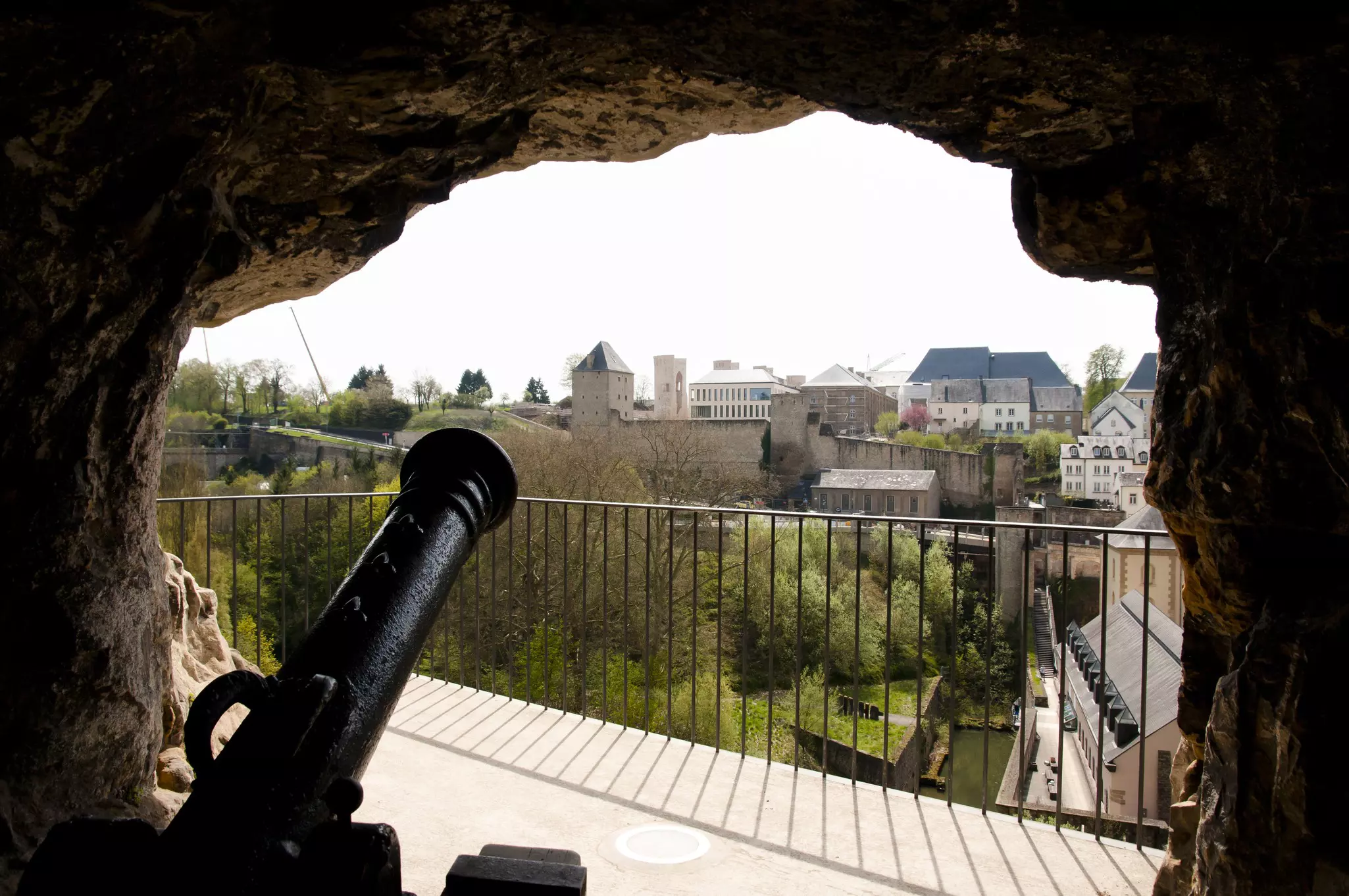
Luxembourg City’s fortifications are famous for their casemates – military emplacements set in a honeycomb of tunnels and artificial caves overlooking the valley. Prebooked tickets to the Bock Casemates require you to enter within an allotted 15-minute time slot; once inside, you can explore this atmospheric warren of passageways at your own pace.
On the south side of the Palais Grand-Ducal, the Pétrusse Casemates are accessible on 45-minute guided tours, with snazzy new lighting effects adding to the atmosphere. Buy tickets from the tourist office on Place Guillaume II.
Luxembourg City’s European Quarter is a powerful engine for government and finance. While most of the banking and EU office buildings are closed to the public, it’s still an intriguing area to explore, with some interesting hidden attractions.
Even on otherwise slow weekends, you’ll find plenty of life at the Philharmonie, an eye-catching modernist concert hall that looks like an optical illusion in three dimensions. You can also find some interesting exhibitions at the BnL (National Library), and more art on show at the Mudam, a groundbreaking gallery of contemporary works.
Planning tip: Using the free funicular is a fun way to get here, and there are good views from the Pfaffendal Elevator, a glass lift running up to the Old Town across the river. Return to the via footpaths amid a series of Vauban-era fortifications, including Fort Thüngen.
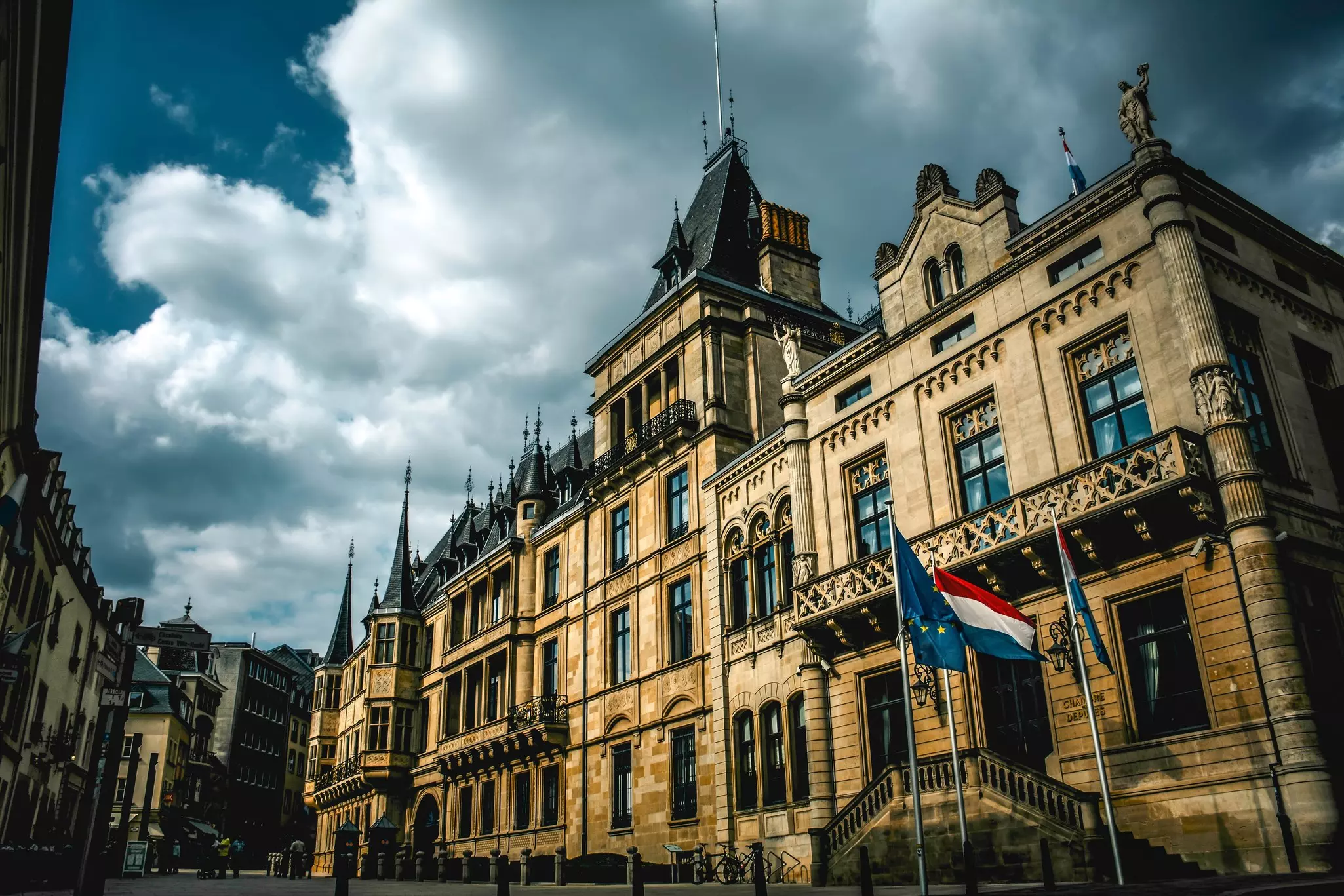
Luxembourg’s head of state, Grand Duke Henri, has his office in the Palais Grand-Ducal, a palatial building with photogenically pointy turrets. Built in 1572 as the town hall, the palace was expanded in 1860 with an annex that today houses the national parliament.
The main building has served as Luxembourg’s royal palace since 1890. The view of the facade (a popular backdrop for selfies) can be appreciated at leisure over coffee at the Chocolate House terrace cafe. Inside the palace, the decor morphs from medieval Gothic in the extravagant dining room to sumptuous gilt in the chambers upstairs.

Lonely planet’s trusted travel insurance provider
Travel with confidence. Protect your trip and your wallet.
We don’t represent World Nomads, we receive a fee from quotes using this link. This is not a recommendation to buy travel insurance.
Planning tip: To enter the palace, you’ll need to prebook a 75-minute guided tour (mid-July to early September only) via the Luxembourg City Tourist Office. The lively tours provide lots of insights into the colorful story of Luxembourg’s royal family.
For an unusual art experience, venture into the Am Tunnel, a 350m subterranean gallery with photographic exhibits that change every year or so. At the far end, you can view a 14-minute film about the pioneering Luxembourgish-American photographer Edward Steichen. More of Steichen’s portfolio is exhibited at the National Museum of History and Art (MNHA), the superb national art gallery north of the Palais Grand-Ducal.
Detour: The Am Tunnel is part of the impressive Spuerkees Complex, whose centerpiece is the tower-topped palace on Place de Metz, constructed in 1913. Reached via a separate entrance, it contains a great banking museum, open to groups with advance reservations.
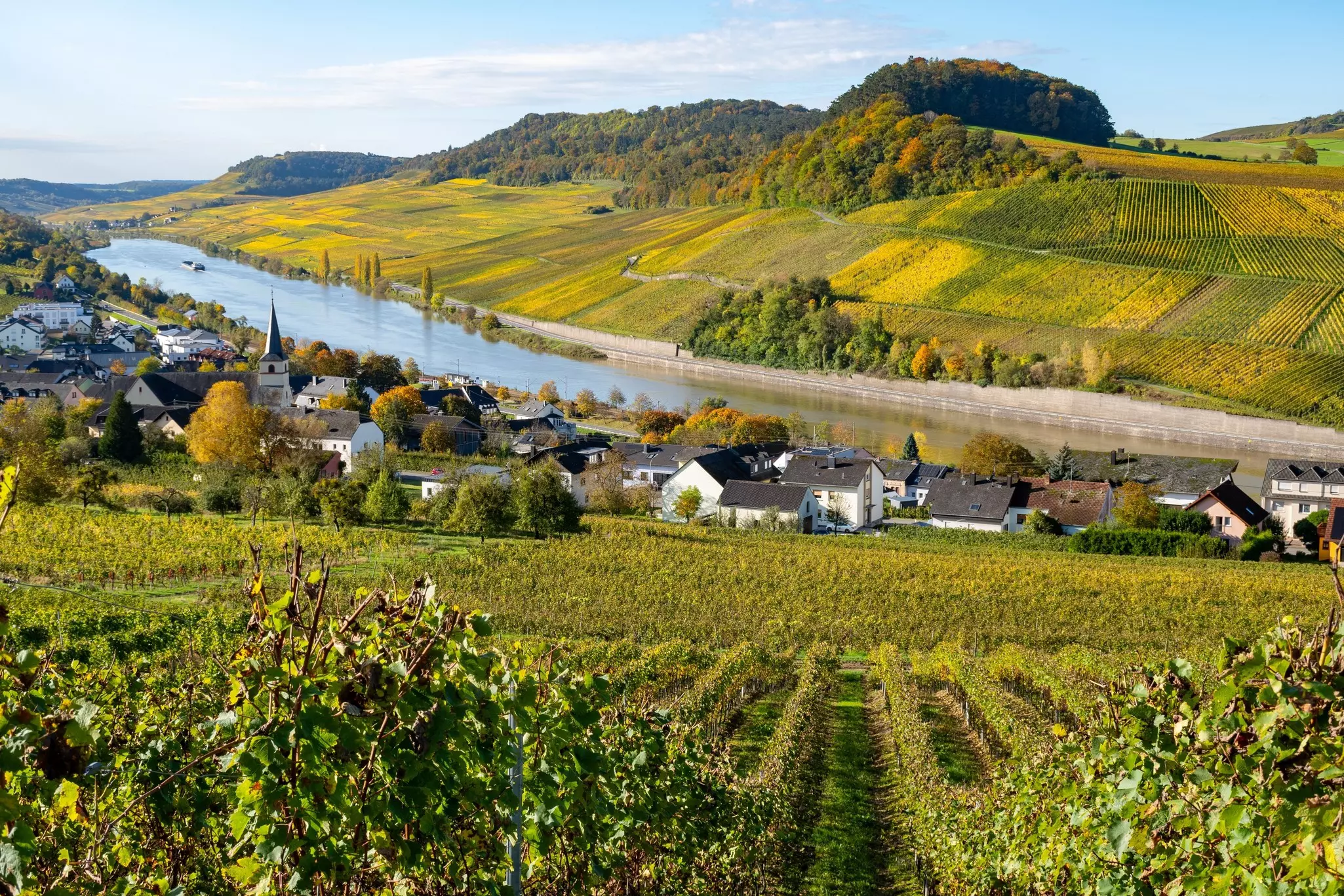
Just half an hour from Luxembourg City, the River Moselle forms the Luxembourg–Germany border between Wasserbillig and Schengen, its banks lined with emerald-green vineyards. The vines produce the excellent crémants (sparkling wines) that give Luxembourg its fizz and pop, as well as a wide range of quality white wines. A special delight are softly balanced pinot blancs, almost unique to Luxembourg.
If you want to tour as well as taste, the vineyard to visit is Bernard-Massard by the bridge in Grevenmacher, with its art-filled reception area and humorous guides. Many travelers are also drawn to the winemaking commune of Remich, where you can enjoy river-boat trips and a good selection of eateries. (Note that it can get very crowded here, particularly on Sundays in summer.)
A better way to spend a Sunday afternoon is to join a charmingly time-warped wine dance in one of the cellar rooms at Domaines Vinsmoselle’s Poll Fabaire premises. For tastings and light snack boards in a modernist salon with unbeatable poolside views, visit Caves Henri Ruppert.
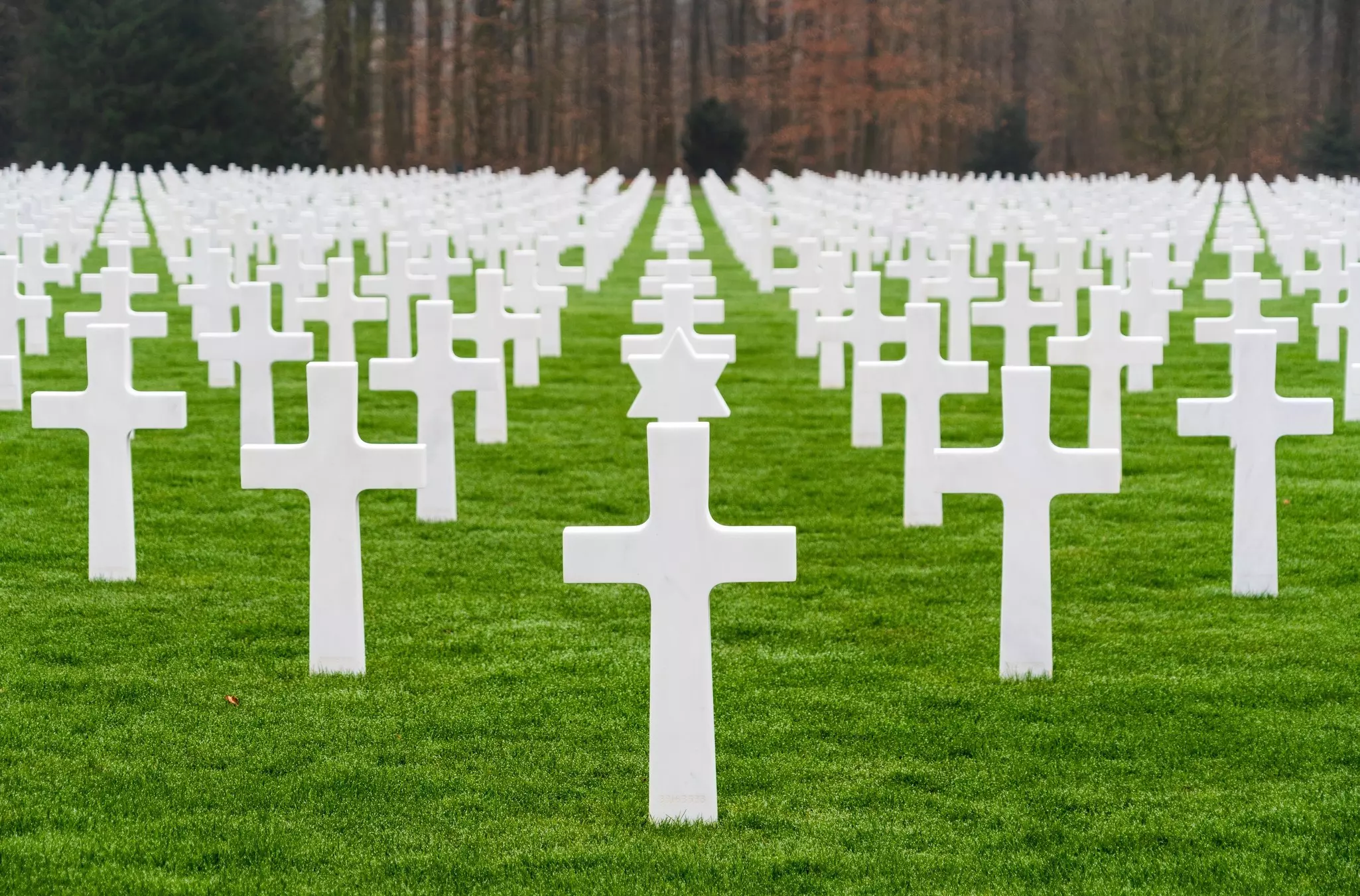
About 4km from central Luxembourg City at Hamm, the Luxembourg American Cemetery is a deeply moving place. More than 5000 white grave markers and commemorative pillars pay tribute to the US servicemen and servicewomen who gave their lives for the liberation of the Grand Duchy. (In fact, Luxembourg was liberated twice, first in September 1944 and again during the Battle of the Bulge that Christmas.) Perhaps most famous among the veterans in eternal repose is General George Patton, famed for his swagger, ivory-handled pistol and foul-mouthed pronouncements, who died after a car accident in 1945.
Step off the mainstream tourist circuit with a scenic driving or cycling route linking some of Luxembourg’s lesser-known castles. In Koerich, the hefty ruins of the Gréiweschlass (or Koerich) castle have been turned into a performance space that hosts an interesting program of cultural events, including the Beautiful Decay festival every July.
The idyllic route continues through the Eisch Valley, where water meadows and small trees line the roadside and verdant woodlands blanket the surrounding hills. Keep an eye out for the austere castle (today a private home) rising above Septfontaines.
The next stop is at Ansembourg: at the elegant Grand Château, visitors can enjoy free daytime access to the beautifully manicured formal gardens. Take the steep lane veering left between the château’s two spired turrets to reach Hollenfels, descending toward the village’s fine medieval castle tower.
Planning tip: If you’re happier exploring on foot, bus 823 runs from central Luxembourg City to Koerich; you can connect back to the capital from Hollenfels via Mersch.
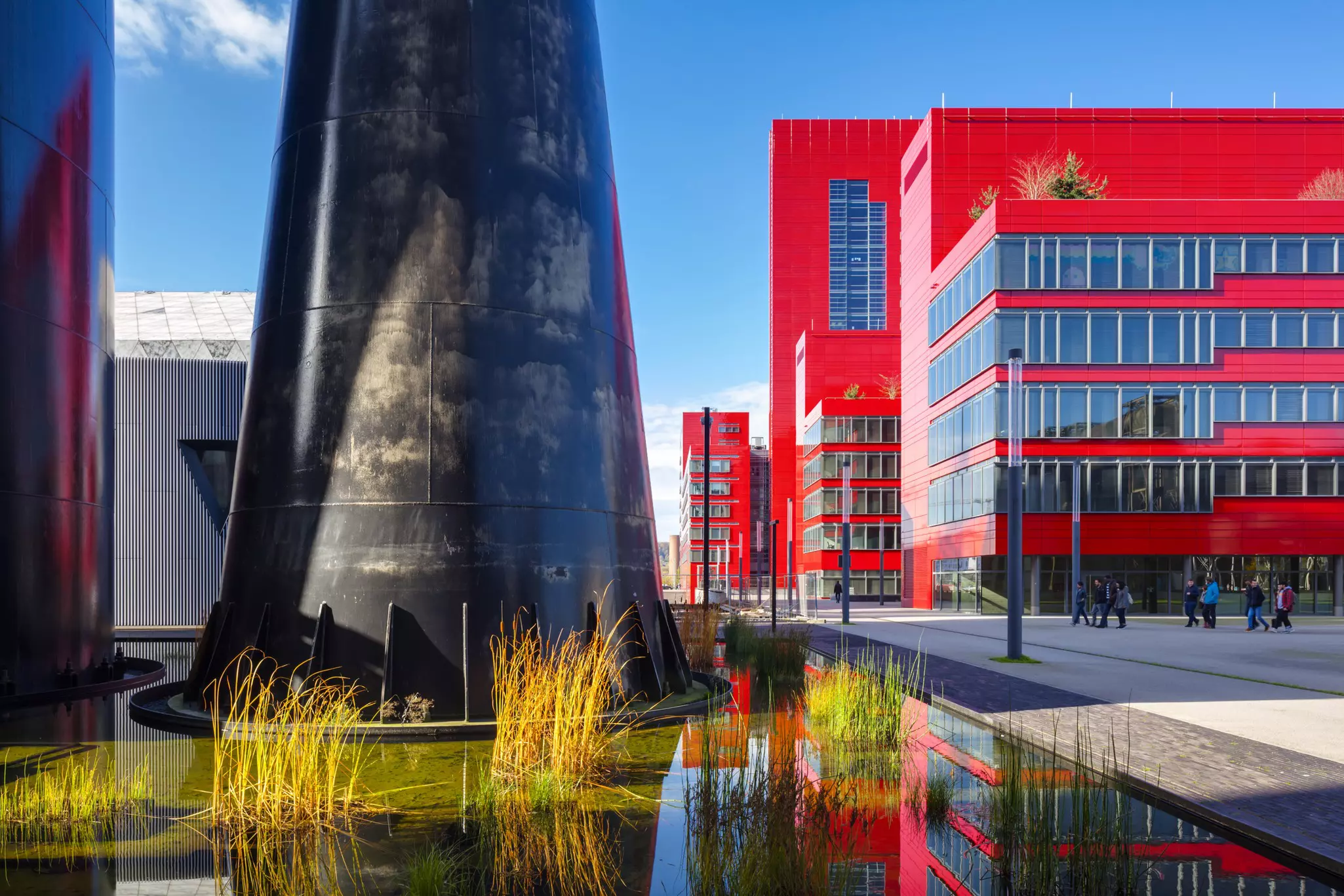
In the industrial Belval quarter, southwest of Luxembourg City near the French border, two gigantic blast furnaces from the city’s former steelworks have been imaginatively revamped as the centerpiece of an impressive urban-regeneration project.
Restored from postindustrial decline, the furnaces have been fused into a contemporary facade. You can visit the old workings inside daily except Tuesdays; while you’re here, stop inside the ’60s-retro-styled Café Saga, inside Furnace B.
Music fans are lured to Belval by Rockhal, Luxembourg’s biggest live-music venue, located (really) on Avenue du Rock ’n’ Roll. The Belval quarter also has an eye-catching train station that looks like a 1960s UFO.
Less than 25 minutes from Luxembourg City by train, Dudelange (aka Diddeling) is a lively events hub. The town hosts such music festivals as Like a Jazz Machine (May), Usina (early June) and Fête de la Musique (mid-June). Dudelange’s cultural renaissance is doubly impressive when you consider that this former industrial town was once divided in half by mountainous piles of slag from the local ironworks.
Today, the Italian Quarter overlooks a graffiti-daubed factory area that forms the centerpiece of the Neischmelz regeneration zone. Here you’ll find VEWA, a creative space for artists and crafters; a cool contemporary cafe; and the Kantin microbrewery – plus the plush new National Audiovisual Center (CNA) cinema and exhibition space.
Planning tip: Don’t miss Dudelange’s twin-towered Église Saint-Martin. From the outside, it’s a typical Luxembourg church; inside, you can view a dazzling collection of murals and stained glass above a gilded altar.
For an immersive take on the country’s industrial past, tour the National Mining Museum (MNM) in Rumelange. Tours give a hint of the tough conditions experienced by miners in the 19th and 20th centuries.
The sweat of local coal miners and steel workers fueled massive infrastructure development in Luxembourg, including the construction of continental Europe’s first railway and a network of canals lined with remarkable boat lifts (over the border in Belgium) that are now UNESCO-listed.
Planning tip: Dress for the cold as temperatures dip once you enter the mine. And book ahead, as visiting slots are limited, with few available dates outside of the peak summer months.
Set in a bend of the River Sûre, Echternach is Luxembourg’s oldest city, and makes a worthwhile day trip from the capital. The expansive Abbaye d’Echternach site is partly used as a school and also contains an interesting museum.
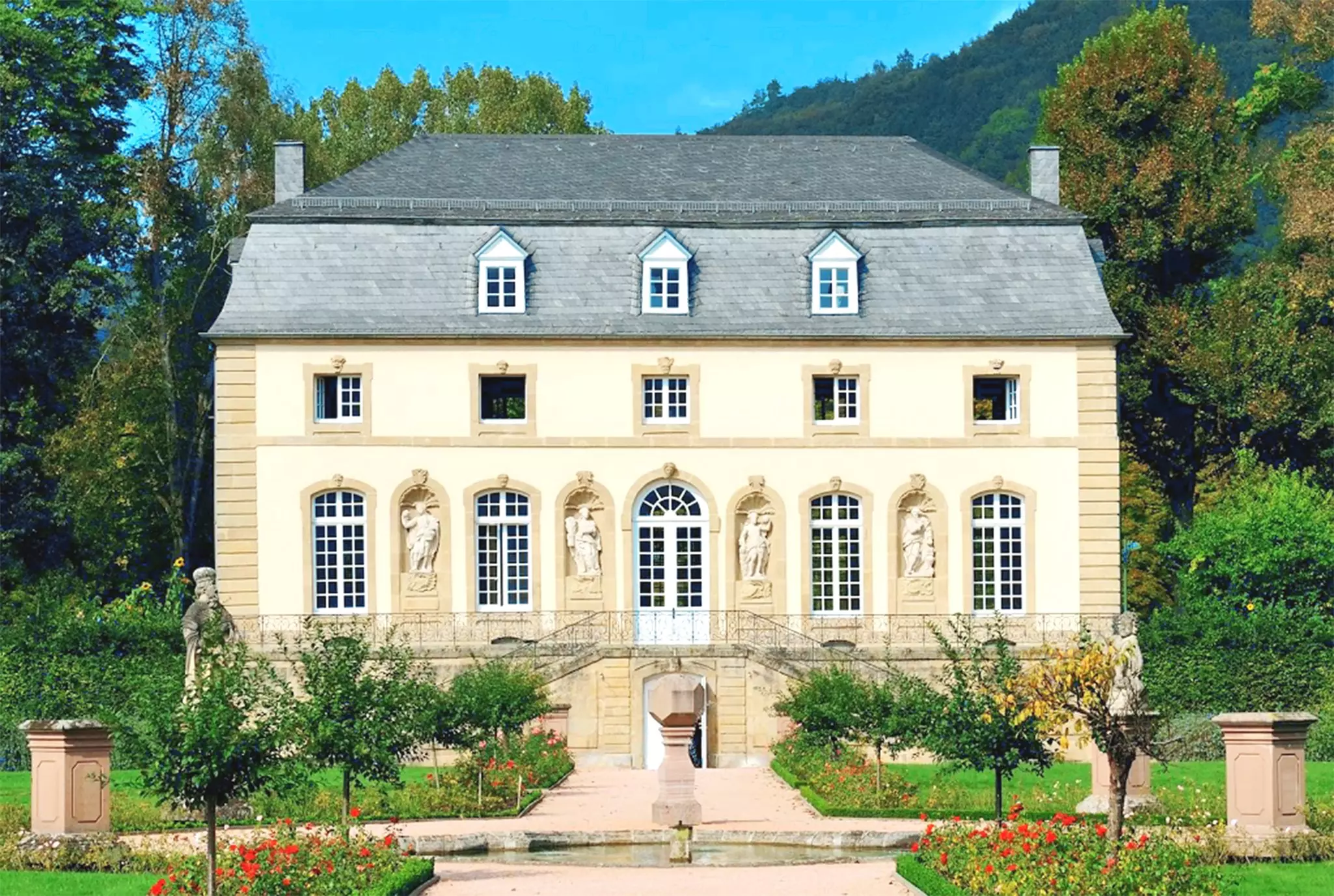
Stroll through the north arcade gateway to peek through wrought-iron gates at the splendid 18th-century Orangery, set in formal French-style gardens. Next, wander east between tennis courts to find a rococo pavilion from 1761 in the riverside gardens.
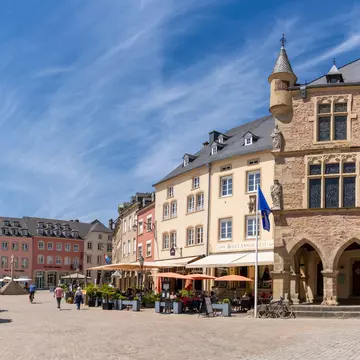
The most distinctive structure in Echternach’s bustling town center is the Dënzelt, a stone-fronted former law court dating back to the 14th century. (Its photogenic arcade, statues and corner turrets date from an 1895 rebuild.) Buses run from Luxembourg City to Echternach, taking about 1.5 hours.
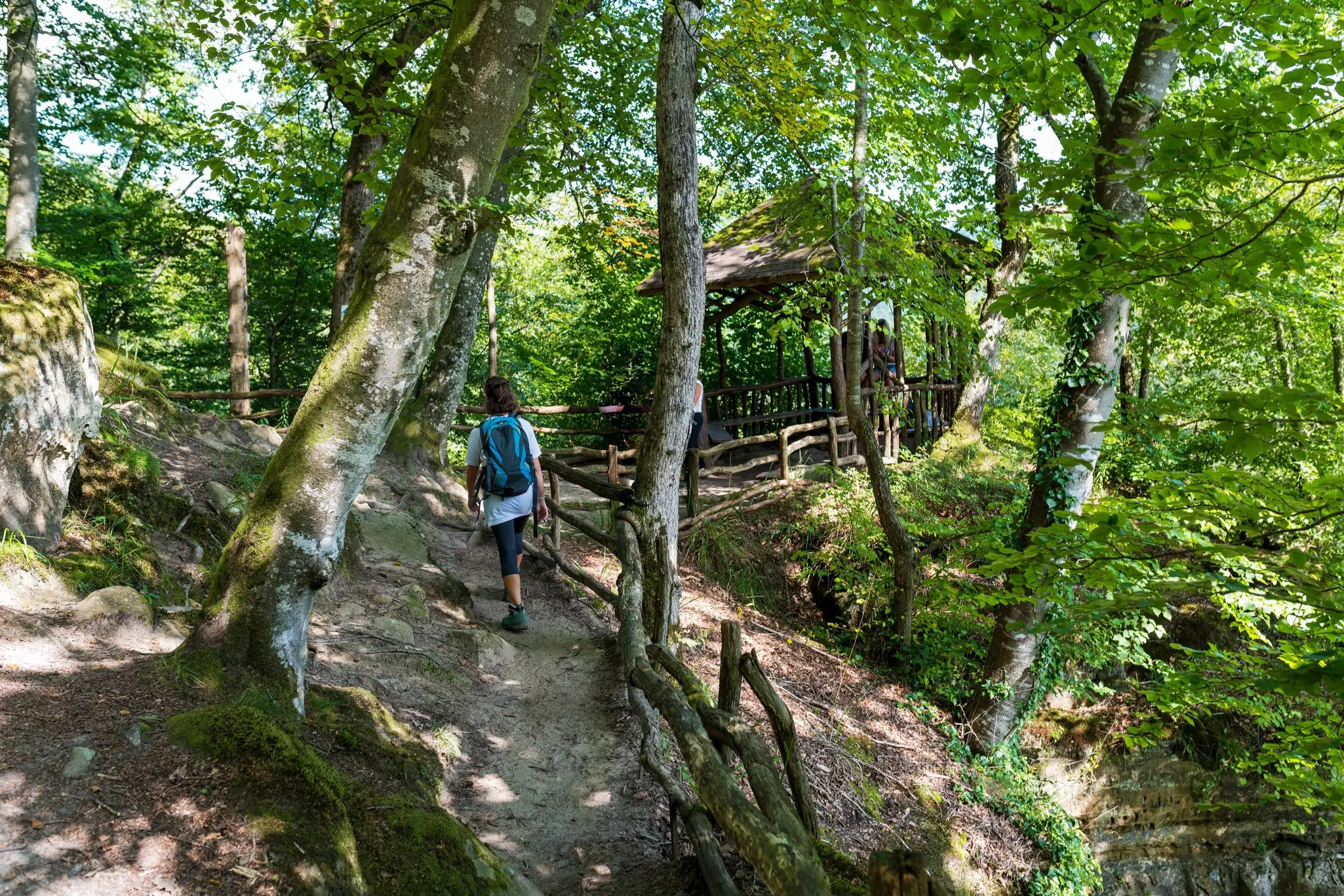
Among all the beautiful country landscapes of Luxembourg, no area is more magical than the Müllerthal forest, with its pretty beech trees, mossy rocks and streams winding through micro-canyons. The E1 walking route winds for 6km from Echternach to Berdorf, passing the Wolfsschlucht (Wolves’ Canyon), where a stone staircase leads to a lovely viewpoint.
Further on, the trail traverses the so-called Labyrinthe, a series of dramatic cliffs and tight ravines. There’s a small cave system called Hohllayust just before you reach Berdorf.
Planning tip: To continue the walk, loop back to Echternach via the Geierslee viewpoint or take bus 191 or 211.
A castle seemingly out of a fairy tale dominates the lovable old town of Vianden in the north of Luxembourg, with chairlift access for those who don’t want to struggle up the scenic but steep cobbled Grand-Rue. The towers and battlements have been restored to their medieval grandeur, and interiors feature photo galleries showing the painstaking reconstruction process.
Detour: Vianden town also has a little Victor Hugo Museum in a house where the writer once stayed; a fascinating hydroelectric plant you can visit; and family-friendly zip-line adventures.
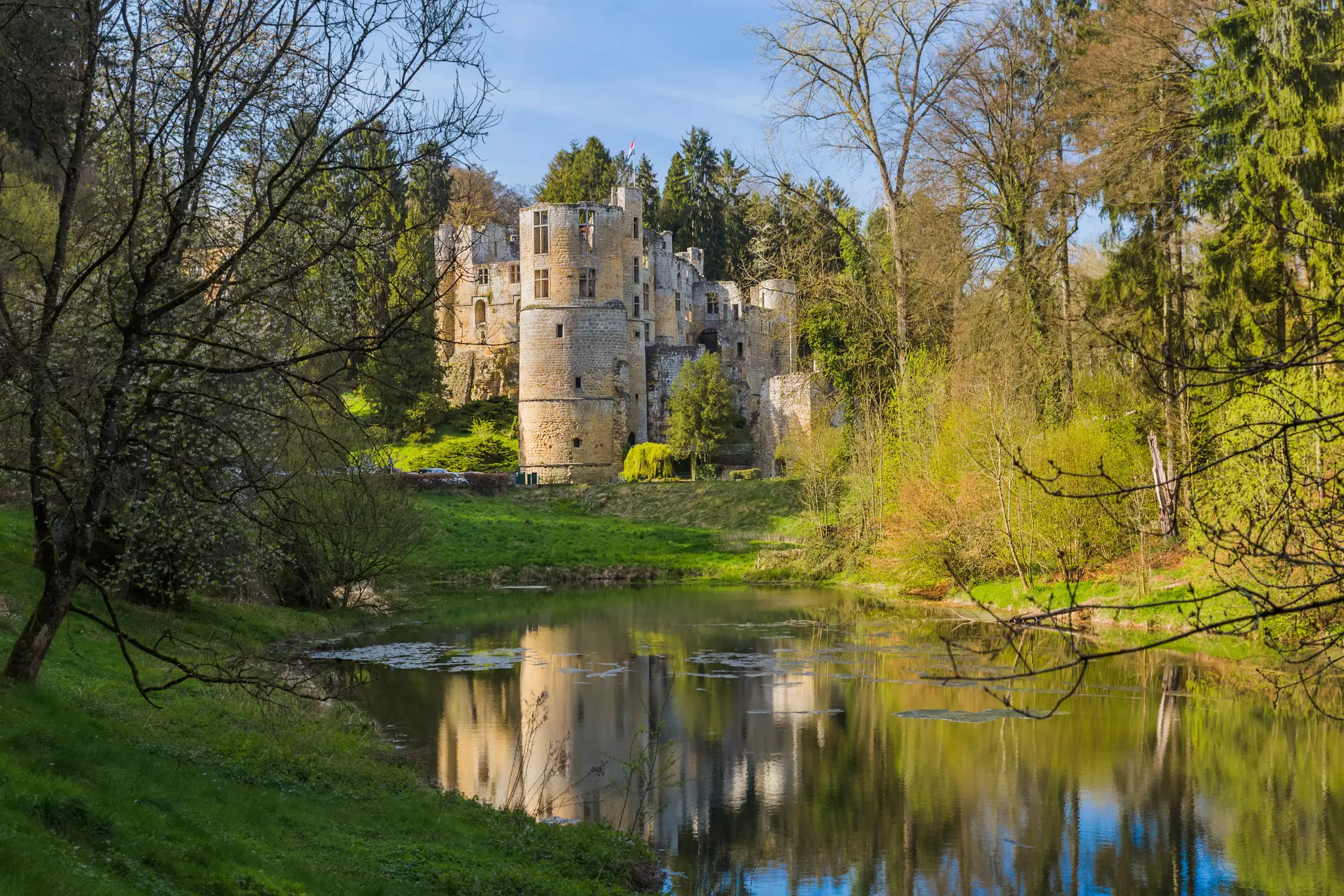
In the town of Beaufort, northwest of Echternach, don’t miss the twin valley-side castles – one an atmospheric medieval ruin, the other a 17th-century Renaissance-style château. Nearby, the interactive Naturpark Expo highlights the natural features of this region, which forms part of the Mëllerdall UNESCO Global Geopark.
More impressive still is Château de Larochette, a hulking ruin that towers above the town of Larochette. Up close, the castle is less complete than it first seems; still, it’s well worth exploring its lawns, walls and stairways. The four-story keep, raised in 1385, provides vertiginous views.
To learn more about the WWII Battles of the Ardennes (or Battle of the Bulge), head to the National Museum of Military History (MNMH) in Diekirch and the mural-fronted General Patton Museum in Ettelbruck. From Ettelbruck, an appealing driving route takes in several other relics from the ferocious battles of 1944.
Start by heading northwest from Ettelbruck via the picturesque village of Esch-sur-Sûre, then take the backroad over the hill toward Wiltz. Stop to survey the scenery from beside a US tank – it’s the only Allied tank to have survived unsuccessful attempts to defend the town when German forces counterattacked in late 1944.
At the bottom of Wiltz’s Grande Rue, the Château de Wiltz building contains a small WWII museum as well as a microbrewery and a marvelous old bar, now part of a museum of brewing – all worthy spots to end this historical tour.
This article was adapted from Lonely Planet’s Belgium & Luxembourg guidebook.
Explore related stories