Dec 23, 202514 min read
The 12 Best Things to Do in Alexandria, EgyptDec 23, 2025
14 MIN READ
Contributors
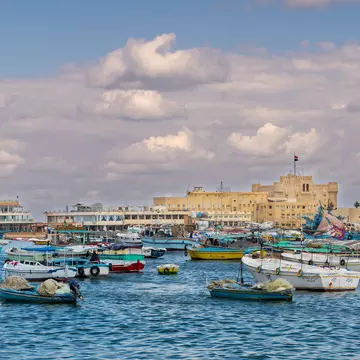
The eastern harbor and Fort Qaitbey in Alexandria, Egypt. Halit Sadik/Shutterstock

Contributors


Paula Hardy, Lonely Planet Editors
Highlights
Writer Paula Hardy picks 12 things to do in Alexandria, Egypt.
History lovers should head to Fort Qaitbey, the Graeco-Roman Museum and Kom El Shoqafa's catacombs.
Take a food tour through the Anfushi district for kushari, kebda and fresh-caught fish.
Visit the Bibliotheca Alexandrina and Royal Jewelry Museum, plus six more from churches to gardens.
Lonely Planet may earn a commission from affiliate links on our site. All recommendations and reviews reflect our own independent opinions.
The fortunes of the great city of Alexandria have always been tied to its strategic location at the mouth of the Nile River on the Mediterranean coast of Egypt. Alexander the Great spotted the potential of its deep harbor and founded his Egyptian capital here, creating a bridge between the land of the pharaohs and ancient Greece.
In the end, Alexander never got to see the city that bears his name. He died in Persia, and his body was brought back to Memphis by his general, Ptolemy, who established the last great Pharaonic dynasty. Alexander's body was later moved to Alexandria, but the location of his tomb remains one of the great unsolved mysteries of the Mediterranean.
Over subsequent centuries, Alexandria became a major port and, due to its famous library, a great center of learning. The city also earned a spot as one of the Seven Wonders of the World, thanks to the now-vanished Pharos lighthouse. Later, Alexandria caught the hungry eye of a succession of empires, from the Romans to the Ottomans and the French, and was besieged and remodeled repeatedly over its long history.
Today, this is one of Egypt’s most atmospheric but least explored cities – a place to immerse yourself in Mediterranean culture and explore Ottoman relics, historic cemeteries and sandy beaches nearby.
Whether you come during the summer beach season or visit in the quieter, cooler spring, fall and winter, here are the best things to do in Alexandria.
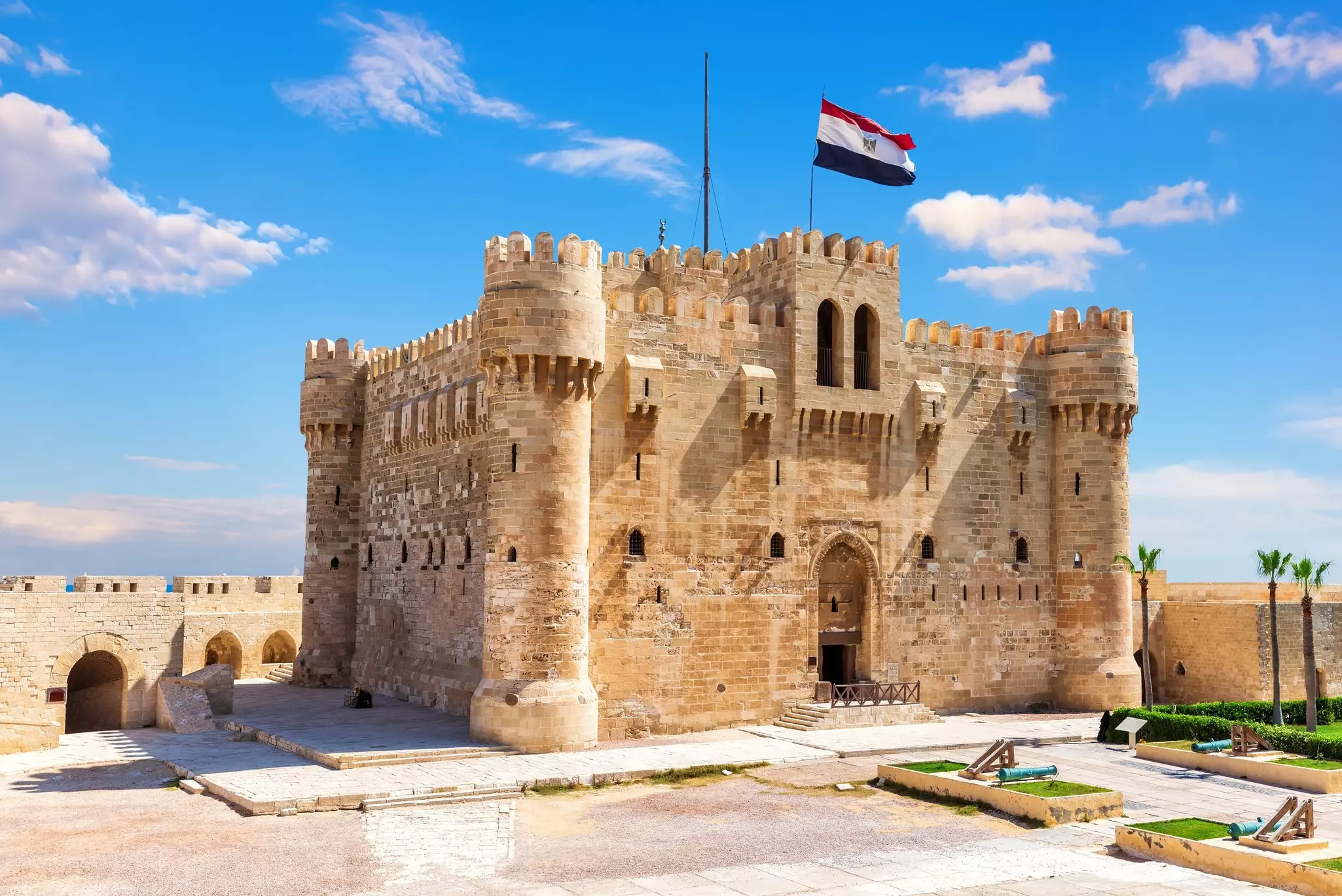
Known as Ras El Tin (Cape of Figs), the peninsula between Alexandria's eastern and western harbors is the place to dip into Alexandria’s rich history. At its tip stand the crenelated walls of Fort Qaitbey, built in 1477 over the ruins of the Pharos lighthouse.
Although the fort was damaged in the British bombardment of 1882, it has been beautifully restored. Its honey-colored interior houses the oldest mosque in the city, while its ramparts offer views of Alexandria and the eastern bay.
Southwest of the fort are the city’s shipyards and the lavish – but sadly off-limits – Italianate palace, built in the early 1830s as a summer residence for ruler Mohammed Ali, the Father of Modern Egypt. You’ll get a good view of the palace if you arrive in Alexandria by cruise ship.
Planning tip: You can reach Fort Qaitbey on foot from Midan Ramla along the Corniche, or come by tram or microbus.
One of the best ways to experience Alexandrian life is on a food tour. Local guides Karim Serrie (tel 20-10-0261-7885) and Rasha Aggag (tel 20-10-6208-8282) will introduce you to the city’s most famous dishes on a tasting journey around the streets using speeding tuk-tuks and slow trams.
Tours start at Alexandria’s teeming fish market, Al Midan, where you can browse the day's catch, watch locals haggle over the best crabs, then buy some fish and have it cooked on the spot. Afterward, dive into the lanes of the Anfushi district for some spicy kebda Eskandarany – liver, sautéed with garlic and spices, and stuffed into a’aish fino (bread).
Also unmissable is the Alexandrian version of kushari, a mix of pasta, fried rice, vermicelli noodles and lentils topped with tomato sauce, chickpeas and fried onions, given extra flavor with cumin and curry leaves. The tour ends with coffee and traditional desserts such as omm ali (Egyptian bread pudding made with puff pastry, raisins and pistachios).
Sitting in the shadow of Fort Qaitbey, the warren of streets of the Anfushi and Bahary districts were the hub of the Ottoman city. This is where Alexandrians came to let loose, where novelist Lawrence Durrell sought inspiration for his Alexandria Quartet and where people still flock to enjoy the best fish restaurants in the city despite the area's slightly worn edges.
It’s a fascinating district to explore, dotted with distinctive mosques. In the center sits the El-Shorbagi Mosque, built in 1758 and rising above a teeming souq. At the junction of Sharia Faransa and Wekalet Al Limon, the Terbana Mosque was built in 1685 as a rest stop for pilgrims on their way to Mecca.
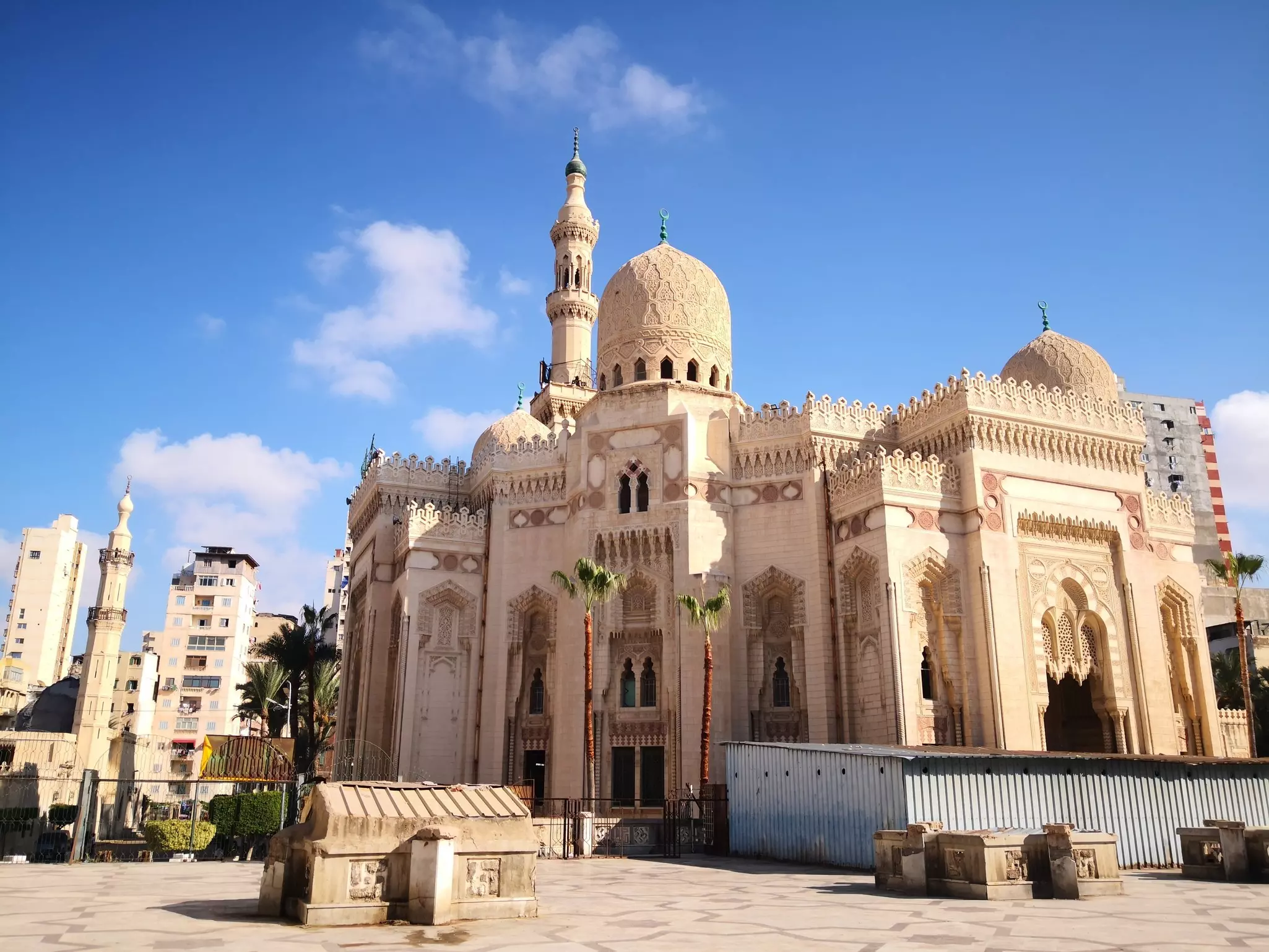
Most impressive is the Abu Abbas Al Mursi Mosque, dedicated to the 13th-century Andalucian Sufi saint Abu Abbas, one of the four master saints of Egypt. It is the main congregational mosque in Alexandria and an important site of pilgrimage. The current incarnation above the saint’s ancient mausoleum was built by an Italian, Mario Rossi, in 1945.
Outside of prayer times, you can visit the gorgeous interior, where eight pink granite columns hold aloft a 24m-high cupola. Around the lantern, colored windows illuminate the carved dome, while arabesques and carved plasterwork cover the walls and ceilings.
Planning tip: In summer and during Ramadan, the area around the mosque is a great spot to visit at night to observe the city’s social and religious life.
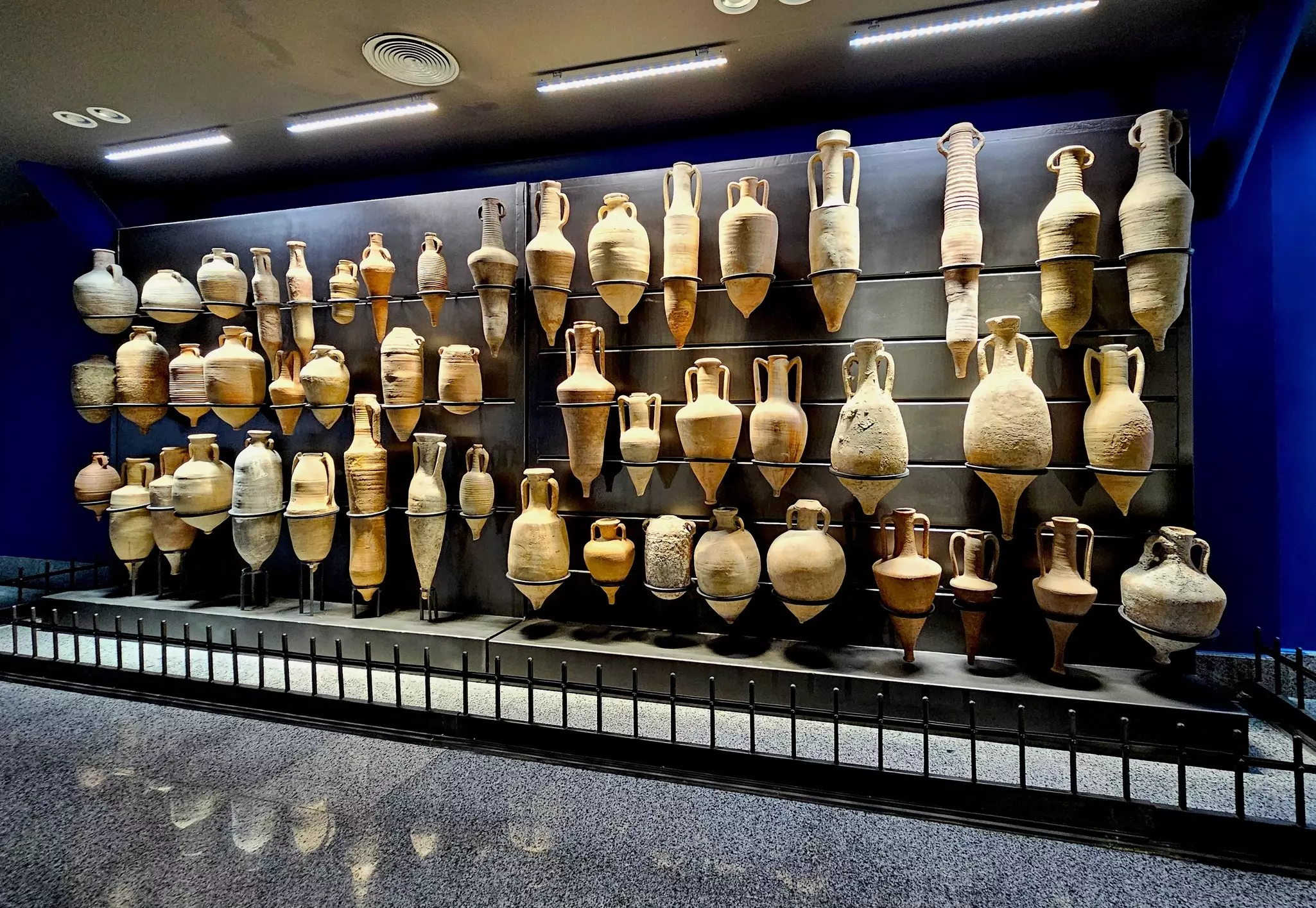
Alexandria’s Graeco-Roman Museum is the pride of the city, showcasing treasures that span nearly a millennium of Greek rule, starting from the 3rd century BCE. Exhibits are spread over 27 beautifully curated halls in a distinctive Greek revival building, modeled on the great museums of Athens.
This impressive museum was the brainchild of Italian archaeologist Giuseppe Botti, who arrived in Alexandria in 1884 and was incensed to discover that treasures were being removed to Cairo and Europe because there was no museum for the city's antiquities. The initial collection comprised some 4000 objects donated by wealthy Alexandrians such as Prince Omar Toussoun, including the museum's famous statue of Alexander the Great.
The collection was subsequently enlarged with artifacts uncovered in Alexandria, the Delta region and Al Fayoum. As you enter the museum, note the two fine stelae recalling trading relationships between Egypt and Greece as early as the 8th century BCE. It was a military alliance against the expanding Persian empire that first brought Alexander to Egypt in 332 BCE.
Highlights include fabulous floor mosaics, granite and marble statuary, terra-cotta figurines with elaborate hairdos, and the epic Apis bull – an embodiment of the syncretic god Serapis, borrowed from the cult of Osiris. Reproductions of a Roman villa and Ptolemaic-Christian temple show Alexandria's cultural shift toward European ideas.
Planning tip: Take a coffee break in the lovely courtyard beneath the gaze of a monumental pink granite statue of Isis Faria, uncovered in Alexandria.
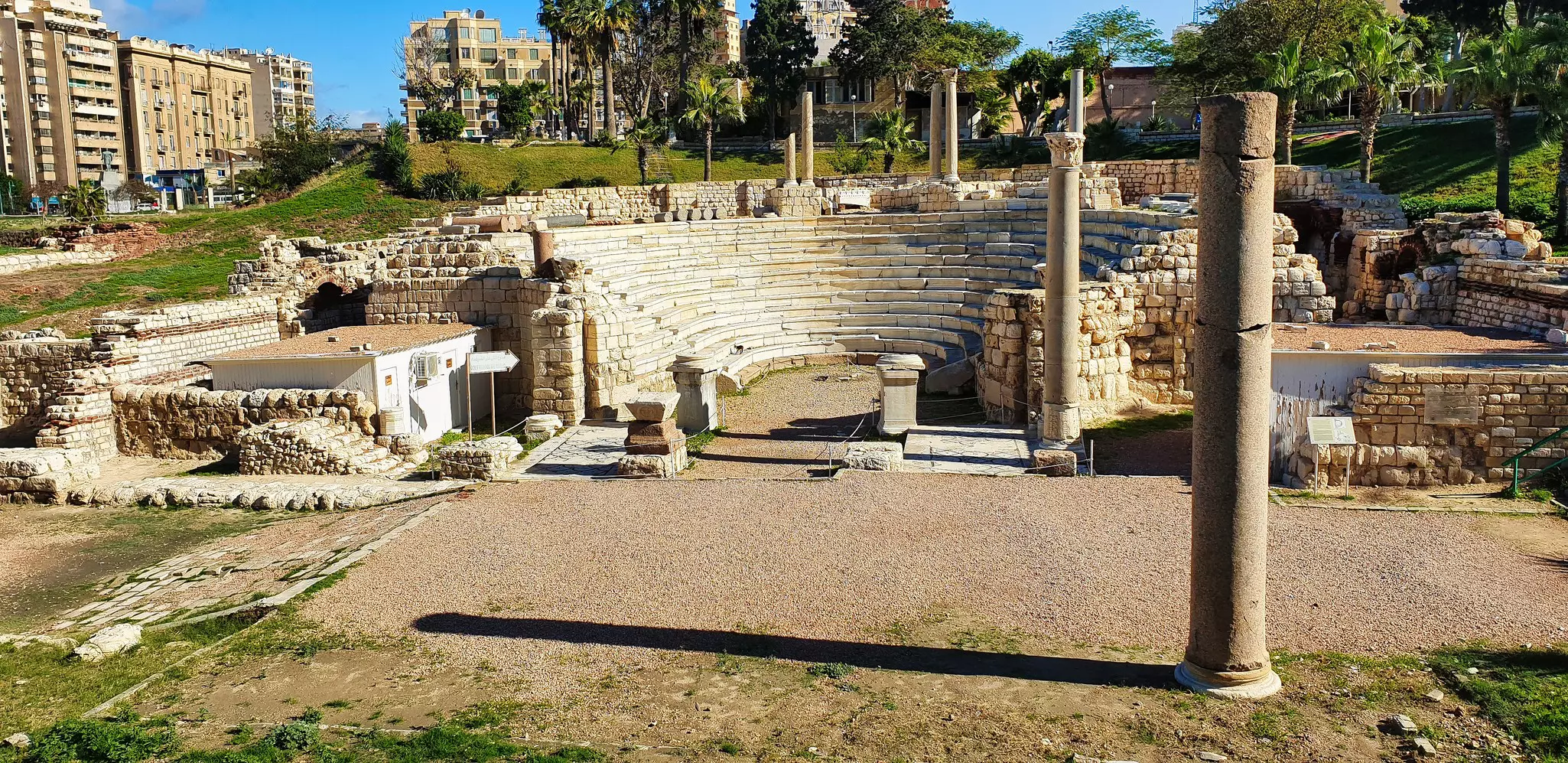
Egypt’s only surviving Roman theater sits in an area once known as Kom Al Dikka, a prosperous residential zone from the 4th to 7th century CE. The site was rediscovered in 1967, when foundations were being laid for an apartment building on a hillock known as the Mound of Shards because of the vast quantities of broken pottery lying on the ground.
Compared to the Roman sites of nearby Tunisia, these sunken ruins are modest, but there are some fascinating details, such as the 6th-century graffiti supporting both blue and green chariot teams on the white-marble terraces. Nearby lie the remains of a large imperial bath complex, auditoria once used as university lecture halls and the ruins of some impressive early Roman villas.
Be sure to check out the so-called Villa of the Birds, a dwelling from the time of Hadrian (117–138 CE). Despite being destroyed by fire in the 3rd century, the villa still has an astonishingly well-preserved, elaborate floor mosaic of peacocks, quails, parrots and water hens.
Planning tip: See more treasures from the city's ancient history at the Alexandria National Museum, where the Hellenic story of Alexandria is part of a broader national narrative. Starting with Pharaonic artifacts in the basement, you'll ascend in chronological order, taking in the Greco-Roman, Coptic (Byzantine), Ottoman and modern eras.
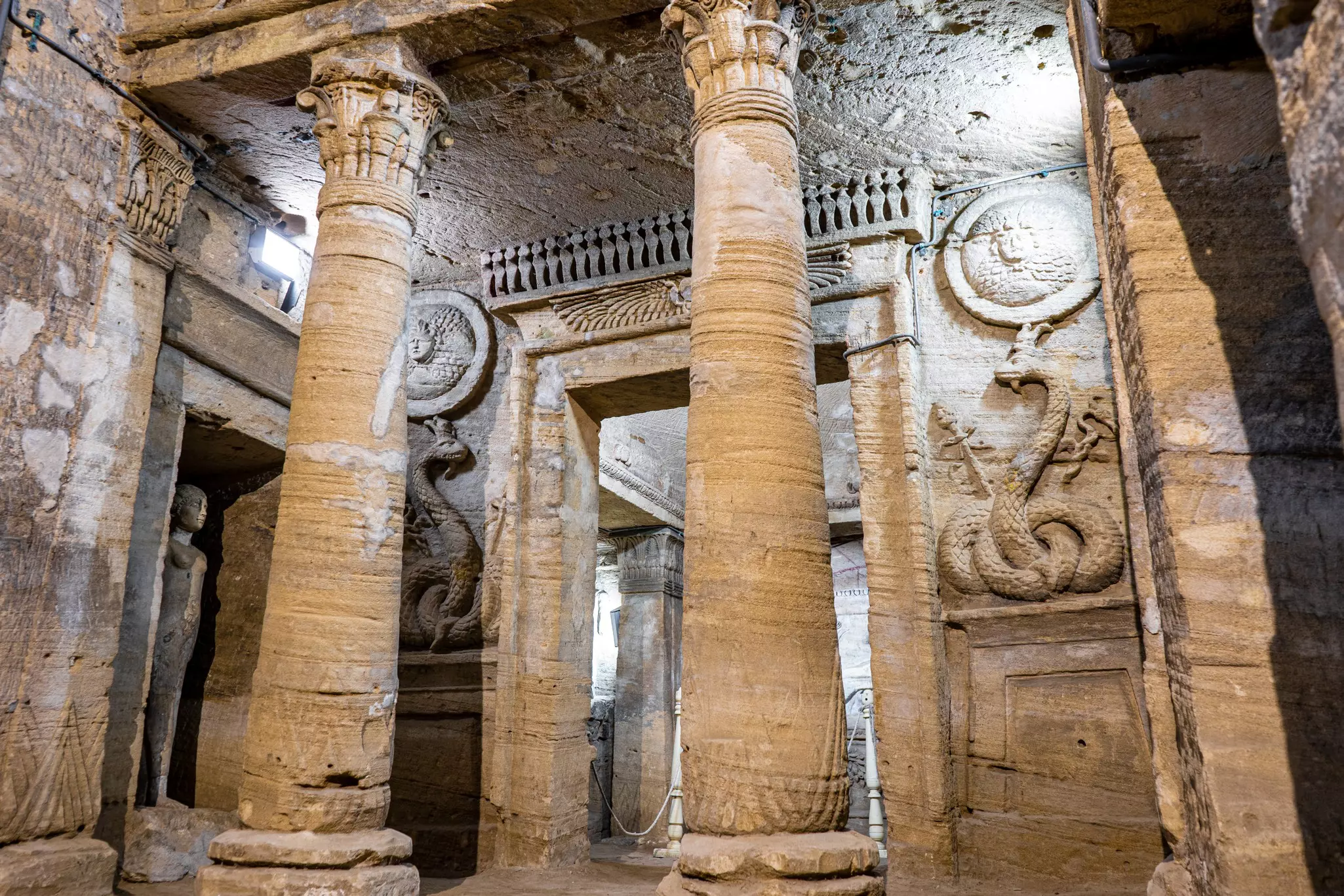
Evidence of Alexandria's rich cultural diversity is evident in the city’s cemeteries; the Catacombs of Kom El Shoqafa are the oldest, as the largest Roman burial site in Egypt. The tombs demonstrate Alexandria’s unique fusion of Pharaonic and Hellenistic architectural styles, blending ancient Egyptian, Greek and Roman funerary iconography.
In the principal tomb, the doorway to the inner chamber is flanked by figures representing Anubis, the Egyptian god of the dead, but he is dressed as a Roman legionnaire, with a serpent’s tail symbolizing Agathos Daimon, a Greek divinity. From the antechamber, passages lead to a large chamber lined with some 300 loculi (burial niches).
Under the auspices of ruler Mohammed Ali, the city's growing Levantine and European populations were granted an area of land in the Shabty district for Christian burials, with separate areas for Orthodox Christians, Roman Catholics and Copts. The most impressive is the Greek Orthodox Cemetery, with its fine mausoleums and elaborate Gothic, art nouveau and neoclassical funeral sculptures.
Planning tip: History researcher Zahraa Adel Awad (tourguide_egypt@yahoo.com) leads interesting tours of the cemeteries, visiting memorials such as the grave of poet Constantine Cavafy.
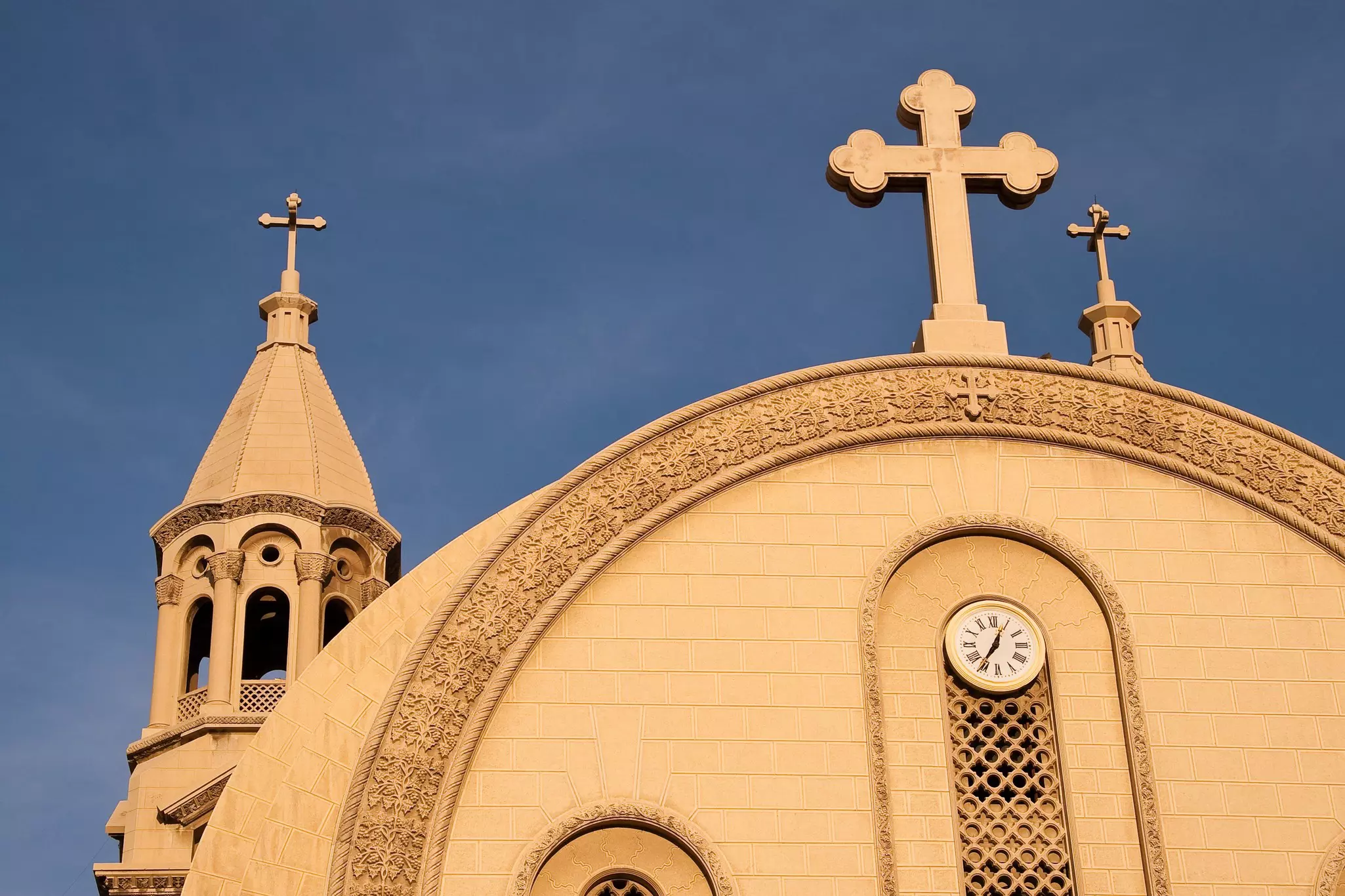
In the 4th century CE, Cyril I, the patriarch of St Mark’s Coptic Cathedral in Alexandria, was ranked almost as highly as the Pope in terms of importance. The present cathedral dates to 1952, but it stands over the remains of the tomb of St Mark the Apostle, Egypt's patron saint, who was interred here until the Venetians stole his body in 828 CE.
Reflecting the city's broad cultural mix, many other interesting churches dot the streets. Aside from the Coptic cathedral, there's the dazzling Greek Orthodox Cathedral of Evangelismos, inaugurated in 1856 and lavishly decorated with a gilded iconostasis, chandeliers from Russia, stained glass windows from Paris and a clock made by Frederick Dent, who produced the famous clock in the Big Ben tower in London.
Meanwhile, the Monastery of St Savvas trains African priests in agronomy, nursing and theology, reflecting the role of the Alexandrian Primate as patriarch of all of Africa. Also of interest is the Moorish-style St Mark’s Anglican Church on Midan Tahrir; built in 1839, it was the first Anglican church in Egypt.
Finally, make a visit to the Catholic St Catherine’s Cathedral, a Baroque church that looks like it has been teleported from Rome. It's dedicated to St Catherine, whose body is interred in Sinai in the monastery of the same name, and it contains the tomb of exiled Italian king Victor Emanuel II.
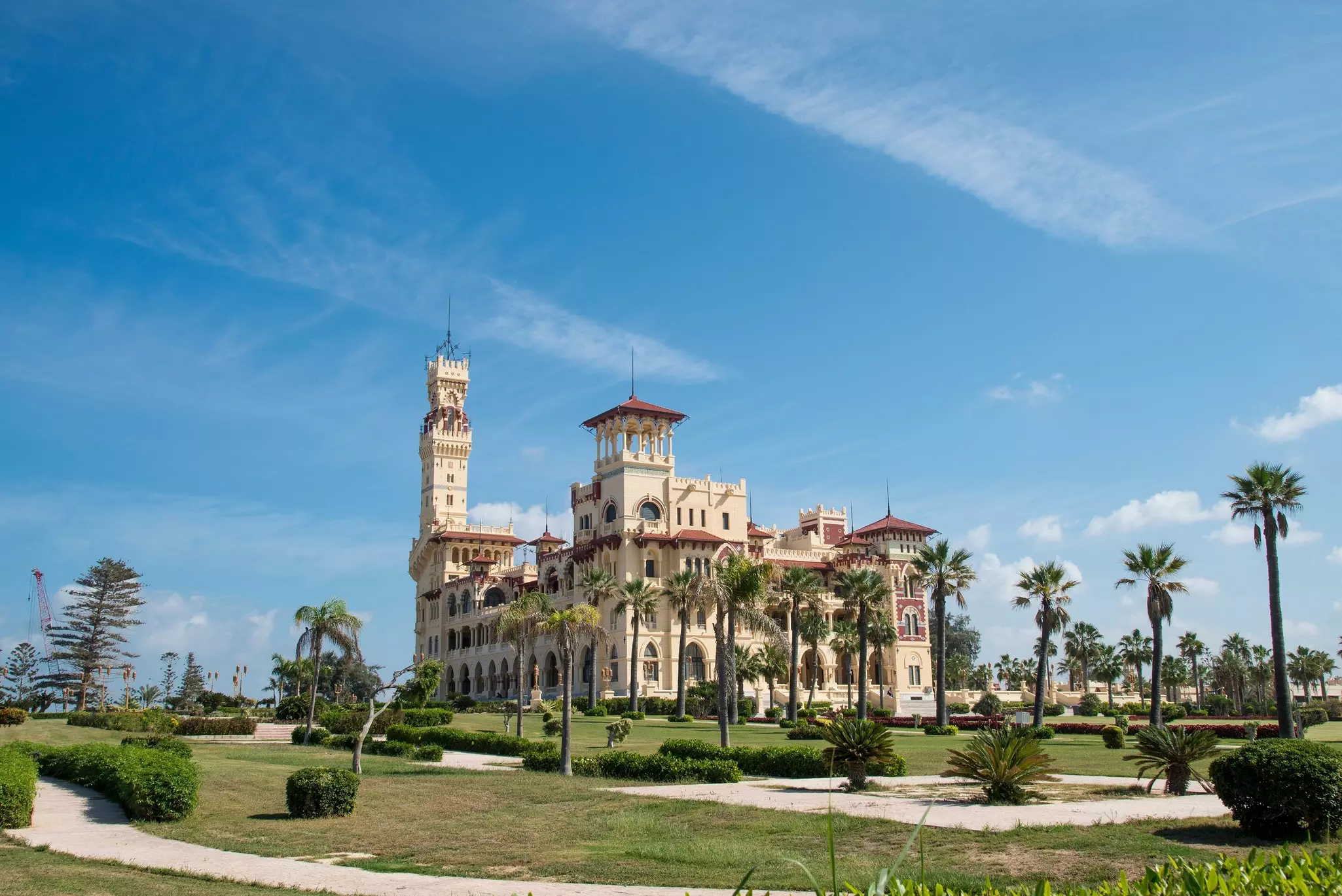
In the east of Alexandria, the Montazah Gardens were the summer retreat of Khedive Abbas Helmy II, the last Ottoman viceroy of Egypt and Sudan, and they sprawl around the Al Haramlek Palace, built by King Fouad in 1932 and modeled on Florence’s Palazzo Vecchio.
While the palace is closed to visitors, the 150-hectare garden is the largest green area in Alexandria, and families gather to wander the shady forest, picnic and swim off the Aida, Nefertiti, Cleopatra and Semiramis beaches. You can also stop for a drink in King Farouk’s Tea Pavilion on Nelson’s island.
Planning tip: Golf carts are on hand to ferry you around the grounds for a fee; a better option is to rent a bike to go exploring before finding your way to one of the beaches.
Jewish people have been part of life in Alexandria since the city’s founding. The Talmud mentions the Great Synagogue of Alexandria (since destroyed), and Alexandrian Jews such as Simeon the Just served as high priests in ancient Jerusalem. Mohammed Ali saw to the reconstruction of the Eliyahu Hanavi Synagogue, replacing an older building dating back to 1354 that was damaged during Napoleon’s invasion.
The present synagogue is a beautiful Italian revival structure, supported by 28 pink marble columns and large enough to accommodate 700 congregants. It served a 400,000-strong community in the 1940s, but most of the Jewish population fled to Israel following the Egyptian Revolution of 1952, the 1956 Suez Crisis and the 1967 Six Day War.
Come to admire the elegant interior, bathed in rose-tinted light through the stained glass windows. The synagogue's greatest treasures are 50 of the oldest copies of the Torah in the world, which are stored in the archives.
Planning tip: The Eliyahu Hanavi Synagogue is closed on Friday afternoon and on Saturday, and you'll need to present your passport to enter.
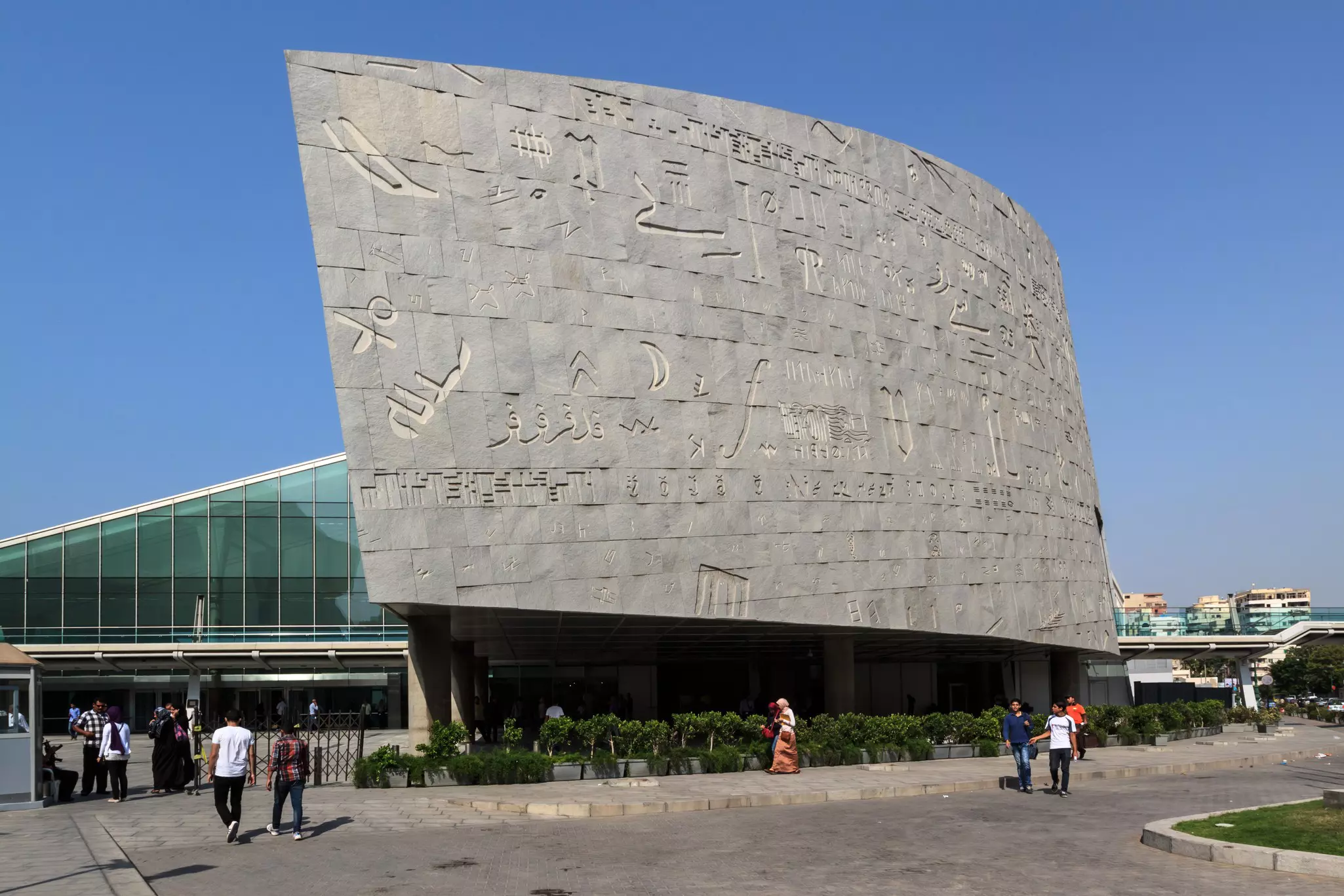
Built in the 3rd century BCE, the original Library of Alexandria was one of antiquity’s most important intellectual centers and the greatest archive of manuscripts in the ancient world. It was destroyed by fire when Julius Caesar seized the city in 48 BCE, but in 2002, the ambitious Bibliotheca Alexandrina was founded to rekindle the city's spirit of learning.
Housed in an impressive modern edifice, the library is also home to several interesting museums. Take one of the free tours to admire the interesting architecture. The building is styled like an Egyptian sun disc, and its granite walls are carved with letters, pictograms, hieroglyphs and symbols from more than 120 scripts.
Inside, the Antiquities Museum contains artifacts spanning millennia of Egyptian history, from Pharaonic times through to the Islamic era, with a fine collection of 2nd-century funerary masks and intricately decorated sarcophagi. The Manuscript Museum has a collection of ancient texts and antiquarian books, including a copy of the only surviving scroll from Alexandria’s ancient library.
Next door, the Impressions of Alexandria exhibition documents the city’s history through drawings, maps and early photographs, while the Sadat Museum chronicles the life of Egypt's former President Anwar Sadat, including the blood-stained uniform he was wearing at the time of his assassination in 1981.
Planning tip: As with some other Alexandria sights, the library is closed on Friday and Saturday afternoons; children under 6 are not admitted to the reading room.
The Mahmoud Said Museum is housed in the fine Italianate villa of painter Mahmoud Said, who helped forge a distinctive Egyptian artistic identity in the early 20th century. The collection showcases his work, alongside other important Egyptian modernists such as Seif and Adham Wanly and El Hussein Fawzy.
Find other memorable works of art at the free-to-visit Museum of Fine Arts. It displays a modest collection of 16th- to 20th-century paintings from world artists, but it is the Egyptian modernists and temporary exhibitions that are of real interest. Look out for Mahmoud Moussa’s and Jerman Shalboub’s burnt clay busts, Ezekiel Baroukh’s portrait Motherhood and Mahmoud Mokhtar’s sculptures.
Planning tip: Both galleries are closed on Monday; bring your passport to enter.
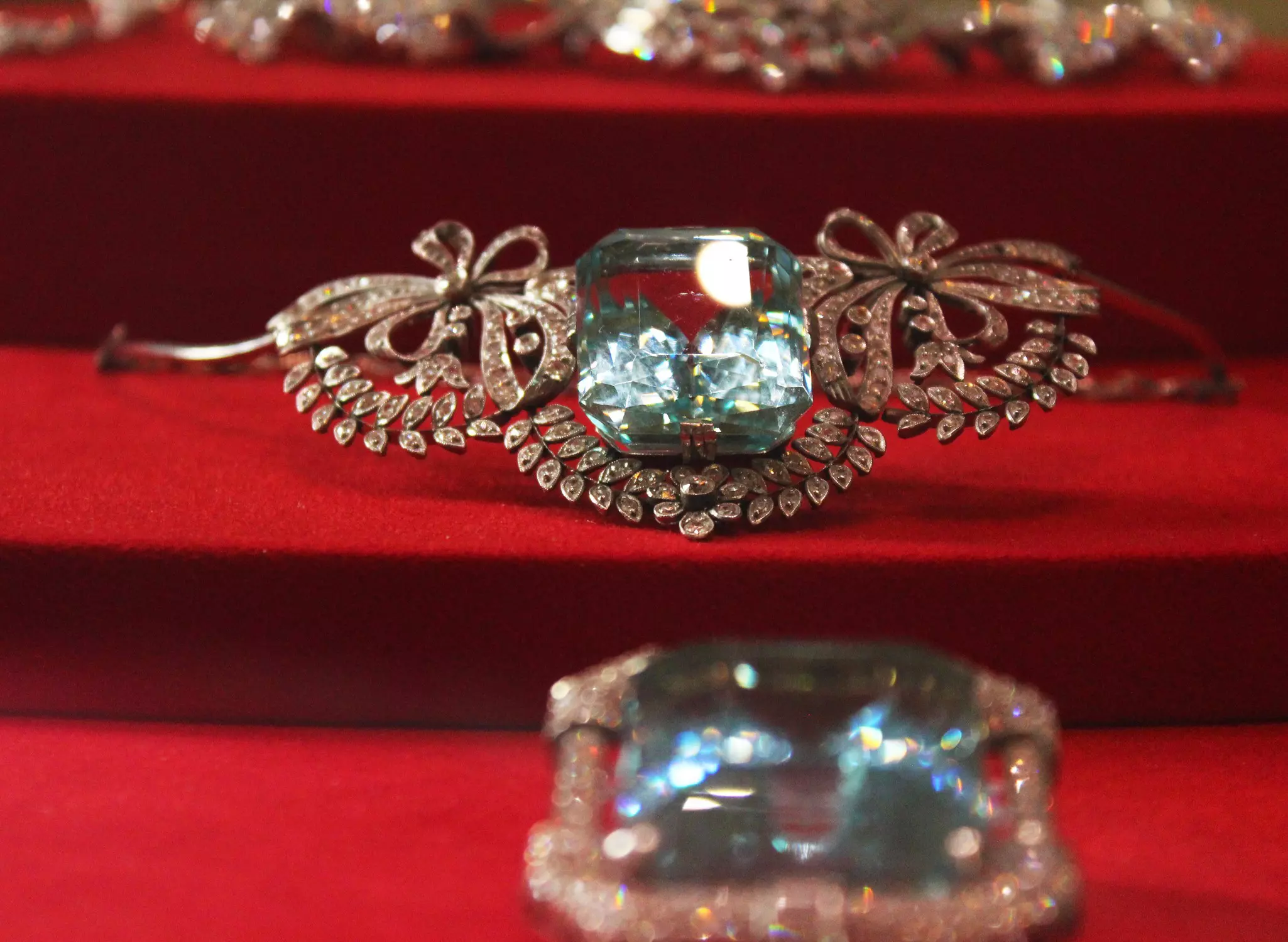
One of the best places to get a glimpse of the wealth of Alexandria between the 1800s and the Revolution of 1952 is at the Royal Jewelry Museum, housed in the extravagant former home of Princess Fatma al’Zahra. Built in the 1920s, this handsome neoclassical building wouldn’t look out of place on the French or Italian Riviera.
It was created by architect Antonio Lasciac, who spared no expense on the art deco interiors. Oak and chestnut timbers were imported from Türkiye for the parquetry floors and wall panels, the painted ceilings and murals depict Greek myths, and the stained glass windows feature scenes from romances such as Romeo and Juliet.
The villa’s 10 halls are decked out with some of the royal family's vast collection of priceless jewelry. Highlights include King Farouk’s gold- and diamond-studded chess board, Prince Youssef Kamal’s diamond-inlaid gold desk and diamond jewelry sets belonging to Princess Shuvekar, Queen Nazli and Queen Farida.
Planning tip: Look out for treasures created by famous jewelers such as Boucheron, Van Cleef and Arpels. One of the most fabulous pieces is a platinum crown, glittering with over 2000 diamonds.
This article was adapted from Lonely Planet’s Egypt guidebook, published in December 2025.
Explore related stories