Oct 15, 202616 min read
The 21 Best Things to Do in CornwallOct 15, 2026
16 MIN READ
Contributors
Fistral Beach in Newquay. OceanKate/Shutterstock

Contributors


Emily Luxton, Belinda Dixon
Lonely Planet may earn a commission from affiliate links on our site. All recommendations and reviews reflect our own independent opinions.
Expansive beaches, chic hotels and moody Poldark filming locations – it seems picturesque Cornwall is rarely off British TV screens. But while the county is awash with sandy beaches and quaint pubs, there’s also a much richer narrative to explore.
This one sees you seaweed foraging, vineyard visiting, barefoot beachcombing, or soaking in an open-air geothermally heated pool. Time to star in truly awesome adventures of your own with our pick of the best things to do in Cornwall.
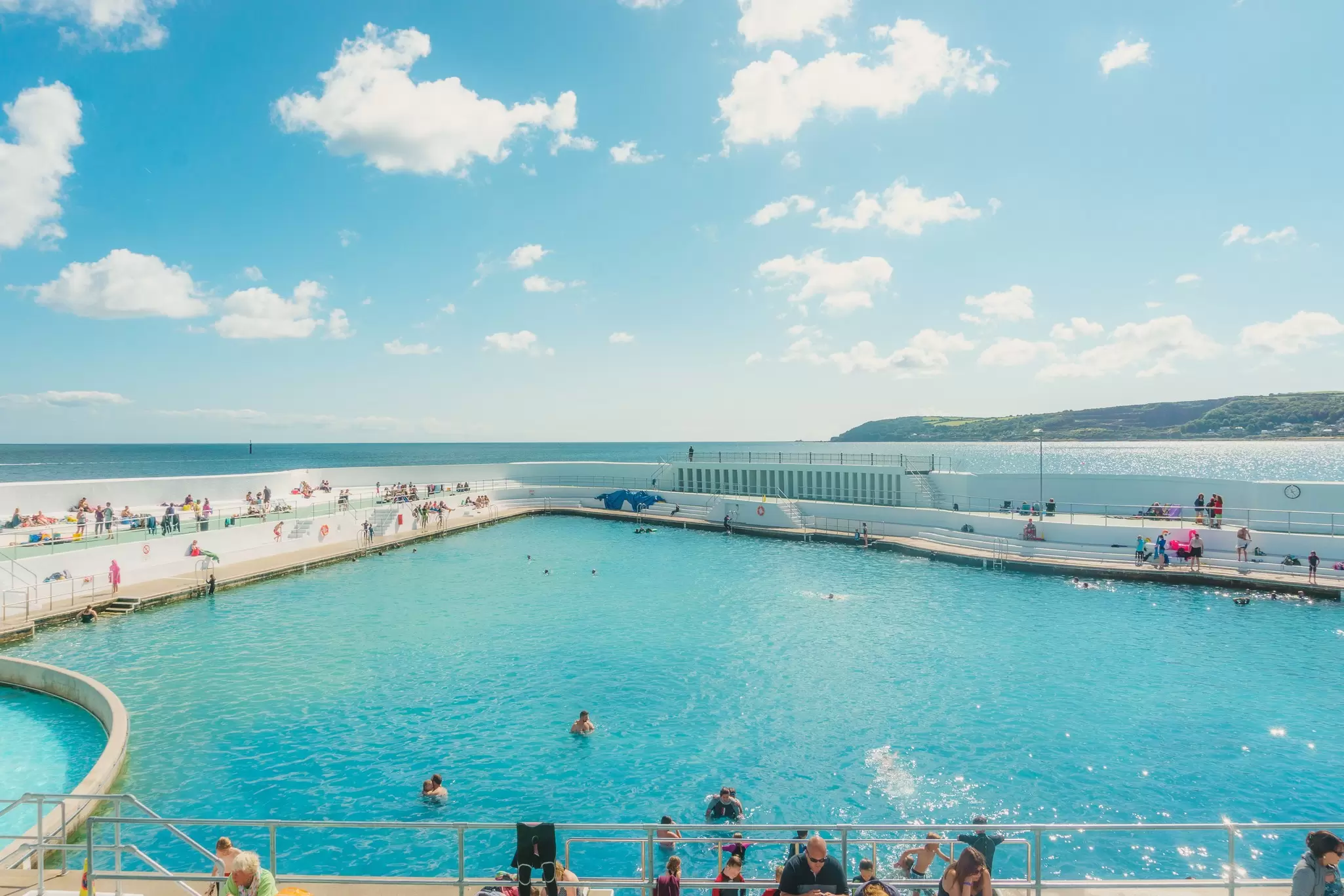
Although Cornwall has some of Britain’s warmest seas, an outdoor swim can still feel a decidedly chilly affair. Enter Penzance’s art deco, open-air Jubilee Pool. This triangular 1930s saltwater lido sits right beside the sea, a geometric vision in blue and white. But what makes it a sensational swim spot is the geothermal section. It’s heated to a blissful 30 to 35°C (86-95°F) by water that’s been extracted from a geothermal well that plunges 410m into the ground. It’s not only an unforgettable place to float, but it’s also sustainable, as the whole heating process has a tiny carbon footprint. The geothermal tickets sell out fast: book well in advance. There are also special full moon swimming events and an annual "dog day" when you can swim with your pooch. And if you want more warmth? There's an on-site sauna (tickets are bought separately) to complete the wellness experience.
Nearest town: Penzance
Cost: thermal pool plus sea pool £16; sauna from £6.50 (30 mins)
How to book: jubileepool.digitickets.co.uk
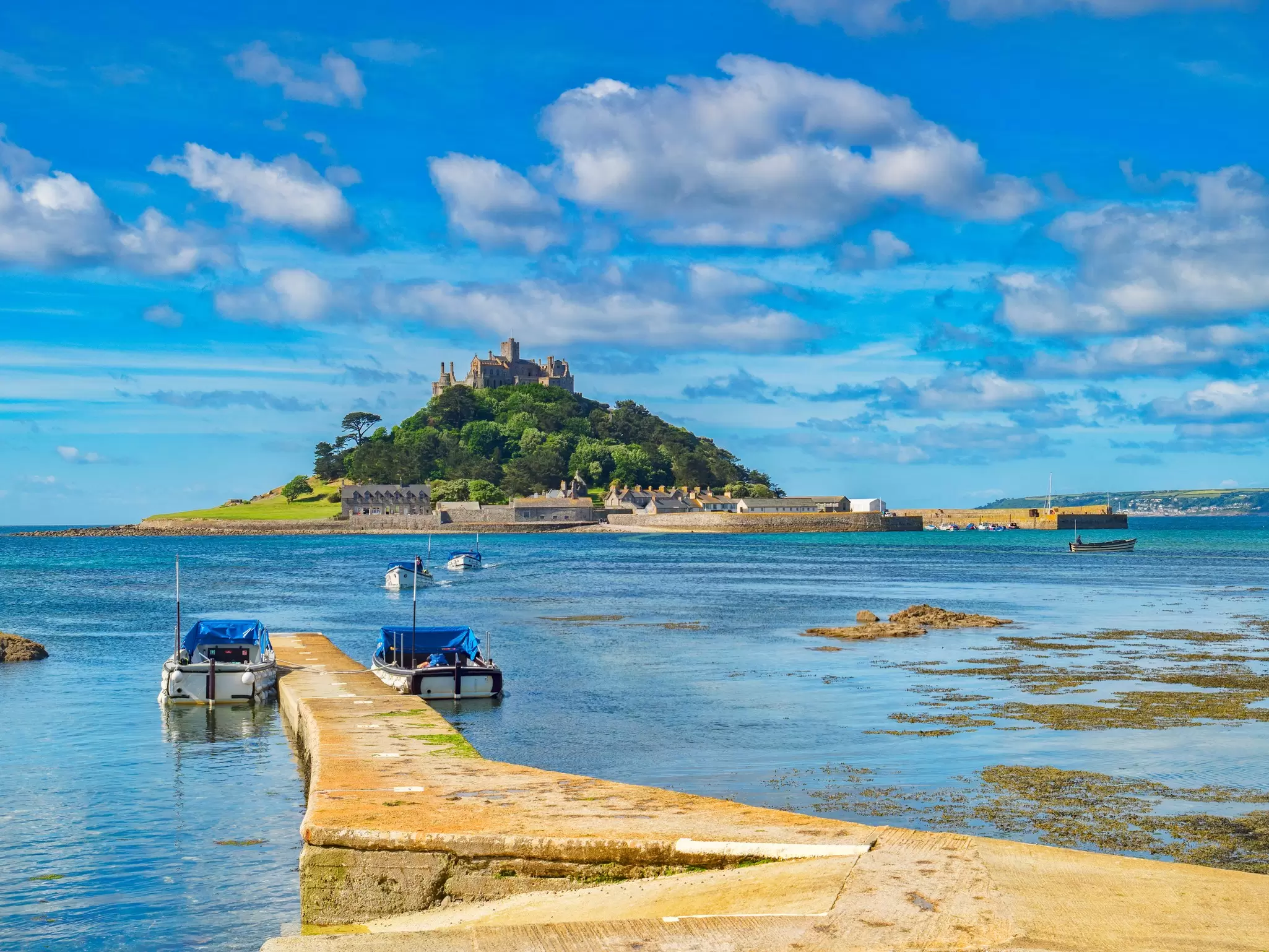
A rocky, tidal island topped with an ancient castle and steeped in Cornish folklore, St Michael’s Mount is one of the most famous places to visit in Cornwall. But this popularity makes it no less magical. The causeway connecting the island to the mainland is only exposed at low tide, so you’ll need to time your visit carefully; look online for the latest tide times to check whether you'll need to travel by boat. Pilgrims have been making this same crossing for centuries in homage to the island’s namesake, the patron saint of fishers. As you make the climb up to the castle, look out for the heart-shaped stone set into the cobbled path. Local legend holds that this is the heart of the giant Cormoran, slain by Jack the Giant Killer. Book ahead if you'd like to stay for afternoon tea. Outside summer, you can visit the island (but not the castle) for free on foot. During peak season, you'll need to book a full castle and gardens visit to enter.
Nearest town: Marazion
Cost: adult/child £21/10.50
How to book: stmichaelsmount.co.uk
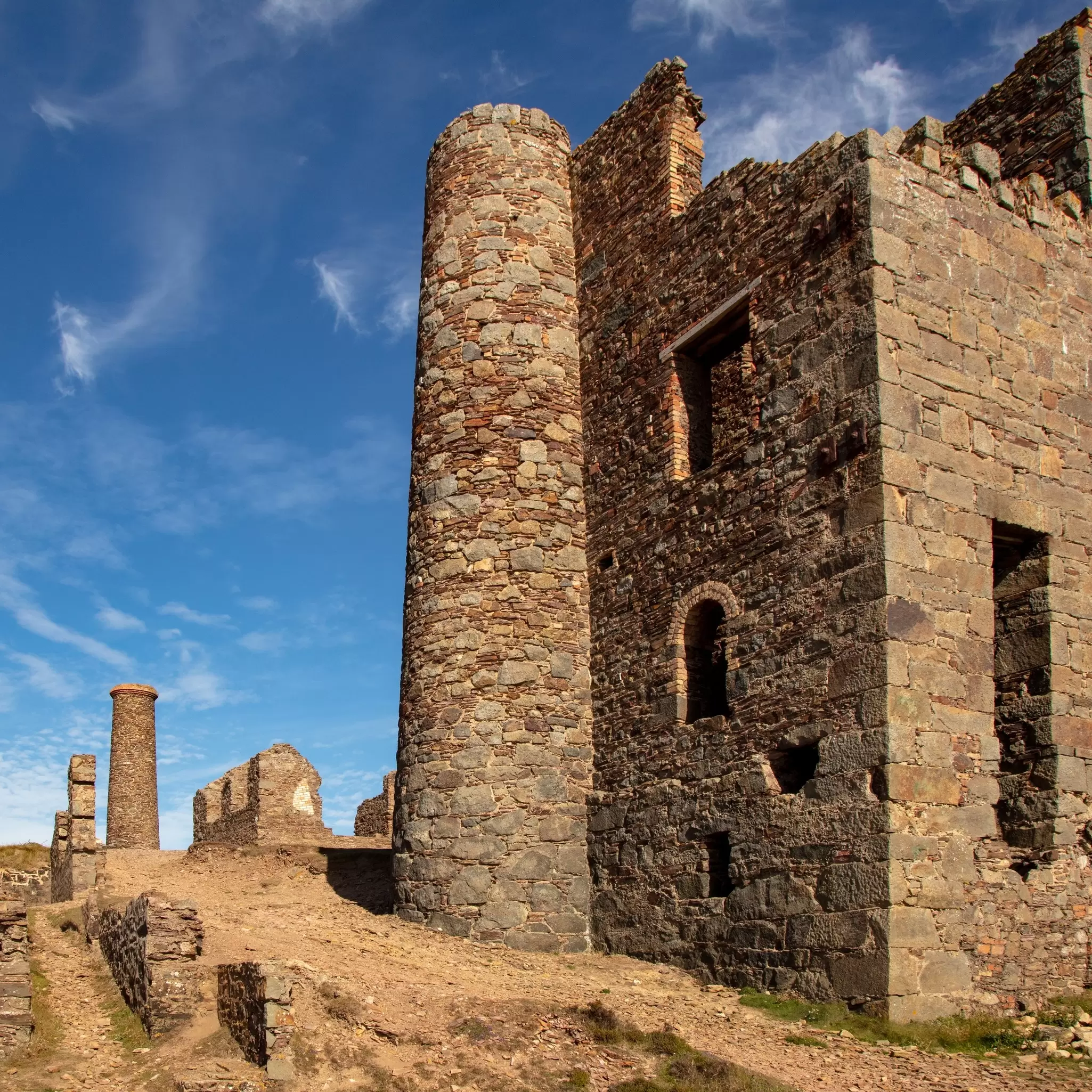
Poldark – the BBC TV series (also on Netflix) of life, love and tragedy in 18th-century Cornwall – remains a huge draw to the region. But while many head to the filming location of ruined Botallack Mine to snap a selfie, more powerful narratives can be explored at the National Trust-run Levant Mine, a few miles north. Here you can see the world’s only still-working steam beam engine thundering away and head into the Man Engine tunnel. This was the scene of Cornwall’s worst-ever mining tragedy, where 31 men were killed when a transport system collapsed in 1919. Watching Poldark will never seem quite the same again.
Nearest town: Pendeen
Cost: adult/child £14/7
How to book: nationaltrust.org.uk

Cornwall has become a world-famous surfing destination, particularly on the north coast, where Newquay’s Fistral Beach is known as the “Home of British Surfing.” Whether you’re a keen enthusiast or an absolute beginner, taking to the waves in Cornwall is a must. Beginners can book into a surf school in Newquay, or head to gentler spots like Polzeath Beach or Harlyn Bay. More experienced surfers might enjoy the challenge of Porthleven’s reef break, or, in winter, the cove at St Agnes. Don’t fancy big waves? Try stand-up paddleboarding (SUP) at Polkerris Beach or Falmouth’s beloved Gylly Beach instead.
Nearest town: Newquay
Cost: free; surfing lesson from £50 (2 hours)
How to book: fistralbeachsurfschool.co.uk
While foodies head to Cornwall’s harborside restaurants, wine lovers go inland – the county is one of the best places to sample superb local vintages in the UK. The wine produced at Camel Valley is some of Britain’s best; under winemaker Sam Lindo, Camel Valley’s fizz has beaten French Champagne house, Bollinger, in global awards. Camel Valley is also a beautiful site to visit – rows of vines etch sun-soaked slopes on the edge of Bodmin Moor. Book ahead for a guided tour or arrange to sip chilled wine by the glass on their vine-side sun terrace.
Nearest town: Bodmin
Cost: winery tour and tasting £20 (kids £5 with a soft drink)
How to book: camelvalley.com/tours
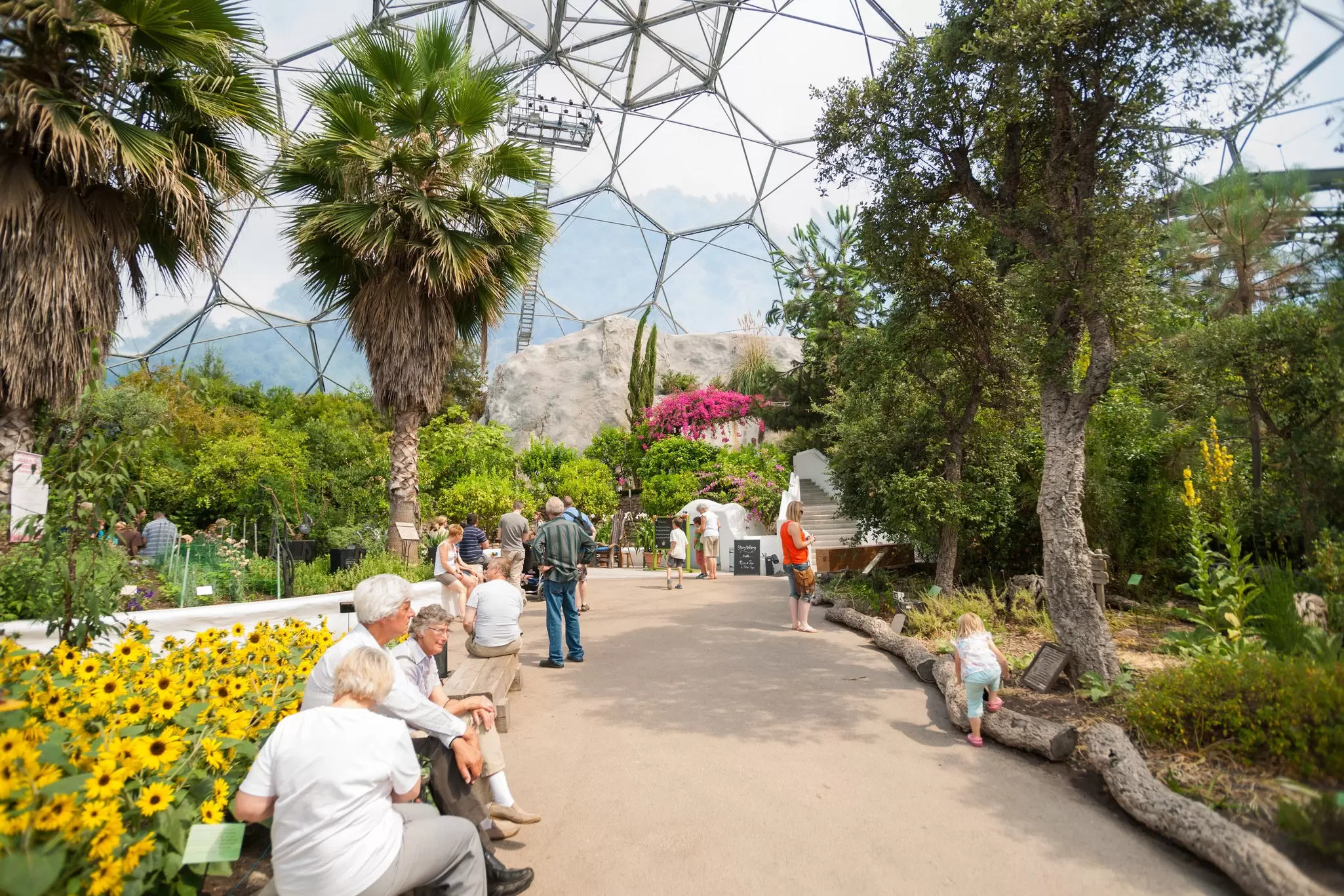
The pioneering ecological attraction that is the Eden Project tops many visitors’ lists of things to do in Cornwall. Famously built in an abandoned clay pit, this cluster of gigantic geometric greenhouses is home to massive biomes that recreate two key world climate systems. The Mediterranean biome transports you to temperatures of 9 to 25°C (48-77°F) and the fruits, herbs and flowers of Italy, Greece and Spain. Here you’re surrounded by bougainvillea, cotton, aloes, olive trees and vines (no surprise that many people visit Eden when it rains). In the Rainforest biome, you’ll feel temperatures rise to 18 to 35°C (64-95°F) as you stroll beside rubber tree groves, sugar cane plantations and banana trees. You can even walk on a swaying wooden bridge, suspended high in the canopy. The biome also explores issues surrounding palm oil and deforestation. Everywhere at Eden, artwork and imaginative displays outline environmental issues and nudge us towards a greener, clearer future.
Nearest town: St Austell
Cost: adult/child £35.50/12.50
How to book: edenproject.com
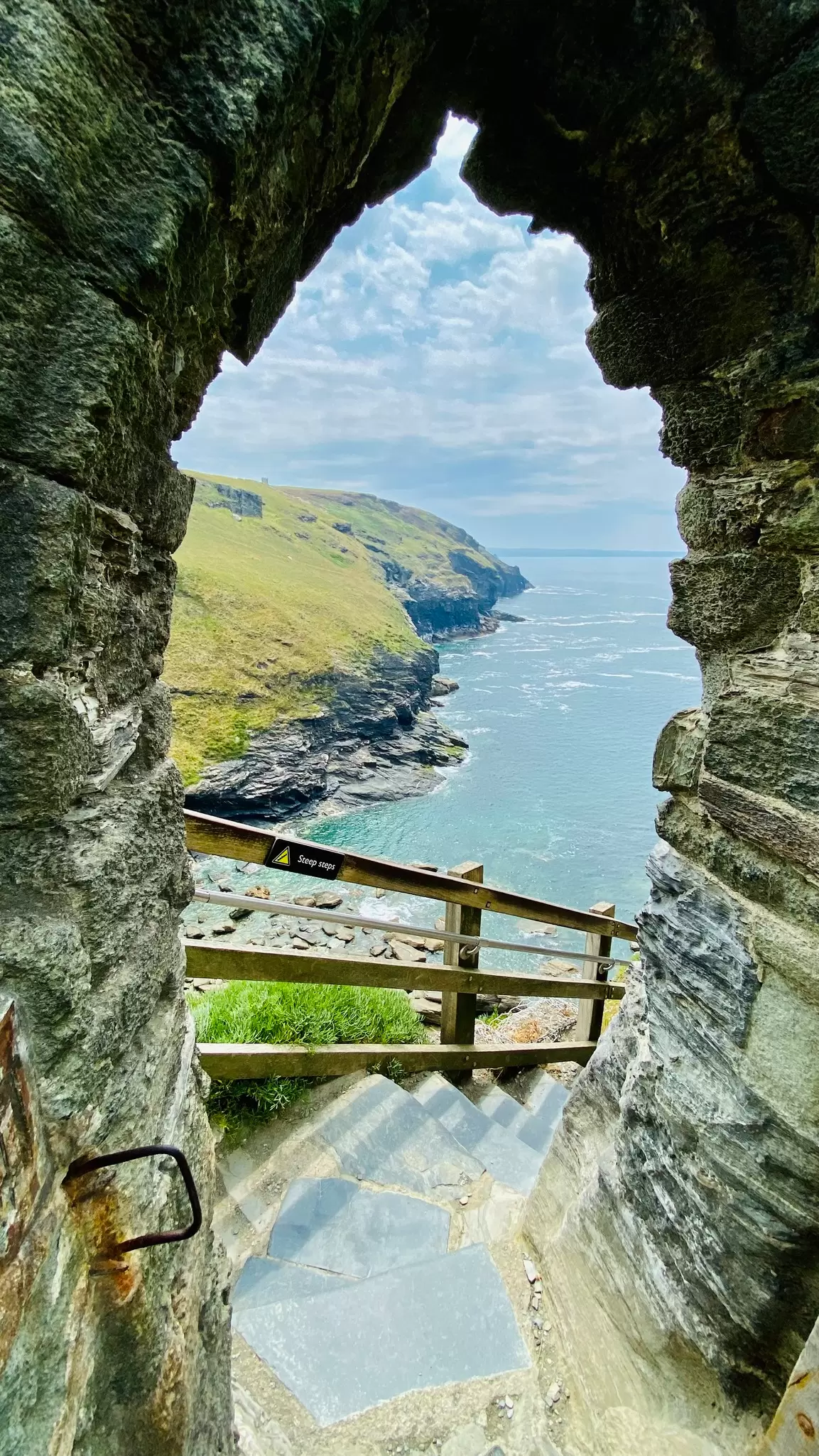
Powerful wizards, noble heroes, a sword trapped in stone… here, there be legends. Whether he was a romantic myth or a real-life mortal, King Arthur has become very much a part of the fabric of Southwest England’s story. And that story was born in North Cornwall. Follow the King Arthur Trail through these legendary landscapes to live the myth at places like Camelford, thought to be the site of Camelot, where a 6th-century stone inscribed in Latin supposedly marks the site of Arthur’s final battle with his traitorous nephew Mordred. Although the castle we see today was built in the 1230s, Tintagel was a seat of Cornish kings since the 5th century, among them King Arthur. So says the legend, at least. Cross the narrow bridge to reach the eerie ruins on their jagged headland, before heading down to the sheltered bay below to explore Merlin’s Cave.
Nearest town: Tintagel
Cost: castle admission adult/child £17/8.50
How to book: english-heritage.org.uk
Cornwall’s coastal paths are well-known, but inland there is plenty to entice walkers, too. Take a “stank” (local dialect for “walk”) on Bodmin Moor – a remote, heather-strewn moorland whose bleak but beautiful landscapes provide the perfect setting for adventure. Soak up the views from atop Brown Willy, the highest point in Cornwall and one of the UK's best hikes, or explore the stone circles and Bronze Age barrows surrounding the slopes of Rough Tor. Fans of Cornwall’s most famous author, Daphne du Maurier, won’t want to miss the real-life Jamaica Inn at the heart of the moor. As in the novel, this isolated inn was once used to stash smugglers’ contraband in the late 18th century.
Nearest town: Bodmin
Cost: free
How to book: no need
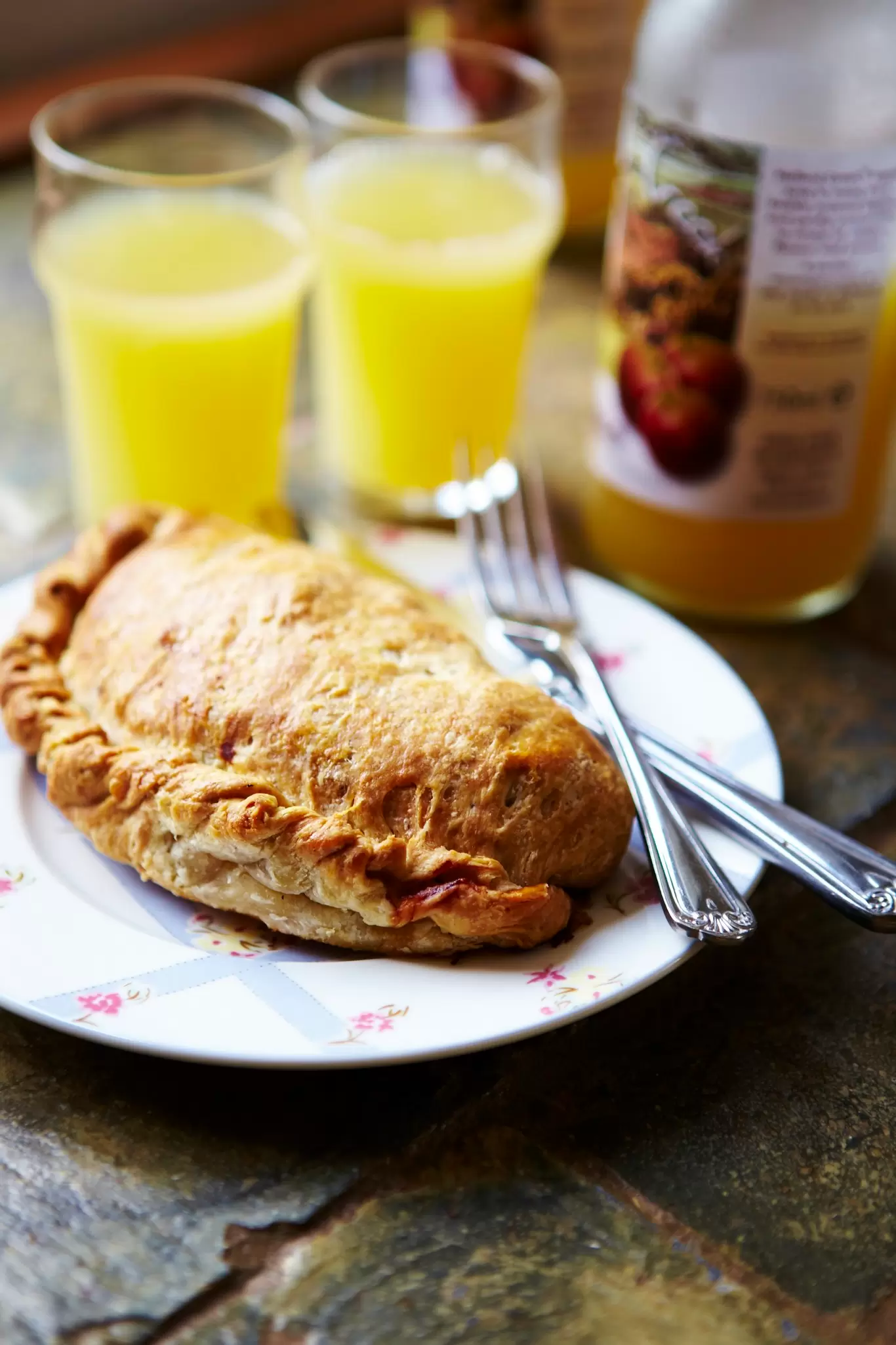
The Cornish pasty – beloved by 17th-century miners, claimed to be worth millions to the Cornish economy, and awarded protected status (only pasties made in Cornwall can use the geographic name). Buy them everywhere from rugby grounds and surfer hangouts to old-fashioned village stores. Or go one better and learn to make them yourself. The pasty-making course run by the Philleigh Way Cornish Cookery School near Falmouth sees you learning about the delicacy’s history and culture and practicing essential techniques, including the famous crimp. A demo on homemade scones and a Cornish cream tea is thrown in while your pasties bake – gifting you two Cornish culinary icons in one session.
Nearest town: Falmouth
Cost: £65
How to book: philleighway.co.uk
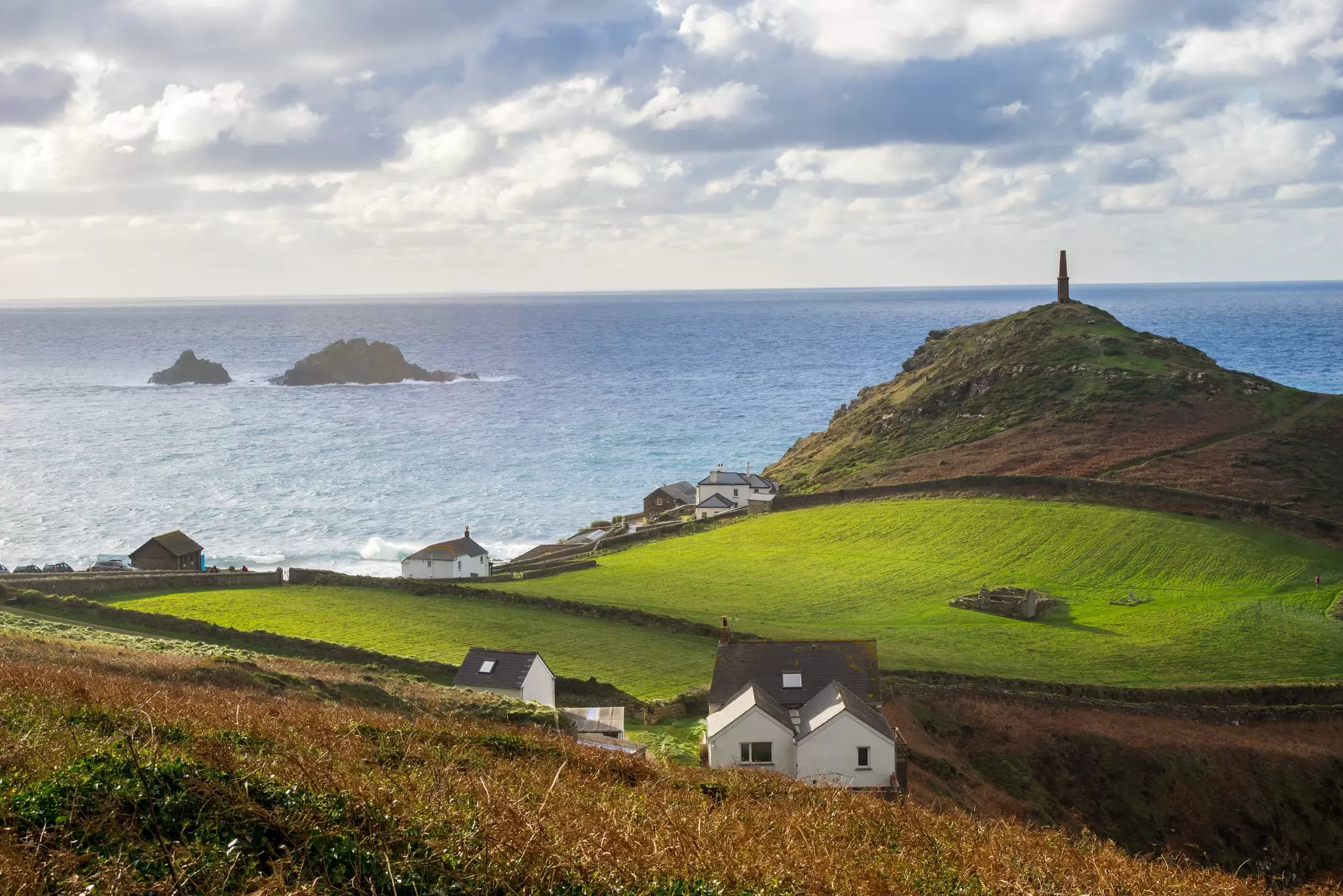
The problem with travelers’ totems is that sometimes they get overrun. At Cornwall’s most westerly mainland location, Land’s End, the dramatic cliffs are crowned by a theme park complete with a hotel, pub and 4D cinema. Time to head 7 miles north to the rugged headland at Cape Cornwall. Here you’ll discover a real end-of-the-world feel, a ruined early-Christian chapel, a derelict mine stack and tiny Priest's Cove, which – at low tide – has a pocket-sized pool. Until about 200 years ago, the Cape was actually thought to be the most westerly point in mainland Cornwall then it lost that title to Land’s End. It’s a lot quieter than that other headland now.
Nearest town: Cape Cornwall
Cost: free
How to book: no need
Most of the cars whizzing west into Cornwall cross the county border and carry straight on. But if you turn south instead, you enter the much-overlooked Rame Peninsula. It’s home to three-mile Whitsand Bay, the pretty fishing villages of Kingsand and Cawsand, and Rame Head – a rocky promontory that juts into the sea, providing 360-degree views east to south Devon and west to the Lizard Peninsula, some 50 miles away. To get a true taste of the area’s wild beauty, walk to Whitsand Bay from Mount Edgcumbe Country Park – a 10-mile cliff path hike via Kingsand, Cawsand and Rame Head that has exceptional views.
Nearest town: Millbrook
Cost: the gardens are free
How to book: mountedgcumbe.gov.uk
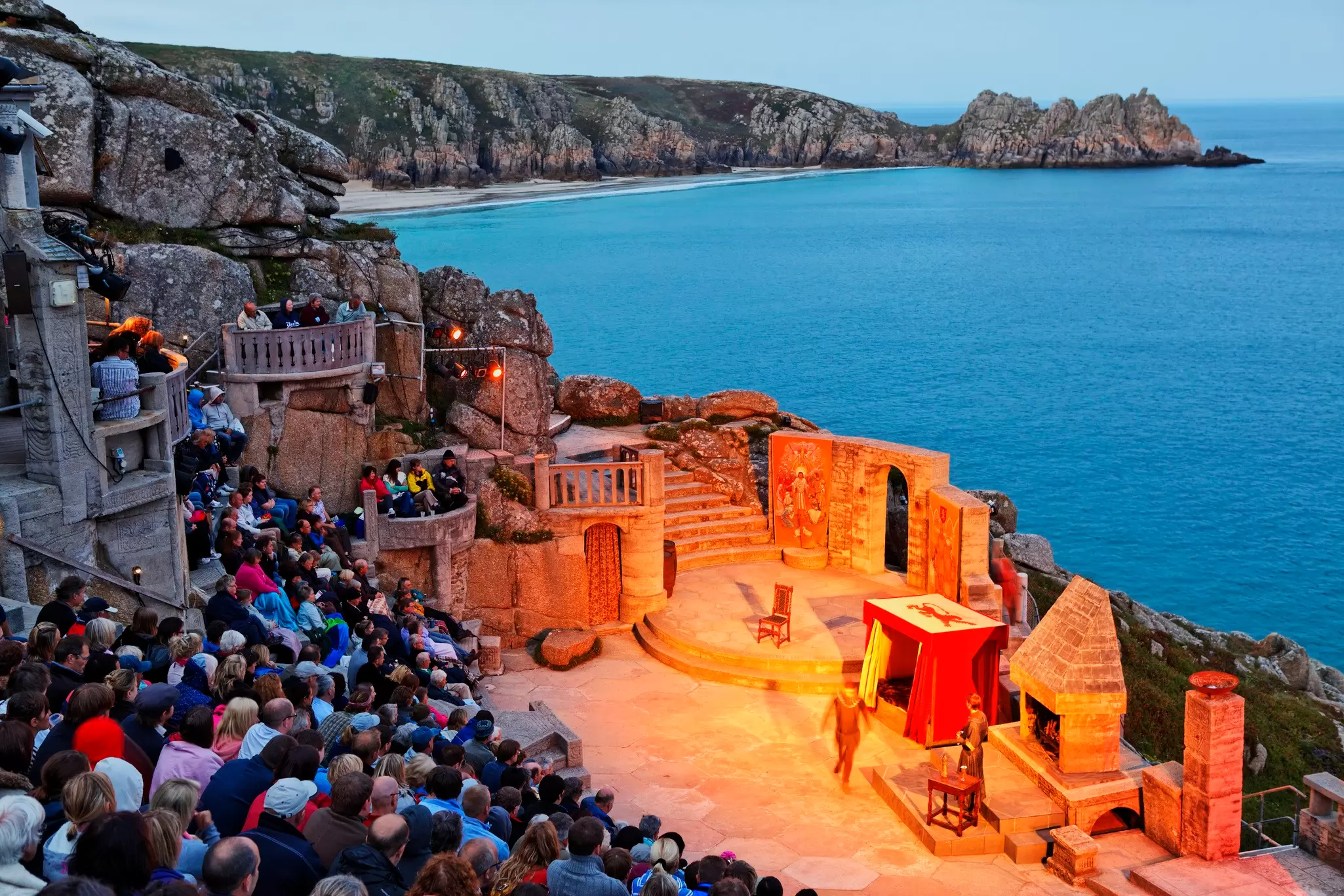
Chief among Cornwall’s cultural highlights, the Minack Theatre is an open-air theater in an unbeatable location. Perched on a clifftop near Penzance, this spectacular setting looks as though it has always been there, its stone seats facing out onto the Atlantic Ocean. In actual fact, the Minack is less than 100 years old. It was built in the 1930s by Rowena Cade, who felt her cliff garden would be the perfect setting for a performance of The Tempest. Today, over 200 live performances a year grace this unique stage, from plays and operas to children’s events.
Nearest town: Porthcurno
Cost: visitor center admission adult/child £10/5
How to book: minack.com
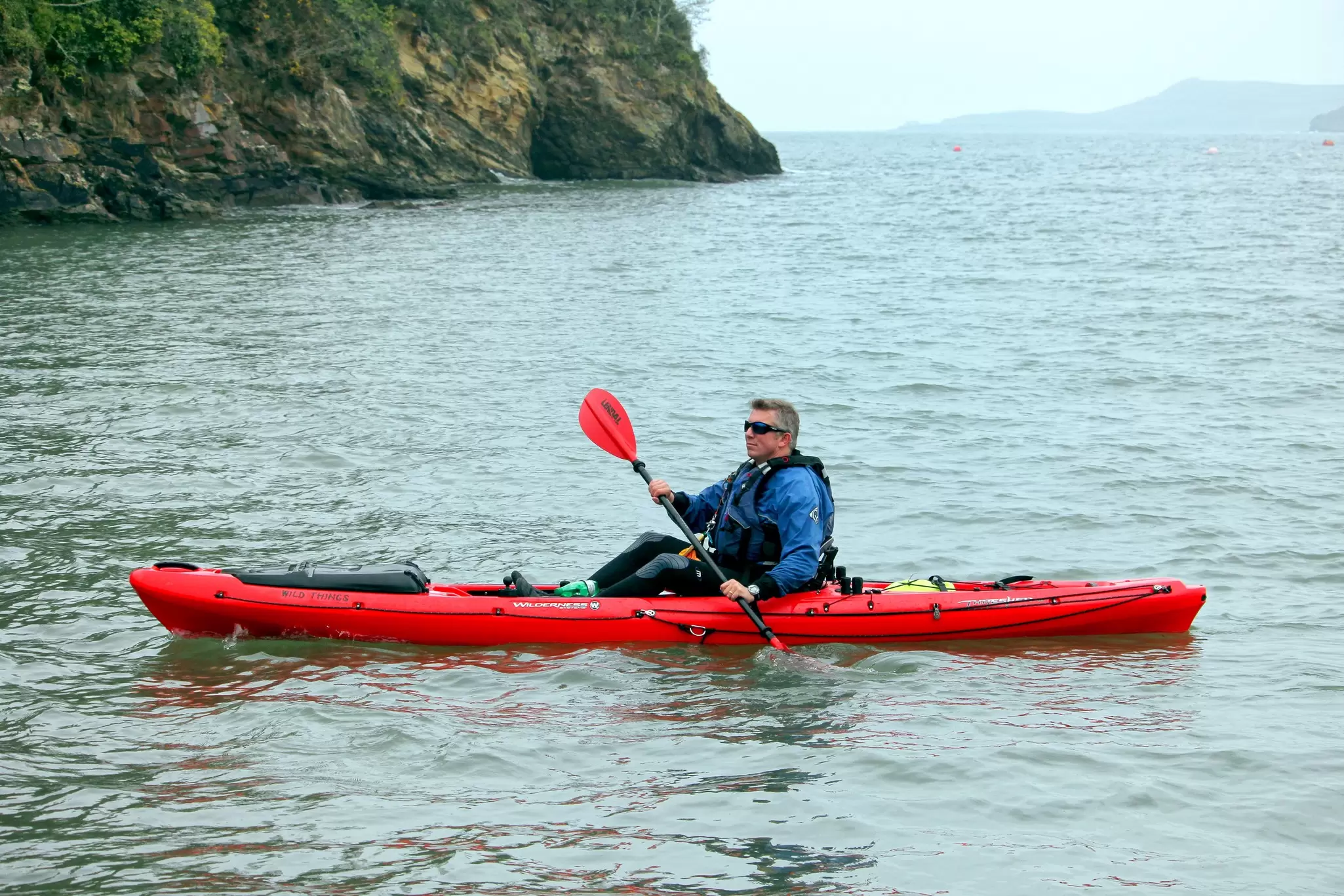
Supremely scenic from the land, Cornwall is spectacular when explored by kayak. See gin-clear seas, towering cliffs, and otherwise inaccessible places on a half-day kayak with one of the beachside kayak hire outfits around the coast. But to really get immersed in the experience, you can sign up for an 8-day sea kayaking trip with Evoke Adventure. Run by international expeditioners, these wild camping and sea kayaking adventures open up new worlds as you glide into sheltered coves, land on pristine beaches and wander footpaths on otherwise uninhabited isles. It's a once-in-a-lifetime experience you'll be talking about for years to come.
Nearest town: St Martin's, Scilly Islands
Cost: £1850
How to book: evokeadventure.com
Cornwall’s wide sea views draw your eyes to the horizon, but there’s much to be gained from zooming in. Stuart Woodman of Cornwall Foraging has you studying the shores, hedges, fields and woods in front of you. Courses take place on the Rame Peninsula – their seaweed foraging courses are held on golden beaches beside the broad sweep of Kingsand Bay. Each course covers local history, science and folklore as well as ethical foraging, species identification and how to cook what you find.
Nearest town: various, including Falmouth and Lostwithiel
Cost: £45 per person
How to book: cornwallforaging.co.uk
The clear light and picturesque scenery of Cornwall have long drawn artists – from the impressionists of the Newlyn School of the 1880s to the abstract artists of the St Ives School in the 1940s. The local creative heritage was a factor in one of Britain’s most prestigious art institutions, the Tate, opening a beachside outpost in St Ives in 1993. Among the wealth of works, hunt out pieces by St Ives resident Alfred Wallis. A retired fisherman, he was entirely self-taught. Working at his kitchen table, he used marine paints on bits of cardboard boxes to capture quintessentially Cornish scenes. His unaffected, instinctive style chimed with artists wanting a fresh approach after the horrors of WWI, and he later became lauded for creating evocative naïve folk art. Hunt out Wallis’ Schooner under the Moon and The Hold House Port Mear Square Island Port Mear Beach – then stroll outside onto Porthmeor Beach itself and look for the similarities between Wallis’ work and the scene today. Note: some galleries will be closed for a period over winter 2026 for renovations.
Nearest town: St Ives
Cost: £5-14
How to book: tate.org.uk/visit/tate-st-ives
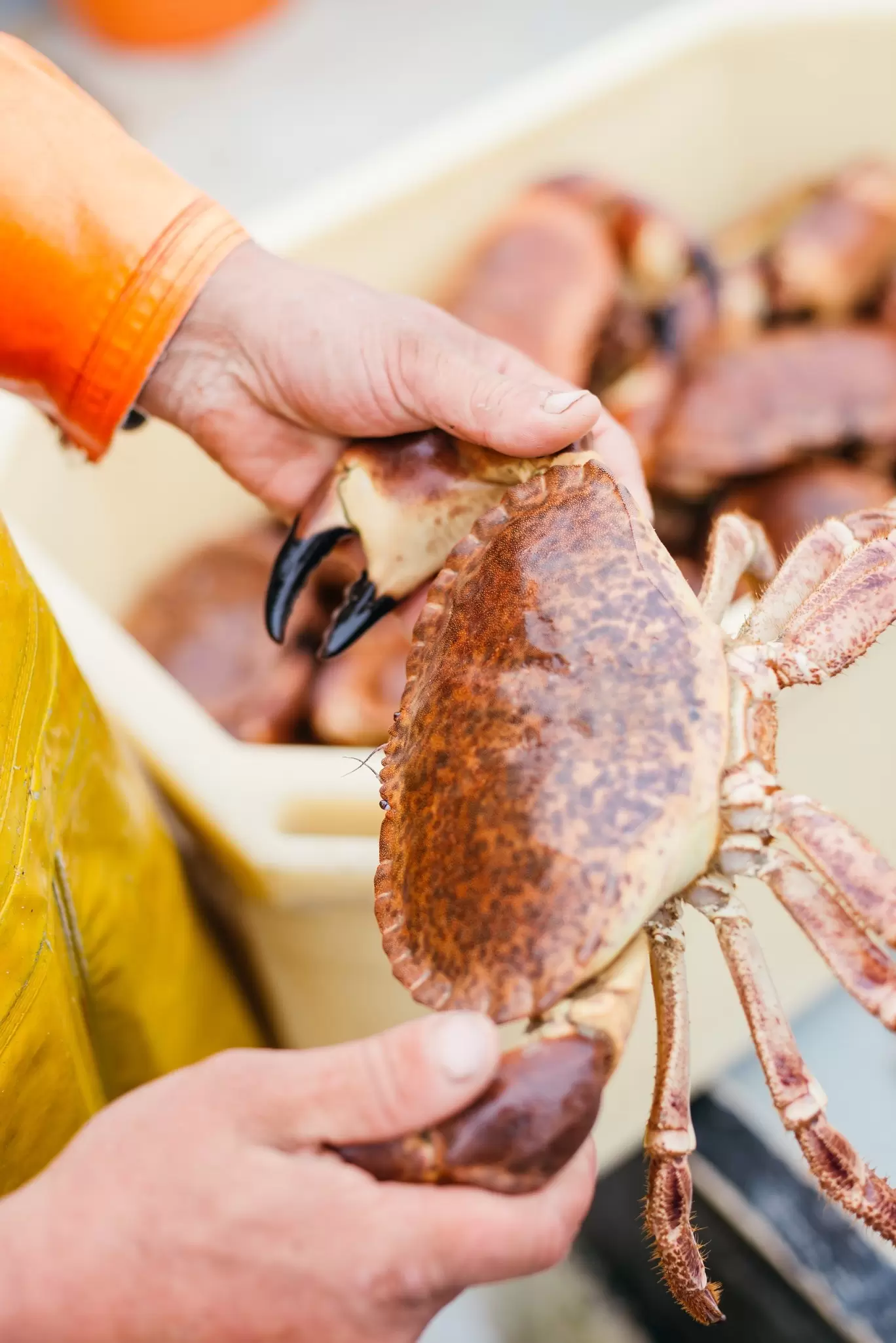
Cornwall may be home to lush scenes on TV screens, but visitors can be surprised to find not everywhere is picture-perfect. Cornwall is one of Britain's more economically deprived regions, due to a decline in traditional industries, lower-than-average wages, high house prices and a seasonal gig economy. If you visit, be sure to support the fishing industry and back a brilliant local chef by enjoying a fantastic meal at the same time. The Tolcarne Inn sits beside the harbor wall in the decidedly gritty port of Newlyn. Here, chef Ben Tunnicliffe has created a superb, unpretentious dining experience in a welcoming, cozy, historic pub. Opt for whatever’s come in on the day boats – it’s sustainable and has been landed just yards away.
Nearest town: Newlyn
Cost: mains £24-40
How to book: favouritetable.com
Cornwall’s shoreline is a string of beautiful beaches and bays, and few things beat exploring them by boat. One of the very best Cornish boat trips is this 20-minute voyage from the busy port of Falmouth across vast Falmouth Harbour to the exclusive yachting haven of St Mawes. Here, cottages cluster around a sandy harbor, and the well-preserved 16th-century St Mawes Castle overlooks the scene. Many trippers explore the village and enjoy a meal or drink in one of the many classy restaurants and pubs. If you can, though, walk north beside the water for just over 2 miles to the less-visited village of St Just-In-Roseland. There you’ll find a sleepy tidal creek and an exquisite 13th-century church – the graveyard here is ablaze with color in summer and spring.
Nearest town: Falmouth to St Mawes
Cost: £15 return
How to book: falriver.co.uk

While Cornwall’s beaches are genuinely gorgeous, they’re as hit by plastic pollution as any others around the world. Cornish environmental charity Surfers Against Sewage began campaigning to clean up seas in 1990, but now cites plastic as the new sewage. As well as backing organized coastal litter picks and inspiring people to stage their own, the charity also has a map of Cornish beach boxes where you can stash any trash you’ve collected. An ideal opportunity to explore Cornwall’s endless beaches and do good deeds for the environment at the same time.
Nearest town: check online for the next place and time, or arrange your own
Cost: free
How to book: sas.org.uk
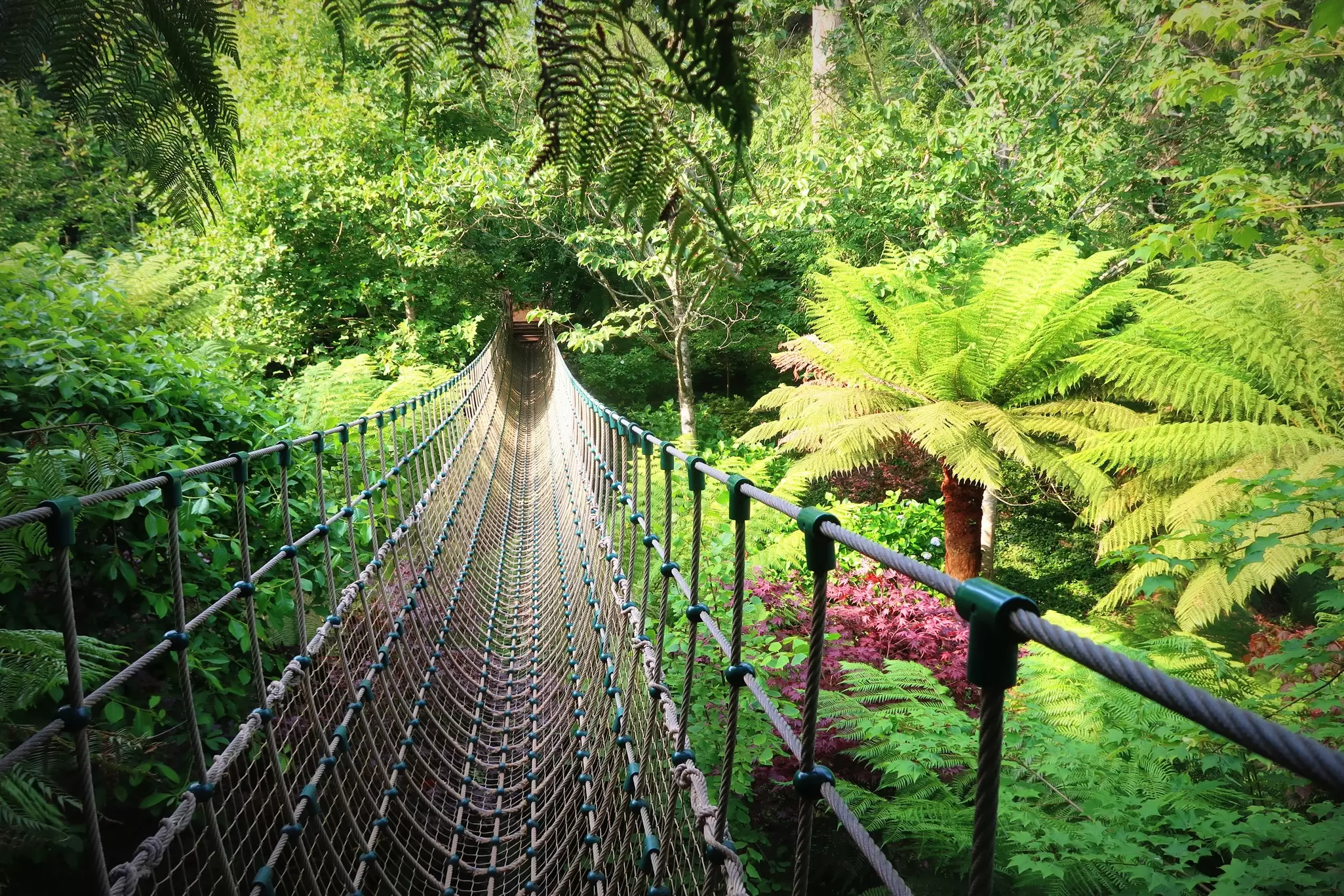
Cornwall’s mild microclimate – an effect of the Gulf Stream as it skirts the coast – means you’ll find a wealth of exotic gardens, particularly along the south coast. But the romantic history of the gardens at Heligan lends them a touch of intrigue that’s hard to beat. Forgotten and overgrown since the outbreak of WWI, the once-glorious gardens of this historic estate were almost lost to time. It wasn’t until 1990 that the chance discovery of a door in the ruins led to the Lost Gardens being found and restored to their former splendor.
Nearest town: St Austell
Cost: adult/child £28.50/10
How to book: heligan.com
Walkers rightly adore the Cornish stretches of the mighty 630-mile South West Coast Path for epic hiking and cracking views. Cycling families love the 18-mile Camel Trail, especially the flat, scenic, 6-mile stretch between Padstow and Wadebridge. But for fewer crowds and a unique insight into Cornwall’s past, head to the Clay Trails. Fanning out from St Austell, this network of 3- to 5- mile walking and cycling paths leads right into the heart of China clay country – an area mined for kaolinite for centuries. Trails snake beside immense clay tips (dubbed the Cornish Alps), working clay pits, drying chimneys, luminous blue lakes and glittering turquoise dams. Wildlife has reclaimed much of the landscape, so your insight into industrial heritage comes complete with buzzards and kestrels, wildflowers and vivid yellow gorse. One of the routes even passes right by the Eden Project.
Nearest town: St Austell
Cost: free
How to book: No need

The Isles of Scilly sit 28 miles west of the end of mainland Cornwall – an exquisite archipelago of five inhabited islands. White-sand beaches, azure seas, a mild microclimate and a slower pace of life make them one of Cornwall’s most appealing places. Fleets of boat trips fan out from the main island, St Mary’s, to the other four inhabited isles. Tresco is the most visited thanks to the subtropical Tresco Abbey Garden. St Martin’s has arguably the best campsite on Scilly. Bryher’s rugged western shore is home to the smart Hell Bay Hotel. Rugged St Agnes has the Turk’s Head, the UK’s most south-westerly pub. Each island is richly rewarding to explore. But the best tip is to arrange to be dropped on uninhabited Sampson by the Isles of Scilly Boatmen’s Association. The twin hills and sweeping beaches of this eerie outcrop were home to a handful of farmers and fishermen until the mid-1800s. Today, you can explore their ruined homes and boat sheds between swims in crystal-clear seas.
Nearest town: ferry from Penzance
Cost: day-trip by ferry £35; fly one-way, sail back around £175
How to book: islesofscilly-travel.co.uk
Book your England trip with Lonely Planet Journeys
See England how it's meant to be seen
Accommodations, activities and ground transportation all taken care of, so you can focus on the fun part. Tell us what your dream trip to England looks like, and our local experts will build it from scratch. Or start with one of our itineraries and make it your own.
Explore related stories