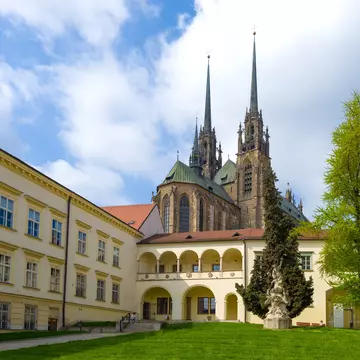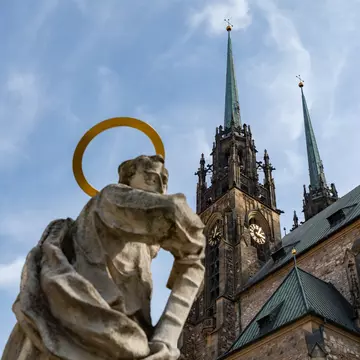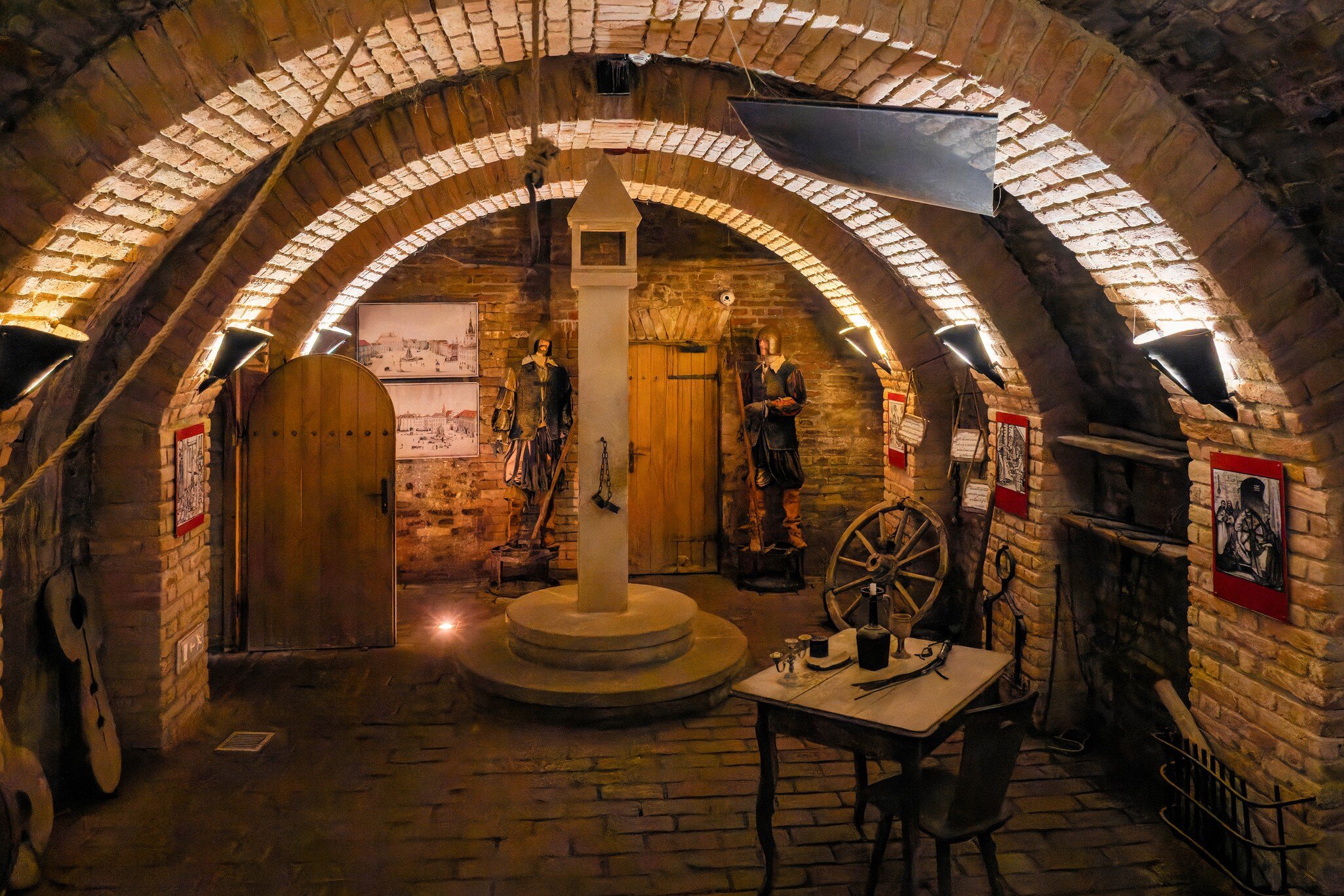
Descend into medieval cellar labyrinths, head down into bone-stacked burial chambers and Capuchin crypts, stand in the historical water tank cathedrals and tour the once-coveted wartime bunker hideouts. Get beneath the surface of squares, streets, and site-topper hills, and you'll find another city entirely. If there’s one thing you do in Brno, go underground.
Subterranean Medieval Maze
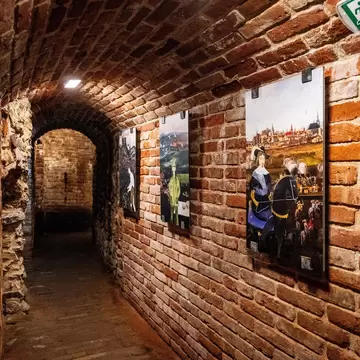
The Vegetable Market has been a firm fixture since the 13th century, but as the settlement expanded, so did the city but beneath the square – unknown until modern reconstruction uncovered a kilometer-long maze of chambers and passageways in a multilevel den from the Middle Ages. Some 8m and 212 steps below ground, tour the cellars of old city merchants and alchemists on a one-hour walk through the Labyrinth under the Vegetable Market (Labyrinth pod Zelným trhem).
The Cellar under the New Town Hall (Sklep pod Novou radnicí) is less of a tunnel exploration and more of an interactive and multimedia exhibit of Brno’s history and legends through the ages, located in the former coin-making Mint Master’s Cellar (Mincmistrovský sklep).
Historic City Cisterns
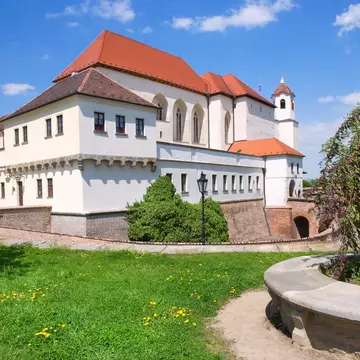
Brno recently opened its pillar-vaulted, cathedral-like Water Tanks (Vodojemy Žlutý kopec) as a showcase of the architectural ingenuity in Brno's 19th-century water supply history. The self-guided tour with a downloadable audio guide takes you through Brno’s three historic structures: the first brick tank from 1874, with its vaulted floors and seemingly infinite chambers, the 1894 brick tank with a simplified arched design, and the 1917 tank, whose vaulted ceiling and 87 concrete pillars create an atmospheric sound-echoing chamber. Śpilberk Castle’s water tank exhibit, on the other hand, is used to present a collection of stone sculptures and engravings.
Czechia’s Colossal Catacombs
It’s a somber walk through the floor-to-ceiling, delicately displayed bone-stacked burial shaft of the Ossuary at the Church of St James (Kostnice u sv Jakuba) – the resting place of 50,000 people who perished in the Thirty Years’ War and the plagues. This vault, the second-largest ossuary in Europe after the Paris Catacombs, was discovered in 2001 during reconstruction of the square, and the bones rearranged in an act of remembrance.
Mummified Capuchin Monks
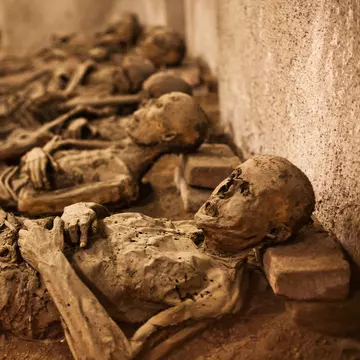
For over 100 years, until 1784, Friars of the Christian Capuchin Order were buried in the Capuchin Crypt (Kapucínská hrobka) below the Church of the Discovery of the Holy Cross on Capuchin Square. It’s a macabre close encounter, but a respectful display of the bodies of the monks given a simple burial here, naturally mummified due to monastery’s ventilation system. Benefactors of the order were also entombed here, many in open caskets.
Brno’s Nuclear Bunkers
A 1959 Communist-era construction turning a former Nazi civil defense shelter into a Cold War nuclear fallout bunker to protect the city’s political elite, 10-Z was luckily never used for its intended purpose. It remained a classified secret until 1993 and only opened to the public in 2016. A self-guided tour through the artifact-packed original operational rooms and living spaces for around 500 people can be eerie, especially if devoid of visitors; tours are only in Czech.
Bunker Denis (Kryt Denis pod Petrovem) is a second nuclear shelter, a 1km track of rock-carved corridors burrowed under Petrov Cathedral hill, with a capacity of up to 2500 people. Currently, limited Sunday-only tours are only in Czech; no English audio or paper guides are available.