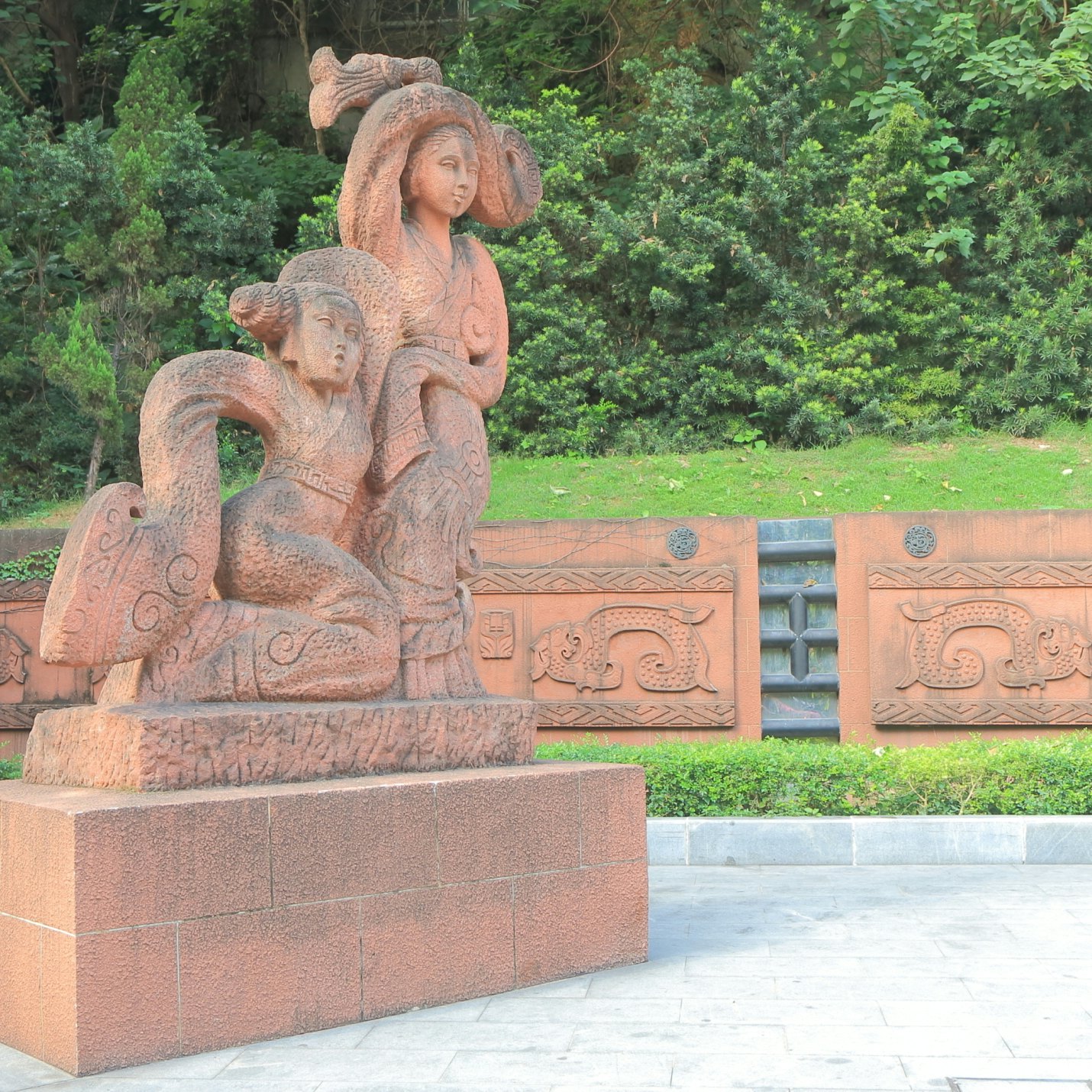
To learn more about Lingnan culture, particularly Lingnan art history, take a few hours to meander through the Chen Clan Ancestral Hall (陈家祠, Chénjiā Cí; 903 Kangwang Beilu, 康王北路903号). The hall is Guangdong’s largest extant Lingnan architectural work and houses the Guangdong Folk Arts Museum. Its many displays provide information on the origins, history and symbolism of the various mediums of Lingnan folk art.
The complex was built in the late 1800s by the residents of 72 villages in Guangdong, where the Chen lineage is predominant. It's a structure of smaller halls, pavilions and rooms – the tops of which hold colorful ceramic roof-tile ridges of birds, fish, dragons and scenes of Chinese legends. The roofs are viewable from the multiple courtyards between chambers.
Within the rooms, find exhibits on stone carving, stucco relief, embroidery, murals, pottery, wood carving, enameled porcelain and many more art practices from Guangdong. Some standout pieces are a unicorn dragon in the exhibit on restoration, an incense powder sculpture (香稿塑, xiānggǎo sù) of Mulan leaving to join the army, and a carved wooden, gold-lacquered ancestral shrine with spirit table seats from the 1940s. At the back of the complex you can see several folk-arts artisans at work and buy some of their creations.
Located in Tianhe, the complex is outside Exit D1 of the Chen Clan Ancestral Hall Station. To buy tickets (adult/child ¥10/free) you will need to bring your passport.