Dec 22, 202513 min read
The 12 Best Things to Do in Delphi, GreeceDec 22, 2025
13 MIN READ

Writer
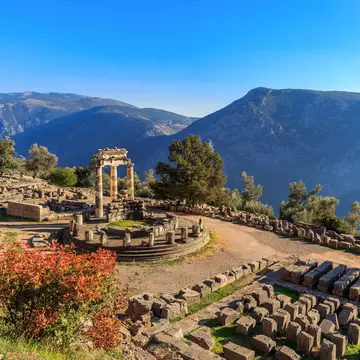
View of Delphi without the crowds in autumn. elgreko/Shutterstock
Writer
Highlights
Lonely Planet's editors share 12 Delphi picks, from sacred ruins to coastal Galaxidi.
Walk the Sacred Way through Ancient Delphi and sip from the Castalian Spring.
Visit the Delphi Archaeological Museum for the Bronze Charioteer and its 'Olympian calm'.
Hikers should tackle Mt Parnassos's ancient path; Galaxidi's port rewards coastal day-trippers.
Lonely Planet may earn a commission from affiliate links on our site. All recommendations and reviews reflect our own independent opinions.
Legend has it that Zeus released two eagles from opposing ends of the Earth to locate its center. They crossed paths above Delphi on the slopes of Mt Parnassos in the south of modern-day central Greece.
In the 8th century BCE, the cult of Apollo was established here. Leaders and commoners alike from the Mediterranean and Asia Minor made the pilgrimage to the oracle of sacred Delphi to consult a mysterious high priestess. Pythia prophesied on everything from matters of the heart to a city-state’s decision to go to war. The sanctuary at Delphi reached its peak between the 6th and 4th centuries BCE, yet its influence was felt right up until Roman times.
Today, this UNESCO World Heritage–listed site is a must-see. As you ascend the archaeological site, look out across the olive grove-carpeted valley and Gulf of Corinth, close your eyes and tap into Delphi’s divine energy. These are the top things to do while you’re here.
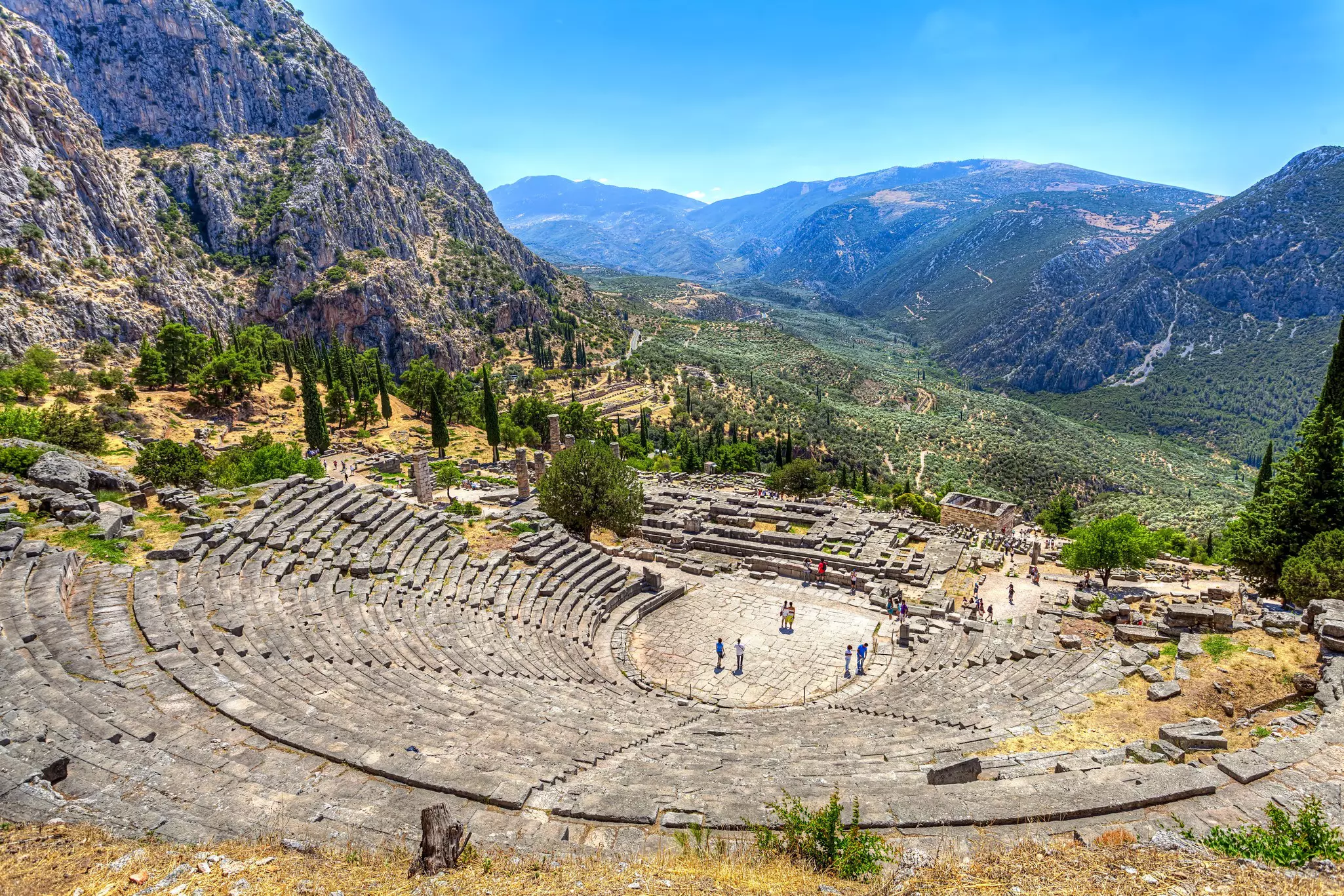
Cicero wrote that the oracle at Delphi would never have been so famous and “so crowded with offerings from peoples and kings of every land” if its prophecies hadn’t been time-tested. Today, Ancient Delphi once again draws tens of thousands of modern-day devotees annually.
It's fun to imagine the site as crowded with tourists from 800 BCE to 400 CE as it is today. Back then, togas were the threads of choice and the Roman Market was jammed with vendors, selling votive candles and offerings to the Gods – as opposed to today's visitors, whose devotions are more typically selfies and social media. Just thinking of the countless feet that have trod the Sacred Way and who they've belonged to, will give all but the dullest minds pause. Don't forget to cast your eyes further and soak up the radiant luminescence of Delphi's soaring backdrop of limestone cliffs, which have dazzled countless generations.
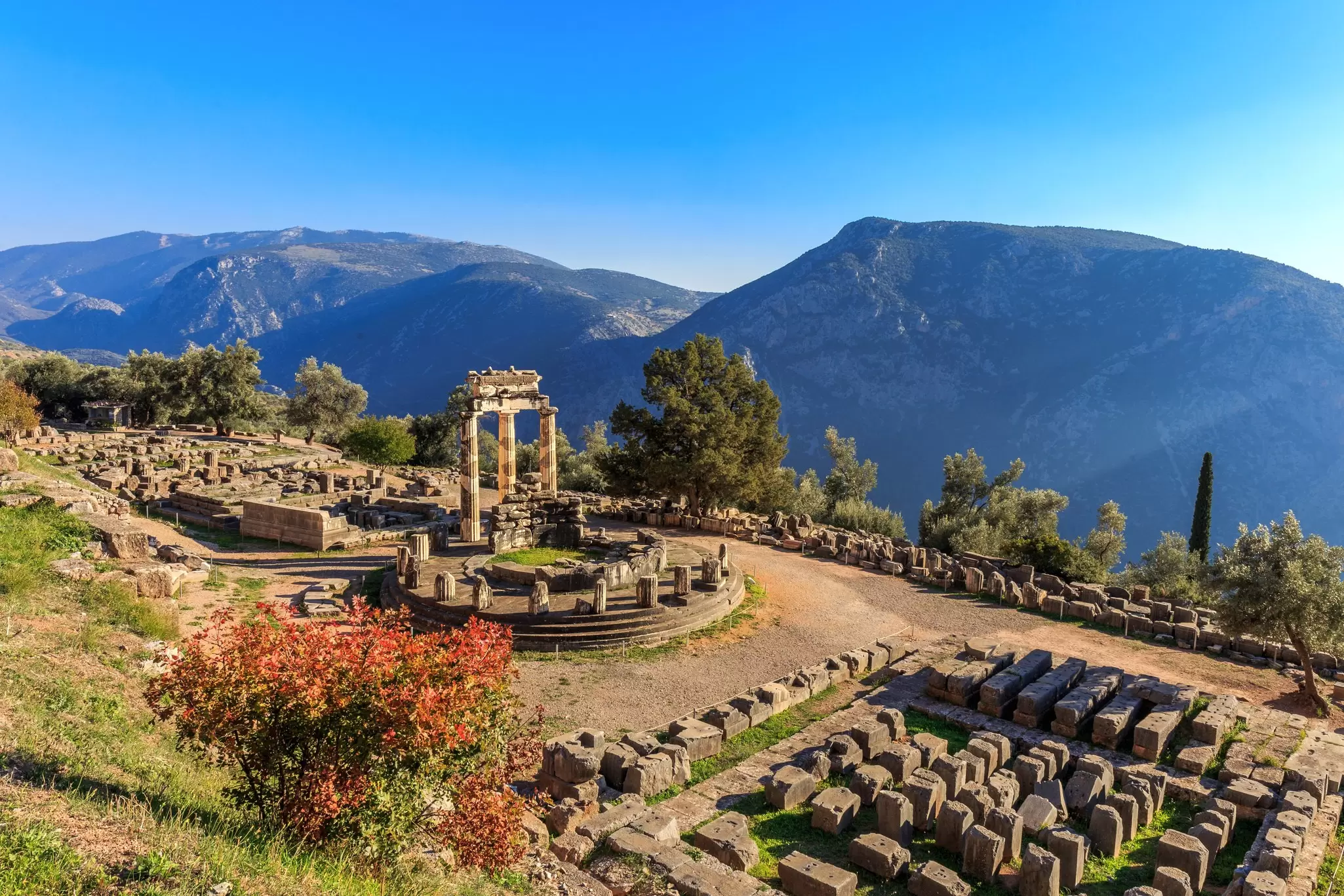
Like the original pilgrims, start your visit at the Sanctuary of Athena Pronaea. Have a coffee at one of the cafes in Delphi, then make the 20-minute walk east past the region's highlights while taking in the sweeping views down to the Gulf of Corinth. The fenced site is always open. Signage provides the minimum information needed to make sense of the remains of roughly a dozen ancient structures.
Wandering amid the carved stones and fragments of columns is an evocative way to get the Delphi vibe. Before long – like Daedalus and the sun – you'll be drawn to the Tholos, the superbly photogenic and graceful circular structure that dates from the 4th century BCE. Three of the 20 columns that stood on its three-stepped podium were re-erected in the 1940s; the white portions are original marble, the darker are new. Some speculate that the site was used for sacrifices.
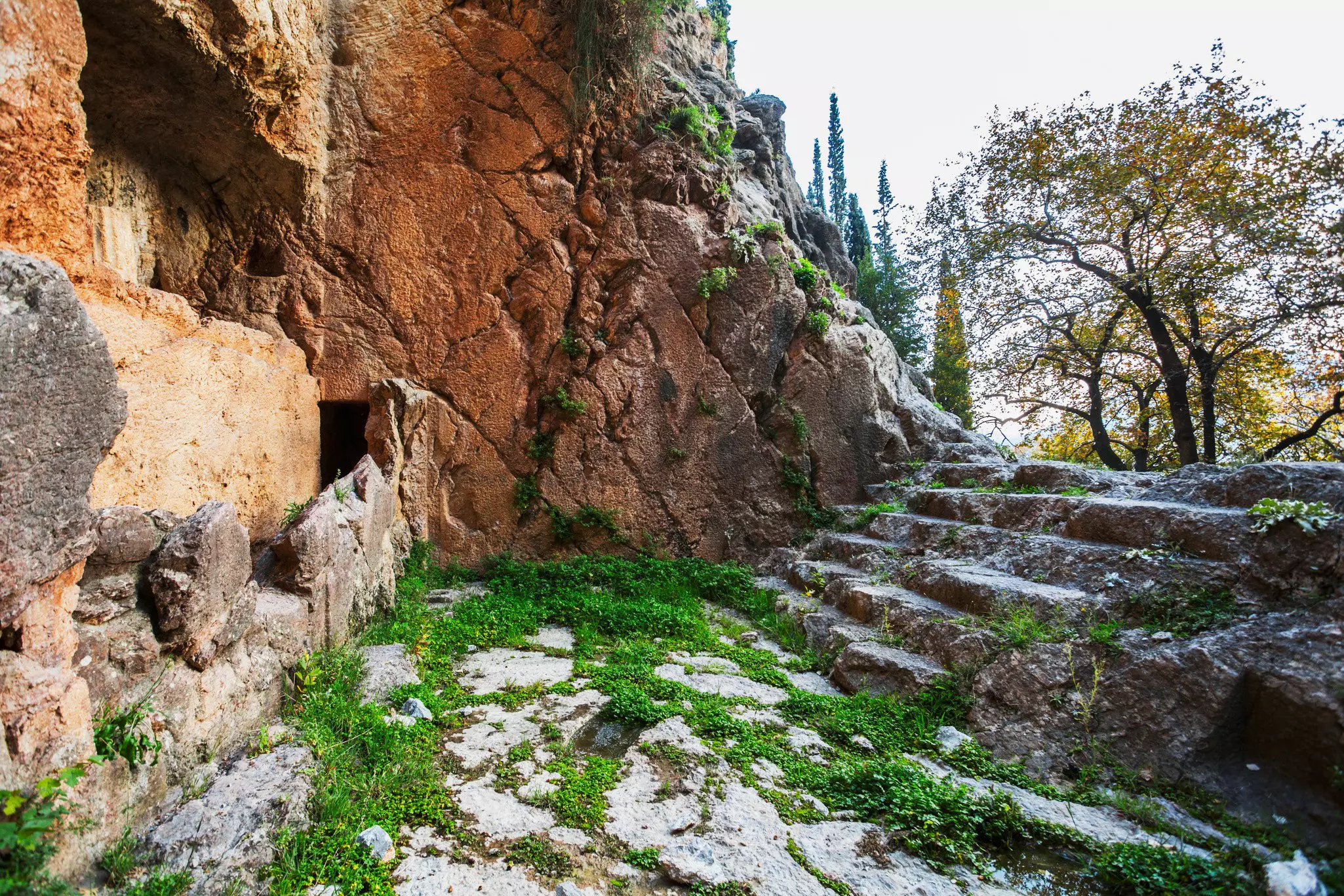
Midway along the peaceful stroll between the Sanctuary of Athena Pronaia and Ancient Delphi, you'll hear the burble of water coming from the eroded bluffs back from the walkway. For aeons, all manner of creatures, from pilgrims to livestock, have paused here for a cooling drink of pure water that issues forth from deep in the sacred hills.
Known as the Castalian Spring, it was a sacred source for Delphi. Priests and believers would purify themselves in the small pools in the rocky crags. Today you can still sip at a small fountain that has its origins in the 6th century BCE. Various niches in the limestone cliffs hold shrines. It's a cool, peaceful and usually uncrowded place.
Planning tip: Current geologic vagaries will determine how much of the various trails will be open for exploration when you visit.
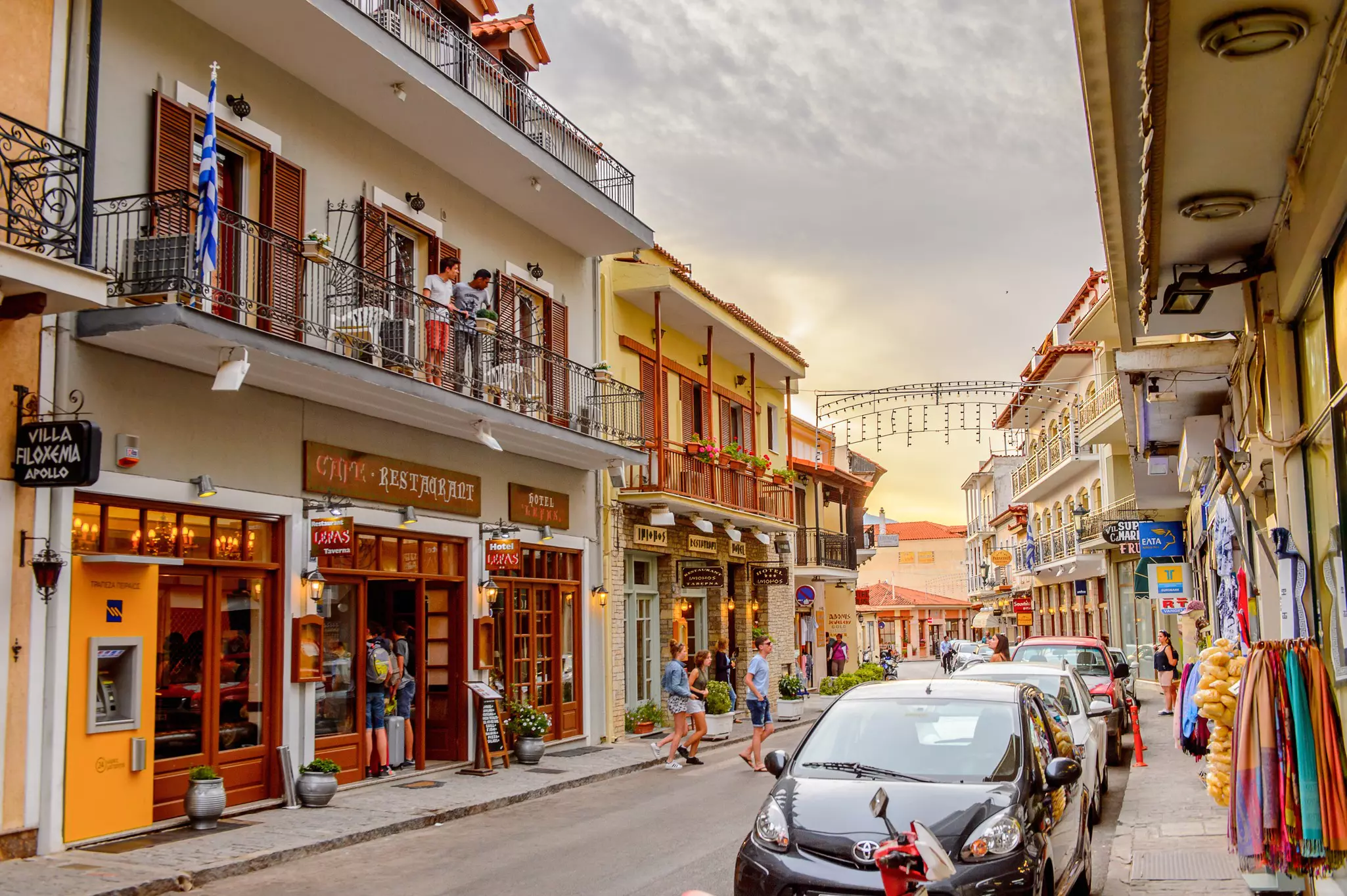
One of the best parts of life in Greece is absorbing the culture at a friendly cafe or bar. At one of Delphi’s oldest cafes, Café Apollon, you can enjoy thick Greek yogurt and homemade baklava with sweeping views down to the gulf.
Choose between pies, cheesecake and other goodies – all baked in-house – at Melopolio Cafe, which morphs from serving daytime coffees to nighttime wine and cocktails (until midnight).
You can soak in grand views on a glass-fronted, open-air terrace at Phileo Cafe Bar while sipping coffee, or cocktails crafted with Greek spirits, liqueurs and herbs in the evening. Talented mixologists also pull off unexpected drink combinations with color and flair in the tiny fun-loving Mr Rose Cocktail Bar – and it’s open until the wee hours (4am).
Planning tip: April, May, September and October are the best months of the year to visit. You won't get blasted by the sun yet everything is open and it's less crowded with visitors.
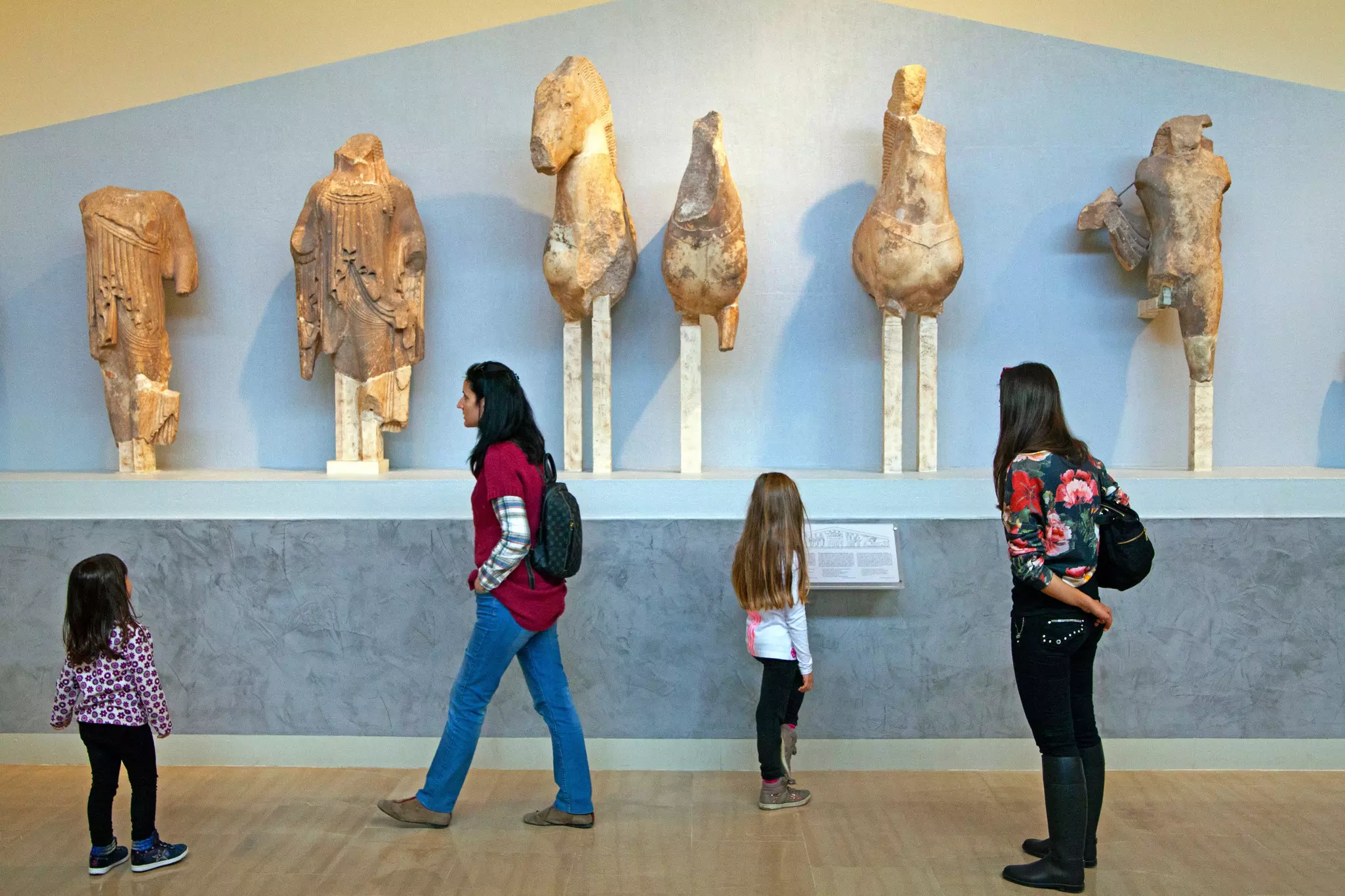
Save the unmissable Delphi Archaeological Museum for the afternoon, particularly in the summer when the outdoor sites swelter in the midday sun. It’s possible to have a deeply rewarding visit in under 2 hours and you'll come away with a clearer picture of how lavish Ancient Delphi must have been and the wealth it attracted.
The collection starts with some impressive bronze works in Rooms 1 and 2. One of the most noteworthy treasures is a bronze figurine believed to depict Apollo, complete with layered hairstyle, fashioned in the Daedalic sculptural style of the 7th century BCE. Named after founder Daedalus, this style was the forerunner of stone-carved kouros statues found in Room 3. Two were uncovered in 1893–94 close to the Athenian Treasury. The idealized muscular forms, dating to the early 6th century BCE, are thought to be those of brothers Kleobis and Biton and feature characteristic braided hair.
Equally striking is the 2.9m-tall Sphinx of the Naxians (560 BCE), which sports the face of a woman, the body of a lion and the wings of a bird. Made of white marble from Naxos, it towers over Room 5 and was a gift from the people of Naxos. It served as an imposing guardian at the Sanctuary of Apollo entrance.
The single-level museum's crown jewel awaits you in Room 13: the life-size Bronze Charioteer (478–474 BCE), a masterpiece commemorating a Pythian Games chariot victory. You won’t be able to take your eyes off his, which are composed of semiprecious stone and glass. His expression has been described as “Olympian calm”.
Planning tip: Get more information on selected exhibits in 3D via the Digital Delphi phone app or the comprehensive Delphi Monuments and Museum by Photios M Petsas.
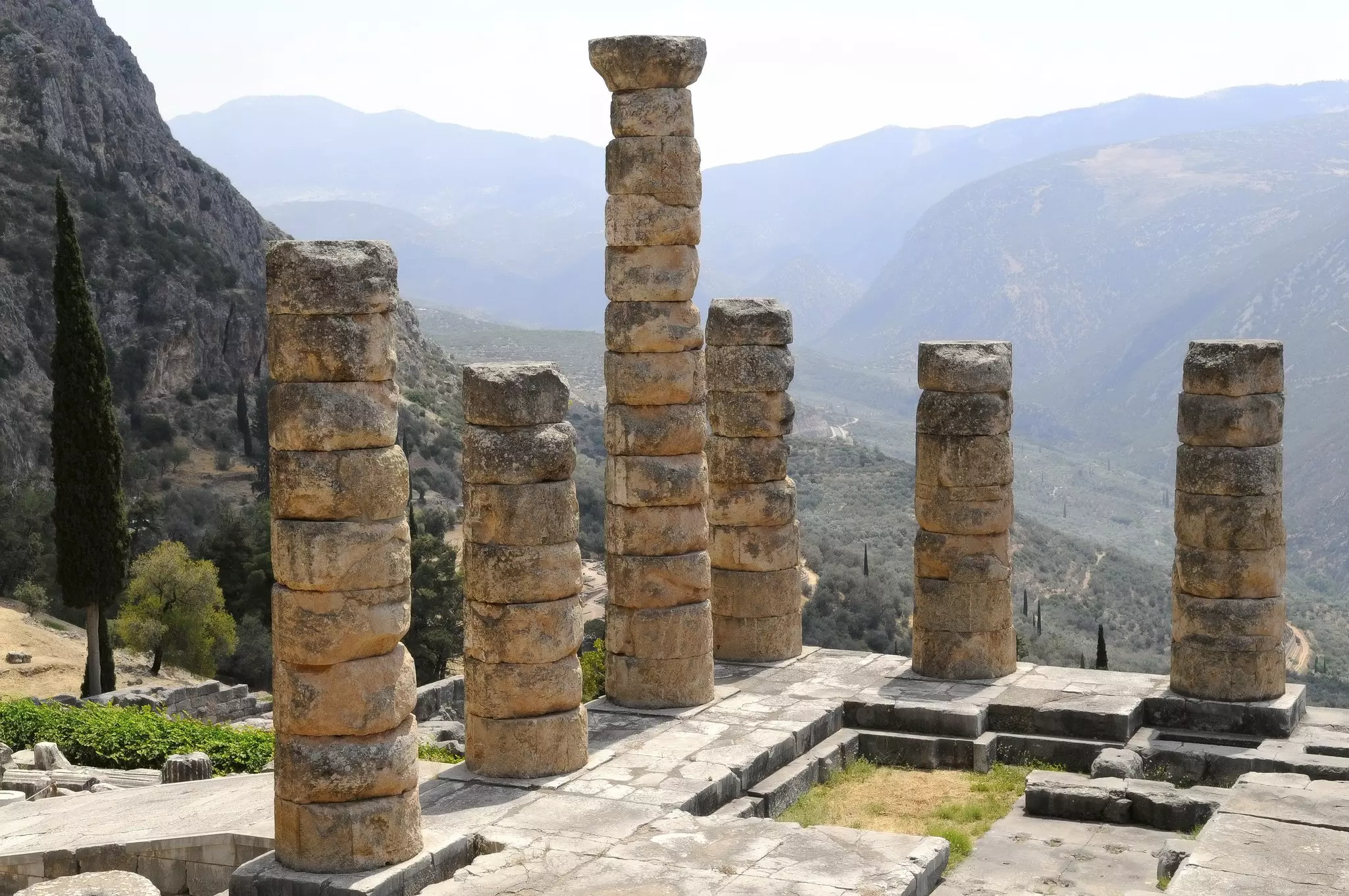
One way to bring these ancient ruins to life is on a guided tour. Proud of her Delphic roots, Penny Kolomvotso relays her vast knowledge about the site with enthusiasm. Email her on kpagona@hotmail.com to find out more.
A trained archaeologist, George Malissos has a deep understanding of Classical Greece and Delphi’s role during that era. He also highlights museum exhibits you’d otherwise miss.
Georgia Hasioti is another energetic and enthusiastic guide for Delphi and the surrounding region (and she knows secret shady spots for longer talks).
Finally, one for the kids: you can arrange Delphi tours with the Athens-based Greek Mythology Tours – perfect for fans of Rick Riordan’s Percy Jackson and the Olympians books and TV series.
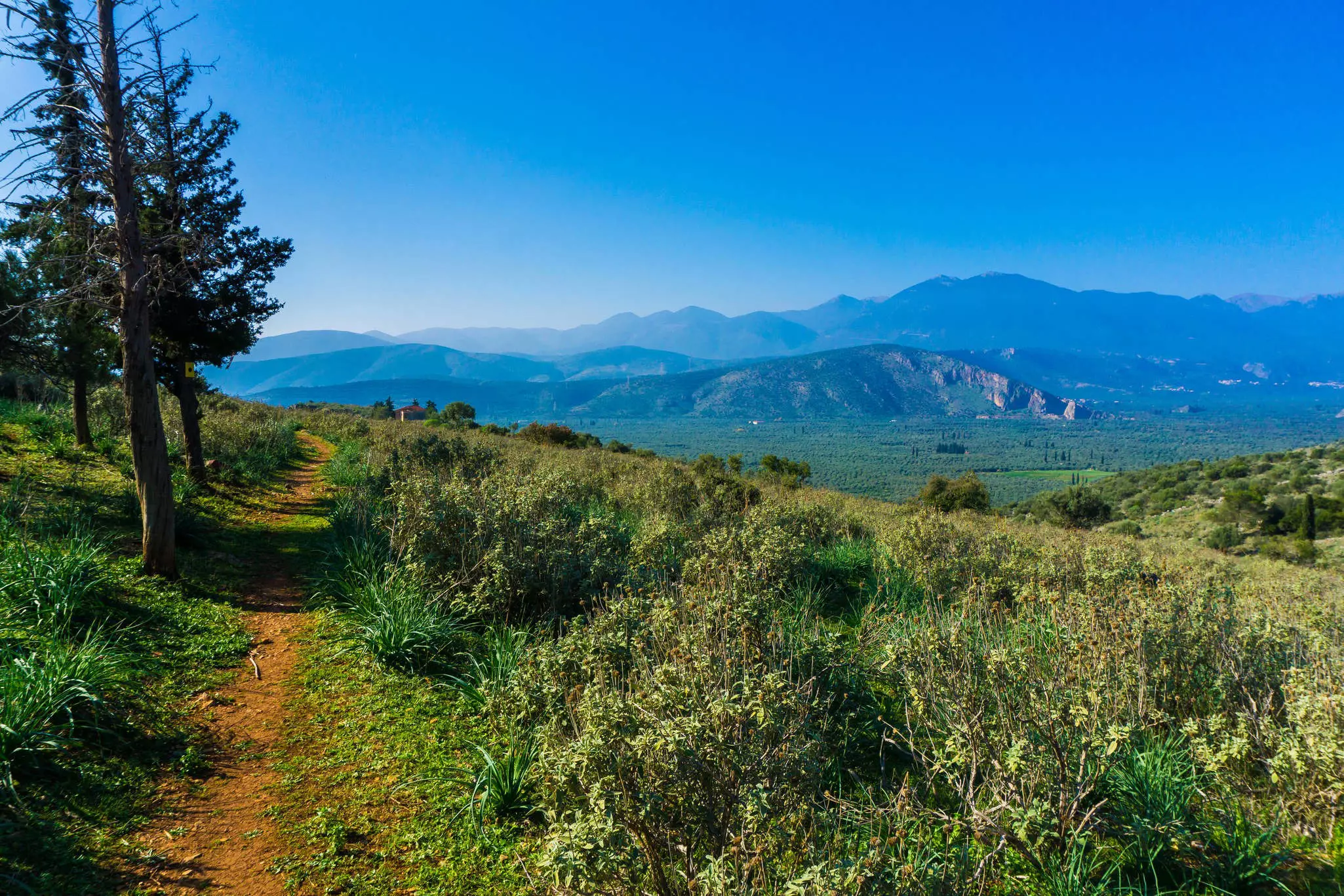
To get a sense of what a visit to Delphi was like for pilgrims, rich and poor, put yourself in their shoes. Trekking Hellas offers a 4½-hour, 8km guided hike along the ancient footpath. Departing from the alpine plateau of Livadi at an altitude of 1200m, you’ll trek the southern slopes of Mt Parnassos, passing through varying landscapes as you go from alpine beauty to a classic Med landscape in surprisingly short order.
The route, which forms part of the European E4 trail, twists through a conifer forest, tracing a riverbed rich in bauxite and limestone. Leaning tree trunks give way to a wide-open grassy meadow, where an endemic white crocus flower thrives.
Further along, you’ll take a break at a rocky spot amid low Mediterranean scrub with views of the town of Itea and its bay below. This is where the archaic cobblestoned path begins, zigzagging down the mountainside and delivering evermore spectacular views.
As you descend toward Delphi, take in the splendor of the ruins from above, ancient olive groves that reach to the sea and Mt Kirra opposite. If you’ve got energy to spare, you can tour the Ancient Delphi archaeological site the same day, or relax in town and tour the site the next day.
Planning tip: The tour is suited to those in decent physical condition and is available April to November. In spring, the surrounding hills are abloom with wildflowers.
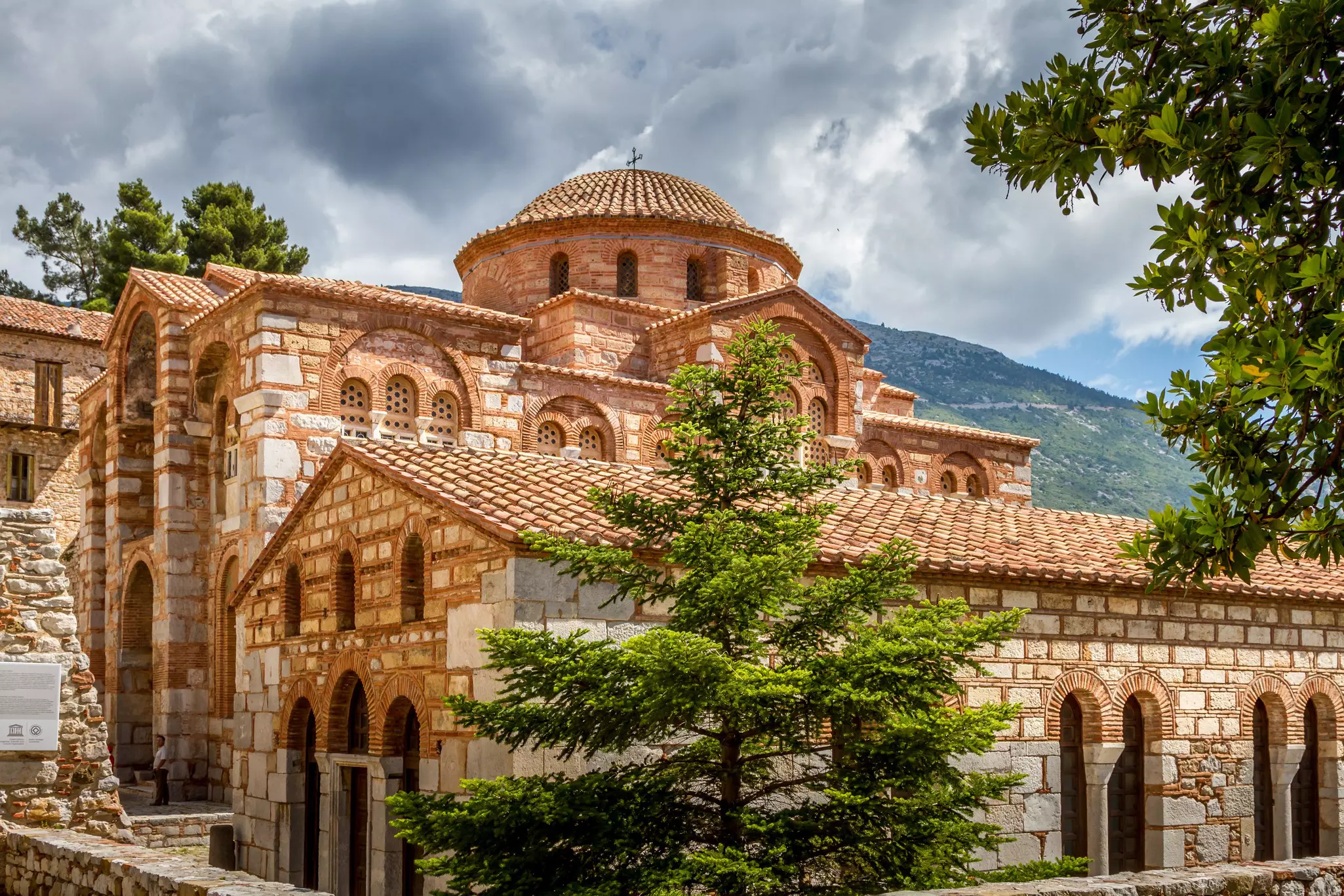
The walled monastery of Moni Osios Loukas, a World Heritage Site, overlooks a remote valley. Its principal church, Agios Loukas, is a glorious symphony of marble and mosaics, with icons by Michael Damaskinos, the 16th-century Cretan painter. These are some of Greece’s most revered Byzantine frescoes.
Dedicated to a 10th-century hermit canonized for his healing and prophetic powers, the entire complex is a fascinating cacophony of stonework that is a marvel of manual labor. Opaque marble screens create striking contrasts of light and shade; even more fine frescoes adorn the crypt where Loukas lies entombed. Save time for the smaller 10th-century Agia Panagia (Church of the Virgin Mary).
The monks’ former living quarters hold historical displays, while a shop adjoining the spacious scenic terrace outside sells simple snacks. In recognizing the site, UNESCO singles out the many local crafts and foodstuffs offered for sale. All are produced with centuries-old techniques.
Planning tip: The complex is a pretty detour off the main road to Delphi, 23km southeast of Arahova, between the villages of Distomo and Kyriaki.
Sassy bars, chichi all-day restaurants, down-home tavernas, and boutiques line the main drag of nearby Arahova – a popular holiday town for Greeks, especially during ski season. Scale the landmark clocktower and visit the Folklore Museum, which not only features traditional handcrafted textiles but encourages a newfound interest among local youth in loom-weaving. Nearby, a 264-step staircase takes you to the Church of Agios Georgios (1676); its courtyard offers views across the Kirfi mountain range. While in town, avail yourself of local culinary specialities, such as the lathouri (grass pea) and opsimotiri cheese.
Planning tip: With roots in Homeric times, Panigiraki is a rousing 4-day celebration that kicks off on April 23 (or after Greek Orthodox Easter Tuesday if it falls during Lent). Inhabitants in folk costume participate in a solemn icon-bearing procession, followed by traditional dancing in the streets to drum and flute music; sporting events, such as rock-throwing and tug-of-wars; and (free!) feasting on spit-roasted lamb and wine.
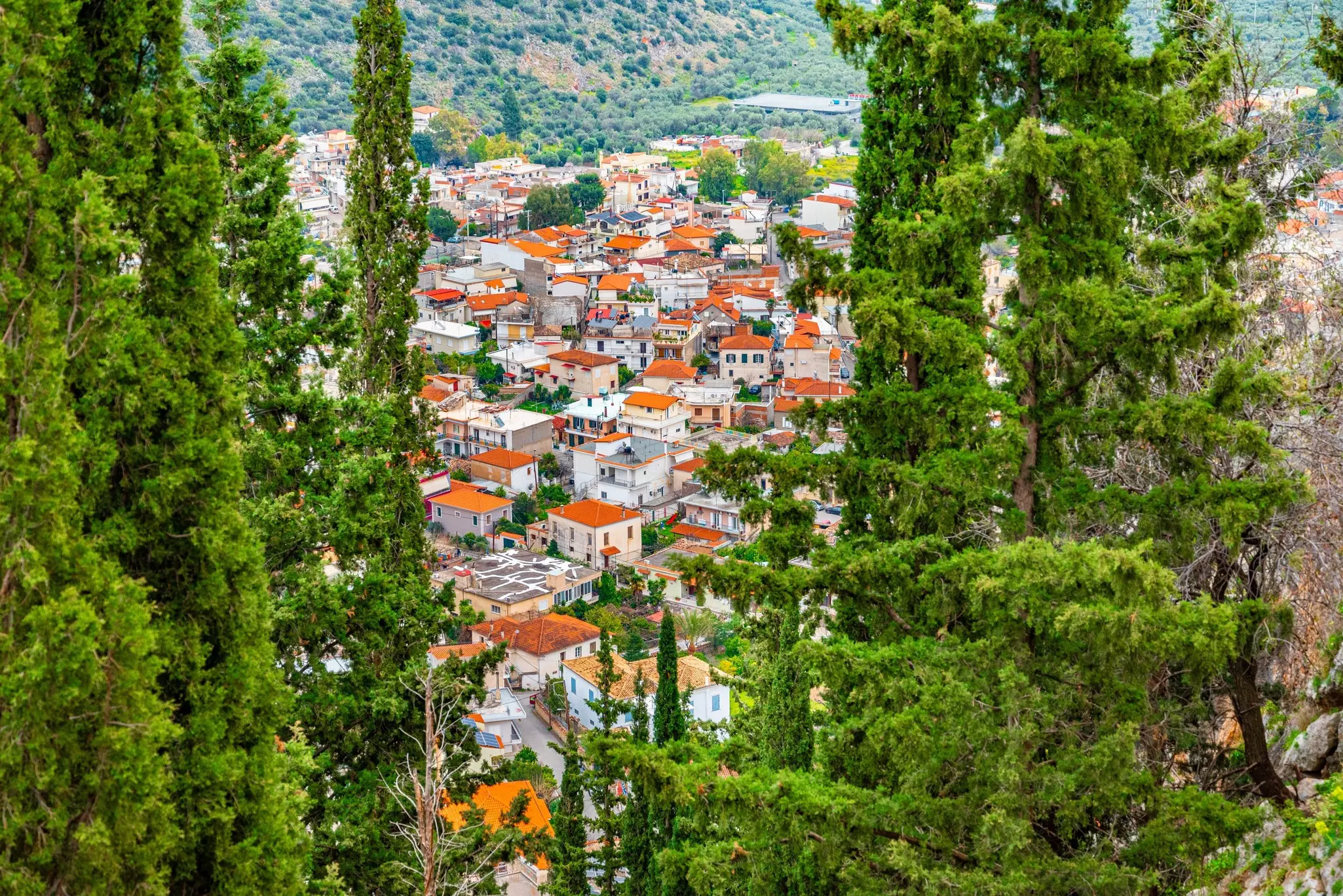
Defining the road less traveled, the tidy hillside town of Amfissa is a sleepy but charming place that lies off the usual tourist path. It’s seen a lot of history since Delphi has been the major draw for travelers.
Set in wooded grounds atop a hill just northwest of the town center, Amfissa’s ruined 13th-century castle retains over 600m of its original fortified wall. It was a stronghold for a parade of invaders including the Romans, Catalans, Franks and Turks. All have left their mark, as shown in the melange of architectural elements that survive today.
Get down to detail in the Archaeological Museum of Amfissa, which holds a wonderful assortment of local finds, dating from the Bronze Age to the early Byzantine period, including a superb Corinthian helmet from around 500 BCE.
The former home of Dimitrios Panourgias, a hero of the 19th-century struggle for Greek independence, houses the free Museum of Greek Revolution. Discover a blow-by-blow account of the local battles during the 1821 revolution. East of town, the 19th-century convent of Moni Profiti Ilia rests on a hillside with superb views across the olive groves to the Gulf of Corinth.
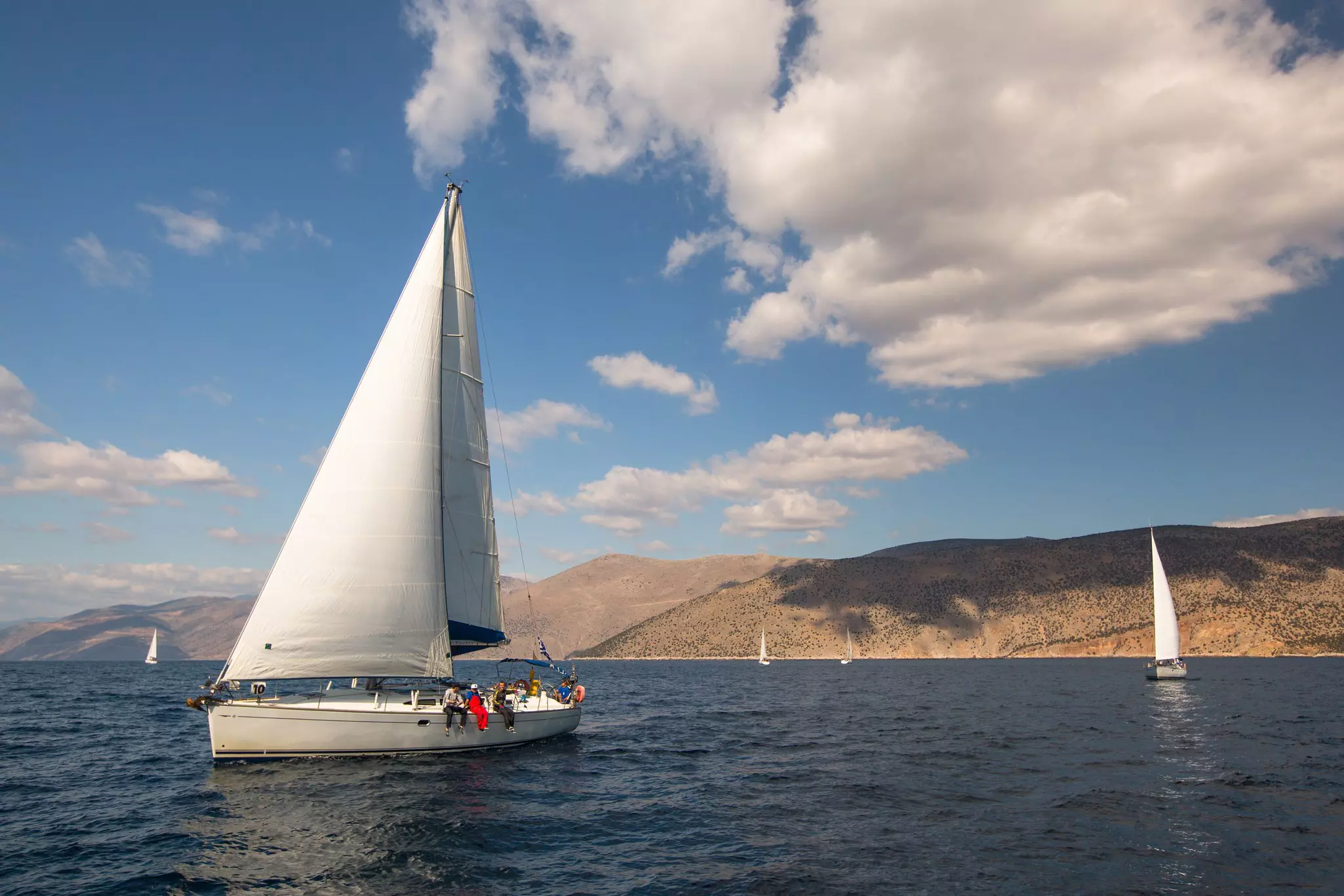
Driving the north coast of the Gulf of Corinth west from Delphi to Messolongi can take a couple of hours or longer – depending on how and where you stop. It's a beautiful drive, with the shimmering blue waters rarely out of sight and just enough beaches and interesting stops.
The overall route is about 130km from Kirra at the base of the road down to the coast from Delphi. Stick to the easy driving of the E65. Use the towns of Galaxidi and Nafpaktos as waypoints. You can also watch for cruise ships and cargo ships taking the shortcut to/from the Aegean Sea.
Detour: If you have no restrictions on your time, consider diverting south over the Rio–Antirrio bridge and on to the Peloponnese.
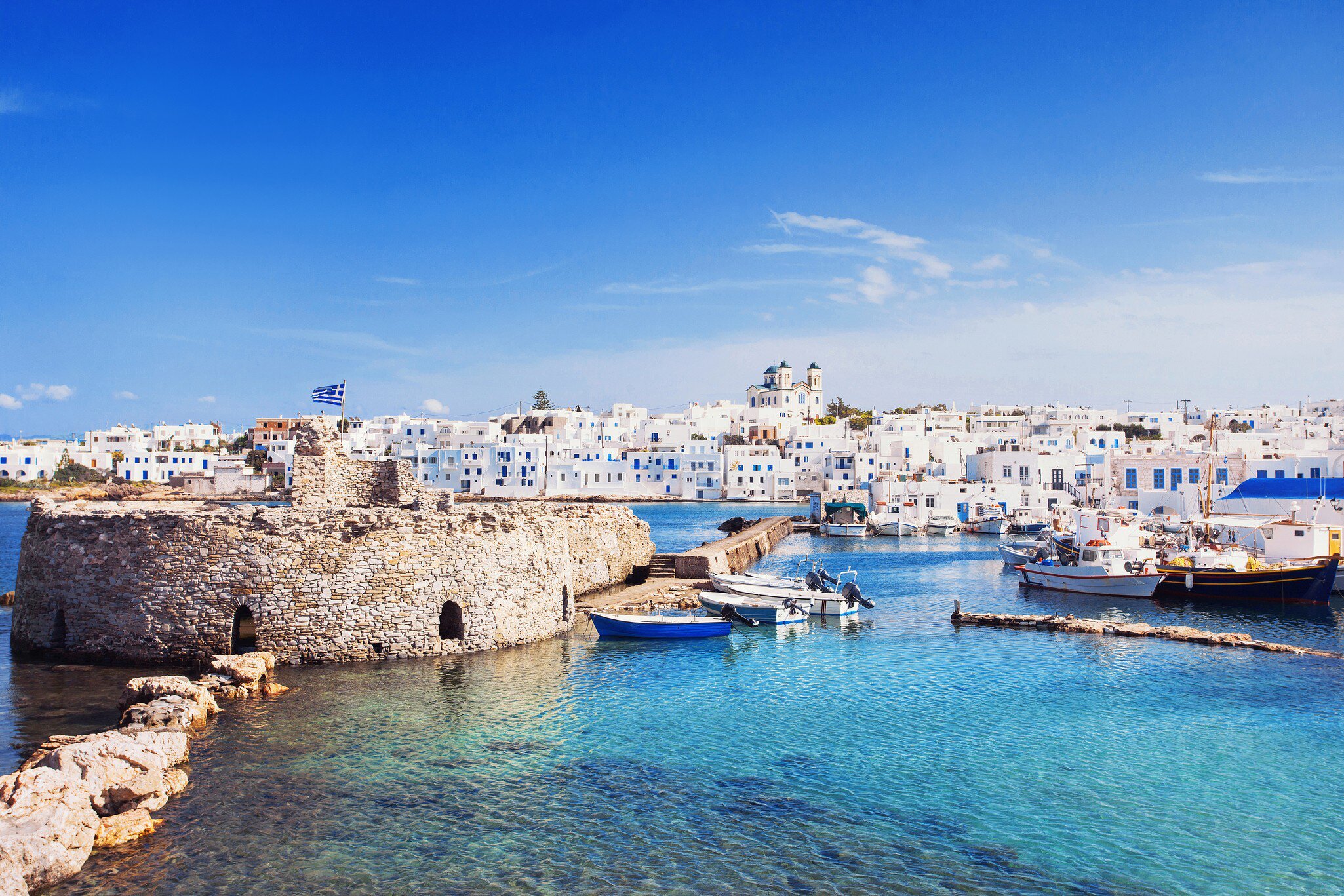
A glittering distant seaside vision when viewed from Delphi, Galaxidi feels more like a small island than a mainland coastal village. Restored neoclassical sea captains' mansions huddle on a hillside, alongside church domes. Stroll the promenade that wraps around the port, leading to a pine and eucalyptus forest and pebbled beaches. Pause at the tiny harbor, where you’ll see traditional fishing caiques and yachts, then cool off with a swim at pebbled Kentri beach.
Next make a beeline for the captivating Maritime Museum of Galaxidi. Here you’ll learn more about this small but important heritage-listed town’s role in Greece’s seafaring and shipbuilding history through the 18th and 19th centuries, and the 1821 revolution. Exhibits include ship logbooks, maps, portraits of 19th-century ships and wooden figureheads.
Close by, the Church of Agios Nikolaos is dedicated to the patron saint of mariners, featuring a finely detailed iconostasis. Finally follow narrow alleyways northwest to the Hirolakka district, the eerily named “widows’ abyss”, with its somber air echoing the anguish endured for those who never returned from sea.
The coast and lagoons around Messolongi are one of the Mediterranean’s most important bird habitats. From October to March is a great time for bird-watching with nearly 300 species spotted locally. Among these are the greater flamingo – these pink-hued birds are easily spotted from coastal roads. Look up for greater spotted eagles; the adults are dark brown with broad wings and short tails.
The Dalmatian pelican is not to be confused with the great white pelican, this big bird is dirty white. Look out for the pied avocet, its black-and-white plumage and a slender upturned bill make this lagoon wader easy to spot. And the Eurasian curlew, also found here, can be identified by its large brown-flecked body and long, thin bill.
This article was adapted from Lonely Planet’s Greeceguidebook, published in May 2025.
Book your Greece trip with Lonely Planet Journeys
See Greece how it's meant to be seen
Accommodations, activities and ground transportation all taken care of, so you can focus on the fun part. Tell us what your dream trip to Greece looks like, and our local experts will build it from scratch. Or start with one of our itineraries and make it your own.

Explore related stories