Jul 21, 20264 min read
Cannabis in Thailand: What Travelers Need to KnowFeb 13, 2026
6 MIN READ

Writer
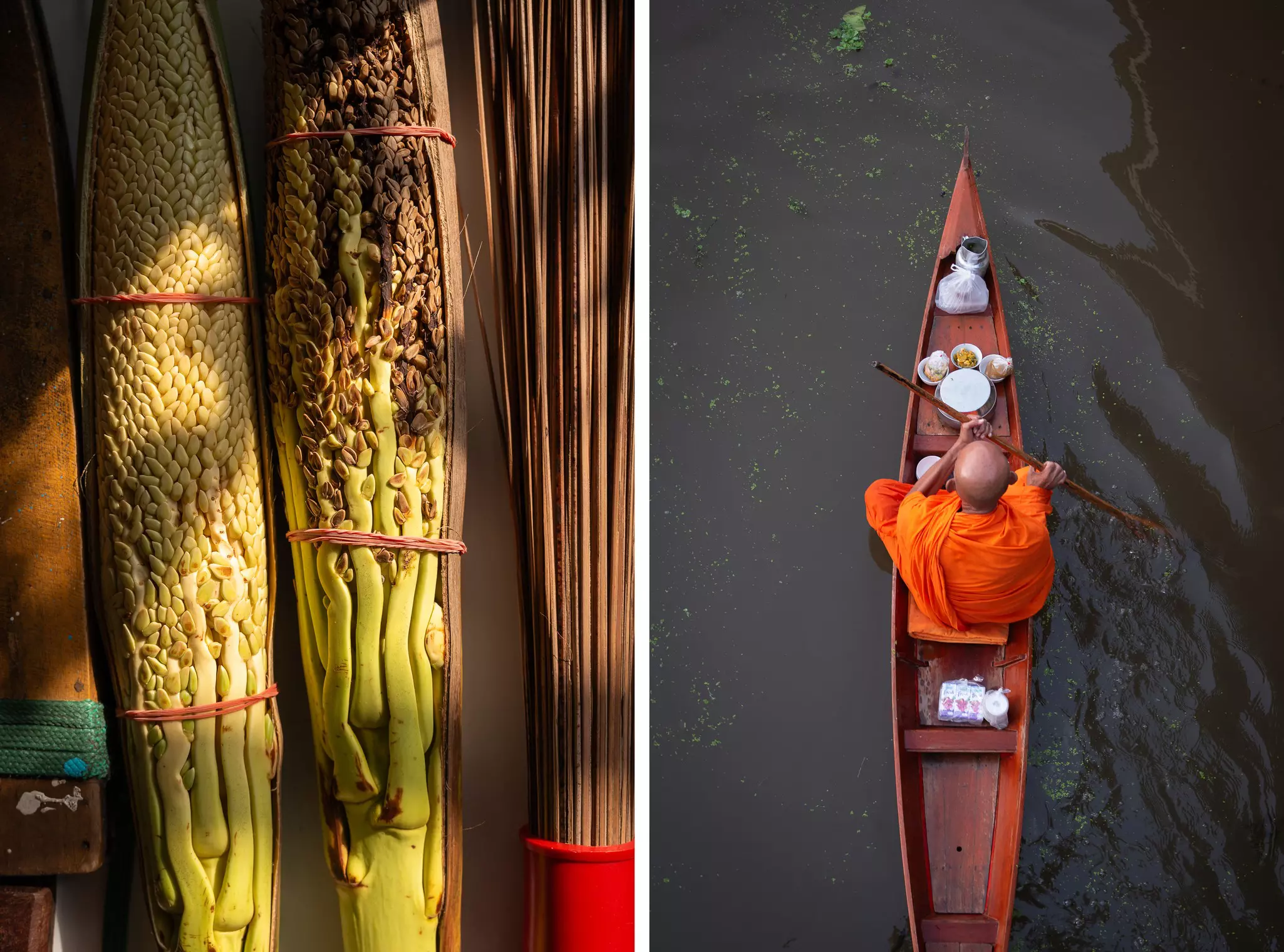
A resident of Tha Kha rows her boat past Tha Kha Floating Market early in the morning. Athikhom Saengchai for Lonely Planet

Writer
Lonely Planet may earn a commission from affiliate links on our site. All recommendations and reviews reflect our own independent opinions.
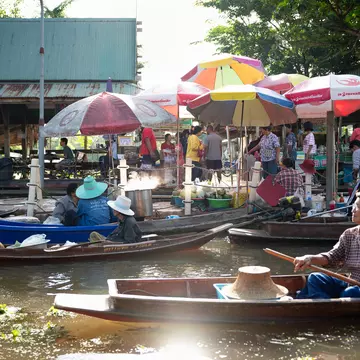
The traditional floating market of Tha Kha draws buyers and sellers from all over the province of Samut Songkhram, Thailand, southwest of Bangkok. For over 100 years, the market – tha means pier, kha means stuck – has been a scene of vibrant bustle, a hub for traders selling mostly agricultural goods and items made within the community.
Bangkok-based photographer Athikhom Saengchai traveled to the Tha Kha market to photograph the mostly female vendors who sell goods on the water. He also captured other locals who cook food and make traditional products like baskets handwoven from coconut palm; coconut sugar; and miang kham, traditional one-bite snacks wrapped in leaves.
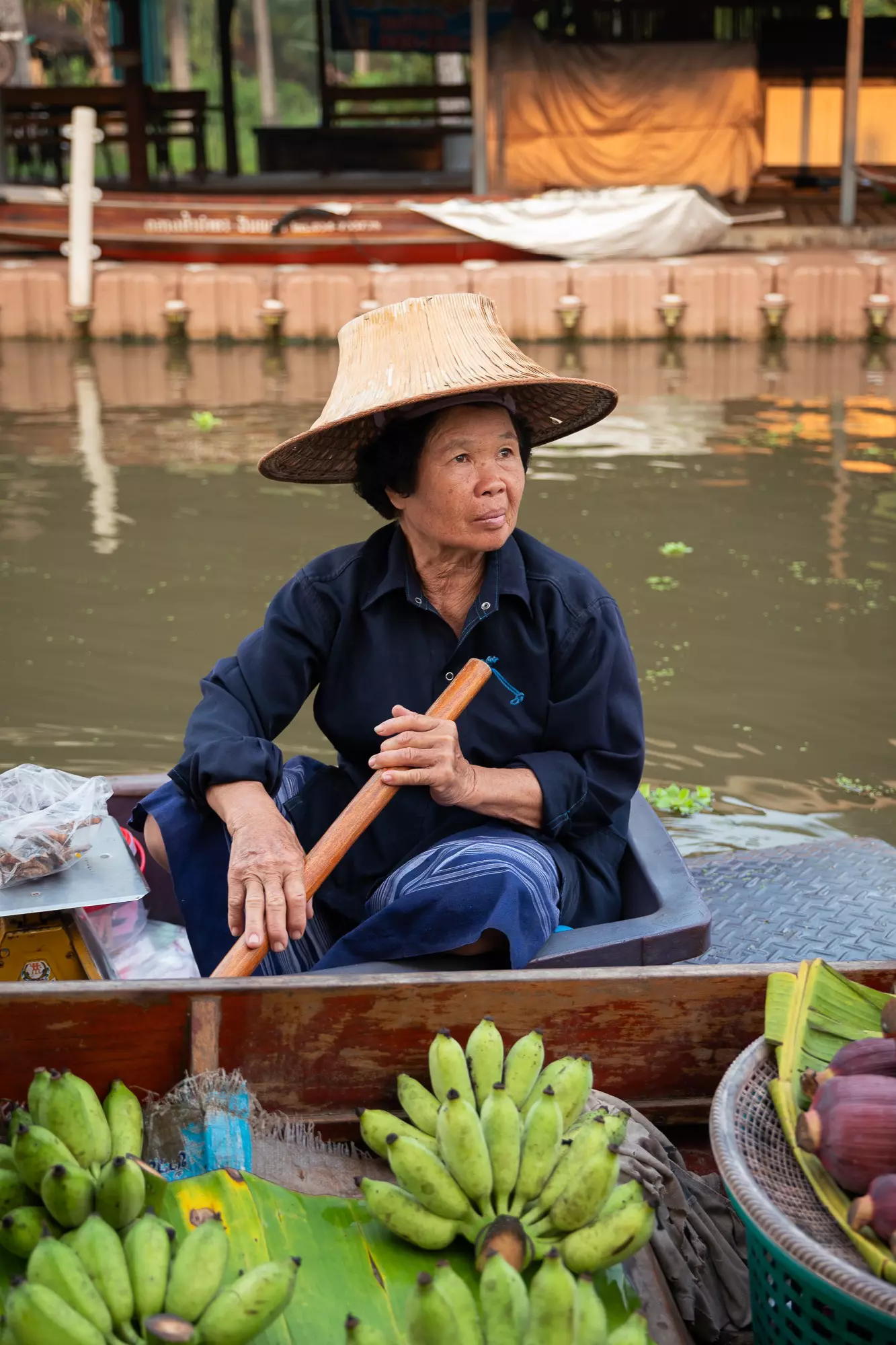
Vipharat Rattanaphitak has been weaving coconut palms for over 30 years – a skill passed down from her mother. Originally, they mostly made wide-mouthed baskets, but have adapted to the times by making hats and cone-shaped covers used for keeping flies off of food.
Vipharat Rattanaphitakuses fronds from the coconut palm. She must wait until a tree is cut down to collect the fronds – for they cannot be dried beforehand. Rather, they have to be woven as they are harvested; otherwise, the fronds become too stiff to work with.
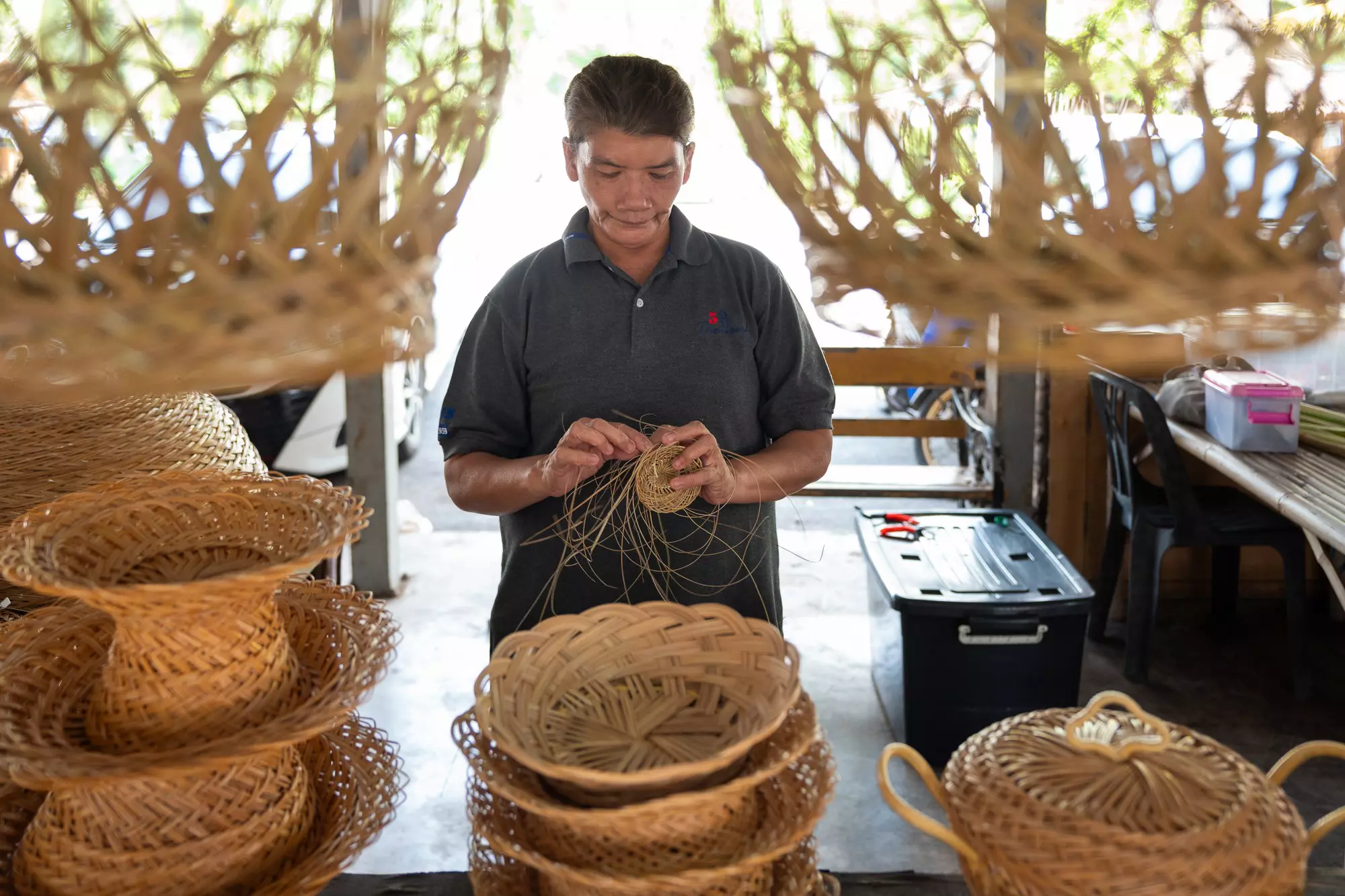
Once the weaving is complete, a coating of oil is applied to protect against mold and increase durability. Each product is handmade, requiring significant time and skill.
Currently, no one from the younger generations in Rattanaphitak’s family is continuing this craft, given the patience and dedication it requires. It seems that her generation may be the last in her family to carry on the tradition of coconut-palm weaving.
In another nod to changing times, Rattanaphitak now drives to the market instead of taking a boat, as she did before. The canals are often cluttered with trash or water hyacinth, making boat travel slow.
Another seller leaves her home at 4am and rows nearly 2 hours from Don Manora to the market, where she sells fruits and vegetables, some of which she grows herself. In the past, floating markets operated according to a tidal calendar known as nat kham: incoming tidal currents make paddling easier during the market hours, which concluded before the currents switched directions. Today, floating markets remain most active early mornings.
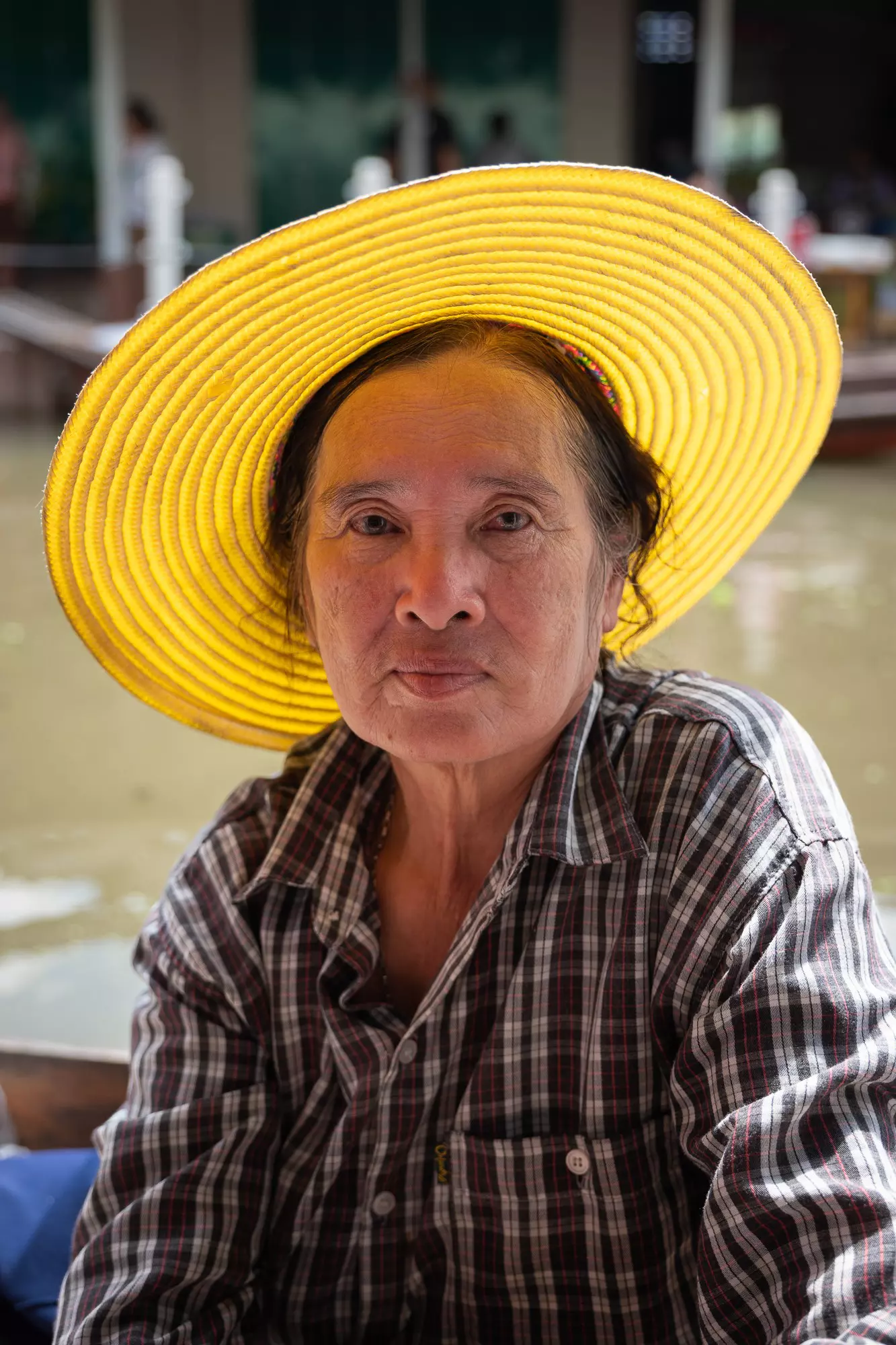
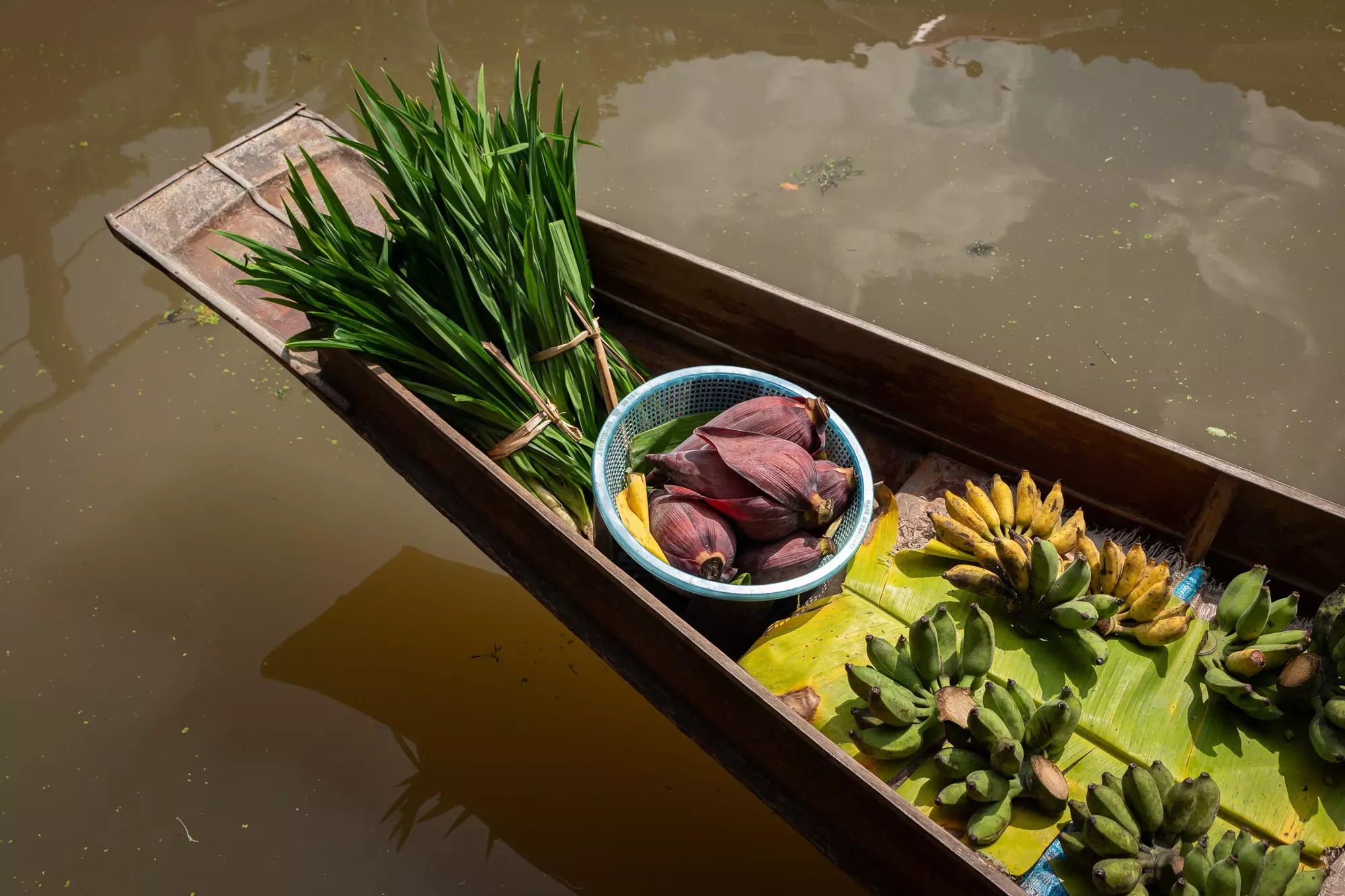
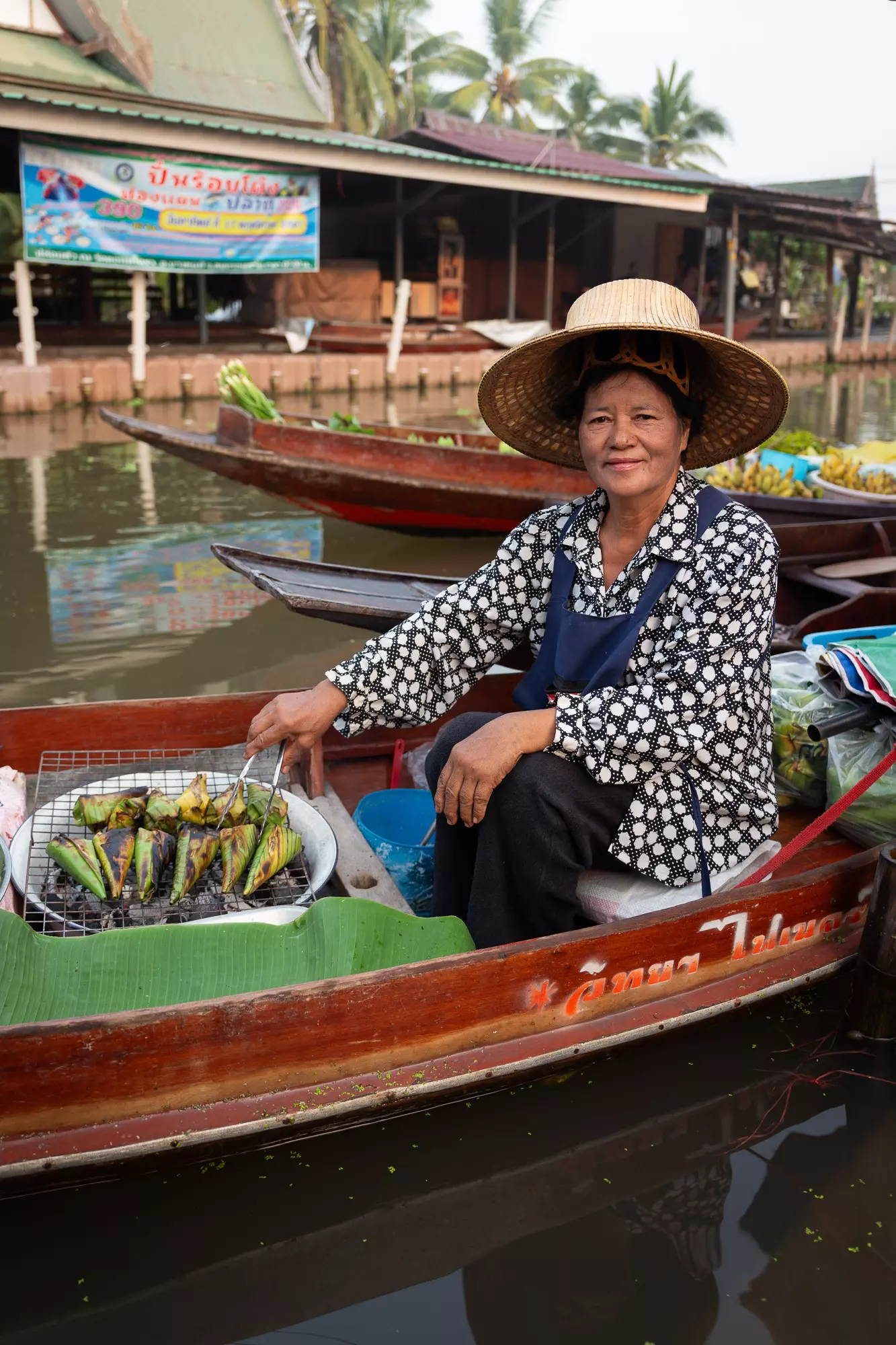
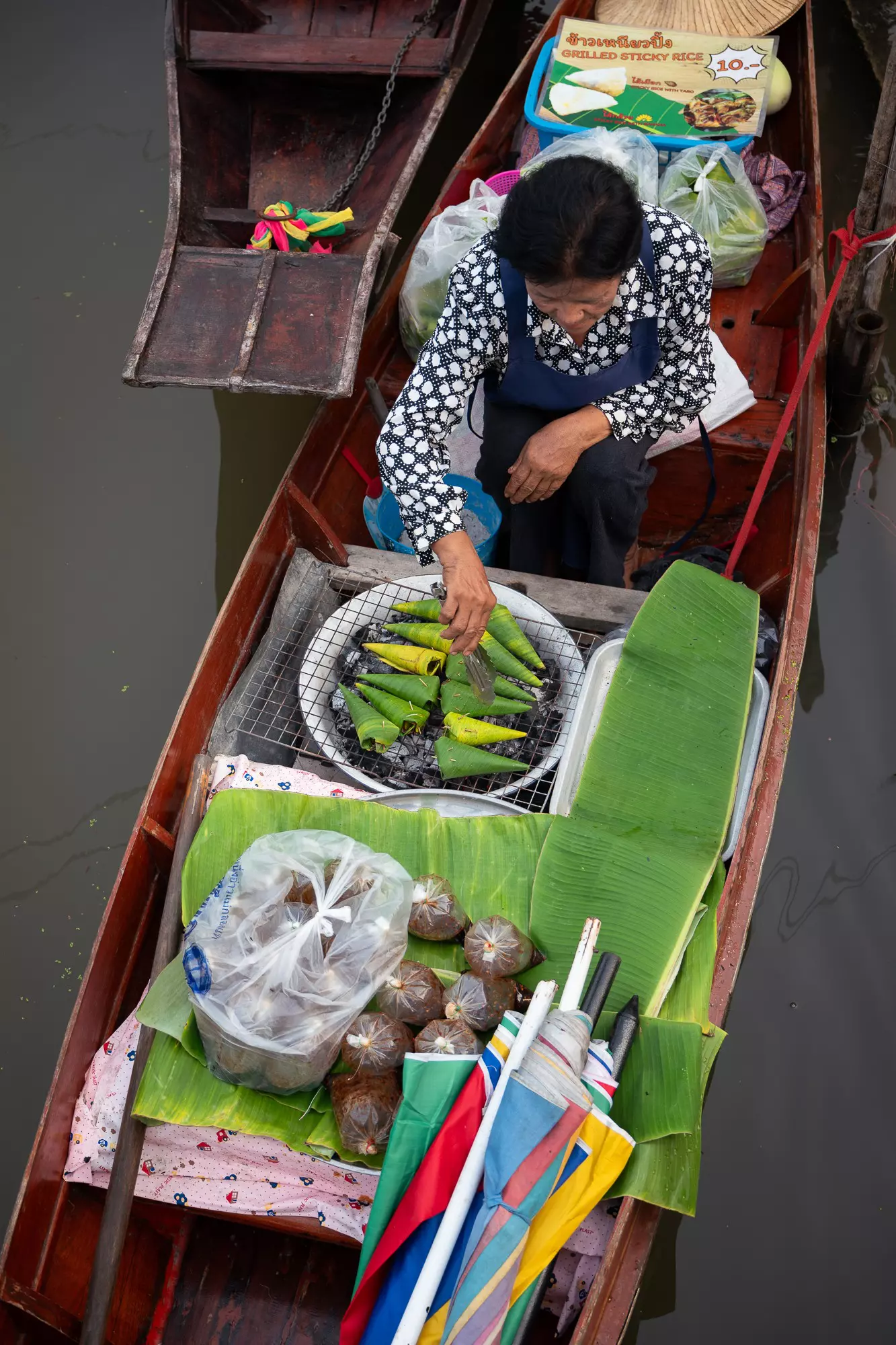
Since shopping can make anyone work up an appetite, snack sellers are key part of the market scene. Shoppers can fuel up on bua loi (sticky rice dumplings floating in a warm, sweet coconut milk soup) or sticky rice filled with banana and taro. Soups flavored with nam phrik phao (a paste made from dried chilies, shallots, garlic, shrimp paste, tamarind and palm sugar) are also popular.
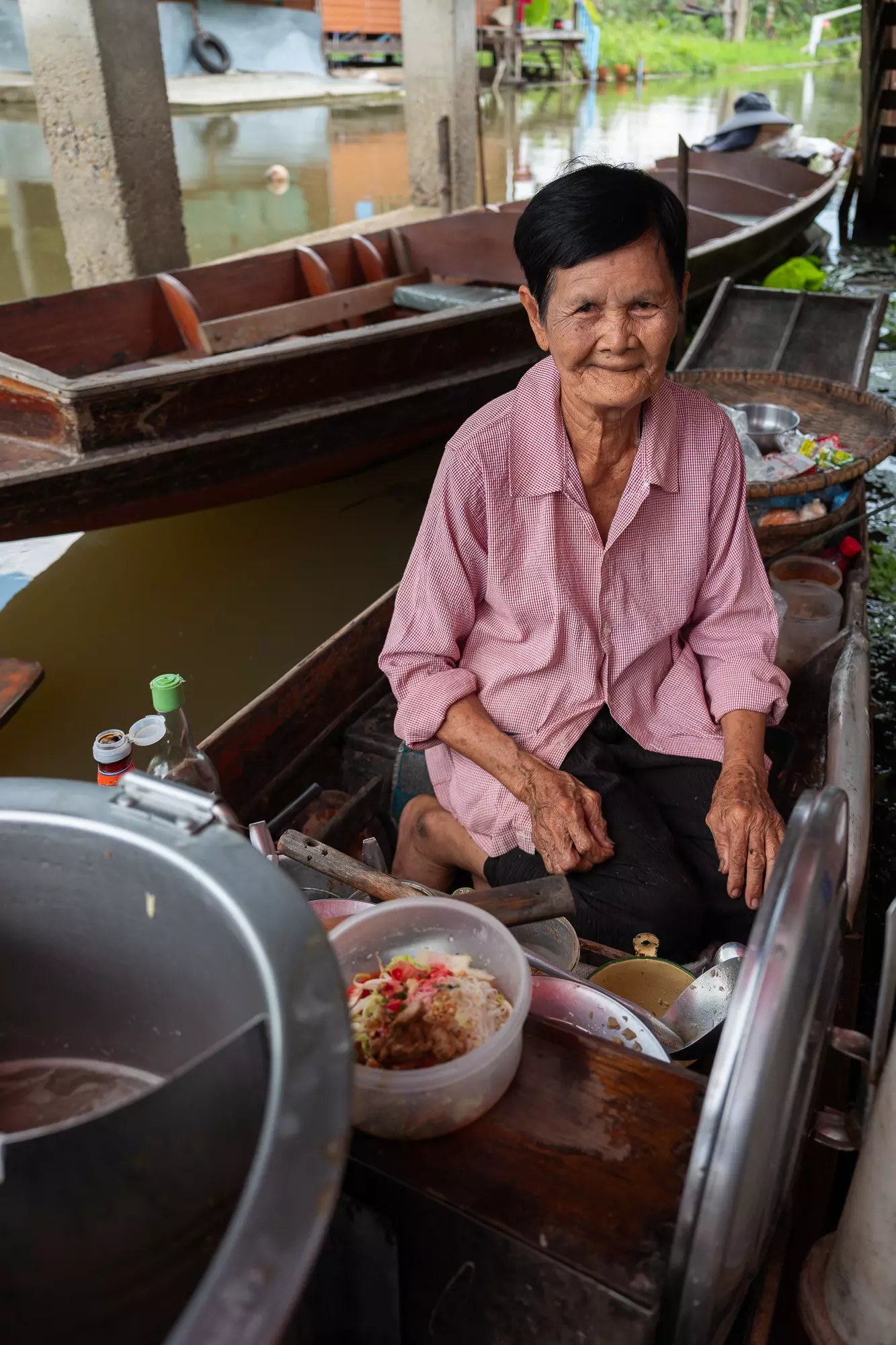
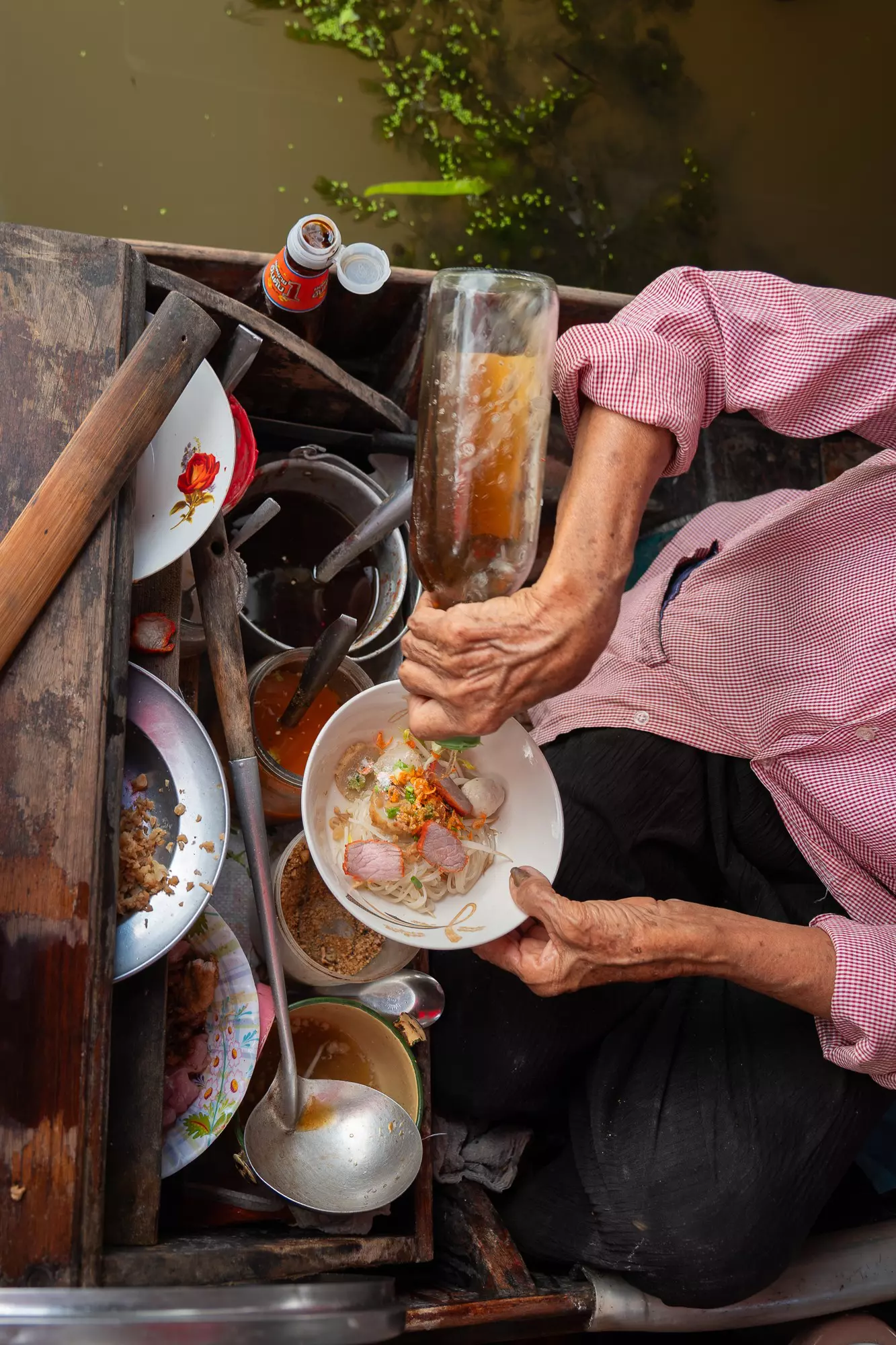
Perhaps nothing is as representative of floating markets as “boat noodles” (kuai tiao ruea), the noodle soup sold from small vessels. Here, a noodle vendor uses a family recipe and cooks over a charcoal stove – as she’s done for 50 years. Her business remains strong, and she believes the market will continue. Still, she worries that fewer young people will want to sell from boats, leaving mainly older vendors.
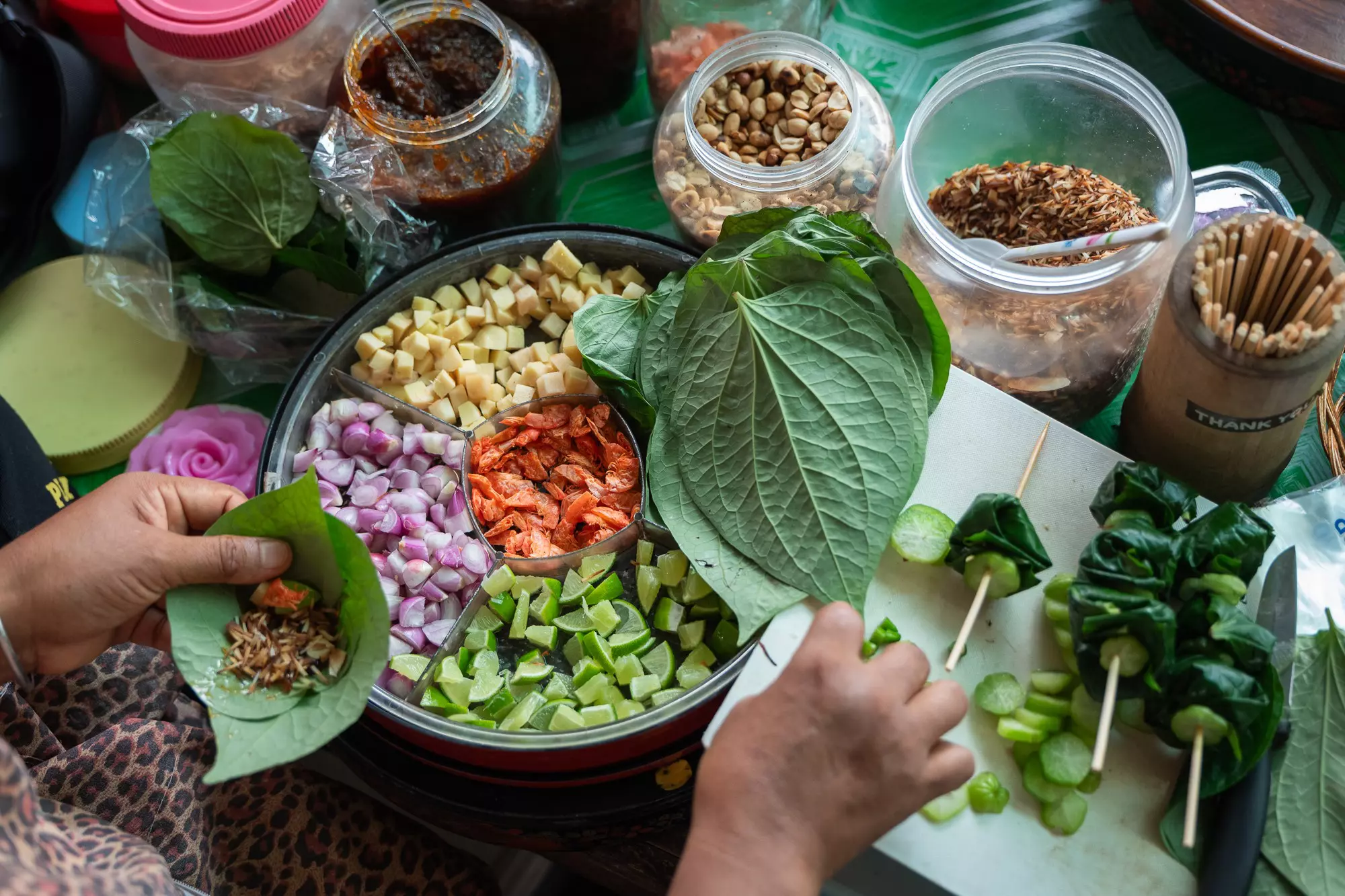
Miang kham are traditional Thai snacks that contain a mix of sweet, spicy, sour and salty components. Common ingredients include roasted coconut, peanuts, ginger, lime, shallots, chili and dried shrimp; the final mix comes wrapped in wild betel leaves. Originally from Northern Thailand, miang kham are now found throughout the country, as well as Laos – and beloved everywhere for their big burst of flavor delivered in a small, tidy package.
Chilies and ginger provide the heat; a squeeze of lime adds acidity. Coconut and peanuts add crunch and texture, while a sweet-and-salty sauce brings all the seemingly disparate ingredients together.
Not all vendors at floating markets are on boats; some have set up stalls on land by the canals. While sellers on boats don’t have to pay fees, land sellers must pay to rent space, which varies by property owner.
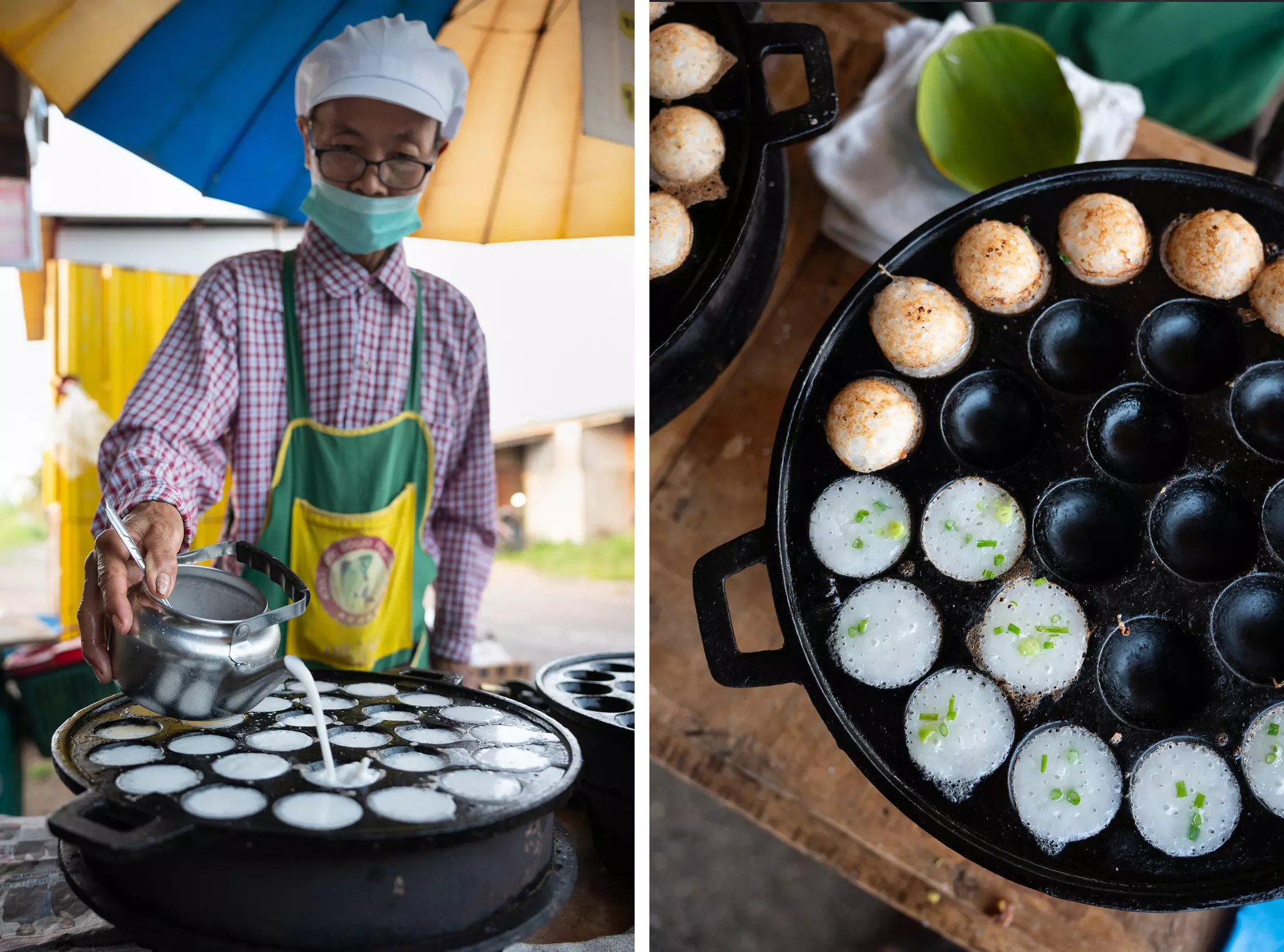
Khanom khrok are little cakes made from rice flour, coconut milk, sugar, and various sweet and savory toppings. Cooked in a hot iron mold, they have an outside that’s crispy – but the filling (which can include scallions, corn and taro) is soft, warm and creamy. This khanom krok vendor works in her garden during the week, cultivating coconuts to make the tasty hotcakes at the market on weekends.
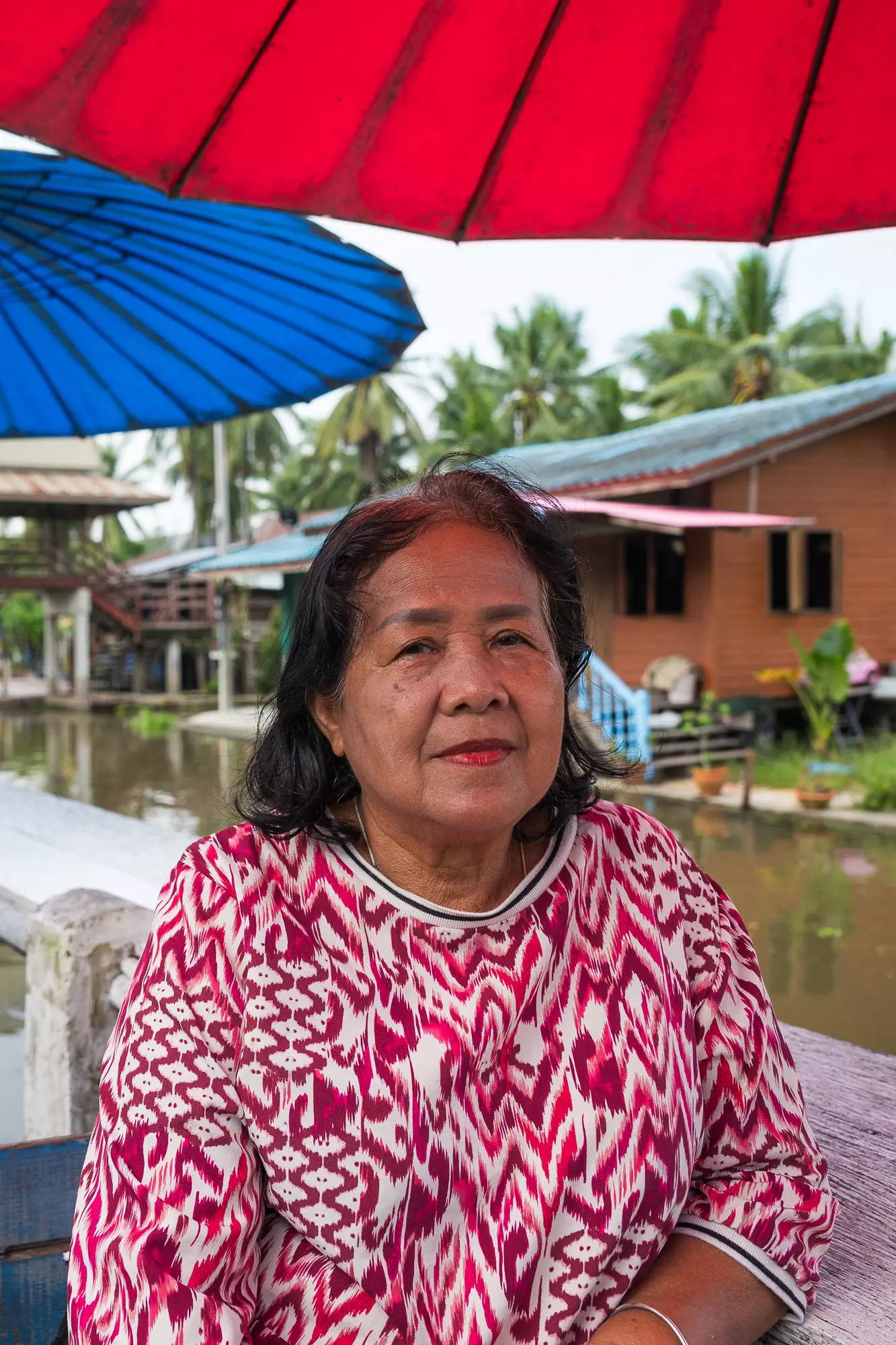
Looking to preserve Thailand’s tradition of floating markets, this former village head established the weekend Tha Kha market with support from the Tourism Authority of Thailand, who helped by improving walkways and enhancing the canals to promote boat trading. Gradually, the market gained recognition as a tourist destination, generating income for the community.
However, as with many other floating markets, its long-term prospects are in doubt. The younger generation shows little interest in the meager living made from selling on the water; instead, they’re turning to land to seek higher-paying jobs. The current crop of vendors at the Tha Kha Floating Market consists mainly of older individuals who enjoy the atmosphere, meeting tourists and engaging with people. They mostly live nearby and don’t require much for their daily expenses.
As the number of boat vendors continues to decline, community leaders are hoping to encourage more young people to participate and preserve the way of life in Tha Kha.
Book your Thailand trip with Lonely Planet Journeys
See Thailand how it's meant to be seen
Planned by local experts and tailored to you, Lonely Planet Journeys handles the logistics so you can just enjoy the trip. Tell us what you want and we'll build your Thailand itinerary from scratch, or browse our bookable trips to get inspired.


Explore related stories