Oct 27, 20269 min read
The Top 6 Day Trips from MadridOct 27, 2026
9 MIN READ
Contributors
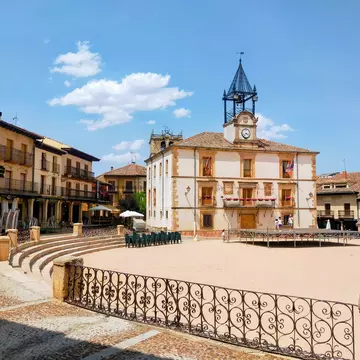
The central square in Segovia, Spain. fotografiahdez/Shutterstock
Contributors


Anthony Ham, Lonely Planet Editors
Highlights
Writer Anthony Ham picks six day trips from Madrid, from Toledo to Aranjuez.
Toledo's El Greco trail rewards art lovers; Segovia's Roman aqueduct and El Alcázar dazzle.
Chinchón's Plaza Mayor has hosted fiestas since the 17th century; Ávila's medieval walls stretch 2.5km.
Head to El Escorial's UNESCO monastery or Aranjuez's palace, modeled on Versailles.
Lonely Planet may earn a commission from affiliate links on our site. All recommendations and reviews reflect our own independent opinions.
While the vibrant city of Madrid overflows with artistic and culinary treasures and has an irresistible energy that is all its own, the capital of Spain is an excellent gateway to the rest of the country, too. Even if this is your first trip to Madrid, it's worth setting aside a few days for day trips into the surrounding countryside.
We recommend giving yourself a minimum of 3 days to soak in Madrid's charms before taking off to explore other beautiful towns and sights elsewhere in the heart of Spain. Within a few hours of Madrid, you'll find cultured Toledo, the ancient walled city of Ávila, Roman ruins at Segovia, atmospheric Spanish villages such as Chinchón and even a UNESCO-listed palace-monastery.
If you plan to head out for a day of exploring, consider the weather – central Spain sizzles in summer and temperatures are better suited to exploring on foot in spring and fall. When you're ready to roam beyond the capital, here is our pick of the best day trips from Madrid.
Get more from your trip with the latest edition of Lonely Planet's Spain guidebook, researched and written by our expert team of Spain writers.
Why go: Enjoy multicultural history and follow the El Greco art trail
Travel time: 30 minutes to an hour
How to travel: By car or train

Famed for its multicultural history and sword-making heritage, the walled city of Toledo is one of the most popular day-trip destinations from Madrid. Dotted with relics from its Arab, Jewish and Christian past, this former Spanish capital has been listed as a UNESCO World Heritage Site since 1986.
Getting lost in Toledo's tightly knotted streets is the best way to explore, particularly if you duck into the narrow alleys around Plaza Santa Clara. But if you want a more focused itinerary, tracking down the artwork of Greek-born Spanish Renaissance artist El Greco will lead you to some of the city's most spectacular sites.
Head to the medieval Catedral de Toledo to see El Greco’s The Disrobing of Christ before venturing to the Museo del Greco, the only museum in Spain dedicated to this important artist. The El Greco trail also leads to the Museo de Santa Cruz, where you'll see the artist's Sagrada Familia con Santa Ana alongside a vast collection of decorative art and ceramics.
For a different take on Toledo history, visit Museo Sefardí in the 14th-century Sinagoga del Tránsito to learn about the history of Jewish culture in Spain, or get insights into Toledo's Arab past at the Mezquita del Cristo de la Luz, which dates back to around 1000 CE.
How to get to Toledo from Madrid: If you are driving, take the A-42 south. Alternatively, fast trains run from Madrid's Puerta de Atocha–Almudena Grandes station. The journey takes about an hour by car and a little more than 30 minutes by high-speed train.
Why go: Immerse yourself in Roman and medieval history
Travel time: 45 minutes
How to travel: By train and bus

One of Spain’s most impressive Roman monuments, the impressively preserved El Acueducto rises over the eastern entrance to the old city in Segovia. This ancient stone water channel was constructed in the 1st century CE, transporting water over 15km from the Fuenfría spring in the Guadarrama Mountains.
From the aqueduct, busy traffic-free streets climb past Romanesque churches and pretty squares to the city’s summit and the Plaza Mayor, watched over by a 16th-century Gothic cathedral – one of the country’s finest and most formidable monuments.
Continue down the cobbled streets to the west to reach El Alcázar, a castle said to have inspired Walt Disney’s design for the castle in Sleeping Beauty. The castle was founded in the 12th century to guard the confluence of the Eresma and Clamores rivers, and the views from the gardens take in rolling hillsides and sandstone churches spread across the Castilian countryside.
How to get to Segovia from Madrid: Going by rail is much more convenient than driving. High-speed trains run regularly between Madrid’s Chamartín Clara Campoamor station and Segovia-Guiomar station, taking less than half an hour, then you can jump on the 11 bus to reach the aqueduct (15 minutes). Alternatively, Moncloa buses run from Madrid to Segovia, taking up to 1 hour and 15 minutes.
Why go: Experience Spanish festivals in a gorgeous, stone-lined village
Travel time: 50 minutes
How to travel: By car or bus

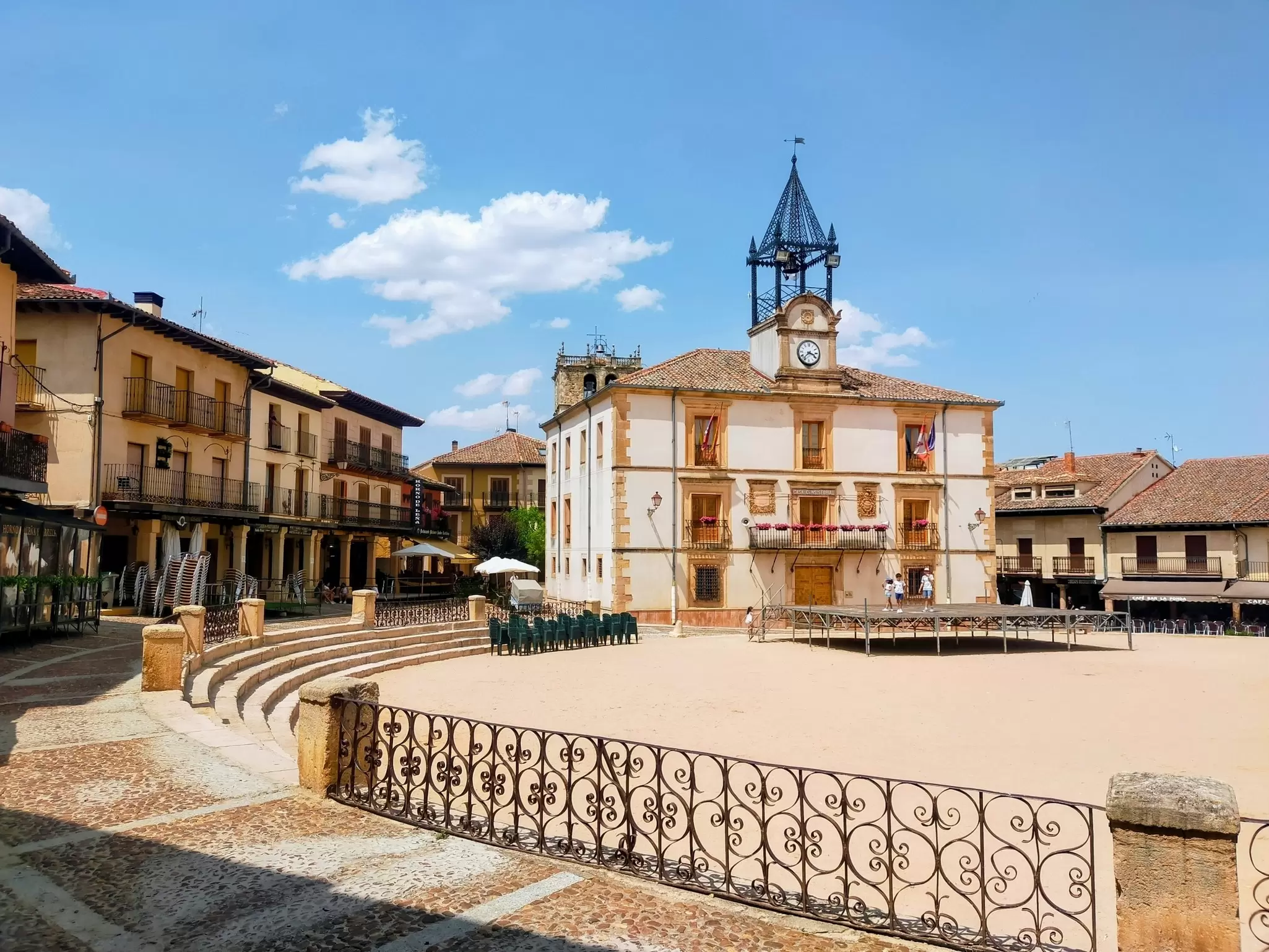
The prettiest of all the villages within striking distance of the Spanish capital, Chinchón spills around an enchanting, rough-hewn town square. All roads in Chinchón lead to the rustic Plaza Mayor, a gloriously ramshackle example of the traditional squares that define small villages across Spain.
Encircled by sagging balconies on wooden buildings stories high, it’s the scene for the town’s biggest fiestas and an enthusiastic Easter passion play during Semana Santa (Holy Week). Festivals have been held in the Plaza Mayor since at least the 17th century.
Key events on the festival calendar include the celebrations to honor Nuestra Señora de la Misericordia and the Fiestas de Nuestra Señora del Rosario – both held in September. Book train travel ahead for the main fiesta days.
How to get to Chinchón from Madrid: Chinchón is 45km southeast of Madrid. If you come by rental car, take the N-IV motorway and exit onto the M404. Alternatively, catch the 337 La Veloz bus from Madrid’s Conde de Casal bus interchange stand. Either way, the trip will take about 50 minutes.
Why go: Step into Spain's ancient history of conquest and reconquest
Travel time: 1.5–2 hours
How to travel: By train

Encircled by near-perfect medieval walls, the city of Ávila is beautiful from afar and it offers one of Spain’s more intimate urban experiences once you pass through its gates. Dating back to the 12th century, the city’s Murallas run for 2.5km, with eight arched gateways, 88 watchtowers and more than 2500 turrets, built to defend the city after it was recaptured from the Moors in 1085 CE. In places, you can climb the walls and walk along nearly 1.6km of the battlements.
For the best views toward the walls, head to Los Cuatro Postes, a stone monument on the northwestern outskirts of the city. At the heart of the walled city, the Catedral del Salvador is another extraordinary house of worship, as impressive in scale as it is exquisite in its detail. And of the many churches inside the walls, the Convento de Santa Teresa is the most storied, a pilgrimage site of great spiritual significance to Catholics everywhere.
How to get to Ávila from Madrid: The easiest way to reach Ávila is by rail; trains to Ávila run from Madrid’s Príncipe Pío and Chamartín Clara Campoamor stations, taking 1.5-2 hours, depending on the service.
Why go: See magnificent art inside a monastery surrounded by graceful gardens
Travel time: 1 hour
How to travel: By train or bus

In the small town of San Lorenzo de El Escorial, the UNESCO-listed Real Monasterio de San Lorenzo de El Escorial is one of Spain’s grandest royal monuments. It rises from the foothills of the Sierra de Guadarrama northwest of Madrid, with vast formal gardens and astonishing artworks concealed behind its imposing walls.
Part palace, part monastery, this dramatic edifice is an extraordinary place, vast yet supremely elegant and filled with artworks by artists such as El Greco, Titian, Tintoretto, José de Ribera and Hieronymus Bosch. The white marble statue of a crucified Christ, chiseled out by Benvenuto Cellini in 1562, is a sublime high point.
Edging the monastery grounds, the Jardín de los Frailes is a classic example of Spain's monumental royal gardens, and it's well worth a wander. To the east stands the neo-classical Casita del Príncipe, built as a retreat for Charles, Prince of Asturias, in the 1770s. Ringed by its own pretty gardens, it provides a calm counterpoint to the sheer grandeur around it.
How to get to San Lorenzo de El Escorial from Madrid: Run by Renfe, C8 cercanías (local trains) depart for El Escorial from Madrid's Puerta de Atocha–Almudena Grandes or Chamartín Clara Campoamor train stations. Alternatively, catch a bus from Madrid's Intercambiador de Autobuses de Moncloa. By train or bus, the journey takes about an hour.
Why go: Admire one of Spain's most impressive royal residences
Travel time: 45 minutes
How to travel: By car or train

A spectacular royal palace and lavish gardens in a classic (and always buzzing) Spanish provincial town – what’s not to like about Aranjuez? Arguably more elegant than any of the palaces that Madrid has to offer, Aranjuez’s Palacio Real was a favored retreat for Spanish royals across the centuries, and it's easy to see why.
Founded in the 15th century, but reconstructed to its current floor plan in the early 18th century, this extravagant UNESCO-listed residence of more than 300 rooms was modeled on France’s Versailles and is surrounded by expansive and perfectly manicured gardens.
The last Spanish king to use the palace, King Alfonso XIII, vacated the premises when the Second Spanish Republic was declared in 1931. Museums on the grounds showcase everything from royal finery in the Casa del Labrador to the pleasure boats beloved by royals with way too much time on their hands in the Museo de Falúas Reales.
How to get to Aranjuez from Madrid: If you are driving, take the N-IV south from Madrid, then follow signs to the town along the M-305. Otherwise, C3 cercanías trains leave every 15 or 20 minutes for Aranjuez from Madrid's Puerta de Atocha–Almudena Grandes station. By road or rail, the journey takes about 45 minutes.
Book your Spain trip with Lonely Planet Journeys
See Spain how it's meant to be seen
Accommodations, activities and ground transportation all taken care of, so you can focus on the fun part. Tell us what your dream trip to Spain looks like, and our local experts will build it from scratch. Or start with one of our itineraries and make it your own.

Explore related stories