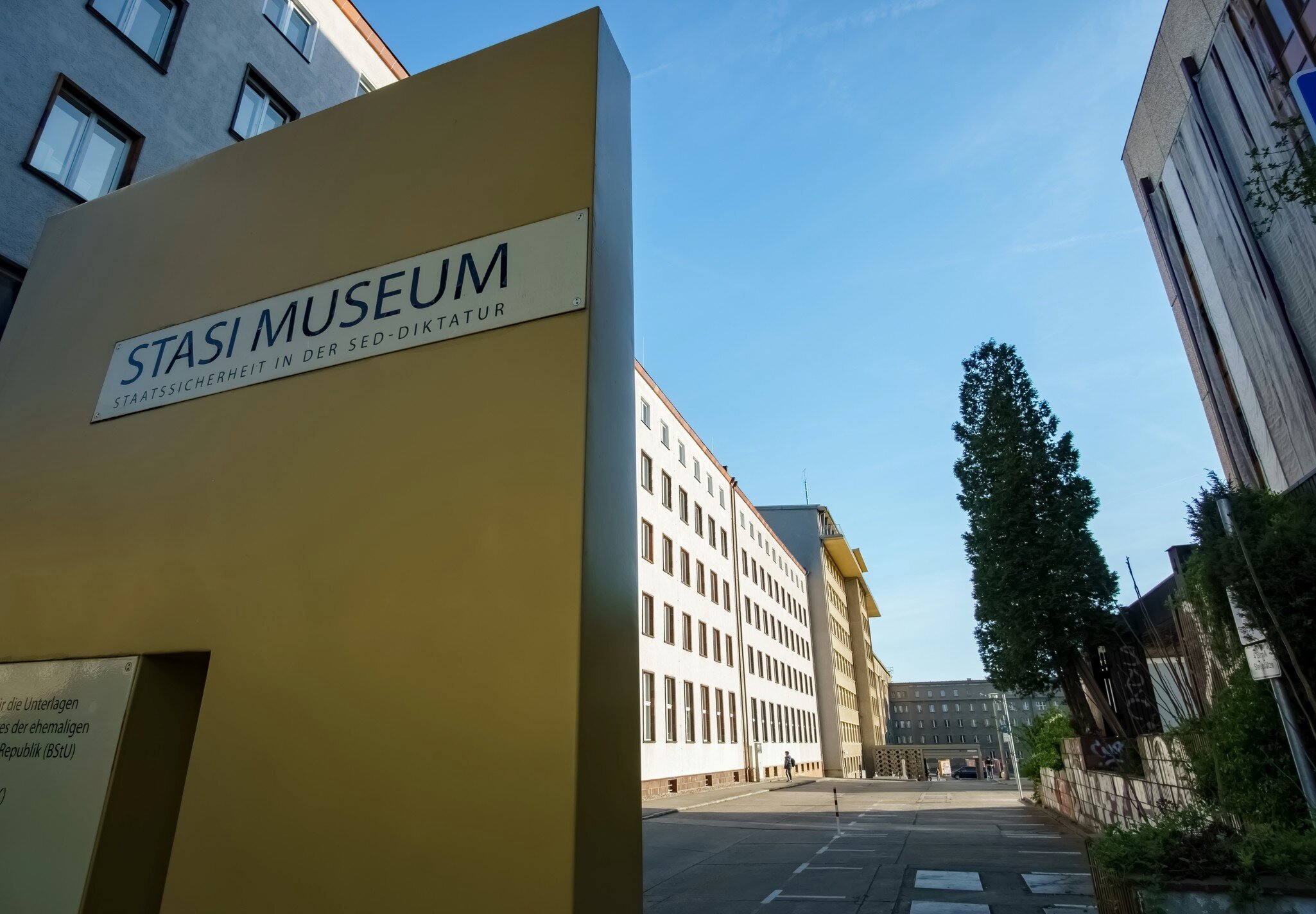
Thousands of offices across 40 buildings served as the nerve center of East Germany’s most feared institution, the Ministry of State Security, better known as Stasi, until 1989. House 1 is now home to the Stasimuseum (stasimuseum.de; adult/concession €10/7.50, tours additional €5), where exhibits unpack the organization‘s origins, working methods and far-reaching grip on East German society and beyond.
The Stasi was East Germany's secret police, which put practically the entire population under surveillance in order to secure the power of the leadership and oppress internal opposition. This museum dissects the structure, working methods, impact and all-pervasive power of the Stasi. Marvel at cunningly low-tech spying devices (hidden in watering cans, rocks, even neckties), a prisoner transport van, and the preserved offices of Stasi chief Erich Mielke.
At its peak, more than 7000 people worked in this labyrinthine Mfs headquarter complex; the scale model in the entrance foyer illustrates its dimensions. Other rooms introduce the ideology, rituals and institutions of East German society. Information panels are partly in English and an audioguide in several languages is available as well (€2).
The Stasimuseum is the center of the still-evolving Campus for Democracy, an educational hub about dictatorship and resistance at the Stasi compound. In the courtyard, an outdoor exhibit chronicles milestones of the Peaceful Revolution that led to the fall of the Berlin Wall in 1989. In the building to the right, another exhibit, "Access to Secrecy," takes you inside the Stasi records archives to reveal the byzantine process of information gathering, processing and storage.