Dec 23, 20258 min read
The Best Time to Visit TunisiaDec 22, 2025
11 MIN READ
Contributors
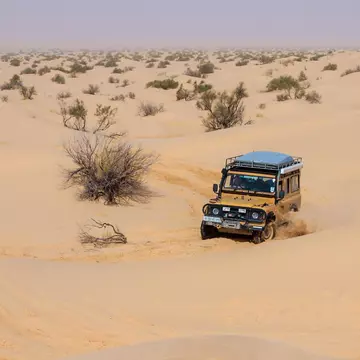
A 4WD crossing the desert in Tunisia. capturelightuk/Shutterstock

Contributors


Paula Hardy, Lonely Planet Editors
Highlights
Writer Paula Hardy guides getting around Tunisia by bus, train, car and camel.
SNTRI buses are the most reliable option, fanning out from Tunis across the country.
Trains are cheap but unreliable; for shorter hops, louages (shared minibuses) leave when full.
Rent a car for freedom; book a 4WD or camel tour into the Sahara.
Lonely Planet may earn a commission from affiliate links on our site. All recommendations and reviews reflect our own independent opinions.
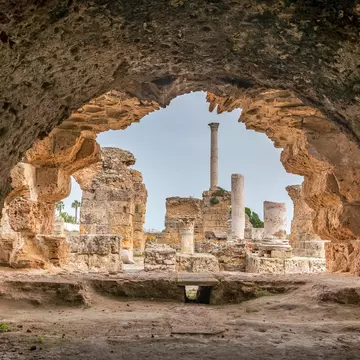
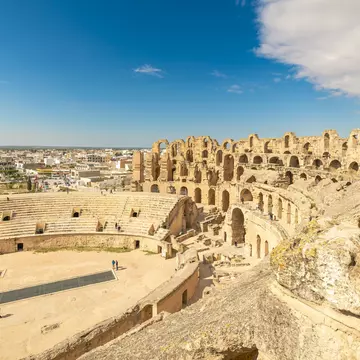
Tucked between Algeria and Libya, Tunisia may be the smallest country in North Africa – but it packs a lot of wonders into its compact territory. From the nation’s lively capital, Tunis, or the southern island of Djerba, you can roam out to beautiful beaches, rolling desert dunes, bird-thronged lakes, historic Amazigh villages, ancient Greco-Roman ruins and the hotel that doubled as Luke Skywalker’s childhood home in Star Wars Episode IV: A New Hope.
Well-maintained highways and railway lines traverse the northern half of the country and the Mediterranean coastline, making it easy to get around by public transportation. The southwest of the country, meanwhile, melts into the Sahara Desert, which means travel is more challenging in this rugged, empty quarter.
The first thing to consider when visiting Tunisia is where to arrive. Many people fly south to Djerba for the beaches, but this will place you more than 500km south of Tunis and the Greco-Roman ruins in the north of the country. If timing is tight, consider flying between the north and south if you want to see both ends of the country.
Always factor in the climate when planning a trip to Tunisia. The baking North African summer from June to September lures travelers to the beaches in droves, but this can be an uncomfortable time to travel inland. To get the best from the desert and Tunisia’s ancient sites, come during the cooler shoulder seasons from April to June and September to November, or visit in winter.
Here’s everything you need to know about getting around in Tunisia.
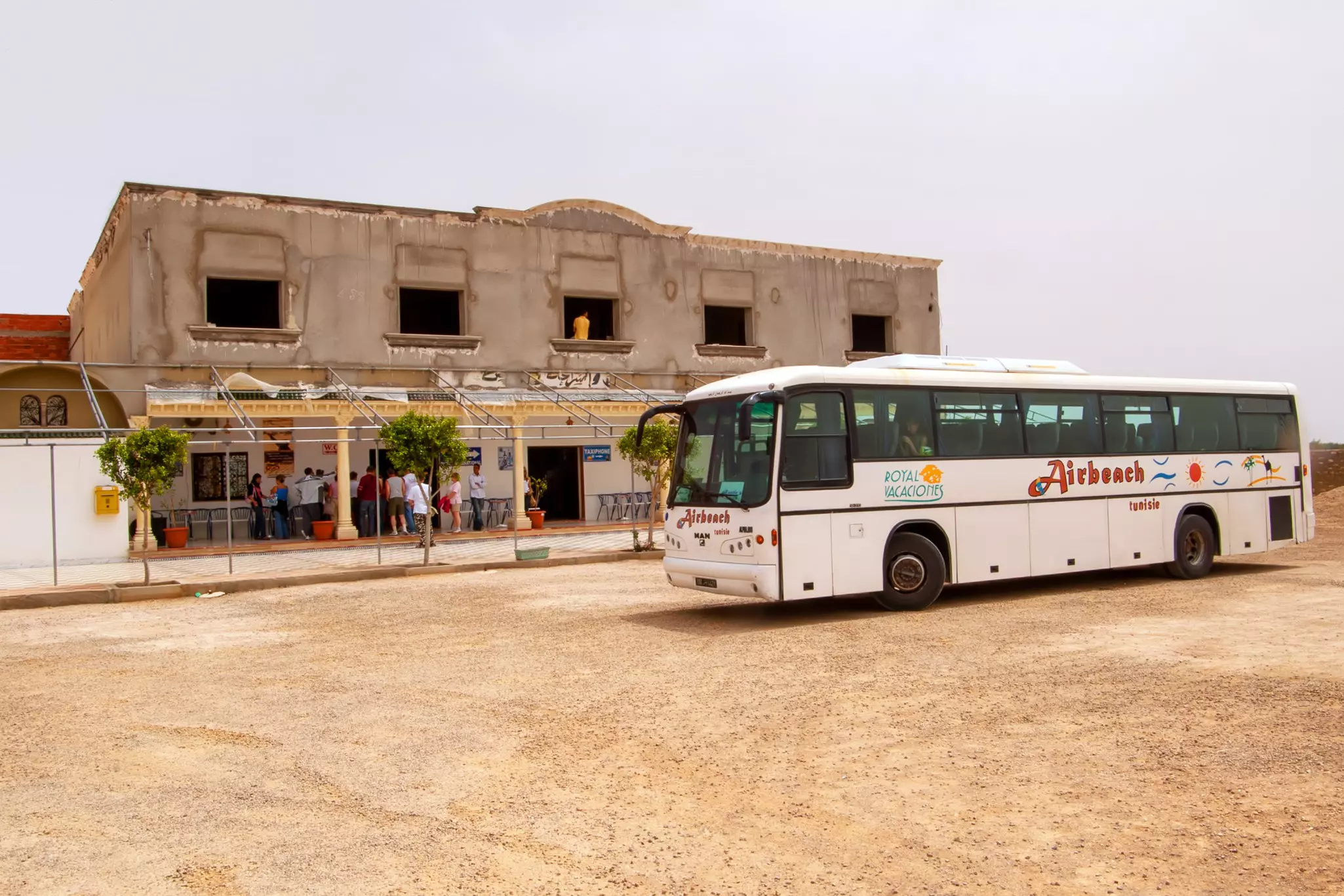
The easiest way to travel from town to town in Tunisia is by bus. The national bus company Société Nationale de Transport Interurbain (SNTRI) operates air-conditioned buses that fan out from Tunis to destinations all over the country.
This is the low-stress option if you plan to travel from Tunis to destinations such as Bizerte, Teboursouk (for the ruins of Dougga), Kairouan, El Jem, Hammamet and Sousse. Major cities also have their own regional bus companies serving local destinations.
If you’re starting your journey in Djerba, buses run directly from the Houmt Souk bus station to coastal cities such as Sousse, Gabès and Sfax, with onward connections to other parts of the country. Direct services between Djerba and Tunis are limited, so you may need to change along the way (Sousse is the most convenient hub).
Bus tickets are inexpensive, services are frequent, and buses are generally comfortable and punctual. In most towns, national and regional bus companies operate from the same communal bus station (ask for the gare routière).
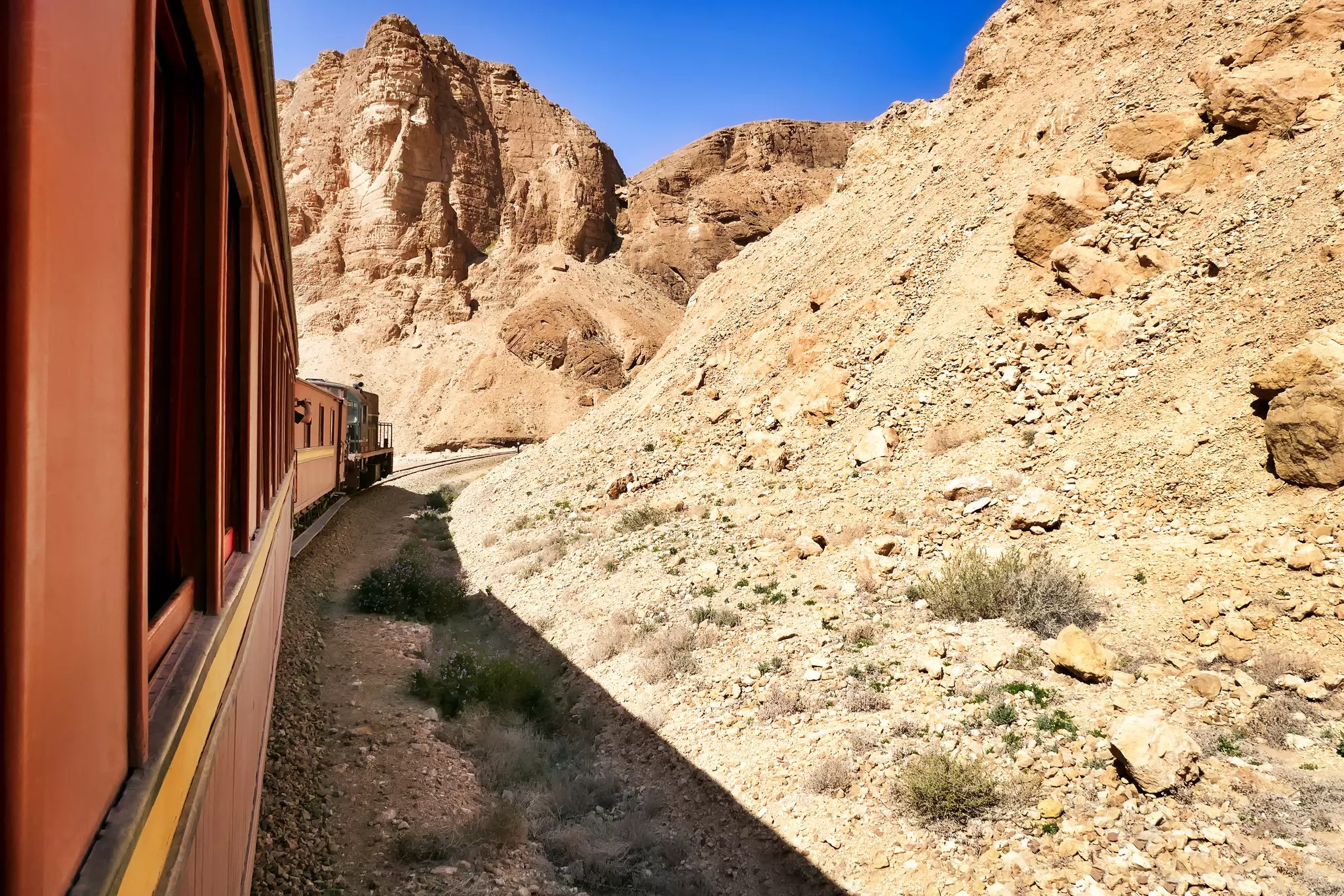
Tunisia has an extensive railway network in the north and along the coast, established during the French colonial period. The national rail company Société Nationale des Chemins de Fer Tunisiens (SNCFT) runs services across the country – but long-distance trains are slow, aging and poorly maintained, with delays common.
The main train line runs between Tunis and Gabès via Sousse and Sfax, while branch lines serve such destinations as Nabeul, Bizerte and Tozeur. On major routes, services are frequent, and express trains run between the main hubs.
There are two classes of ticket: 2nd class, costing around the same as bus travel, and 1st class, costing slightly more. Traveling 1st class is highly recommended for a more comfortable ride, with reclining seats and AC (though it may not be working; carry a portable battery-powered fan just in case).
Traveling 2nd class is a bit of a free-for-all, so give yourself extra time at the station to navigate the crowds. Some express trains also offer confort class – like 1st class, but with a bit more space. The Man in Seat 61 provides a handy overview of train travel in Tunisia.
You can view online schedules on the SNCFT website, but since there is no centralized booking platform, you should reserve in person at the station, ideally a day or two before travel. Travel booking websites such as 12Go and Bookaway offer online train bookings for some routes in Tunisia.
Your ticket will specify a seat – but in practice, you may just have to take any seat you can find. Board your train early to maximize the chances of getting somewhere to sit. As compensation, trains offer good views as you travel across the country.
Railway enthusiasts may be interested in the Lézard Rouge (“Red Lizard”) – a historic Tunisian train originally built to carry phosphate, but now used for tourist joyrides. Trips lasting 40 minutes run from Metlaoui to Redeyef, passing through the dramatic Selja Gorge system.
In Tunis, the Tunis-Goulette-Marsa (TGM) light rail network connects the city center with La Goulette, Carthage, Sidi Bou Said and La Marsa, while the Sahel Metro connects Sousse with Monastir and Mahdia. Both are cheap, modern and reliable.
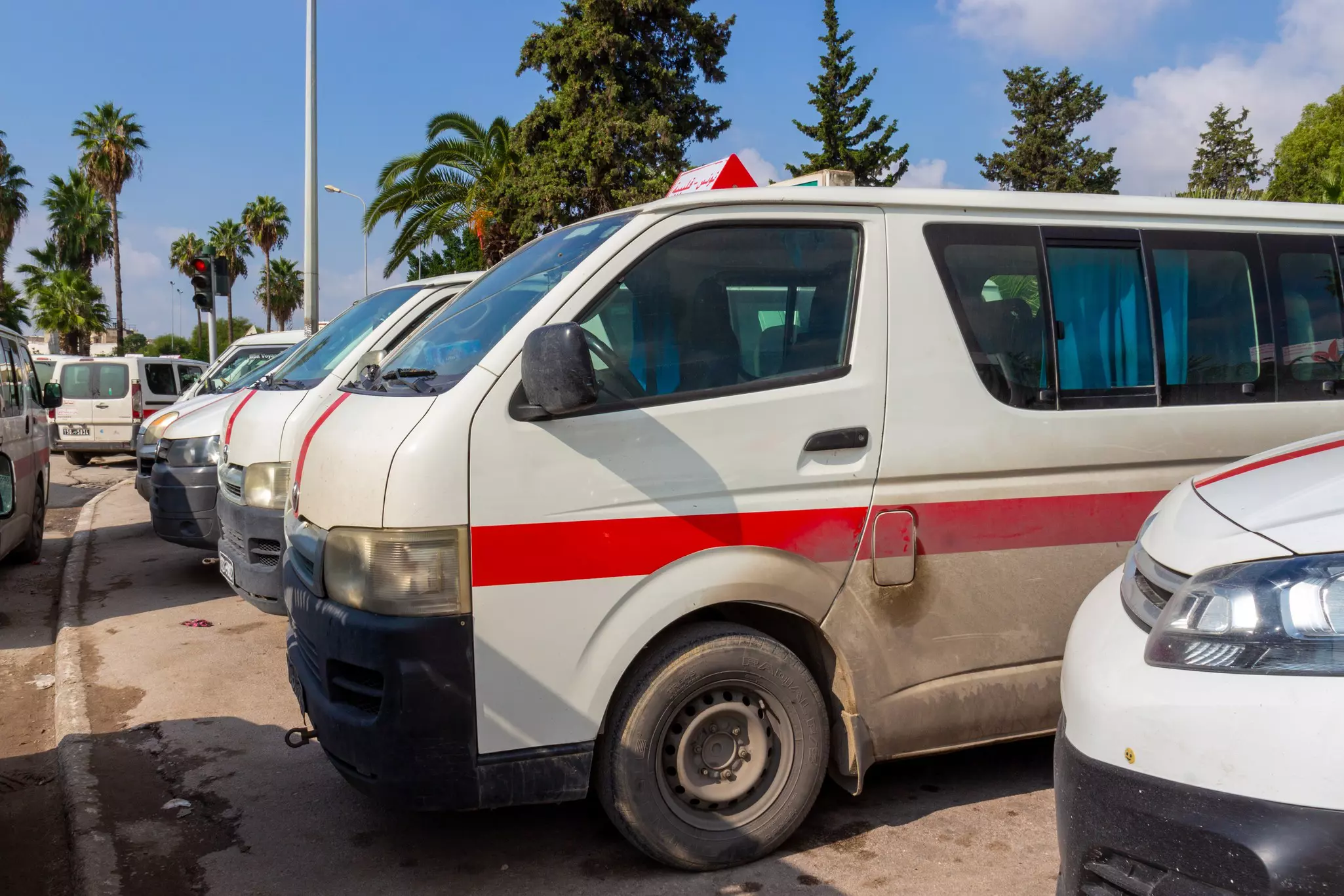
Louages (shared minibuses) supplement the bus service all over Tunisia, providing an inexpensive way to travel shorter distances. You can also use them for longer journeys – if, that is, you don’t mind being squeezed in with other passengers. Departures are plentiful during the day; vehicles leave when full (this can mean a bit of a wait on less busy routes). Tickets usually cost about the same as the equivalent bus ticket.
Seating in louages can be cramped and the driving habits of some drivers can be hair-raising – yet this method of travel is an undeniably memorable experience. Every major town has a louage station, and services are color-coded: a red stripe signifies a long-distance service, a blue stripe signifies a regional service, and a yellow stripe signifies a local service.
To save time when traveling the length of the country, flying is an option, though you’ll need to consider the carbon-footprint implications. A subsidiary of national carrier Tunisair, Tunisair Express operates domestic flights within Tunisia, including connections between Tunis, Sfax and Djerba. Infrequent flights also connect Tunis and Tozeur.
Be aware that Tunisair Express has a reputation for poor service, and that the airline is not permitted to operate in European airspace. Flights rarely run on time, and since the online booking system is problematic, it’s usually easier to use an in-country travel agency to book tickets.
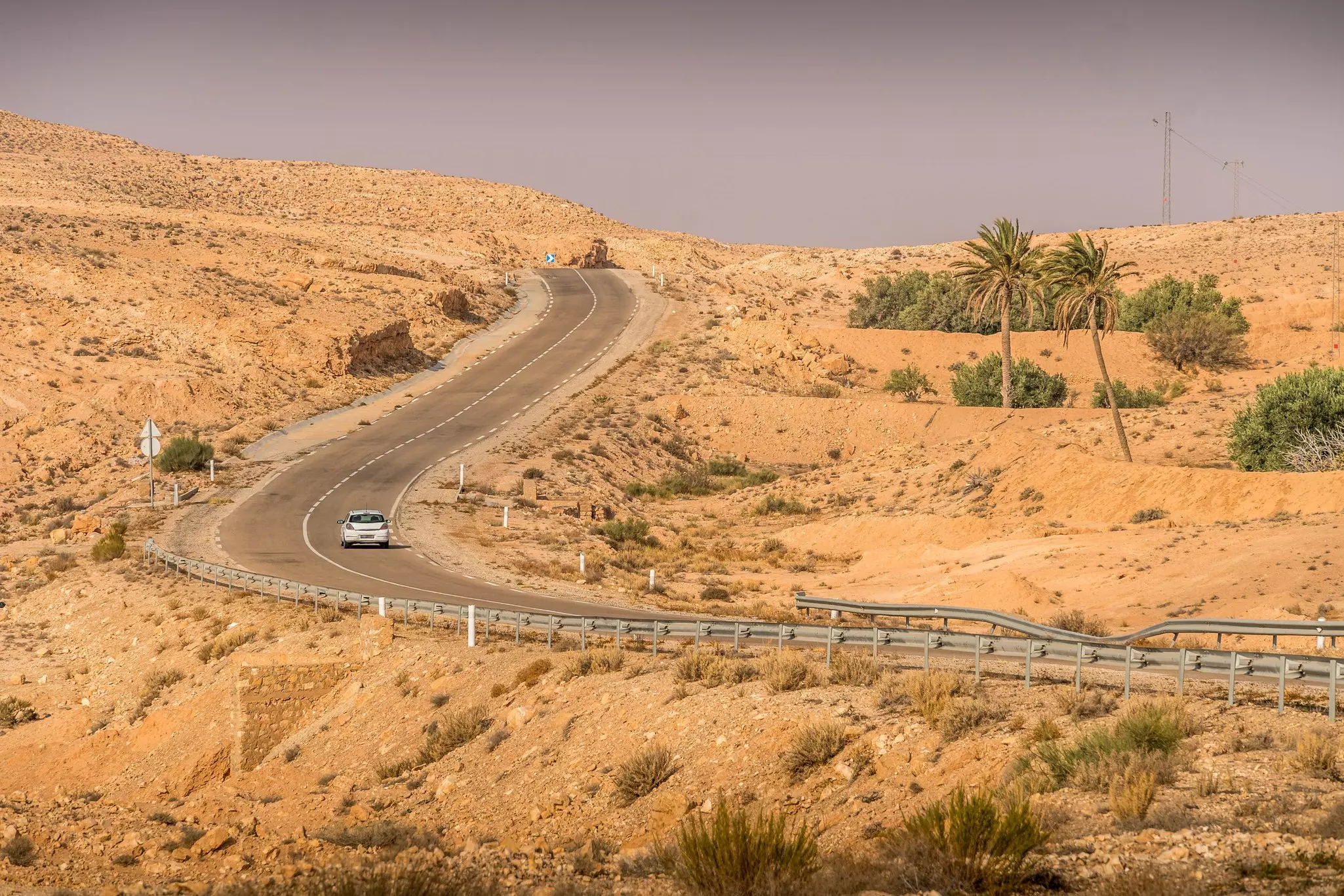
If you want more freedom to explore and more comfort while you travel, car-rental agencies have offices at international airports and in major cities. Self-drive car rental is straightforward in Tunisia, though prices are slightly higher than you’ll find on the European side of the Mediterranean.
Gas is cheap and vehicles are generally rented on a full-to-full basis (so you return the vehicle with a full tank). Automatic cars are widely available but cost more than manual vehicles. When you rent a car, make sure an accident-report form is included with the vehicle’s papers; if the form is not completed by both parties following an incident, you may be liable for costs, even if you have paid for insurance.
The driver license from your home country will normally be sufficient for hiring a car in Tunisia, but an International Driving Permit is recommended if you come from a country outside Western Europe. Always check the level of insurance and the excess you’ll be liable to pay in the event of an accident; if you plan to travel on unsurfaced roads, you’ll need to rent a 4WD vehicle.
Roads in Tunisia are generally well maintained; signs are in English and Arabic, with distances in kilometers. The speed limit is usually 50 km/h in town; 90 km/h in rural areas; or 90–110 km/h on toll expressways, such as the road from Tunis to Bizerte. Traffic drives on the right. As in France, you should give way to vehicles approaching from the right at roundabouts, even if you are already circling in the roundabout.
Tip for driving in Tunisia: Special intersections for turning left off major roads are another local curiosity. Instead of a turning lane in the center of the road, the Tunisian system involves a special lane leading off to the right, which then loops back and crosses the main road at a right angle. This can be a little confusing if you’re expecting to see a sign on your left. You’ll get used to it.
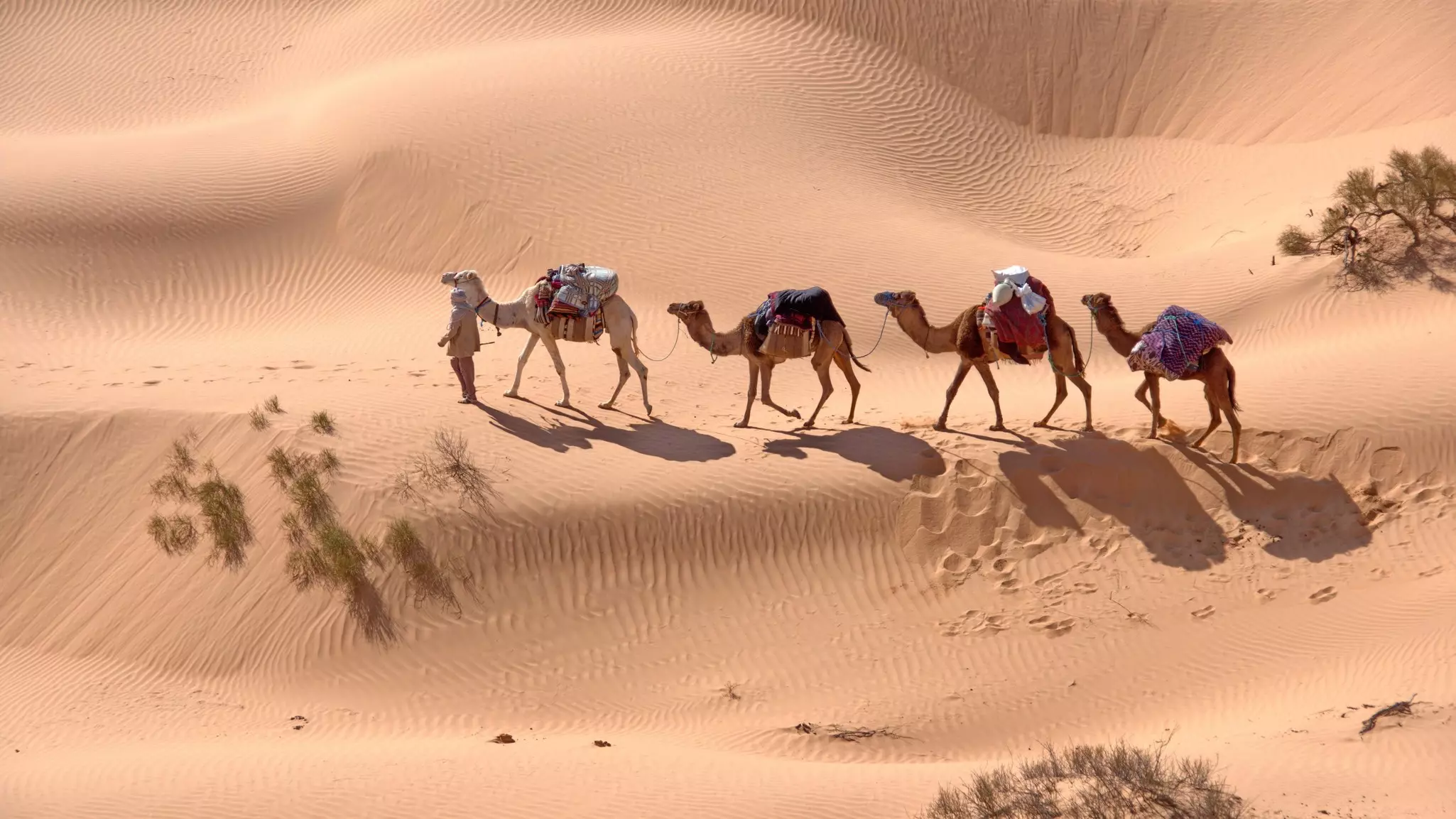
The southern quarter of Tunisia bleeds into the Sahara Desert, and exploring its stony plateaus, salt lakes and whispering ergs (dunefields) is a major attraction for visitors. The two main desert areas visited by tourists are the oasis towns of Tozeur and Douz, both inland from Gabès on the edge of the Chott el Djerid salt flats.
The drive from Tunis to Tozeur takes around 6 hours; you can also fly or travel by bus or train. Douz is best reached from the south; the drive from Djerba takes around 3.5 hours. You can drive between the two oases in around 2 hours on a minor road that crosses the salt flats. A 4WD can be handy for detours off the main roads, but avoid driving off-road on the salt flats as there may be hidden soft spots.
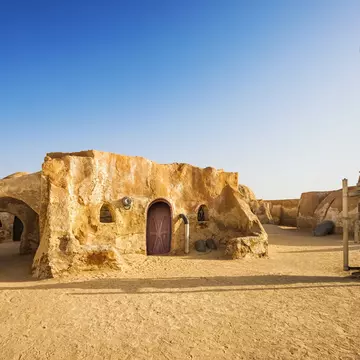
Tozeur is notable for its traditional architecture, authentic oasis culture and delicious dates. The town is also a good base for hikes to slot canyons and natural springs, and visits to the vintage Star Wars set of Mos Espa, which stood in as a spaceport in The Phantom Menace movie.
The date-growing town of Douz has a frontier feel. This area is inhabited by Bedouin tribespeople who lead overnight camel and 4WD safaris into areas of desert populated by fennec foxes, jackals, gazelles, Barbary sheep and houbara bustards.
To get into the desert proper from Tozeur or Douz, you’ll need to book a tour by camel or 4WD with a local safari operator. From Douz, multiday desert trips explore the stunning scenery of Jebil National Park, stopping at night in desert camps amid the whispering sands. Always check how far your tour goes into the national park; some trips stop short of the Grand Erg Oriental, the most impressive area of dunes.
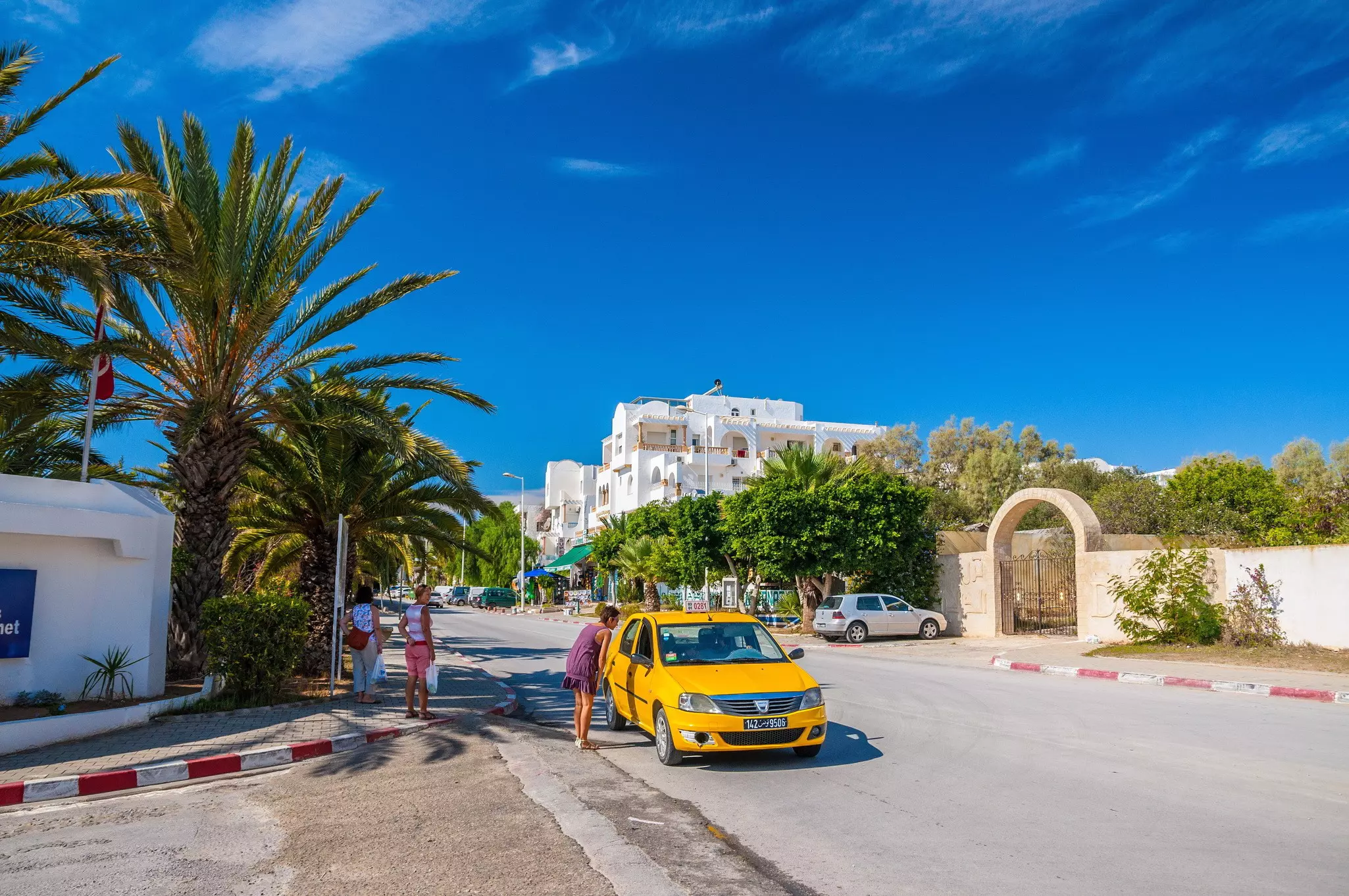
Yellow taxis are useful for getting around in cities across Tunisia, and most vehicles are metered. Insist that the driver uses the meter, or confirm a fare before starting your journey. For longer trips, you may need to charter a vehicle and driver (hotels can help you make arrangements).
Taxis operate at all of Tunisia’s airports, but since drivers may refuse to use the meter when heading into town, be sure to negotiate a fare before you board. Rideshare services operate in larger cities such as Tunis and Sousse; Yassir and InDrive are the main apps. Note that payment must be made in cash, directly to the driver.
The holiday island of Djerba is connected to the mainland by a causeway, but there’s also a car ferry from El Jorf on the mainland to Ajim on Djerba. Ferries depart every 20 minutes from early morning to late evening, with the crossing taking just 15 minutes.
There’s also a car ferry connecting Sfax with the Kerkennah Islands, about 25km off the coast. In summer, there are up to nine crossings daily, but services are less frequent in winter. The crossing takes about an hour.
Tunisia isn’t the easiest country in the region for travelers with disabilities. Trains, buses and louages rarely have space for a wheelchair, and all three forms of transport can be tricky for travelers with even minor mobility issues. At street level, pavements can be bumpy, and even where dropped curbs can be found, drivers often use them to park on the pavement. More expensive hotels have elevators and accessible rooms.
Your best bet is to make arrangements for an accessible trip with a specialist travel agency. Resort hotels in beach destinations such as Djerba and Hammamet are often able to accommodate travelers with extra needs.
This article was adapted from Lonely Planet’s Tunisia guidebook, published in December 2025.
Explore related stories