May 22, 20265 min read
When Should You Visit Anchorage?Apr 24, 2026
6 MIN READ

Writer
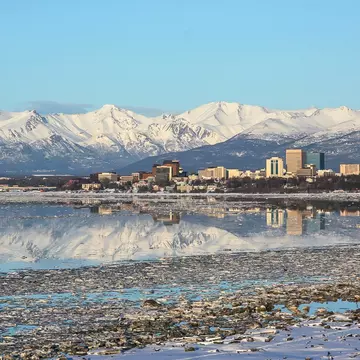
Anchorage, Alaska. Bild LLC/Shutterstock

Writer
Lonely Planet may earn a commission from affiliate links on our site. All recommendations and reviews reflect our own independent opinions.
Founded a little over a century ago, the largest city in Alaska generously spaces out its neighborhoods, which are subtly influenced by the yawning wilderness that surrounds them. But you might be surprised at just how cosmopolitan some of these urban districts of the far north are.
In Anchorage's best neighborhoods, you’ll be able to sample the city’s unique flavor. Here are six areas to seek out.
Best for history and museums
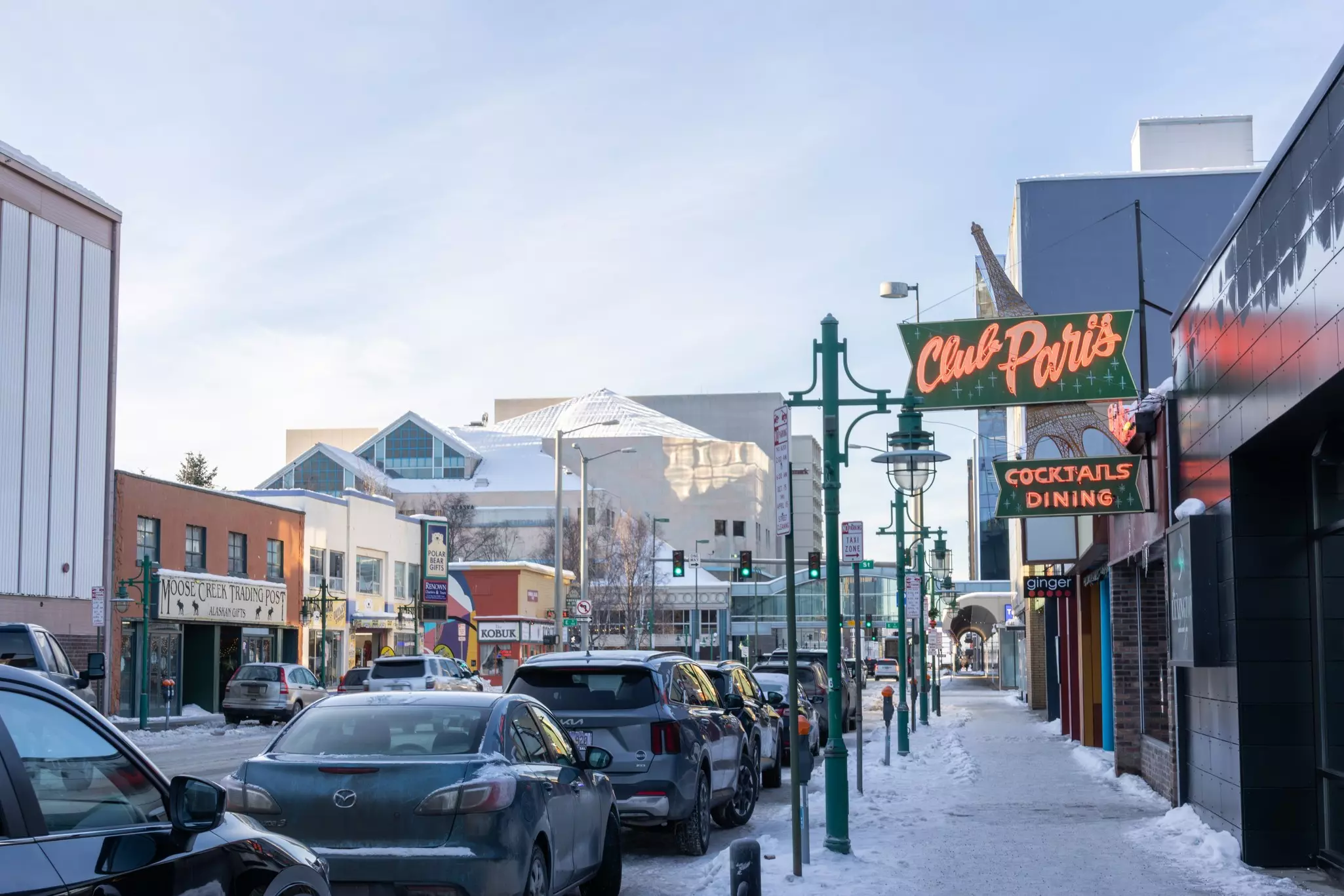
Because many visitors come to Anchorage as a stopping-off point for excursions elsewhere in the state, Downtown is only neighborhood many people will see. It has the bulk of the city’s nice hotels, the state’s best museum and all the requisite shops and restaurants, but the area has its quirks, too, such as the world’s only urban king salmon fishery at Ship Creek.
Ship Creek is where Anchorage began as a tent camp, in 1915; the settlement soon relocated to more-stable bluffs south of the river. These bluffs are now home to some of the oldest buildings still standing in town, including the Oscar Anderson House Museum, one of the first solid structures to grace the urban grid.
Until the 1920s, forest flourished right up to the edge of 10th Ave, and what is now Delaney Park, between present-day 9th and 10th Aves, served as a firebreak. The more spread-out residential neighborhood the south – the so-called South Addition – was built in the 1930s and ’40s.
Where to eat: A pink neon sign summons passersby to Club Paris, Anchorage’s oldest steakhouse, an atmospheric throwback with a 1950s-era Formica-topped bar and historic memorabilia galore.
Where to stay: The Copper Whale Inn has an ideal downtown location, elegant interiors and two relaxing waterfall courtyards.
Best for reasonably priced accommodations
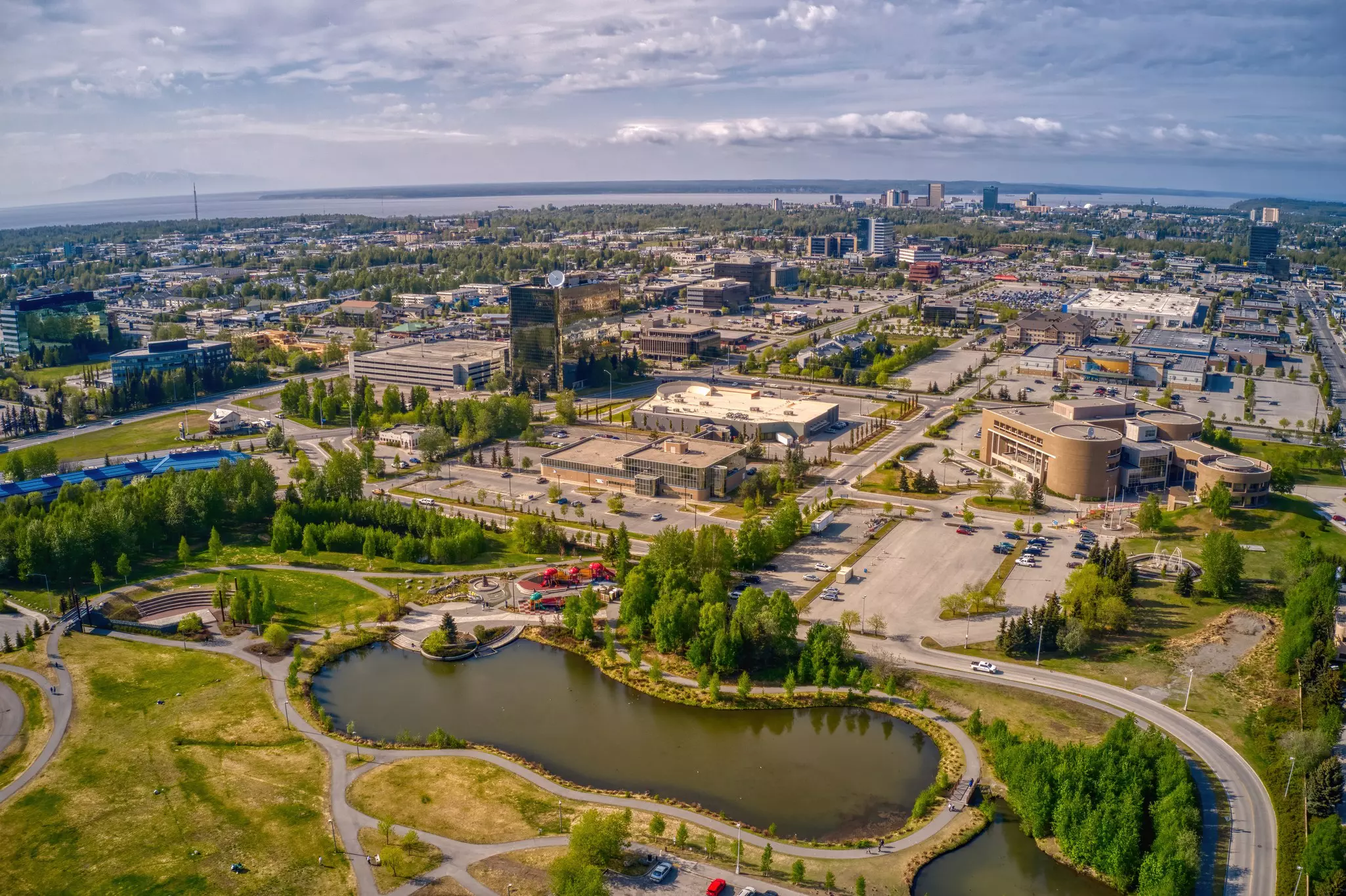
South of Downtown, Midtown is a symmetrical grid of shopping malls, chain hotels and casual restaurants serving craft beer and burgers. What it lacks in dashing good looks, it makes up for in convenience.
With a growing number of affordable, midrange hotels, this neighborhood can be a better value than Downtown, as long as you’re up for a bit of urban walking. Though you won’t have to roam far to eat well. Midtown and its adjacent neighborhoods of North Star and Taku-Campbell have several decent breakfast spots and a good stash of Korean restaurants (an Anchorage specialty).
The neighborhood’s only real green spot is the 15-acre Cuddy Family Midtown Park, which boasts a giant kids’ playground and waterfowl-filled lagoon. The southeastern corner of the district is brushed by the 7-mile Campbell Creek Trail, the western gateway to the rawer realm of Far North Bicentennial Park.
Where to eat: One of the city’s favorite destination breweries is Moose’s Tooth, a made-in-heaven marriage of gourmet pizzas and custom-brewed beer.
Where to stay: Base Camp Anchorage Hostel sits amid Midtown’s action. This community-driven hostel has uncrowded dorm rooms and a wood-fired sauna.
Best for trails into the wilderness
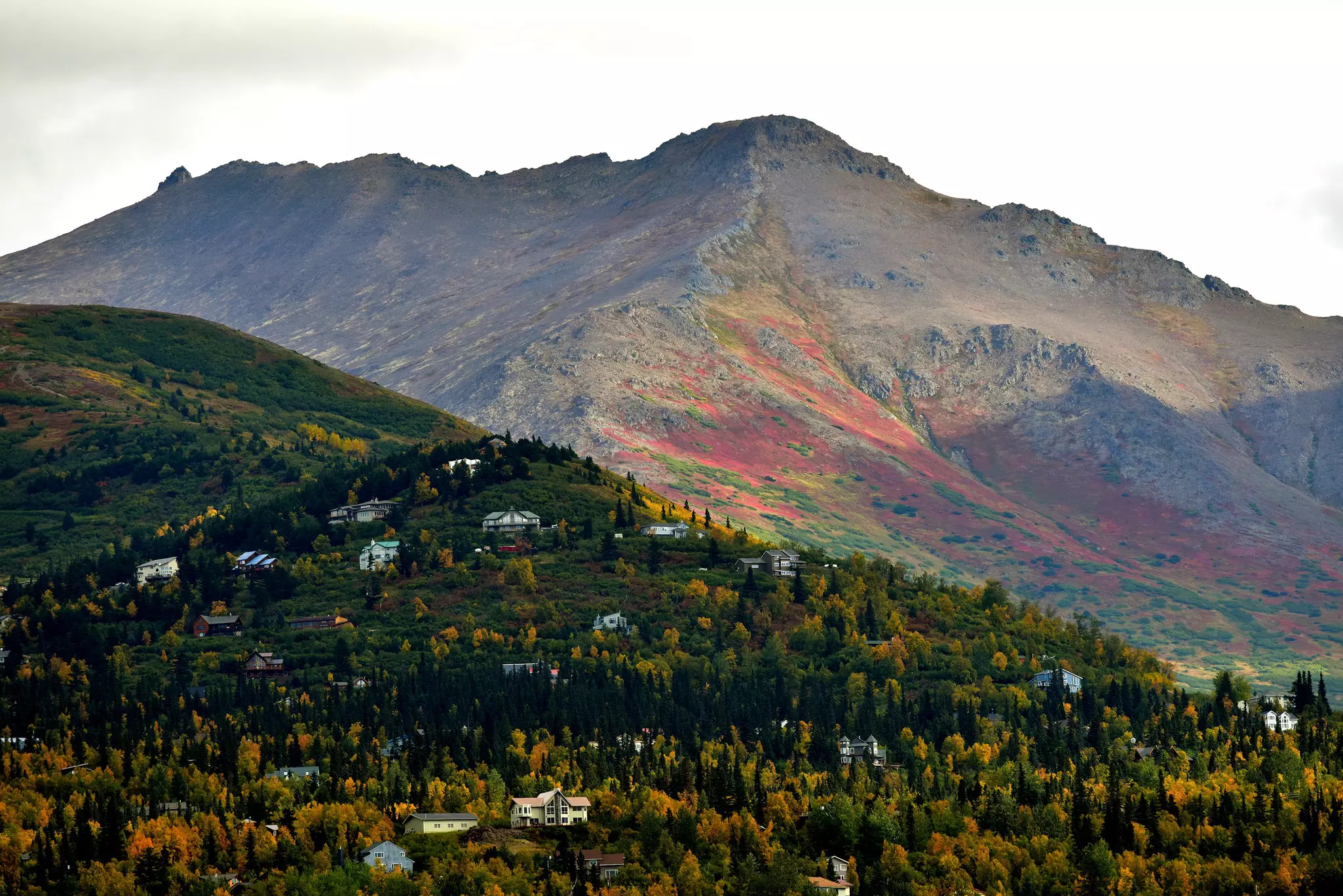
Spending time in Hillside in southeastern Anchorage feels like having one foot in the wilderness and one foot in a swanky suburb. Flush up against the valleys and peaks of Chugach State Park and filled with some of the city’s most sought-after homes, this is a neighborhood of sweeping views and sprawling lots where you’re just as likely to find a bear rifling through your garbage as a raccoon.
Set apart from the city’s main retail and commercial districts, Hillside is more suited to activity-focused day trips than random wandering. Far North Bicentennial Park, Anchorage’s largest, contains a wildlife preserve and a small nonprofit ski area inside its 4000 acres. Densely forested and rich in fauna, it seems way too wild to be within city limits.
The vast majority of visitors and locals gravitate further south to the Glen Alps Trailhead to tackle the craggy face of Flattop Mountain. Considered Anchorage’s ultimate fitness test, Flattop is a short, rough climb to a wide, rocky summit from which paragliders launch into the sky. It’s eternally popular with intrepid hikers in summer, when there’s a daily shuttle to and from Downtown.

Best for nightlife
One of the metro area’s more independently minded neighborhoods, Spenard has a quirky character that stems from its status as a separate city until the mid-1970s. While Anchorage began life as a tent city, Spenard, 3 miles to the south, grew up as a lumber camp: the area takes its name from a Canadian businessman named Joe Spenard, who built the area’s original logging road (now Spenard Rd) in the 1910s.
By Alaskan standards, its personality is positively bohemian. At the Bear Tooth Grill, you can eat chicken chipotle tacos and drink craft beer while watching the latest action movie. Nearby, the Yak and Yeti Cafe introduces diners to Tibetan cuisine, while establishments like Middle Way Cafe counter Alaska’s subsistence-hunting image with a menu of vegetarian and vegan options.
Then there’s the nightlife. Spenard might be the best place in Anchorage to blow your vacation budget, courtesy of venues like Chilkoot Charlie’s, an eccentric emporium of drinking, dancing and live music that has been loosening collars since 1970.
Where to eat: At Spenard Roadhouse, kitsch meets the fiercely locally driven cuisine. Local art, an arsenal of Alaska license plates and faux taxidermy are prevalent around tables where diners knock back elevated comfort food (halibut and chips, gourmet grilled cheese on sourdough).
Best for diverse cuisine
Only 2 miles from Downtown but rarely visited by outsiders, Mountain View is more intriguing than first impressions would suggest. The city's most diverse neighborhood includes well-established communities of Alaskan Natives, Asian Americans and Pacific Islanders, with groups from Ethiopia, Peru and Somali among the more-recent arrivals.
While not really set up for tourists, the neighborhood can be shoehorned into a short afternoon trip from Downtown. Cycle the Ship Creek Trail to its eastern terminus, then wobble along Mountain View Dr, with its small grocery stores and restaurants, until you find a place that looks appetizing.
Where to eat: Hawaiian-themed Hula Hands concocts authentic pulehu (wood-fire grilled) chicken.
Best for coastal vistas
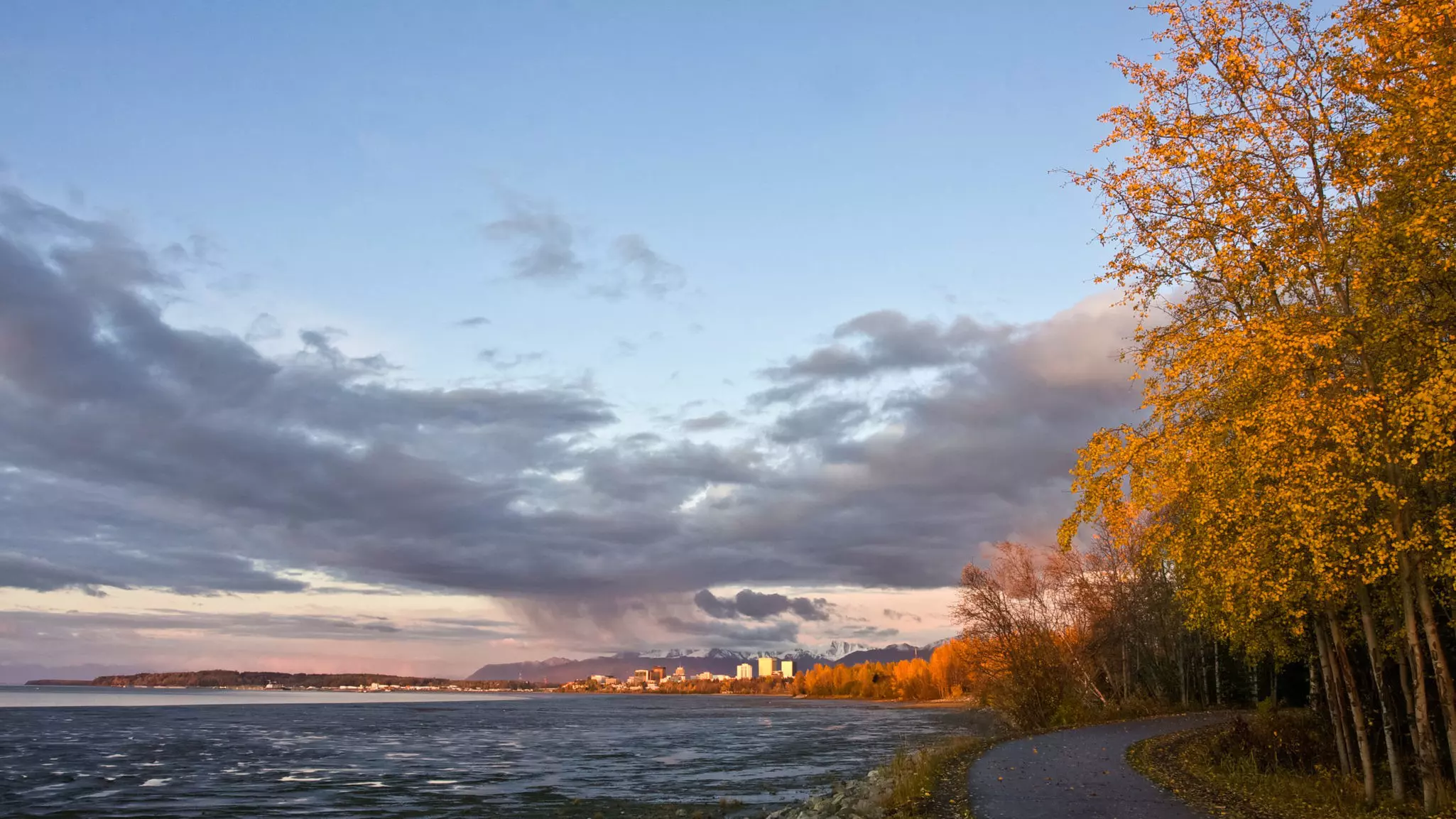
Though airport-adjacent districts are mostly ignored by travelers unless they’re on the lookout for an affordable layover hotel – or they nurture a secret fascination for plane spotting – Anchorage’s Turnagain neighborhood is different. Inhabiting the western tip of the Anchorage peninsula at the point it juts into Cook Inlet, the area is circumscribed by the beautiful Tony Knowles Coastal Trail; cruise its length for the quintessential Anchorage bike ride.
What’s more, the area showcases a tragic chapter of the city’s past. In 1964, the second-biggest earthquake in recorded human history destroyed 75 houses in the vicinity of Turnagain Heights, sending part of a waterside bluff sliding into the sea. The event is memorialized in Earthquake Park, which overlooks the mudflats of Knik Arm. Turnagain has rebounded since the seismically unstable ’60s and has become one of the city’s more expensive areas.
Closer to the airport, the Alaska Aviation Museum sits on the south shore of Lake Hood, the world’s busiest seaplane base; nearby, a strip of comfortable midrange hotels (all with free airport shuttles) line the southern end of Spenard Rd.
Where to stay: The Lakefront Anchorage Hotel backs onto Lake Spenard, the eastern extension of Lake Hood, allowing guests to watch the comings and goings of the ubiquitous floatplanes from their rooms.
Explore related stories