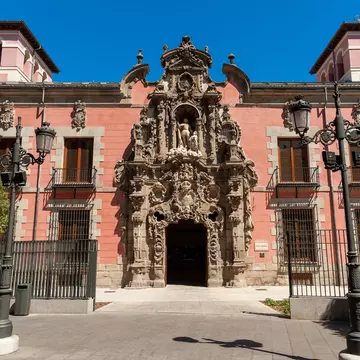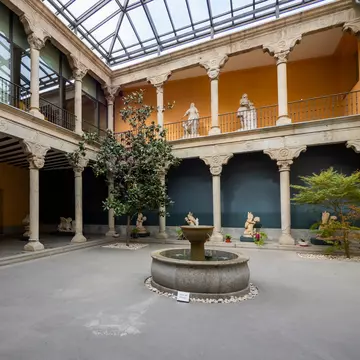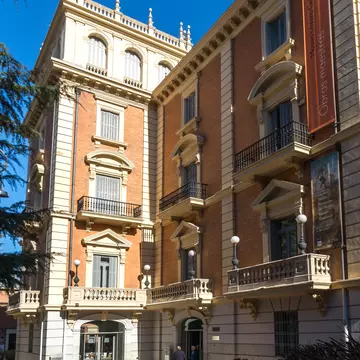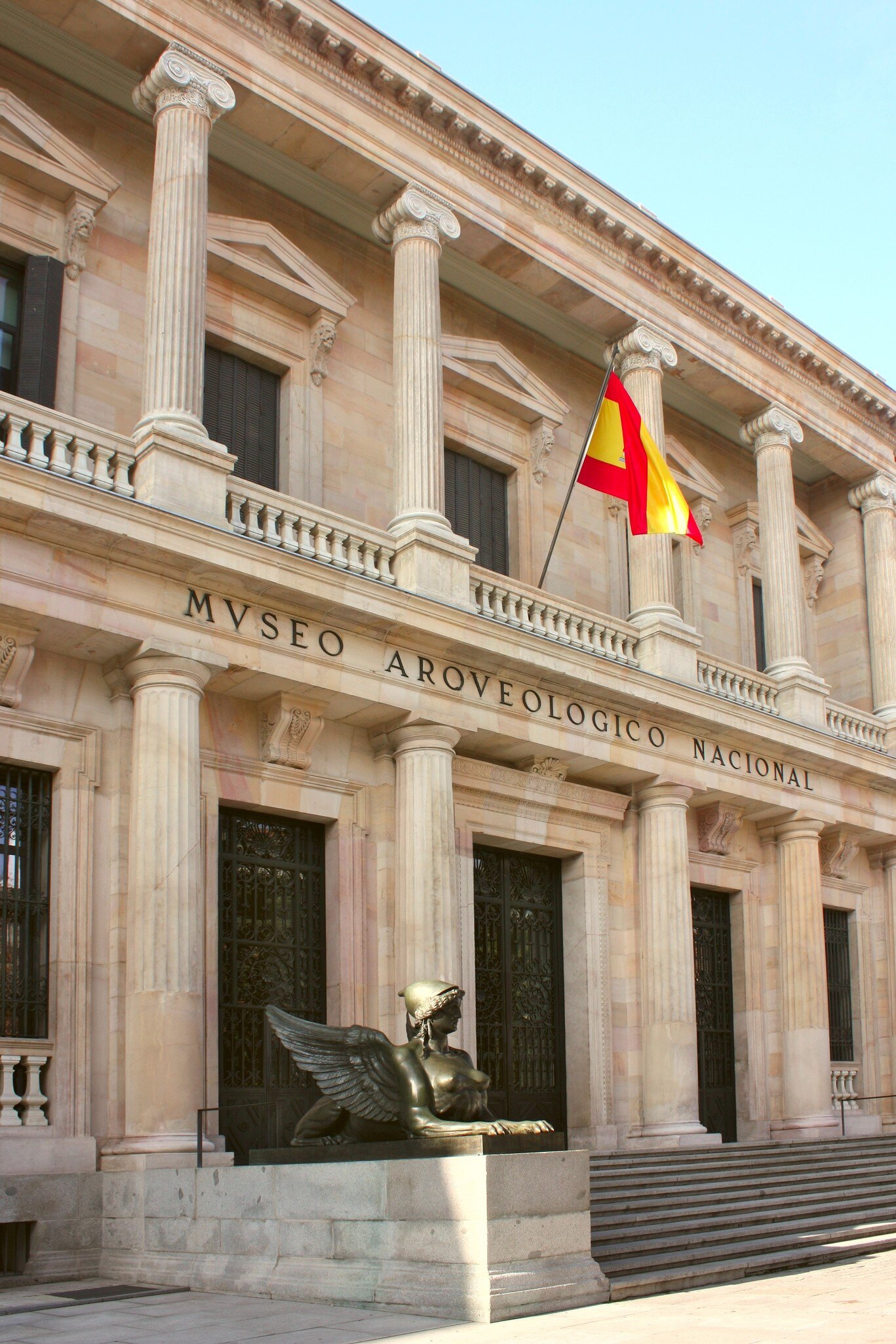
The Museo Arqueológico Nacional (MAN) contains a spectacular array of artifacts behind its grand neoclassical facade. The excellent permanent collection includes finds from prehistoric to medieval times. With a vast array of Roman statues, Greek vases and ancient coinage on display, there’s no danger of disappointment.
Twin Guardians of Knowledge
Founded in 1867, this excellent museum occupies the sprawling Palace of the National Library and Museums. The palace itself is an architectural marvel – a 19th-century neoclassical building with a large central courtyard.
Two familiar characters from Greek mythology sit at the museum's main entrance. With wings unfurled over the head, plus the torso of a woman and the body of a lion, the twin sphinxes were believed to be guardians of knowledge.
Spain's Multi-Layered History
The MAN tells Spain's story through multimedia installations, tactile displays (great for kids!) and exhibition spaces featuring an astounding collection of artifacts and archaeological treasures spread across multiple floors.
Visitors are welcomed with an audio-visual installation showing Spain’s various periods, which span Roman, Visigothic, Islamic and Christian rule. From here, you embark on a chronological journey through 40 galleries starting with Spain’s prehistory, then exploring Roman Hispania, Muslim-era Al-Andalus and the Middle Ages, up until the reign of the Reyes Católicos (Catholic Monarchs). The interactive journey is a glimpse of the sheer vastness of the Spanish empire that once upon a time stretched across Europe, Africa, the Americas and Asia.
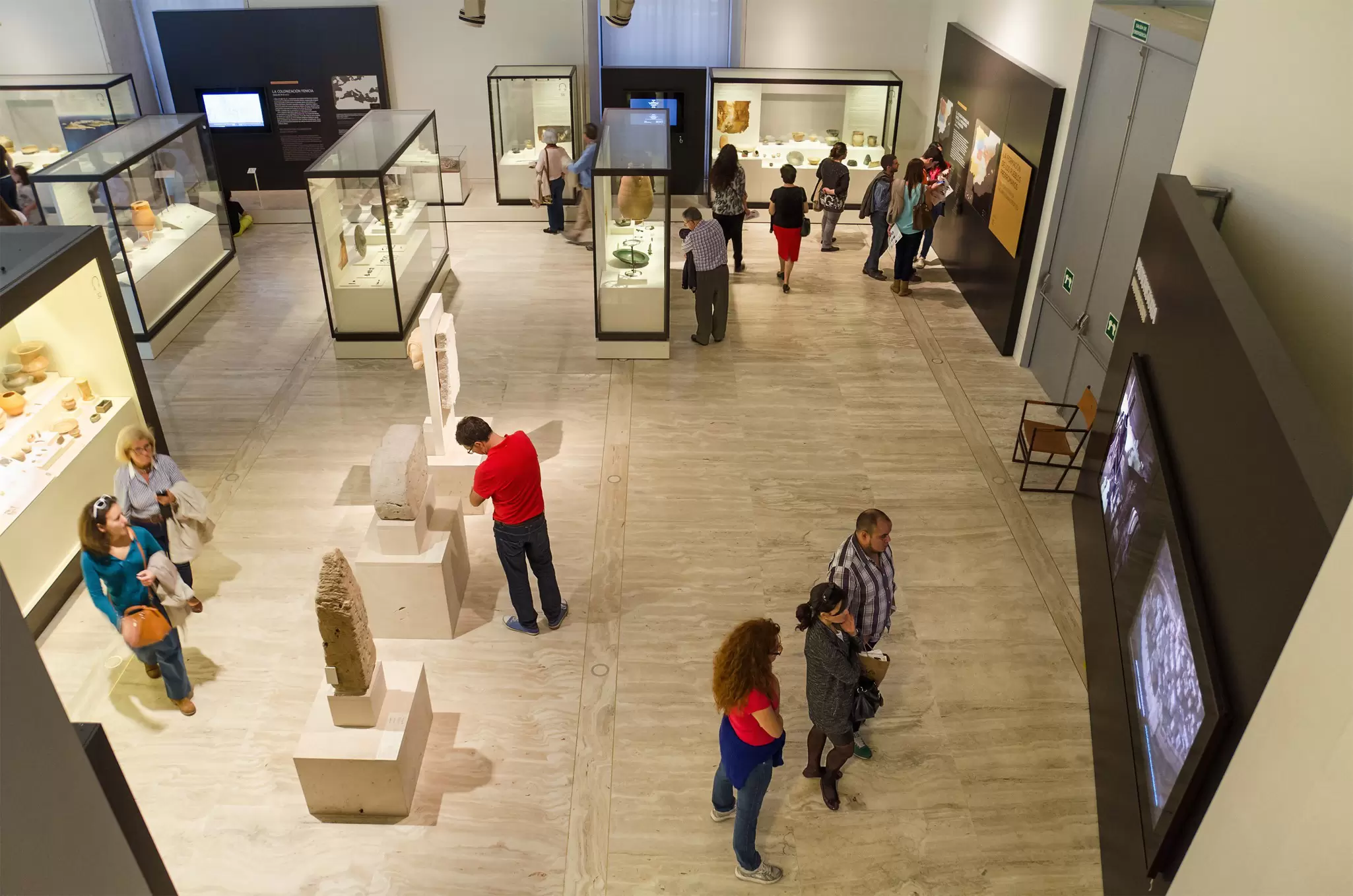
Notable tactile displays to keep an eye out for include "From Iberia to Hispania" and "The Unity of the Roman Empire." They provide insight into Spain's Romanization, which brought profound changes in its culture, governance and architecture.
"Andalusian and Mudéjar Architectural Decoration" is another fascinating installation that gives insight into the Moors' lasting and enriching influence on the country's architecture and aesthetics.
Museum Showpieces
While it may take days to fully explore the museum's treasures, certain standout artifacts shouldn’t be missed.
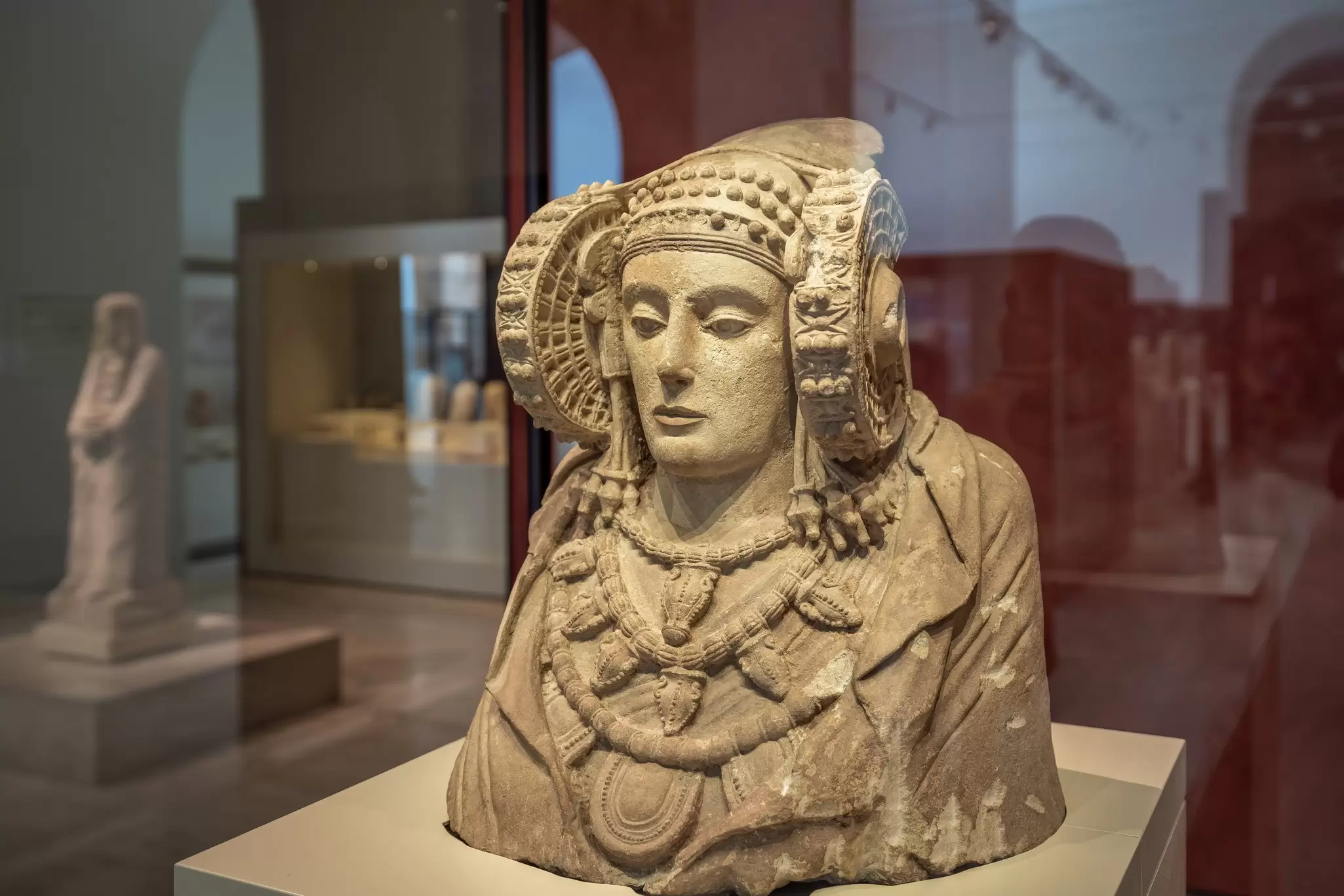
In Room 13, you’ll find the museum’s showpiece, the Lady of Elche – an exquisite stone sculpture of a richly adorned woman, excavated by chance at an archaeological site near the town of Elche in southeast Spain. This icon of Iberian culture remains shrouded in mystery, spawning theories of her identity as a goddess, priestess or deified aristocratic woman. Another distinguished Iberian dama sits in Room 11: the Lady of Baza is a carved limestone anthropomorphic urn from the 4th century BCE.
Head to Room 9 to see the warrior stela from Solana de Cabañas, depicting a local chieftain with the symbols of power that legitimized his reign over the territory, which is inscribed in this stone slab dating back to the Bronze Age.
An equally stellar piece displayed in Room 23 is the bejeweled crown of King Recceswinth, the Visigothic ruler of Hispania in the 7th century.
Move over to Room 38 to see a curious currency, the Tevau or "feather money," consisting of a coil of red feathers; it was used in traditional marriage ceremonies and economic transactions. Something more "modern" is found in Room 28: Napier’s calculating machine, a 16th-century invention performing mathematical calculations.