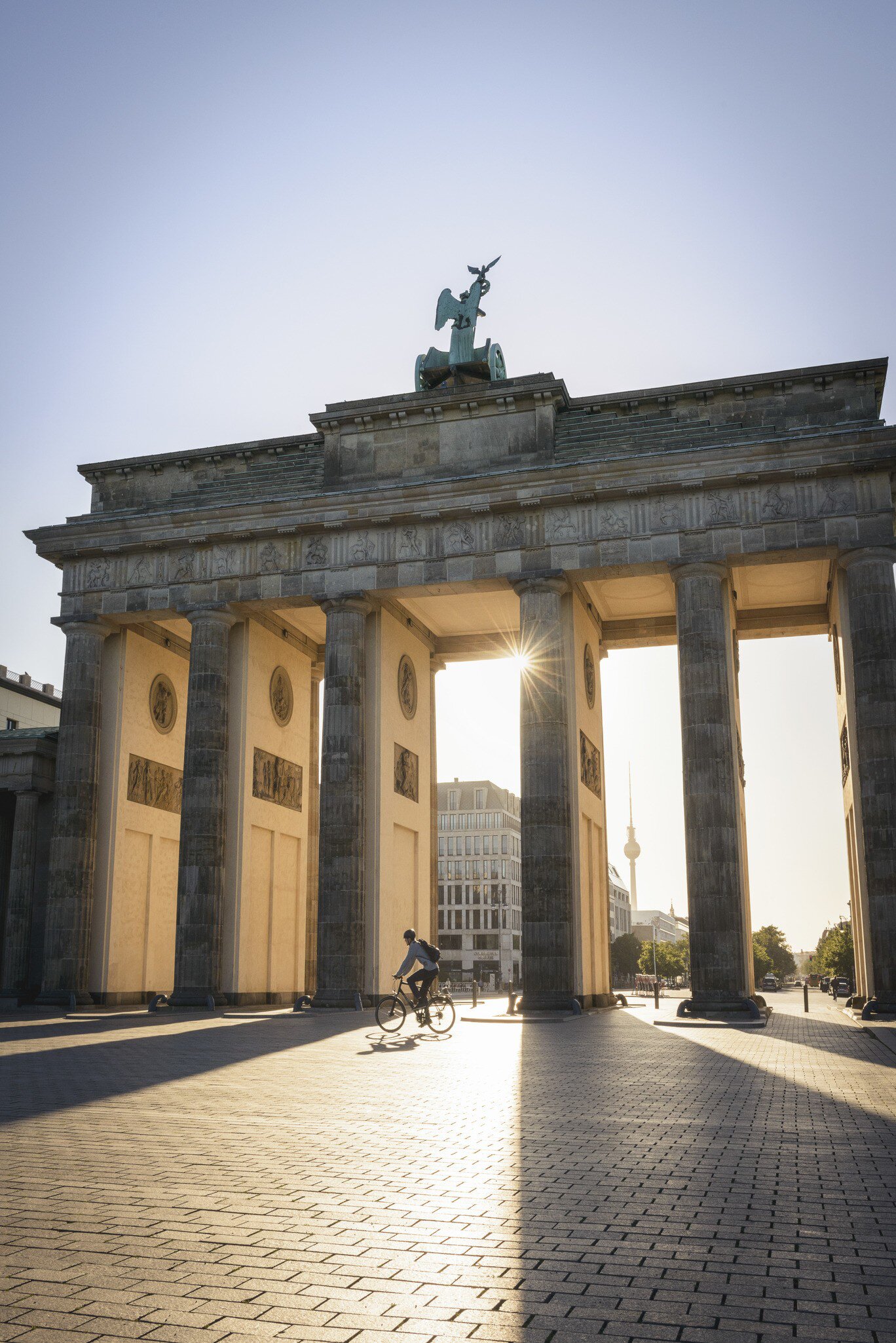
The Brandenburger Tor (Brandenburg Gate) is Berlin’s most famous – and most photographed – landmark.
Trapped right behind the Berlin Wall during the Cold War, it symbolized division for decades before becoming an emblem of German reunification when the hated barrier fell in 1989. Today, it’s a photogenic backdrop for New Year’s Eve parties, concerts, festivals and mega-events, including FIFA World Cup finals.
The Backstory
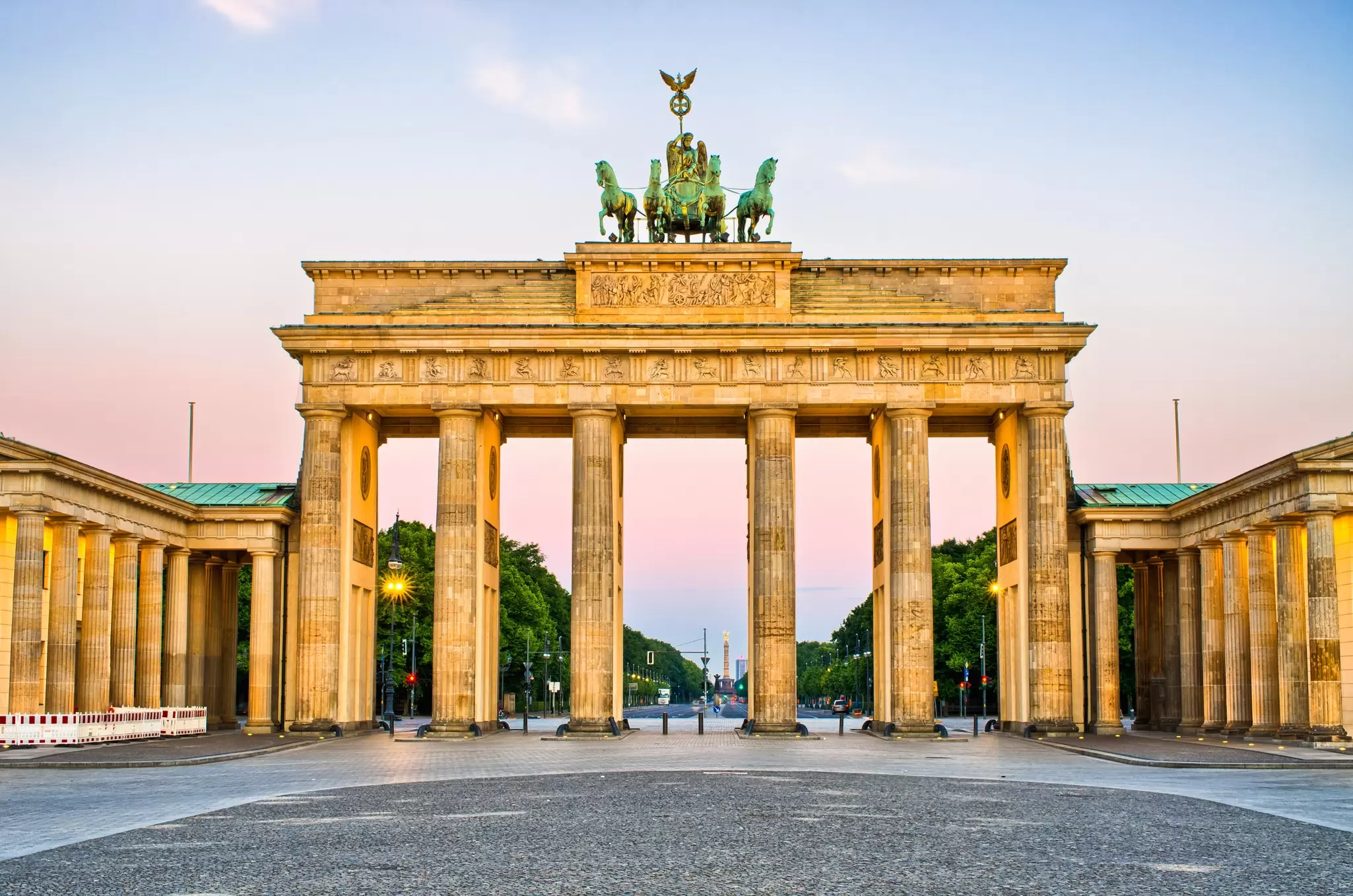
Commissioned by Prussian king Friedrich Wilhelm II, the gate was completed in 1791 as a symbol of peace and suitably impressive entrance to the boulevard Unter den Linden. Architect Carl Gotthard Langhans took inspiration from the Acropolis in Athens for this landmark – the only surviving of 18 city gates. Notice its five passageways: the central, wider one was once reserved for royalty; common folk had to stick to the narrower side lanes.
The Quadriga
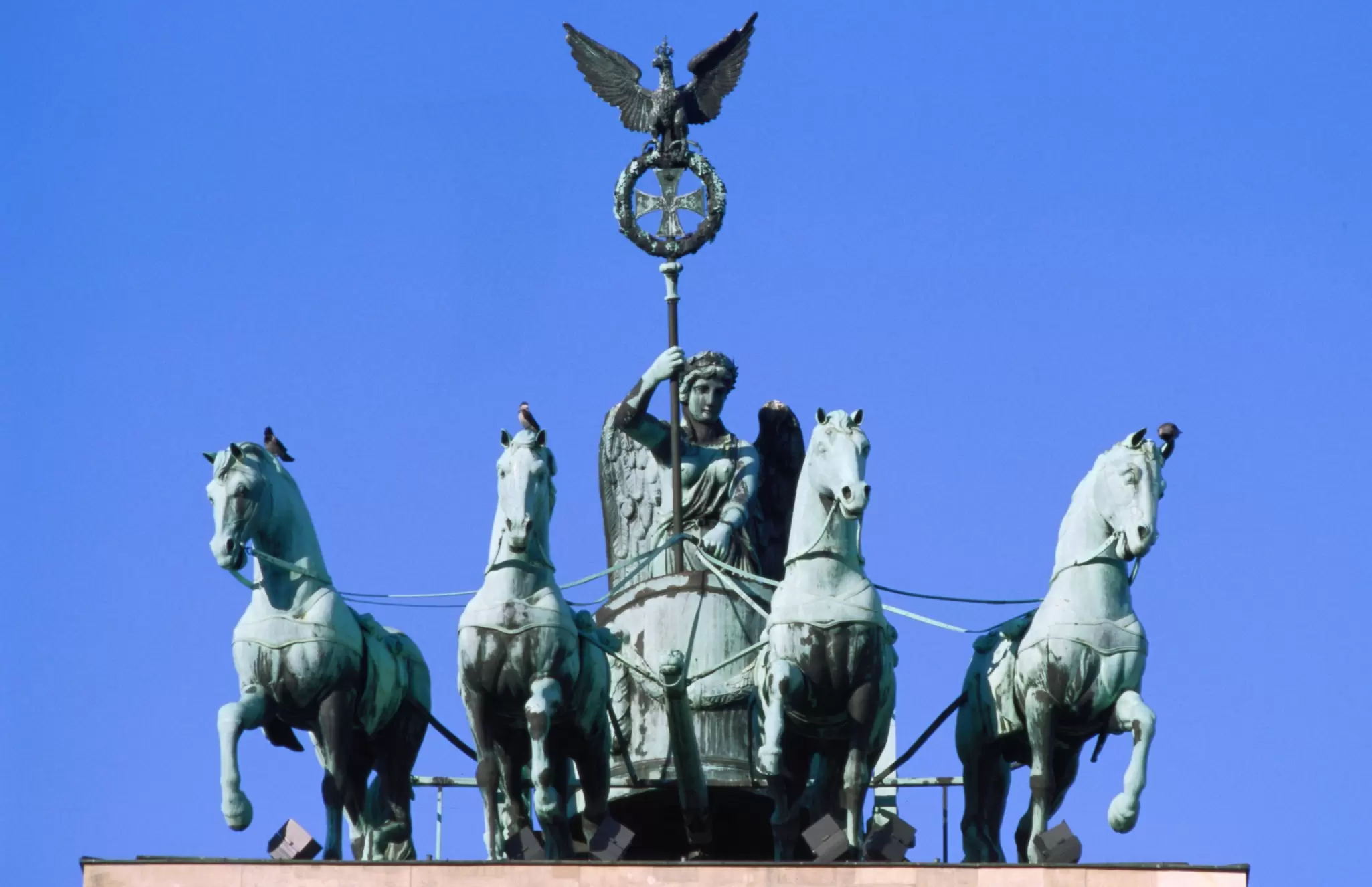
Crowning the gate is the Quadriga, Johann Gottfried Schadow’s sculpture of the Roman goddess of victory piloting a four-horse chariot. After defeating Prussia in 1806, Napoleon kidnapped the lady and held her hostage in Paris until she was freed by a gallant Prussian general in 1815. As a final flourish (and perhaps a 19th-century-style "middle finger"), the goddess was reinstalled with a new accessory: a triumphal iron cross topped with a Prussian eagle.
Pariser Platz
The Brandenburg Gate overlooks Pariser Platz, which was completely flattened in WWII. Look around now: the US, French and British embassies, banks and the venerable Hotel Adlon once again frame the square, echoing its 19th-century heyday.