
Oct 18, 202613 min read
Cruises to Halong Bay: Tips and Things to KnowOct 18, 2026
13 MIN READ
Contributors
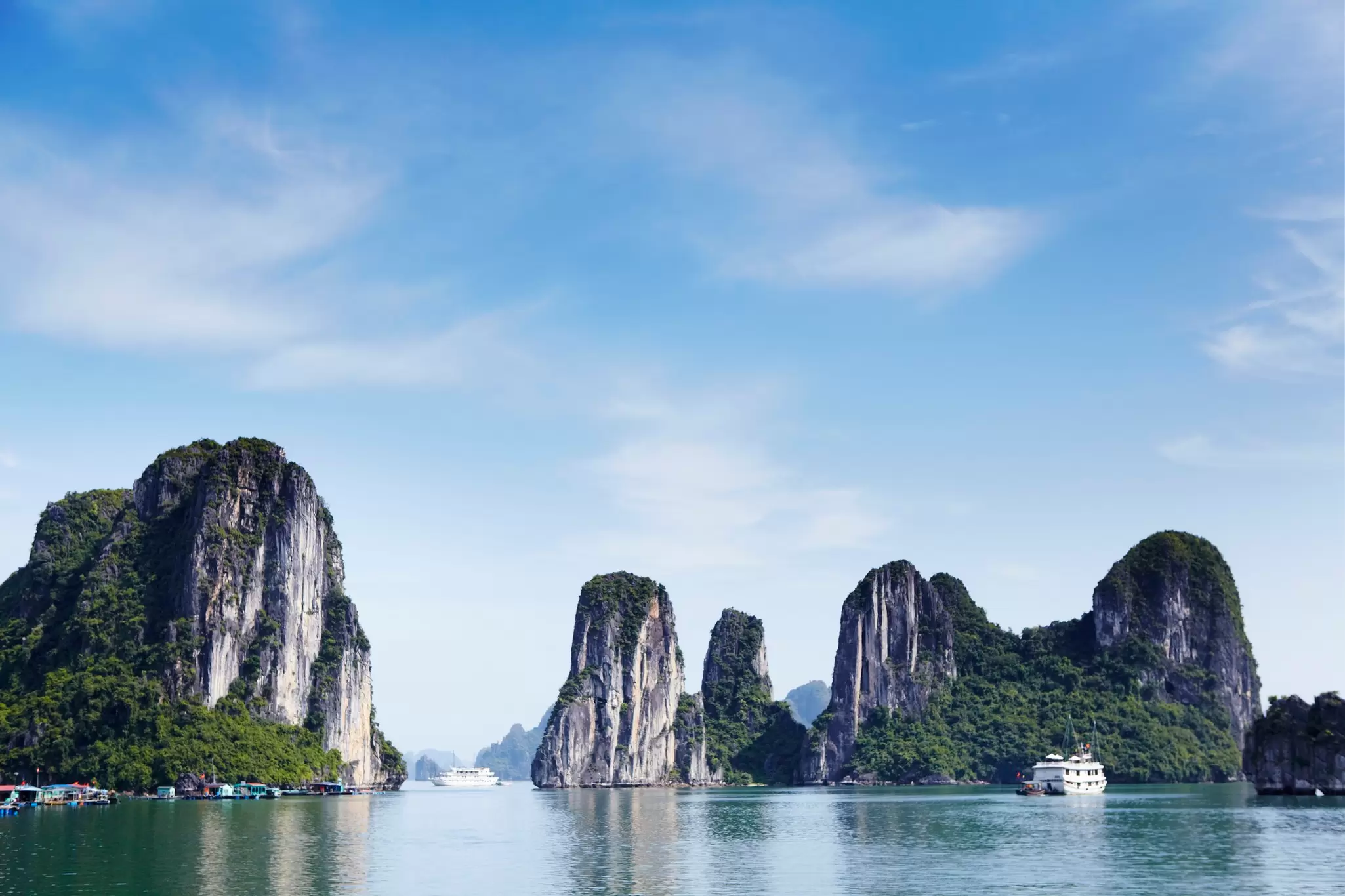
Boats cruise between the karst outcrops in Halong Bay, Vietnam. Digitaler Lumpensammler/Getty Images

Contributors

Lonely Planet Editors, Jessica Lee
Highlights
Writer Jessica Lee explains how to cruise around Halong Bay, from costs and activities to when to go.
Day cruises from US$60 suit the time-pressed; overnight midrange cruises from US$110 add kayaking.
Skip ultra-budget boats on safety grounds, and confirm kayaking stops include a guide.
November brings blue skies and calm seas; June to mid-August sees peak crowds and tropical storms.
Lonely Planet may earn a commission from affiliate links on our site. All recommendations and reviews reflect our own independent opinions.
Dotted with jagged karst pinnacles, Halong Bay is one of the biggest attractions in Vietnam – and one of Southeast Asia's most remarkable landscapes. The name means "Bay of the Descending Dragon," and legend tells of a protector dragon who spat jewels and jade shards to repel an invading army, creating the archipelago of islands seen today.
The vast majority of the 3.4 million visitors who arrive in Halong Bay every year come on day and overnight cruises starting from Tuan Chau International Marina or the Halong International Cruise Port in Halong City, often booked as a package from Hanoi.
However, the multitude of trips on offer can be overwhelming. There are day trips, overnight trips, luxury trips, budget trips, wellness cruises, activity cruises and much, much more. To help you find a cruise you'll remember, here's everything you need to know about cruising on Halong Bay.
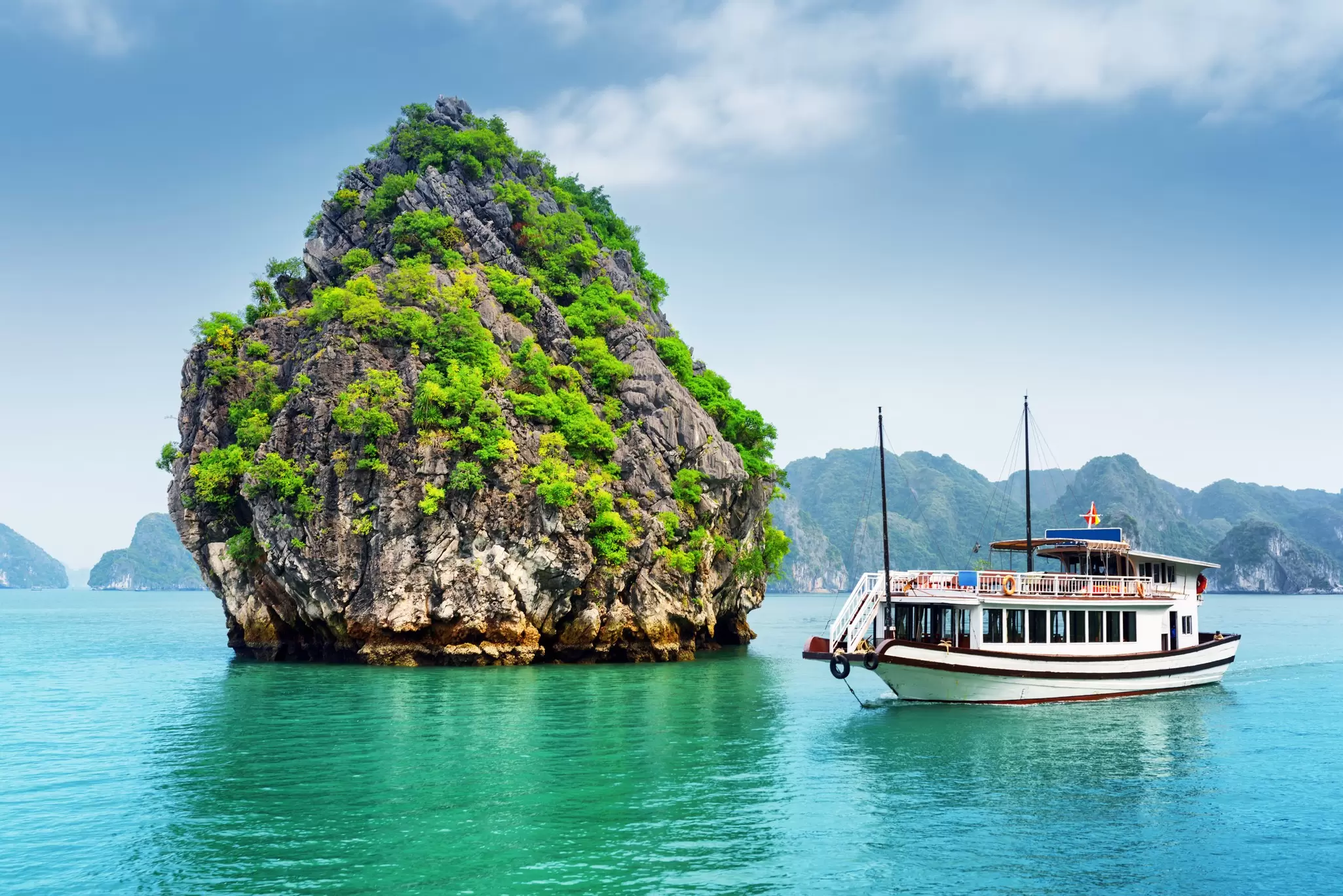
Offshore from Halong City, Halong Bay is dotted with 1969 jungle-clad karst islands and islets, all rising from deep emerald waters. This was once a prehistoric seabed, but tectonic activity forced the bedrock upward, creating an exposed limestone plateau. The ocean and monsoon rains quickly eroded the soft limestone, creating an otherworldly landscape of islands and towering outcrops.
In past centuries, the islands served as a hideout for pirates, smugglers and invading armies, but today, the junks that cruise Halong Bay's waters are mainly tourist boats, offering a touch of nostalgia combined with comfortable modern amenities.
The peak cruising season is between May and August, particularly for domestic tourists, though storms sometimes lead to cancellations. At the start of this window, the weather is warm, with drier days and good water temperatures for swimming. By June, it starts to get hot and humid with regular rain, but the moody skies add to the drama of the seascape, and the vegetation atop the karst outcrops is lush and green.
The autumn months from September to November see calm seas, clearer skies and cooler days that are great for photography – a great time to visit. Winter tends to be a little cool for swimming, but cruises still operate and the swirling mist can make for atmospherically ethereal photos.
Year-round, cruises and tourist boats sometimes need to alter their itineraries, or trips can be cancelled with little warning depending on the weather and sea conditions. If you’re booking a cruise, check the fine print for the refund procedures.
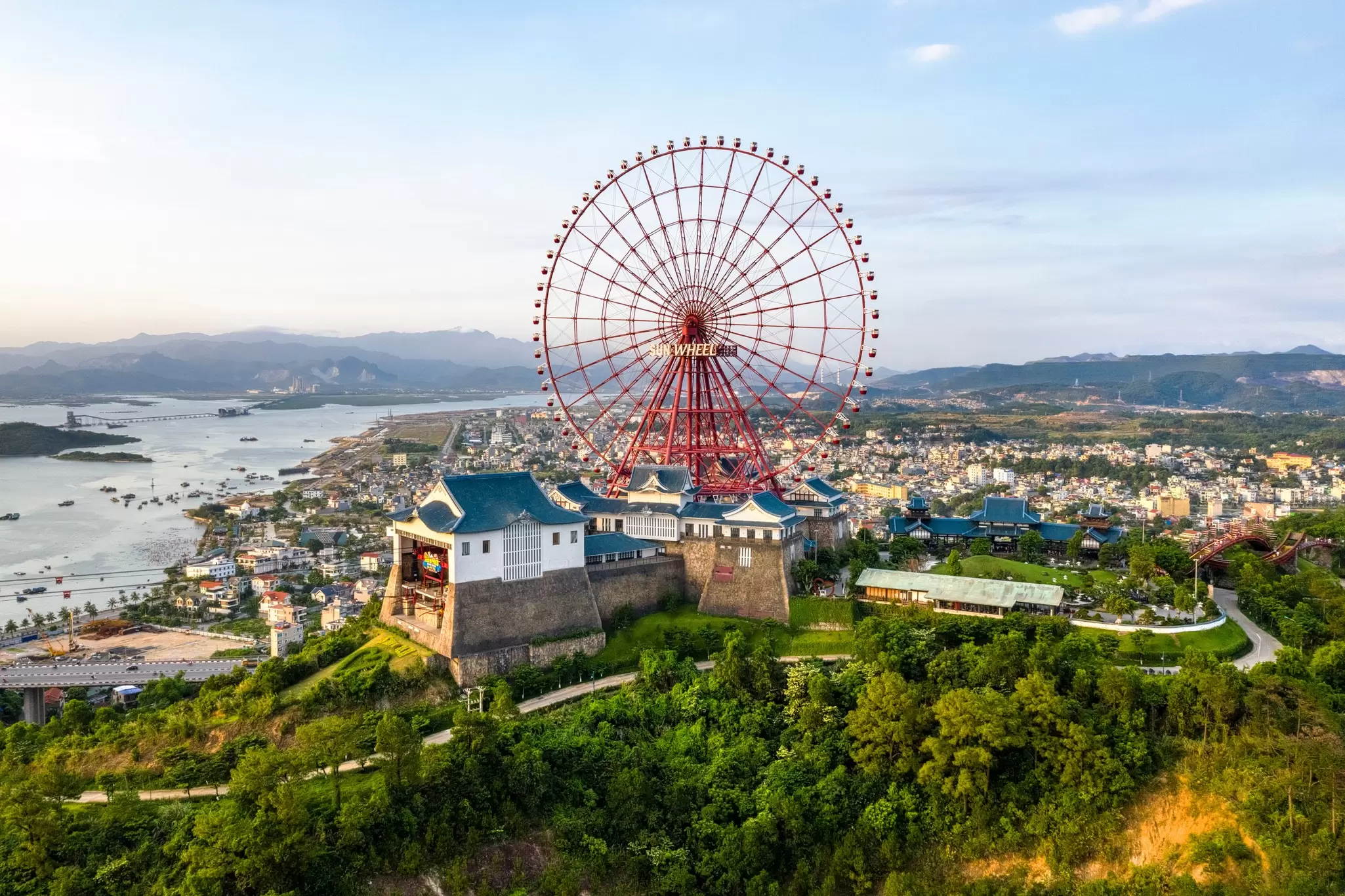
Getting to Halong Bay is straightforward, thanks to the expressway connecting Hanoi to Halong City, and the opening of Van Don International Airport, just 50km from Halong Bay, with flights from Ho Chi Minh City (and plans for international flights in the future). In Halong City, cruises leave from either the Tuan Chau International Marina, just west of the city, or the Halong International Cruise Port, closer to the center in Bai Chay.
If you are coming from Hanoi by road, you can reach the cruise terminals in around 3 hours, allowing enough time for a day cruise if you get an early morning start, but it's more popular to take an overnight cruise before heading back to Hanoi. Dozens of travel agencies (and many hotels) in Hanoi can make bookings, or you can compare cruise packages online using websites such as Halong Bay Tours.
Packages booked in Hanoi often include shuttle transfers to and from the cruise ports rolled into the price, but always check. If you’re coming from Hanoi and going to another place after Halong Bay, tell your cruise company so you’re only charged for one-way (not round-trip) transport from Hanoi.
Be aware that the bay's popularity has taken its toll. In the early days of tourism to Halong, cruises were something of a free-for-all, with many of the common problems associated with overtourism. The Vietnamese government has since imposed strict regulations in response to concerns about overcrowding, water pollution and litter.
Today, boats must follow one of five prescribed routes through the bay, meaning overnight cruises leave from roughly the same place at the same time, and play follow-the-leader as they hit the major highlights of the bay almost in unison. In addition, swimming is only allowed at a few designated beaches.
With these rules in place, your choice of cruise can make or break your Halong Bay experience, so it pays to pick a cruise that matches your preferred level of comfort, itinerary and line-up of activities. As a general tip, longer multiday cruises offer more chances to get away from the crowds, at least for some of the trip.
That all depends on your tastes, your budget, and how much time you have at your disposal. On a tight itinerary, it is possible to get a taste of Halong Bay on a day cruise and return to Hanoi the same evening, but a 2-day/1-night cruise is the most popular option.
Longer cruises lasting 3-days/2-nights are also possible, and boats use the extra day to visit some of the floating villages in the southeastern waters where Ha Long Bay turns into Bai Tu Long Bay. But however long you cruise for, there are fees for entering Halong Bay and sightseeing – usually rolled into the cost of the cruise.
Some luxury cruises are primarily focused on life on the boat, with spa treatments, luxury meals and time basking on deck on a sun lounger. Other cruises are all about activities, such as swimming on approved beaches or sea-kayaking around some of the islands. Here are the main kinds of cruises to consider.
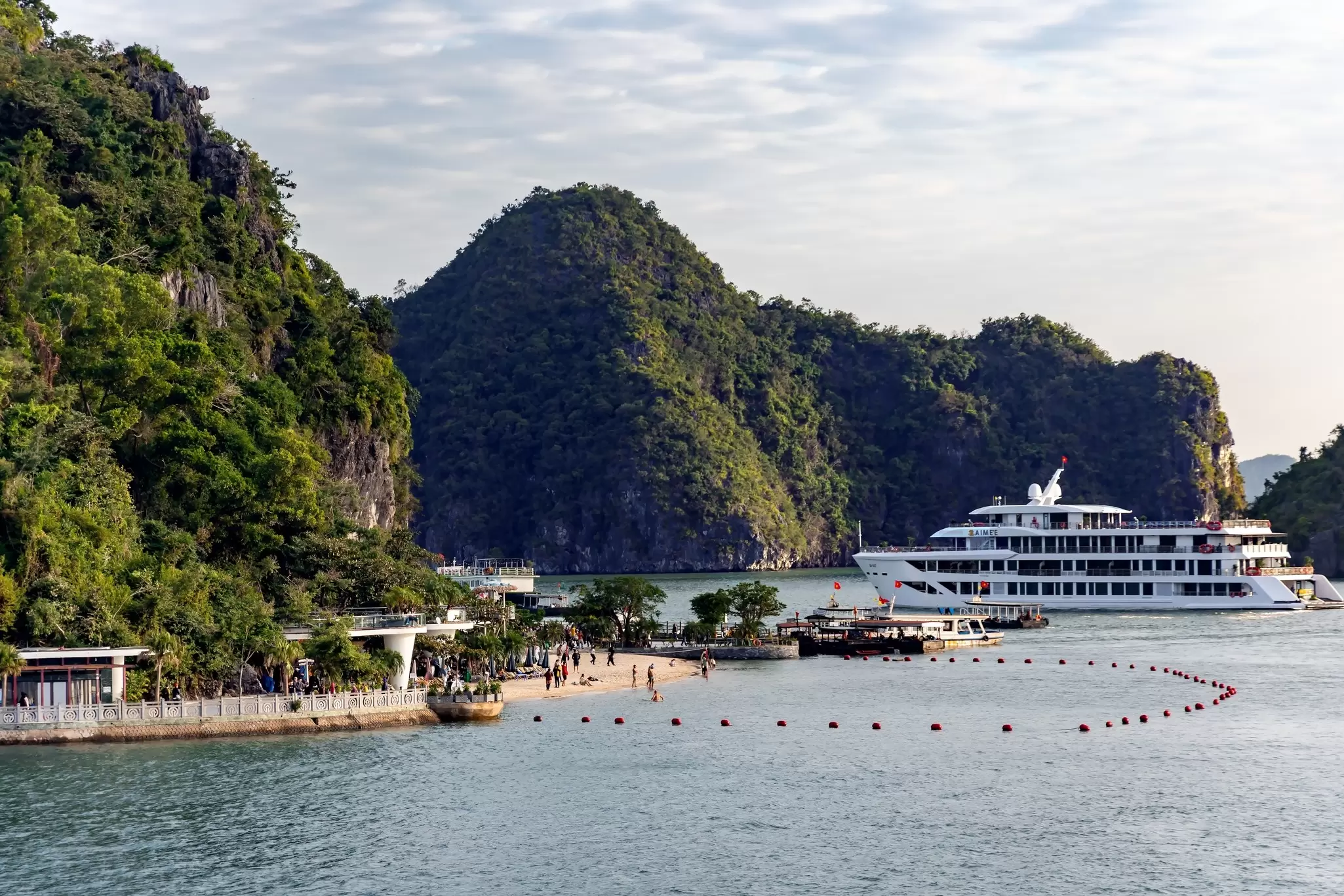
Want to spoil yourself? Halong Bay has some sumptuous cruise options that are basically luxury hotels on water. This type of package is becoming more common with the arrival of big international cruise ships at Halong International Cruise Port.
You’re paying for the experience of five-star amenities here – not for any particular divergence from the typical cruise itinerary – but if you want to live it up from a sun lounger with a cocktail in hand while watching the sun set over a vista of craggy jungle-topped islands, you can’t really go wrong.
Luxury cruises feature stylish boats – sometimes designed to resemble traditional sailing junks – with modern amenities and an engine for smooth cruising. But the experience doesn't come cheap; for a luxury cruise, bank on spending around US$300–350 for a 2-day/1-night cruise, staying in a cabin with meals included.
Pros: A luxury cruise is a serious treat. While the cost may seem high, it typically includes high-quality meals and luxury amenities on board, such as a spa or gym, as well as the entry fees to Halong Bay.
Cons: You pay quite a lot for the amount of time you spend on the water. Overnight trips (marketed as 2-day/1-night trips) usually involve 24 hours or less on the boat, which can rankle given what you pay for the experience. If you are after good value, you may have a better experience on a midrange cruise.

Most Halong Bay visitors go for midrange or budget cruises, but you'll find a huge variety when it comes to prices and value for money. At one end of the scale are ultra-budget boats where conditions are rustic at best; some are effectively hostels with a hull, but the vibe is often relaxed and sociable. However, safety standards can vary – a tourist boat sank in a storm in July 2025, causing many fatalities.
At the other end of the spectrum, there are some excellent midrange options offering cozy hotel-style cabins, knowledgeable on-board tour guides and kayaking stops as part of the cruise. If purse strings are tight, for facilities, comfort and safety, it’s sometimes better to choose a day cruise with a midrange operator rather than a bargain-basement overnight trip.
Budget cruise prices start from around US$60–80 per person for a day trip. Paying between US$110 and US$150 should get you a worthwhile overnight cruise with midrange facilities. Prices typically include entry and activity fees, meals (of Vietnamese and Western dishes) and bottled water, but other drinks (including alcoholic drinks) are usually extra, so bring cash to pay for them.
Pros: Competition is fierce, which means plenty of operators add freebies into the itinerary to lure in customers, such as kayaking excursions or private minibus transfers from Hanoi.
Cons: You have to wade through a lot of options, which can be confusing. It’s worth doing your pre-trip research to make sure your cruise covers all the activities and amenities you are expecting.

If you’re pressed for time, do as many locals do and see Halong Bay on a day cruise from Tuan Chau International Marina in Halong City. Cruise boats can be rented by the hour, with prices starting from around US$30 per hour for a boat that accommodates up to 20 passengers.
Alternatively, you can join other passengers aboard a pre-organized 4–6-hour cruise; prices start at around US$60 per person. Options vary widely, so check whether the price includes lunch; if it does, it will usually be familiar Vietnamese dishes.
Pros: Day cruises are cheap and easily organized on the spot in Halong City, plus there’s often free entertainment on board provided by karaoke machines.
Cons: Day cruises can be crowded and noisy, with only enough time for a few stops, and facilities and meals tend to be oriented toward local tastes. Oh, and did we mention the karaoke?

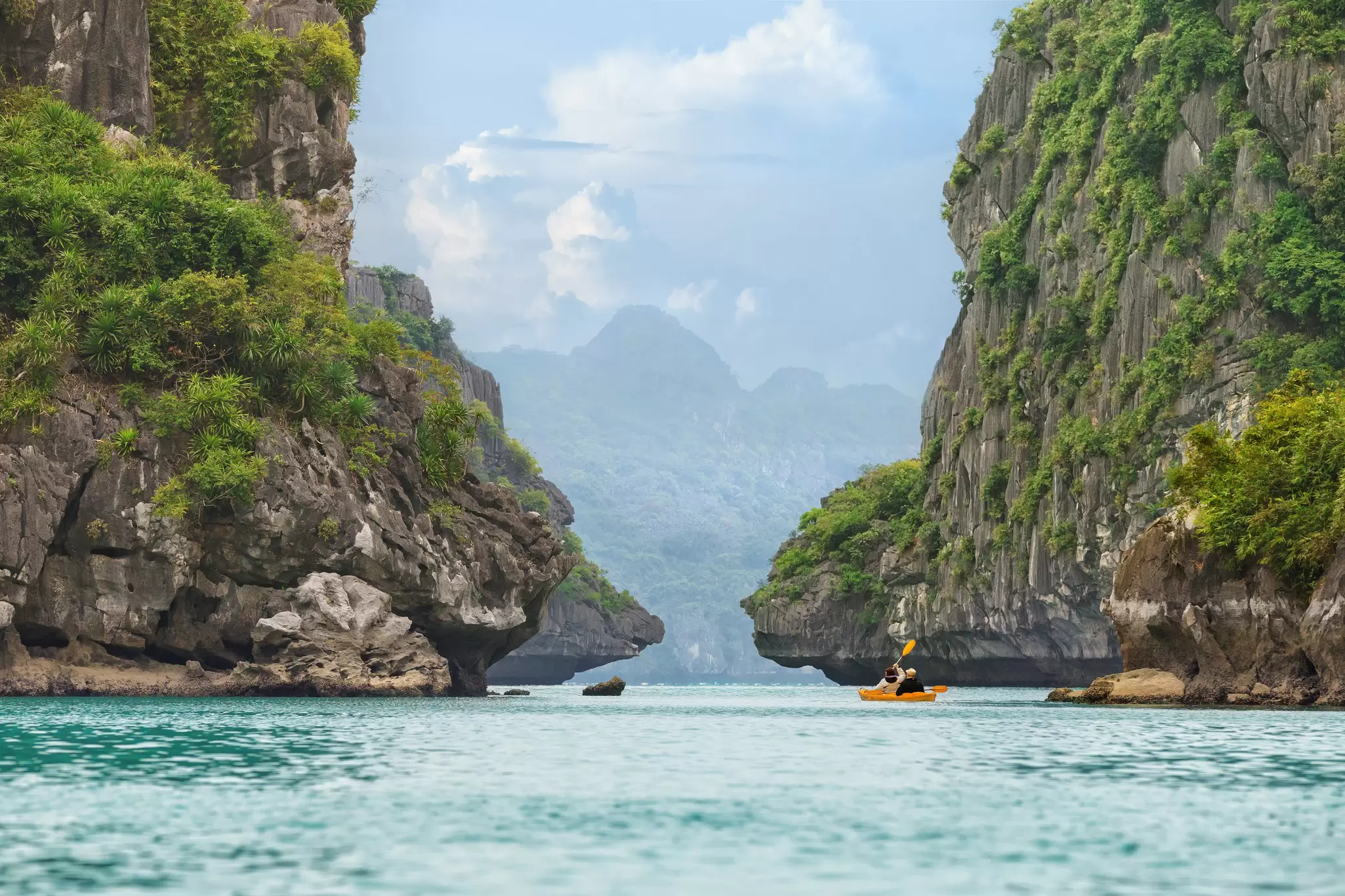
Most decent midrange Halong Bay cruises include an hour or so of kayaking in the bay, though some operators charge an extra fee. Paddling around the karst pinnacles allows you to experience the limestone towers from a completely different angle: up close and personal, without the constant thrum of an engine in the background.
For more experienced kayakers, there are also kayak-only trips that offer a chance to escape the crowds. These trips are run by a handful of operators based in nearby Lan Ha Bay (off Cat Ba Island) rather than Halong Bay itself, though Lan Ha’s islet-scattered sea has as much wow factor as Halong Bay and is much less visited.
Full-day kayaking trips from Cat Ba Island cost from US$30 per person. However, on a kayaking day tour, you’re only going to see a small part of the archipelago. To see more of this memorable landscape, it may be better to take a cruise that includes a kayaking stop further out in the bay.
Swimming is an option on many cruises, but only in approved locations, such as the beach on Ti Top Island, with its slanted outcrop and summit viewpoint. If you choose a cruise with a swimming stop, wear reef-safe sunscreen and try to minimize your impact on the marine environment.
Depending on the operator and level of luxury, other cruise activities might include fishing, shore excursions to floating villages and island caves full of stalactites and stalagmites such as Hang Thien Cung, island cycling stops, wellness activities such as tai chi and yoga, and on-board spa treatments and cooking classes. A few boats even have on-board swimming pools or Jacuzzis.
One of the most important reasons to steer away from the ultra-budget cruises is safety. After a boat sinking (and the loss of 12 lives) in 2011, improved safety regulations were brought in for Halong Bay cruise boats, but scrimping on safety is still an issue with some operators, as demonstrated by the tragedy in 2025.
In particular, check that any kayaking trips are accompanied by a guide, with life vests provided. Because of the variable and surprisingly strong currents close to the karst islands, a safety-conscious operator won’t allow kayakers to paddle off from the boat by themselves.
Also make sure you familiarize yourself with the emergency exits on your cruise boat, and make sure the operator has sufficient life vests, stored within easy reach of passengers. Checking the weather forecast before making a booking is also a sensible precaution.
Most trips leave from Hanoi, but you can also base yourself in Halong City and arrange a cruise there. When you're booking, bear the following tips in mind:
The Halong Bay entry and sightseeing fees are around US$13 per person for a day cruise and around US$25 for an overnight cruise. This is usually included in the price of your ticket, though it's worth double-checking for the cheapest cruises. Activities such as kayaking and island bike rides may cost extra, unless these are specified as part of your package.
When comparing prices, check whether transfers between Hanoi and Halong Bay are included, and if so, whether this is a one-way or round-trip transfer. Also check if the shuttle uses the expressway, as the transfer time can impact how much time you have to enjoy Halong Bay from the water.
While the Ha Long–Hai Phong Expressway has cut travel time between Hanoi and Halong Bay, shuttle buses and vans typically make a 30-minute comfort stop halfway through the journey, so allow 3–3.5 hours for the trip. If you come with a chartered car and driver, you can travel from Hanoi to Halong City in 2.5 hours.
Check the small print to see whether overnight cruise rates are priced by the cabin or by the person. Single travellers should expect to pay 70-80% of the full cabin price.
The itinerary on a 1-night cruise can be very packed, with shore excursions, kayaking, swimming and hiking all included in your schedule, leaving little time to sit and watch the amazing scenery during daylight hours. If you have the time, a 2-night itinerary is much more leisurely, with the bonus of visiting sights with fewer people around.
Numerous travel agencies and hotels in Hanoi and Halong City can arrange a Halong Bay cruise for you, or you can find a cruise yourself online. Here are some recommended operators:
Vega Travel: Offers good-value overnight and 2-night tours with comfortable cabins, and kayaking included. Highly recommended by travellers.
Cat Ba Ventures: Runs tours out of Cat Ba Island, taking in both Halong Bay and Lan Ha Bay.
Indochina Sails and Indochina Junk: Two companies operating traditional Chinese junks that have been fully fitted out with all mod cons.
Bhaya Cruises: Has a range of boats targeting various types of travelers, some with luxe features such as on-board pools.
Handspan Travel: Offers cruises on a proper sailing ship, so you don’t have to put up with that pesky engine hum. Handspan also runs kayaking tours in nearby Lan Ha Bay.
Grand Pioneers Cruise: The top of the top end in Halong Bay, with cruises in a 55-cabin superyacht.
Book your Vietnam trip with Lonely Planet Journeys
See Vietnam how it's meant to be seen
Accommodations, activities and ground transportation all taken care of, so you can focus on the fun part. Tell us what your dream trip to Vietnam looks like, and our local experts will build it from scratch. Or start with one of our itineraries and make it your own.


Explore related stories