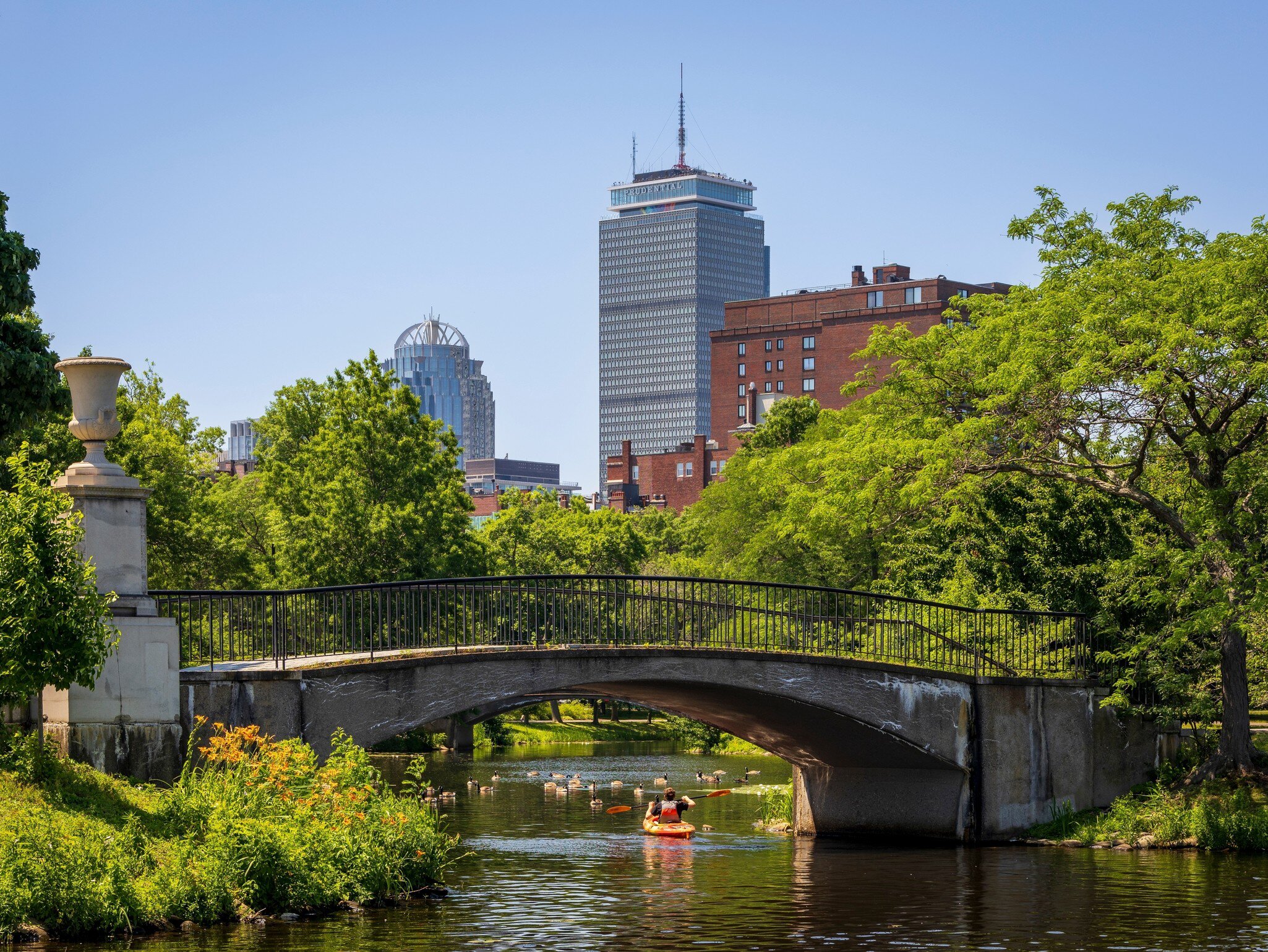
In the late 1880s, landscape architect Frederick Law Olmstead designed Charlesbank, a promenade along the Charles River’s Boston bank. But it wasn’t until the river was dammed in 1910 that the riverside was transformed from a smelly tidal basin to a scenic recreational area. In the 1930s, Olmstead disciple Arthur Shurcliff expanded the parkland, creating the foundation for the 3-mile linear park now known as the Charles River Esplanade.
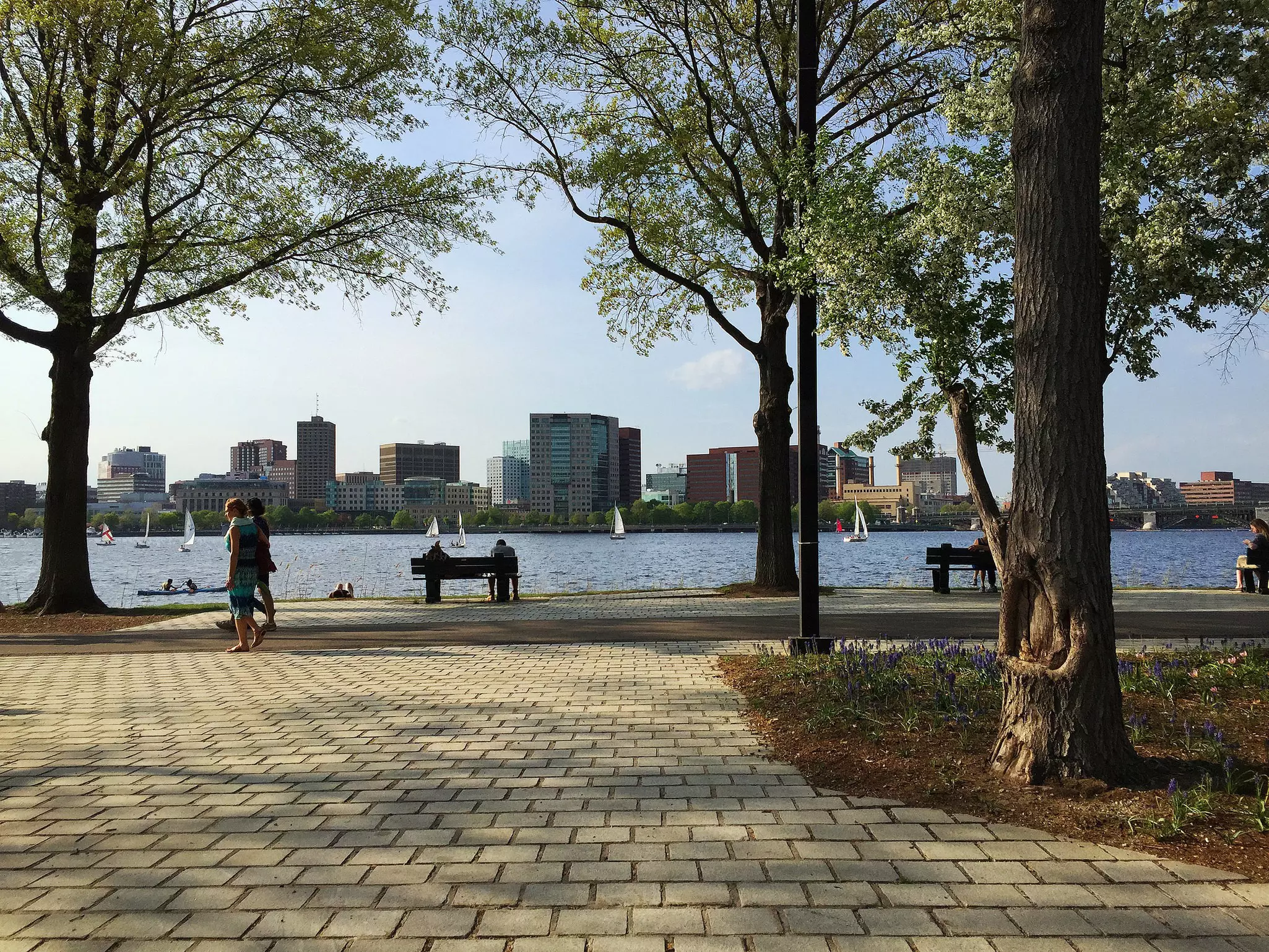
With riverfront walking and cycling paths, the Esplanade extends from the Museum of Science to the Boston University Bridge west of Kenmore Sq. While the hum of Storrow Dr traffic is a constant backdrop (and you need to cross one of eight bridges over this busy roadway to reach the Esplanade), it’s a leafy location to exercise with river and city views. There are play areas for kids, tennis courts and public art, including a larger-than-life bust of Arthur Fiedler, the legendary conductor of the Boston Pops. The Esplanade Association (esplanade.org) offers park tours and events in the warmer months.