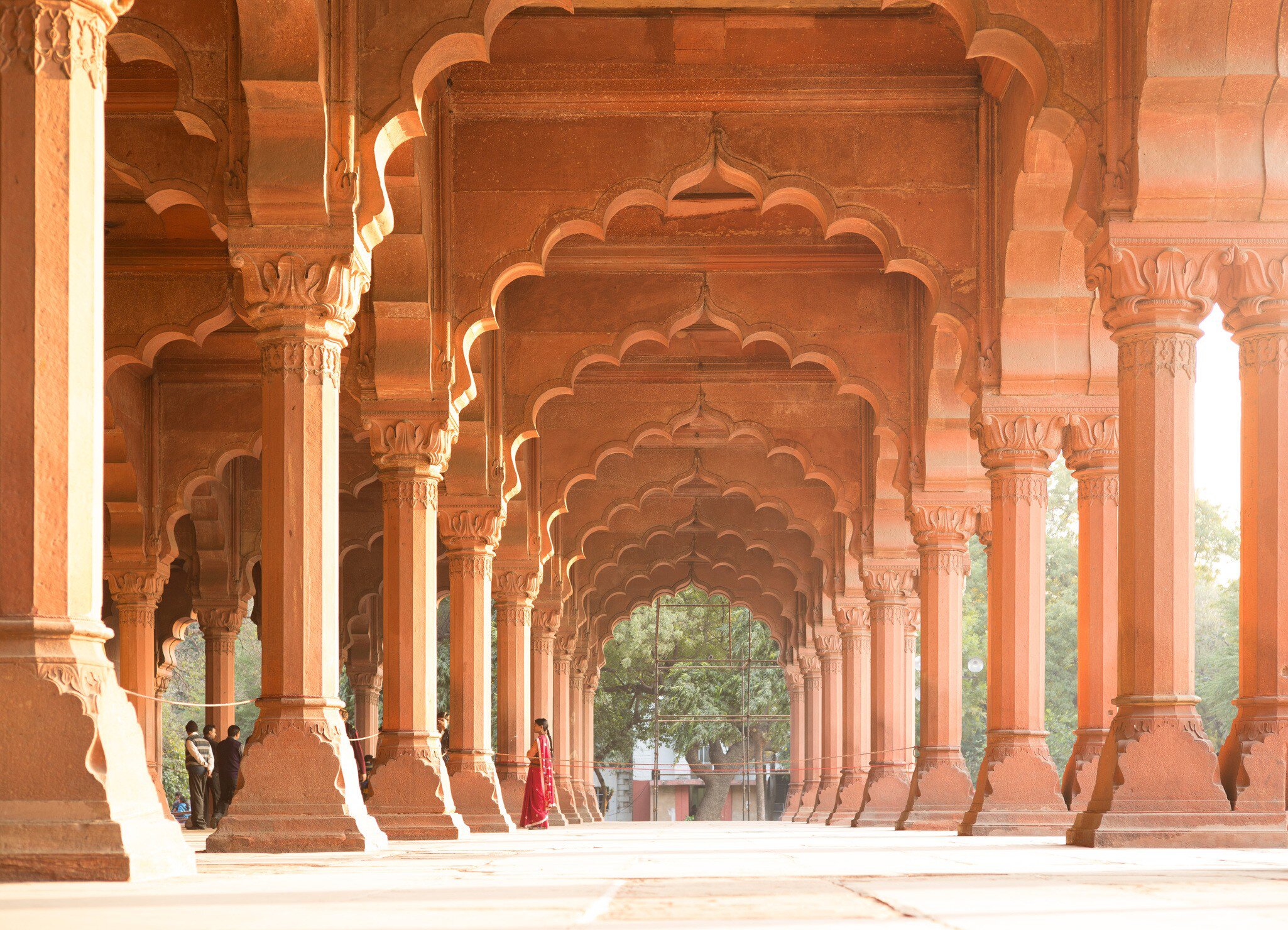
Commissioned by Emperor Shahjahan, who shifted his capital from Agra to Delhi in 1638 to establish Shahjahanabad (Delhi's seventh city), this red sandstone citadel is the youngest of the city's three UNESCO World Heritage Sites. This gargantuan fortress, which took nine years to complete, is an exceptional example of how Mughal architecture merged Islamic, Hindu, Persian and Timurid architectural elements to develop a style all its own.
Lahore Gate
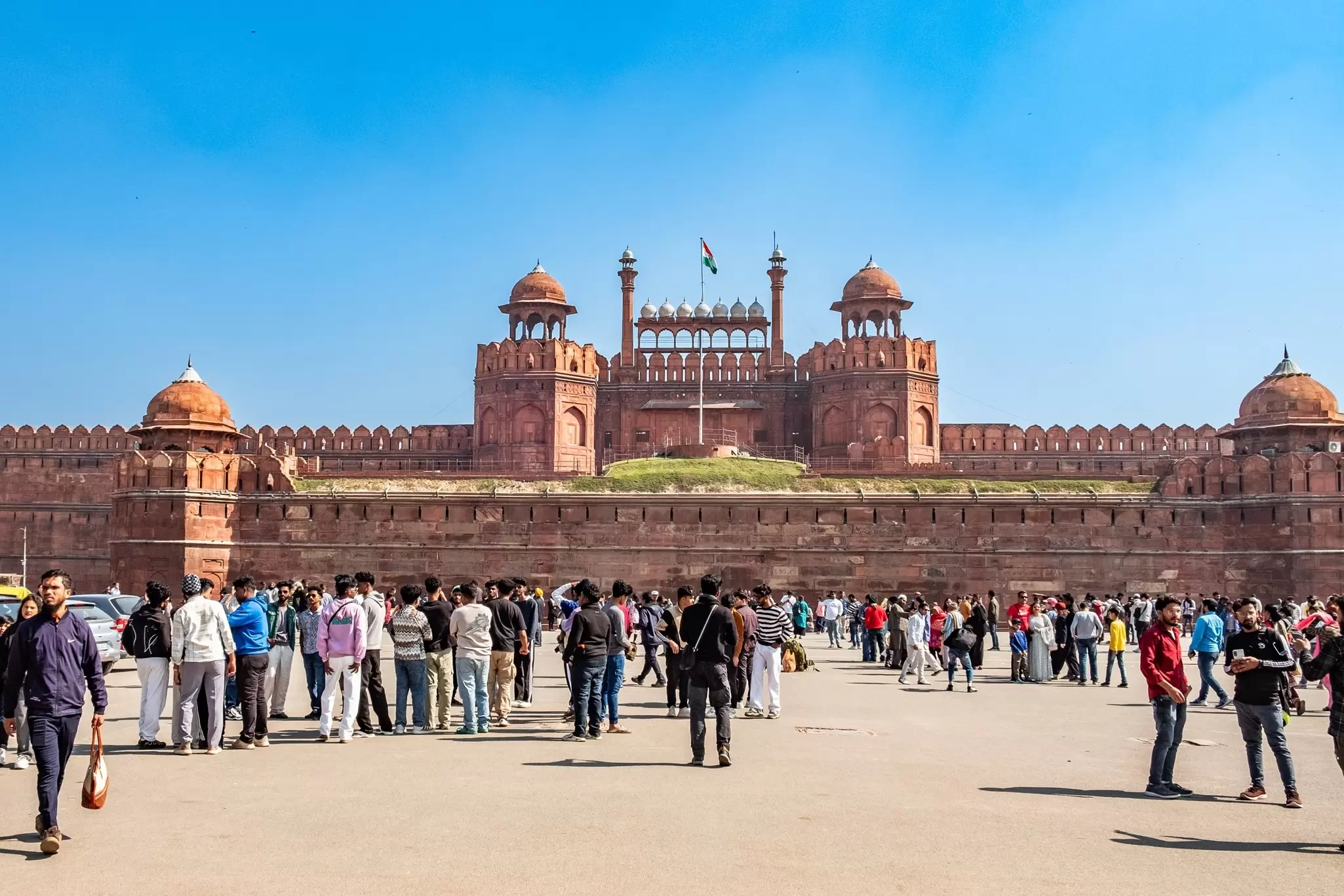
The main entrance to the Red Fort is Lahore Gate, where Jawaharlal Nehru first raised the tricolor flag of a newly independent India back in 1947, a tradition that takes place every year to honor Independence Day. You can still see bullet marks on the gate that date from the First War of Independence (Indian Uprising) in 1857. Just beyond the gate is Chatta Chowk, a roofed arcade that’s lined with shops selling scarves and other souvenirs.
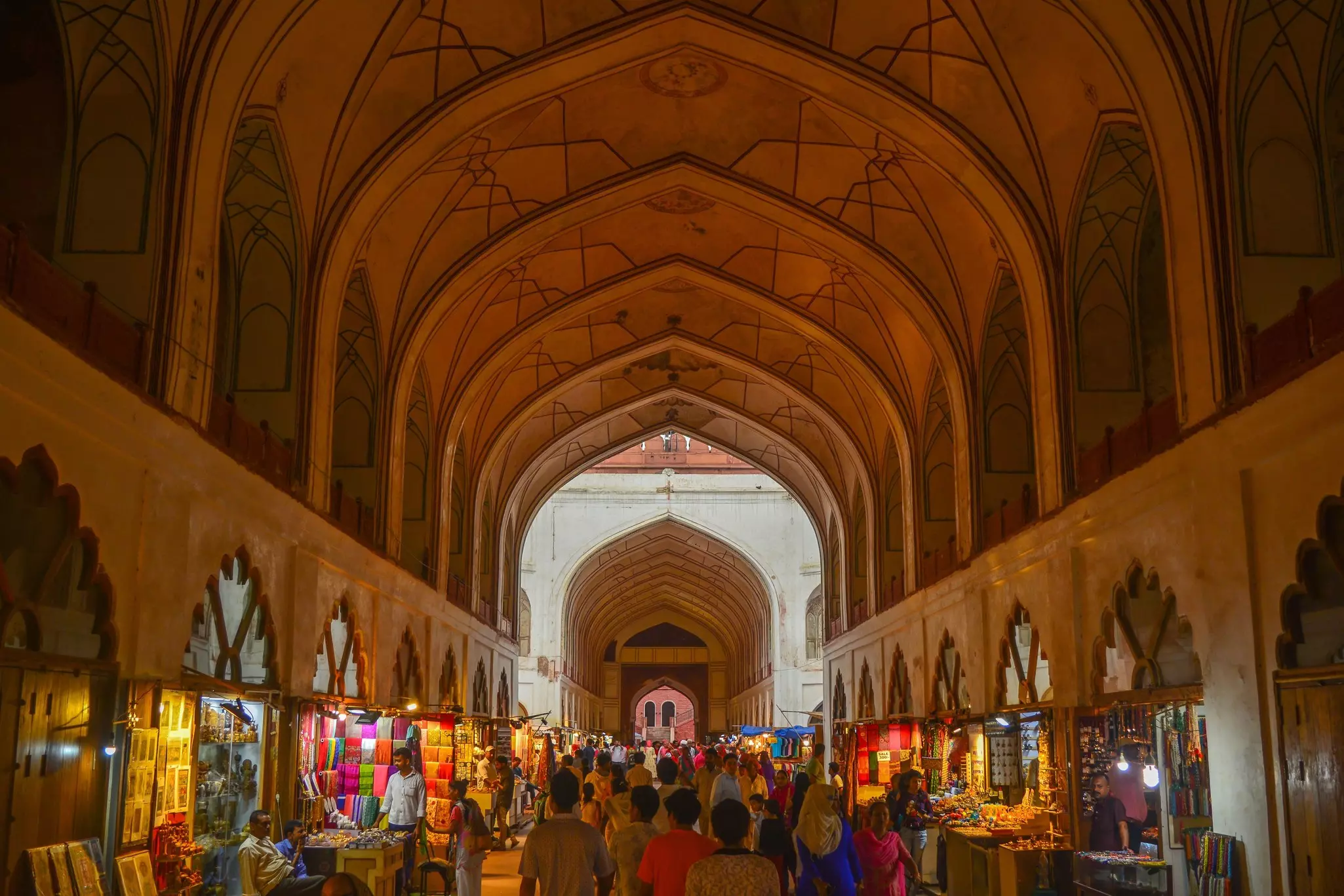
Red Fort Centre
Just beyond Chatta Chowk, inside repurposed barracks dating to the British era, the Red Fort Centre tells the story of the Red Fort through a series of four interpretive areas, collectively known as Afsana, along with a 360-degree immersive augmented reality experience, Afreeen, that takes visitors back in time to the era of Shahjahan's rule. The center is ticketed separately from regular Red Fort admission, and tickets with (₹150) and without (₹100) the Afsana experience are available.
Naubat Khana
Past the Red Fort Centre, the Naubat Khana, or "drum house," is a three-story structure embellished with carved designs that were originally painted with gold. This structure was once used by musicians, who performed here five times a day, and doubled as a parking area for elephants and other mounts.
Diwan-i-Am
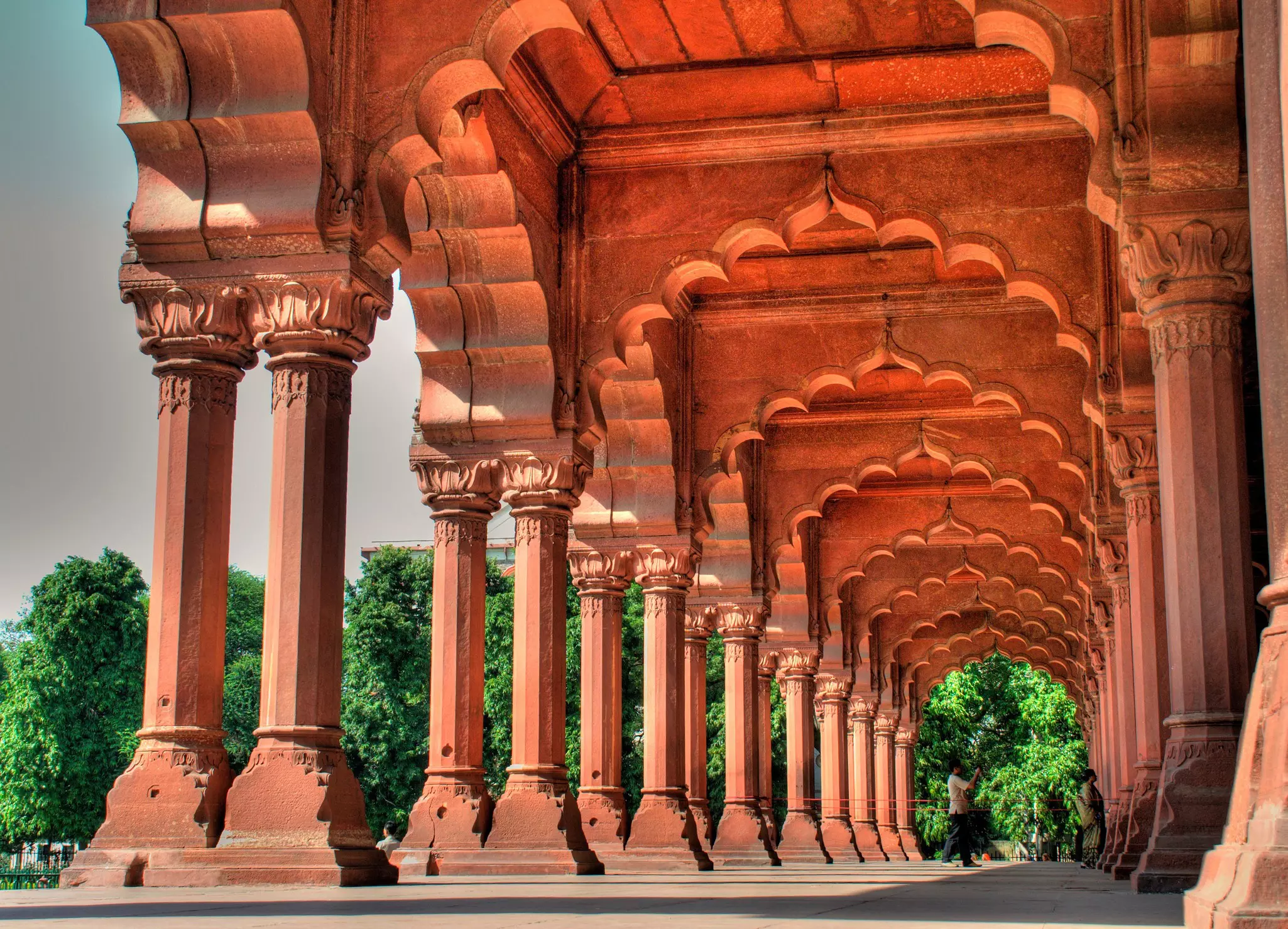
Behind the Naubat Khana, the Diwan-i-Am (Hall of Public Audiences) was where the emperor once received the public, who would come here to air their grievances. At the back of the hall, protected by plexiglass, sits a white marble throne inlaid with precious stones. Behind it, a series of pietra dura panels depict images of flowers and birds; there's also one of Orpheus and his lute. The panels are believed to have been created by French jeweler Austin de Bordeaux.
Rang Mahal
So-named because its exterior was once a riot of color, the Rang Mahal was part of the zenana (secluded women's quarters). A cooling artificial stream, the nahr-i-bihisht (river of paradise), once helped regulate temperatures within. Two of its apartments feature sheesh mahal (palace of mirror) in which fragments of mirrors are arranged on the walls to create beautiful reflective designs when illuminated by candlelight.
Diwan-i-Khas
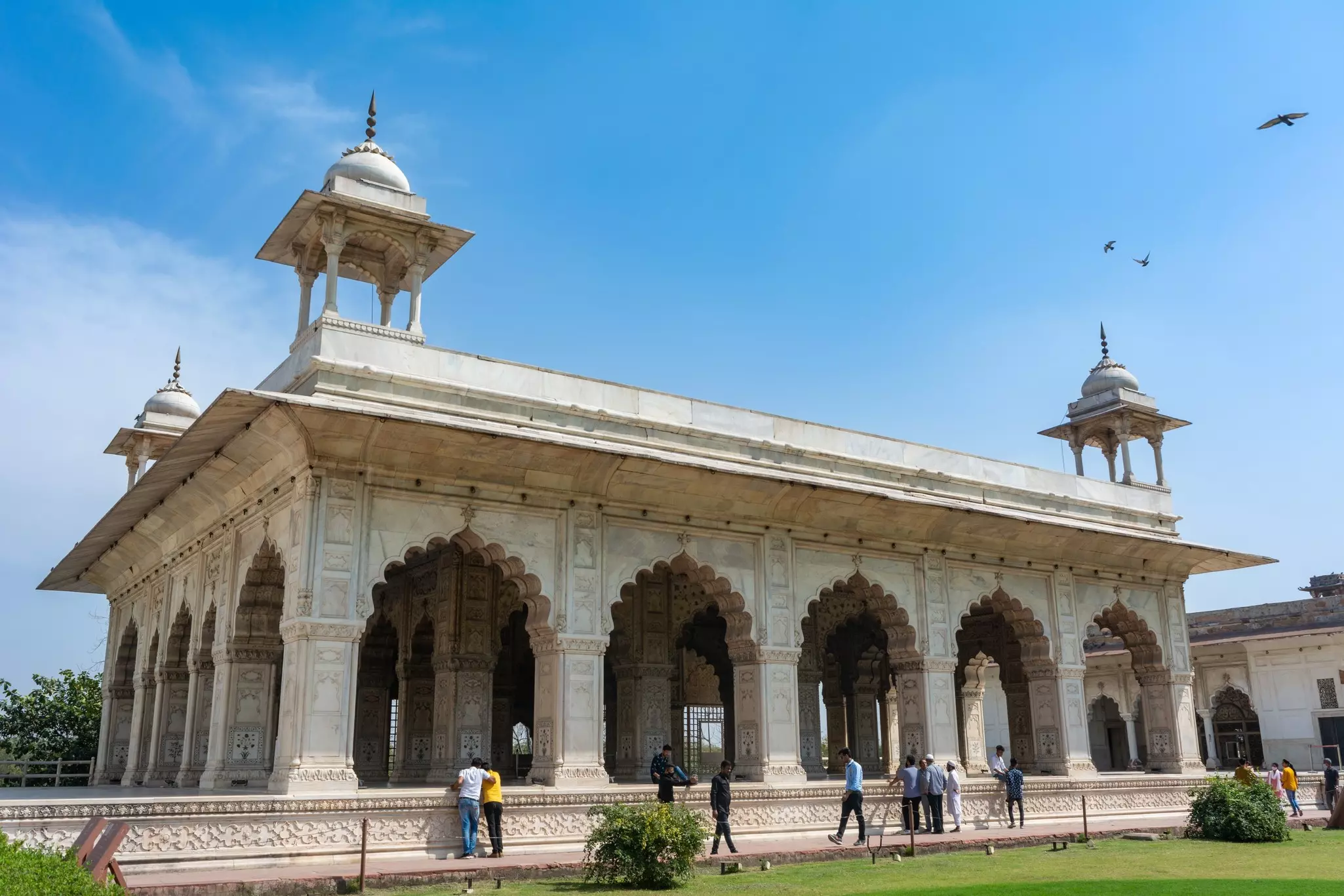
The Diwan-i-Khas (Hall of Private Audiences) was where the emperor would meet with courtesans and other officials. It features aisles of decorated arches supported by marble piers decorated with semi-precious stone inlay. A wooden ceiling over the hall was painted in 1911 and is crowned with chhatris (domed canopies). Inscribed on the wall is a Persian couplet that’s been attributed to both Amir Khusro and Abu'l-Fazl, who served in Akbar's court. It reads "If there is paradise on the earth – it is this, it is this, it is this." It was here where Bahadur Shah Zafar became the last Mughal emperor in 1857, only to be exiled by the British later the same year.
Moti Masjid
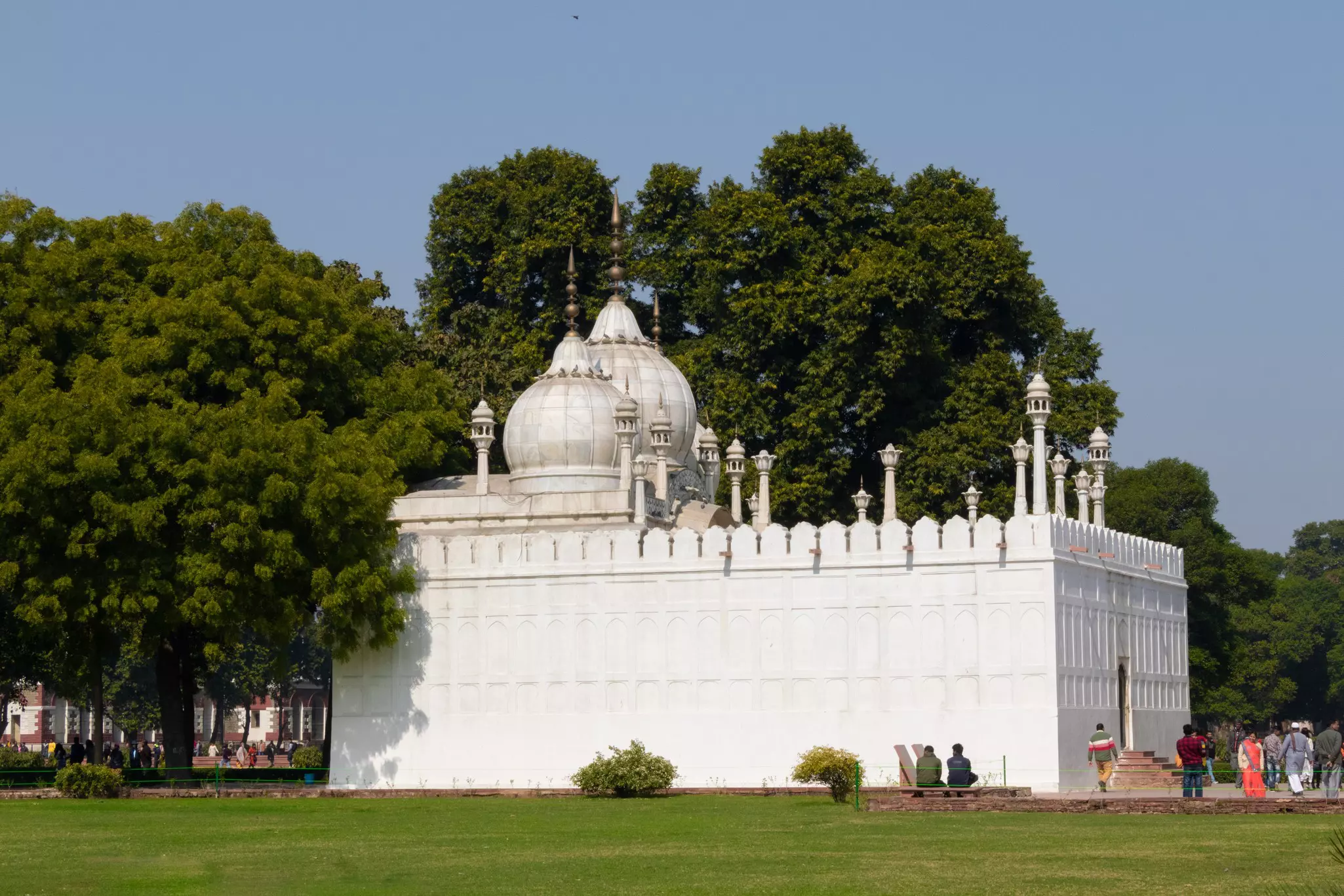
To the west of Diwan-i-Khas, the Moti Masjid was built by Aurangzeb for his personal use back in 1662. The white mosque surmounted by three onion-shaped domes is quite the sight from outside, but the interiors are off-limits to visitors.
Jai Hind Sound & Light Show
After sunset, the fort transforms into the venue for Jai Hind, a sound-and-light show that uses projection mapping and narration by veteran Bollywood superstar Amitabh Bachchan to tell the story of the fort over the centuries. The show begins at the Naubat Khana, continuing to the Diwan-i-Am, and culminating at the Diwan-i-Khas (the only seated part of the experience).