Jul 23, 20268 min read
How to Visit Indonesia's Gili Islands on a BudgetJul 7, 2026
5 MIN READ

Writer
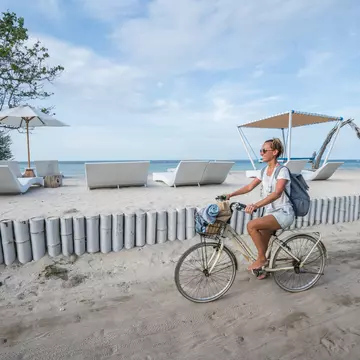
A morning cycle along the beach. swissmediavision/Getty Images

Writer
Highlights
Writer Rachel Lovelock guides you around the car-free Gili Islands, off Lombok's coast.
Bicycles (from 50,000Rp/day) suit independent exploring; cidomo carts carry you and your bags.
Between islands, take the public ferry (35,000–40,000Rp) twice daily or a speedboat from 85,000Rp.
Never swim between the islands; the currents are deceptively strong despite short distances.
Lonely Planet may earn a commission from affiliate links on our site. All recommendations and reviews reflect our own independent opinions.
There are no cars or motorbikes on the Gili Islands, and this is one of the many charms of this trio of tiny isles off Lombok’s northwest coast. All fossil fuel vehicles are steadfastly banned by local government ordinance, eliminating air pollution or traffic noise. These Indonesian islands are some of the few destinations in the world where you can completely escape from motorized traffic.
That said, there are alternate transport options on and between the isles. Here's our guide to getting around the Gili Islands.
With no traffic to hamper your progress, a bicycle is by far the most popular way of getting around. This economical and independent means of transport allows you the freedom to move comfortably at your own pace, stopping whenever you wish to admire the view or take photos. The narrow concrete or sand-and-dirt-packed roads are rough and potholed in places, but at least they’re flat. On the northeastern side of Gili Trawangan, the track gives way to loose, soft sand for about 50yd (150ft) and you’ll have to carry your bike. Many hotels offer bicycle rentals, priced from 50,000 to 100,000 Indonesian rupiah (Rp) per day, making it an affordable way to explore each island.
Not all bikes are in good condition, so examine the tires and do a test drive to check the brakes and gears. Ideally, rent one with a headlight.
Rentals are available all over the islands, but we recommend renting directly from your lodgings so you don’t have to worry about returning the bike to another rental shop before you check out. Don’t want to commit for a whole day? Some businesses offer hourly rentals.
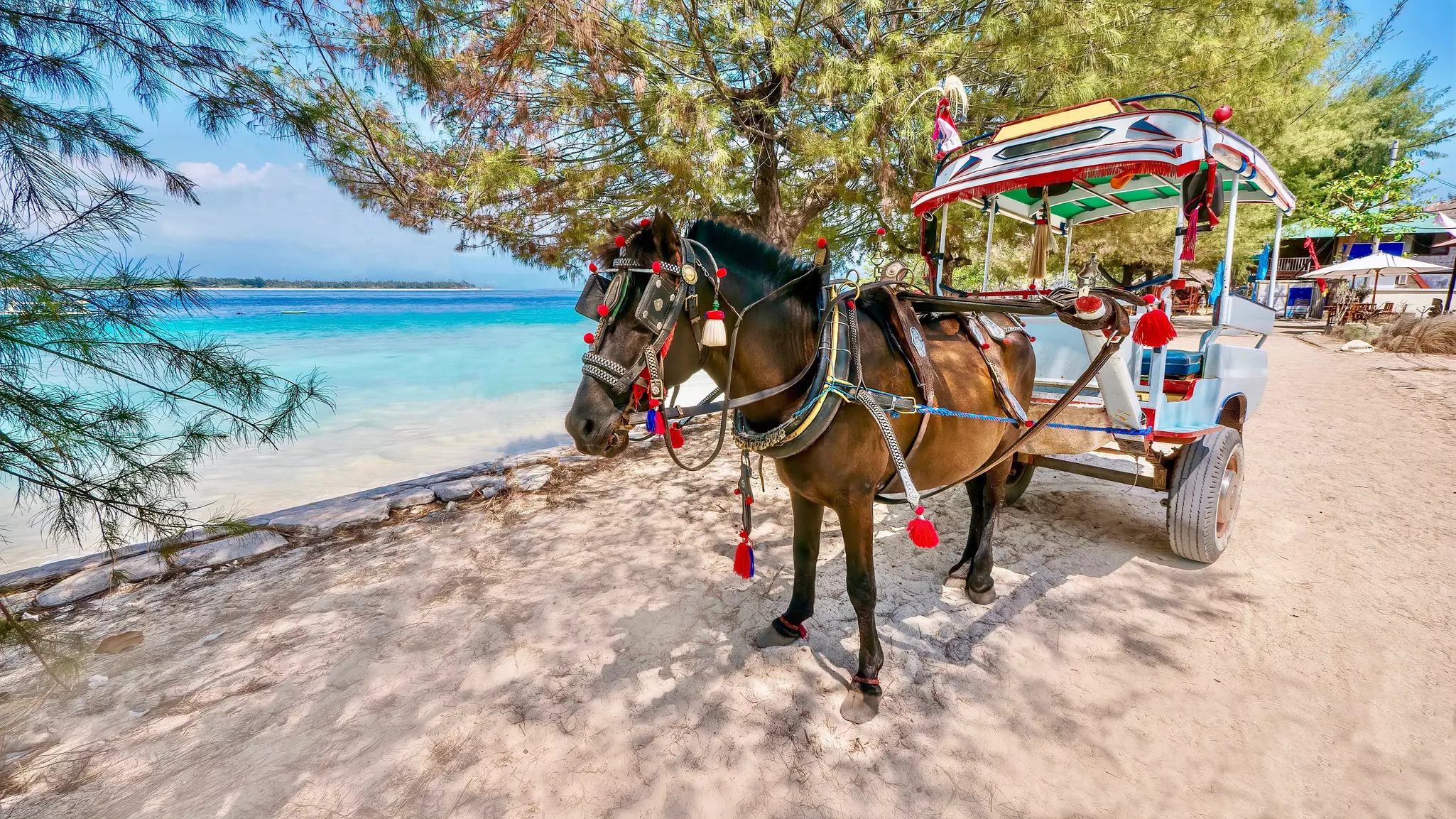
Horse-drawn carts, locally known as cidomo (chi-do-mo) are the traditional form of public transport on the Gili Islands, providing a vital role within the community. They are used by the locals to carry goods and also to transport visitors and their luggage. A cidomo may be helpful when you arrive and depart your hotel with your luggage. The cost varies depending on how far you’re going. It’s important to agree on the price before you leave with a bit of friendly bargaining. Expect to pay at least 100,000Rp, and consider limiting the load to two people plus baggage. The horses wear bells so you’ll hear them coming.
The tough little horses are a way of life on the Gili Islands and part of the local communities’ cultural heritage. Over the years, cidomo drivers have had a lot of bad press about the conditions of their horses, and this has been controversial issue for many tourists. Since 2015, however, the horses have been much better cared for thanks to the non-profit organizations Horses of Gili and Gili Eco Trust, which have worked to improve the welfare of the islands’ horses. The organizations provide care education and free basic healthcare for the animals. Ongoing projects include free clinics manned by international vets who volunteer their time and expertise, as well as a grassroots program for children that teaches them how to care for horses. Stud Horse Riding & Rescue on Gili Trawangan provides a forever home for rescued and retired ponies, and it trains local farriers on better techniques.
In 2022, a new means of transport manifested in the form of electric scooters, an initiative made possible by the solar power plant on Gili Trawangan. Available for rent at some hotels, the cost ranges from 250,000 to 350,000Rp per day, or they can be rented by the hour.
Be considerate, though: the scooters are silent, so pedestrians and cyclists won’t hear you coming up behind them.
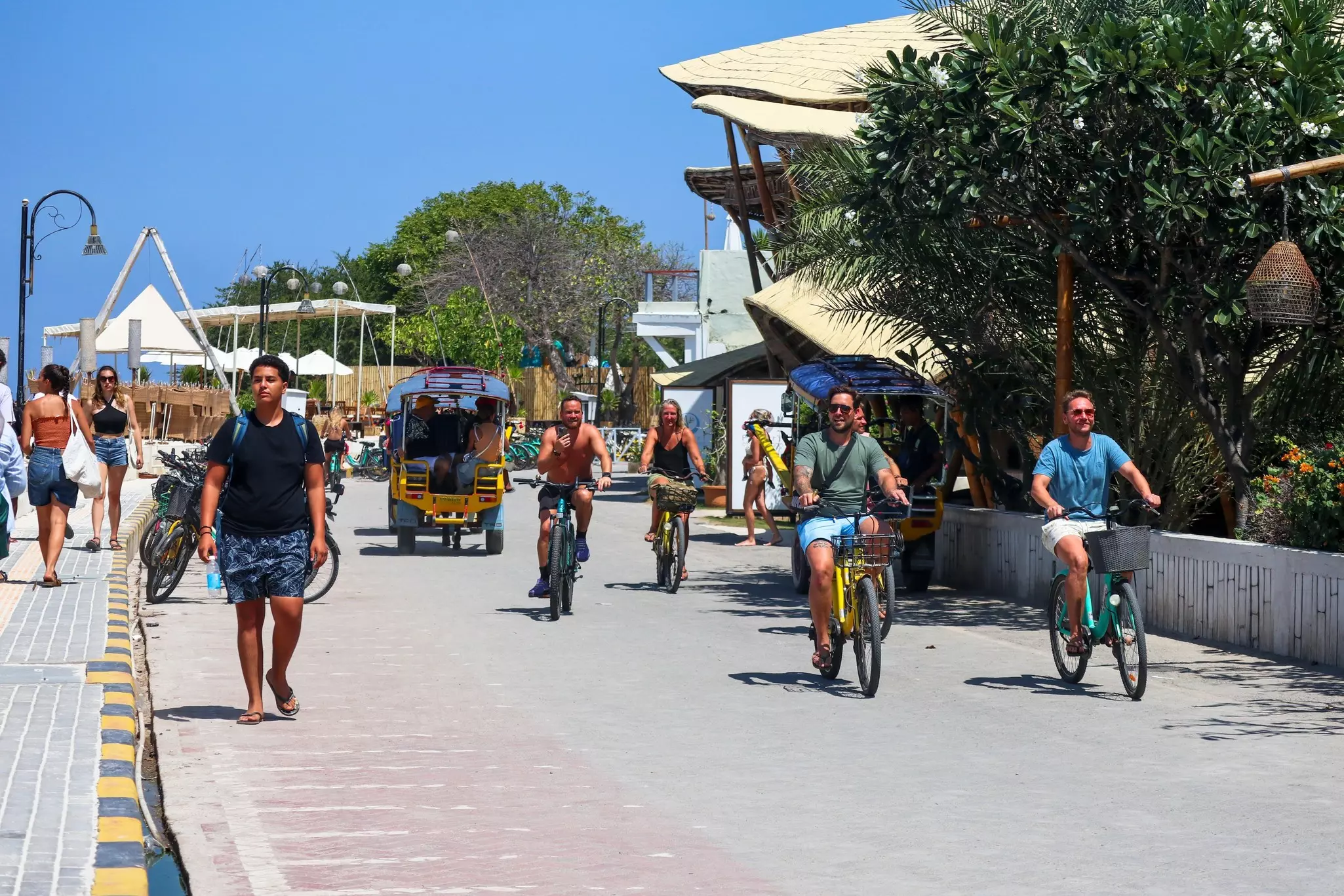
The diminutive size of each island means that you can easily get around by foot. It takes about two hours to walk around Gili Trawangan, and only an hour to walk around Gili Air or Gili Meno. You can circumnavigate each island via a coastal track. If you plan on walking after dark, bring a flashlight because there are almost no street lights.
Tip for a birds-eye view: Take a walk up Bukit Trawangan, the hill in the middle of Gili Trawangan. It’s 259ft (79m) above sea level and houses the remains of a Japanese WWII machine-gun bunker. From the top you can see all three islands and beyond, to Lombok and even Bali on a clear day.
To get from one island to another, the public ferry is the way to go. It costs 35,000 to 40,000Rp and runs twice a day, departing Gili Air at 8:30am and 3pm; departing Gili Meno at 8:45am and 3:15pm; and departing Gili Trawangan at 9:30am and 4pm. Speed boats cost 85,000Rp for a one-way trip and typically leave every 30-45 minutes – or at least eight times per day – between 8am and 5pm. There’s a ticket office at each island-harbor.
If you're traveling during high season, be sure to get to the ticket office with plenty of time to spare to ensure you get a seat.
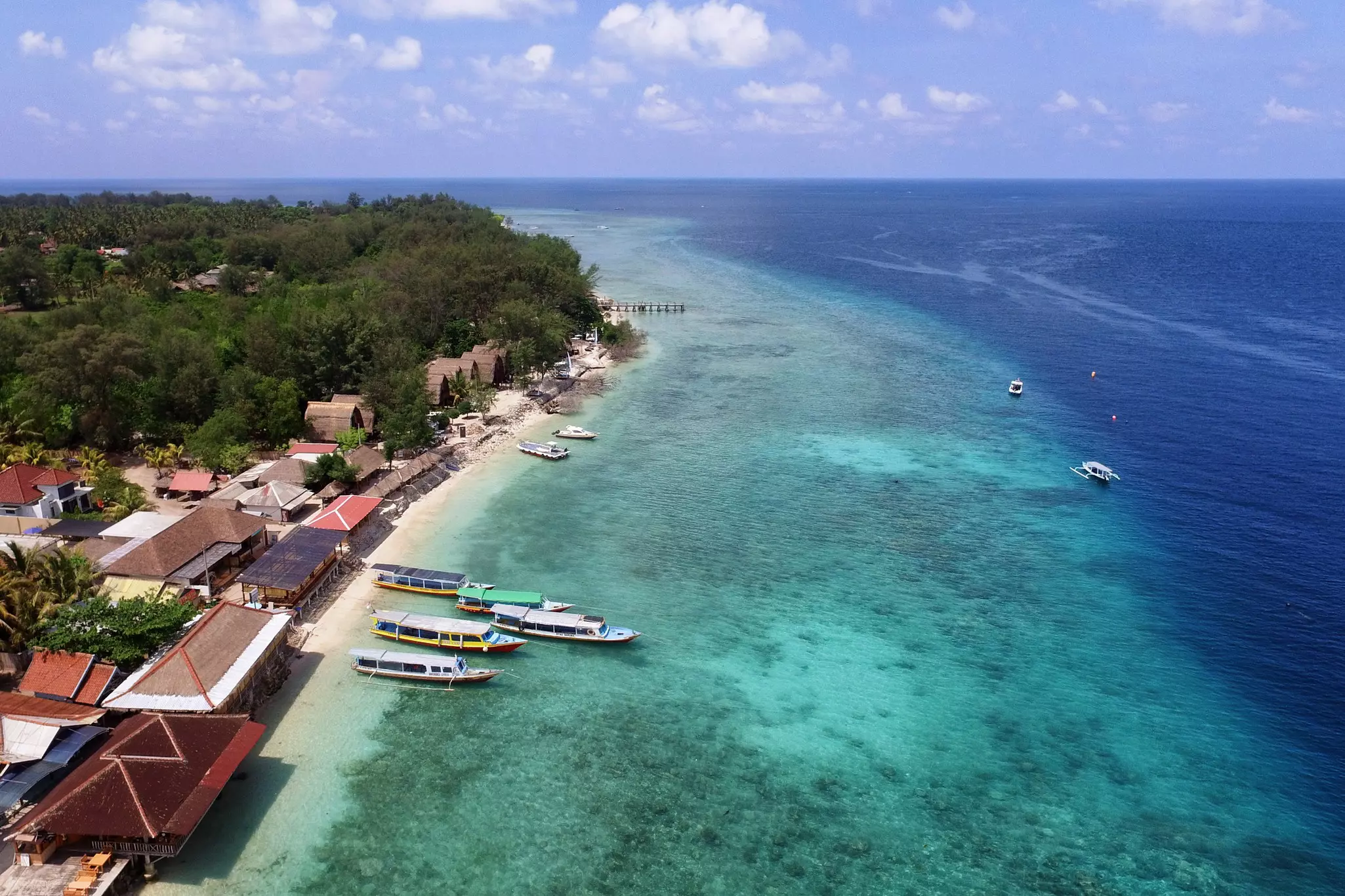
It's possible to book a private charter, which is officially priced at around 500,000Rp. Heads-up: after your charter has been agreed, local people may jump aboard free of charge. Etiquette is important here, so smile and suck it up.
The distance is short but the currents are deceptively strong, and a fair number of people have drowned while trying.
The boats and the cidomo carts are not wheelchair accessible and the island tracks are rough but, as with everywhere in Indonesia, you can always count on human kindness to help you find a way forward.
Explore related stories