Apr 6, 20266 min read
A Guide to Puducherry, IndiaApr 6, 2026
6 MIN READ

Writer
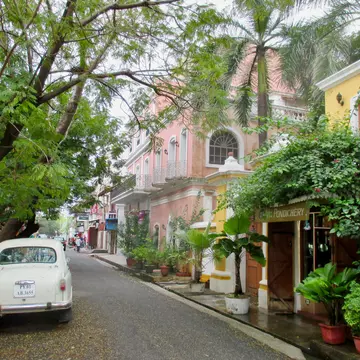
The White Town district of Puducherry, India. Jean-Yves Barralis/Shutterstock

Writer
Highlights
Writer Margot Bigg introduces Puducherry, India's French-inflected coastal city in Tamil Nadu.
Visit between January and March, when temperatures cool and rain is unlikely.
Tour the Sri Aurobindo Ashram, then head to Auroville and its golden Matrimandir.
Take a day trip to Mamallapuram's Pallava temples or Chidambaram's carved Nataraja complex.
Lonely Planet may earn a commission from affiliate links on our site. All recommendations and reviews reflect our own independent opinions.
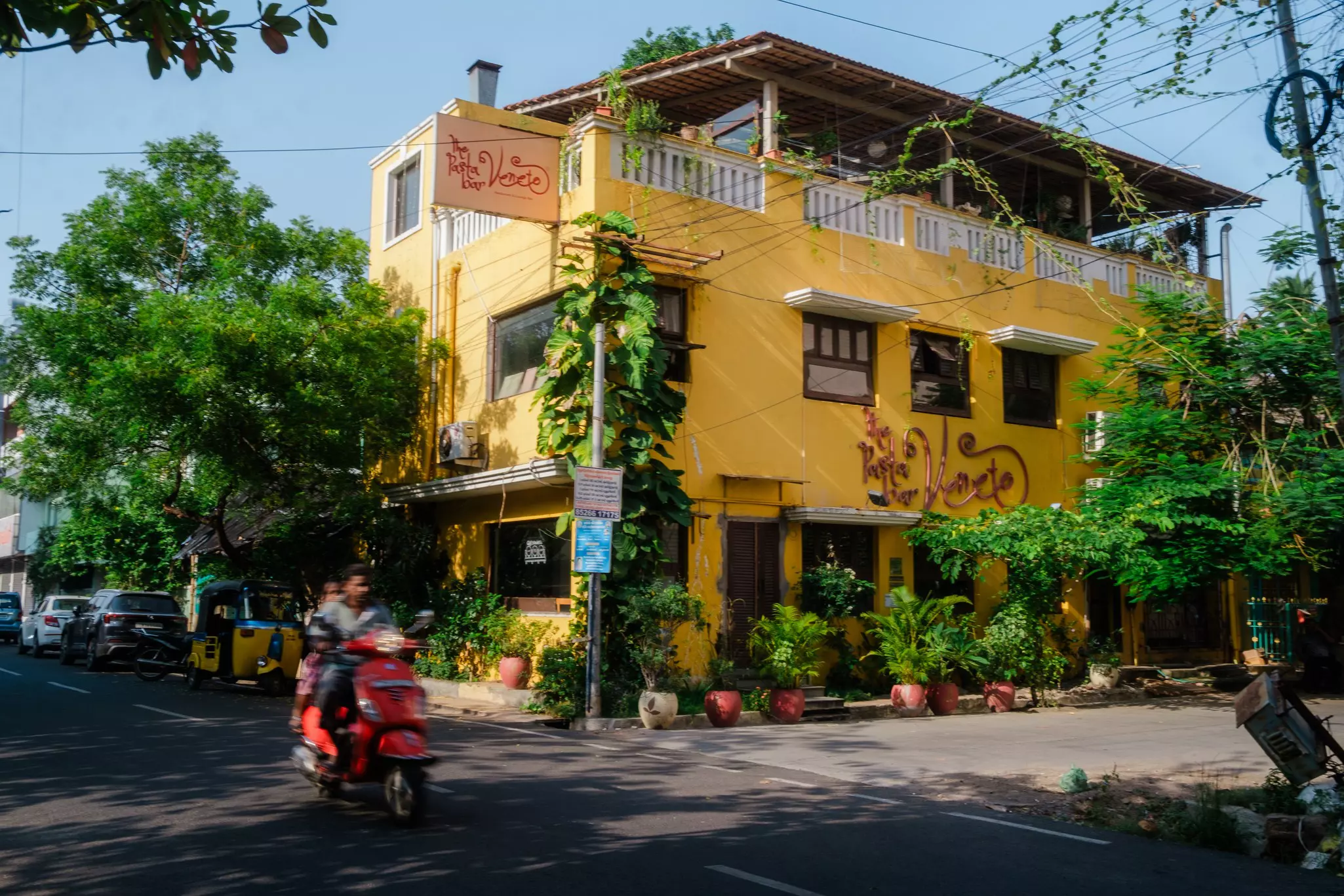
Scoop up an 18th-century French town and plop it down in the middle of coastal Tamil Nadu, India, and voilà: you have Puducherry (Pondicherry). This breezy city was under French colonial rule from the late 17th century until 1954, and although indisputably Tamil, Puducherry still holds onto countless traces of its Gallic past, from pastel-hued heritage hotels and churches to a slew of croissant-slinging cafes, particularly in White Town, its French Quarter.
While Puducherry’s abundance of French food and architecture are among its biggest draws, it’s also an old favorite among spiritually inclined travelers, many of whom are more interested in visiting temples and ashrams than wolfing down coq au vin and crêpes suzette.
Find whatever experiences you seek in Puducherry – walking through White Town, relaxing on the seafront, exploring temples and churches – in this guide to when to go, how to get around and how long to stay in this singular city.
Although Puducherry is attractive year-round, the best time to visit is between January and March, when temperatures are at their coolest and there’s little chance of rain. Things start to heat up in April, with temperatures rising through June before slowly dropping again in July, when the southwest monsoon begins. The rains often continue through the end of the year, since the northeast monsoon arrives in the Puducherry area in October.
Three full days in Puducherry is enough time to see the main sights at a relaxed pace and spend a day in nearby Auroville. With 4 or 5 days, you can tack on a day trip or two. Over a week or more, you’ll have time to relax and get a feel for the rhythm of life in the city, with time left over to attend a retreat at a nearby yoga center.
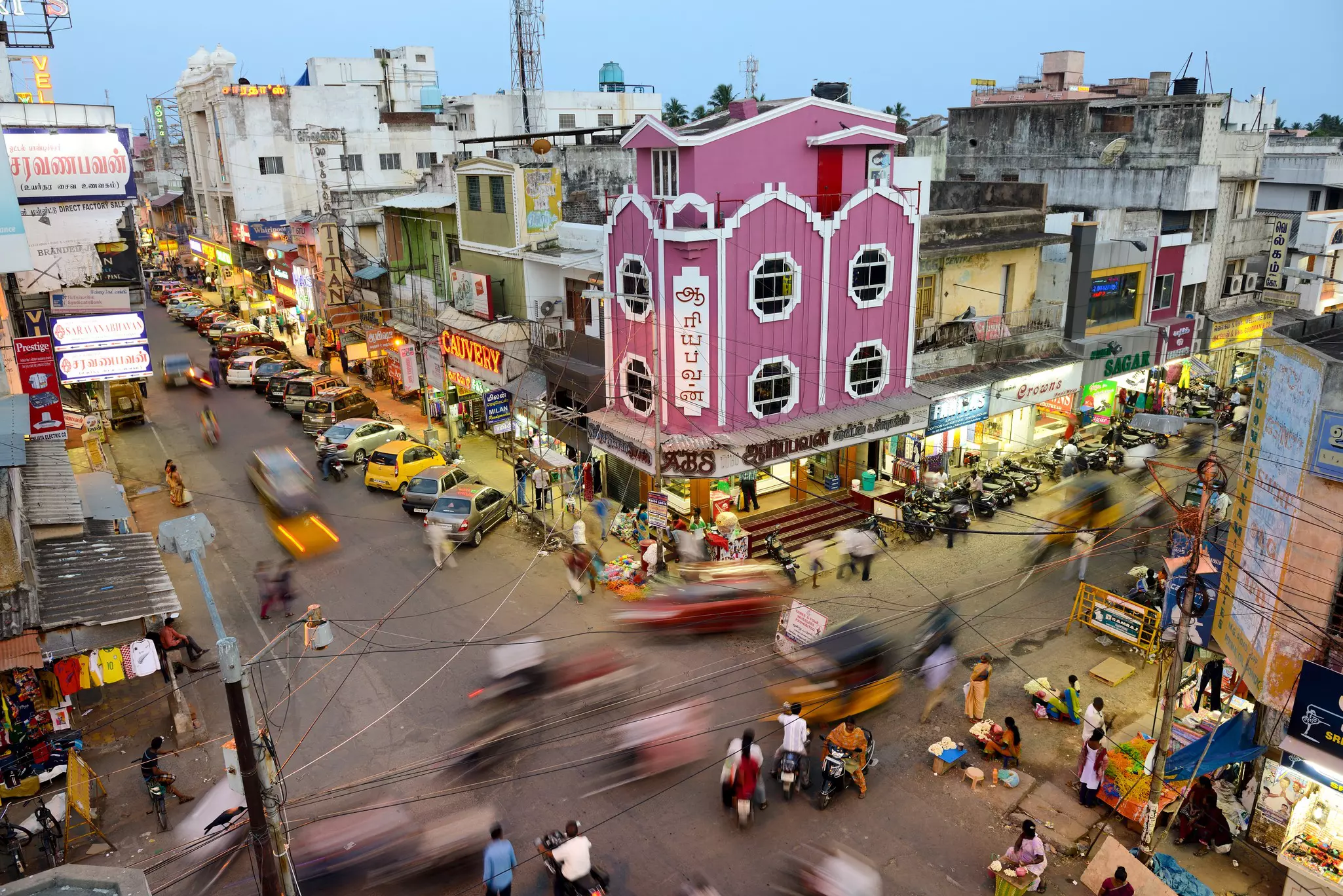
Puducherry has a relatively new airport, though since flights are limited, many visitors opt to fly into Chennai, 145km away, then continue onward by bus or private taxi (count on a 3-hour drive at minimum). Trains depart for Puducherry from Chennai Egmore; the trip takes roughly 4 hours.
Getting around Puducherry is equally straightforward. The city is mostly flat, with well-maintained roads and pavements that make navigating on foot a breeze, especially if you base yourself in or near White Town. Autorickshaws are easy to hail off the street (negotiate a price in advance), and there are plenty of taxi companies for destinations further afield. If you’d prefer a bit more independence, bicycles and scooters are also widely available to rent from outfits such as JP Two Wheeler.
Puducherry is home to numerous spiritual sites, the most famous of which is the Sri Aurobindo Ashram, founded by Bengali philosopher Sri Aurobindo and his French collaborator, Mirra Alfassa (widely known as the Mother). The ashram is a major hub for spiritual life in the city; curious visitors can explore it and learn about ashram activities by taking a tour or dropping by for an evening meditation session. It’s just around the corner from the Manakula Vinayagar Temple, a centuries-old temple to Ganesh whose colorful interiors are adorned with intricate friezes displaying mythological scenes.
Puducherry is a great place for art lovers, with galleries in addition to museums and shops selling local creations. Must-sees include the Puducherry Museum, with its centuries’ worth of art and artifacts, and the adjacent Puducherry Contemporary Art Gallery, a government-run space that launched in 2022 to display more-modern expressions of creativity. A 10-minute walk north, Tasmai showcases the works of contemporary artists from Puducherry and surrounding areas.
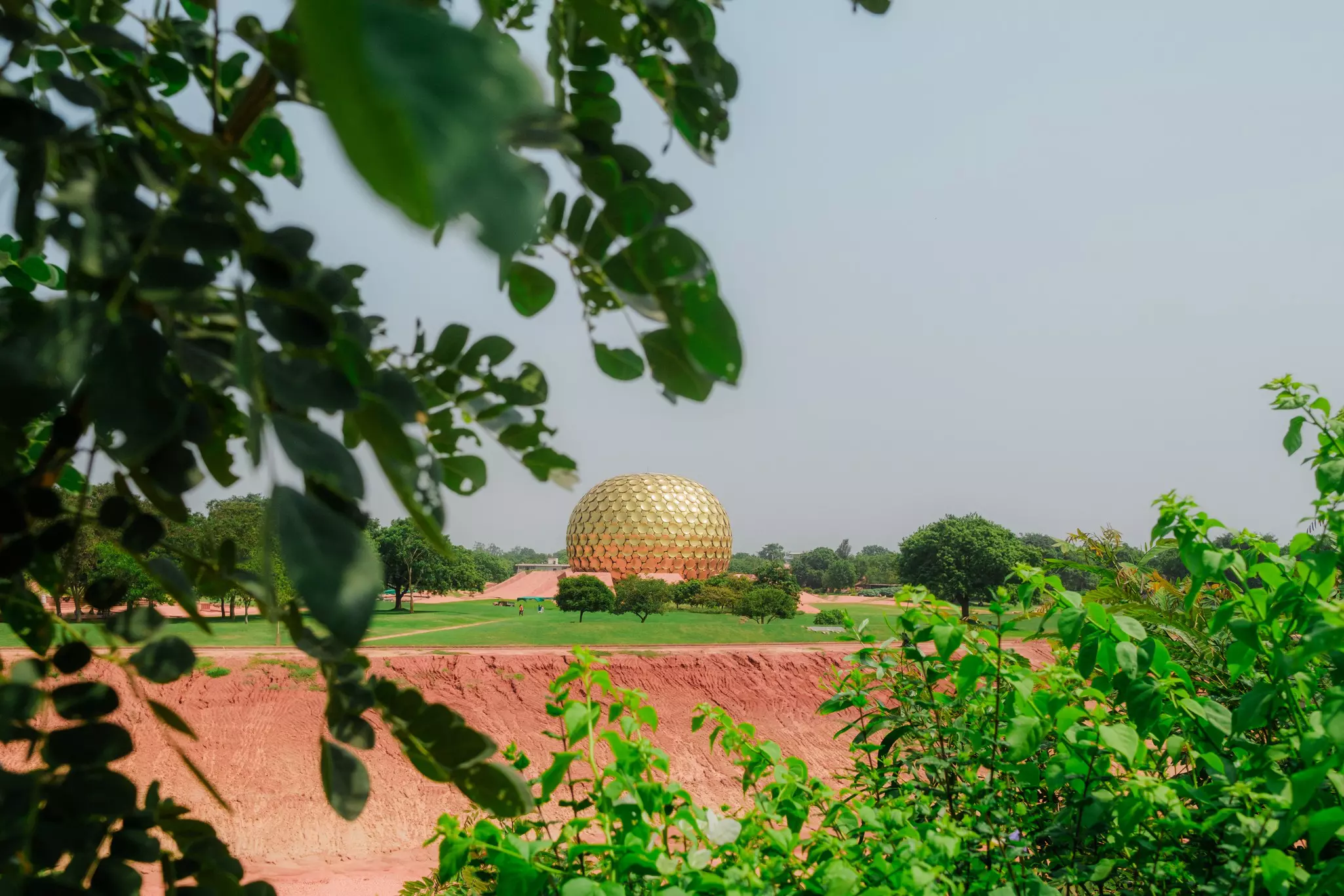
Just north of town, Auroville is a “universal township” where residents from around the world live together in an experimental community. Founded by the Mother in 1968, it has continued to grow over the years into a large, spread-out town. The key attraction here is the Matrimandir, a golf-ball-shaped golden dome at the center of the community. You can make a reservation to visit the interior or see the exterior from a viewing platform near the visitors center, which doubles as a small shopping complex selling everything from musical instruments to incense, all made by Aurovillians.
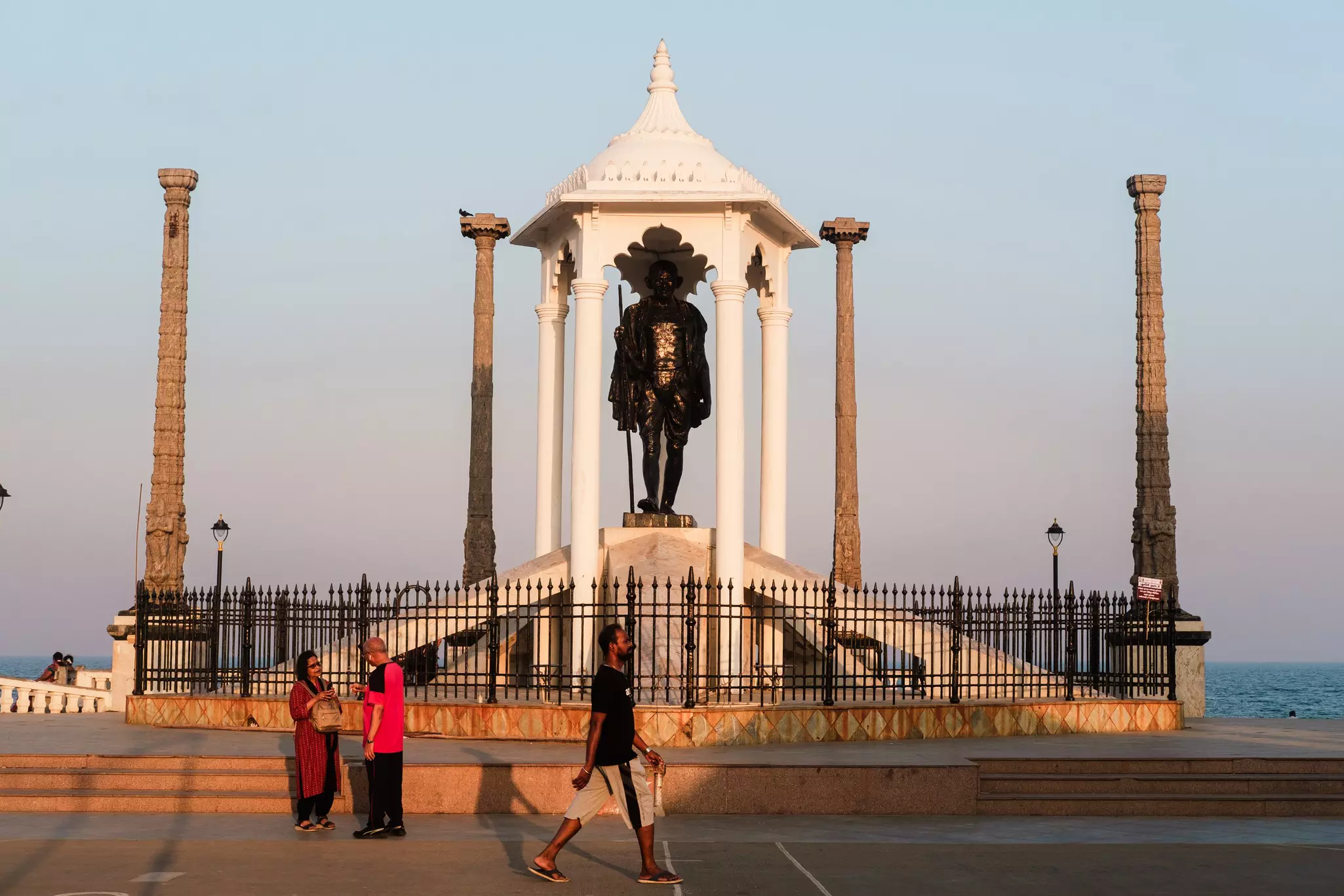
If you love exploring cities on foot, Puducherry will feel perfect. I particularly love strolling along Goubert Ave (Beach Rd) at sunset, when large crowds of families, couples and roving cotton-candy vendors head out on one big evening walk along the seafront. The vibe is super festive.
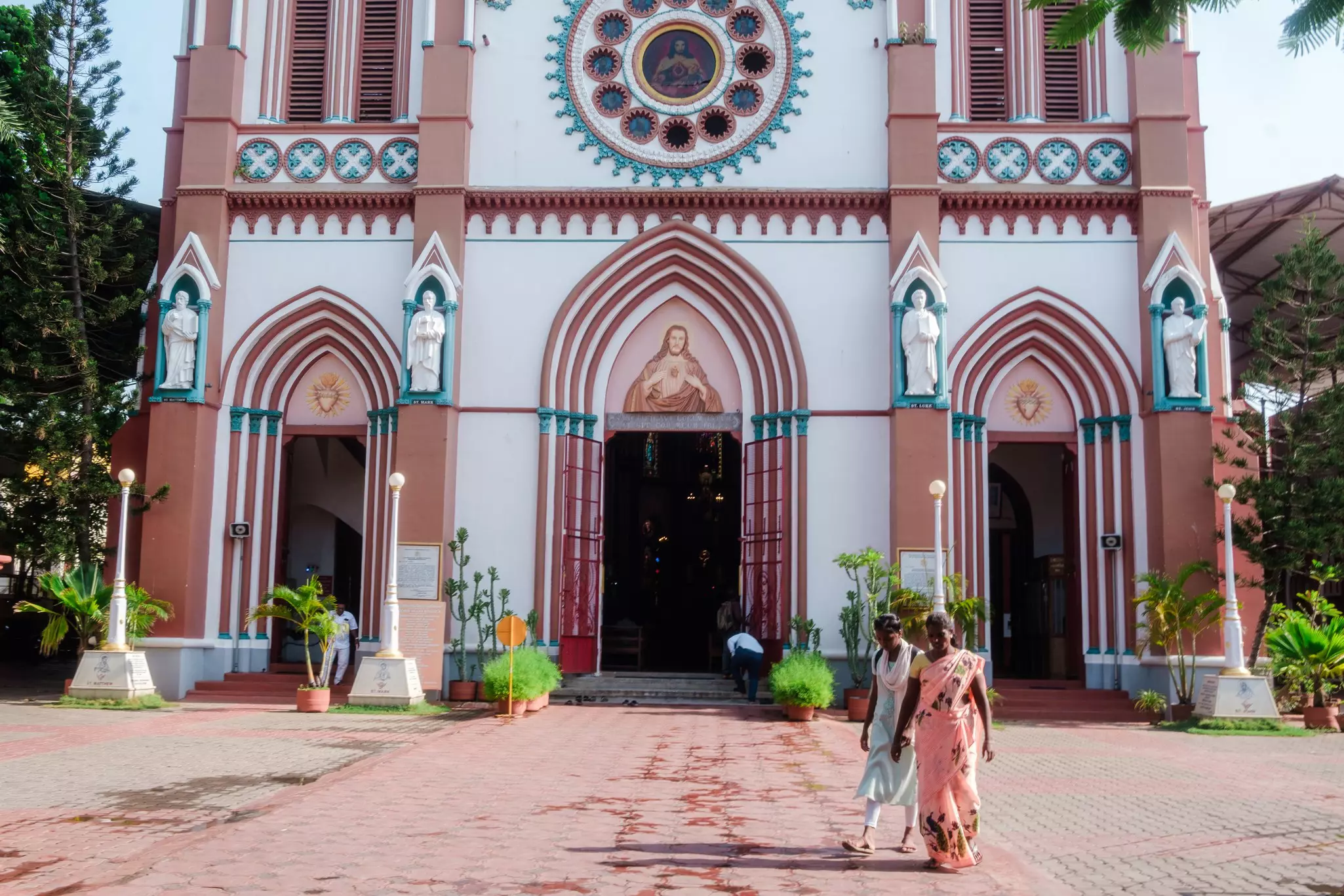
A good place to start is at Our Lady of the Angels (Notre Dame des Anges), a massive church with a huge arched ceiling adorned with pale blue, jasperware-style tiling. From here, you can cut across the Joan of Arc Park to Beach Rd and continue north – the road continues for about a kilometer before merging with St Louis St.
It’s easy to have a great time in Puducherry on a tight budget, but the city also has plenty of higher-end places to dine and spend the night. Budget travelers will find a range of guesthouses and homestays to choose from, as well as casual restaurants serving modestly priced dosas (paper-thin lentil-flour crepes) and other Tamil and South Indian favorites. If you’ve got more cash to spend, you’ll find lots of deluxe restaurants and hotels, many housed in heritage buildings.
Night in a basic room for two: 800–1200 Indian rupees (₹)
Night in a room for two in an upscale heritage hotel: ₹7,000–₹16,000
Espresso: ₹120
Cocktail: ₹400–500
Vegetarian thali (a plate meal) at a casual restaurant: ₹150
Dinner for two at an upscale restaurant ₹1,600–₹2,000
Expect heat and humidity no matter when you visit. Loose-fitting, light-colored clothes made from natural fibers plus a wide-brimmed hat are ideal for staying cool (or at least trying to). Comfortable shoes are a must – especially sandals that are easy to slip on and off if you plan to visit temples. Don’t forget the mosquito repellent, especially if you plan to be outside at dawn or dusk.
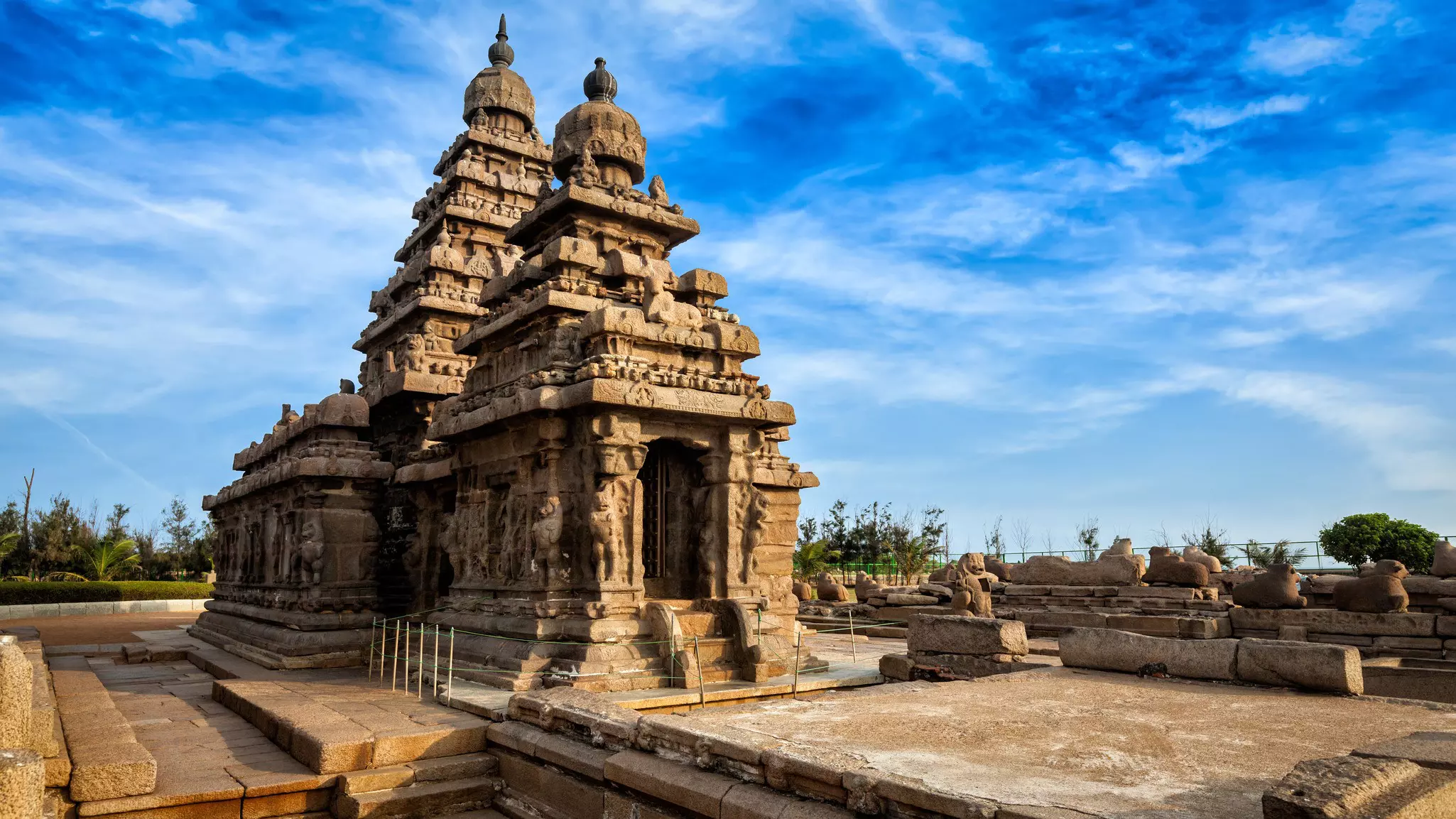
Perhaps the most popular spot within easy day-tripping distance of Puducherry is Mamallapuram (Mahabalipuram), a UNESCO World Heritage site that preserves a group of intricately carved Pallava temples and edifices, most dating to the 7th century.
In the opposite direction, the city of Chidambaram is a great half-day trip. Its draw is the massive Thillai Nataraja Temple, an exquisitely carved Chola complex dedicated to Nataraja (Hindu deity Shiva in his cosmic dancer form).
Explore related stories