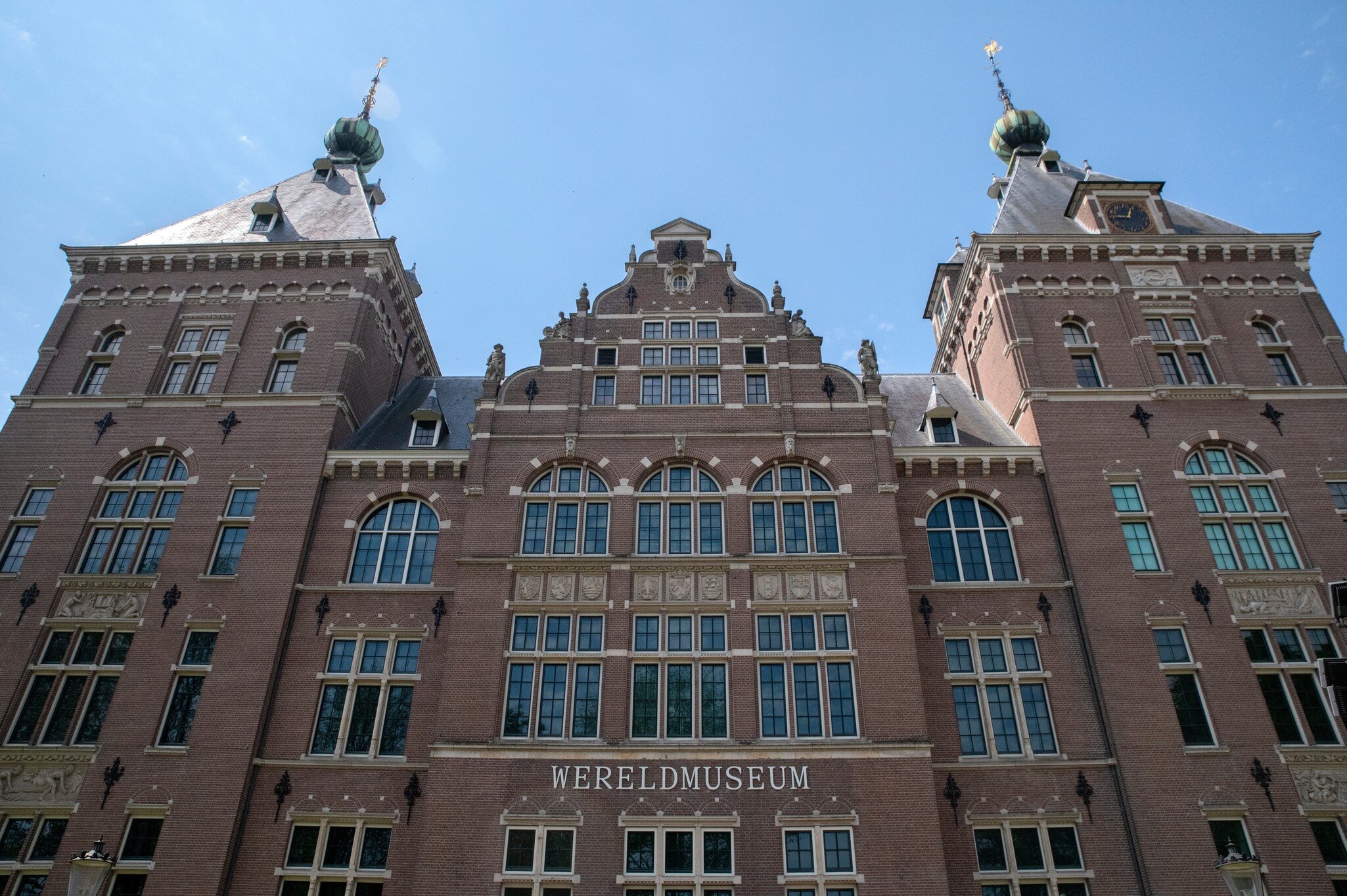
The Dutch slave trade, understanding cultural appropriation and returning stolen artifacts to Indonesia – at the Wereldmuseum Amsterdam (amsterdam.wereldmuseum.nl; adult/child €18/7.50), themes around race, ethnicity and identity are explored from multiple perspectives. Such exhibits are part of the ethnographic museum's greater vision to examine and undo colonial practices of its past.
The Wereldmuseum's origins go back to 1871, when it was initially established as the Koloniaal Museum (Colonial Museum). Like many 19th-century European museums, the museum's collections grew out of colonial expansion and scientific research. After the Dutch colonial empire ended, the institution became the Royal Tropics Museum in 1950, shifting its focus to regions from Africa to the Middle East and beyond.
Contrasting the atrium's stunning, old-world elegance with brightly lit, modern displays, the 2018-installed permanent exhibition "Things That Matter" explores universal cultural themes such as language, belief, climate and activism, honing in on questions such as "When is culture yours?."
Spanning 1200 sq meters, the exhibition "Our Colonial Inheritance" is a profound, comprehensive inspection of Dutch colonial history. Most movingly, the Digital Names Monument is inscribed with the names of nearly 200,000 people who were enslaved during the colonial period in Suriname, Curaçao and Indonesia.
Excellent temporary exhibitions (included in admission) dive deeper into topics such as restitution and martial arts around the world.