Home to a spectacular garden, several superb structures and beautiful precincts, Tōfuku-ji is one of the best temples in Kyoto. It is linked to Fushimi Inari-Taisha by the Keihan and JR train lines. The present temple complex includes 24 subtemples. The huge San-mon is the oldest Zen main gate in Japan, the Hōjō (Abbot’s Hall) was reconstructed in 1890, and the gardens were laid out in 1938.
The northern garden has stones and moss neatly arranged in a chequerboard pattern. From a viewing platform at the back of the gardens you can observe the Tsūten-kyō (Bridge to Heaven), which spans a valley filled with maples.
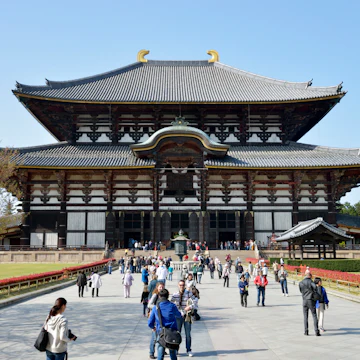
Founded in 1236 by the priest Enni, Tōfuku-ji belongs to the Rinzai sect of Zen Buddhism. As this temple was intended to compare with Tōdai-ji and Kōfuku-ji in Nara, it was given a name combining characters from the names of each of these temples.
Tōfuku-ji offers regular Zen meditation sessions for beginners, but don’t expect coddling or English-language explanations: this is the real deal. Get a Japanese speaker to enquire at the temple about the next session (it holds about four a month for beginners).
Note that Tōfuku-ji is one of Kyoto’s most famous autumn-foliage spots, and it is invariably packed during the peak of colours in November. Otherwise, it’s often very quiet.