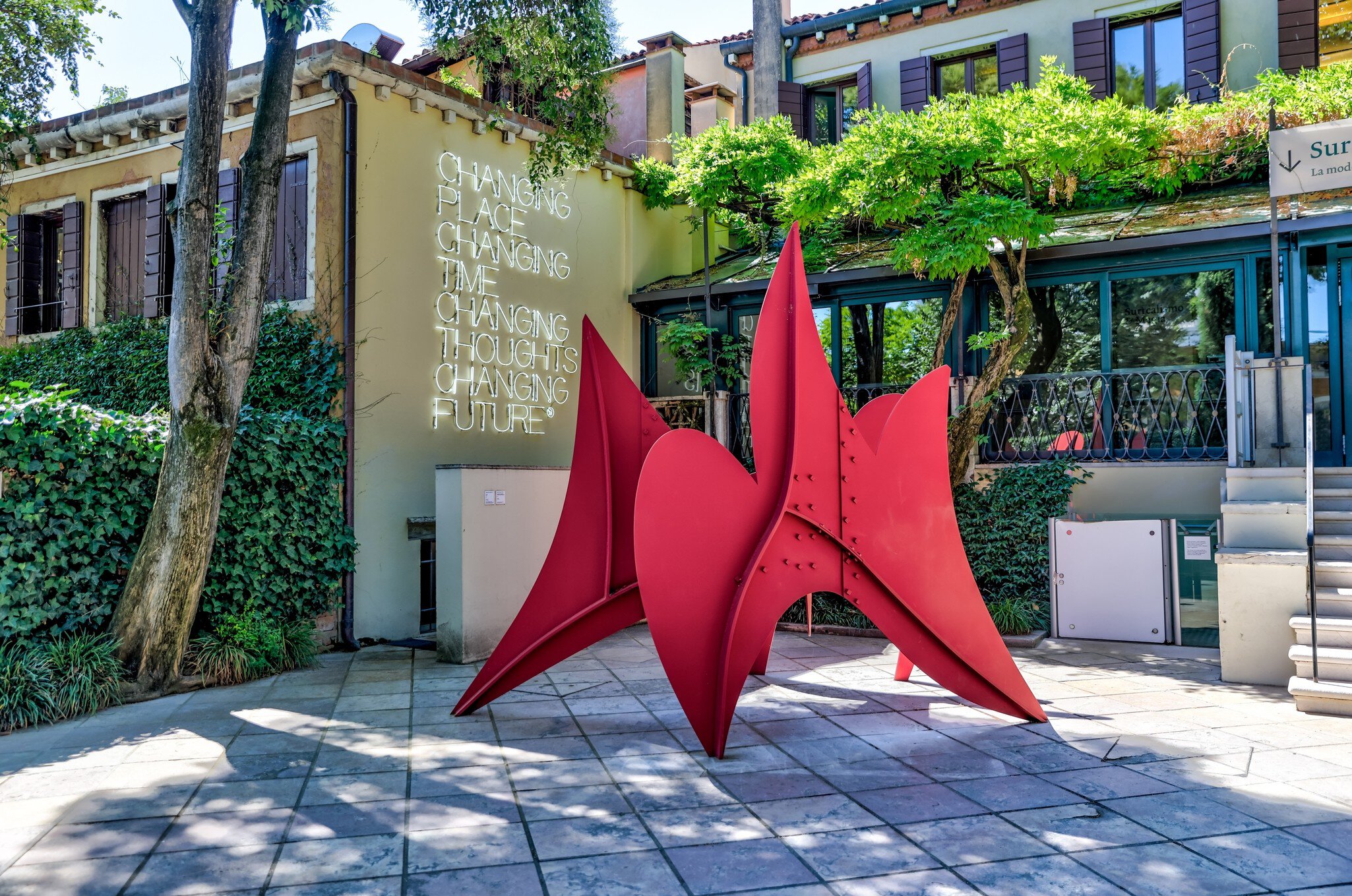
After tragically losing her father on the Titanic, American heiress Peggy Guggenheim befriended Dadaists, dodged Nazis and changed art history at her palatial home on the Grand Canal.
The Peggy Guggenheim Collection at Palazzo Venier dei Leoni is a showcase for surrealism, futurism and abstract expressionism by some 200 breakthrough modern artists, including Peggy’s second husband, Max Ernst, and Jackson Pollock (among her many rumored lovers).
Hannelore B. & Rudolph Schulhof Collection
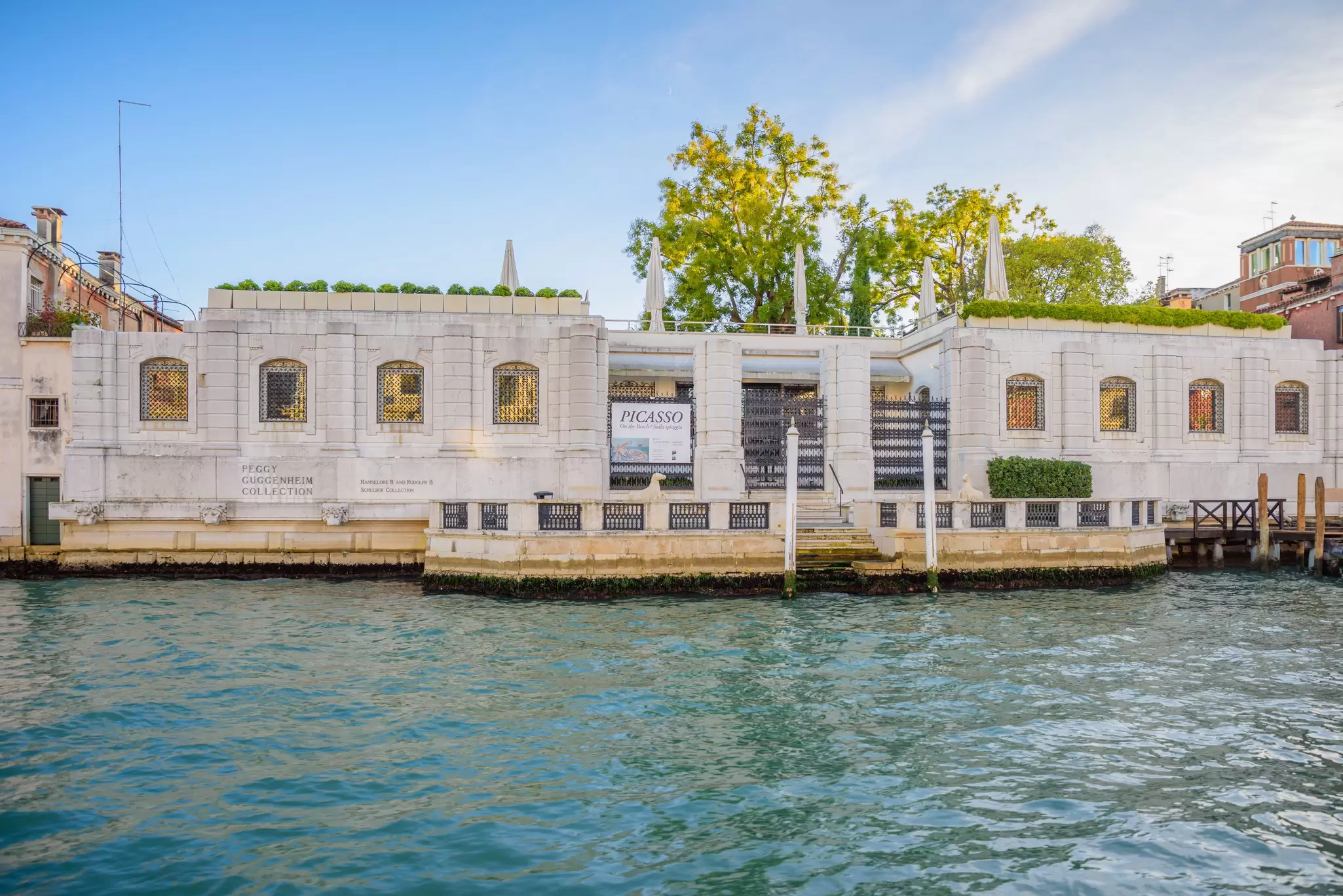
From the ticket office, visitors spill out into the Nasher Sculpture Garden. While it may be tempting to linger here, save the garden’s tranquility for later. Instead, head through the entrance marked Hannelore B. and Rudolph Schulhof Collection to begin your exploration.
Over their lives, German-born, New York–based Hannelore Schulhof and her Czech-born husband Rudolph built an outstanding collection of post-war American and European art, part of which was bequeathed to the Peggy Guggenheim Collection after Hannelore’s death in 2012. The museum created a dedicated gallery for these coveted gifts, which include works by Alberto Burri, Lucio Fontana, Mark Rothko, Barbara Hepworth and Cy Twomby. Look for Jean Buffet’s confronting Portrait of the Soldier Lucien Geominne (1950) and Willem De Kooning’s visceral Nude Figure – Woman on the Beach (1963).
Main Collection
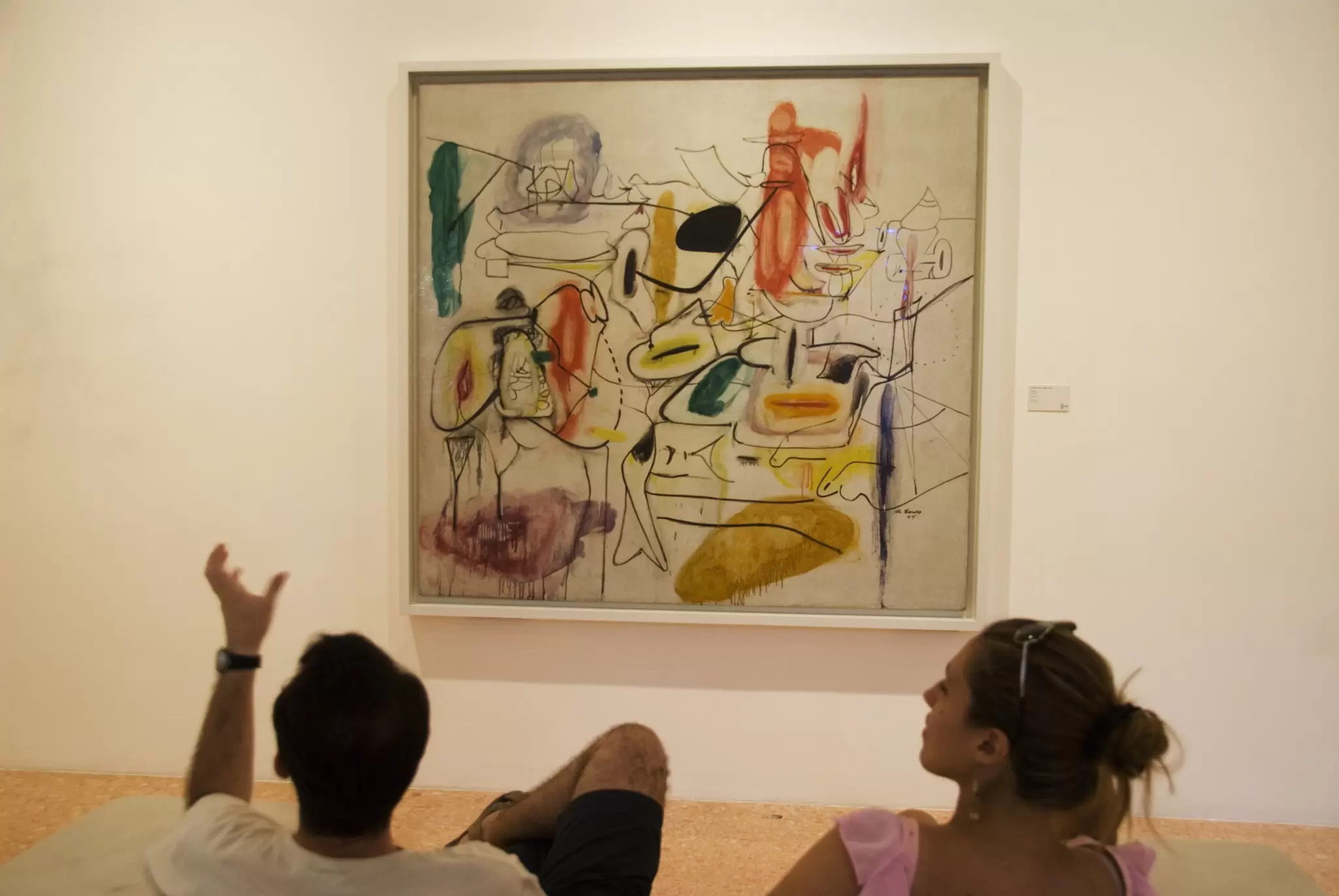
The Hannelore B. and Rudolph Schulhof wing leads up into the main palazzo and collection. Here, the very rooms in which Peggy had lived and entertained in are hung with the artists she championed. The Jewish-American collector acquired works according to her own convictions rather than for prestige or style, resulting in a collection that includes inspired folk art and lesser-known artists alongside Kandinsky, Picasso, Magritte, Man Ray, Rothko, Mondrian, Chagall, Miró and Dalí. Major modernists also contributed custom interior decor, including the Alexander Calder silver bedhead in the former bedroom.
Works on display rotate, but look for early works by Picasso and Mondrian – among them Picasso’s A Poet (1911) and Mondrian’s Ocean 5 (1915) – as well as Magritte’s enigmatic Empire of Light (1953–54). Peggy famously supported Jackson Pollock, hosting his first solo show in New York in 1943. Seek out Alchemy (1947), one of Pollock's first revolutionary "poured" paintings.
More than a mere tastemaker, Peggy also became a spirited advocate for contemporary Italian art, which had largely gone out of favor in the aftermath of WWII. She resurrected the reputation of key Italian futurists, whose dynamic style had been co-opted to make Fascism more visually palatable. Her support led to reappraisals of Umberto Boccioni, Giacomo Balla and Giorgio de Chirico and aided Venice’s own Emilio Vedova and Giuseppe Santomaso.
From the palazzo’s atrium, a door leads out to the Marino Marini terrace. Never afraid to make a splash, Peggy gave passing gondoliers an eyeful with Marino Marini’s The Angel of the City (1948), a visibly excited bronze male nude on horseback. Down by the water, perch yourself on a bench and drink in the view.
Nasher Sculpture Garden & Temporary Exhibitions
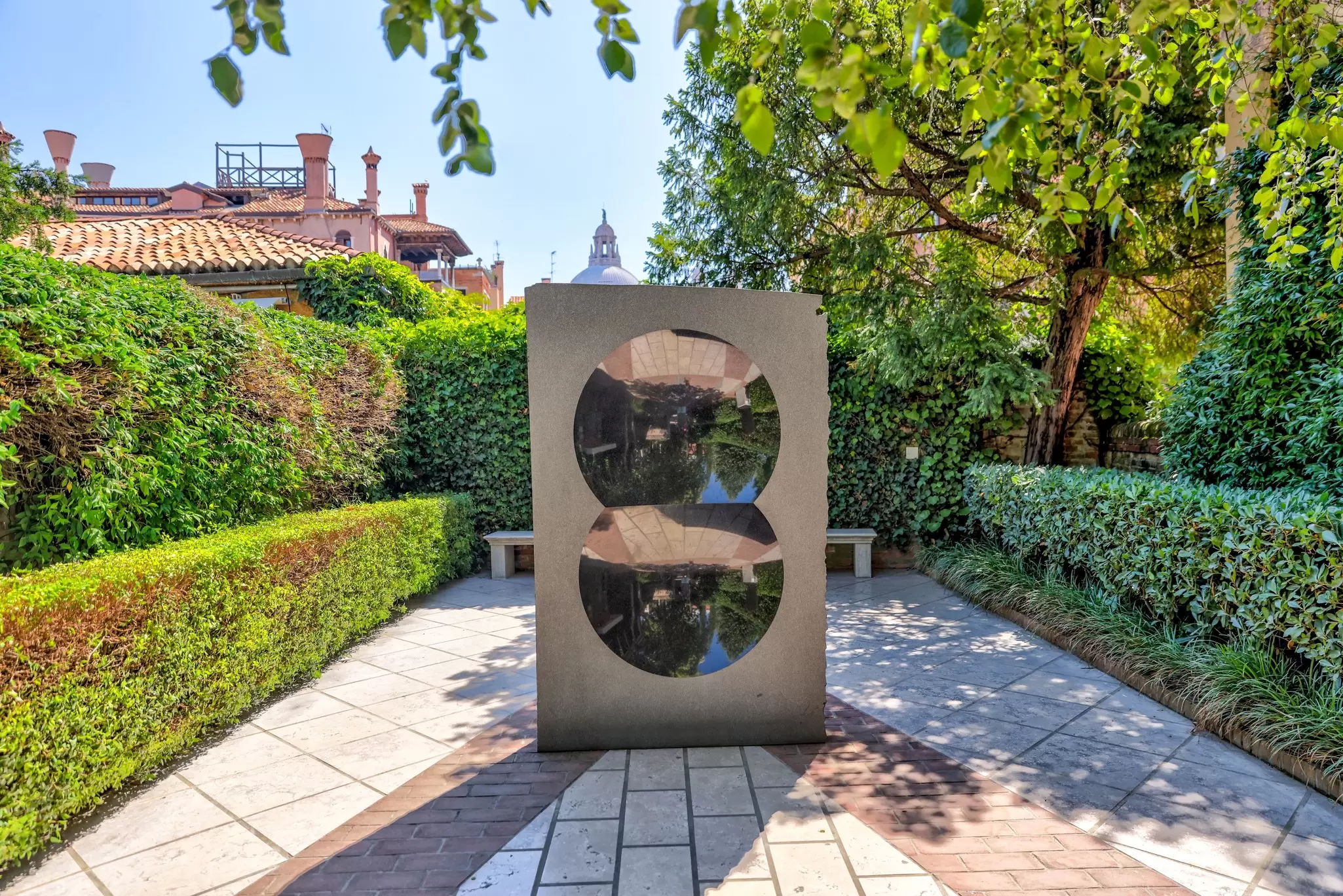
From the atrium, another door leads into the Nasher Sculpture Garden. Wander lazily, passing bronzes by Henry Moore and Alberto Giacometti, and intriguing granite creations by Anish Kapoor and Isamu Noguchi. On an ivy-covered wall, Mario Merz’s blue neon handwriting declares: "If the form vanishes, its root is eternal."
The city of Venice granted Peggy an honorary dispensation to be buried in the garden, alongside her dearly departed lapdogs, in 1979. Superb temporary exhibitions are held in a separate pavilion across the garden, while the garden cafe is a civilized spot for coffee or a light lunch.