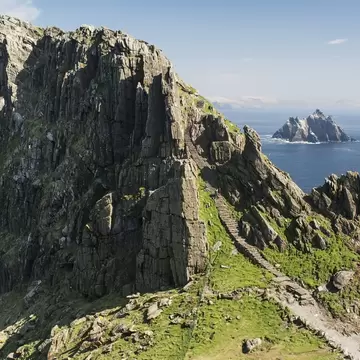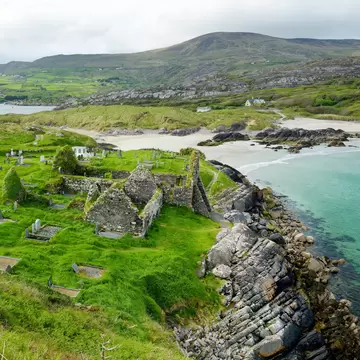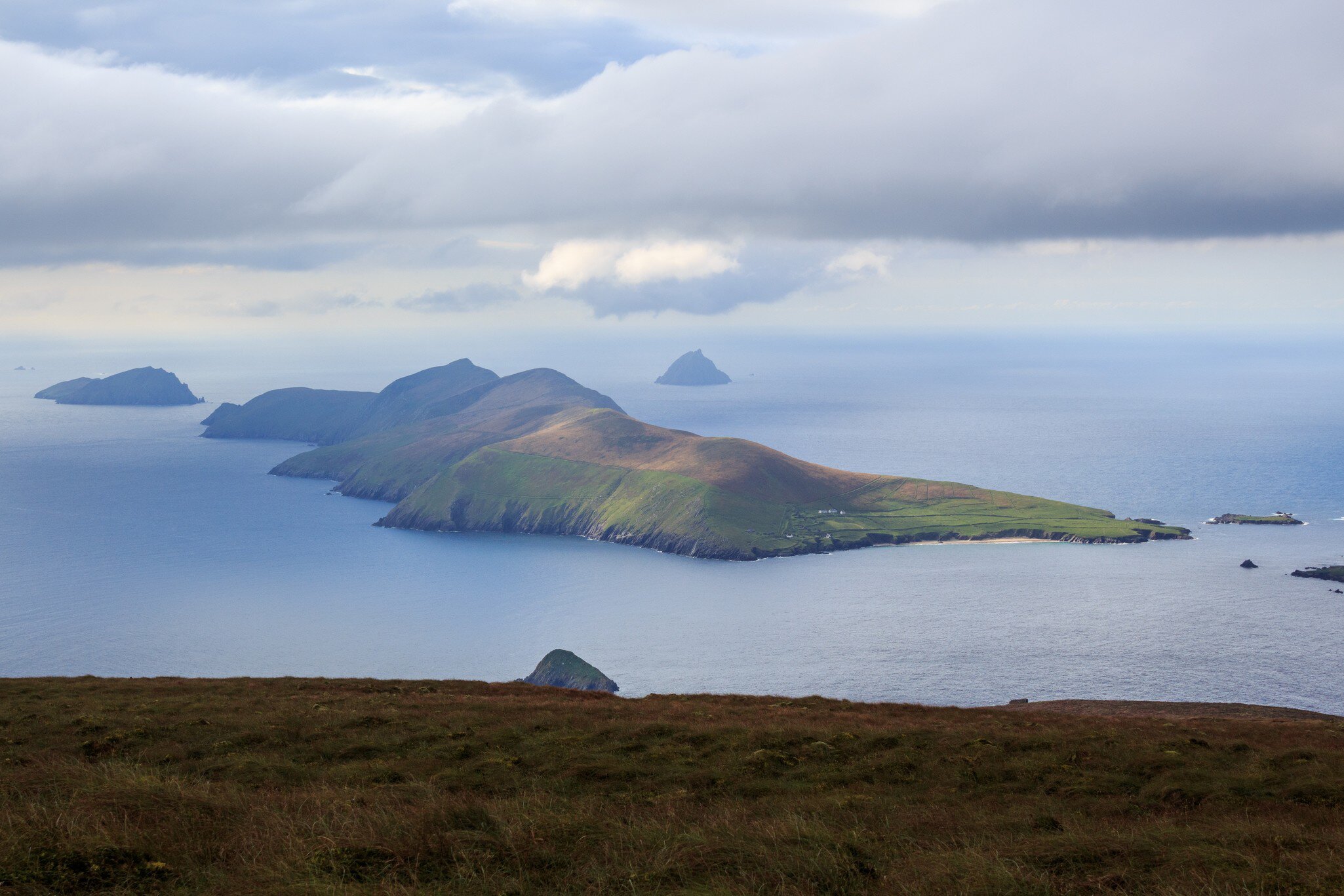
The Blasket Islands (Na Blascaodaí) off the tip of the Dingle Peninsula are the most westerly part of Ireland and one of the westernmost points in Europe (after Iceland, the Azores and Rockall). All of the islands were lived on at one time or another; there is evidence of the largest, Great Blasket (An Blascaod Mór), being inhabited during the Iron Age and early Christian times. But no more – the last islanders abandoned their homes in 1953, moving to the mainland or North America after they and the government agreed that it was no longer viable to live in such harsh and isolated conditions.
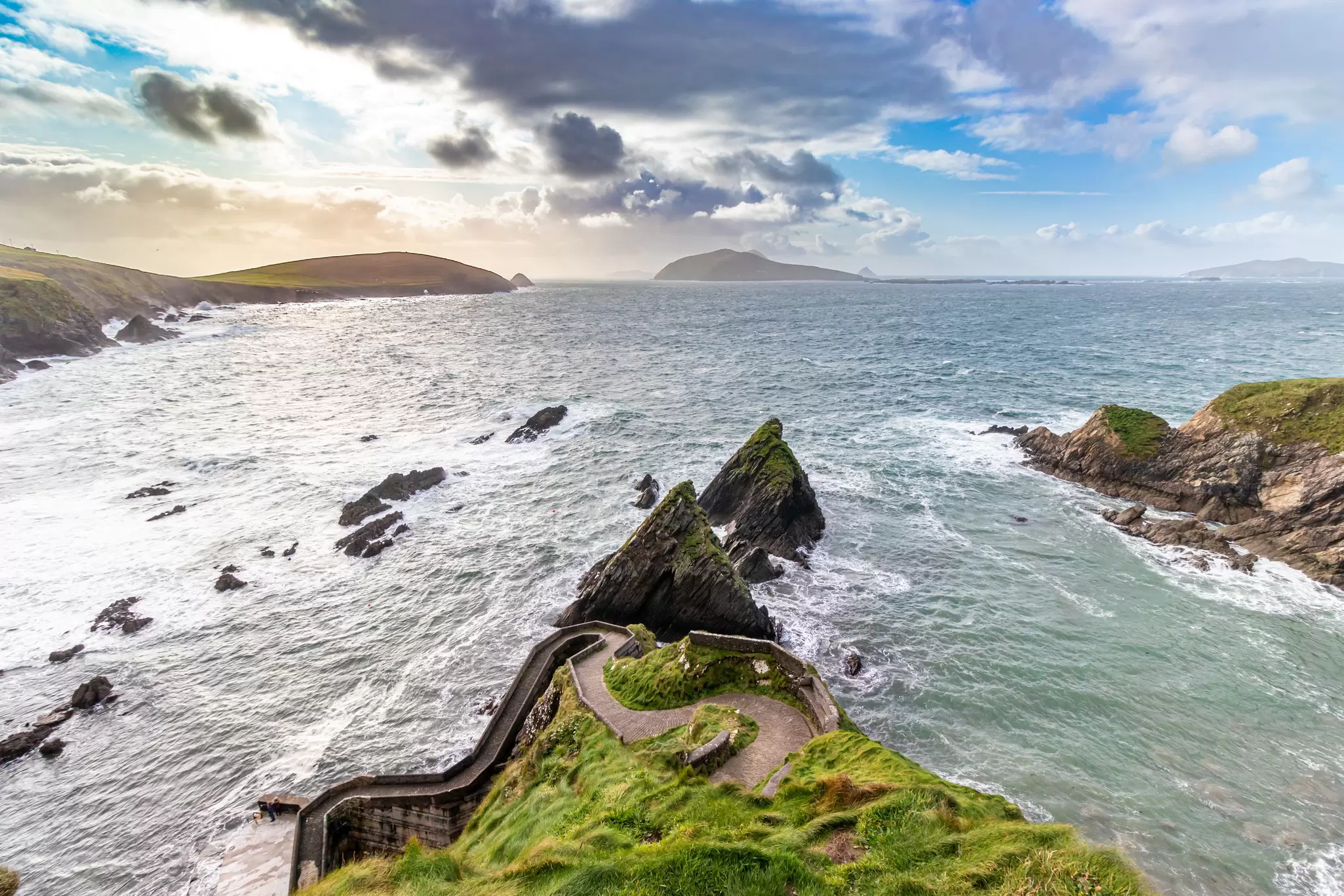
At Dunquin (Dún Chaoin), the rich history and cultural life of the islands are celebrated at Blasket Centre (heritageireland.ie; adult/child €5/3) from mid-March to early November. The interactive interpretative center is housed in a striking modern building with a long white hall ending in a picture window looking directly at the islands. Great Blasket’s rich community of storytellers and musicians is profiled along with its literary visitors, such as playwright JM Synge, author of The Playboy of the Western World. The more prosaic practicalities of island life are covered by exhibits on boatbuilding and fishing.
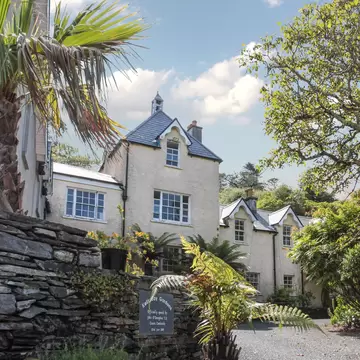
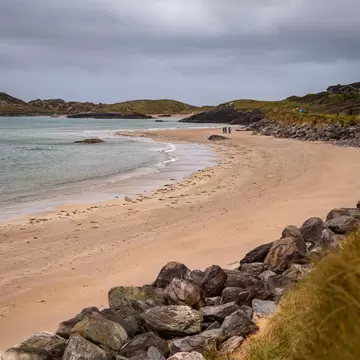
From around April to September, weather permitting, several operators run boat trips to Great Blasket from Dunquin (adult/child from €50/30), Dingle town (per person from €70) and Ventry (per person from €97.50). These excursions allow you to explore the sea cliffs and coves around the islands and look for whales and dolphins; you can also go ashore on Great Blasket to visit the abandoned settlements, watch the seabirds, picnic on the gorgeous white-sand beach Trá Bán, and hike the island's many trails. During the season, the OPW runs free 45-minute guided walks most days. There are public toilets, along with a basic lunchtime cafe; it’s also possible to stay on the island.